Yes, mice absolutely eat bird food, and they will also eat bird eggs if they can reach a nest. Both behaviors are well-documented and completely normal for mice. The bigger issue for backyard birders is that a standard feeder setup is practically an invitation: seeds on the ground, easy shelter underneath, and nobody checking at 2 a.m. when mice are most active. The good news is that a few practical changes to your feeder placement, cleanup routine, and storage habits will cut mouse visits dramatically without hurting the birds you're trying to feed.
Do Mice Eat Bird Food and Eggs? Signs and Prevention Tips

Maya Bennett
13 May 2026
Do mice actually eat bird food, and why are they so drawn to feeders?
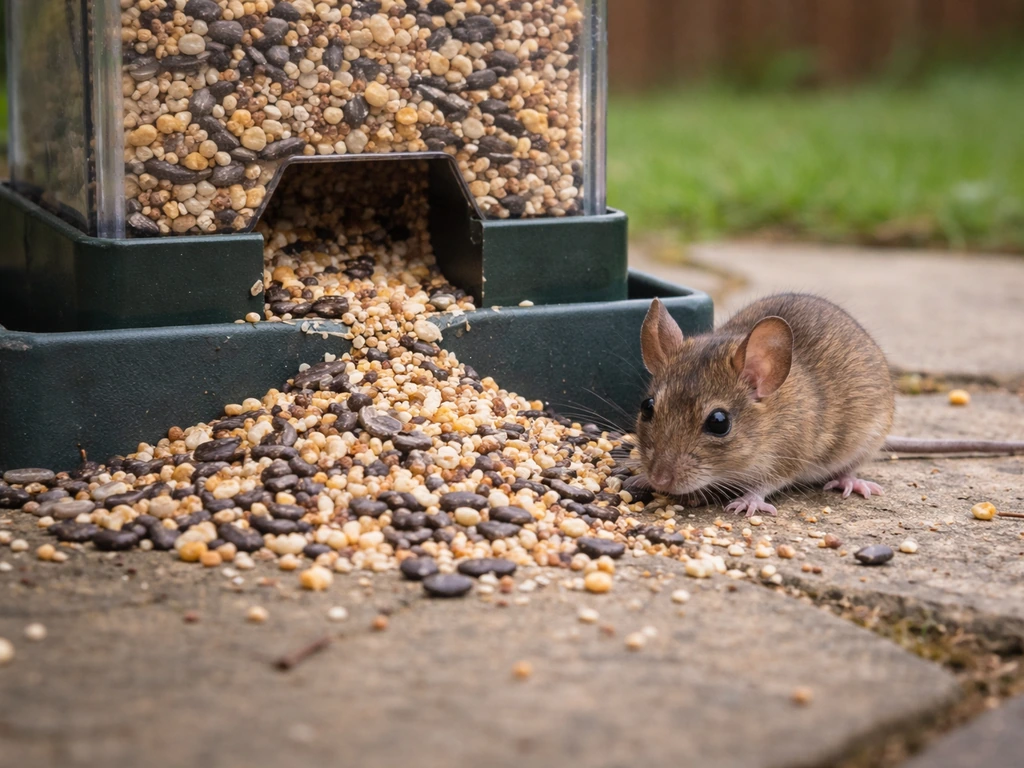
Mice are opportunistic omnivores that naturally eat seeds, grains, nuts, berries, and occasional animal matter. House mice, white-footed mice, and deer mice all consume seeds as a dietary staple, which means a bird feeder is essentially a buffet they evolved to exploit. The Pennsylvania Game Commission specifically lists seeds as a core food for mice, and Utah State University Extension notes that house mice will eat virtually any stored grain or seed product they encounter.
Three things make a typical feeder setup irresistible to mice: concentrated food in one predictable spot, seed that spills and accumulates on the ground, and shelter nearby (shrubs, woodpiles, or the feeder post itself). The U.S. Fish and Wildlife Service flags spilled seed as one of the most common ways people accidentally feed wildlife they didn't intend to feed. K-State Extension research on backyard feeder problems points directly at spilled seed and poor sanitation as the main drivers of rodent activity at feeders. In short, the mice aren't going out of their way to bother you. You're just making it very easy for them.
Do mice eat bird eggs, and when does that become a real problem?
Mice will eat bird eggs, but the context matters. In a typical backyard with ground-level or low nest boxes, mice are genuinely opportunistic nest predators. The Pennsylvania Game Commission specifically notes bird eggs as part of mice diets. Peer-reviewed research published in ornithology journals confirms that small rodents including mice have historically been underrated as nest predators, partly because they're nocturnal and hard to catch in the act. A striking real-world example: house mice on Midway Atoll were documented preying on Laysan Albatross nests, causing nest abandonment and parental mortality, which was published in the Journal of Wildlife Diseases.
In a backyard setting, the risk to eggs depends on nest height and access. Do skunks eat bird eggs? Like many backyard predators, their diet can include eggs, especially when they can find accessible nests. Ground nests and low nest boxes are most vulnerable, especially if there's no baffle on the post. Mice are strong climbers and can squeeze through openings as small as a dime. Research on songbird nest predation (published in the Journal of Wildlife Management) shows that habitat type, nest height, and nearby cover all influence predation rates significantly. Feeders near nesting areas may actually increase the problem: a Condor study found that feeders can change the behavior and density of nest predators, including small mammals, in ways that elevate nest predation risk for birds nearby.
So nest predation by mice is opportunistic rather than systematic in most backyards, but it's a real risk worth managing, especially during nesting season (roughly April through August in most of North America). blank" rel="noopener noreferrer">House Mouse | Utah State University Extension (IPM notes) notes that utah State University Extension lists house mouse diet broadly to include seeds and other stored/human foods, supporting the plausibility that mice will consume birdseed when accessible.
How to tell if mice are visiting your feeder or nesting area
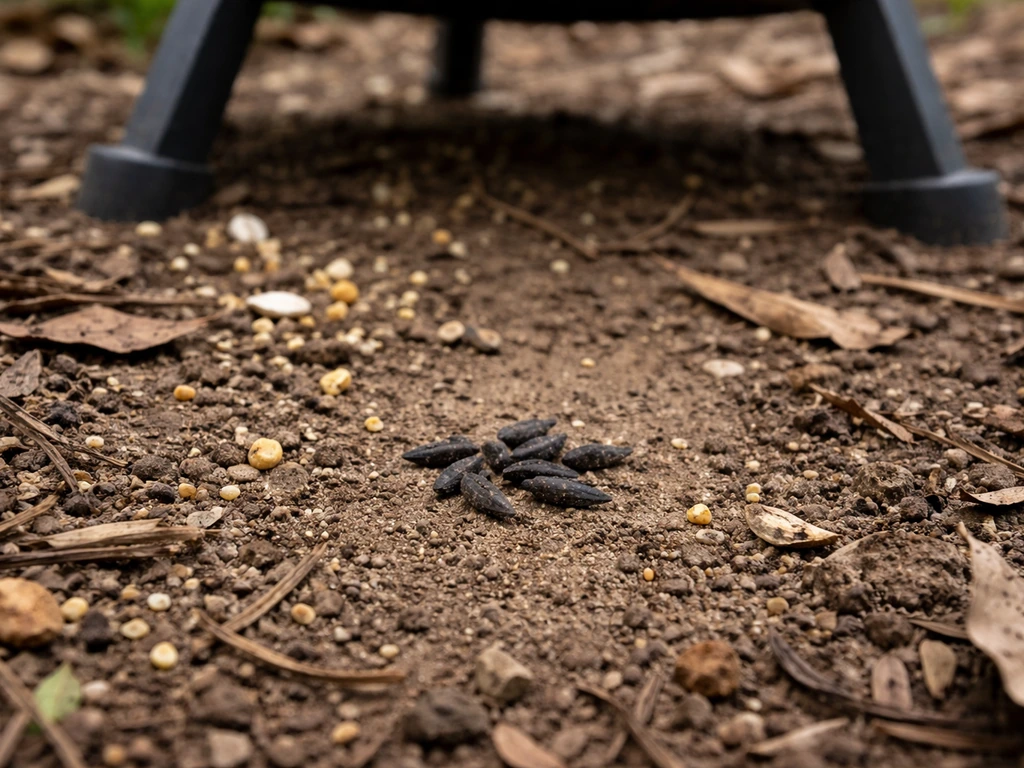
Mice are mostly nocturnal, so you may not see them directly. Look for these signs instead.
- Droppings near or under the feeder: house mouse droppings are small, dark, and pointed at both ends, averaging about 1/4 inch long. Environmental health guidance from NEHA distinguishes mouse droppings from rat droppings (which average closer to 1/2 inch) by size alone.
- Gnaw marks on the feeder, the post, or seed storage containers. Mice have to gnaw constantly to keep their incisors worn down, so fresh gnaw marks usually indicate active visitors.
- Seed piles moved or scattered in unusual patterns, especially in sheltered spots nearby, which indicates a mouse caching food.
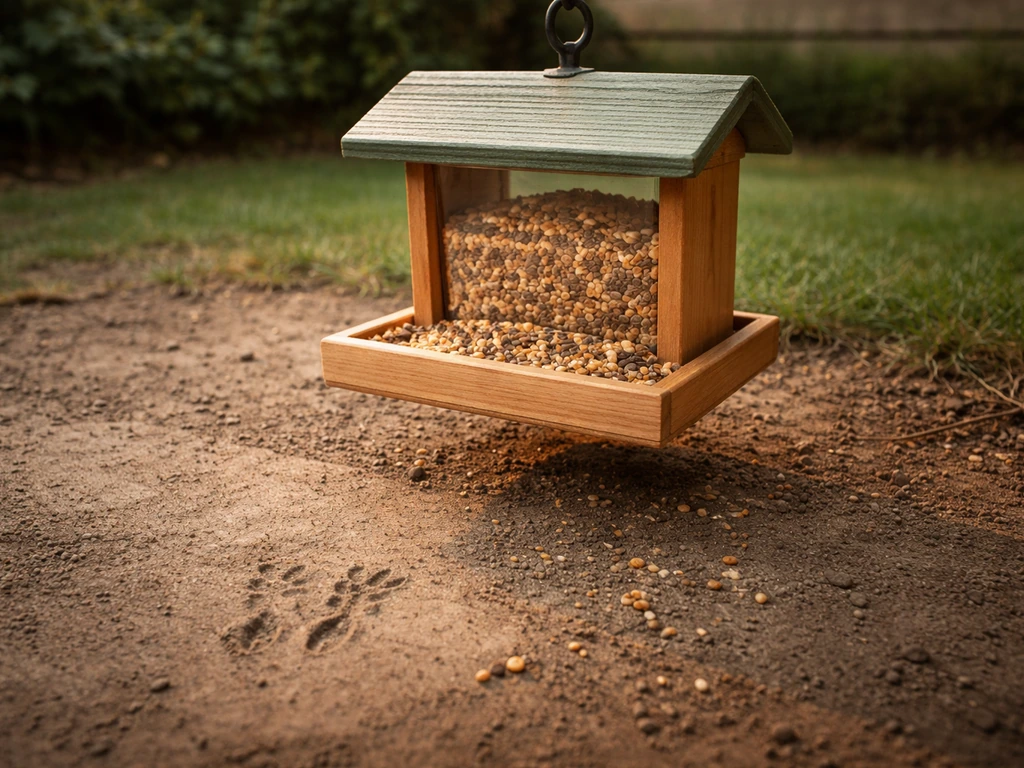
- Tiny footprints in loose soil, dust, or snow around the base of the feeder post. Mouse front prints show 4 toes, back prints show 5.
- Seed disappearing unusually fast overnight, especially if you know the birds aren't at the feeder after dark.
- Nesting material (shredded plant fiber, insulation, or paper) in sheltered spots around the base of your feeder setup or in nearby nest boxes.
How to stop mice from taking bird food
Stopping mice at the feeder is really a three-part problem: making the food harder to reach, removing the food they're already accessing on the ground, and reducing nearby shelter that makes your yard feel safe to them.
Feeder placement and type
- Mount feeders on a smooth metal pole at least 5 feet off the ground. Mice can climb rough wood and brick easily but struggle with smooth metal.
- Install a dome or cylinder baffle on the pole, positioned at least 4 feet off the ground. Baffles physically block upward climbing. Make sure the baffle extends at least 18 inches in diameter so mice can't reach around it.
- Keep feeders at least 10 feet away from trees, fences, rooftops, or any surface a mouse could jump or drop from. Mice can jump horizontally about 12 inches and can drop from considerable heights safely.
- Switch to tube feeders or feeders with small ports and no tray, or use a tray with drainage holes so spilled seed doesn't pile up.
- Remove or enclose platform feeders at night if mice are persistent, since these are the easiest feeders for mice to access.
Ground cleanup and food removal
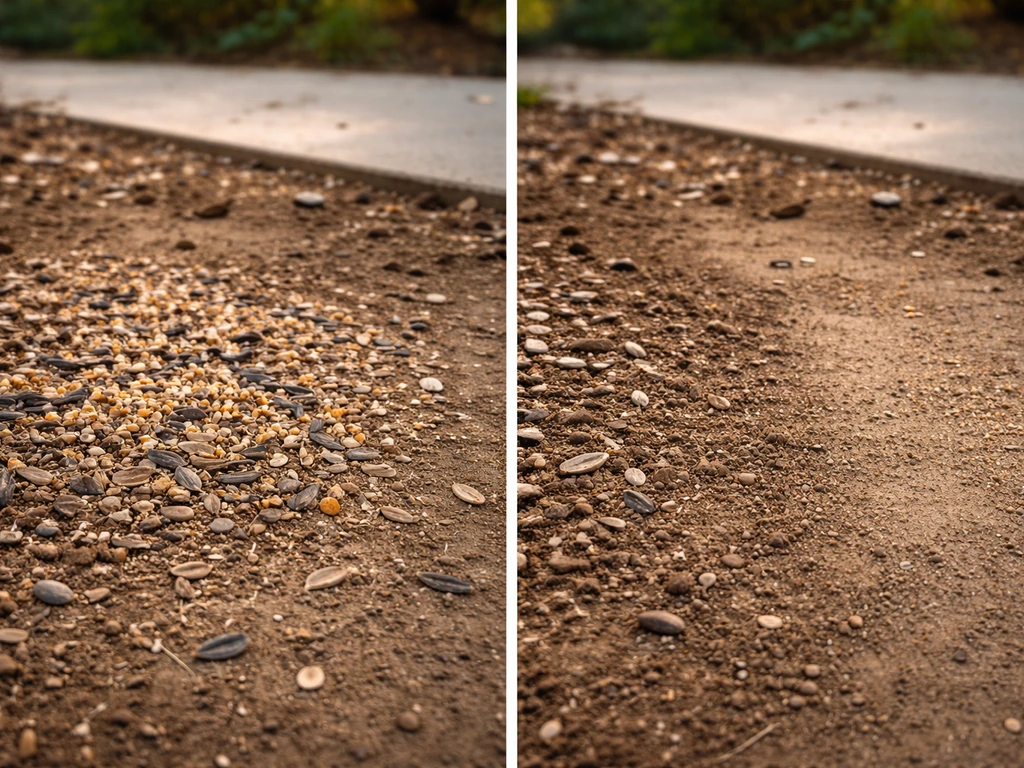
Spilled seed on the ground is almost always the primary attractant. The USFWS, Cornell Lab of Ornithology, and K-State Extension all point to ground seed as the key driver of rodent activity at feeders. Sweep or rake under your feeders every one to two days during active feeding season. Dispose of the seed rather than leaving it in a pile nearby. If you use a platform or tray feeder, put only as much seed as birds will consume in a few hours. NC Wildlife advises temporarily closing feeders entirely if pest or predation problems escalate, which is a legitimate and immediate option if mice become persistent.
Habitat and shelter reduction around the feeder
- Clear brush, woodpiles, and dense ground cover within 10 feet of feeders. Mice feel exposed in open areas and avoid them.
- Remove or elevate any ground-level debris (old pots, tarps, lumber piles) near feeders. These become nesting and resting spots.
- If you store seed outdoors, move it farther from the feeder area and use a sealed container (more on this below).
Trapping as a last resort
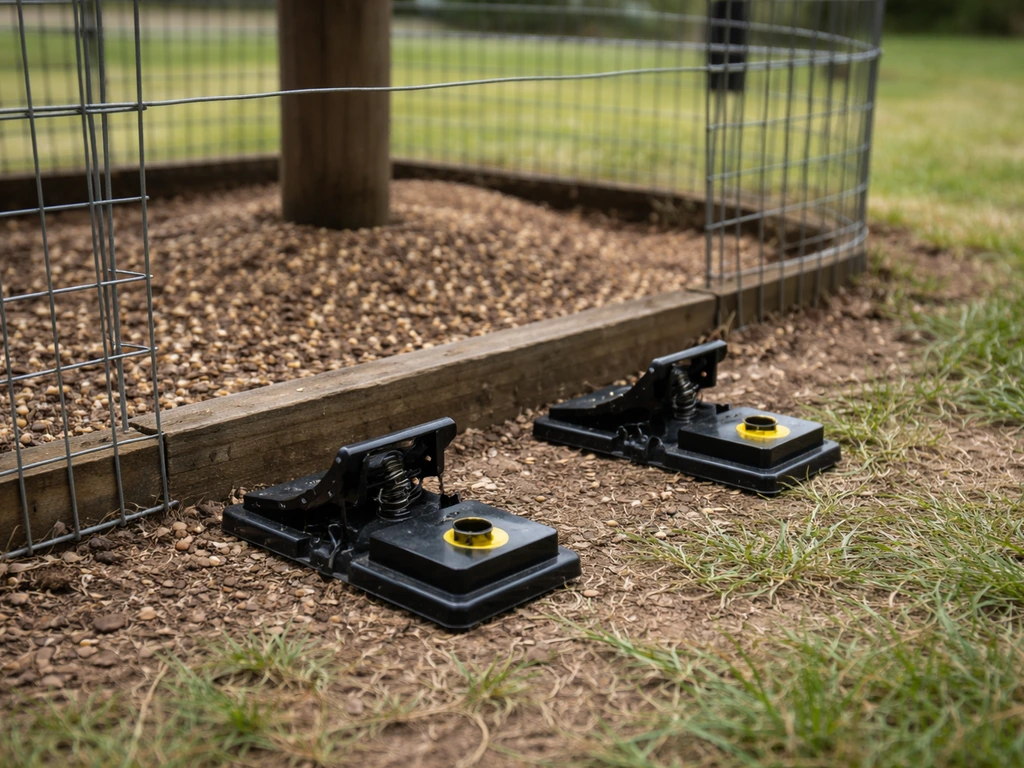
If the steps above don't resolve the problem within a week or two, snap traps are the most practical and humane next step. Penn State Extension's IPM guidance recommends starting with exclusion and prevention, then moving to trapping if needed. The CDC advises selecting the right trap type for the rodent (standard snap traps work well for mice) and placing them along known travel routes, which are usually walls or feeder bases. Place traps out of reach of birds and children, check them daily, and wear gloves when handling. Poison baits are not recommended near bird feeders because secondary poisoning can kill raptors and other wildlife that eat dead or dying rodents.
Protect nests: reducing mouse egg predation without harming birds
If you have nest boxes or know of ground or low nests in your yard, a few targeted actions can meaningfully reduce the risk of mouse predation during nesting season.
- Mount nest boxes on smooth metal poles with baffles, exactly as you would a feeder. This is the single most effective protection against mice climbing to eggs.
- Check nest box entry holes. The standard 1.5-inch hole for bluebirds and similar species is just large enough for a house mouse to squeeze through. Adding a metal hole guard (also called a portal protector) to the entrance makes chewing and forced entry much harder.
- Place nest boxes at least 5 to 6 feet high and away from overhanging branches or fences where mice could drop down.
- Avoid placing nest boxes directly next to feeders or seed storage areas, which concentrate mice in the same zone as nesting birds.
- Do not use rodenticide (poison) anywhere near nesting areas. Raptors and other predatory birds that naturally control mouse populations will eat poisoned rodents and can die as a result. Stick to physical exclusion and snap traps placed where birds cannot reach them.
- If you find a nest on or near the ground, consider whether temporary fencing or a cage around the nest base (used in some conservation programs) is practical for your situation during the most vulnerable incubation period.
It's worth noting that mice aren't the only small animals that prey on eggs in backyards. Chipmunks, skunks, and even deer have all been documented interacting with bird nests and eggs in ways that surprise people. Mice are just particularly effective because of their nocturnal habits and ability to fit into tight spaces. blank" rel="noopener noreferrer">To Feed or Not to Feed Wild Birds | U.S. Fish & Wildlife Service notes that the U.S. Fish & Wildlife Service notes that if you use bird feeders, you should avoid unintentionally creating food sources for other animals and it emphasizes ecological responsibility when feeding wildlife.
Safe seed storage and feeder hygiene to prevent attracting mice (and other pests)
How you store seed matters as much as how you dispense it. Mice can chew through plastic bags, cardboard boxes, and even thin plastic bins. The Minnesota DNR and Penn State Extension both note that wet seed and accumulated hulls under feeders breed mold and bacteria, which creates its own risk to birds independent of rodents. Good storage and hygiene practice solves both problems at once.
| Practice | Why it matters | How often |
|---|---|---|
| Store seed in metal containers with tight-fitting lids | Mice chew through plastic; metal is genuinely rodent-resistant | Ongoing |
| Keep stored seed in a garage or shed, not outdoors against the house | Reduces proximity to both mice and moisture | Ongoing |
| Buy only as much seed as you'll use in 2 to 4 weeks | Old seed gets wet and moldy; fresh seed is safer for birds and less likely to be damp and clumped (which mice prefer) | Restock every 2-4 weeks |
| Sweep or rake spilled seed and hulls under feeders | Ground seed is the primary mouse attractant; wet hulls promote mold harmful to birds | Every 1-2 days in active feeding season |
| Wash feeders with a 10% bleach solution, rinse thoroughly, and dry completely before refilling | Removes mold, bacteria, and pathogen buildup; reduces disease risk for birds | Every 1-2 weeks, more often in wet weather |
| Discard any wet, clumped, or foul-smelling seed immediately | Moldy seed can cause aspergillosis in birds; wet seed is also more likely to attract rodents | Check every fill |
| Remove uneaten seed at the end of the day if mice are active | Eliminates overnight food access for nocturnal mice | Daily when mice are a known problem |
King County public health guidance on bird feeders and rodents makes the point clearly: eliminating accessible food on the ground and in poorly sealed containers is more effective than any reactive pest control. Oklahoma Department of Wildlife Conservation's bird feeding tips echo this, recommending feeder setups designed to minimize waste as a first-line strategy. The USFWS frames it as ecological responsibility: you're choosing to feed birds, so you're also responsible for not accidentally sustaining a local mouse population in the process.
Your action checklist for today
- Sweep under all feeders now. Remove all spilled seed and accumulated hulls from the ground.
- Check your feeder pole: if it's wood or rough material, consider switching to smooth metal. Add a baffle if you don't have one.
- Move your feeder at least 10 feet from any structure, fence, or tree a mouse could use as a launch point.
- Inspect your seed storage. Transfer any seed in bags or cardboard into a metal container with a tight lid.
- Check seed quality before refilling: discard anything wet, clumped, or musty-smelling.
- If you have nest boxes, inspect the mounting pole for baffles and check the entry hole for signs of gnawing.
- Set snap traps near the feeder base along walls or along fence lines if you've confirmed mouse activity, keeping them inaccessible to birds.
- Establish a regular cleaning schedule: sweep under feeders every 1-2 days, wash feeders every 1-2 weeks.
- If mice are consistently heavy, temporarily close feeders for a week as NC Wildlife recommends, then reopen with the improved setup in place.
FAQ
Will mice eat bird food if the feeder is hanging and nothing is on the ground?
They may still try, because mice can climb and investigate, but ground waste is usually the main driver. If you use a hanging feeder, use a seed-catching tray that prevents pooling, clean beneath it regularly, and stop using low-quality trays that let seed spill over the edges.
Do mice go after suet, or only seeds and grains?
Mice primarily seek seeds and stored grains, but they can also nibble high-energy foods if they are available, especially if other attractants like spilled seed or sheltered cover are present. If you notice droppings or chewing around non-seed foods, prioritize waste removal and storage first.
Can mice chew through seed bags or storage bins, even indoors or in a garage?
Yes. Mice can chew through cardboard and thin plastic, and they can exploit gaps around lids. Store seed in rigid, tightly sealed containers (not only in bags), and keep containers off the floor to reduce access to travel routes.
How long after I stop using the feeder will mice move on?
If food is removed and ground waste cleaned up, activity often drops within days, but it may take one to two weeks for numbers to fall because mice continue to use nearby shelter and established routes. If you see fresh droppings or repeated nighttime disturbances after two weeks, you likely need exclusion and possibly trapping.
What signs tell me mice are feeding at the feeder, not just passing through?
Look for small piles of mixed seed, chewed hulls, and droppings near the feeder base or under nearby cover. Fresh gnaw marks on feeder components and repeated disturbed areas after cleaning are stronger indicators than one-time tracks.
Are drop trays or seed-catching devices always a good idea for preventing mice?
Not always. If the tray captures seed but still leaves it exposed or allows it to accumulate, mice can use the tray as a reliable feeding spot. A better approach is a tray that catches waste with a design that reduces access, plus frequent cleaning of the tray and area beneath.
If mice are eating bird eggs, does that mean they will also eat adult birds?
Not typically. Mice are more associated with eggs and nestlings than with taking adult birds. Still, if you have persistent nest predation, focus on nest protection and habitat changes, not fear that adult birds are likely to be attacked.
How small is “small enough” for mice to enter near nest boxes or gaps around a feeder?
Mice can squeeze through surprisingly tight openings, including small gaps around posts, siding, and wiring. Even if an entrance seems too narrow, check around feeder mounts and structures for gaps you can seal after excluding access.
Will trapping near bird feeders put birds at risk?
It can, so placement matters. Use traps only along mouse travel routes like walls or behind feeder supports, keep them out of reach of birds and children, and avoid setting traps where birds land or where pets can access them.
Is it ever safe to use rodent bait (poison) if mice are persistent?
Generally avoid it around bird-feeding areas. Poison can lead to secondary poisoning of raptors and other wildlife that eat a dying rodent, and carcasses can also create an additional health and sanitation problem. Trapping and exclusion are usually the safer first choices.
Does adjusting feeder height or switching feeder type reduce mouse egg predation risk?
Yes, indirectly. Higher nest placement reduces access for ground and climbing predators, and feeder setups that reduce waste lower the number of mice in the immediate area. If nest boxes are involved, prioritize baffles and nest placement rather than relying on feeder changes alone.
What changes help most if mice keep returning after I clean up for a week or two?
Add exclusion and route disruption: secure food storage, remove nearby shelter like wood piles close to feeding zones, and stop leaving any spilled food for mice to harvest. If activity continues, follow up with targeted trapping along established routes instead of only repeating cleanup.