The birds most likely to eat seagulls are bald eagles, great horned owls, and snowy owls for adult or near-fledged gulls, while crows, herring gulls, and great black-backed gulls are the main egg and chick predators. Which predator you are dealing with depends heavily on your location, the time of year, and whether you are seeing active hunting, egg raiding, or opportunistic scavenging. Here is how to figure out exactly what is happening, confirm which species is responsible, and take sensible steps to reduce problems around your home.
What Bird Eats Seagulls? Identify the Predator Fast
Maya Bennett
10 Apr 2026
Which birds actually eat seagulls
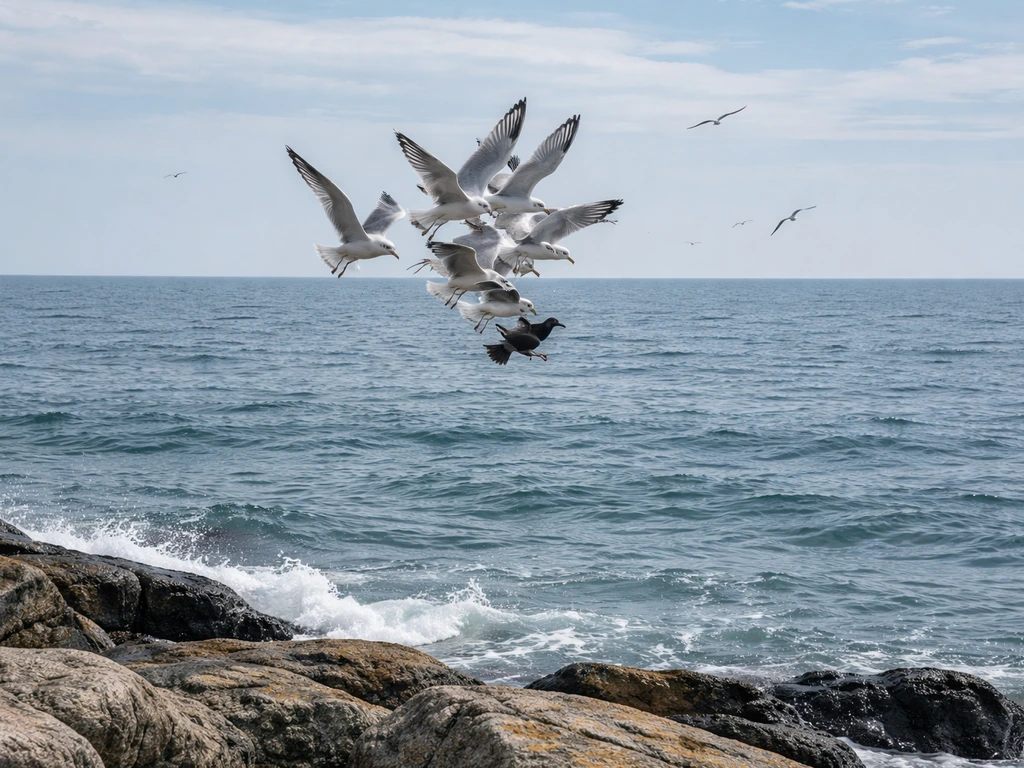
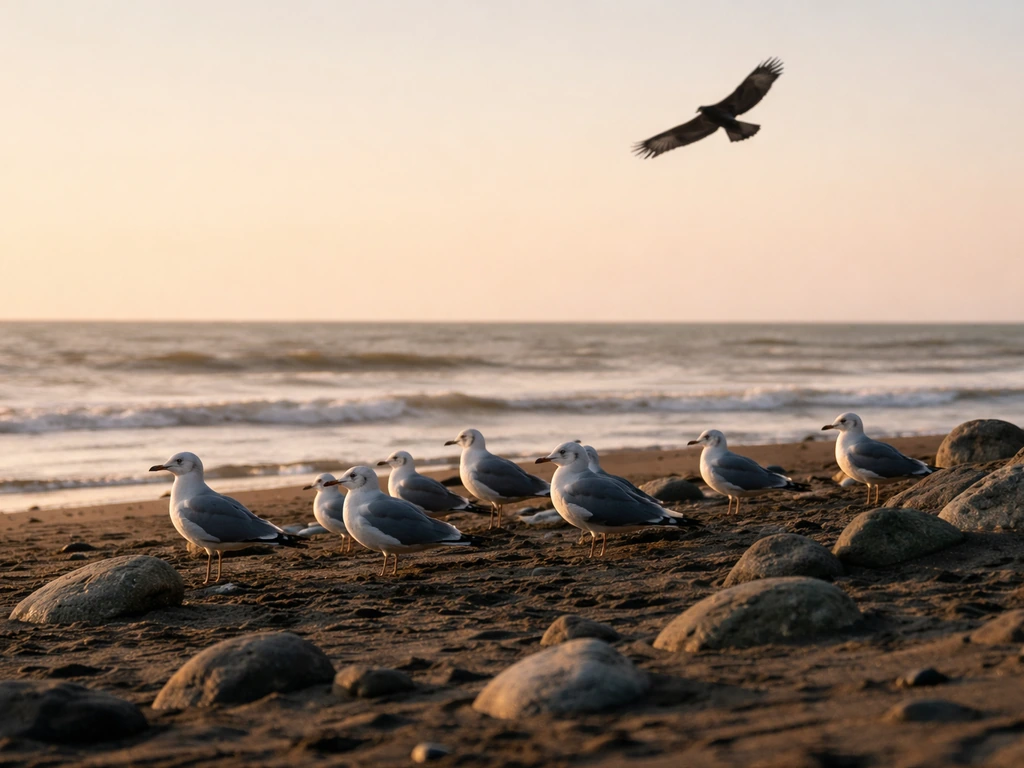
Gulls are not easy prey for most birds. They are large, aggressive, and highly social, meaning any attacker quickly faces a mobbing response from the whole colony. Despite that, several species have found reliable ways to exploit gulls at different life stages.
Bald eagles: the most documented gull predator
Bald eagles are the best-studied bird predators of gulls. Peer-reviewed research published in the Journal of Raptor Research has specifically documented bald eagle predation on herring gull eggs, and a separate University of Washington study tracked eagle attack rates across an entire hatching season at a glaucous-winged gull colony. Interestingly, attack rates were highest early in the season and dropped over time, probably because eagles learn quickly which parts of the colony are worth targeting. Eagles will take eggs, chicks, and, when they can manage it, adult gulls, though healthy adults can escape. If you are near a coastal estuary, large lake, or river system and seeing gulls scatter suddenly and panic-call, a bald eagle is the most likely culprit.
Great horned owls and snowy owls
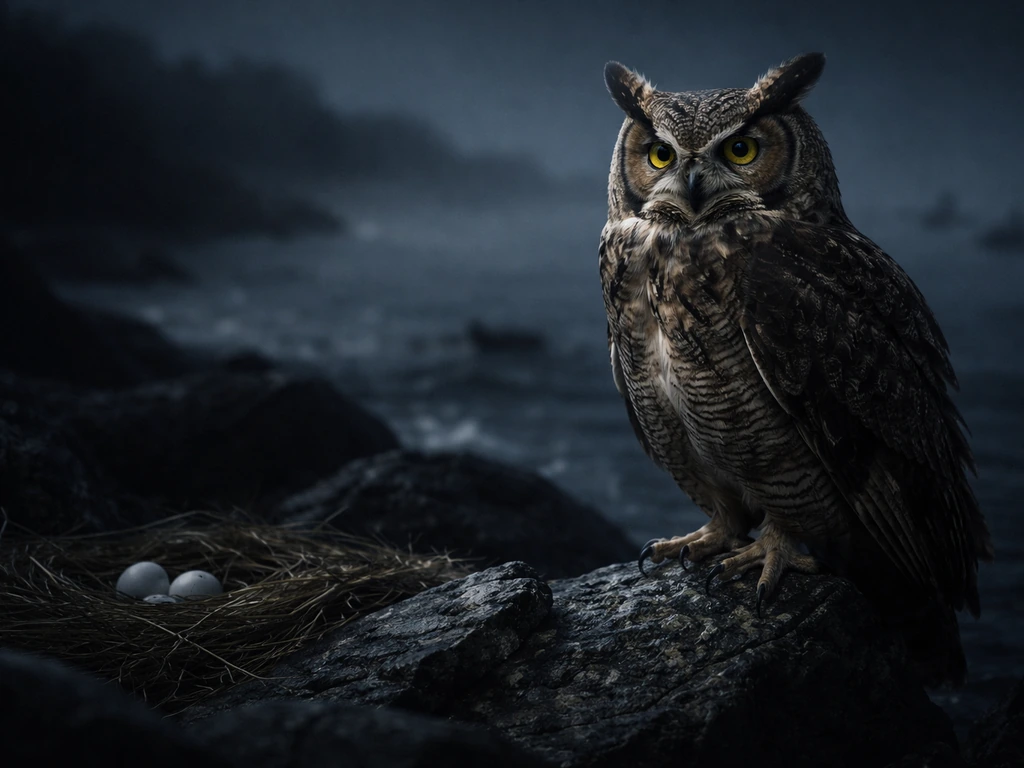
Great horned owls are nocturnal and powerful enough to take adult gulls. Research published in the journal Waterbirds found that herring gull nest attentiveness dropped measurably at sites where great horned owls were active, with actual predation events recorded. Gulls at those sites essentially abandoned normal nesting behavior trying to avoid the owls. Snowy owls are a winter story: National Wildlife Federation tracking data describes snowy owls that hunted almost entirely over open water during winter, taking waterbirds including ducks and gulls. If you are on or near a coastal area in late fall through early spring and seeing large white owls hunting low over open water at dusk or dawn, snowy owl predation on gulls is a realistic possibility.
Crows and ravens
Northwestern crows were the focus of a peer-reviewed study in The Auk tracking egg predation on glaucous-winged gull nests over five years (1976 to 1980). The researchers found that crow predation on gull eggs was closely linked to human disturbance and bald eagle activity at the colony, because both factors caused parent gulls to flush off their nests, giving crows an opening. Ravens behave similarly. If you are seeing broken gull egg shells near a nesting area without any feathers or blood, corvid egg raiders are the most likely explanation.
Gulls eating other gulls
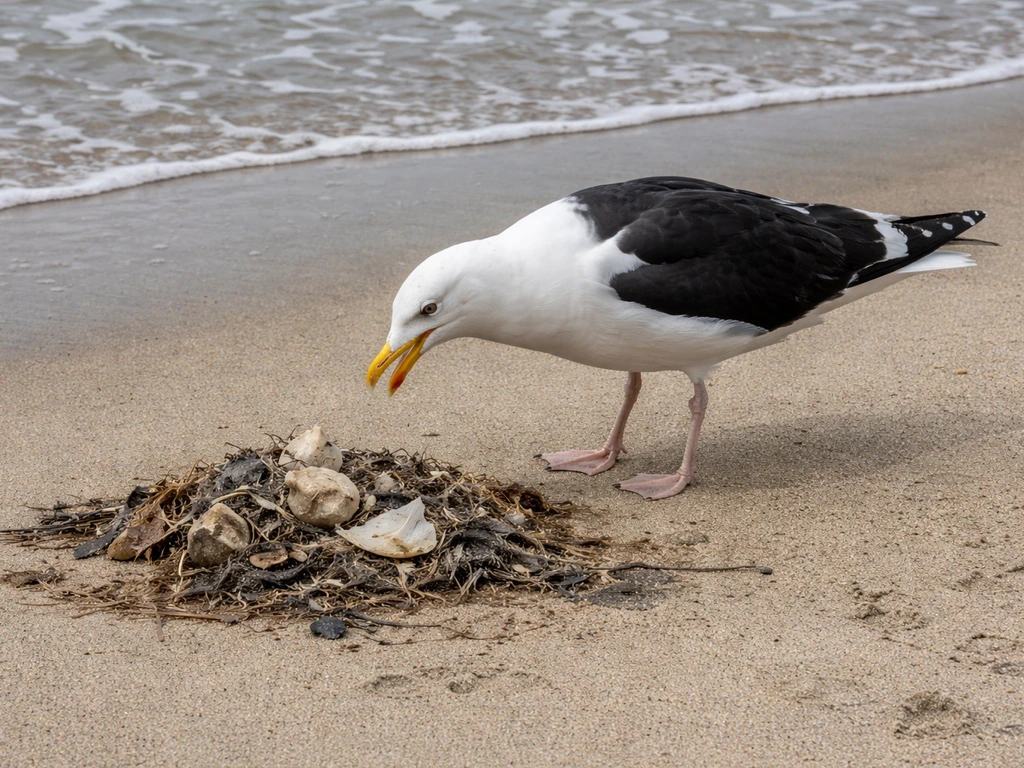
This one surprises people. The great black-backed gull is a significant predator of other gull species. Massachusetts wildlife documentation describes its appetite for eggs and young of other birds as voracious, and its diet includes adult birds of smaller seabird species in addition to eggs and nestlings. Herring gulls are also documented by USGS as frequent predators of eggs and chicks, particularly in tern colonies. So if you are watching a nesting colony and seeing chicks disappear without any obvious raptor activity, look closely at the larger gulls in the area before assuming an outside predator is responsible.
| Predator | Primary targets | Timing | Key location clues |
|---|---|---|---|
| Bald eagle | Eggs, chicks, adult gulls | Breeding season for eggs/chicks; year-round for adults | Coastal, lakeside, large rivers; audible colony panic calls |
| Great horned owl | Adult and near-fledged gulls | Nocturnal; spring through fall nesting season | Found near mixed woodland and coast; disturbed nests at night |
| Snowy owl | Adult waterbirds including gulls | Winter (Nov to Mar in most of US/Canada) | Open coastal areas; hunts low over water |
| Northwestern crow / raven | Eggs primarily | Breeding season when adults are flushed | Broken shells near nests; corvid calls nearby |
| Great black-backed gull | Eggs, chicks, smaller adult seabirds | Breeding season | Within the gull colony itself; larger gull standing over nest |
How to confirm which predator you are dealing with
Seeing gulls scatter is not enough to identify a predator. You need to combine several clues before drawing a conclusion.
Physical evidence at the scene
- Broken egg shells with clean edges and the contents eaten: corvid or gull egg raider
- Egg shells with puncture marks or crushed: larger bird like eagle or great black-backed gull
- Feathers scattered in a fan pattern with quill ends bitten off: hawk or eagle kill site
- Feathers scattered with quill ends intact but pile tightly grouped: owl kill site (owls pluck and eat on site)
- Carcass mostly consumed with only wings remaining: larger raptor, possibly eagle
- No physical evidence but disturbed nest and missing chick overnight: owl predation
Calls and behavior to watch for
Colony-wide alarm calling combined with mobbing behavior is one of the most reliable ways to confirm a predator is present. Gulls use classic mobbing tactics: dive-bombing, loud persistent calls, and defecation aimed at the predator. This is reactive defensive behavior, not aggression, and it tells you the gulls have identified a threat. Watch what they are mobbing. If they are circling and calling above a large, broad-winged bird soaring overhead, that is almost certainly a raptor. If the alarm is happening at ground level and the gulls are focused on another large gull standing in the colony, you may be watching a great black-backed gull raiding session.
Timing and location
Time of day matters a lot. Daytime disturbances with fleeing gulls point to eagles, hawks, or corvids. Overnight nest disturbances with missing chicks or eggs point to great horned owls. Winter coastal incidents with large white birds hunting low over water almost certainly involve snowy owls. Location is equally telling: if you are inland near a lake, eagles and great horned owls dominate; if you are on an Atlantic or Pacific shoreline, all of the above species are possible, plus great black-backed gulls.
What these predators eat when they are not hunting gulls
Understanding the full diet of each predator helps you identify them when they are not actively hunting gulls, and it helps you assess whether your yard or property is attracting them for other reasons.
Bald eagles are generalist hunters and scavengers. They are famous for eating fish, which is typically the core of their diet, but they also take waterbirds regularly. If you want a full picture of what bird eats fish with the kind of regularity that brings them into coastal environments where gulls nest, bald eagles belong at the top of that list. They will also scavenge carrion, steal prey from other birds (especially ospreys), and take small mammals when other food is scarce.
Great horned owls are among the most versatile predators in North America. They take rabbits, squirrels, skunks, opossums, domestic cats, and a wide range of birds including ducks, crows, and other raptors. Mice are a major part of owl diets generally, and great horned owls are no exception, particularly in winter when other prey is harder to catch. If you have a rodent problem near your property and you have also been losing songbirds or small waterfowl, a great horned owl could be the common factor.
Snowy owls winter on open ground and are specialists at taking medium-sized birds and mammals. Their winter diet in coastal areas leans heavily on waterfowl and open-water birds. They are less likely to be near a typical backyard feeder but very likely to be present around harbor areas, open beaches, and airport grasslands in winter.
Great black-backed gulls eat almost anything: fish, invertebrates, carrion, eggs, chicks, small adult birds, and human food waste. They are genuinely one of the most aggressive and capable avian predators in Atlantic coastal ecosystems. They also prey on birds like puffins and other smaller seabirds at nesting colonies. Understanding how other large seabirds get preyed upon by dominant colony members follows the same pattern you see with great black-backed gulls dominating mixed-species colonies.
Is your feeder or yard attracting both gulls and predators?
If you are seeing both gulls and raptors near your property, there is a good chance your setup is creating a food chain. Gulls are drawn to accessible food and then predators follow the gulls. Fixing the root cause is the most effective way to reduce unwanted activity from both.
What attracts gulls to yards and feeders
Gulls are not typical feeder birds, but they are smart, persistent, and strongly conditioned by habit. Aberdeenshire Council guidance makes the point clearly: gulls naturally return to wherever they have been fed before. Once a gull learns your yard has food, it will come back repeatedly and bring others. Cornwall Council guidance goes further, advising people who are attracting gulls or larger birds to simply stop feeding altogether in that area. USDA Wildlife Services adds a public health dimension, explicitly linking feeding wildlife including gulls to disease transmission risk.
The practical checklist for reducing gull attraction is straightforward:
- Use gull-proof bin lids or sealed containers for all outdoor food waste
- Never leave bread, scraps, or pet food outside uncovered
- Remove birdbath water sources that are large enough for gulls to use comfortably (gulls will preferentially use large, shallow water sources)
- Switch to enclosed hopper feeders or tube feeders that gulls cannot access
- Clean up spilled seed under feeders daily, since ground spill attracts gulls more than hanging feeders
- If gulls are already nesting on or near your property, contact your local wildlife authority before nesting season begins, not after
How feeder choices affect predator pressure
Reducing gull presence around your property does reduce raptor visits somewhat, because you are removing the food source that attracted the raptors in the first place. However, be realistic: if you live near a coastline, lake, or large open area, raptors like bald eagles and great horned owls are part of the local ecosystem regardless of what you do at your feeder. Your goal should be minimizing unnecessary attraction, not eliminating predators from the landscape.
One thing worth noting: predators like hawks and falcons that hunt pigeons and medium-sized birds in urban areas follow the same basic logic. If you have ever wondered about what bird eats pigeons in city environments, the answer involves the same family of raptors that will pursue gulls in coastal settings. The predators adapt to wherever the prey concentrates.
Safety for people, pets, and local wildlife
Risks from spoiled seed and inappropriate food
One underappreciated risk when gulls start visiting a feeding area is the food itself. Gulls will eat almost anything, including spoiled seed, moldy bread, and old pet food. Spoiled seed and wet grain left in open trays can harbor Aspergillus fungus and Salmonella, both of which can be passed between birds and potentially to pets that eat contaminated bird droppings or pick up dead birds. Store seed in sealed, moisture-proof containers, discard any seed that smells musty or shows clumping, and clean feeders with a diluted bleach solution at least once a month.
Risks to pets from predators attracted by gulls
If your gull activity is drawing in great horned owls or eagles, your small pets are at real risk. Maine Department of Inland Fisheries and Wildlife guidance on owls is explicit: free-roaming domestic animals, especially cats and small dogs, are vulnerable to owl predation. Great horned owls can take prey up to the size of a large rabbit, and a small cat or toy-breed dog left outside at dusk or overnight is genuinely at risk. Keep small pets indoors after dark if owls have been active near your property, and supervise them closely outside during dawn and dusk hours. Eagles are less likely to target pets but have been documented taking small animals near the shoreline.
Legal protections you need to know
Do not attempt to remove, disturb, or interfere with eagles, owls, or any other birds of prey. Bald eagles are protected under the Bald and Golden Eagle Protection Act, which carries criminal penalties for taking, possessing, or even disturbing eagles, their nests, or their eggs without specific federal authorization. All migratory birds, including gulls and the raptors that prey on them, fall under the Migratory Bird Treaty Act. If predation is causing a genuine conflict at a documented nesting colony, contact USDA Wildlife Services or your state wildlife agency for guidance before taking any action.
Defending yourself and others from defensive gulls
RSPCA guidance notes that swooping behavior by gulls near humans is almost always defensive rather than predatory, triggered by the presence of chicks on or near the ground. If a gull is dive-bombing you, it almost certainly has a chick nearby. Walk away, cover your head, and do not attempt to touch or remove the chick. The behavior stops once chicks can fly, typically within a few weeks.
Myths and common mix-ups worth clearing up
Scavenging is not the same as predation
One of the most common confusions is assuming any bird eating a gull or gull remains is a predator. Bald eagles, crows, and large gulls will all scavenge dead gulls opportunistically without having killed them. Finding a bird feeding on a dead gull on a beach tells you almost nothing about which bird (if any) killed it. True predation evidence looks different: alarm calls from the colony, a bird physically striking and carrying live prey, feather scatter patterns consistent with a kill, or documented disturbance at active nests with eggs or chicks going missing. Confirming predation requires combining multiple lines of evidence.
Gulls vs other seabirds: the ID problem
People often misidentify gulls, calling them seagulls generically when what they are seeing might be terns, kittiwakes, gannets, or other seabirds. This matters for predator identification because the predators of terns and small seabirds differ from those of large adult gulls. Herring gulls themselves are documented USGS predators of common tern eggs and chicks, which means the bird doing the predating and the bird people call a seagull can sometimes be the same species. If you are watching what looks like gull-on-gull predation, consider whether you might be watching a large gull targeting a smaller seabird rather than a conspecific.
Peregrine falcons and other raptors in gull territory
Peregrine falcons can and do take gulls, particularly in urban coastal environments. They are not the most common gull predator but are worth knowing about, especially in cities. The same applies to large buteo hawks. If you see a fast, pointed-wing bird making a steep dive into a group of roosting gulls, a peregrine is your most likely candidate. Peregrines are the same birds responsible for a lot of bird-of-prey predation on pigeons in urban areas, and they apply the same aerial stoop technique to gulls when the opportunity arises.
Ducks and gulls are not the same prey category
People sometimes lump gulls and ducks together when thinking about waterbird predation, but the predator profiles overlap only partially. Eagles and great horned owls take both, but the specialist hunters differ. If you are near a mixed waterbird environment and trying to sort out what is preying on which species, it helps to understand that what eats ducks includes a somewhat different set of predators than what targets large, aggressive gulls.
Mobbing does not mean the gulls are being eaten
Seeing gulls mob another bird is not evidence that predation is occurring or has occurred. Mobbing is a coordinated deterrence behavior where birds use dive-bombing, loud calls, and sometimes defecation to drive away a potential threat. Gulls will mob eagles, owls, hawks, ravens, and even humans that get too close to nesting areas. Mobbing tells you a predator is nearby and the gulls have identified it as a threat. It does not tell you that any gull has been killed. Treat it as a useful alert that a predator species is in the area, then look for supporting evidence of actual predation.
What to do right now if you are dealing with this today
- Identify when the disturbance is happening: daytime points to eagles, falcons, or corvids; overnight or dawn/dusk points to owls
- Check for physical evidence at the site: feather patterns, egg shell condition, and carcass state all narrow down the predator
- Look at what the gulls are mobbing: overhead large bird means raptor; ground-level focus within the colony may mean a great black-backed gull raider
- Secure all food waste immediately: bins, compost, pet food, and any food scraps that could be attracting gulls to your property
- Switch to enclosed feeders and clean up ground spill to reduce gull presence at your feeder setup
- Bring small pets indoors after dark and supervise them at dawn and dusk if owls are confirmed in the area
- Do not attempt to interfere with any raptor, nest, or eggs: contact USDA Wildlife Services or your state wildlife agency if you have a documented conflict at a nesting site
- If gulls are nesting on your building or property, contact your local authority before nesting season begins for legal deterrence options
FAQ
If I see a bird carrying off a gull, does that automatically mean it killed it?
Not always. Scavengers can haul away partially dead prey, so look for supporting signs like a fresh kill with visible feather scatter, a live struggling struggle, or repeated visits to the same spot by the suspected predator. If you only see one removal with no colony alarm afterward, the bird may be taking an already-dead gull.
What bird is most likely to be responsible if the gulls are calm but one nest suddenly fails?
Single-nest loss without loud, colony-wide alarm is more consistent with corvid egg raiding or great black-backed gulls, especially when the area has nearby nesting colonies or human disruption. Raptors like eagles and owls usually trigger stronger, more obvious disturbance patterns tied to hunting time windows.
How can I tell great black-backed gull predation from raptor predation when both types are present?
Great black-backed gull activity often shows at ground level, with larger gulls lingering near nests and moving in short bursts between eggs or chicks. Raptors usually create higher, overhead focus with classic raptor-like attack behavior and more frequent sky-level mobbing over a broad area. If you repeatedly see eggs gone after large gulls patrol the colony edge, that points to gull-to-gull raiding.
Do bald eagles only hunt during daylight, and what if I only see activity at night?
Bald eagles are primarily active in daylight, so nighttime nest events are less likely to be eagles. Nocturnal disturbance, missing chicks, or signs appearing overnight point more toward great horned owl activity. If you are unsure, set a simple camera trap aimed at the nest area during dusk to morning.
Will crows target gull nests only when bald eagles are nearby?
Crow egg raiding is often increased when parent gulls flush from disturbance, including eagle activity, but crows also exploit other triggers. Wind, nearby construction, frequent foot traffic, or pets roaming can reduce attentiveness and create the same opening even without any eagle present.
Are peregrine falcons common gull predators in suburbs, or is it mostly coastal cities?
Peregrines show up wherever they can hunt by speed and surprise, but they are more noticeable in built-up coastal corridors and urban waterfronts where roosting gulls concentrate. In suburban inland areas, their presence is less frequent, and owls or eagles may better match nighttime or estuary-adjacent patterns.
What does it mean if gulls are mobbing a bird but nothing looks like it attacks?
Mobbing indicates gulls have identified a threat nearby, but it does not prove a kill happened. After mobbing, look for evidence over the next several hours, like damaged nest bowls, missing eggs, feather scatter consistent with a kill site, or a predator returning repeatedly to the same location.
Can eagles or owls take adult gulls, or is it mainly eggs and chicks?
All three general predator categories described can take different life stages. Eagles are known to take eggs and chicks and may take adult gulls when conditions allow, while great horned owls are strong enough to take adult gulls more often than many other predators. Still, if adults regularly escape and only nests fail, egg and chick predators become more likely.
If I find dead gulls on the beach, how do I know which bird killed them?
You often cannot tell from carcass location alone because multiple birds scavenge. Stronger clues include whether the surrounding colony had alarm calls and mobbing during the missing period, whether the predator was seen striking and carrying live prey, and whether feather scatter and kill-site disruption look like an active predation event.
Will feeding birds increase the chance of predators showing up, even if I stop feeding right away?
It can still take time. Gulls learn reliable food routes, and they may continue visiting for a while even after feeding stops, especially if there is other accessible food like unsecured trash or pet food. Removing that extra food source consistently, cleaning up leftovers, and reducing open, easy-access feeding usually lowers visits over subsequent days to weeks.
Is it safe to let my cat outside at dusk if gulls are visiting my yard?
If great horned owls have been active locally, dusk and overnight exposure is high risk because owls hunt at those times and can take prey up to rabbit size. Keep cats and small dogs indoors after dark, and supervise closely at dawn and dusk if you have confirmed owl presence nearby.
How do I avoid confusing gulls with other seabirds when trying to identify a predator?
Start by identifying the seabird type you are seeing. Predators that target small seabirds or tern colonies differ from predators that focus on large, aggressive gulls. If you see smaller seabirds mixed in with your “gulls,” consider that the bird people call a seagull might actually be a different species, which changes the most likely predator list.
What should I do if I’m dealing with predation at a known nesting colony?
If it is a documented nesting conflict, do not attempt to harass predators yourself. Instead, contact your state wildlife agency or USDA Wildlife Services for guidance on lawful, targeted solutions that protect nests without violating protections. Many actions that seem harmless can still be illegal when they involve raptors.