The bird that eats apple snails in Florida is, most reliably, the limpkin. A close second is the snail kite. Both species depend heavily on apple snails as a food source, but they behave differently, live in slightly different habitats, and come with very different rules for how you can interact with them. If you are seeing apple snails pile up in your pond, wetland edge, or backyard canal and want a natural solution, this guide walks you through exactly what is happening, which bird you are probably watching, and what you can actually do about it today.
What Bird Eats Apple Snails in Florida and How to Tell

Maya Bennett
22 Mar 2026
Apple snail basics and where they're found
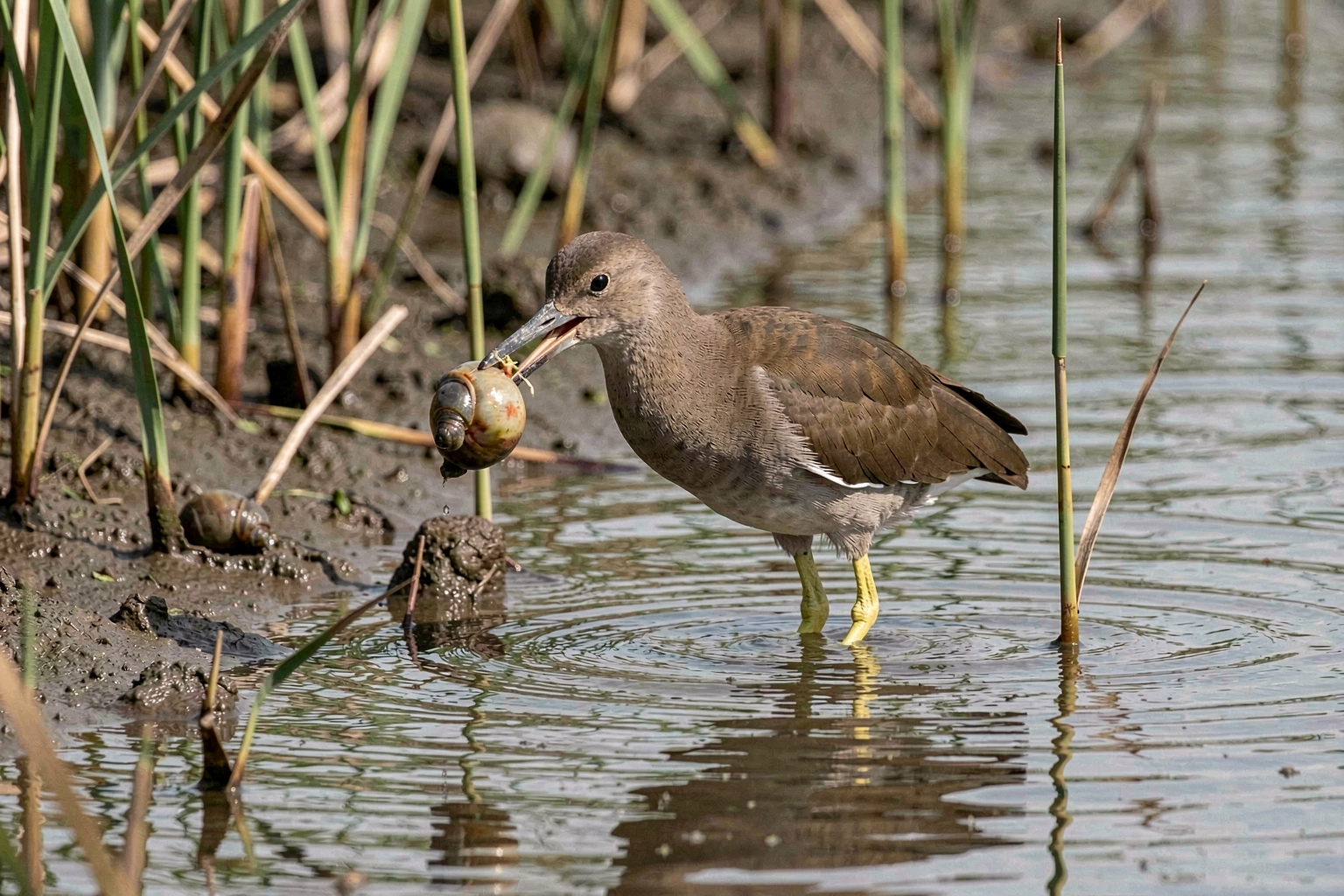
Florida has five apple snail species total: one native and four exotic. The native one is the Florida apple snail (Pomacea paludosa), found throughout peninsular Florida. The most problematic exotic is the island apple snail (Pomacea insularum), first introduced in Palm Beach County in 1989 via the aquarium trade and now established across most of the state. These snails are aquatic and prefer shallow, slow-moving freshwater like marshes, ponds, canals, and wetland edges.
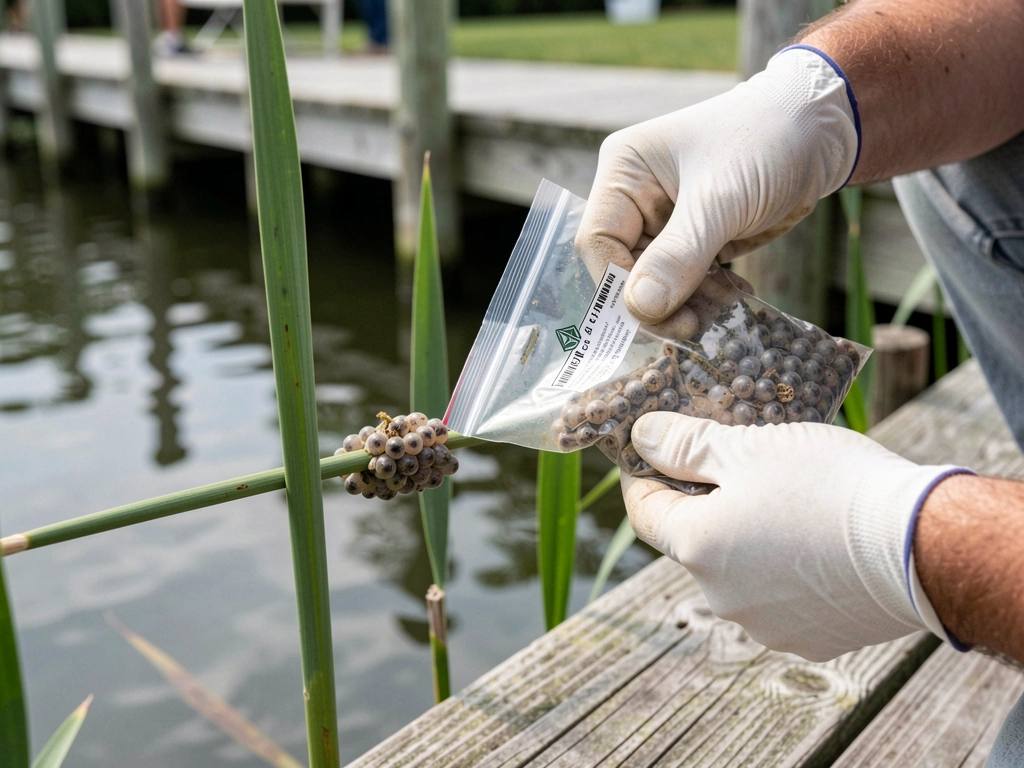
The easiest way to confirm apple snails are present is to look for their egg masses. Apple snails lay grape-like clusters of eggs on solid surfaces just above the water line, things like cattail stems, dock pilings, rocks, or even the waterline of a bulkhead. Egg mass color varies by species: white, pink, or reddish-pink depending on which species laid them. If you see these clusters on anything sticking out of the water, apple snails are there. You do not need to catch the snail to confirm the problem.
Apple snails thrive in warm, vegetated freshwater. They play an important role in wetland food webs as a prey species, which is precisely why certain birds have evolved to depend on them. The snails can reach golf-ball size, making them a worthwhile meal for a bird that knows how to handle them.
Birds that eat apple snails in Florida
Two bird species in Florida eat apple snails as a primary or near-exclusive food source. A handful of other animals, including raccoons, turtles, and alligators, also prey on them, but if you are asking specifically about birds, these are your two.
Limpkin
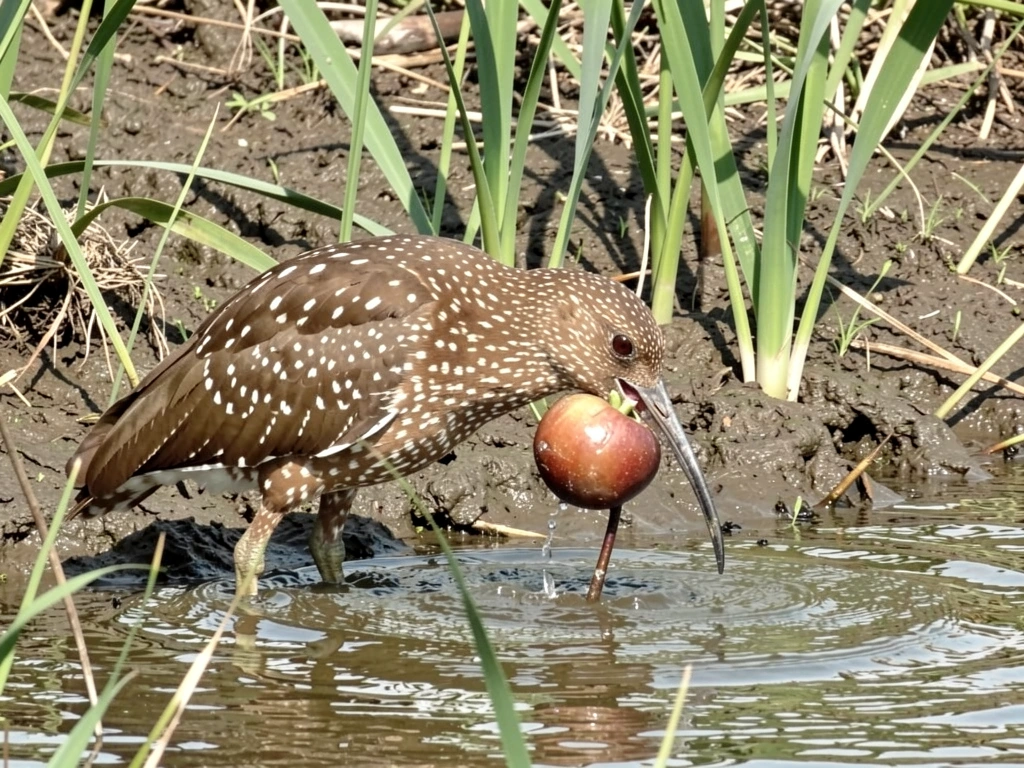
The limpkin (Aramus guarauna) is the bird most people encounter when they have apple snails near a residential or semi-rural water body. Its diet is dominated by apple snails, and it has a very specific feeding behavior: it hunts in shallow water, finds a snail, carries it to land or extremely shallow water, positions it opening-face-up, and extracts the snail using its slightly curved bill. If you see a large brown-speckled wading bird methodically working the shoreline and disappearing with something in its bill, that is almost certainly a limpkin.
Limpkins are not endangered and are found throughout Florida, particularly in central and south Florida. They are loud, often calling at dawn and dusk with a distinctive wailing cry. They are the most practical natural predator for homeowners dealing with apple snail issues because they are relatively common, they show up on their own where snails are plentiful, and there are no special legal restrictions on simply leaving them alone to do their work.
Snail kite
The Everglade snail kite (Rostrhamus sociabilis plumbeus) is a raptor that eats apple snails almost exclusively. Research has confirmed it as the most specialized apple-snail predator in Florida, with apple snails documented as its sole reliable food source. Snail kites are found in larger freshwater wetlands, particularly in the Everglades system, Lake Okeechobee, and surrounding areas. They have even expanded their range northward as the invasive island apple snail spread through the state.
Here is the critical point about snail kites: they are federally endangered under the Endangered Species Act and protected under Florida law. You cannot take any action intended to attract, disturb, or interfere with them, especially near active nests. USFWS recommends staying at least 500 feet from any active snail kite nest. This is not a suggestion. If you see a snail kite working your waterway, that is genuinely exciting and you should watch from a distance, but you should not attempt to manage that bird's behavior or presence.
How to tell which predator bird you're seeing
These two birds look and behave very differently. Here is a quick reference to help you confirm which one is visiting your water.
| Feature | Limpkin | Snail Kite |
|---|---|---|
| Size | About 26 inches, similar to a large heron | About 15 inches, smaller raptor |
| Coloring | Dark brown with white streaks and spots | Male: slate gray with red face; Female: brown with streaked underparts |
| Bill shape | Long, slightly curved, yellowish | Short, strongly hooked (like a hook) |
| Flight style | Flaps with legs dangling, rarely soars | Soars and glides over water, dips to snatch snails |
| Feeding behavior | Wades in shallow water, carries snails to shore | Snatches snails from water surface mid-flight |
| Typical habitat | Freshwater edges, marshes, ponds, canals | Large open freshwater marshes, Everglades system |
| Sound | Loud, piercing wail, especially at night/dawn | Relatively quiet |
| Legal status | Not threatened or endangered | Federally and state endangered |
If the bird is wading along the edge of your pond and walking to a nearby bank to eat, it is a limpkin. If it is gliding low over open water and dipping down to grab something, you may be watching a snail kite. Location matters too: snail kites are rarely seen around residential ponds. They need large, open wetland systems. If you are in a backyard or small canal setting, assume limpkin until proven otherwise.
How to attract the right birds (and what not to do)
Limpkins find apple snails on their own when conditions are right. Your job is not to place a limpkin somewhere, it is to make your water body a place where limpkins want to spend time. These birds need a few specific things.
What helps attract limpkins
- Shallow water margins: limpkins hunt best where water is 6 inches or less deep at the edge. If your pond drops steeply right at the bank, they will struggle to forage.
- Emergent vegetation: cattails, pickerelweed, and similar plants give limpkins cover and also provide perfect egg-laying surfaces for apple snails, so snails and limpkins tend to co-locate.
- Minimal human disturbance near the water's edge: limpkins are somewhat tolerant of people but will abandon a site if dogs, foot traffic, or loud activity constantly push them out.
- Access to land just above the water line: limpkins need a place to carry snails and extract them. A gentle slope or muddy bank edge works perfectly.
- Do not remove all snails at once if you want the birds to stay: limpkins need an ongoing food supply. If you chemically wipe out every snail in one go, there is nothing left to attract them.
What to avoid
- Do not release apple snails from aquariums or move them from one water body to another. FWC specifically advises against releasing captive snails in the wild, and USDA APHIS restricts interstate movement of Ampullariidae species. You could make an existing problem much worse.
- Do not attempt to handle or relocate snail kites. Period. They are federally protected and any disturbance to active nests is a federal violation.
- Do not use pesticides or copper-based molluscicides in your waterway without confirming legality and consulting FWC or a licensed applicator. Broad-spectrum chemical control can harm native snail populations that limpkins and kites need.
- Do not add aggressive waterfowl like muscovy ducks hoping they will eat snails. They will not help and will complicate the habitat for birds that actually eat snails.
- Do not block natural water flow or radically alter water levels without checking with your local water management district, as this can harm both apple snail habitat and bird foraging conditions in ways you did not intend.
Practical next steps for controlling apple snails
Relying entirely on birds for apple snail control is realistic only in smaller, accessible water bodies where limpkins are already active or likely to visit. For most homeowners with a pond or canal edge, you will want to combine bird-friendly habitat management with direct removal. Here is what to do.
- Confirm the problem first. Look for egg masses above the water line. Pink or reddish-pink clusters (island apple snail) and white clusters (Florida apple snail) are both visible without getting in the water. Take a photo and note the location.
- Remove egg masses by hand. This is the most effective and lowest-risk control method, confirmed by UF/IFAS. Scrape clusters into a sealed bag and dispose of them in the trash, not back into the water or onto land near the water. Do this consistently over several weeks, especially in spring and summer when snails lay most actively.
- Make the shoreline limpkin-friendly. Reduce steep drop-offs at the water's edge if possible, allow some emergent plants to remain, and keep foot traffic and pet disturbance away from the margins during early morning and evening when limpkins are most active.
- Monitor for limpkin activity. Once apple snails are present and habitat is accessible, limpkins often appear within a few weeks, particularly in central and south Florida. Listen for their call at dawn.
- Document what you are seeing. Keep a simple log of egg mass density and bird visits. This helps you tell whether the situation is improving, staying the same, or getting worse, so you know when to escalate.
Physical removal of egg masses and snails is consistently the most effective management tool available to homeowners. Birds help, but they are not fast enough to outpace a prolific snail population on their own without some human assist.
When to call local wildlife or use non-bird options
If the infestation is large, spreading quickly, or affecting agricultural or restoration land rather than a backyard pond, you need to escalate beyond egg-mass removal and habitat tweaks.
Contact FWC if you suspect an invasive apple snail species is spreading to a new area, or if you want guidance on legal control methods for your specific situation. FWC's Nuisance Wildlife and Nonnative Species staff can advise on what is permitted and whether your situation qualifies for any managed removal assistance. They can also confirm species identification if you are not sure what you are dealing with.
Contact your regional water management district (South Florida Water Management District, St. Johns River Water Management District, or whichever applies to your area) if the issue is tied to canal systems, flood-control infrastructure, or larger wetland parcels. These agencies coordinate apple snail monitoring as part of broader environmental reporting and may have active management programs in your area.
If you observe what you believe is a snail kite nesting nearby, the right move is to note the location and report it to FWC or USFWS. Do not disturb the nest, do not approach within 500 feet, and do not publicize the exact location on social media in a way that could bring a crowd. These birds are genuinely rare and the nest information is useful to wildlife biologists tracking the population.
For larger-scale suppression research, USGS has developed and piloted apple snail suppression protocols at national wildlife refuges that combine physical destruction with targeted approaches. This level of management is not something a homeowner implements independently, but knowing it exists means you can point to it when working with a land manager or refuge contact if you are dealing with a more significant infestation on managed land.
The bottom line: limpkins are your most practical, naturally occurring bird-based solution in Florida. They will show up on their own if snails are present and habitat allows. Support them with accessible shorelines and reduced disturbance, knock down the snail population yourself with consistent egg-mass removal, and call FWC or your water management district when the problem is bigger than a shovel and a trash bag can handle.
FAQ
Besides limpkins and snail kites, can other Florida birds eat apple snails?
Yes, but typically not as a primary food source. Birds like herons and egrets may take opportunistic snails, but they usually will not focus on apple snails enough to control an active egg-and-snail population. If your observations show methodical shoreline feeding centered on snails, limpkin or snail kite behavior is more likely.
How can I tell if the bird is eating apple snails versus just hunting something else?
Look for the feeding pattern, not just the bird species. Limpkins typically carry a snail and then eat it with the opening facing up, often working the same shallow shoreline repeatedly. Snail kites usually skim low over open water and drop sharply at moments, then disappear from view while handling the snail.
Will leaving a limpkin alone actually reduce the apple snail problem, or do I still need to remove egg masses?
Egg-mass removal is usually still necessary. Birds can reduce some snails, but apple snails lay new egg masses reliably, so without removing eggs, the population can rebound faster than birds can consume them. Use birds as an added pressure while you keep egg clusters knocked down on a schedule.
What should I do if I see a snail kite around my property?
Watch from a distance and do not try to encourage it, chase it off, or modify habitat with the intent to influence its behavior. If it appears to be nesting or using a consistent feeding area, report the observation to the right state or federal wildlife contact so biologists can assess what is happening.
How close is too close to a snail kite nest?
A safe rule is to stay well beyond a typical nest buffer, at least 500 feet from any active snail kite nest. Avoid approaching for photos, using drones, or bringing others to the nest area, since added disturbance can affect nesting success.
Do apple snail egg masses always look the same color?
No. Egg masses can be white, pink, or reddish-pink depending on the apple snail species and what conditions they were laid in. Color alone is not enough to identify the species, so treat any consistent grape-like cluster above the waterline on stable surfaces as a sign apple snails are present.
Is it possible that what I am seeing is a different snail or insect egg mass?
It can be confused, especially if egg clusters are small or attached to unusual surfaces. Apple snail eggs are typically laid in dense, grape-like clusters on solid material just above the water line. If you are uncertain, take a clear photo for identification support rather than removing everything based on guesswork.
When should I remove egg masses for best results?
Remove them as soon as you spot fresh clusters, before they hatch. Recheck every few days during warm weather, since new egg masses can appear quickly. If you wait weeks between checks, bird predation and your manual removal may not keep pace with reproduction.
Does habitat management for limpkins apply to every pond or canal?
It helps most when you have accessible, shallow shoreline and minimal repeated disturbance. If your water body has steep banks, constant human traffic, or heavy shoreline mowing right up to the edge, limpkins may not stay. In those cases, focus more on direct removal and work with local agencies if the site is part of a managed canal system.
If my apple snail issue is spreading through a larger canal or multiple properties, who should I contact first?
Start with FWC for invasive species guidance and permitted control options, especially if you suspect island apple snails or another nonnative species. For canal systems and flood-control infrastructure, also contact your regional water management district, since they coordinate monitoring and may have existing management or reporting processes.
Can I use birds as the only solution if I cannot remove egg masses easily?
For many homeowners, relying on birds alone is unlikely to keep snail numbers low enough. If manual removal is difficult, the next best step is to combine limited removal with habitat changes that make feeding conditions favorable, and then escalate to FWC or a water management agency if the scale is beyond a backyard pond.
What should I do if I am not sure whether the bird I saw was a limpkin or a snail kite?
Use both movement and setting. Limpkins are more likely along residential edges and shallow banks, walking and working the shoreline. Snail kites are rarer around small ponds, often feeding over more open wetland water and showing a low, gliding approach before dipping to grab prey. If still uncertain, report the sighting to help confirm identification.
Next Articles
Will a Squirrel Eat or Kill a Bird? What to Do
Learn if squirrels eat or kill birds, how to spot their signs, and stop them with feeder and yard protection steps.
What Bird Eats Snakes? Top Species and How to Spot Them
Find the main snake-eating birds by region and spotting signs, plus safe steps to confirm predation near you.
What Animal Eats a Bird? Identify Predators Fast
Identify the animal that eats birds using evidence like claw marks, timing, and remains, plus quick backyard prevention