Bird saliva is not good for you, and you should not treat it as a health tonic or a harmless substance. Whether you are touching wild birds at your feeder, cleaning a birdbath, or handling a pet parrot, bird saliva and related secretions can carry bacteria, parasites, and respiratory pathogens that pose real risks to people and pets. The honest answer is: avoid direct contact where you can, and when you cannot, clean up properly.
Is Bird Saliva Good for You? Risks and Safer Tips

Maya Bennett
19 May 2026
What people actually mean by "bird saliva" (and why it comes up)
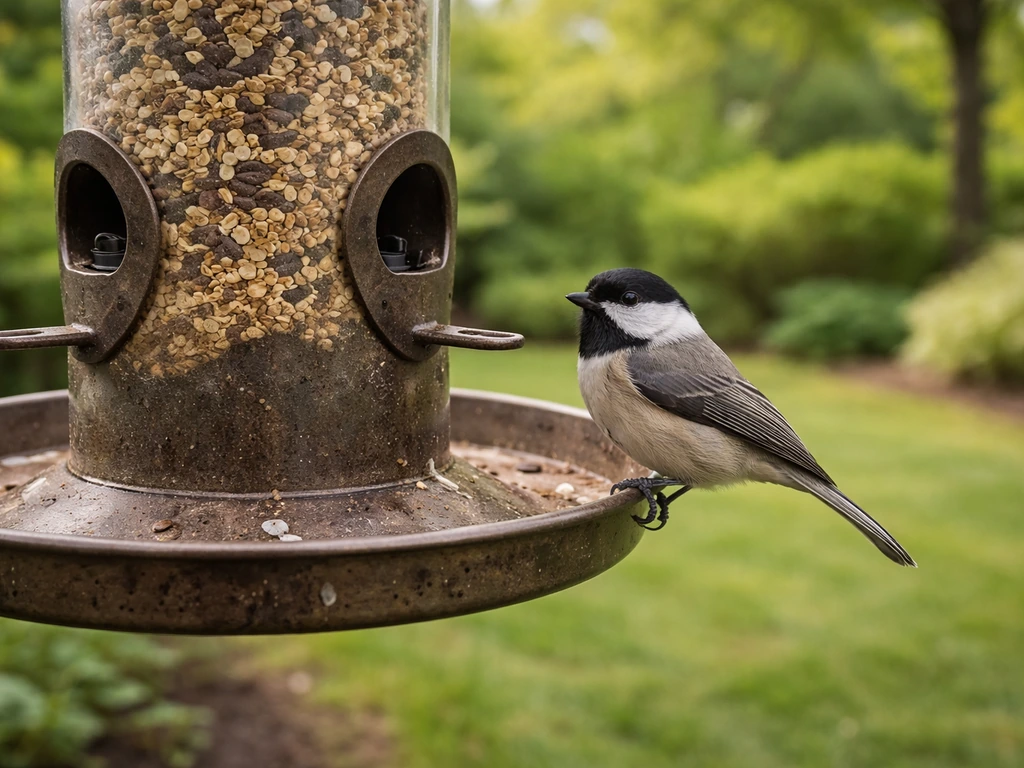
Most people asking this question are not thinking about bird spit in isolation. They are thinking about one of a few very common scenarios: a wild bird bit or mouthed them at a feeder, a pet parrot or cockatiel preened their finger or landed near their face, they touched a feeder surface or nesting material covered in bird droppings and moisture, or they are curious about bird's nest soup, a dish made using the dried saliva of cave swiftlets. Each of these represents a genuinely different level of exposure, but the thread connecting them is the same: bird oral and respiratory secretions are not sterile, and they mix constantly with droppings, feathers, and contaminated surfaces in ways that make the risk higher than most people expect.
There is also a related question worth flagging here: what is a bird saliva drink? Some readers have come across the term in the context of swiftlet nest beverages or traditional health products. A swiftlet nest “bird saliva” beverage is different from the nectar-drinking birds many people imagine nectar from flowers. That is a real thing with its own separate considerations, but for the average backyard birder or pet owner, the far more pressing question is about day-to-day contact, not specialty food products.
Potential benefits vs. realistic value: let's be honest
The main claimed benefit you will see associated with bird saliva is from swiftlet nests, where the saliva is traditionally thought to have restorative or immune-boosting properties. Some research has looked at glycoproteins in swiftlet nests, but the evidence for human health benefits is weak and the studies are small. For practical purposes, if you are a backyard birder or pet bird owner, none of this translates to any benefit from casual contact with bird secretions around your feeder or cage. If you are wondering how much milk thistle to give your bird, the safest choice is to focus on proper veterinary guidance instead of any treatment based on bird secretions casual contact with bird secretions. There is no plausible mechanism by which a bird licking your finger or pecking at your hand delivers a health benefit, and the contamination risk outweighs any theoretical upside by a wide margin. Because bird saliva is not known to be a safe ingredient for people, it is also not something you should treat as a health beverage like milk health benefit.
The same logic applies to the idea that "natural" environments like bird feeders are somehow health-positive spaces just because they feel wholesome and outdoor. Being around birds is great for your mental health and for nature connection, but that benefit comes from the watching, not the touching.
The real risks: what bird saliva and feeder surfaces can carry
Bird saliva does not exist in a clean bubble. It mixes with respiratory secretions, droppings, feather dust, and contaminated food and water surfaces. The pathogens below are not rare exotic threats. They are the ones public health agencies flag specifically for people who interact with birds regularly.
Psittacosis (Chlamydia psittaci)
This bacterial infection is one of the top concerns for pet bird owners in particular. The CDC notes that the most common way people get it is by breathing in dust that contains dried bird droppings or secretions, not necessarily from a direct bite or saliva contact. An infected bird can shed the bacteria even when it looks completely healthy. Symptoms in people typically resemble a flu or atypical pneumonia. The incubation period is roughly 5 to 14 days after exposure.
Campylobacter
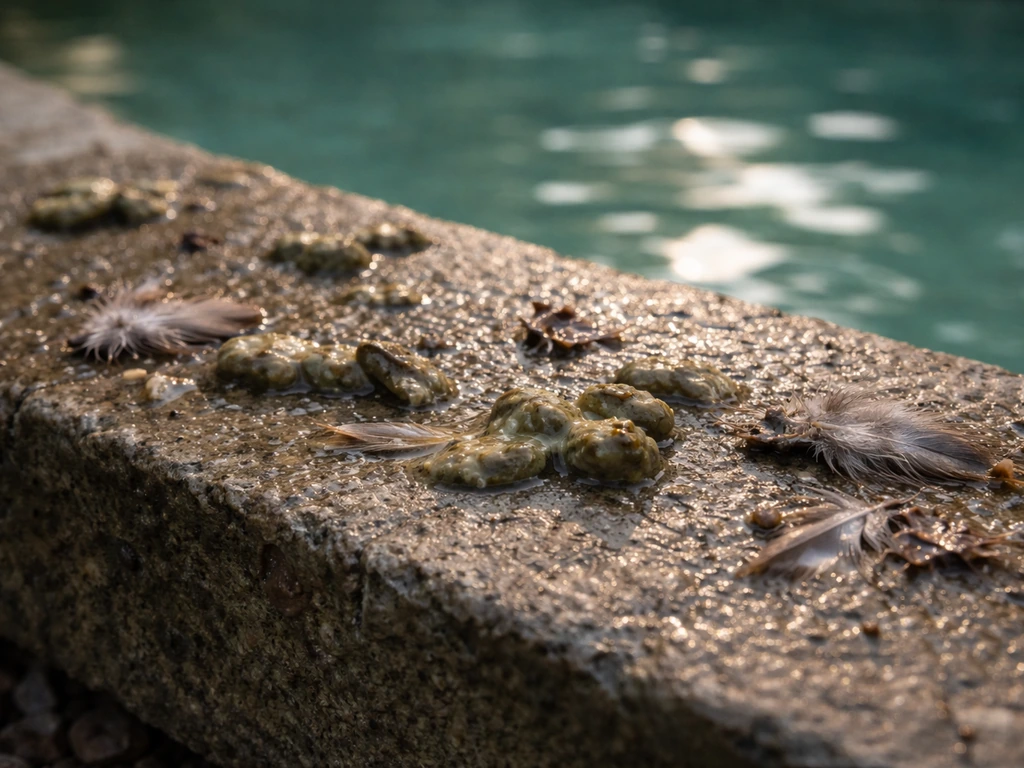
Birds can carry Campylobacter without showing any signs of illness at all. The CDC estimates around 1.5 million human Campylobacter infections per year in the U.S., and contact with animals, their food, water, droppings, and contaminated surfaces is a recognized route. If a bird mouths food near you, splashes water from a bath onto a surface your hand touches, or you clean a feeder without gloves, there is a genuine pathway for exposure. If you are wondering which bird can drink salt water, that is a different topic from handling bird saliva, and the key risks still come from contact and hygiene. If you are wondering whether the drinking bird needs water to function properly, the key is to keep the water source filled so it continues cycling safely and reliably does the drinking bird need water.
Salmonella and E. coli
Waterfowl droppings in particular can contain Salmonella, E. coli, Campylobacter, and Cryptosporidium, according to CDC guidance on birds around pools. These are not just waterborne threats either. Any bird droppings on a feeder surface, birdbath rim, or nesting material can harbor these organisms, and they can survive on hard surfaces long after the visible mess dries.
Cryptosporidium
The CDC explains that Cryptosporidium can infect many vertebrate hosts including birds, and that infected animals shed oocysts in feces that are hardy, immediately infectious, and can contaminate water, food, soil, and surfaces. The relevance for feeder hygiene: dried droppings around feeders, birdbaths, and ground feeding areas are a realistic source, especially in wet conditions.
Avian influenza (bird flu)
The CDC states that human bird flu cases most often result from direct, unprotected contact with infected birds or contaminated materials, including saliva, mucus, and feces. The good news: the New York State Department of Health notes there have been no known human cases from casual contact with wild bird droppings alone. But the guidance is still to minimize contact and always wash hands, because sick or recently dead wild birds at a feeder represent a higher-risk situation.
Safe handling for backyard birders and pet owners: what to do today
Most of these risks are very manageable with straightforward habits. You do not need to stop feeding birds or rehome your pet parrot. You just need a consistent routine.
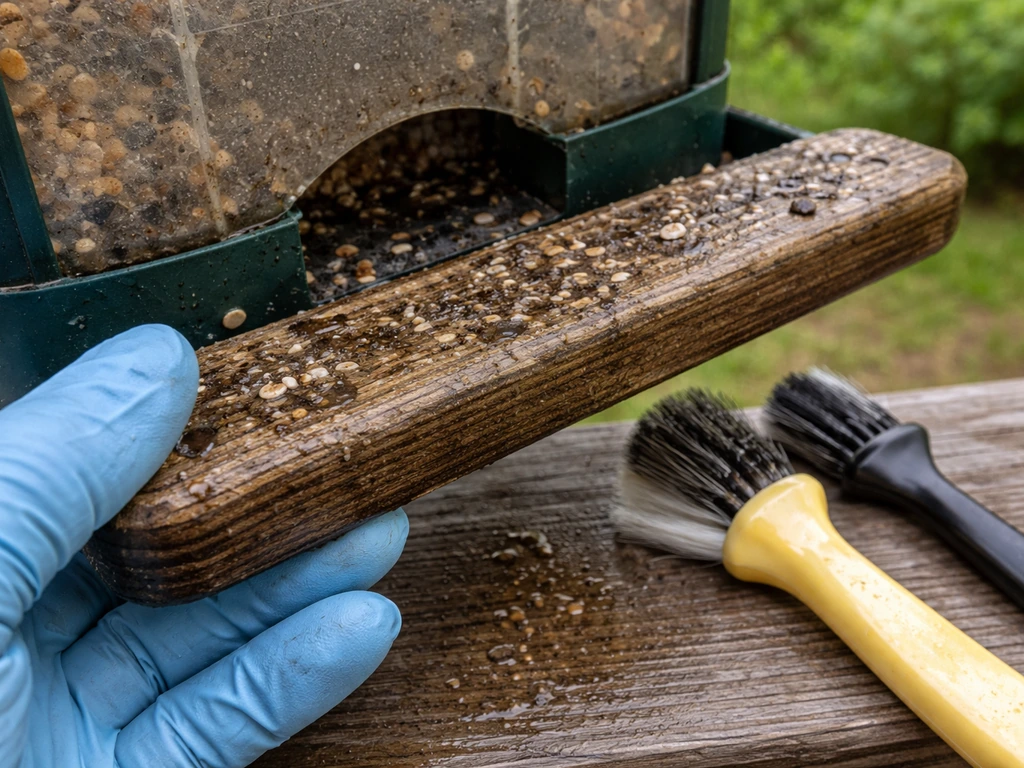
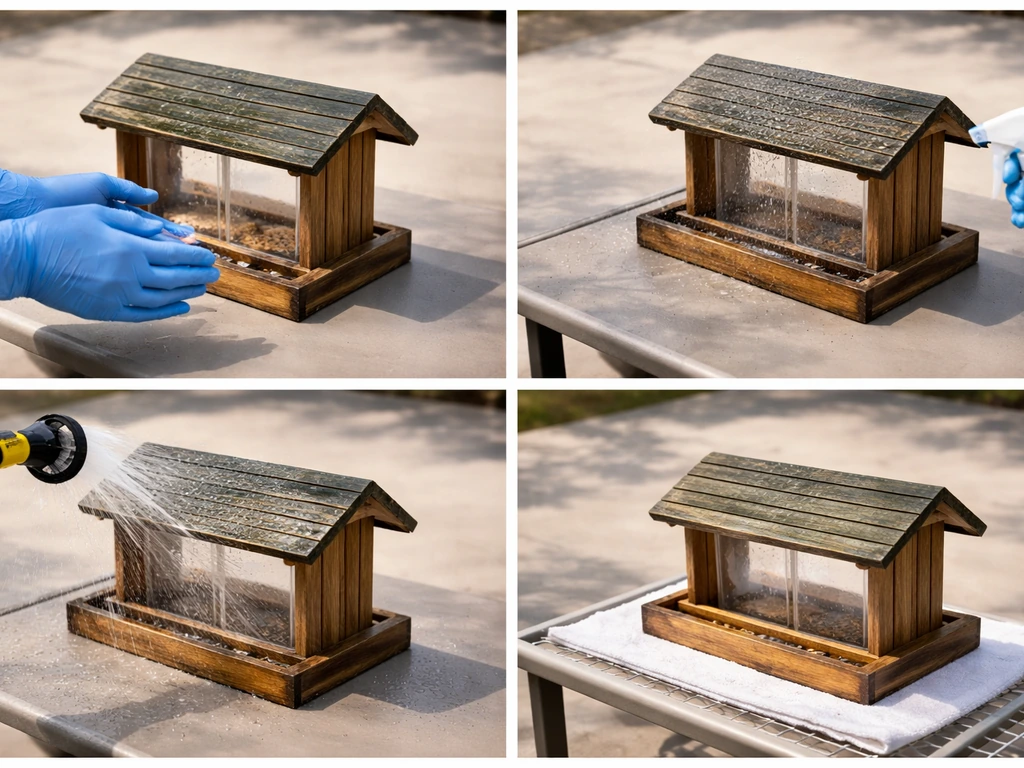
- Wear disposable gloves every time you clean feeders, birdbaths, or cage surfaces. The CDC recommends this specifically for bird hobbyists, and it is the single most important habit you can build.
- Wash your hands with soap and water after any contact with bird food, feeders, birdbaths, or birds themselves, even if you wore gloves. The CDC makes this recommendation explicitly for wild bird contact.
- Do not touch your face, mouth, or eyes after handling birds or feeder equipment before washing your hands.
- Before cleaning feeders or cages, wet the surfaces with water or a disinfectant solution first. This is a CDC-recommended step specifically to reduce airborne dust and aerosolized dried secretions, which is how psittacosis transmission most often happens.
- Soak cleaned feeders and baths in a solution of 1 part household bleach to 9 parts water for at least 10 minutes. Both the CDC and Canada's government guidance recommend this ratio. Rinse thoroughly and allow to dry completely before refilling, as the U.S. Fish and Wildlife Service advises.
- Clean your feeders and birdbaths at least every two weeks, or more often if you notice buildup, sick birds, or heavy traffic. Canada's government guidance specifically recommends the two-week interval.
- For pet birds, clean food and water bowls daily. The CDC lists this as a key step in reducing psittacosis exposure.
- Dispose of old or wet seed promptly. Spoiled seed becomes a breeding ground for bacteria and mold, and birds picking through it and then visiting your feeder transfer contamination to surfaces you touch.
When the risk is higher: situations that deserve extra caution
Most routine feeder interactions carry low risk if you follow basic hygiene. But there are specific situations where the exposure is meaningfully higher and you should be more deliberate.
- Handling sick or recently dead wild birds: This is the highest-risk scenario for avian influenza and other pathogens. Use gloves, avoid touching your face, and report unusual numbers of dead birds to your local wildlife agency.
- Heavy feeder buildup after wet weather: Moist, accumulated droppings and seed debris are a concentrated source of bacteria and parasites. Clean up rather than waiting for rain to do it.
- Cleaning pet bird cages without wetting surfaces first: Dry-scraping a cage releases aerosolized particles from dried droppings and secretions, which is exactly the transmission route for psittacosis.
- Children handling birds or feeder areas: Kids are more likely to touch their faces and less likely to wash hands reliably. Keep young children away from direct feeder cleaning and supervise any bird handling closely.
- Immunocompromised individuals: People undergoing chemotherapy, living with HIV, or on immunosuppressive medications are at significantly higher risk from Cryptosporidium, Salmonella, Campylobacter, and psittacosis. These individuals should consider having someone else handle feeder cleaning, or use full PPE including a face mask when doing so.
- Pets licking feeder areas, birdbaths, or ground feeding spots: Dogs and cats that lick contaminated surfaces or eat droppings can become infected and then transfer organisms to people through normal pet contact. Keep pets away from active feeder zones where possible.
Safer ways to enjoy birds without the contact risks
The goal here is not to scare you away from birds. It is to redirect the energy into low-risk, genuinely rewarding activities.
- Set up feeders at a distance that allows great viewing without encouraging hand-feeding or direct contact. Tube feeders on poles work well for this.
- Use a dedicated brush or tool for feeder cleaning that never goes near your kitchen or food prep areas.
- Plant native shrubs and trees that provide natural food sources like berries, seeds, and insects. This reduces feeder-surface contamination risk while genuinely helping bird populations.
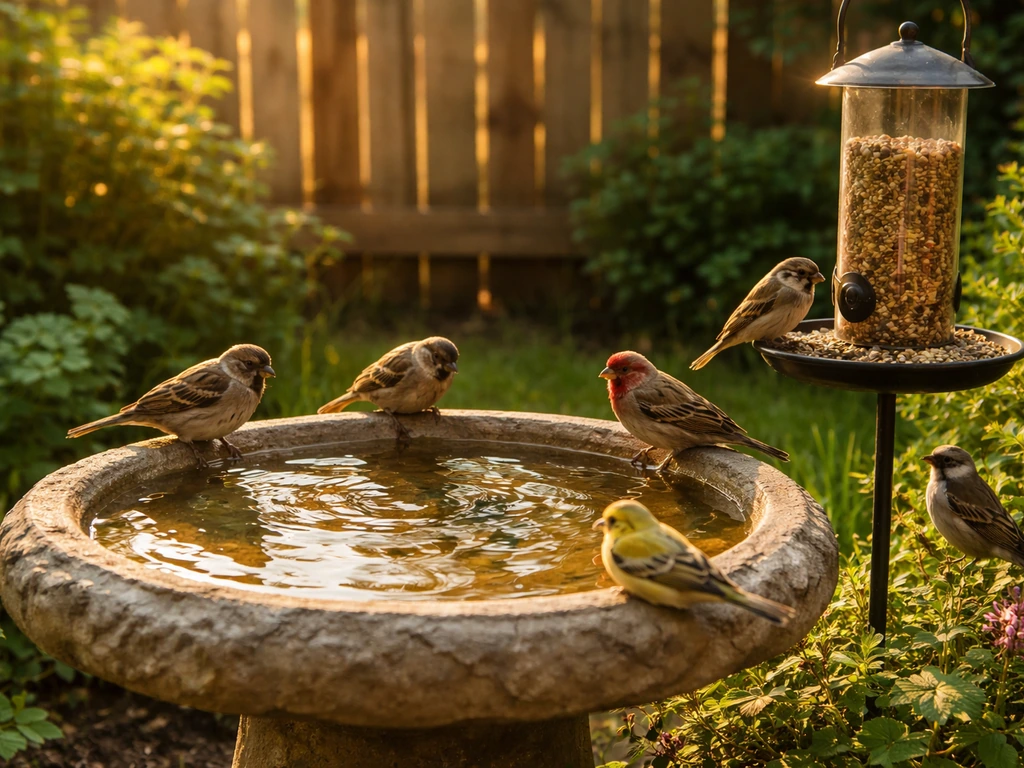
- Provide a birdbath with a dripper or mister, which birds love and which you can clean easily on a routine schedule.
- If you want to support birds directly, contribute to habitat restoration, nest box programs, or native plant initiatives in your area. These have real ecological value and zero saliva-contact risk.
- For curiosity about what birds eat and drink (including nectar-drinking species), there is a lot of fascinating biology to explore through observation and reputable wildlife guides rather than direct handling.
Myth-busting: common misconceptions about bird bodily fluids and feeder safety
Myth: "My bird looks healthy, so it cannot be spreading anything."
False. Both psittacosis and Campylobacter can be shed by birds that show zero visible signs of illness. A bird that looks perfectly healthy at your feeder or in your home can still be shedding bacteria in its droppings and secretions. The CDC is clear on this point for psittacosis specifically: infected birds without signs of illness can still transmit the bacteria to people.
Myth: "Feeders dry out between visits, so the pathogens die off."
Not reliably. Cryptosporidium oocysts in particular are described by the CDC as hardy and immediately infectious. Many bacteria survive on dry surfaces for longer than you would expect, especially in the micro-environments created by accumulated seed hulls and debris at the base of a feeder. Dry does not mean clean.
Myth: "Bird's nest soup and swiftlet saliva products prove bird saliva is healthy."
This is a category error. Even if you accept the best-case claims about processed swiftlet nest products (which are harvested, dried, and prepared very specifically), that has nothing to do with casual contact with saliva from wild birds or pet birds in everyday settings. You cannot extrapolate from a traditional food product to a conclusion that bird spit at your backyard feeder is safe or beneficial.
Myth: "Washing hands once after cleaning is enough if I was quick."
Handwashing technique and timing matter more than speed. Use soap and water, lather for at least 20 seconds, and do it every single time, not just when you feel like your hands got visibly dirty. The CDC's guidance on psittacosis, bird flu, and general wildlife contact all emphasize this as a non-negotiable step, not an optional one.
Myth: "Only exotic or imported birds are risky."
Native wild birds at your backyard feeder, including house sparrows, finches, starlings, and mourning doves, can and do carry Campylobacter, Salmonella, and other pathogens. Feeder environments concentrate birds from multiple locations and create shared contact surfaces. A sick bird visiting your feeder once can contaminate that surface for every subsequent visitor, and for you when you clean it.
Quick reference: feeder hygiene routine
| Task | Frequency | Key Detail |
|---|---|---|
| Clean feeders and birdbaths | At least every 2 weeks | Bleach solution: 1 part bleach to 9 parts water, soak 10 minutes, rinse thoroughly, dry fully before refilling |
| Wash hands after bird contact | Every time | Soap and water, 20 seconds minimum |
| Wear gloves for cleaning | Every cleaning session | Disposable gloves; discard after each use |
| Wet cage/feeder surfaces before scrubbing | Every time | Reduces aerosolization of dried droppings and secretions |
| Clean pet bird food and water bowls | Daily | Reduces bacterial buildup and psittacosis risk |
| Remove old or wet seed | As soon as noticed | Wet seed breeds bacteria and mold quickly |
| Report sick or dead wild birds | Immediately | Contact local wildlife agency, especially clusters of deaths |
FAQ
What should I do immediately if a bird’s saliva or spit gets on me?
If bird saliva gets on your skin, rinse with running water first, then wash with soap and water right away. Avoid scrubbing into broken skin. If it contacts your eyes, flush with clean water or saline for several minutes and seek medical advice if there is irritation or vision changes.
Is the risk high if I only had brief contact with bird droppings or spit?
If you only touched a feeder once and did not touch your mouth or eyes afterward, your risk is usually lower. The bigger issue is whether you then handled food, ate, or touched your face before washing. Treat any contact involving gloves-off cleaning, droppings, or wet birdbath splash as higher risk.
Does bird saliva exposure become more dangerous if I have a cut or skin irritation?
Yes. If you have an open cut, dermatitis, or frequent hand rubbing, transmission risk is higher because pathogens can enter through compromised skin. Extra caution is to wear disposable gloves for cleaning and avoid touching your face until after you wash thoroughly.
When is it safest to touch things again after cleaning a feeder or birdbath?
After cleaning, wash hands with soap and water before handling your phone, cooking utensils, pets, or your own meals. Many people contaminate themselves by turning off taps, touching doorknobs, or grabbing shared kitchen items right after cleaning.
What protective steps matter most when cleaning bird areas to reduce inhalation risk?
Wear gloves for any task that involves droppings, nesting material, or wet debris, and wash hands after removing them. Use respiratory protection (at least a well-fitting mask) if there is dusty seed hulls or dried droppings, and avoid dry sweeping, which aerosolizes particles.
How can I tell when bird contact is higher risk, even if the bird looks alive?
Do not assume an outdoor bird is safe because it looks healthy or active. The higher-risk scenario is a bird that is sick, shivering, breathing with effort, or found dead, because secretions and droppings may be more likely to contain pathogens.
Are some people at higher risk from bird saliva or secretions around feeders?
For people with asthma, chronic lung disease, or immunocompromised conditions, avoid close, prolonged handling and prioritize distance, ventilation, and protective gear during cleaning. If you feel short of breath after bird-area cleanup, contact a clinician.
Can bird saliva exposure spread to pets, and then to me?
Yes. Any pet can be exposed by licking contaminated feet or surfaces, and then transferring germs to you. After cleaning cages or litter areas, keep pets away until surfaces are dry, and disinfect per the pet-safe product directions.
What symptoms should I watch for after exposure, and when should I seek care?
If you have symptoms such as fever, persistent cough, diarrhea, or flu-like illness within roughly 5 to 14 days after significant bird exposure, call a healthcare provider and mention bird contact and cleaning activities. Early context helps clinicians choose the right tests.
Is swiftlet “bird saliva” the same thing as bird spit from backyard birds, and is it safe?
For the “bird saliva drink” idea, do not treat it as a safe wellness product for casual use. Even if a product is processed, it is not the same as a wild bird licking your hand, and safety claims do not remove the need for caution.
What’s the lowest-effort routine that reduces risk while still feeding birds?
If you want to feed birds, manage hygiene instead of eliminating them: use a separate area for bird food, remove wet or moldy debris, clean feeders regularly, and keep food off the ground where possible. Dry does not mean clean, so follow up cleaning even when nothing looks messy.
Next Articles
Can Bird Drink Milk? Safe Feeding Tips for Backyard Birds
Find out if birds can drink milk, why it can harm, and what to feed instead with safe water and feeder tips.
What Bird of Prey Eats Pigeons: Common Raptors & ID Tips
Which raptors eat pigeons: peregrine, Cooper’s, goshawk, merlin, red-tailed, kestrels, owls; ID tips, risks and how to保护

Which Bird Eats Mice? How to Identify Mouse Predators
Identify which birds eat mice using hunting cues, time of day, calls, and perch habits, plus safe yard steps.