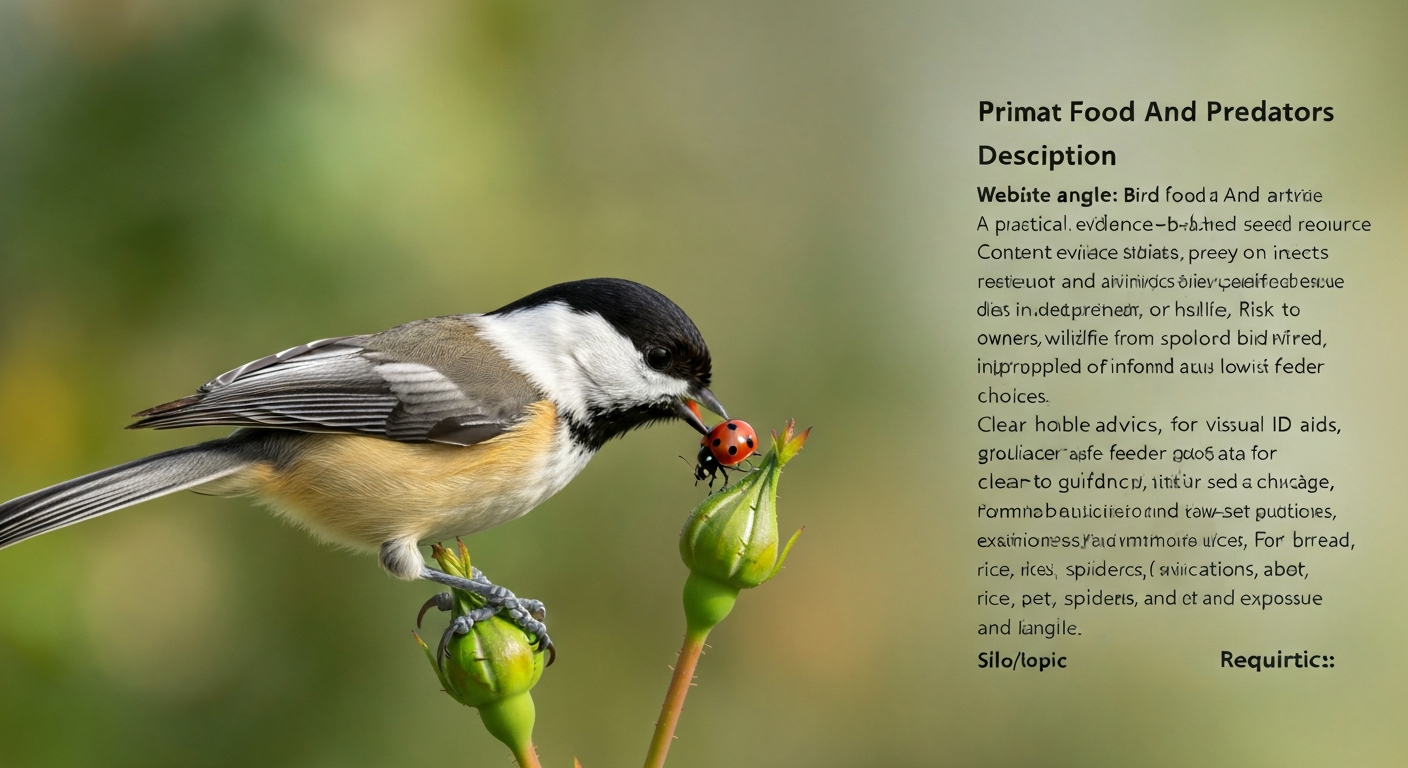
Yes, birds do eat ladybugs, though not as eagerly as they eat softer, less defended insects. Species like chickadees, great tits, tree sparrows, nuthatches, and starlings have all been recorded attacking or consuming ladybirds in field studies and controlled experiments. They do it most during spring and summer when insect demand is highest, and they do it selectively, often rejecting brightly colored individuals after a single bitter taste.
What Bird Eats Ladybugs? Backyard Birds That Prey on Ladybugs

Maya Bennett
13 Jul 2026
Do birds eat ladybugs? The quick answer
Multiple bird species eat ladybugs, but ladybugs are not a preferred food. The chemical defenses these beetles carry, including bitter alkaloids and the reflex bleeding of toxic hemolymph when disturbed, make many birds think twice. That said, hungry birds during the breeding season or birds that haven't yet learned to associate red-and-black coloring with bad taste will absolutely pick one up. The invasive Harlequin ladybug (Harmonia axyridis) carries particularly potent compounds like harmonine and isopropyl methoxy pyrazine, yet researchers have still documented birds attacking it under experimental and field conditions. The blank" rel="noopener noreferrer">Harmonia axyridis (Animal Diversity Web species account) documents the species' chemical defenses such as harmonine and notes studies reporting birds attacking or consuming it despite those compounds. So the practical takeaway for backyard birders: ladybugs are not off the menu, just near the bottom of it.
Why birds sometimes eat ladybugs
Ladybugs use a layered defense system that birds have to work through before deciding a meal is worth it. First comes the warning: that bold red or orange shell with black spots is aposematic coloring, essentially a visual billboard saying 'I taste terrible.' If a bird ignores that and picks one up, the beetle performs reflex bleeding, oozing bitter, alkaloid-laced hemolymph from its leg joints. Many birds drop the beetle immediately and learn to avoid similarly colored ones in future. This learned avoidance is well-documented in behavioral ecology research and explains why experienced adult birds in a yard are less likely to eat ladybugs than naive juveniles.
So why do some birds eat them anyway? A few reasons. Naïve young birds haven't learned the lesson yet. Hungry birds during nestling-feeding season, when protein demand is intense, will sample almost anything. And individual and species-level variation matters: some birds are simply less sensitive to the alkaloids or more willing to tolerate the bitterness. There's also a numbers effect. When ladybug populations spike in late summer or fall before they seek overwintering sites, the sheer abundance of easy-to-find beetles makes them a more likely target even for birds that would normally pass.
Common backyard birds that eat ladybugs
The species most likely to eat ladybugs in a typical North American or European backyard are the same ones that dominate insect-gleaning foraging: small songbirds working through foliage and bark. Here are the ones with the strongest documented or strongly implied connections.
| Bird | Visual ID cues | Foraging style | Ladybug evidence |
|---|---|---|---|
| Black-capped Chickadee | Black cap and bib, white cheeks, gray back, 5 in long | Gleaning leaves and bark; acrobatic hovering | Strong inference; diet is 80–90% insects in summer; small beetles taken regularly |
| Great Tit | Bold black-and-white head, yellow breast with black stripe, 5.5 in | Bark and foliage gleaning, ground foraging | Directly observed attacking Harlequin ladybirds in controlled experiments |
| Tree Sparrow | Chestnut crown, white cheek with black spot, 5.5 in | Ground and low shrub foraging | Observed eating H. axyridis in experimental trials |
| White-breasted Nuthatch | Blue-gray back, white face/underparts, black cap, 5.5 in; creeps headfirst down trunks | Probing bark crevices on trunks and branches | Diet includes small beetles encountered while bark-foraging; seasonal insect switch |
| European Starling | Iridescent black plumage, yellow bill in summer, speckled in winter, 8.5 in | Turf and vegetation probing, highly opportunistic | Broad beetle consumption documented; opportunistic invertebrate forager in lawns |
| House Sparrow | Males: chestnut back, gray crown, black bib; Females: streaked brown, 6 in | Ground foraging, low vegetation | Opportunistic insect consumption; less specialized than Paridae but takes small beetles |
Chickadees deserve special attention here. Their summer diet is 80 to 90 percent insects, and they forage by systematically gleaning foliage and probing bark, exactly the microhabitats where ladybugs rest and hunt aphids. If you've ever watched a chickadee work through a rose bush covered in aphids, it's almost certainly also encountering any ladybugs hunting the same aphids. Nuthatches do something similar on tree trunks, creeping headfirst down bark and picking off anything small enough to swallow, beetles included.
How to spot ladybug predation in your yard
Direct bird-on-ladybug predation is surprisingly hard to photograph, and confirmed records in citizen-science platforms like iNaturalist are relatively rare compared to the sheer number of ladybug sightings. That doesn't mean it isn't happening; it just happens quickly and birds often fly off with or drop the prey in thick cover. Here's what to look for instead.
- Discarded elytra (the hard wing covers) on leaves, fences, or the ground beneath regular bird perches. Ladybug elytra are distinctively shaped and colored and survive digestion or being spat out; finding clusters of them under a favored perch is a strong sign.
- Chewed beetle carcasses on broad leaves, especially near aphid colonies, where ladybugs congregate and birds forage.
- Concentrated chickadee or nuthatch foraging activity on plants hosting aphid infestations. Watch for birds working the same stems repeatedly rather than passing through.
- Increased bird activity in late summer through early fall, when ladybugs aggregate on warm exterior walls and fences before seeking overwintering sites. This congregation makes them briefly far more accessible.
- In a research context, gut and fecal analysis using gas chromatography–mass spectrometry can detect ladybug alkaloid markers in predator samples, but that's a lab tool, not a backyard one.
If you want to document it yourself, set up a phone or camera on a tripod pointed at an aphid-heavy plant and let it run for an hour or two in the morning. Birds are most active in early morning and late afternoon, and foraging intensity picks up around aphid colonies. You won't always catch a ladybug being eaten, but you'll likely see the bird foraging behavior that makes it plausible.
Which birds eat cicadas and stink bugs, and how that compares
The same group of insectivorous songbirds that occasionally eats ladybugs also takes on much larger or more strongly defended prey when the opportunity arises. Cicadas and stink bugs are good comparison cases because they show how opportunistic diet breadth works in practice.
Cicadas, during periodic emergence events, are consumed by an enormous range of birds including robins, crows, red-winged blackbirds, and even raptors. They're soft-bodied, slow, and temporarily so abundant that birds sometimes eat them to the exclusion of almost everything else. The prey switching is dramatic and temporary, driven purely by availability. Ladybugs are the opposite: usually present year-round in lower densities, chemically defended, and hard-shelled, so birds pick at them opportunistically rather than switching their whole diet over. See Do birds eat cicadas? for a detailed look at which species take advantage of cicada emergences.
Stink bugs (family Pentatomidae) present a more direct parallel to ladybugs because they also carry chemical deterrents, in this case compounds that produce their signature odor. Most birds avoid stink bugs for the same reason they avoid heavily defended ladybugs, but some species, including starlings and certain sparrows, will still take them. The key difference from ladybugs is that stink bug defenses are olfactory rather than taste-based, so the deterrence cue is different, and some birds that reject ladybugs might still sample a stink bug before deciding against it, and vice versa. For a quick guide to what bird eats stink bugs, see our short overview on which bird species commonly consume stink bugs.
Insectivores vs. berry-and-insect eaters: who is more likely to eat ladybugs?
Not all insect-eating birds are equally likely to eat ladybugs. The distinction between dedicated insectivores and birds that eat both berries and insects matters quite a bit here, both for how they forage and how they handle bitter or defended prey.
Dedicated foliage and bark gleaners like chickadees, nuthatches, and warblers spend their foraging time in exactly the vegetation layers where ladybugs hunt and rest. They handle small, hard-bodied prey regularly, which makes a ladybug a less foreign object in the beak. Their diet shifts seasonally, heavily insectivorous in spring and summer, more seed- and berry-heavy in fall and winter, so ladybug encounters cluster in the warmer months.
Omnivores that eat both berries and insects, including American Robins, thrushes, and cedar waxwings, forage differently. Robins are mostly ground workers taking earthworms and surface insects, so their contact with ladybugs resting on foliage is lower. Cedar waxwings are predominantly berry eaters with seasonal insect supplements, and they tend to take flying insects rather than beetles on leaves. These birds are less likely to encounter ladybugs regularly, but they're not immune to picking one up during a hungry bout of insect foraging. Birds that eat both berries and insects represent a broader dietary category where ladybug predation is possible but less systematic. For more on which bird eats berries and insects, note that American Robins and cedar waxwings are typical examples of birds that mix fruit and insects in their diet.
When predation spikes: seasons, migration, and breeding
Ladybug predation by birds follows a fairly predictable seasonal pattern once you understand what drives it from the bird side. There are two main peaks: spring through midsummer, and late summer into fall.
The spring and summer spike is driven by breeding. Parent birds feeding nestlings need high-protein food, and insects are the primary source. During this period, chickadees and other Paridae are making hundreds of foraging trips per day specifically to find arthropods. Any small beetle encountered while gleaning a leaf is a potential item to pick up, taste-test, and either swallow or reject. Juveniles leaving the nest in early summer are particularly likely to eat ladybugs because they haven't yet accumulated the learned avoidance that adults develop.
The late summer and fall spike is driven by ladybug behavior, not bird behavior. As temperatures drop, Harlequin ladybugs and some native species aggregate in large numbers on sun-warmed surfaces before seeking overwintering crevices. A wall covered in dozens of accessible ladybugs is a very different foraging opportunity than a single one hidden in foliage. Migrating birds moving through in fall also encounter these aggregations and may sample them, especially young-of-the-year birds on their first migration with no prior experience of the prey.
| Season | Predation driver | Most likely predators | Predation intensity |
|---|---|---|---|
| Spring (Mar–May) | Breeding season; nestling protein demand | Chickadees, nuthatches, warblers | Moderate; insects abundant but ladybugs not aggregated |
| Summer (Jun–Aug) | Peak insectivore activity; naive juveniles fledging | Chickadees, sparrows, starlings, juveniles of many species | Moderate to high; inexperienced young birds sampling widely |
| Fall (Sep–Nov) | Ladybug aggregation on warm surfaces; migration | Starlings, sparrows, migrating songbirds | Can be locally high when aggregations form |
| Winter (Dec–Feb) | Ladybugs dormant/overwintering; birds shift to seeds | Almost none | Very low |
Risks and consequences: what ladybugs, stink bugs, and bad feeder food can actually do to birds
This is where the cautionary side of the topic matters most. Ladybug alkaloids are not just unpleasant, they can be genuinely harmful in quantity. Experimental research by Marples (1989) demonstrated that sustained feeding of certain ladybird species to captive bird nestlings caused lethal or sublethal effects. In practice, a wild bird eating one or two ladybugs is unlikely to be harmed, but a nestling being fed many ladybugs by parents who haven't learned better could face digestive upset or worse. The Harlequin ladybug (H. axyridis) is particularly concerning here because its concentrations of harmonine and IPMP are higher than in many native species.
Stink bugs present a similar risk profile. The chemicals responsible for their odor can cause digestive upset and behavioral aversion, and birds that eat significant numbers, as some blackbirds and starlings do opportunistically during stink bug outbreaks, may show temporary lethargy or reduced activity. There's no strong evidence of mass mortality from stink bug ingestion in wild birds, but it's a real enough concern that many rehabilitators avoid offering stink bugs to bird patients.
Feeder hygiene is a separate but related risk that backyard birders sometimes overlook when focused on what birds are eating in the wild. Spoiled seed, moldy nyjer, or wet millet at a feeder can cause aspergillosis (a fungal respiratory infection) and salmonellosis in feeder birds. These risks are entirely preventable. Clean feeders with a 10 percent bleach solution every two weeks, store seed in airtight containers away from heat and moisture, and remove uneaten seed from platform feeders after rain. If you're attracting insectivorous birds specifically, the feeder itself is less central than the habitat, but any supplemental food source you add carries a hygiene responsibility.
For pet owners, the concern is slightly different. Dogs and cats that eat ladybugs (particularly Harlequin ladybugs in numbers) can experience oral ulceration, drooling, and gastrointestinal upset because the alkaloids are irritating to mucous membranes. This is documented in veterinary literature mostly for dogs that have ingested large numbers of H. axyridis clustering in homes in fall. A pet bird (parakeet, canary, etc.) exposed to a ladybug that wanders into its cage is at low risk from one beetle, but ladybugs should not be offered as a deliberate food source to captive birds.
How to attract insect-eating birds without putting ladybugs at risk
If you want more insectivorous birds in your yard, the single most effective thing you can do is plant native vegetation. Native flowering plants, trees, and shrubs support the specific caterpillar and insect communities that insectivorous birds evolved to eat, far more effectively than non-native ornamentals. An oak tree alone supports hundreds of caterpillar species; a Bradford pear supports almost none. More insects means more bird activity, and that includes incidental ladybug encounters, but the overall prey base is diverse enough that ladybug populations aren't singled out.
- Plant native trees, shrubs, and forbs suited to your region. Focus on species known to support high caterpillar diversity: oaks, native cherries, willows, and native viburnums are consistently high-value choices.
- Leave leaf litter and brush piles. A huge proportion of overwintering insects (including beneficial beetles and lacewings) shelter in leaf litter. Clearing it removes the food base that draws foraging birds in the first place.
- Install a water source. A shallow bird bath with moving water (a drip or small solar fountain) attracts far more species than a still basin. Clean it every two to three days to prevent mosquito breeding.
- Add nest boxes for cavity-nesting insectivores. Chickadees, nuthatches, and wrens will use appropriately sized boxes and immediately begin raising broods that consume enormous quantities of insects in your yard.
- Eliminate or minimize broad-spectrum insecticide use. This removes the prey base that insectivores depend on and can directly poison birds through secondary exposure.
- Avoid fall raking on ladybug aggregation surfaces if you want to protect native ladybug populations. Disturbing overwintering clusters reduces their survival.
Protecting native ladybug populations
It's worth noting that bird predation is a relatively minor pressure on ladybug populations compared to the bigger threats they face. The invasive Harlequin ladybug (H. axyridis) has caused significant declines in native ladybird species across Europe and North America through direct competition and intraguild predation, meaning it literally eats native ladybug eggs and larvae. A 2012 study tracking species distributions showed rapid native ladybird declines following Harlequin establishment. This context matters because it means native ladybug populations deserve active support, and bird activity in your garden is not a meaningful threat to them. The threats worth acting on are pesticide use, habitat loss, and the presence of large Harlequin populations outcompeting native species.
If you're interested in monitoring ladybug populations in your area, projects like iNaturalist and the Lost Ladybug Project accept photo records of ladybug sightings. Contributing observations, particularly of native species, helps researchers track population trends that bird predation studies can't capture at scale.
Safe feeder practices when insectivores are your target birds
Attracting insectivorous birds to a feeder setup requires a slightly different approach than attracting seed-eaters. Most dedicated insectivores, like chickadees and nuthatches, will visit seed feeders for suet and sunflower seeds in winter, but in summer they're out hunting insects and a seed feeder isn't their priority. Here's a practical setup that works for both seasons.
- Offer suet cakes in a wire cage feeder from fall through early spring. Suet is high-fat and meets the energy needs of insectivores when bugs are scarce. Avoid suet with artificial additives or rendered beef fat in warm weather as it can go rancid quickly and cause crop infections.
- Use mealworms (dried or live) on a platform feeder in spring and summer to attract chickadees, bluebirds, and robins. Live mealworms are significantly more attractive to birds but require a container with smooth sides to prevent escape.
- Keep platform feeders dry. Wet seed on an open platform grows mold within 24–48 hours. After rain, remove uneaten seed and let the platform dry before reloading.
- Store all seed in airtight metal or hard plastic containers, not paper bags or open bins. Moisture and warm temperatures degrade seed fats quickly and promote mold growth. Discard any seed that smells musty, looks clumped, or shows visible mold.
- Clean feeders every one to two weeks with a 10 percent bleach solution, rinse thoroughly, and allow to fully dry before refilling. This step prevents Salmonella and Aspergillus buildup that can kill feeder birds.
- Place feeders at least three feet from windows or more than ten feet away to reduce collision risk. Insectivorous birds like chickadees and nuthatches are fast, active fliers that collide with glass more often than slower ground-feeding species.
The bottom line for backyard birders and educators
Birds do eat ladybugs, but it's an opportunistic and selective behavior shaped by the beetles' chemical defenses, the bird's prior experience, and the time of year. Chickadees, great tits, tree sparrows, nuthatches, and starlings are the most documented or strongly implicated species. For more on common insectivorous species and which bird eat insects, see our guide to which bird eat insects. Predation peaks in summer during the breeding season and again in fall when ladybugs aggregate. The risks to birds from eating defended beetles are real but mostly limited to heavy repeated consumption; a bird eating one ladybug is probably fine. The risks from moldy feeder food or spoiled seed are higher, more predictable, and entirely within a backyard birder's control. Focus your effort on native plantings, feeder hygiene, and fresh water, and you'll support healthy insectivore populations while giving ladybugs, native ones especially, the best chance of thriving alongside them.
FAQ
Which backyard bird species commonly eat ladybugs?
Many common backyard insectivores will eat ladybird beetles (Coccinellidae) opportunistically. Frequent predators include chickadees (e.g., Black‑capped Chickadee), nuthatches (Red‑breasted, White‑breasted), titmice, some warblers and flycatchers, European Starlings, and sparrows. Species differ in likelihood: bark‑ and foliage‑gleaning Paridae and nuthatches commonly encounter small beetles while foraging, and omnivores like starlings probe turf and vegetation for beetles.
Do birds actually eat the invasive Harlequin/Asian lady beetle (Harmonia axyridis)?
Yes. Field studies and feeding trials report birds attacking and sometimes consuming H. axyridis despite that species’ chemical defenses. Some species avoid them after bad experiences, but others (or individuals) will eat them, especially when other prey are available or during high insect demand.
Why and when do birds eat ladybugs (seasonal and behavioral context)?
Birds eat ladybugs primarily when insects are abundant—spring through fall—because many backyard insectivores increase insect intake for breeding and feeding nestlings. Foraging method matters: birds that glean foliage, bark, or lawn invertebrates are most likely to encounter ladybugs. During winter, many insectivores switch to seeds/fruit and consume fewer beetles.
How can I recognize ladybug predation in my yard?
Look for discarded elytra (hard wing covers) or chewed beetle fragments beneath perches, concentrated foraging by birds on aphid‑infested plants, or small carcass remains on leaves. Direct predation photos/videos are uncommon but possible. Scientific detection (research use) can include chemical analysis of predator gut or feces for ladybird alkaloid markers.
Are ladybugs toxic to birds or harmful if birds eat many of them?
Ladybugs produce defensive alkaloids and can reflex‑bleed; these chemicals taste bitter and can deter predators. Experimental studies show some aposematic ladybirds can have sublethal or lethal effects when consumed in large amounts (especially for nestlings or naïve birds). In the wild, negative effects are mitigated because birds often learn to avoid unpalatable prey or eat a mixed diet.
Which birds that eat ladybugs also eat cicadas or stink bugs?
Many opportunistic insectivores and omnivores overlap in diet. Flycatchers, starlings, grackles, jays, and many songbirds will take large, seasonal prey like cicadas. Stink bugs and other Hemiptera are also eaten by generalist insectivores. The same species that take beetles by gleaning or probing are often those that will take other invertebrates, depending on size and availability.