No, bird-eating spiders do not routinely eat birds. Despite the dramatic name, the spiders most people are referring to (primarily Theraphosa blondi, the Goliath birdeater, and a handful of other large tarantulas) eat mostly insects, worms, and amphibians. Birds are rare, opportunistic prey, not a regular menu item. If you spotted a large spider near your backyard feeder and worried about your songbirds, you can relax. Here is what is actually going on, and what you should do about it.
Do Bird-Eating Spiders Eat Birds? What They Really Eat

Maya Bennett
16 Apr 2026
What 'bird-eating spiders' really are (and why the name is misleading)
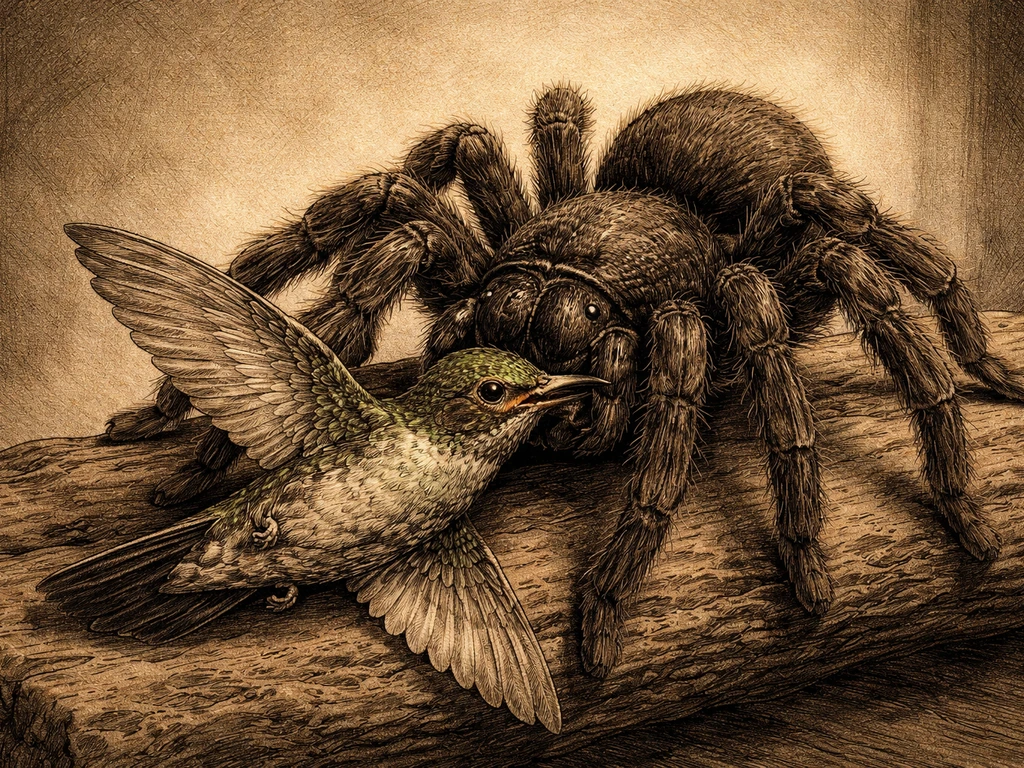
The nickname 'birdeater' traces back to a single 18th-century engraving by naturalist Maria Sibylla Merian, which depicted a large tarantula preying on a hummingbird. That image stuck, and the Theraphosa genus picked up the 'bird eater' label even though the illustration was almost certainly an exaggerated or exceptional event. National Geographic, the Smithsonian, and Audubon have all pointed this out: the name comes from one old drawing, not from any pattern of birds being regularly hunted and eaten.
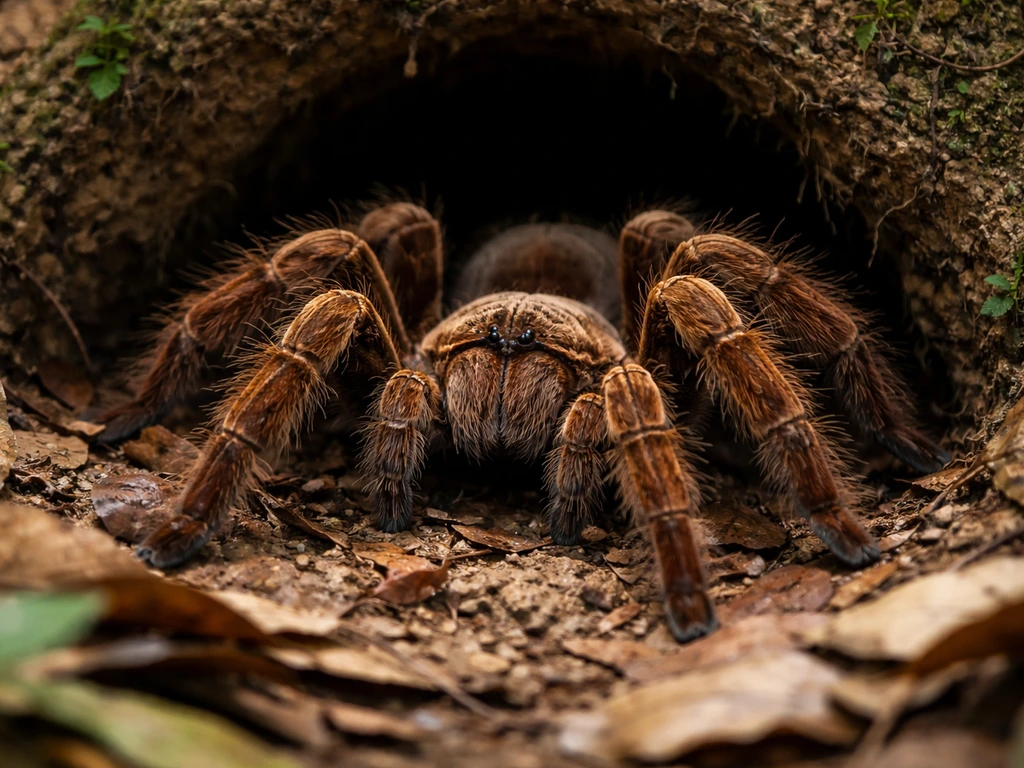
When people say 'bird-eating spider,' they usually mean one of a few large tarantula species. The most famous is Theraphosa blondi (Goliath birdeater), native to the rainforests of South America. It holds the record for the world's largest spider by mass, with a body up to about 12 cm (roughly fist-sized) and a leg span reaching 28 to 30 cm (around 11 to 12 inches), with large venomous fangs. The other species that gets this nickname is Selenocosmia crassipes, the Queensland whistling tarantula, a burrowing ground-dweller native to eastern Queensland. Both species are sometimes kept as pets, both have intimidating common names, and both eat birds far less often than their names imply.
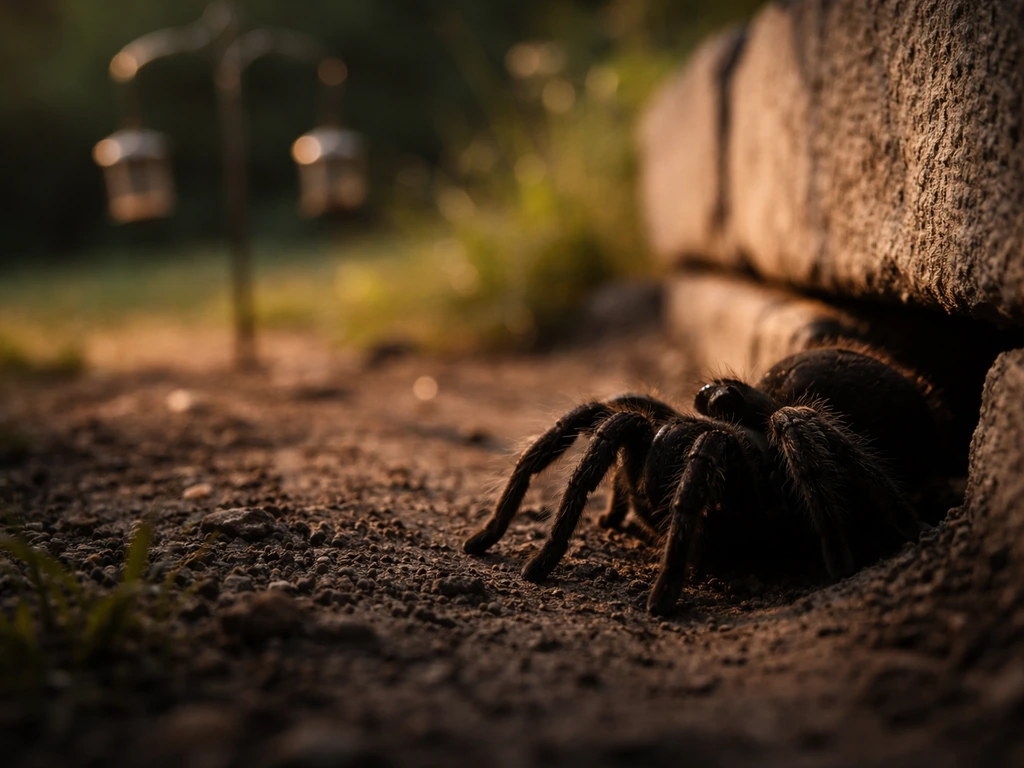
If you are wondering whether bird-eating spiders are found in Australia, the answer is yes specifically Selenocosmia crassipes, which lives in burrows up to about 1 meter deep and can occasionally appear in gardens during heavy rain events that force them to the surface.
What these spiders actually eat day to day
The real diet of a Goliath birdeater is unglamorous compared to the name. In the wild, the diet consists primarily of large arthropods, worms, and amphibians. Insects make up the bulk of meals. Frogs and other small amphibians get taken opportunistically. The spider hunts on the forest floor and lines burrows with silk rather than spinning aerial webs, which tells you a lot about what prey it is realistically positioned to catch: things on or near the ground, not things flying overhead.
Selenocosmia crassipes follows a similar pattern. It is a burrowing ground-dweller, and its name 'bird-eating tarantula' is more of a dramatic moniker than a dietary description. It too feeds on invertebrates and the occasional small vertebrate within reach of its burrow.
Interestingly, the predator-prey relationship runs the other way more often than you might expect. If you want to know what bird eats spiders, the list is long: robins, thrushes, roadrunners, and many others actively hunt spiders as a food source. Spiders are far more often prey than predators when birds are involved.
Can they eat actual birds? Realistic scenarios and limits
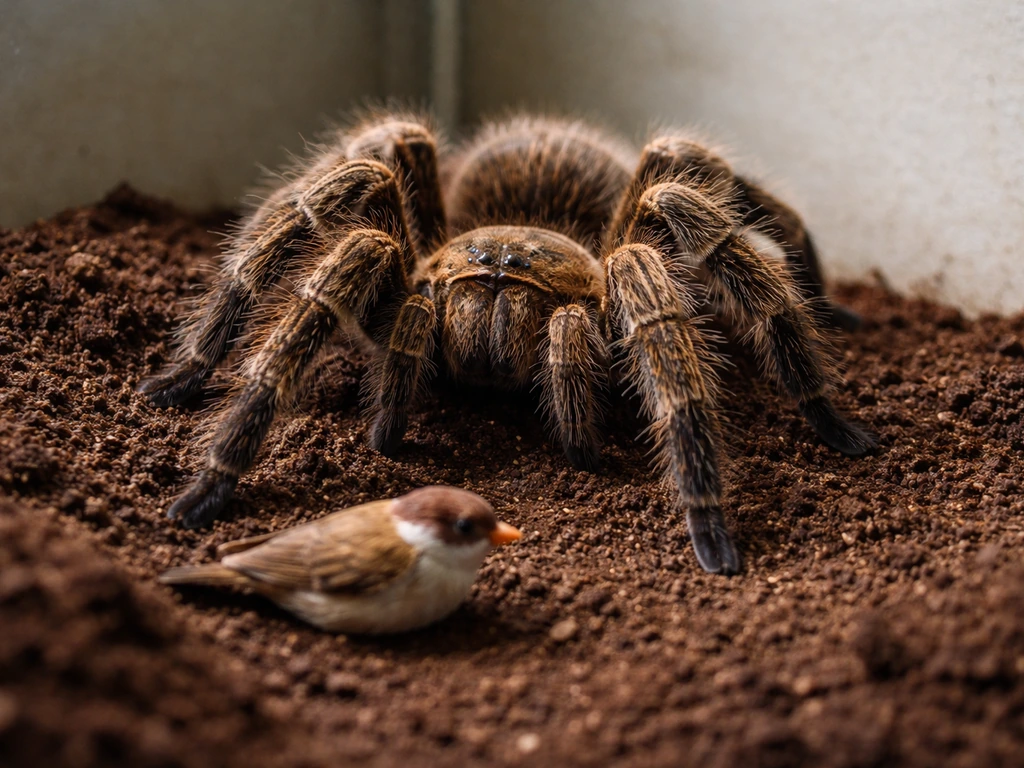
Technically, yes, under very specific circumstances. A peer-reviewed paper documented a female Theraphosa blondi capturing a Common Scale-backed Antbird in the eastern Brazilian Amazon. The catch was that the bird was already entangled in a mist-net used by researchers, making it essentially immobilized prey on the ground. That is not the spider hunting a free-flying bird. It is the spider taking an easy, helpless target that happened to be at ground level. That is opportunistic scavenging, not predation in the sense most people imagine.
Researchers in arachnology have also noted that some historical records of tarantulas eating birds involved arboreal (tree-dwelling) species rather than ground-burrowers, and that species misidentification has complicated earlier reports. The honest scientific picture is this: bird consumption by tarantulas happens, but it is rare, usually involves compromised or very small birds, and is not a hunting strategy these spiders rely on.
The Smithsonian puts it simply: the goliath birdeater does not eat birds frequently. That should be the anchor point for any backyard birder trying to assess real risk.
How to ID the spider you're seeing at home
Most people in North America, Europe, or temperate parts of Australia who see a large spider near their feeder are not looking at a Goliath birdeater or a Queensland whistling tarantula. Those species have specific, limited ranges. Here are the cues that matter for quick identification.
| Feature | Goliath Birdeater (Theraphosa blondi) | Queensland Whistling Tarantula (Selenocosmia crassipes) | Typical Garden Spider (most regions) |
|---|---|---|---|
| Body length | Up to ~12 cm | Up to ~11 cm (Australian Museum data) | 1–3 cm |
| Leg span | Up to 28–30 cm | Up to ~20 cm | 2–8 cm |
| Color | Brown, hairy, dense | Dark brown, hairy | Variable, often striped or banded |
| Habitat | South American rainforest burrows | Eastern Queensland burrows | Webs in shrubs, eaves, gardens |
| Builds webs? | No (burrow-liner) | No (burrow-liner) | Yes (orb or cobweb) |
| Range | South America | Eastern Queensland, Australia | Worldwide |
| Likely near your feeder? | No | Only in Queensland, Australia | Yes, very common |
If the spider you spotted is building a web, it is not a tarantula. True tarantulas, including all 'bird-eating' species, do not spin capture webs. They are ambush or pursuit hunters. If the spider you found is smaller than your palm, hairy, and in a burrow near your garden in eastern Queensland, you might have a Selenocosmia crassipes on your hands. Outside that region, a large ground-dwelling hairy spider in the Americas could be one of many common tarantula species that are harmless and not remotely interested in birds.
What this means for your backyard birds and feeders (myth-busting)
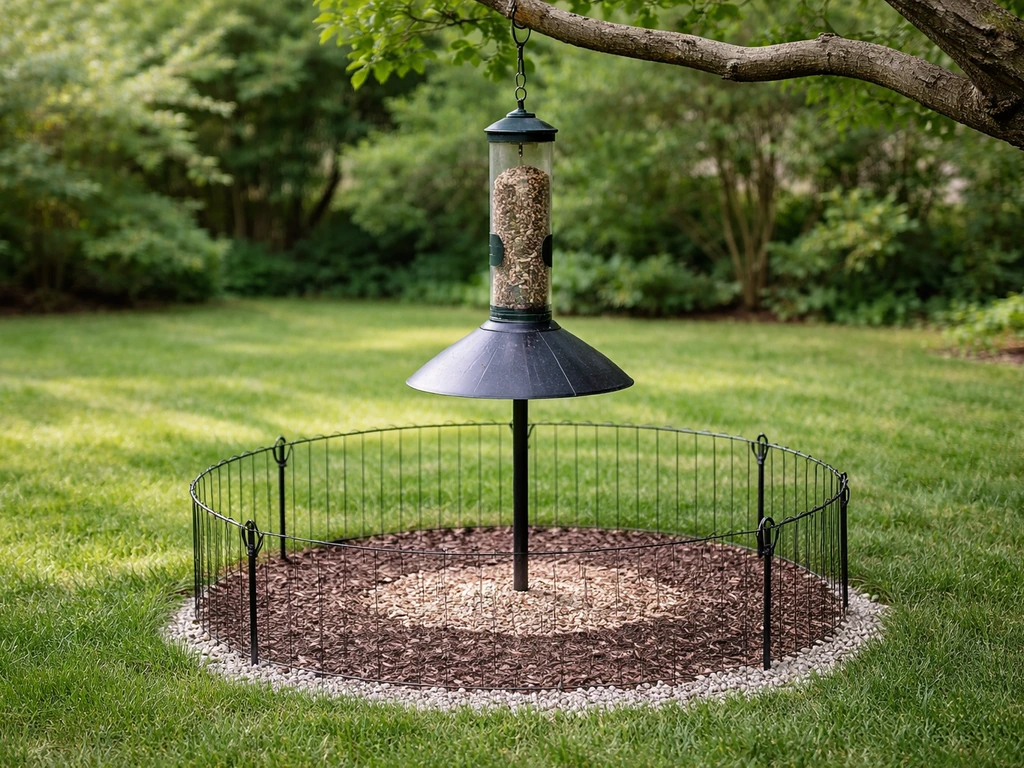
Let's be direct: a bird-eating spider is not going to ambush your songbirds at the feeder. Here is why. First, true 'birdeater' species do not live in most backyard birding regions. Second, even if one did, it hunts on the ground and is not built to leap up and grab a perching bird. Third, healthy adult songbirds are fast, aware, and far more likely to avoid or even attack a large spider than to fall victim to one. The scenarios where tarantulas catch birds in the wild involve birds that are already compromised, extremely small (like a nestling on or near the ground), or trapped.
If you are seeing a large spider near your feeder, the most likely explanation is that the feeder is attracting insects (which is normal), and the spider is there to eat the insects. The spider is not there for the birds. It is exploiting the same food source your birds are, just at a different trophic level. This is actually a healthy sign of a functioning backyard ecosystem.
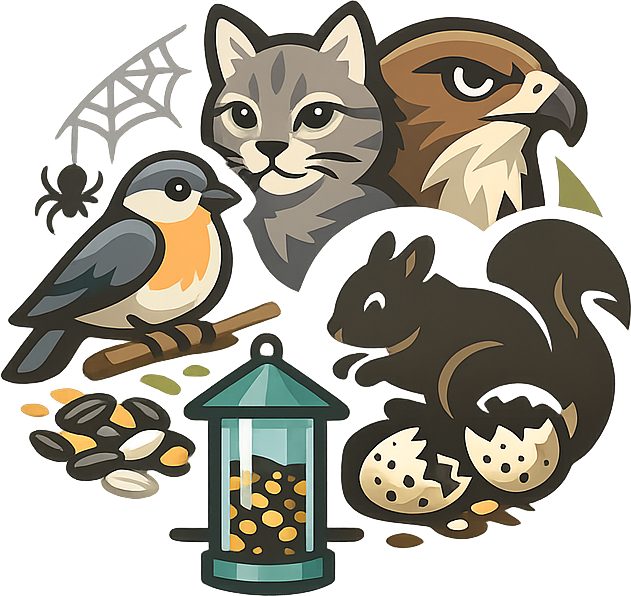
The real threats to backyard birds at feeders are cats, hawks, window collisions, and spoiled or contaminated feed. A spider at your feeder is essentially a non-issue for the birds themselves.
Safety and risk for pets and people near feeders
This is where you do want to pay some attention, not because bird-eating spiders are hunting your pets or children, but because any large tarantula encountered up close can pose minor risks worth knowing about.
For humans: according to StatPearls, there have been no reported human deaths from tarantula venom toxicity. A bite from a large tarantula like a birdeater is painful, roughly comparable to a bee sting according to MedlinePlus, and allergic reactions are possible in some people. The Cleveland Clinic advises seeking emergency care if you experience severe symptoms, trouble breathing, or if the spider's identity is unclear. The bigger risk with many tarantula species is urticating hairs, which these spiders flick defensively and which can cause serious irritation to skin, eyes, and mucous membranes. If you have questions about whether bird-eating spiders bite humans and what that actually feels like, the short answer is yes they can, but fatalities from venom are not on record.
For pets: the Drake Center veterinary guidance notes that the primary risk for dogs and cats is not systemic venom but irritation from urticating hairs, particularly if a pet tries to sniff, paw, or mouth the spider. This can lead to mouth and throat swelling, which is a veterinary emergency. The American Kennel Club emphasizes that the severity depends on the spider species and your pet's symptoms, and that if a dog has been bitten by an unknown spider, getting a vet involved quickly is the right call. Keep dogs away from any large unknown spider near your feeder area.
It is also worth knowing that whether bird-eating spiders are poisonous is a nuanced question. They are venomous (venom injected via bite), not poisonous (harmful if consumed), and their venom, while not lethal to humans on record, is not something to dismiss if you or a pet gets bitten.
What to do if you find a large spider near your feeder
- Do not handle it with bare hands. Use gloves or a container to relocate it if needed.
- Keep children and pets away from the area until you have identified or removed the spider.
- Take a clear photo from a safe distance for identification. Focus on size, leg span, and whether it has built a web.
- If you or a pet is bitten, contact Poison Control (1-800-222-1222 in the US) or your vet immediately. PoisonHelp advises that most spider bites are harmless, but expert advice is free and fast.
- Do not kill the spider reflexively. Most large spiders near feeders are beneficial insect predators.
Practical next steps: reduce risk, store feed safely, and know when to call for help
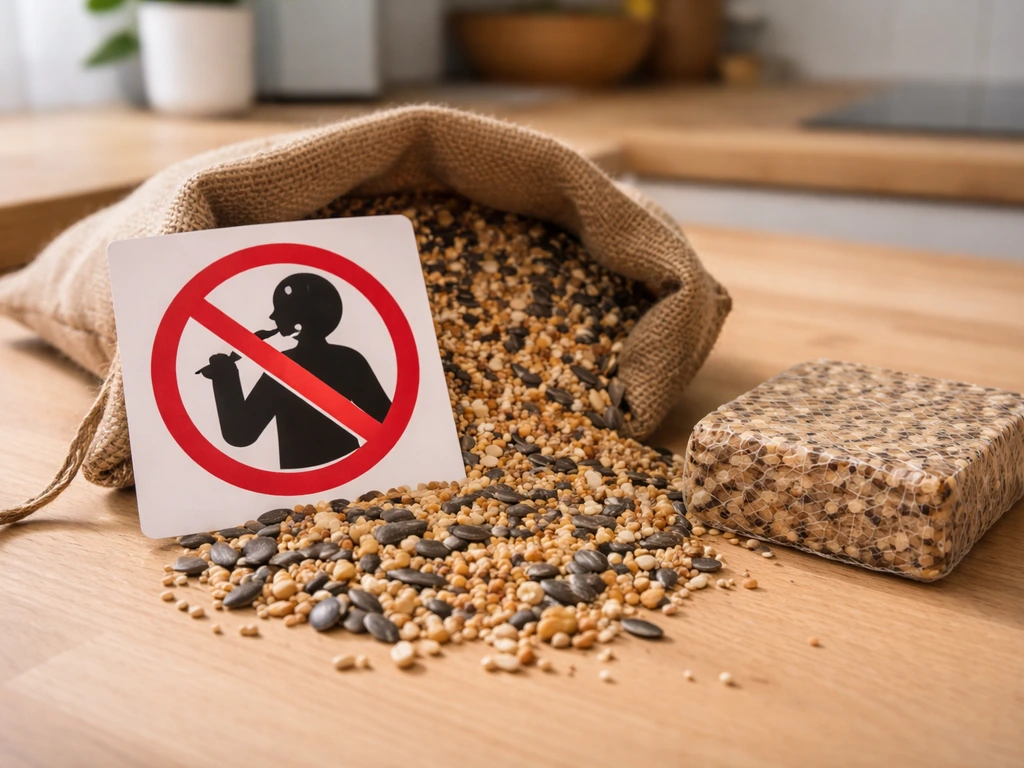
The best way to reduce unwanted wildlife encounters near your feeder is to eliminate the conditions that attract them. Spiders come for insects. Insects come for spilled seed, rotting fruit, and standing moisture. Clean up seed debris under feeders every few days. Store birdseed in sealed, hard-sided containers (not soft bags left in a garage or shed) to avoid attracting both insects and the rodents that in turn attract larger predators. This keeps your feeding area cleaner, reduces pest insects, and incidentally makes the spot less appealing to ground-hunting spiders.
- Clean seed debris from the ground under feeders at least twice a week.
- Use a tray or catch guard under hanging feeders to collect hulls and reduce ground spill.
- Store all birdseed in airtight hard-plastic or metal containers, away from moisture.
- Rinse feeders with a dilute bleach solution (one part bleach to nine parts water) monthly to prevent mold and fermentation that attracts insects.
- Move feeders at least 3 meters away from dense ground cover, wood piles, or rock piles where burrowing spiders might shelter.
- If you live in eastern Queensland, be aware that Selenocosmia crassipes can surface during heavy rain and may temporarily appear in garden areas near feeders.
When to call for professional help: if you find a spider you cannot identify and it is large (leg span over 10 cm), hairy, and living in a burrow in your garden, contact your local extension service, a pest management professional, or a natural history museum identification service before handling anything. In Australia, the Australian Museum's online identification tools are a good starting point. In the US, university extension entomology departments often offer free ID help.
The bottom line is simple. Bird-eating spiders got their name from one old illustration, not from a diet that involves regularly catching birds. Your backyard songbirds are safe. The spiders you are most likely to see near feeders are common, harmless, insect-eating species. Keep your feeding area clean, keep pets away from unknown large spiders, and if something bites you or your dog and you are unsure what it was, call Poison Control or your vet without hesitation. That is genuinely all you need to do.
FAQ
How can I tell if the spider near my feeder is actually a tarantula (and not something that looks similar)?
Look for tarantula traits such as a stocky body, heavy hair, and a “leg posture” that looks deliberate and grounded, not thin, web-slinging, or fast-moving in the typical spider-jump way. Also note that tarantulas generally do not build capture webs, if you see a true web framework or a web funnel, it is almost certainly not a tarantula.
Do bird-eating spiders ever eat birds out of the blue at feeders or birdbaths?
In most real backyard situations, no. Documented bird takes in tarantulas usually involve compromised birds at ground level, for example trapped or entangled, rather than a healthy bird calmly feeding. A spider at a feeder is usually there because insects are clustering around spilled seed.
What if a nestling falls to the ground, could a tarantula take it?
It is possible in principle because tarantulas sometimes take small, vulnerable vertebrates, but it is still uncommon. If you find a nestling on the ground, focus on returning it to the nest or using local wildlife guidance, and keep pets and humans from moving the nest area repeatedly.
Are “bird-eating” tarantulas dangerous to birds if I’m trying to help them at the feeder?
Healthy adult birds are very unlikely to be prey because they can perceive and avoid threats, and tarantulas are primarily ground-oriented ambush hunters. The practical risk to birds from a spider presence is far lower than window collisions, cats, and hawks, which remain the main feeder hazards.
Should I remove a tarantula from my yard if it’s near my feeder?
If it is an unidentified large hairy spider, the safer approach is to keep distance and avoid handling. You can reduce attraction by cleaning seed debris and removing standing moisture, which usually encourages the spider to move on naturally. Relocation attempts are higher-risk if the spider flicks urticating hairs or if you misidentify it.
What should I do if my pet mouths or gets urticating hairs from a tarantula?
Call your veterinarian or emergency clinic promptly, especially if you see drooling, pawing at the mouth, coughing, gagging, or swelling around the lips or throat. Do not try to “wash it off” by mouth contact, instead focus on keeping the pet from further rubbing and getting professional guidance.
If a bite happens, what symptoms are most concerning?
Pain is common, but the urgent red flags are trouble breathing, facial swelling, widespread hives, or symptoms that escalate quickly. If symptoms are severe or the spider cannot be identified confidently, seek emergency care rather than monitoring at home.
Are tarantulas poisonous if a pet or child eats one?
They are venomous by bite, not poisonous by consumption. However, ingestion can still cause harm because of irritation, potential allergic reactions, and general injury from handling. If ingestion occurs, contact poison control or a veterinarian for species-appropriate advice.
Do tarantulas eat birds more in certain seasons or weather?
Weather can change where spiders appear, especially heavy rain that forces burrow dwellers to the surface. That increases the chance you see one near human activity, but it does not necessarily increase bird predation, because the prey situation and the spider’s hunting mode still matter.
Can I use the spider’s web or lack of web to identify it accurately?
It helps but is not perfect. A lack of a capture web is consistent with tarantulas, but you can still encounter other non-web-building hunters. For accurate ID, combine multiple cues (size, hairiness, burrow behavior, location, and whether it flees or advances) and use local identification support if you are unsure.