The short answer: very few birds will eat bones in any meaningful way near a typical backyard, and the one species that genuinely specializes in bone consumption (the bearded vulture) is not going to show up at your feeder. If you are watching something pick apart a bone in your yard, the most likely culprits are a mammal like a raccoon, fox, or dog, or a scavenging bird like a crow or vulture that is after the soft tissue still attached. Let me walk you through what is actually happening, which birds do interact with bones in nature, and how to confirm what you are dealing with safely.
What Bird Eats Bones? Identification and Safe Backyard Tips

Maya Bennett
21 Apr 2026
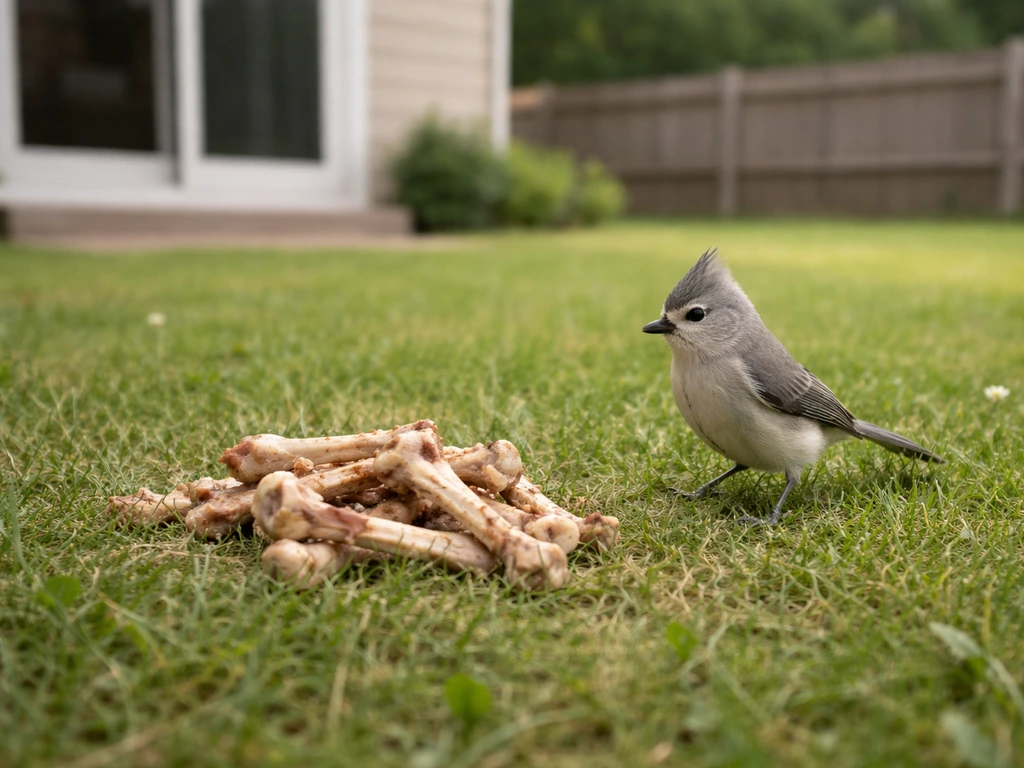
Birds that actually eat bones (or bone material)
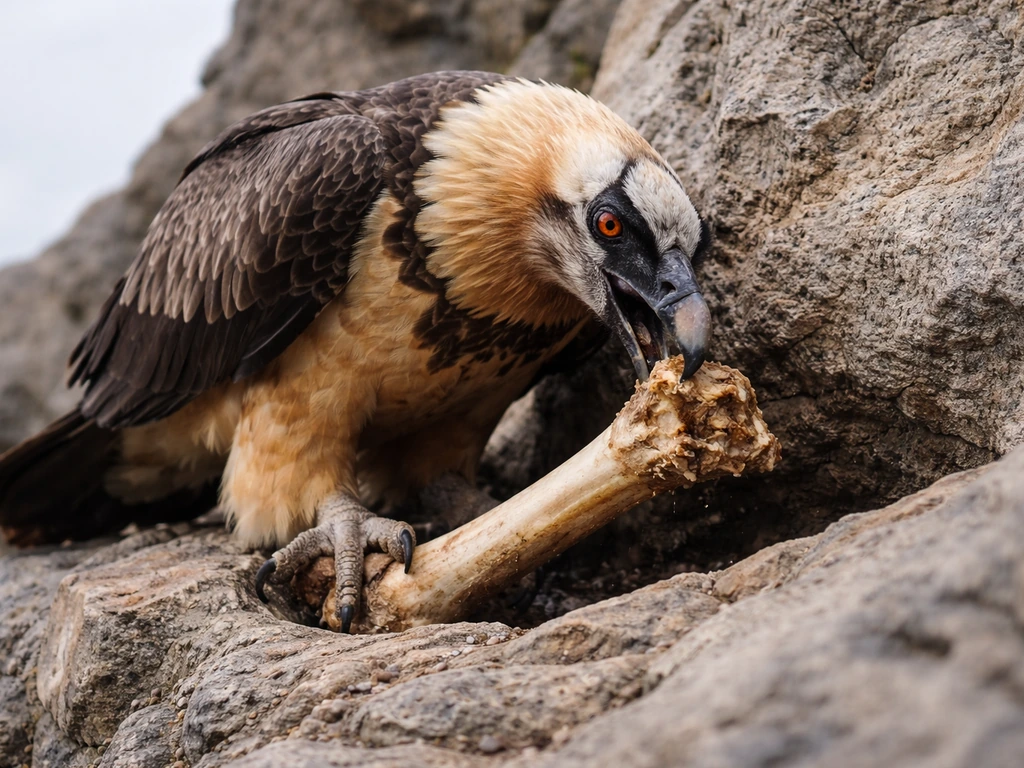
One bird deserves its own category here: the bearded vulture (Gypaetus barbatus), also called the lammergeier. The bearded vulture has been studied using rocky bone-drop “ossuaries,” where remains dropped and gathered around these sites can be analyzed in peer-reviewed research blank" rel="noopener noreferrer">rocky “ossuaries” as bone-dropping/cracking sites. Its diet is documented at roughly 70 to 90 percent bone. It carries large bones into the air and drops them onto rocks to crack them open, then swallows the fragments whole to access the marrow and bone itself. Nothing else in the bird world comes close to this level of bone specialization. The bearded vulture lives in mountainous regions of Europe, Africa, and Asia, so unless you are birding in the Alps or the Himalayas, you will not see one.
Raptors as a group do consume bones incidentally. When a hawk or owl swallows a small mammal whole, the bones go down with everything else. Hawks have a gastric pH of around 1.7, which is acidic enough to break down a significant amount of bone before it is ever excreted. Owls have a less acidic stomach (pH roughly 2.2 to 2.5) and digest bones less thoroughly, which is why owl pellets often contain recognizable skulls and intact bones inside them. Audubon explains that owls swallow prey whole, digest it in stomach chambers, and then regurgitate the parts they cannot digest, such as bones and fur or feathers. If you have ever dissected a barn owl pellet, you have seen this firsthand. Raptor pellets from hawks tend to contain more feather and less clean bone for the same reason.
Turkey vultures (Cathartes aura) are the classic North American scavengers. They locate carrion partly by smell, which is unusual among birds, and they will strip a carcass thoroughly. They consume the soft tissue, cartilage, and whatever bone scraps are accessible at the surface of a carcass, but they are not bone-crushers. Crows, ravens, and magpies will also work over carcasses and may carry off small bone fragments, usually to cache or to access marrow. These are the birds most likely to appear near a chicken carcass or animal remains in or near a suburban yard.
Natural scavenging vs. what actually happens at feeders
Here is where expectations need to be reset. Seed feeders, suet feeders, and fruit feeders attract birds that eat seeds, insects, and fruit. These birds, including finches, sparrows, woodpeckers, chickadees, and nuthatches, have no interest in bone. They do not have the beak anatomy or digestive physiology to process it. If you put a bone out near a feeder, a songbird is not going to touch it. Full stop.
Scavenging corvids (crows, ravens, jays) are feeder-adjacent visitors that might investigate unusual food items, but even they are after soft tissue and fat, not hard bone. Raptors may occasionally perch near feeders to hunt the songbirds visiting them, but they are not interested in anything you put out as feeder food. The bird behaviors that involve actual bone consumption happen in wild habitats around carcasses, not around standard backyard setups.
How to figure out which bird (or animal) you are actually seeing
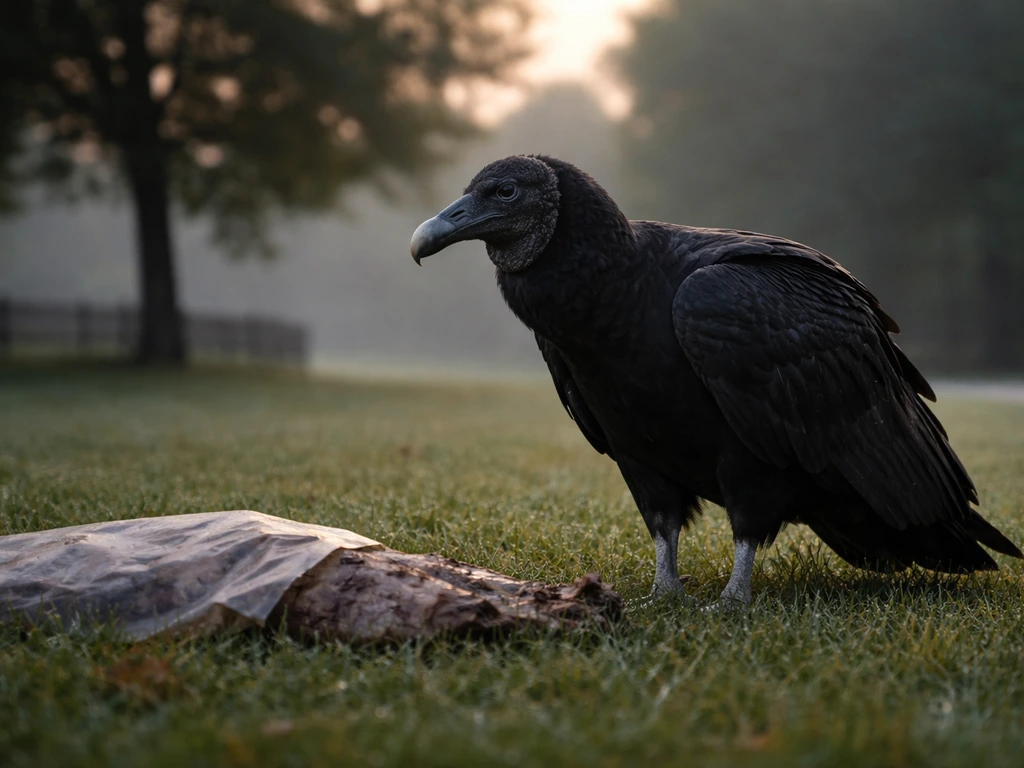
If something is working on a bone or carcass in your yard, use these clues to narrow down what it is before you assume it is a bird at all.
Beak shape and body size
- Large, hooked beak, dark plumage, 2 to 4 foot wingspan: likely a vulture or large raptor
- Medium body, all-black or black and white with a heavy straight bill: crow, raven, or magpie
- Small body, thin pointed beak: songbird, not eating bone at all (probably eating insects off the material)
- Large rounded head, upright posture, silent arrival at dusk or dawn: possibly an owl investigating remains
Timing and behavior
- Daytime, circling overhead before landing: vulture
- Early morning or late afternoon, quick grab-and-go: crow or raven
- Nighttime activity with no visible animal: almost certainly a mammal (raccoon, opossum, fox, skunk)
- Bones moved significant distances, buried, or scattered: mammal, not a bird
- Gnaw or tooth marks on bone: mammal (dogs, raccoons, foxes all leave characteristic marks that birds cannot replicate)
Location clues
- Rural or semi-rural area near open fields: vultures are plausible
- Dense suburban neighborhood: crows and mammals are far more likely than vultures
- Near a compost pile, trash, or pet food left outside: raccoon or fox, almost certainly
- Feeder area specifically: rule birds of prey and vultures out almost entirely
It might not be a bird at all
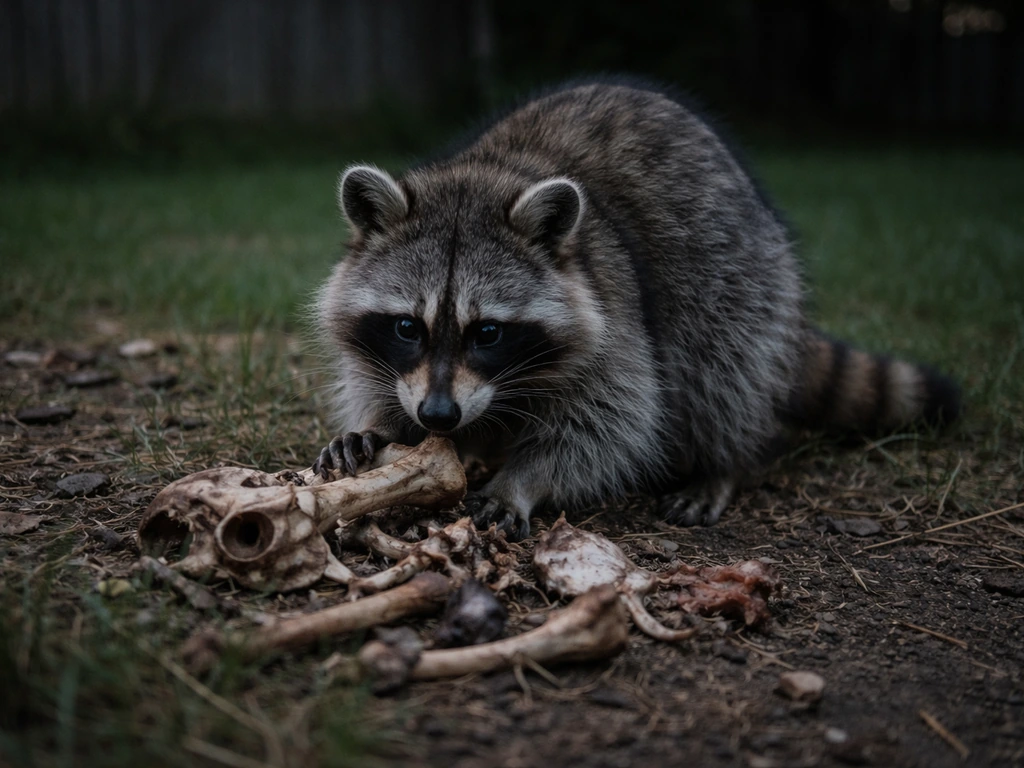
This is the most common misidentification situation I hear about. Raccoons, foxes, opossums, and stray or free-roaming dogs are all enthusiastic bone-chewers and are active during periods when people are less likely to be watching closely. Raccoons in particular are dexterous and persistent enough to drag bones, open containers, and scatter food across a wide area in a single night. Foxes will cache bone fragments by burying them. Dogs, both strays and neighborhood pets, leave the most obvious gnaw marks and tend to work bones in an open, unhurried way.
Insects are another overlooked explanation. Dermestid beetles and blowfly larvae can strip soft tissue from bone very efficiently and are often the organisms responsible for cleaning a carcass that ends up as a clean-looking bone. If you find a bone that appears freshly cleaned but saw no large animal around it, insects probably did the work, not a bird.
| Culprit | Key sign | Active time | Bone interaction |
|---|---|---|---|
| Bearded vulture | Only in mountain habitats; drops bones on rocks | Daytime | Consumes bone fragments directly |
| Turkey vulture | Bald red head, soaring flight, circles carcass | Daytime | Strips soft tissue, incidental bone fragments |
| Crow / Raven | All-black, loud calls, carries food away | Daytime | May take small fragments for marrow |
| Owl / Hawk | Pellets found below roost with bones inside | Dawn, dusk, night (owls) | Incidental bone ingestion from whole prey |
| Raccoon | Knocked-over containers, muddy paw prints | Night | Chews and gnaws bone surfaces |
| Fox | Buried fragments, small oval scat nearby | Dawn, dusk | Caches bone, chews for marrow |
| Dog (stray) | Gnaw marks, dragged bones, daytime activity | Variable | Heavy chewing, scatters bones widely |
| Dermestid beetles | Clean white bone, tiny beetle casings | Variable | Strips tissue from bone surface |
What is safe to put out, and what to leave out of the feeder
The practical question for most backyard birders is whether bones or meat scraps belong in the feeding setup at all. The honest answer is: almost never, and the risks generally outweigh any benefit.
Why bones and meat scraps cause problems at feeders
- Raw meat and bones spoil quickly, especially in warm weather, and become a bacterial hazard (Salmonella, E. coli, Clostridium) within hours in temperatures above 40°F
- Cooked bones splinter in ways that can injure birds and mammals that try to swallow fragments
- Meat and bones attract mammals and corvids that can become aggressive, habituated to human feeding, and a nuisance or safety concern
- Rotting organic material under or near feeders creates a disease reservoir that affects songbirds visiting for seed
- Most local wildlife ordinances prohibit intentionally feeding large scavengers like vultures or corvids with meat products
What works instead
If you want to attract insect-eating birds, suet cakes (rendered beef fat, solidified and sold commercially) are the appropriate and well-studied option. They do not spoil at the rate raw meat does, do not attract large scavengers the way raw flesh does, and are specifically formulated for the birds you likely want at your feeder (woodpeckers, nuthatches, wrens). In warm months, switch to no-melt suet formulas that hold their shape above 90°F. For corvids and jays specifically, peanuts in the shell are a far safer attractant than meat or bone.
Risks to pets, wildlife, and your backyard ecosystem
Putting bones or meat near a feeder or yard creates a chain of risks that go well beyond the birds themselves. Dogs and cats that access decomposing bone material can develop gastrointestinal infections or, in the case of cooked splintered bones, internal injuries. Wildlife that feeds regularly on human-provided food at a fixed location becomes habituated and loses natural foraging behavior, which creates management problems for local animal control and your neighbors.
Spoiled food under feeders is a genuine disease pathway. Wet seed, moldy grain, and rotting organic material harbor Aspergillus (a fungal pathogen that causes aspergillosis in birds), Salmonella, and other organisms that spread through fecal contamination in the feeder area. Songbirds congregate on the ground below feeders and are exposed directly. The fix is simple: clean up spilled seed every few days, rake or replace substrate below feeders monthly, and wash feeders with a 10 percent bleach solution every two to four weeks.
Seed storage matters too. Store seed in airtight metal or hard plastic containers off the ground. Seed left in a cloth bag or original paper packaging invites rodents, which in turn attract the raptors and corvids you are trying to observe. That is a good closed loop for nature, but it is not great for a controlled backyard feeding station.
One note worth connecting here: birds that swallow hard material (like small stones for grinding food in their gizzard) is a separate behavior from eating bone, though both relate to how birds process tough dietary items. One note worth connecting here: birds that swallow hard material (like small stones for grinding food in their gizzard) is a separate behavior from eating bone, though both relate to why might a bird swallow gravel or small stones. For example, some birds swallow small pebbles as grit for grinding food, which is different from eating bone. Some birds can also ingest hard materials, such as stones and iron fragments, though this is not typical feeder behavior small stones. Similarly, birds choking on oversized food is a risk that comes up when people offer inappropriate feeder items, including large chunks of food meant for mammals. Birds can choke on oversized or unsuitable food in the same way, especially when it gets lodged in the throat or airway choking on oversized food. Keeping feeder items appropriately sized for the species you are targeting reduces that risk directly.
What to do today to get a clear answer

- Set up a basic camera trap or use a phone motion-alert camera aimed at the location where the bone or carcass material is. Even one night of footage usually confirms whether you are dealing with a mammal or a bird.
- Check the timing. If the disturbance happens at night, eliminate all birds immediately. Vultures, crows, and raptors are strictly diurnal. Night activity means mammal.
- Look for physical evidence: tooth or gnaw marks on bone point to a mammal. Clean beak-peck marks are much shallower and less rounded. If the bone has been buried or moved far from where it started, that is a mammal behavior.
- Identify your local scavenging birds using a regional field guide or a free app like Merlin (Cornell Lab). Check whether turkey vultures or large corvids like ravens are on the species list for your county. If vultures are not in your area, you can rule them out entirely.
- Remove the bone or meat source. Do not leave bones or carcass material in the yard. Bag it and dispose of it in a sealed trash container. This is the fastest way to stop attracting whatever is coming.
- Clean the area. If there is any tissue residue, rinse with a dilute bleach solution (1 part bleach to 9 parts water) and let it air dry. This reduces bacterial load and scent trails that attract scavengers.
- If you suspect a nuisance wildlife animal (raccoon, fox, coyote) is the culprit, contact your local wildlife agency or animal control. Do not attempt to trap or relocate wildlife without proper permits.
- Reassess your feeder setup. If you have been putting out any meat, fat scraps, or bones, stop immediately and switch to species-appropriate foods: seed mixes, suet cakes, or fruit for the birds you actually want to attract.
FAQ
If I see a bird near a bone, how can I tell whether it is actually eating it or just inspecting it?
Look for feeding behavior clues. True bone processing usually involves tearing large pieces, carrying them, or repeated work that leaves broken fragments behind. Many birds instead peck at soft tissue remnants only, then move on. If nothing about the bone changes over multiple visits, it is more likely scavenging of surface meat or just curiosity, not bone consumption.
Are there any backyard birds that might carry off bone fragments even if they do not eat the bone itself?
Yes. Corvids like crows, ravens, and magpies may take small bone bits to cache or to access marrow pockets at the surface, without digesting the bone the way a bone specialist would. Their involvement is usually intermittent and tends to involve small fragments rather than systematically cracking and reducing a full-sized bone.
What is the safest way to confirm whether the culprit is a raptor, a corvid, or a mammal?
Use indirect evidence first. Raccoon and fox activity often includes scattering, container tampering, or gnaw marks with clear tooth impressions. Raptors are more likely to leave a more intact carcass remnant with pellet material nearby, and owl pellets are usually clustered and contain compact bone with little sign of fur or larger-scale scattering. If possible, review a night camera or trail camera setting for 1 to 2 nights rather than guessing from day observations.
Could insects make bones look “processed” in a way that fools me into thinking a bird did it?
Definitely. Dermestid beetles and fly larvae can strip tissue rapidly and leave a bone that looks freshly cleaned, even when no large animal was seen. This is especially likely when the area stays warm and there is no obvious predator activity. If the bone is clean but you do not find pellet-like remnants or large breaks from impact cracking, insects are a strong candidate.
Do owls always leave recognizable skulls and intact bones in pellets?
Not always. Pellet contents vary by prey size, the species, and how much time passed after feeding. Even when bones are present, they can be fragmented, and not every pellet contains a clearly identifiable skull. The key sign is that pellets are compact, consistent, and located in regular roosting areas, not spread randomly like typical scavenger foraging.
Should I avoid putting out any animal remains, including cooked meat scraps, if I mainly want songbirds?
Yes. Cooked bones can splinter and create internal injury risk if pets or wildlife chew them, and meat scraps increase odor-driven scavenger visits. Even without bones, rotting meat and wet carrion increase disease exposure at the feeder area, because congregating birds mix droppings with contaminated food and substrate.
What should I do if I already left bones or meat out and birds are actively feeding nearby?
Remove the bones and any remaining meat promptly, then clean the feeder area. Pick up spilled material, rake or replace the substrate under and around feeders, and wash feeders with a 10 percent bleach solution as described in your article guidance. If there are pets, keep them away until the area is fully cleaned and dry.
I want to attract woodpeckers and nuthatches, what is a bone-free alternative to raw meat?
Use suet rather than bones or meat scraps. Choose rendered, solidified suet that is formulated for backyard birds, and in warm weather use a no-melt style to prevent messy leakage that draws unwanted scavengers and increases spoilage. This targets the same “high energy” feeding niche without the bone-related risk.
Is it ever appropriate to provide grit or small stones for birds that visit my feeders?
Usually it is not necessary at feeders, and offering grit improperly can increase choking and ingestion of unsuitable material. Birds that ingest small stones typically do so from natural sources for gizzard function. If you do provide any hard material, do it sparingly and only in ways that match the needs of the species you target, otherwise you risk attracting the wrong animals or creating safety issues.
Can bones harm pets even if the pets do not seem to chew them aggressively?
Yes. Dogs and cats can swallow fragments, and cooked bone splinters pose a higher risk of punctures or obstruction than raw, intact bones. Even if chewing is minimal, decomposing bone material can carry pathogens that lead to gastrointestinal illness. If you have pets, prevent access and clean the yard promptly.