The birds most likely eating pigeons in your area are peregrine falcons, Cooper's hawks, great horned owls, and eastern screech-owls. In cities, peregrine falcons are the number one culprit by a wide margin. They use feral pigeons as a staple food source, and urban pigeon populations are literally what allow many peregrine populations to thrive. Cooper's hawks are a close second in suburbs. Great horned owls take pigeons at night, and screech-owls can take them too, though less often. Corvids like crows and ravens usually go after eggs and nestlings rather than adult birds. That's the quick breakdown, but the details matter a lot if you're trying to figure out what's happening in your own yard or neighborhood.
What Bird Eats Pigeons? Common Predators and Proof

Maya Bennett
17 May 2026

Common pigeon predators: raptors and corvids
Rock pigeons (the classic city pigeon) are abundant across the United States and southern Canada, which makes them a reliable and easy-to-find meal for a surprising range of birds. Here's who's actually doing the hunting.
Peregrine falcon
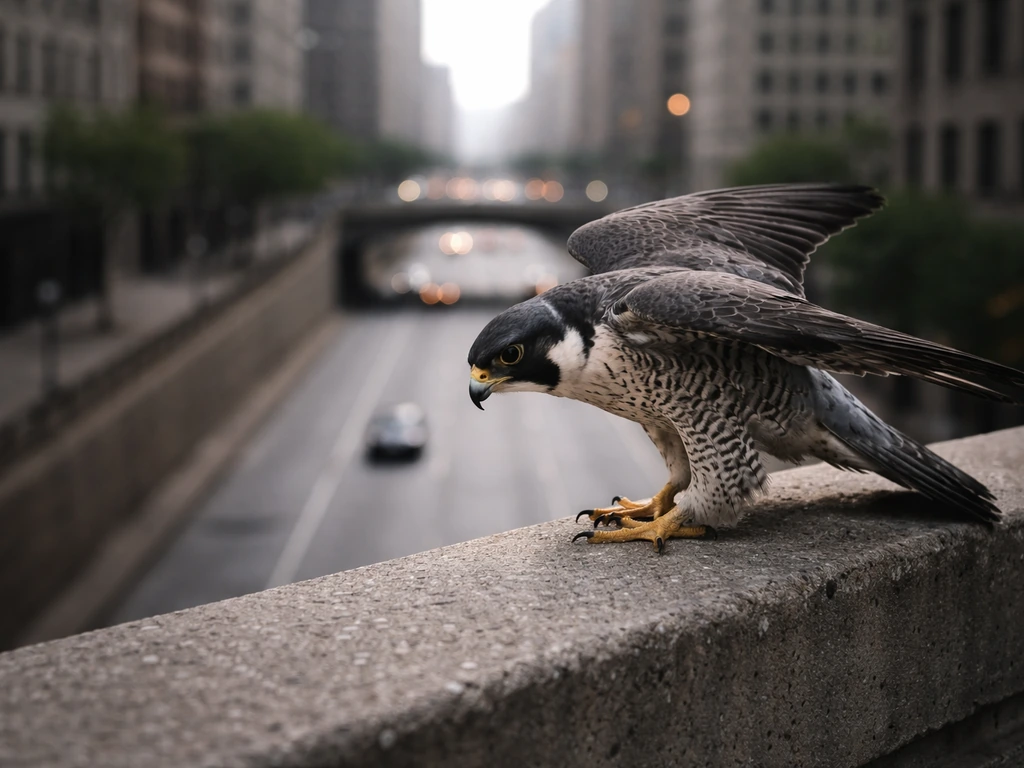
Peregrines are the apex pigeon hunters in urban environments. Feral pigeons support many peregrine populations as a staple food source, especially in cities. That's not a coincidence. Peregrines nest on skyscrapers and bridge ledges specifically because the pigeon supply is so reliable. They're fast, accurate, and built for this. Even so, pigeons aren't helpless. Research has shown that rock pigeons have evolved plumage and flight adaptations that give them at least a partial edge against falcon attacks.
Cooper's hawk
Cooper's hawks are the suburban and edge-of-city hunters that most backyard birders actually encounter. They actively prey on pigeons and doves in urban areas, using an open-air stoop (a diving pursuit) to chase and capture them in flight. If you've watched a Cooper's hawk tear through your neighborhood at low altitude and thread between buildings or fences, you've seen this in action. They're medium-sized, agile, and relentless.
Great horned owl
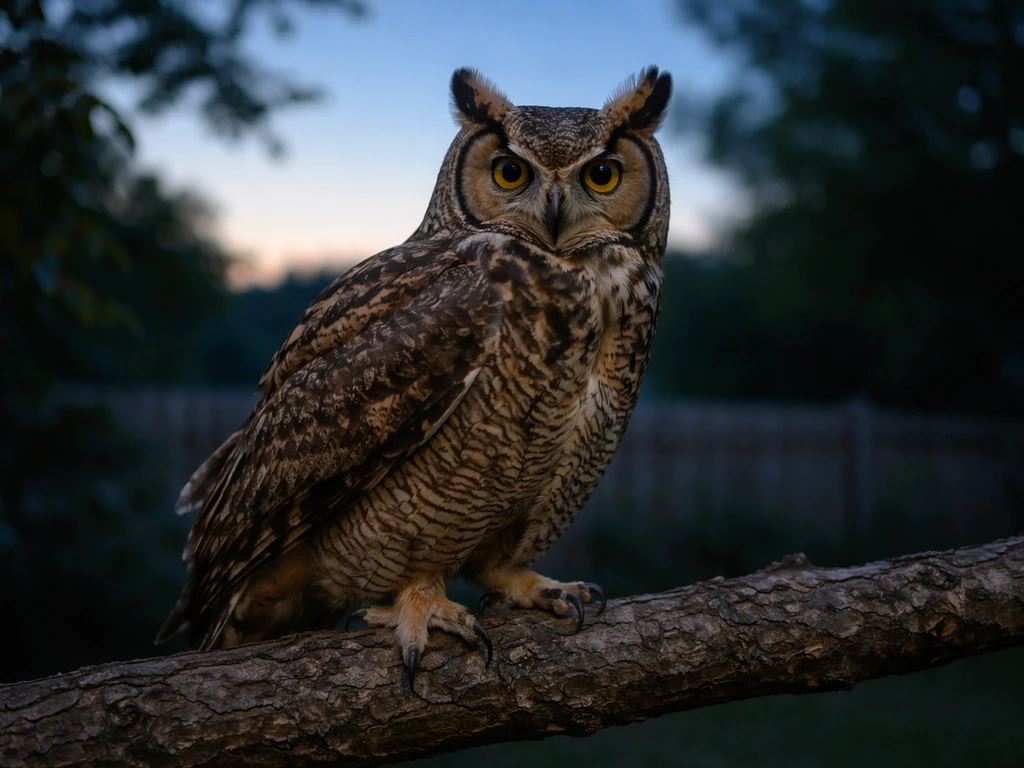
Great horned owls are powerful, aggressive nocturnal hunters that take a wide range of prey including doves, starlings, and similarly sized birds. They're not exclusively pigeon hunters, but they are opportunistic enough to target roosting pigeons at night. The U.S. Fish and Wildlife Service notes that they kill and eat many species of that size range, and Audubon describes them as capable of taking prey the size of rabbits and small hawks. If your pigeons are disappearing at night, a great horned owl is high on the suspect list.
Eastern screech-owl
Eastern screech-owls are smaller than great horneds, but they can and do kill domestic and feral pigeons with predatory intent. Forest Service research specifically documents this. They also prey on doves as a regular part of their diet. They hunt at night and are common in suburban tree lines, parks, and wooded neighborhoods. They're easy to overlook because they're so small and so quiet.
Crows and ravens
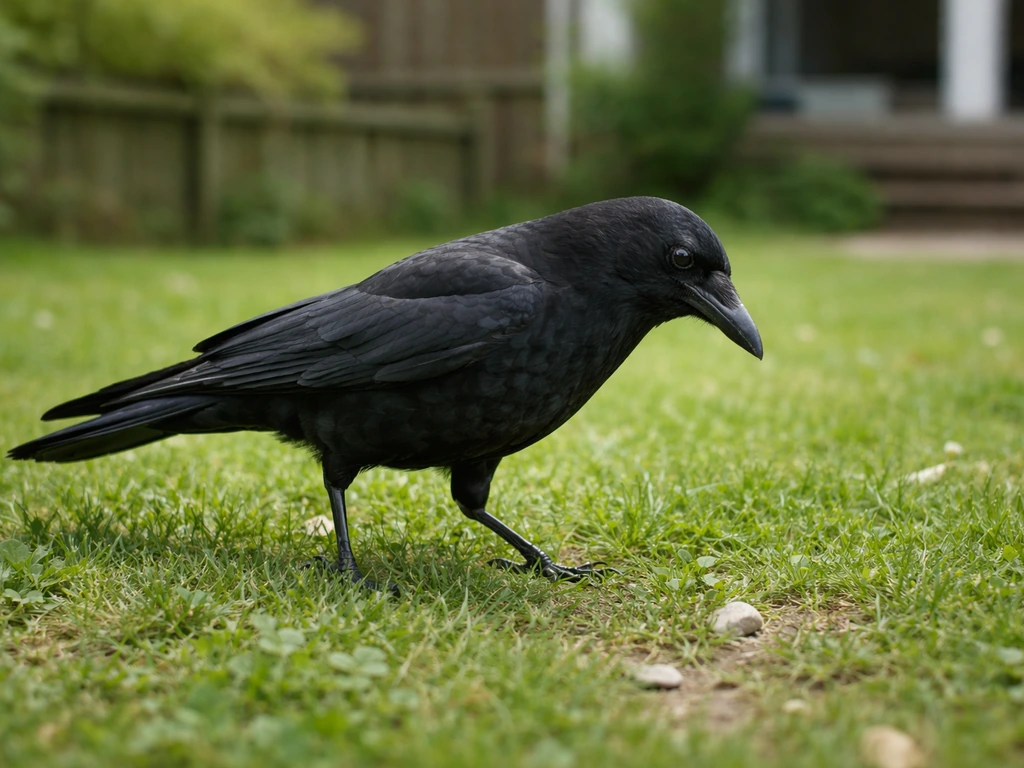
American crows and common ravens are omnivores, not hunters in the raptor sense. Crows occasionally raid nests for eggs and nestlings, and crow predation on pigeons primarily occurs at the nest site rather than in the open air. Ravens are more opportunistic and forage widely, including near urban garbage dumps and suburban areas where food is concentrated. Neither bird is going to swoop down and take an adult pigeon in flight the way a peregrine would, but both can absolutely clean out a pigeon nest if they find one.
Identifying the culprit at your yard or neighborhood
The evidence left behind is often more useful than actually seeing the attack. Here's a quick comparison of the main suspects and what distinguishes them.
| Bird | Size | Active hours | Typical sign left behind | Key ID feature |
|---|---|---|---|---|
| Peregrine falcon | Crow-sized, compact | Daytime | Clean pluck pile, feathers scattered, no carcass | Steel-blue back, black hood, pointed wings |
| Cooper's hawk | Pigeon-sized to larger | Daytime | Feather pile near cover, body consumed on site | Rounded tail, barred chest, accipiter wing shape |
| Great horned owl | Large, bulky | Nighttime | Feathers, sometimes partial remains near roost | Ear tufts, large yellow eyes, barrel-shaped body |
| Eastern screech-owl | Small (sparrow to robin range) | Nighttime | Little physical evidence, often at nest sites | Tiny, cryptic bark-colored, ear tufts |
| American crow | Similar to pigeon | Daytime | Broken eggs, missing nestlings, no clean kill | All black, fan-shaped tail, loud caw |
| Common raven | Larger than crow | Daytime/dawn | Disturbed nest, scavenged remains | Wedge-shaped tail, deep croaking call, larger bill |
If you find a tidy pile of plucked feathers with the quills stripped clean, that's almost always a falcon or accipiter (like a Cooper's hawk). Owls tend to swallow prey whole or leave messier remains near their roost. Crows and ravens leave broken eggs and missing chicks, not clean adult kills.
Hunting behavior clues: time of day, stalking, and ambush
Timing tells you a lot. Peregrine falcons and Cooper's hawks hunt during the day, often in the early morning or late afternoon when pigeons are most active near food sources. Peregrines use a high-altitude stoop, diving at speeds that can exceed 200 mph to stun or kill prey mid-air. Cooper's hawks are low-altitude ambush hunters that chase through tight spaces and grab pigeons in sustained pursuit. If you see a fast, low rocket of a bird tear through a flock and scatter everyone, that's almost certainly a Cooper's.
Great horned owls and screech-owls work after dark. They approach silently, using soft feathers that muffle wing noise, and strike roosting birds before they can react. If pigeons or doves are vanishing from roost spots at night and you're finding feathers in the morning but no attacker during the day, owls are the likely explanation.
Crows don't really stalk adult pigeons. They watch nest sites and wait for an opportunity, then move in fast when adults are away. If you see crows persistently hanging around a pigeon nesting area and then the nest goes empty, you've probably identified the cause.
Diet reality check: what these birds actually eat
None of these birds eats only pigeons. It's worth understanding where pigeons fit in each predator's broader diet so you don't overreact to a single sighting. That said, penguins have different natural predators than city pigeons what bird eats penguins.
- Peregrine falcons eat a huge range of birds, including starlings, shorebirds, waterfowl, and bats. Pigeons are a major component of the urban diet specifically because they're so numerous and predictable.
- Cooper's hawks eat mostly birds, with pigeons and doves being common prey in urban areas alongside robins, starlings, and house sparrows.
- Great horned owls eat rabbits, squirrels, skunks, large birds, snakes, and many other species. Pigeons are opportunistic prey, not a staple.
- Eastern screech-owls eat insects, small mammals, and small birds. Pigeons are at the upper end of their prey range and less common in their diet.
- American crows and ravens eat almost everything: fruit, insects, carrion, garbage, eggs, and nestlings. Adult pigeon predation is rare for either species.
- American kestrels are sometimes spotted in urban areas and can take small birds and insects, but they're too small to reliably take an adult pigeon. They hunt by hovering and scanning from a perch before dropping onto ground-level prey.
This matters practically because if you're seeing a raptor near your feeder, it's not necessarily coming for the pigeons every time. It may be after house sparrows, starlings, or even the mice attracted by spilled seed. This also helps explain why certain predators may be around when you notice mice near feeders. The same predators that eat pigeons also eat birds like ducks, fish (in the case of some raptors), and mice, which is why understanding the broader predator profile helps you read the situation correctly. If you are wondering what bird eats ducks, many of the same predators that target pigeons can also take ducks depending on local availability and opportunity. In some raptors, you can also see them hunt and eat fish.
Where pigeons are most vulnerable
Pigeons are not easy prey when they're in a tight flock in open sky. They're actually harder to catch than you might think, and peregrines miss more than they hit. But vulnerability spikes in specific situations.
- Roosting sites: Pigeons roosting on ledges, under bridges, or in building recesses are stationary and exposed after dark. Great horned owls and screech-owls exploit this directly.
- Nest areas: Eggs and chicks in pigeon nests are highly vulnerable to crows, ravens, and even squirrels. Nests in open, accessible spots are especially at risk.
- Ground feeding: Pigeons that land to feed on scattered seed or spilled grain are slow to take off and distracted. Cooper's hawks exploit this with low, fast approaches. A pigeon focused on food on the ground is at serious risk.
- Isolated birds: A single pigeon separated from the flock is much easier to target than one inside a tight group. Raptors often try to separate individuals before striking.
- Predictable flight paths: Pigeons that fly the same route at the same time daily (homing pigeons especially) become predictable targets for peregrines, which will wait and intercept.
What to do today: deter pigeons and protect smaller birds
If you're dealing with pigeon predation and want to either discourage pigeons from gathering in the first place, or protect smaller feeder birds from the raptors that follow pigeons, here's where to start.
Reduce what's attracting pigeons
- Stop scattering seed on the ground. Ground feeding attracts pigeons faster than almost anything else. Virginia DWR specifically recommends against loose seed distribution on stumps, decks, or patios because it spreads disease and attracts unwanted species.
- Switch to tube feeders or feeders with small perches that pigeons can't use comfortably. Pigeons prefer flat, open surfaces. UF/IFAS Extension recommends varying feeder types and heights to target specific species.
- Clean up spilled seed under feeders daily. Spilled seed is a ground food source whether you intended it or not.
- Block access to roost sites. If pigeons are roosting on your building, ledges, or roof, physical exclusion (spikes, wire, netting) is the most effective and legal long-term fix.
- Remove open water sources that pigeons are using for bathing or drinking if you're trying to reduce their numbers specifically.
Protect smaller feeder birds from raptors
- Add natural cover near feeders. Dense shrubs within 6 to 10 feet of a feeder give small birds an escape route that raptors can't easily follow. Raptors prefer open sightlines.
- Avoid placing feeders in completely open areas where a Cooper's hawk has a clean approach with no obstacles.
- Take feeders in temporarily if you're seeing repeated raptor strikes. A few days without food usually moves the raptor on to a different hunting spot.
- Don't try to haze or trap raptors yourself. All the birds discussed here are protected under the Migratory Bird Treaty Act. Harassment, trapping, or interfering with them can result in federal violations. If predation is causing serious, ongoing problems, contact your state wildlife agency about deterrent permits.
If you want to encourage natural pigeon control
Oregon State University Extension has guidance on attracting birds of prey through beneficial habitat features like nest boxes, open perch sites, and reduced pesticide use. If you have space and a genuine overabundance of pigeons, providing habitat that supports raptors is a legal, low-intervention approach. Just understand that raptors won't exclusively target pigeons, and you may also see them take house sparrows or other birds at your feeders.
Safety and feeder risks: seed, disease, and pets
This is where a lot of backyard birders create problems they didn't see coming. Pigeons attracted to feeders don't just bring raptors. They bring disease pressure, fouled seed, and risks that can affect pets.
Spoiled and contaminated seed
Pigeons feeding at ground level, or gathering under feeders to eat dropped seed, accelerate the contamination problem. Their droppings get into seed piles and water sources quickly. UF/IFAS Extension notes that moldy and spoiled food is unhealthy for birds, and seed scattered on the ground is a direct path to mold, fungi, and bacterial growth. Project FeederWatch recommends cleaning seed feeders every two weeks, more often in warm or wet weather, and immediately if you see mold or cloudy water. Iowa DNR recommends a 10% bleach solution for cleaning and making sure feeders are completely dry before refilling.
Disease risk at overcrowded feeders
OSU Extension notes that sick birds near feeders show specific signs: ruffled feathers, squinted eyes, wings held away from the body. If you see this in birds visiting your feeder, take it down, discard all seed, and clean with bleach solution before putting it back up. Overcrowding at feeders, which pigeon flocks cause, increases the rate of disease transmission significantly. This is one of the clearest reasons to actively discourage pigeon congregating near your feeding setup.
Pets and raptor presence
If a great horned owl or a large raptor is regularly hunting in your yard because you've attracted pigeons, that's a risk factor for very small pets. Great horned owls are large and powerful enough to attempt prey the size of a small rabbit or cat. This isn't common, but it's documented. Small dogs and cats left outside unsupervised after dark in areas with active great horned owl activity are at elevated risk. This is especially true in winter when natural prey is scarce and owls are more willing to take unusual targets.
Myths, look-alikes, and common confusion
"It was an owl, not a hawk"
This one is extremely common. If you saw a large bird attack a pigeon during the day, it was almost certainly not an owl. Great horned owls are primarily nocturnal hunters. A daytime pigeon kill is almost always a peregrine falcon, a Cooper's hawk, or (less commonly) a red-tailed hawk. Owls are much harder to spot, and most people who claim to have seen a daytime owl attack have usually seen an accipiter moving fast.
"Crows are hunting my pigeons"
Crows do not hunt adult pigeons in the way raptors do. They're not built for it and they don't behave that way. What they do is rob nests. Connecticut DEEP notes that crows mob and harass hawks and owls, which is the opposite of being prey. If a crow is being aggressive near your pigeons, it's likely defending territory or investigating a nesting site, not hunting. The actual pigeon killer is probably somewhere nearby being pestered by the crow.
"Kestrels are taking my pigeons"
American kestrels are the smallest North American falcon, roughly the size of a large sparrow. They hunt insects, small rodents, and occasionally small birds like house sparrows. They cannot reliably take an adult pigeon. If you see a kestrel hovering near your yard, it's watching for mice or large insects, not your pigeons.
"Geese or large birds are predating my pigeons"
Geese are herbivores. They do not eat pigeons or any birds. If you're seeing Canada geese or similar large waterfowl acting aggressively near pigeons, it's territorial behavior during nesting season, not predation. Similarly, large wading birds like herons are fish predators, not pigeon hunters.
"Seagulls might be eating the pigeons"
Large gulls (especially herring gulls and great black-backed gulls) are actually capable of eating surprisingly large prey and are known to eat other birds opportunistically. But in practice, gulls are scavengers first, and actively hunting pigeons is not typical behavior. Like crows, they're much more likely to steal eggs or harass injured birds than to hunt healthy adult pigeons. If you're in a coastal or harbor area, gulls are worth a brief mention on your suspect list, but they're rarely the main cause. If you're wondering what bird eats seagulls, large gulls can be attacked and outcompeted by bigger raptors, depending on the location gulls are worth a brief mention.
Hawk vs falcon: they look different
People often use "hawk" and "falcon" interchangeably, but they're quite different in flight. Falcons like the peregrine have long, pointed wings and a direct, powerful flight style. Hawks like the Cooper's have shorter, rounded wings and a flap-flap-glide pattern. If you can watch the wing shape in flight, you can reliably separate them. This matters because their hunting tactics are completely different, and your deterrent approach may vary depending on which one you're dealing with.
Your quick-action checklist
- Look at the evidence first: feather piles, timing, and kill style tell you more than a brief sighting.
- Match the timing: daytime kill means falcon or accipiter, nighttime means owl.
- Stop ground feeding immediately if you want to reduce pigeon congregation.
- Move feeders near natural cover so smaller birds can escape, but open sightlines attract raptors.
- Clean all feeders with 10% bleach solution, especially if pigeons have been visiting. Dry fully before refilling.
- Remove spilled seed under feeders every day, not weekly.
- Keep small pets indoors after dark if great horned owls are active in your area.
- Do not attempt to trap, poison, or harm any of the birds discussed here. All are federally protected. Contact your state wildlife agency if you need guidance on a depredation permit.
FAQ
How can I tell if a peregrine or a Cooper’s hawk killed my pigeon rather than it dying from something else?
Look for the kill style and timing. A raptor that took an adult pigeon in flight usually leaves cleaner, feather-and-quill remains than owls, which more often leave whole or messier prey remains near a roost spot. If the event seems to happen early morning or late afternoon and the remains are near where a pigeon flock was feeding, that supports a diurnal raptor. If you only see sick birds disappearing gradually, disease is more likely than predation.
What should I do if I only see feathers and no obvious carcass or nestlings?
Feathers without a body can mean the predator removed the carcass, cached it, or carried it away. Focus on location and pattern: check nearby ledges, trees, and fences within a short radius, and look for additional feathers over the next day. Also scan for human-caused causes (entanglement, window strikes, or traps) if the feathers are scattered far from any likely hunting path.
Do owls always hunt pigeons at night, or could the culprit be a raptor during the day?
Not always, but timing is a strong clue. Great horned owls and screech-owls hunt after dark, but a day attack is much more often an accipiter or falcon. If you find fresh remains in the morning after repeated nighttime roost disturbance, owls move higher on the list. If the disturbance and remains line up with daytime feeding activity, suspect a diurnal raptor first.
If crows are aggressive near my pigeon area, does that mean they are eating the adult pigeons?
Usually no. Crows and ravens more commonly remove eggs and nestlings, and they often harass predators rather than hunt adult birds in the open. If you see crows mobbing a larger raptor and your nest disappears when adults are away, the crow behavior is more consistent with nest raiding and interference, not the adult pigeon kill.
Can a kestrel eat an adult pigeon or is it just feeding on insects nearby?
A kestrel is generally too small to reliably take an adult pigeon. If you see one hovering near a pigeon setup, it is more likely hunting large insects or small rodents. If there is ongoing pigeon predation, the kestrel is probably a separate, unrelated bird or a misidentification.
I’m seeing Canada geese around pigeons. Could they be the reason pigeons are vanishing?
Canada geese are herbivores and do not eat pigeons. If geese act aggressively near pigeons, it is usually territorial behavior during nesting or when defending feeding areas. For pigeon loss, focus on birds with predatory behavior, especially diurnal raptors or nocturnal owls depending on when the loss occurs.
Could gulls be taking pigeons in a coastal city?
Gulls are capable of taking birds opportunistically, but in most places they behave more like scavengers and egg predators than active hunters of healthy adult pigeons. If gulls are present, check whether eggs or injured birds are being targeted, and compare that with the clean adult-kill pattern typical of falcons and accipiters.
Why do I see pigeons disappear only when I have a feeder running?
Feeding can concentrate pigeons at ground level or under feeders, which increases the chance that a nearby predator notices and can access the easy prey. It also boosts the overall food web activity, so you may see the same raptors that hunt pigeons shifting to other prey at other times. If the pattern is mainly around feeder times, the feeder setup is part of the problem, not just the predator.
What’s the safest first step if I want to stop raptors from attacking smaller birds without attracting more pigeons?
Reduce pigeon congregation near your feeders rather than focusing only on the predator. Use feeder designs that discourage ground feeding and keep seed off the ground, because pigeons increase droppings and spoilage risks and draw raptors in follow-up. Clean feeders regularly and remove spoiled seed immediately, since sickness among birds can amplify losses that look like predation.
When should I be concerned about small pets at night because of a great horned owl?
Concern is highest when a great horned owl is regularly present and hunting near your yard after dark. The risk is mainly for unsupervised small pets outside at night, especially during winter when owls may take unusual prey. If you see repeated nighttime hunting behavior, bring small cats and dogs indoors after sunset.
What’s a common mistake when identifying the predator from the remains?
Overinterpreting feather piles without checking timing and location. Clean, orderly feather-and-quill remains near where birds were feeding often point to a falcon or accipiter, while messier remains or evidence near a consistent daytime roost spot points toward owls. Also, nest events with missing chicks or broken eggs point toward corvids rather than “adult pigeon hunting” by crows.
Citations
Rock pigeons (common city pigeons) are widespread and especially common in urban settings throughout the United States and southern Canada.
https://www.nationalgeographic.com/animals/birds/facts/rock-pigeon
Feral/rock pigeons show survival advantages against attacks by peregrine falcons (evidence discussed in the paper about pigeon adaptations vs peregrines).
https://www.nature.com/articles/434973b.pdf
In North American urban areas, peregrines take “rock pigeons (Columba livia)” among their major foods (listed alongside many other urban bird species).
https://research.fs.usda.gov/feis/species-reviews/fape
Peregrine falcons use feral pigeons as a staple prey: due to greater city abundance, feral pigeons “support many peregrine populations as a staple food source, especially in urban settings.”
https://en.wikipedia.org/wiki/Peregrine_falcon
Eastern screech-owls can take rock dove/feral pigeons: the FEIS review states that “Eastern screech-owls have killed domestic pigeons…with prandial intent.”
https://research.fs.usda.gov/feis/species-reviews/meas
Maryland DNR notes the eastern screech owl eats “doves” (and a variety of birds), reflecting it as a plausible urban feeder-bird predator even when pigeons are not its only prey.
https://dnr.maryland.gov/wildlife/pages/plants_wildlife/eastern_screech_owl.aspx
For North America, feral pigeon predators include “great horned owls and eastern screech owls” (among other predators like raccoons and opossums).
https://en.wikipedia.org/wiki/Feral_pigeon
Common ravens are omnivorous and forage across many habitats; they also occur in rural and urban areas with steady food supplies such as garbage dumps.
https://home.nps.gov/articles/000/common-raven.htm
USDA APHIS technical material discusses common ravens as a nuisance in “urban and suburban areas,” consistent with higher encounter risk around human food sources.
https://www.aphis.usda.gov/sites/default/files/Common%20Ravens_WDM%20Technical%20Series_February%202020.pdf
American crows feed on the ground and eat a wide range of foods, including garbage/carrion and “chicks they rob from nests” (so they can sometimes prey where pigeons/nestlings are accessible).
https://www.allaboutbirds.org/guide/American_Crow/overview
Connecticut DEEP notes American crows are large black perching birds with robust beaks and a fan-shaped tail, and they can mob/harass hawks and owls (useful for separating predator vs defended species in the field).
https://portal.ct.gov/DEEP/Wildlife/Fact-Sheets/Crow
Wikipedia summarizes that American crow predation “primarily occurs at the nest site,” where eggs and nestlings are frequently eaten by predators including ravens and other animals (context for where crow predation on pigeons would most likely happen—eggs/nestlings).
https://en.wikipedia.org/wiki/American_crow
FWS describes great horned owls as primarily nocturnal hunters and states they kill/eat many species including “doves and starlings,” and also mentions they eat “crows, ravens” and others—supporting owl plausibility around urban pigeons.
https://www.fws.gov/media/great-horned-owl-12
Audubon characterizes the great horned owl as aggressive/powerful and notes it takes prey as varied as rabbits, hawks, snakes, etc. (helpful for expecting large-raptor-scale hunting success).
https://www.audubon.org/field-guide/bird/great-horned-owl
Wikipedia states cooper’s hawks prey on pigeons/doves in cities, and specifically notes open-air stoops/capture behavior during hunts of feral pigeons in urban areas.
https://en.wikipedia.org/wiki/Cooper%27s_hawk
American kestrels typically hunt by perching/scanning and ambushing on the ground, though they can also hunt from the air (useful for distinguishing them from other falcons/raptors in flight).
https://en.wikipedia.org/wiki/American_kestrel
A USGS-linked citation describes diet composition of common ravens across the urban–wildland interface in the West Mojave Desert, using pellets collected at nests and relating diet composition to distance from towns/landfills (evidence of urban-related prey availability shaping raven behavior).
https://pubs.usgs.gov/publication/1008372
Project FeederWatch recommends cleaning seed feeders about once every two weeks, and more often during heavy use or warm/damp conditions; it also recommends discarding and cleaning immediately if you see cloudy water/black mold.
https://feederwatch.org/learn/feeding-birds/safe-feeding-environment/
Virginia DWR advises that ground feeding/loose distribution (seed on stumps/decks/patios) is “not recommended” because it can increase disease spread and attract other animals; it also warns that tray feeders without a cover increase mold/fungal risk from moisture.
https://dwr.virginia.gov/wildlife/safe-bird-feeding/
Iowa DNR recommends cleaning with about a 10% bleach solution about once each month and ensuring the feeder is dry before refilling it with seed.
https://www.iowadnr.gov/news-release/2025-04-22/plan-regular-cleanings-bird-feeders-waterers-and-baths
OSU Extension notes sick birds can be found near feeders (e.g., feathers in disarray, eyes squinted, wings held out) and emphasizes keeping feeders clean.
https://news.oregonstate.edu/news/dont-let-disease-foul-your-bird-feeder
UF/IFAS states that moldy/spoiled food is unhealthy for birds and that bird food scattered on the ground can attract unwanted rodents; it also recommends varying feeder types/heights for different species.
https://edis.ifas.ufl.edu/publication/UW192
OSU Extension discusses barn owl nest boxes/attracting birds of prey as an approach focused on beneficial predator habitat (framed as wildlife management, not harm).
https://extension.oregonstate.edu/sites/default/files/documents/ec1641.pdf
A Congressional Research Service report discusses MBTA legal issues including that direct/poisoning over baited areas can lead to violations and clarifies strict-liability concepts (useful for advising against poisoning/harmful deterrents).
https://www.congress.gov/crs-product/R44694
FWS’s migratory bird depredation permit form requires applicants to describe deterrents used previously and “haz[ing] or harassment techniques” (examples like horns/pyrotechnics/propane cannons), which implies many methods are regulated and not “free-form.”
https://www.fws.gov/sites/default/files/documents/3-200-13%20App%20-%20SectionE.pdf
A Utah State University Extension document focuses on keeping feeders safe (topic-aligned for maintenance/placement/disease prevention).
https://digitalcommons.usu.edu/extension_histall/774/
Next Article
What Bird Eats Penguins? Likely Predators and How to Tell
Identify which birds prey on penguins, where it happens, how to spot clues safely, and which myths to ignore.