Many birds eat small stones and grit on purpose, and it's not random pecking. Pigeons, doves, chickens, turkeys, quail, pheasants, ptarmigan, sandhill cranes, and a long list of other ground-feeding seed eaters deliberately swallow tiny rock fragments and hold them in a muscular stomach chamber called the gizzard, where those stones grind hard seeds and tough food down to digestible size. It's a built-in food processor, and the stones are the blades.
What Bird Eats Rocks to Digest Food? Grit and Gastroliths

Maya Bennett
23 Jun 2026
Which birds are known for eating rocks (gastroliths)
The scientific term for intentionally ingested stomach stones is gastroliths, and the birds most famous for using them are the galliforms: chickens, turkeys, quail, pheasants, grouse, and ptarmigan. Field studies have confirmed gizzard stones in wild white-tailed ptarmigan in Colorado, and researchers examining gizzards from birds associated with cornfields found grit present across 22 different species. It's extremely common in any bird that eats whole seeds or hard plant material.
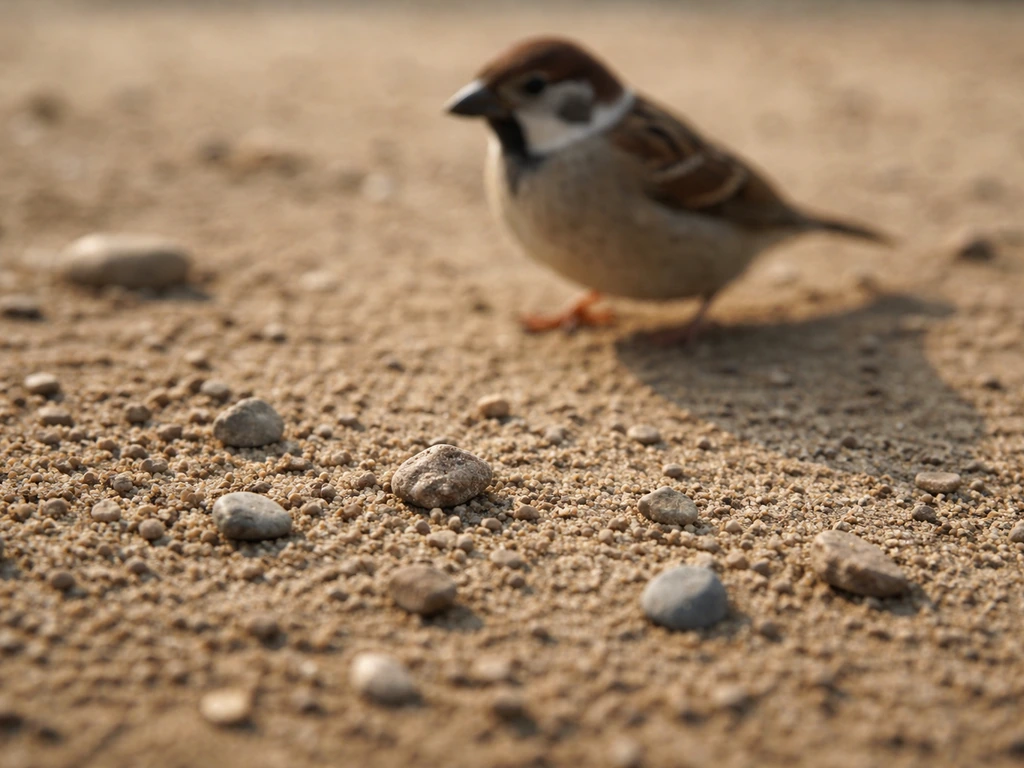
Beyond the galliforms, pigeons and doves are probably the birds most backyard watchers see picking up grit. They forage on the ground and regularly swallow fine gravel. Cranes and swans have also been documented retaining measurable quantities of grit in their gizzards. Even house sparrows use grit, with studies showing they adjust the size of grit particles (roughly 0.2 to 1.4 mm) depending on whether their current diet leans toward soft animal food or hard plant seeds.
| Bird group | Uses grit? | Notes |
|---|---|---|
| Chickens and turkeys | Yes, well-documented | Classic experimental models; retain insoluble grit in gizzard |
| Quail, pheasants, grouse, ptarmigan | Yes | Grit found in wild gizzards; all galliforms should have access to grit |
| Pigeons and doves | Yes | Common in backyard; seen actively picking up fine gravel |
| House sparrows | Yes | Adjust grit particle size by diet type (0.2–1.4 mm range studied) |
| Sandhill cranes and swans | Yes | Grit size and mass quantified in wild birds by USGS research |
| Parrots and hookbills | Not typically needed | Grit is not universally appropriate; captive parrots rarely need it |
| Loons and waterbirds | Yes, but risky | Ingest stone-like objects as grit; can accidentally ingest lead tackle |
Why rocks help: gizzards, grinding, and what foods trigger grit use
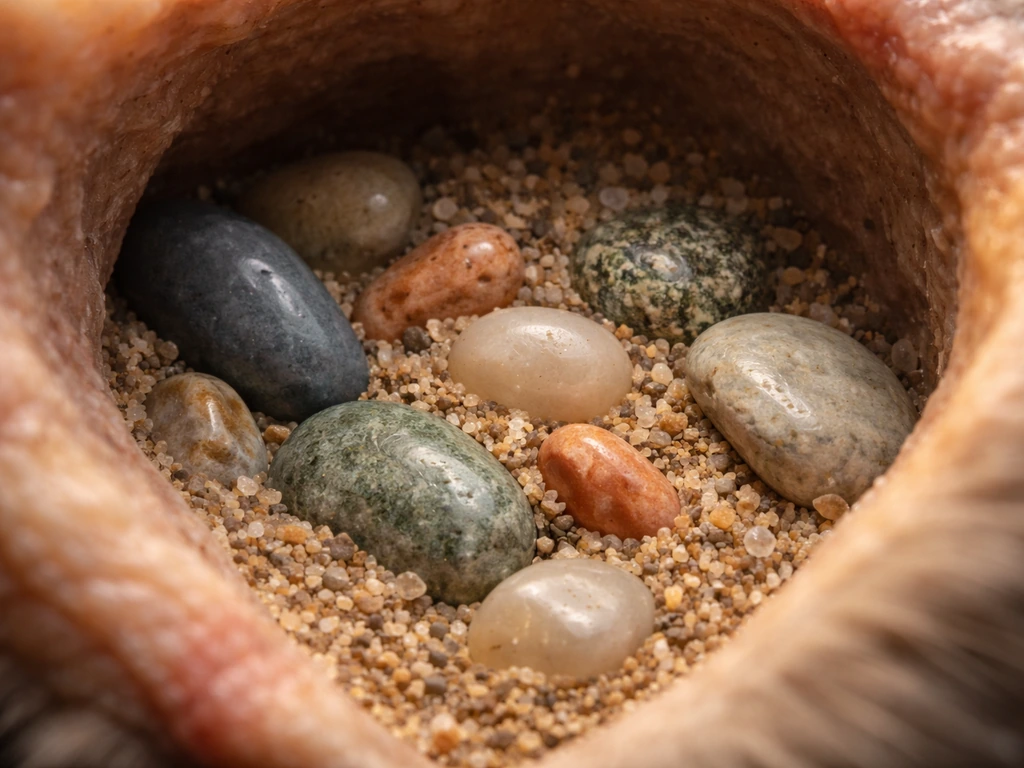
Birds have no teeth, so the gizzard does the chewing. This question is related to how birds use the gizzard and grit, because their ability to process hard food can affect choking risk can a bird choke on food. It's a thick-walled, muscular chamber that contracts rhythmically, and when grit is present, those small stones generate shear and abrasion against food particles. The mechanical grinding reduces tough seeds, hulls, and insects to a fine enough mash that digestive enzymes further along the gut can actually break it down. Without grit, whole hard seeds can pass through or sit in the gizzard unprocessed. With it, a bird can extract far more nutrition from the same meal.
Grit use scales with diet hardness. Studies on house sparrows confirmed this directly: birds eating harder plant food held more and larger grit particles than birds on soft food. Chickens fed coarser diets showed different grit intake and retention patterns than those on softer feeds. So birds are not mindlessly pecking gravel. They're self-regulating based on what they're eating, which is a useful thing to understand before you decide to supplement.
There are also two functionally different types of grit worth knowing. Insoluble grit (granite chips, flint, small quartz pieces) doesn't dissolve and stays in the gizzard long enough to do mechanical work. Soluble grit (oyster shell, limestone, cuttlebone) dissolves quickly and delivers calcium rather than grinding power. The Merck Veterinary Manual specifically recommends that all gallinaceous birds have access to both: insoluble grit for grinding and a soluble calcium source, especially for laying hens. These are separate tools that do separate jobs.
How to identify the bird in your yard and what behavior to look for
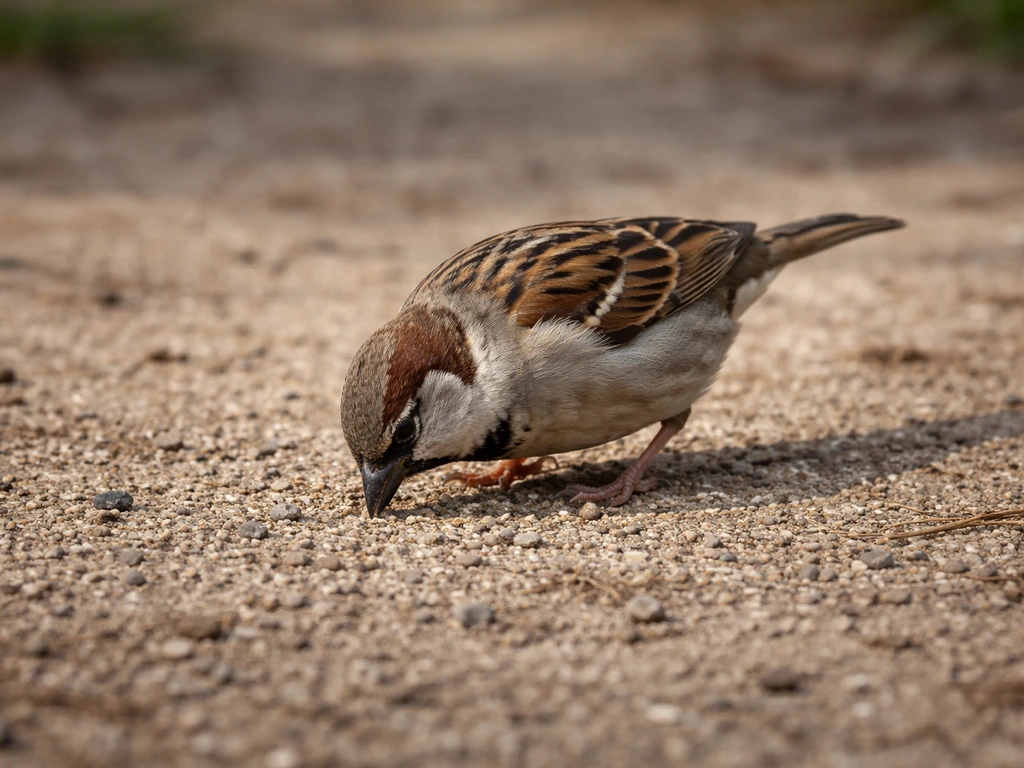
If you're watching a bird and wondering whether it's actively seeking grit, look for deliberate ground pecking that isn't aimed at food. Grit-seeking birds pause over bare soil, gravel driveways, sandy paths, or roadsides and pick up individual tiny particles, often in a slow, methodical pattern. Some people also wonder which bird eats pebbles, but grit use generally depends on what a bird can digest safely, not on one species eating stones as a habit. They're not scratching for insects. The head tilts, the beak goes to the ground, and they swallow with a small head bob. Pigeons and mourning doves do this often along graveled paths or after rain, when small stones are more visible.
Quick field ID cues for the most common grit-eating backyard birds:
- Rock pigeons and mourning doves: stocky, ground-level foragers; seen on driveways and edges of paths; deliberate single-item pecking between seed feeding bouts
- House sparrows: small and brown; males have black bibs; forage in groups, often mixing seed eating and grit picking on bare ground
- Quail (bobwhite, California quail): round-bodied, low to the ground, often in small groups; scratch and peck on dry, open soil
- Mourning dove vs. rock pigeon: doves are slimmer with a long pointed tail; pigeons are heavier with a rounded tail and iridescent neck
- Any galliform guest (pheasant, turkey, guinea fowl): large ground birds that scratch actively; will absolutely seek out grit if you keep them
One thing that trips people up: a bird picking up something from the ground near the feeder is not always eating fallen seed. Watch carefully and you may notice it's choosing from the fine gravel or sandy soil nearby, not the seed pile itself. That's grit foraging, and it's perfectly normal.
Should you provide grit at feeders? When, what type, and how much
For most wild birds with outdoor access, supplemental grit at feeders is simply not necessary. Birds in yards, parks, and natural areas find their own grit in soil, gravel, and sandy substrate. Adding more can be harmless in small amounts, but it's not the urgent need that some birding products make it seem. Where it genuinely matters is in captive, confined, or indoor-kept birds that can't forage naturally, especially chickens, quail, pheasants, and other galliforms being raised in runs or coops with no soil access.
If you do want to provide grit at a feeder or in a coop, here's how to do it right. Offer insoluble grit (granite grit or crushed flint) in a separate small dish alongside feed, not mixed in. Particle size matters: fine grit (about 1 to 2 mm) is appropriate for small birds like finches and sparrows; medium grit is right for pigeons, doves, and quail; coarser grit suits larger galliforms like chickens and turkeys. Let birds self-select from the dish rather than forcing a set quantity. For laying hens, add a separate dish of oyster shell or limestone as the soluble calcium source. Merck's guidance is clear that these two things do different jobs and should both be available.
If you're asking about wild backyard visitors: scatter a small handful of commercial chick grit or parakeet grit on a flat surface near where they forage, and let them take what they want. Don't dump large quantities and don't mix it with seed or suet. Refresh it monthly and keep it dry.
What not to do: unsafe rocks, gravel, and feeder practices that cause harm
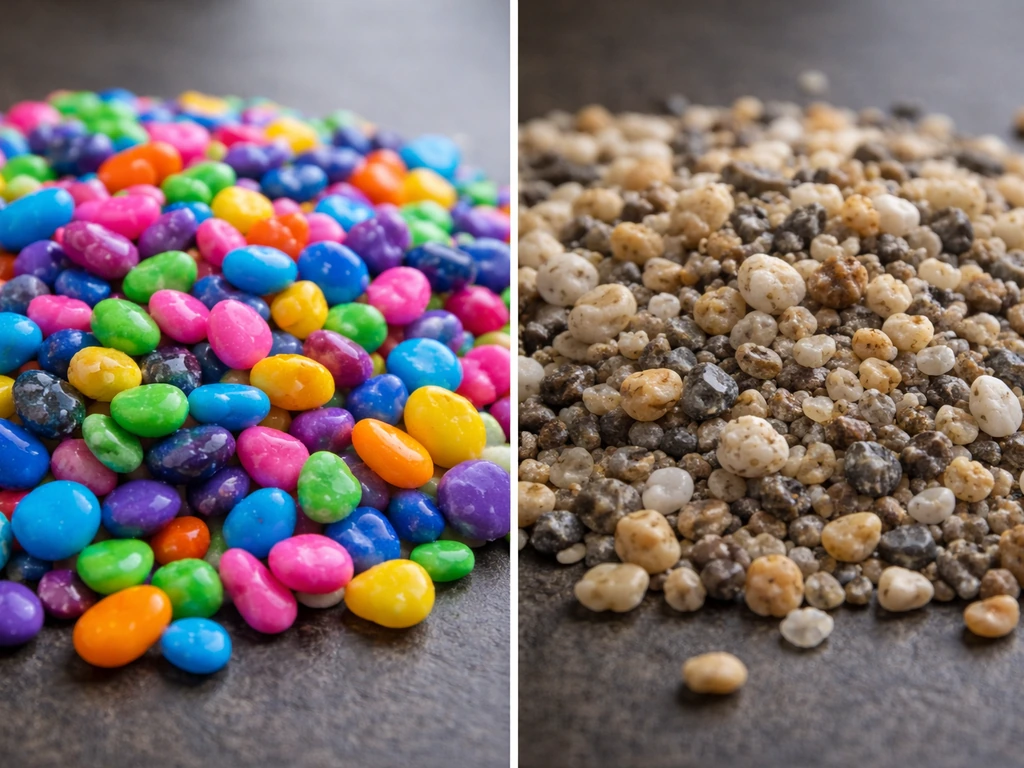
Not all small stones are safe grit. This is where people run into real problems. Colored aquarium gravel is coated with paints and dyes that can leach toxic compounds when exposed to stomach acid. Decorative stones from garden centers may be treated or contaminated. Pea gravel from construction supply is often too large, especially for smaller birds. Sand from unknown sources can carry heavy metal contamination. Stick to commercially sold chick grit, parakeet grit, or crushed granite sold specifically for birds.
The lead tackle issue deserves a direct mention. Loons and other waterbirds ingest lead fishing weights and sinkers because they look and feel like the small stones they'd normally swallow as grit. For example, the U.S. Fish & Wildlife Service explains that loons and other waterbirds may ingest lead fishing tackle because it can be mistaken for small stones they normally swallow to aid digestion. The U.S. Fish and Wildlife Service has documented this pathway: lead moves to the gizzard, stomach acid erodes it, lead absorbs into the bloodstream, and the bird dies of lead poisoning. Clinical signs include weakness, depression, and weight loss. This isn't a fringe concern: USGS research has found elevated lead in blood and liver tissue of waterbirds from this exact mechanism. If you fish near waterfowl habitat, use non-toxic tackle.
A few other don'ts worth knowing:
- Don't give parrots or hookbills grit without a specific veterinary recommendation; it's not appropriate for their digestive system and can cause impaction
- Don't mix grit into wet or moist food where it will clump, become contaminated, or be ingested in uncontrolled amounts
- Don't assume every wild bird needs supplemental grit; birds with outdoor access self-regulate fine
- Don't use road grit or sidewalk grit, which can contain salt, de-icing chemicals, and heavy metals
- Don't offer grit in open dishes that collect rainwater and become breeding grounds for bacteria
Food safety and storage: preventing spoilage, pests, and disease risks
Grit itself doesn't spoil, but everything around it can. The bigger food safety issue at feeders is wet seed, moldy hulls, and fecal buildup under feeding areas. Wet seed ferments within days, and mold produces mycotoxins that are harmful to birds and potentially to pets and wildlife that scavenge under feeders. The Minnesota DNR recommends raking and sweeping debris and hulls from under feeders regularly, not letting it accumulate. Penn State Extension guidance goes further: rotate where you scatter ground feed to prevent bacterial buildup in any one spot.
Feeder cleaning is non-negotiable. At minimum, clean feeders monthly using a dilute bleach solution (about 1 part bleach to 9 parts water), rinse thoroughly, and let them dry completely before refilling. The Iowa DNR and CDC both recommend this schedule and note that if you see visibly sick birds at your feeder, take the feeder down for at least two weeks to interrupt disease transmission. Wet ground under feeders is a particular hotspot: mold, bacteria, and droppings concentrate there and can infect healthy birds that forage on the ground, which includes most of the grit-eating species we've been talking about.
Practical storage rules for seed and grit:
- Store birdseed in a sealed, airtight container (metal preferred to prevent rodent access) in a cool, dry location
- Never top up a feeder with fresh seed over old, damp, or clumped seed; empty and inspect first
- Discard any seed that smells musty, looks clumped, or shows visible mold immediately
- Keep grit in a dry covered container; moisture promotes bacterial growth even in inorganic material
- Refresh outdoor grit dishes after rain, and position them under a slight overhang if possible to reduce wetting
Pet and wildlife safety at feeders: what to watch for and how to reduce exposure
Dogs and cats that spend time around feeders can and do ingest fallen seed, grit, and the debris that accumulates underneath. The AKC notes that a small amount of fresh, clean birdseed is generally not harmful to dogs, but the situation changes fast with damp or contaminated material. Old seed under feeders can carry mold, mycotoxins, and bacteria that cause gastrointestinal illness in dogs if they eat enough of it. If your dog is a ground scavenger or your cat hunts under feeders, keep the ground beneath feeders as clean as possible and consider elevating or baffling your setup to reduce scatter.
Cats face an additional risk from the contaminated substrate itself. Pet-care sources flag that damp old birdseed under feeders can carry bacteria and mold residue that transfers to paws, coat, and mouth. Cats that groom after contact can ingest small amounts. This is low-level but worth knowing, especially if your cat has a compromised immune system or is elderly.
For backyard wildlife at large, the grit-lead connection mentioned earlier extends beyond just loons. Ground-foraging birds like doves, sparrows, and quail can accidentally ingest lead shot fragments or small lead-containing debris if it ends up in soil near feeders. Keep shooting ranges, old garden debris, and painted materials well away from feeding areas. Lead paint chips are small enough to be mistaken for grit by ground-feeding birds.
It's also worth noting that the questions of which birds eat bones and which birds swallow unusual hard objects as part of their digestion are closely related to the grit story. Some species push the gastrolith concept further than others, and understanding the gizzard mechanism helps explain behaviors that can otherwise look bizarre or even alarming.
Quick do/don't checklist for grit and feeder safety
| Action | Do or Don't | Why |
|---|---|---|
| Offer commercial chick grit or parakeet grit in a separate dish for confined galliforms | Do | Provides insoluble grinding aid birds can't source themselves in a coop or run |
| Provide oyster shell or limestone separately for laying hens | Do | Soluble grit delivers calcium, which insoluble grit does not |
| Use colored aquarium gravel as grit | Don't | Coatings can leach toxins in stomach acid |
| Use road grit, sand from unknown sources, or construction gravel | Don't | Risk of salt, de-icing chemicals, and heavy metal contamination |
| Give parrots or hookbills grit without vet guidance | Don't | Wrong digestive system; risk of impaction |
| Add grit to wet or mixed food | Don't | Clumping leads to uncontrolled intake and contamination |
| Clean feeders monthly with dilute bleach solution | Do | Prevents mold, bacteria, and disease transmission |
| Rake and remove seed hulls and debris under feeders regularly | Do | Reduces mycotoxin, bacterial, and fecal contamination at ground level |
| Take feeders down for two weeks if sick birds appear | Do | Interrupts disease spread among ground-feeding and grit-eating species |
| Store seed in sealed, dry, cool containers | Do | Prevents mold and mycotoxin development |
| Keep dogs and cats away from ground debris under feeders | Do | Contaminated seed and grit residue can cause illness in pets |
| Fish with non-toxic tackle near waterbird habitat | Do | Lead weights are mistaken for grit by loons and waterfowl, causing fatal lead poisoning |
FAQ
How can I tell the difference between grit foraging and a bird eating something dangerous (like aquarium gravel)?
Watch what it targets. Grit-seeking birds pick up individual tiny particles from bare soil or natural gravel and swallow them, often after a brief head tilt and ground peck. If the bird is repeatedly beaking larger, uniform chunks (for example colored aquarium gravel pieces), that pattern suggests it may not be getting appropriate grit particle sizes and you should remove or relocate those materials.
Do birds need grit year-round, or only when they eat hard seeds?
Grit use generally tracks diet hardness, so birds on softer foods tend to carry less grit. However, many birds eat mixed diets seasonally, and gizzard stone retention can still be helpful whenever hard plant material (hulled seeds, insects with tough parts) is a major portion of intake.
If I put grit in a feeder, will it help birds that only eat from the platform or hanging feeder?
Usually not much. Birds that do not forage on the ground typically do not have the same opportunity to ingest grit. Platform or tray feeders mostly attract species that can eat seeds while standing, while grit is most relevant for ground-feeders and birds that naturally peck at soil or gravel nearby.
What grit size is safest for small backyard birds like finches and sparrows?
Choose fine grit in the ballpark of about 1 to 2 mm so it is small enough to swallow comfortably yet large enough to create abrasion. If you can only find one size, start with fine rather than coarse, then observe whether birds pick it up and whether you see any coughing or refusal to swallow.
Can birds overdose on grit?
They generally self-select and regulate intake, but problems can arise when grit is dumped in large quantities or mixed with feed. Excess grit in a confined setup can crowd out normal food choices and may irritate the gizzard. Offer it as a separate dish so birds can take only what they need.
Is oyster shell the same thing as grit?
No. Oyster shell and limestone dissolve faster and mainly provide calcium, they are not designed to grind hard seeds. Many keepers make the mistake of using only calcium sand or only insoluble grit, but birds benefit from both separate options when they are laying or consuming hard foods.
If birds already find grit outside, why do some people still use feeder grit or chick grit?
Supplementing is mainly for captive or restricted birds that cannot access bare soil, sandy substrate, or natural gravel. For free-ranging wild birds, providing grit is usually unnecessary, and the bigger risk is that feeder areas can also accumulate wet seed, mold, and droppings that create health problems.
How often should I refresh grit, and how do I keep it from getting contaminated?
Keep it dry and remove old, damp material. In practice, many people refresh monthly, but if your area is humid or the dish gets soiled quickly, shorten the interval and wash the dish with a mild detergent, rinse well, and dry fully before refilling.
What should I do if I see a ground-foraging bird with trouble swallowing or acting weak after visiting my yard?
Stop using questionable stones or gravel near the feeder, remove the food and grit sources temporarily, and clean the area. If multiple birds show weakness or weight loss, especially near water or fishing gear, suspect hazards like lead contamination and contact a local wildlife rehabilitator or vet for guidance.
Do waterbirds that eat rocks always have lead poisoning when they ingest sinkers, or is it just a risk?
It is a risk, not a guaranteed outcome. The pathway depends on whether the bird ingests the sinkers and on corrosion rates in acid. Still, because lead exposure can be fatal and is documented in real cases, using non-toxic tackle near water or waterbird habitat is the safer default.
Is it okay to mix grit into seed or sprinkle it directly on the floor?
Better not. Mixing grit into seed makes particle size harder to control and increases the chance of birds eating unwanted materials together. Use a separate dish for grit so birds can select, and only scatter small amounts in natural, clean areas if you are trying to encourage use.