Yes, most backyard birds can safely eat grapes. The U.S. Fish & Wildlife Service lists white seedless grapes as a recommended fruit offering at feeding stations, and Project FeederWatch calls grapes and raisins a favorite of many fruit-eating birds. The main rules are simple: use seedless grapes, cut them in half, rinse them first, and keep the feeding area clean. Follow those steps and you're doing it right.
Can Bird Eat Grapes Safely? How to Feed Grapes to Birds

Maya Bennett
16 May 2026
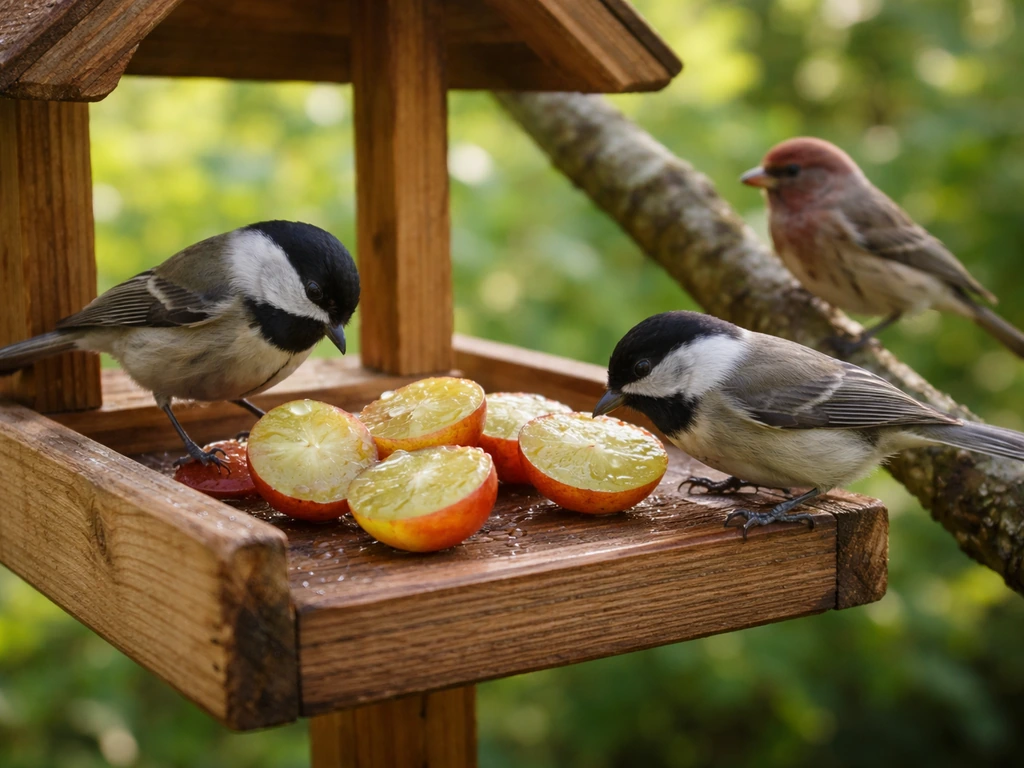
Are grapes safe for birds? The direct answer
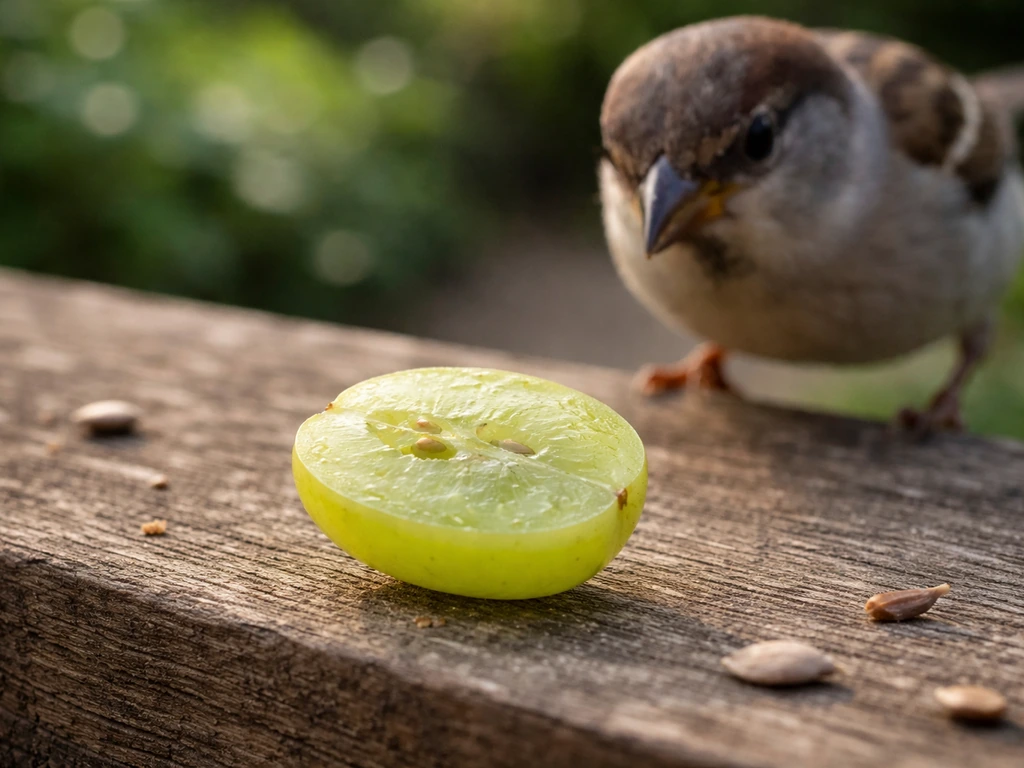
Grapes are not toxic to birds. The grape toxicity concern you may have heard about applies to dogs and cats, not birds. The Merck Veterinary Manual frames grape and raisin poisoning as a species-specific issue driven by tartaric acid, and that risk does not extend to birds the way it does to mammals.
Garden Wildlife Health makes this distinction explicit in their best-practice feeding guidance: grapes are listed as a household hazard for cats and dogs, not as a bird toxin. So if you've been nervous about putting grapes out at your feeder, you can relax on that front. The real risks with grapes for birds are practical ones: choking on whole grapes, pesticide residue on the skin, and mold from fruit left out too long. All of those are easy to manage.
One quick myth to clear up: raisins are also fine in moderation, as long as they have no added preservatives or sulfites. Fresh grapes are generally preferable because you have more control over freshness and pesticide exposure, but plain dried raisins work in a pinch.
Which birds eat grapes (and how to spot them at your feeder)
Not every bird that visits your yard is going to be interested in grapes. Seed-focused birds like sparrows, finches, and chickadees will usually ignore fruit entirely. The birds that go for grapes are fruit and berry eaters, and they tend to have a few things in common: they're often medium-to-large songbirds, they forage on the ground or from low platforms, and they're drawn to color.
The RSPCA notes that birds that benefit from fruit include “apples, pears and soft fruits” fruit and berry eaters.
Project FeederWatch names mockingbirds, catbirds, bluebirds, robins, and waxwings as the species most likely to use backyard fruit. The BTO adds starlings, blackcaps, blackbirds, song thrushes, and waxwings to the list for those in the UK. The BTO notes that frequent fruit-feeders include [woodpigeons, blackcaps, and starlings](https://www. bto.
org/learn/about-birds/behaviour/bird-behaviour-eating-berries-and-fruit), as well as waxwings and thrush-family birds like blackbirds and song thrushes.
| Bird | How to identify them | Feeding habit |
|---|---|---|
| American Robin | Orange-red breast, dark back, yellow beak | Forages on ground; eats fruit and worms |
| Northern Mockingbird | Gray body, white wing patches, long tail | Aggressive feeder; loves soft fruit |
| Gray Catbird | Slate gray, rusty undertail, cat-like call | Prefers low, sheltered fruit offerings |
| Eastern Bluebird | Blue back, rusty-orange chest (male) | Eats small fruit; attracted to platform feeders |
| Cedar Waxwing | Sleek brown crest, yellow tail tip, red wing spots | Moves in flocks; strips fruit quickly |
| European Starling | Iridescent black, speckled in winter, yellow bill in summer | Opportunistic; will dominate fruit stations |
| Baltimore Oriole | Vivid orange and black (male) | Attracted to halved fruit and grape jelly |
| Blackbird / Song Thrush (UK) | All-black with yellow bill / spotted breast | Ground feeder; takes berries and soft fruit |
If you're putting grapes out and not seeing takers, check whether you have any of these species in your area first. A quick look at a regional bird checklist or an app like Merlin will tell you fast. If robins and waxwings aren't in your yard at all, grapes may just sit there and mold.
How to prep and offer grapes the right way
Prepping the grapes
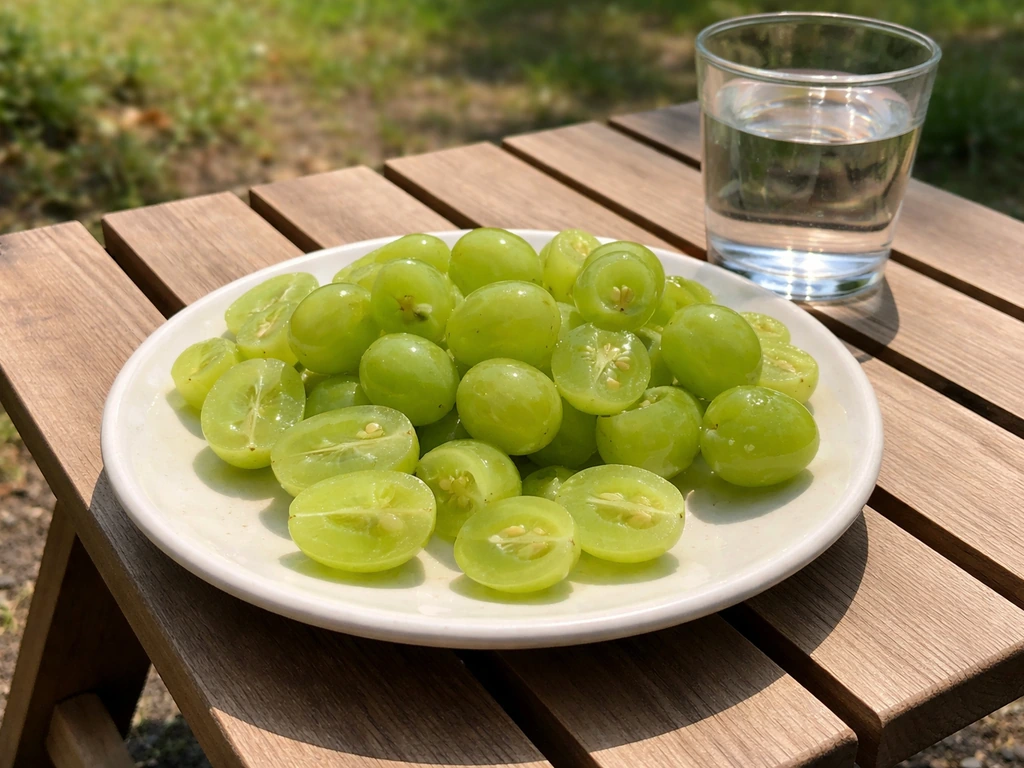
Both Tufts Wildlife Clinic and standard wildlife feeding guidance recommend the same prep: seedless grapes, cut in half. Cutting in half does two things. It reduces the choking risk (a whole grape is surprisingly large for a medium songbird to manage), and it exposes the moist interior, which makes the fruit much more attractive to birds since they can smell and access it immediately. Rinse the grapes under running water before cutting to remove surface pesticide residue. This is especially important with conventionally grown grapes, which tend to carry higher pesticide loads. Organic grapes are a better choice if they're available and affordable, but rinsing conventional ones is a reasonable middle ground.
Portions and placement
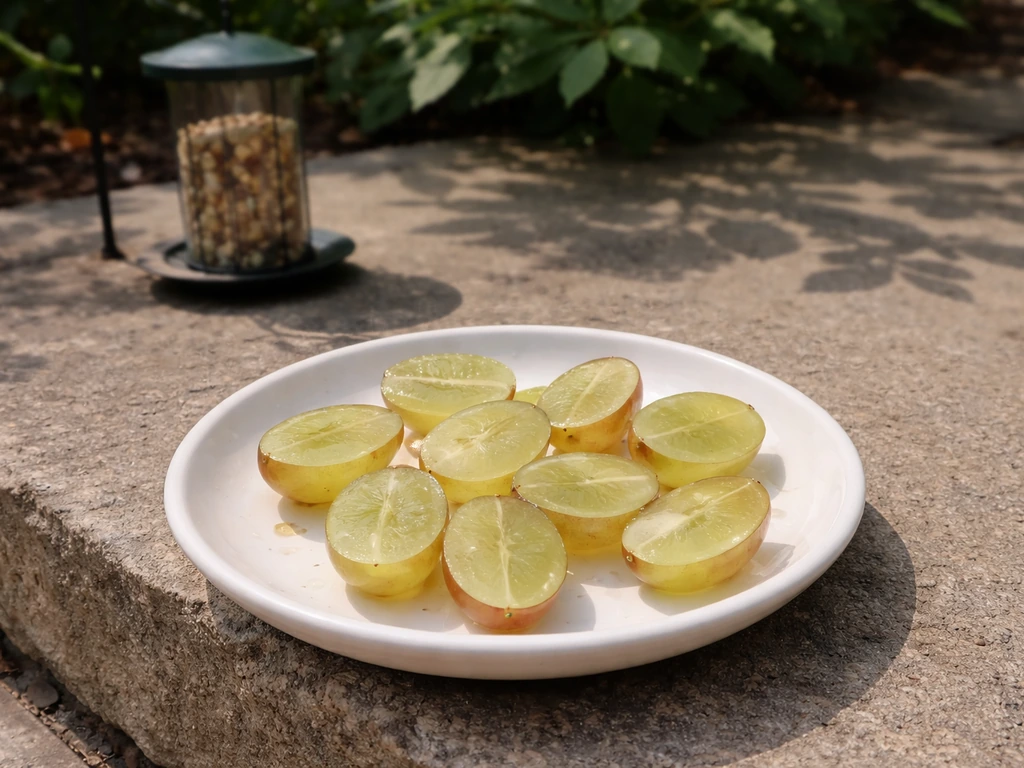
Start small. Put out 6 to 10 halved grapes at a time, not a whole bunch. Fruit goes off faster than seed, and you want birds eating fresh food, not fermenting leftovers. A flat platform feeder or a spike-style fruit holder works well. Ground placement is fine for robins and thrushes, which naturally forage at ground level, but a raised platform keeps the fruit cleaner and harder for rodents to access. Spreading fruit across a couple of spots rather than one big pile also helps limit disease transmission between birds, which is standard feeder hygiene advice from Audubon and Project FeederWatch.
- Choose seedless grapes (red, green, or black all work)
- Rinse thoroughly under cool running water
- Cut each grape in half lengthwise
- Place 6 to 10 halves on a clean platform feeder or flat surface
- Remove any uneaten fruit after 1 to 2 hours in warm weather, or after a few hours in cooler conditions
- Clean the feeder surface before adding a fresh batch
Risks you actually need to worry about
Choking hazard
Whole grapes are a choking risk for smaller and medium-sized birds. Cutting them in half eliminates most of this risk. Don't skip this step.
Mold and spoilage
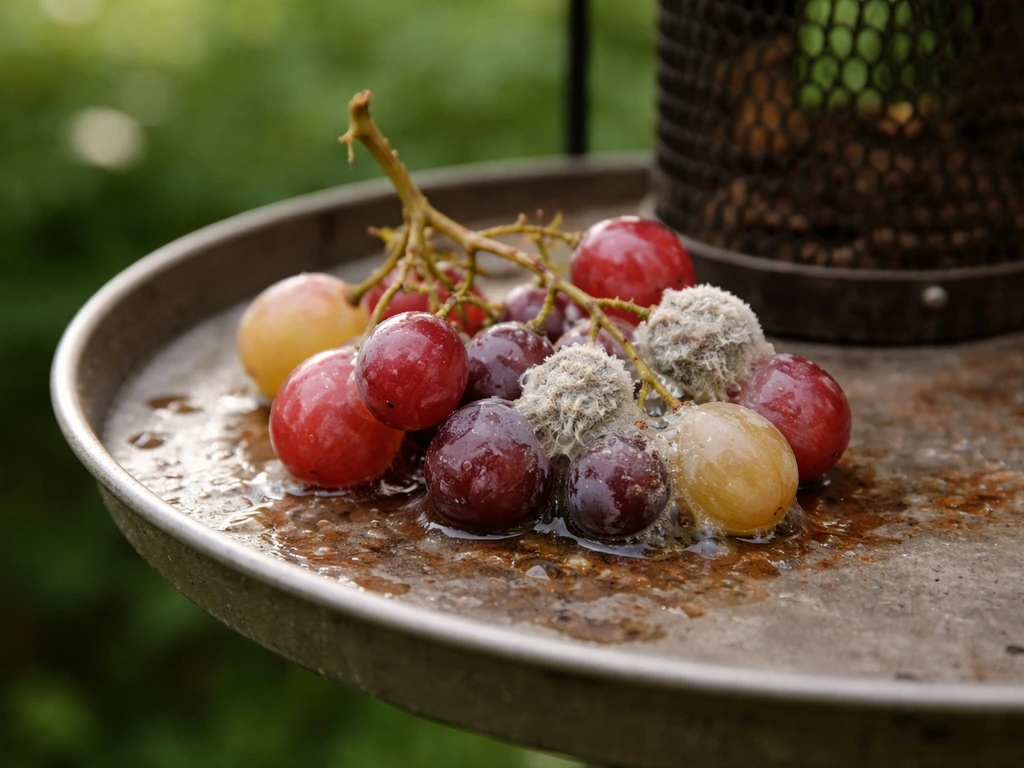
This is the biggest practical risk with fruit feeding. Grapes left out in warm or wet conditions can develop mold within hours. Moldy food makes birds sick, and the Minnesota DNR is direct about this: moldy birdseed and unclean feeders cause illness. The Project FeederWatch guidance on safe feeding environments says to discard and clean immediately if you see any mold. For fruit, treat this as a strict rule: if you wouldn't eat it, remove it. In summer, check your fruit station at least twice a day. In cooler months you can extend that window slightly, but fruit still spoils faster than you expect.
Pesticide residue
Grapes are consistently on the higher end of pesticide residue rankings for produce. Rinsing removes surface residues, and using organic grapes removes more of the concern. Don't offer grapes from an unknown source (like wild-harvested ornamental grapes that may have been sprayed) without rinsing them carefully.
The pet safety issue (this one is serious)
Grapes are genuinely toxic to dogs and cats, and this is the risk that actually matters for most households. Cornell University's veterinary college and the Merck Veterinary Manual both flag grape and raisin toxicity in dogs as a significant concern, with the toxic dose not clearly defined, meaning even small amounts can be dangerous. If you're putting grapes out for birds in a yard where dogs or cats have access, fallen or uneaten grapes become a real hazard. Clean up all fruit scraps thoroughly after every feeding session. Don't leave grapes on the ground where pets could find them. This is less about the birds and more about keeping your other animals safe.
If grapes were already put out: cleanup and what to watch for
If you already offered grapes and you're now wondering whether you did something wrong, the first thing to do is assess what you put out. Were they whole or halved? Rinsed? How long have they been sitting? If they've been out for more than a couple of hours in warm weather, remove them now and do a feeder cleanup before adding anything new.
For the feeder surface itself, the Minnesota DNR recommends scrubbing with a solution of two ounces of bleach per gallon of water, then rinsing well and letting it dry completely before refilling. This is the right approach any time you've had fresh food sitting out that could have gone off.
As for the birds: if they ate fresh, halved, rinsed grapes, they're almost certainly fine. Watch for any bird that appears lethargic, puffed up, or unable to fly normally near the feeding area. These are general signs of illness in wild birds. If you see a bird in clear distress after a feeding event, the right move is to contact a local wildlife rehabilitator, not to attempt treatment at home. Tufts Wildlife Clinic recommends this approach for any sick or injured songbird. Do a ground cleanup too: pick up any fallen grape pieces, especially if dogs or cats are around.
- Remove any grapes that have been out more than 1 to 2 hours in warm weather
- Clean the feeder surface with a bleach-water solution (2 oz bleach per 1 gallon water), scrub, rinse, and dry
- Pick up all fallen fruit scraps from the ground below the feeder
- Watch birds near the area for signs of illness for the next day or two
- Keep pets away from the feeding area until cleanup is complete
- If a bird appears sick or injured, call a local wildlife rehabilitator
Better alternatives and how to build a smart fruit feeder strategy
Grapes are a solid choice, but they're not the only option, and for some yards they're not the best one. The same general fruit-feeding rules usually apply to watermelon too, but you should offer it in small, clean portions and remove any leftovers quickly can bird eat watermelon. If you're not seeing fruit-eating species in your area, you might get better results with other fruit types or with seed.
Oranges cut in half are particularly effective for attracting orioles, and they're easy to spike onto a feeder. Bananas, watermelon pieces, and apples are also worth trying depending on what species visit your yard. The same prep principles apply to all of them: fresh, clean, cut into manageable pieces, removed before they mold.
Fruit feeding and seed feeding serve different bird communities, and mixing both at your station is usually the smartest approach. Seed eaters like finches, sparrows, and chickadees won't touch grapes, and fruit eaters like waxwings and catbirds mostly ignore seed. Running a standard seed feeder alongside a separate fruit station means you're catering to both groups without competition. Just keep the two feeder types a few feet apart so dominant species like starlings don't monopolize everything.
One final note on storage: like bread and other perishables sometimes offered to birds, fruit needs to be treated as a short-use food. Bread can also be a short-term food for birds, but it spoils quickly so it needs prompt removal can bird eat bread. Don't buy a large bag of grapes to use as feeder fruit and then let them sit in your fridge for two weeks before using them. The fresher the grape going out, the less mold risk, and the more attractive it is to birds. Buy small quantities for feeder use, keep them refrigerated until needed, and rinse right before serving.
| Fruit option | Best for attracting | Prep needed | Spoilage speed |
|---|---|---|---|
| Grapes (seedless, halved) | Robins, waxwings, catbirds, mockingbirds, orioles | Rinse, cut in half | Fast (1-2 hrs in heat) |
| Orange halves | Orioles, tanagers, mockingbirds | Cut in half, spike or cup on feeder | Moderate (a few hours) |
| Banana slices | Orioles, waxwings, catbirds | Peel, slice into rounds | Fast (browns quickly) |
| Watermelon pieces | Robins, mockingbirds, starlings | Remove seeds, cut into chunks | Fast in heat |
| Apple slices | Robins, waxwings, thrushes | Core, slice thinly | Moderate |
If fruit feeding feels like too much maintenance for your setup, that's a perfectly reasonable call. Fresh fruit requires more attention than a seed feeder, and if you're not home regularly to check it, the spoilage risk isn't worth it. In that case, stick to seed and suet, which are much more forgiving.
But if you have robins, waxwings, or catbirds in your yard and you want to attract more of them, a small tray of halved grapes refreshed twice a day is one of the most effective things you can do. If you're wondering whether a bird can eat cheese instead, the rules are different, so check the right guidance before offering dairy halved grapes refreshed twice a day.
FAQ
Can I put flavored or sweetened grapes out for birds, or only plain grapes?
Use only plain grapes, with no honey, sugar water, juice, yogurt, or “fruit” products that may contain additives. If a grape has been coated, rinsing afterward may not remove all residues, so it is safer to skip it.
What should I do if I keep seeing smaller birds try to swallow whole grapes?
If you find whole grapes still being taken, keep using halved grapes and consider adding a few at a time. Smaller birds may try to swallow pieces too large, so using larger cuts for the birds you see (for example, half again for very small fruit visitors) can reduce choking.
Can I use previously frozen grapes for feeding birds?
Yes, but only if the fruit stays clean and you can remove it quickly. Rinse just before serving, cut them in half, start with a small amount, and check more often because fridge-cold fruit can warm and spoil faster once outdoors.
Are grapes safe to re-offer if they look a bit soft but are not visibly moldy?
If grapes were left out until they were soft, leaking, or smelly, treat them as unsafe and discard them. Before refilling, scrub the tray or platform and let it dry fully, then offer a fresh small batch.
Should I offer grapes differently when it’s raining or humid?
In most yards it is fine, but avoid “wet piles.” If rain or sprinkler water hits the fruit, remove what got wet, rinse the feeder surface, and then refill with fresh, halved, rinsed grapes.
Where is the best place to put grapes so they do not spoil or get covered in debris?
Do not put grapes in areas where birds can’t reach them cleanly, for example a deep gutter or narrow crevice where fruit can decay unnoticed. Choose a platform or ground spot where you can monitor and remove old pieces easily.
Can I place halved grapes on the same feeder as seed, or should I keep them separate?
If you use fruit at the same station as seed, keep grapes in a separate holder and away from seed hulls. Seed dust and husks can contaminate fruit, and the cleanup cycle gets harder if both foods sit in the same tray.
If I have larger fruit-eating birds like waxwings, can I increase the amount of grapes I offer?
Yes, but keep the quantity small and remove leftovers promptly. Whole birds can still use cut grapes, but larger species may grab faster, so start with fewer halved grapes to prevent an overstocked pile that spoils.
How do pet-safe practices change how long grapes should stay outside?
For dogs and cats, remove fallen grapes and clean the feeding area after each session. For birds, focus on halved and rinsed fruit, but if you have pets, you may need to shorten outdoor time even more because pets may find uneaten pieces quickly.
What if my birds ignore grapes, even after I’ve followed the prep steps?
If you do not see fruit-eating species within a day or two, try a different spot (ground versus raised platform), and pair grapes with another bird-attracting fruit option like orange halves for orioles. Also avoid offering at peak dominance times, for instance when aggressive birds are monopolizing the area.