
Yes, rats absolutely eat bird eggs. This is not a rare or opportunistic fluke. Rats are documented nest predators across many species of birds, from backyard songbirds to seabirds, and they will take eggs, chicks, and anything else in a nest that offers a calorie. If you have rats around and you are losing eggs, rats are very much on the suspect list. The good news: once you confirm they are the culprit, the steps to stop them are practical and largely doable on your own.
Do Rats Eat Bird Eggs? How to Confirm and Prevent It

Maya Bennett
22 Mar 2026
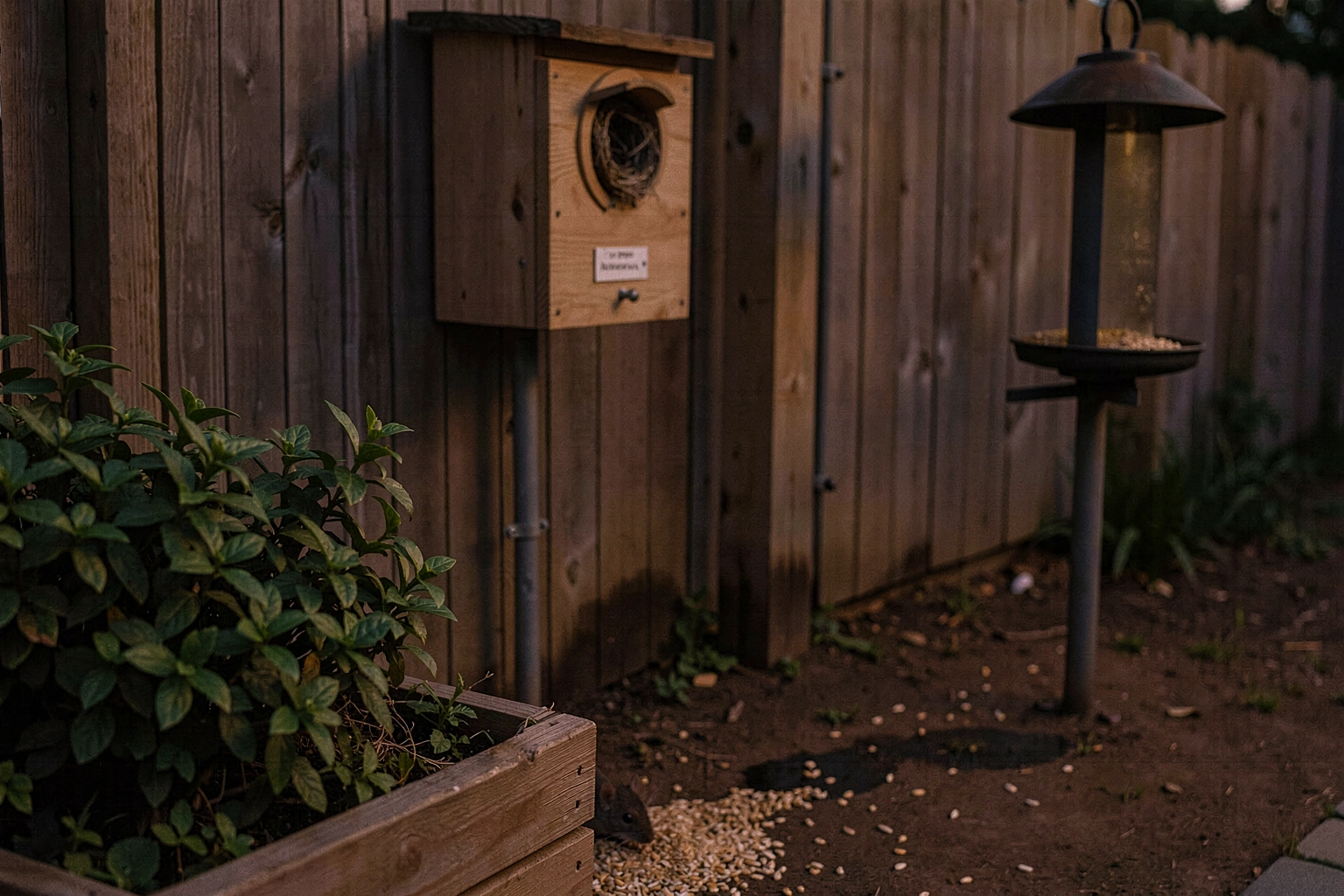
Do rats eat bird eggs? The direct answer
Rats are omnivores with broad, opportunistic diets, and bird eggs are exactly the kind of high-protein, calorie-dense food they will actively seek out. Research from nesting colonies shows that rats (both Norway rats and black rats) target eggs and chicks during the breeding season, then shift their diet when those resources dry up. That seasonal pattern is important: if birds are nesting in or around your yard right now, the risk is highest. Eggs in ground-level nests, low shrubs, nestboxes close to the ground, and anywhere with easy rodent access are the most vulnerable.
Rats are not just scavengers poking around randomly. Studies on nest predation show that rodents can develop a search image for nests, meaning they actively learn where nests are and return repeatedly through a breeding season. A rat that finds your nestbox once is very likely to come back. That makes early action critical.
Why rats go after bird nests in the first place
Understanding what draws rats to a nesting area helps you cut off the problem at the root. Rats thrive when four conditions are met: food, water, shelter, and safe travel routes. Bird nesting setups often check all four boxes without the bird keeper even realizing it.
- Bird feeders and spilled seed on the ground are a reliable, high-calorie food source that draws rats in before they ever discover the nest
- Water sources like birdbaths, dripping hoses, or puddled water near feeders meet their water needs
- Dense shrubs, woodpiles, compost bins, and cluttered areas near nesting sites provide daytime shelter and harborage
- Fence lines, walls, and the undersides of raised structures give rats low-risk travel routes directly to nests
- The eggs and chicks themselves are a protein-rich seasonal bonus once the rats are already present
The critical insight from pest management research is that rats increase in number quickly when resources are consistently available. If your yard reliably offers food and cover, rat populations can grow to a point where pressure on any nesting site becomes intense. That is why deterrents alone rarely work without also addressing what attracted them in the first place.
How to tell if rats are the ones taking eggs
Other animals also eat bird eggs, including squirrels, chipmunks, snakes, jays, and crows. Before you take action, it is worth spending a few minutes confirming rats are actually involved, because the solutions are different depending on the predator. Here is what to look for.
Physical evidence at and around the nest
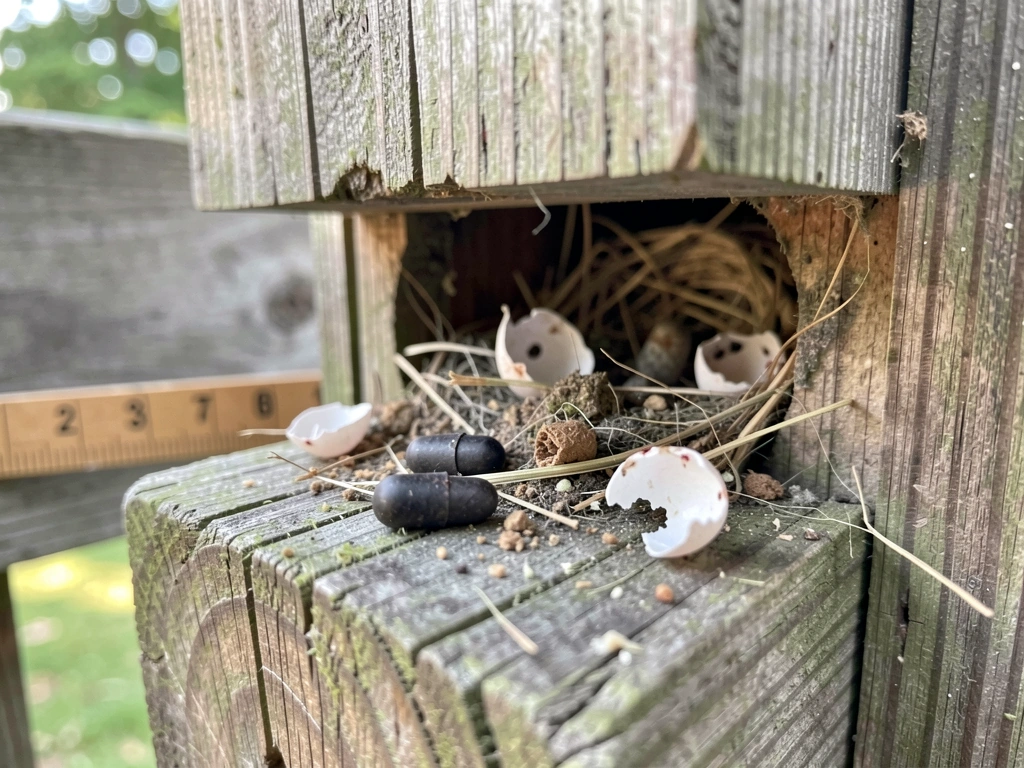
- Droppings near the nest or along travel routes: rat droppings are roughly 1/2 to 3/4 inch long, dark, capsule-shaped, and tapered at the ends. Mouse droppings are smaller (about 1/4 inch). Finding droppings in or directly under a nestbox is a strong indicator.
- Gnaw marks on the nestbox entrance hole or surrounding wood: rats gnaw to enlarge openings and leave rough, splintered edges with visible incisor marks
- Egg fragments or eggshell pieces on the ground with ragged, irregular edges and possible gnaw marks on the shell itself
- Disturbed or destroyed nest material: rats often pull nesting material around and may even use nest boxes for their own sleeping or food storage
- Grease marks or smudge trails along fence posts, pipes, or tree bark near the nest, which come from oils in rat fur as they repeatedly travel the same route
Timing and behavior clues
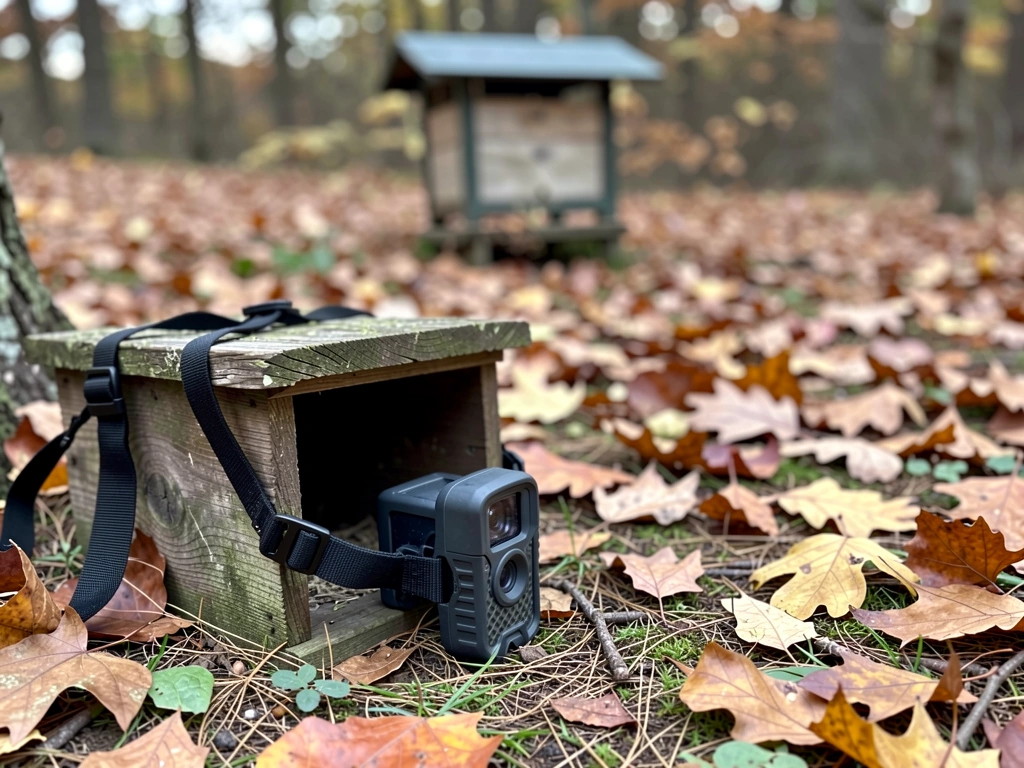
Rats are primarily nocturnal, so if eggs are disappearing overnight with no sign of daytime predators, that is a meaningful clue. Set up a simple wildlife camera pointing at the nestbox or nest area and check it after a night or two. Daytime egg loss with loud disturbance is more consistent with corvids (crows, jays) or squirrels. If you see eggs vanishing silently between dusk and dawn, rats are the most likely culprit among small mammal predators.
Quick comparison: rat signs vs. other nest predators
| Predator | Active time | Droppings near nest | Egg evidence | Other signs |
|---|---|---|---|---|
| Rat | Mostly night | Large capsule-shaped, 1/2–3/4 in. | Gnawed shell fragments, irregular edges | Grease marks, gnawed wood on nestbox |
| Mouse | Mostly night | Small, pointed, ~1/4 in. | Small gnaw marks on shell | Tiny entry holes, nesting material shredded |
| Squirrel | Daytime | None typical near nest | Shell cracked or carried off, no gnaw marks | Seen near nest during day |
| Chipmunk | Daytime | Rare near nest | Small shell fragments | Quick movements near ground nests |
| Snake | Variable | None | Egg missing entirely, no shell left | Shed skin, smooth entry hole in nestbox |
| Jay or crow | Daytime | None | Shell pieces scattered widely | Loud disturbance, seen at scene |
Which birds and nesting setups face the most risk
Not all nests are equally vulnerable. Research on nest predation consistently shows that placement and accessibility are the biggest factors in whether rodents can get to eggs. Ground-nesting birds, low shrub nesters, and birds using nestboxes mounted on wood posts or fences are at the highest risk. Cavity nests high up in trees with no nearby climbing routes are much harder for rats to reach, though not impossible for black rats, which are excellent climbers.
- Ground-nesting birds (towhees, certain sparrows, killdeer): highest risk, with no physical barrier between eggs and ground-traveling rats
- Low shrub nesters (robins, mockingbirds, doves nesting under 6 feet): easy access for rats that can climb
- Nestboxes on wooden fence posts, buildings, or trees: rats can climb straight up wood or run along fences to reach the box
- Nestboxes with large or gnawed entrance holes: once a rat enlarges an opening to about 1.5 inches, it has access to most small nestboxes
- Nests close to known rat harborage (woodpiles, sheds, compost bins): proximity shortens the rat's travel distance and lowers its exposure risk
A forest service field study using artificial nests confirmed that nest position and distance from edge habitat (where rodent activity tends to be concentrated) strongly influence predation rates on small eggs. If your nesting setup is near a fence line, dense ground cover, or a structure that offers rats shelter, the risk is meaningfully higher than a nest in the open center of a yard with no nearby cover.
How to stop rats from eating bird eggs
Deterrents work best when layered together. A single fix rarely holds for long because rats are persistent and will probe for weaknesses. The approach that actually works targets their motivation (food, water, shelter) and their access (physical barriers) at the same time.
Reduce what is attracting rats in the first place
- Sweep up spilled birdseed under feeders every day, ideally before dark. Research-backed guidance specifically recommends daily cleanup before nightfall to deny rats this food source.
- Use tube feeders with catch trays rather than platform feeders that scatter seed widely
- Bring feeders in at night if rats are actively present, or switch to a no-waste seed mix that birds eat more cleanly
- Remove water sources that are not needed overnight (tip over birdbaths if rats are already an active problem)
- Clear woodpiles, debris, and dense ground cover within about 18 inches of any nesting area or nestbox post
- Secure compost bins with tight-fitting lids; open compost is one of the most reliable rat attractants in a backyard
What about repellents?
Predator-odor repellents (products using fox urine, bobcat urine, or synthetic equivalents) have shown some effect on rat behavior in controlled studies, including triggering defensive responses. However, real-world backyard results are inconsistent. Rats habituate to static odor sources within days, especially when they are hungry or when the food reward (eggs) is high enough. Mothballs are not effective for this purpose and are not recommended: they are a pesticide, regulated by the EPA, and using them in open outdoor areas or near wildlife is inappropriate and may be illegal. Do not rely on repellents as your main strategy around active nests.
Exclusion: physically blocking rats from nests
Physical exclusion is the most reliable method. If a rat cannot physically reach the nest or enter the nestbox, eggs are safe. Here is how to set this up for the most common nesting situations.
Nestboxes on posts
- Mount nestboxes on smooth metal poles rather than wood posts or fence boards. Rats cannot get a grip on slick metal the way they can on wood.
- Install a conical or cylindrical metal baffle on the pole, at least 18 inches below the nestbox. The baffle should be at least 8 inches in diameter and angled downward so a rat climbing the pole hits it and cannot get past.
- Make sure there are no branches, fences, or structures within jumping distance (roughly 4 feet horizontally and 4 feet vertically) of the nestbox, because rats can jump surprisingly well.
- Seal the nestbox entrance hole to the correct size for the target species using a metal entrance hole plate (available at birding supply stores). For bluebirds that is 1.5 inches; do not leave wood exposed around the hole where rats can gnaw it wider.
- Hardware cloth (welded wire mesh) of 1/4-inch or 1/2-inch mesh can be used to reinforce the underside or back of a nestbox that rats have previously gnawed through.
Ground nests and low shrub nests
Protecting ground nests from rats is harder because you cannot always move the nest without abandoning it. If you discover an active ground nest, focus on reducing rat activity in the immediate area through snap traps placed in protected bait stations within a few feet of the nest, and eliminating any nearby harborage. Wire cages placed over open-style ground nests are an option sometimes used by wildlife rehabilitators, but they must be sized to allow the parent bird to enter while keeping rats out, and they can interfere with the birds. If the nest is in a known high-rat area, contact a wildlife rehabilitator for guidance.
Entry-point exclusion for structures
If birds are nesting in or on your house, shed, or another structure and rats are gaining access, seal any gap larger than about 1/2 inch. Use hardware cloth (1/4-inch mesh, at least 19-gauge wire) or steel wool packed tightly into gaps as a short-term measure, followed by a hard seal with caulk, foam, or metal flashing. Rats can chew through soft materials including plastic and rubber, so the material you seal with matters. The US Armed Forces Pest Management Board technical guidelines specifically call for hardware cloth of appropriate gauge and mesh size as the standard for rodent exclusion.
Trapping near nesting areas
Snap traps are the most effective, fastest-acting method for reducing rat numbers in a targeted area. Place them in enclosed bait stations so that birds, pets, and children cannot access the trap. Position stations along the fence line, along the base of the nestbox pole, or along any runway (travel route) you have identified. Check and reset traps daily. Peanut butter, nesting material, or small pieces of meat are effective baits. Do not rely on glue traps outdoors: they capture non-target wildlife including birds, and they are inhumane.
Safety and legality when dealing with rats near birds
This is where a lot of people go wrong, especially with poison. Second-generation anticoagulant rodenticides (the stronger poisons in many hardware store products) kill rats but also kill the raptors, owls, and foxes that eat the poisoned rats. If you are specifically trying to protect bird nests, poisoning rats in a way that also kills the natural predators that help control rodent populations is counterproductive and ecologically damaging.
- If you use rodenticide bait, the EPA requires it to be sold in tamper-resistant bait stations. Use the bait station as directed and place it only where birds, pets, and children cannot access it.
- Do not scatter poison grain or pellets openly in a yard or garden where birds forage. Birds can and do eat rodenticide bait directly.
- Check your state and local regulations before trapping. Many states have rules about live trapping and relocation of wildlife, and some require a license for certain methods. Washington Department of Fish and Wildlife, for example, provides specific guidance on when trapping is appropriate and recommends professionals for methods with non-target risk.
- If migratory birds are nesting, do not disturb the nest, even to protect it from rats. The Migratory Bird Treaty Act protects most songbirds and their active nests. Work around the nest rather than touching or moving it.
- Do not use smoke cartridges, gas, or flooding to control rats near a structure where birds are present or where those methods could harm non-target wildlife.
When to call a professional
DIY methods work well for early-stage or limited rat problems. But there are situations where professional pest control is the right call, and waiting too long costs you more eggs and more money.
- You are seeing rats during daylight hours. Daytime activity usually means the population is large enough that nighttime foraging cannot support all of them, which indicates a significant infestation.
- You have set snap traps for two weeks and keep catching rats with no sign of the population declining.
- Rats are entering a structure (your home, a chicken coop, a shed) through multiple entry points you cannot locate or seal yourself.
- You are dealing with a situation involving protected bird species (e.g., federally listed species) where the wrong action could have legal consequences.
- You want to use rodenticide but are not sure how to do it safely around birds and pets.
When hiring a professional, look for a licensed pest control operator who practices Integrated Pest Management (IPM). IPM focuses on identifying the source of the problem, making the environment less hospitable to rats, using traps and targeted baiting as needed, and sealing entry points, rather than just spraying or baiting repeatedly without addressing root causes. The Town of Medford, Massachusetts guidance, for example, specifically recommends hiring a licensed professional using IPM for rodent prevention and control.
Your next steps right now
If you came here because you are losing eggs today, here is the short checklist to work through this week:
- Confirm the predator: check for droppings (capsule-shaped, 1/2–3/4 inch), gnaw marks on the nestbox, and grease trails along nearby fences or posts. Set a wildlife camera overnight if you are not sure.
- Remove food attractants today: sweep up all seed under feeders before dark, secure or move compost, and eliminate any standing water near the nesting area.
- Clear nearby harborage: move woodpiles, clear dense brush, and remove clutter within 18 inches of any nestbox post or nesting shrub.
- Install or improve physical exclusion: add a metal baffle to the nestbox pole, swap wood posts for smooth metal posts, and fit a metal entrance plate to the correct hole size.
- Seal any structural gaps: anything larger than 1/2 inch that gives rats access to a structure where birds nest should be sealed with 1/4-inch hardware cloth or metal flashing.
- Set snap traps in enclosed bait stations along known rat travel routes, check daily, and keep trapping until you have had at least one week with no catches.
- Reassess in two weeks: if you are still losing eggs or catching large numbers of rats, call a licensed IPM professional.
FAQ
How can I tell if do rats eat bird eggs versus another predator like squirrels or crows?
Rats can, but timing and evidence matter. If eggs vanish silently between dusk and dawn, that points to rats. If you find torn egg shells during daytime with visible disturbance, squirrels or corvids are more likely. A simple wildlife camera is the fastest tie-breaker, because footprints, claw marks, and consistent night activity are hard to fake.
Is the risk that do rats eat bird eggs only during the breeding season?
Bird eggs are not “only” a seasonal snack. Risk peaks during active nesting, but rats may continue to raid nests whenever food is exposed, especially if there are repeated nest attempts or multiple broods. If you keep losing eggs across weeks, treat it as an ongoing access and attractant problem, not a one-off event.
If I stop rats at the nest, can they still keep eating eggs nearby?
Yes, and it can matter for what you place and where. Rats tend to travel along predictable runways (fence lines, wall edges, under decks). Put bait stations and exclusion work along those travel routes, not only directly at the nest. If you block the “front door” to the nest but leave runways untouched, rats may simply switch to another access point.
What should I use to seal entry gaps when birds are actively nesting on my property?
Use temporary indoor-style exclusion materials with care, because rats chew. For short-term blocking, you can pack gaps tightly, then immediately follow with hardware cloth or metal flashing as a permanent seal. Soft sealants alone are not enough, rats can reopen them quickly, especially around basements, vents, and siding overlaps.
Why does poisoning sometimes make the nest problem worse for birds and other wildlife?
You should be cautious with any poison around birds. Even if you never target bird predators, anticoagulant rodenticides can harm raptors and other wildlife that eat poisoned rats. If you are protecting bird nests, prioritize snap traps in enclosed stations and full exclusion, and only consider professional guidance for any toxicant use.
How do I place snap traps so they actually reduce do rats eat bird eggs in my yard?
Snap traps can be very effective, but placement is the whole game. Station them inside covered, enclosed bait boxes and align with the rat’s runway (along fence bases, nestbox poles, or along walls). If you place traps only near the nest opening, rats may avoid them while still reaching eggs from a less obvious approach.
Can wire cages or nest guards protect ground nests from rats without harming the parent bird?
It can, especially if the wire-cage solution blocks the bird’s normal route to enter and leave. If you use a protective cage over a ground nest, it should be large enough for the adult to access comfortably, and it must not trap the bird. When the nest is in a high-rat area or you cannot ensure safe access, contact a wildlife rehabilitator instead of improvising.
What’s the best way to use a wildlife camera to confirm do rats eat bird eggs?
Camera timing is key. Set the camera to record continuously or with motion detection, and review footage after at least one full night. Rats are primarily nocturnal, so checking only during the day can miss the proof and lead you to chase the wrong culprit.
Do predator-odor repellents work long enough to stop do rats eat bird eggs?
Habituation is why odor repellents often fail. If you try them at all, treat them as a short-term experiment while you implement physical exclusion and habitat cleanup. Static odors typically lose effectiveness in days, particularly when eggs and other food sources remain easy to reach.
What yard changes most directly reduce rat visits to nesting areas?
You can get better results by removing the “why” while you block the “how.” Reduce cover near nests, eliminate nearby harborage (wood piles, clutter, thick ground cover close to structures), and secure pet food and bird feed. If you leave consistent food and shelter, rats can rebuild pressure even after you deter them temporarily.
Next Articles
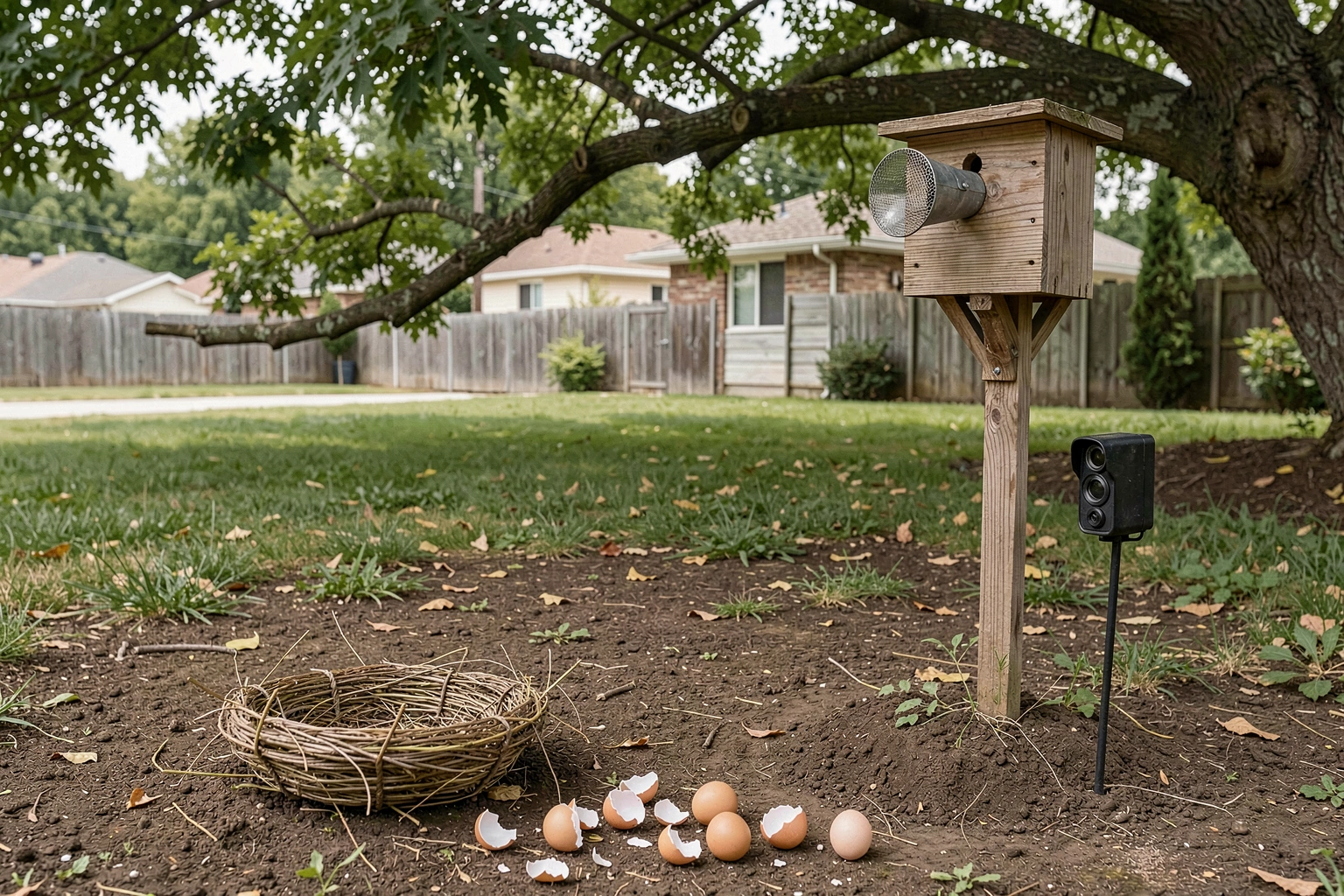
Do Squirrels Eat Bird Eggs? USA Guide and Prevention
Learn if squirrels eat bird eggs in the USA, which types do it, and how to prevent and confirm nest raids.
Do Squirrels Eat Bird Seed? Safety and What to Do Now
Learn if squirrels eat bird seed, if it’s safe, and what to do now to protect feeders and wildlife.
Can Guinea Pigs Eat Bird Food or Bird Seed Safely?
Guinea pigs should not eat bird food or seed; learn why, what to feed instead, and what to do if they already did.