Yes, squirrels absolutely eat bird seed
If you have a bird feeder, you have probably already watched a squirrel empty it in one sitting. Chipmunks also commonly raid bird nests and may eat bird eggs when they get the chance do chipmunks eat bird eggs. For a related comparison, see do squirrels eat bird eggs to understand how egg raiding fits with nest-checking behavior. Squirrels eat bird seed eagerly and often. They are not being sneaky or opportunistic in some unusual way; this is completely normal foraging behavior. Bird seed is calorie-dense, easy to access, and smells strongly of fats and oils that squirrels are wired to seek out. So the short answer is: yes, squirrels eat bird eggs, they like it a lot, and if your feeder is within reach, they will keep coming back.
The more useful question is whether that is a problem, whether it is safe for the squirrels, and what you should actually do about it today. It can also help to consider related wildlife egg questions, like whether do rats eat bird eggs, when you are evaluating what animals might be taking advantage of your yard. That is what this guide covers.
Why squirrels go after bird feeders (it is hardwired)
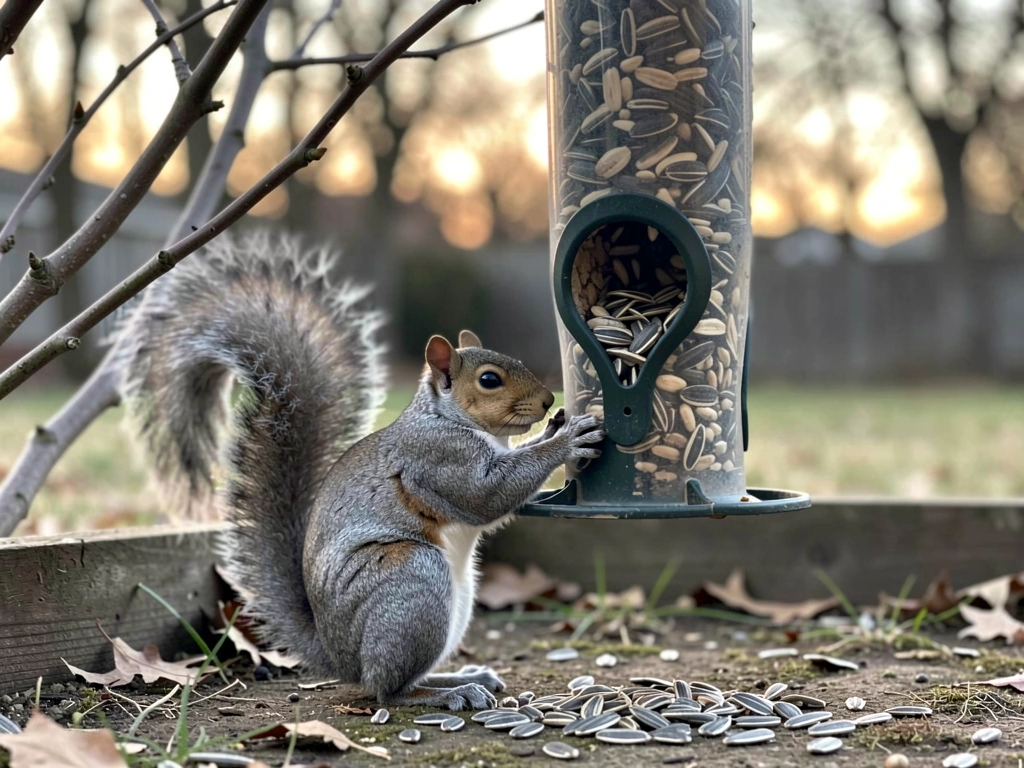
Squirrels are granivores by nature, meaning seeds and nuts make up a huge part of their natural diet. Their sense of smell is sharp enough to locate buried nuts under a foot of snow, so a feeder packed with sunflower seeds and peanuts is basically a beacon. They can detect the high-fat, high-calorie profile of black oil sunflower seeds, safflower, corn, and especially peanuts from a distance.
blank" rel="noopener noreferrer">Mass Audubon points out that squirrels are seed eaters capable of launching from nearby trees or structures to reach feeders. They are not just walking up to an easy meal; they are actively problem-solving to get to the food. Penn State Extension describes squirrel access as one of the most common bird-feeding headaches for exactly this reason. The combination of blank" rel="noopener noreferrer">powerful smell, natural seed-eating instinct, and physical agility makes your bird feeder one of the most attractive spots in a squirrel's territory.
Is bird seed actually safe for squirrels?
Plain, fresh bird seed is not toxic to squirrels in the way that, say, chocolate is to dogs. Most core ingredients including black oil sunflower seeds, safflower, and millet fall squarely within a squirrel's natural diet. But there are real risks hiding in a typical bag of bird seed or inside a poorly maintained feeder, and they are worth knowing about.
The mold and aflatoxin problem
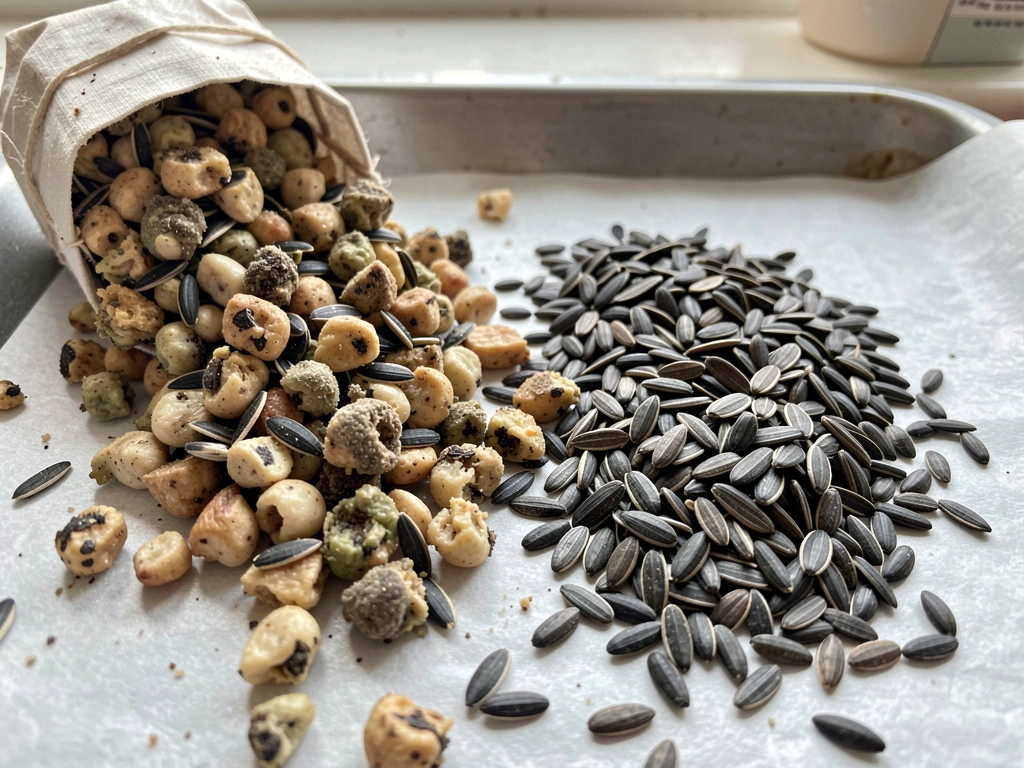
This is the biggest actual hazard. Aflatoxins are poisonous carcinogens produced by Aspergillus mold, and they grow readily on peanuts, sunflower seeds, and cereal grains when conditions are humid or wet. Texas Parks and Wildlife notes that seed left in a feeder for a week or more is especially vulnerable, particularly after rain or morning dew. Oklahoma State University Extension specifically warns that aflatoxin poses a real toxicity risk to wildlife eating contaminated feed. A published study of bird seed sold in Texas found measurable aflatoxin levels in backyard bird seed, making it a legitimate concern rather than a theoretical one.
Aspergillus growth is tied to moisture and warmer temperatures, which means any seed that looks clumped, smells musty, or has been sitting in a wet feeder for days should be considered a risk. Peanuts are the most commonly contaminated item. Laura Erickson, writing from years of bird-feeding experience, advises avoiding peanuts sold in bird-feeding stores that have not been tested for aflatoxin.
Filler seeds and additives
Many cheap mixed-seed bags include filler grains like red milo that birds actively toss to the ground. Florida FWC specifically recommends avoiding red milo because birds reject it and it accumulates on the ground below feeders, attracting squirrels and other wildlife. Purdue Extension also notes that mixes with heavy fillers create more waste than they are worth. If you are concerned about what a squirrel is eating from your feeder, look at the ingredient list on the bag. High-filler mixes also tend to have more exposure risk from mold because the rejected seeds sit on wet ground.
Salted or processed seeds
Salted peanuts or flavored seeds sold for human snacking are not the same as bird seed and should not end up in feeders or in a squirrel's diet. High sodium is harmful to small mammals. Plain, unsalted, raw or roasted-without-salt seeds are fine; salted snack versions are not.
| Seed / Ingredient | Safe for Squirrels? | Notes |
|---|
| Black oil sunflower seeds | Yes | Core part of natural squirrel and bird diet; fine when fresh and dry |
| Safflower seeds | Yes | Less attractive to squirrels than sunflower; safe if fresh |
| Plain unsalted peanuts | Okay with caution | High aflatoxin risk if stale or stored poorly; avoid peanuts not tested for aflatoxin |
| Red milo / filler grains | Not ideal | Low nutritional value; accumulates on wet ground and molds quickly |
| Thistle (nyjer) seed | Mostly ignored | Squirrels rarely eat it; low interest, not a hazard |
| Salted / flavored seeds | No | High sodium is harmful to small mammals |
| Moldy or clumped seed | No | Aflatoxin risk; discard any seed that smells musty or looks wet and clumped |
Should you intentionally feed squirrels bird seed?
Here is the honest answer: most wildlife agencies recommend against it. USDA APHIS Wildlife Services explicitly discourages feeding squirrels and other wildlife, noting that human-provided food is not healthy for wild animals and that animals fed near roads face higher risks of vehicle collisions. MassWildlife echoes this, warning that feeding wildlife (including through bird feeders) can attract predators drawn to concentrations of small mammals. Oregon Metro adds that regular feeding can make animals tame and disrupt their natural foraging patterns, which is a welfare concern, not just a nuisance one.
That said, squirrels are going to eat from bird feeders whether you intend it or not. The practical question is not really whether to feed them but how to manage the situation. If you want to reduce feeder raiding without fully excluding squirrels, or if you have decided you want to offer them something separate, here is how to do it with minimal risk.
If you want to offer squirrels food separately
- Use plain, fresh, unsalted sunflower seeds or shelled corn placed in a separate spot away from your bird feeder
- Keep portions small and replace them daily; do not let seed sit out long enough to get wet or clumped
- Store all seed in an airtight, dry container and discard any that smells off or looks damp
- Do not use peanuts unless they are from a source that tests for aflatoxin
- Place food away from roads, not near curbs or traffic areas
How to feed birds without losing everything to squirrels
If your goal is to feed birds and keep squirrels out of it, the good news is that it is very doable with the right setup. The bad news is that no single fix works on its own; you usually need a combination of feeder design, placement, and cleanup habits.
Feeder placement rules that actually work
Florida FWC recommends suspending feeders at least 10 feet from the ground and at least 4 feet away from any nearby attachment points like walls, fences, or tree branches that squirrels can jump from. Mass Audubon confirms that squirrels can launch themselves from nearby structures, so distance really matters. Hanging a feeder from a thin wire strung between two poles, with baffles on both poles, is one of the most reliable setups available.
Feeder designs that reduce squirrel access
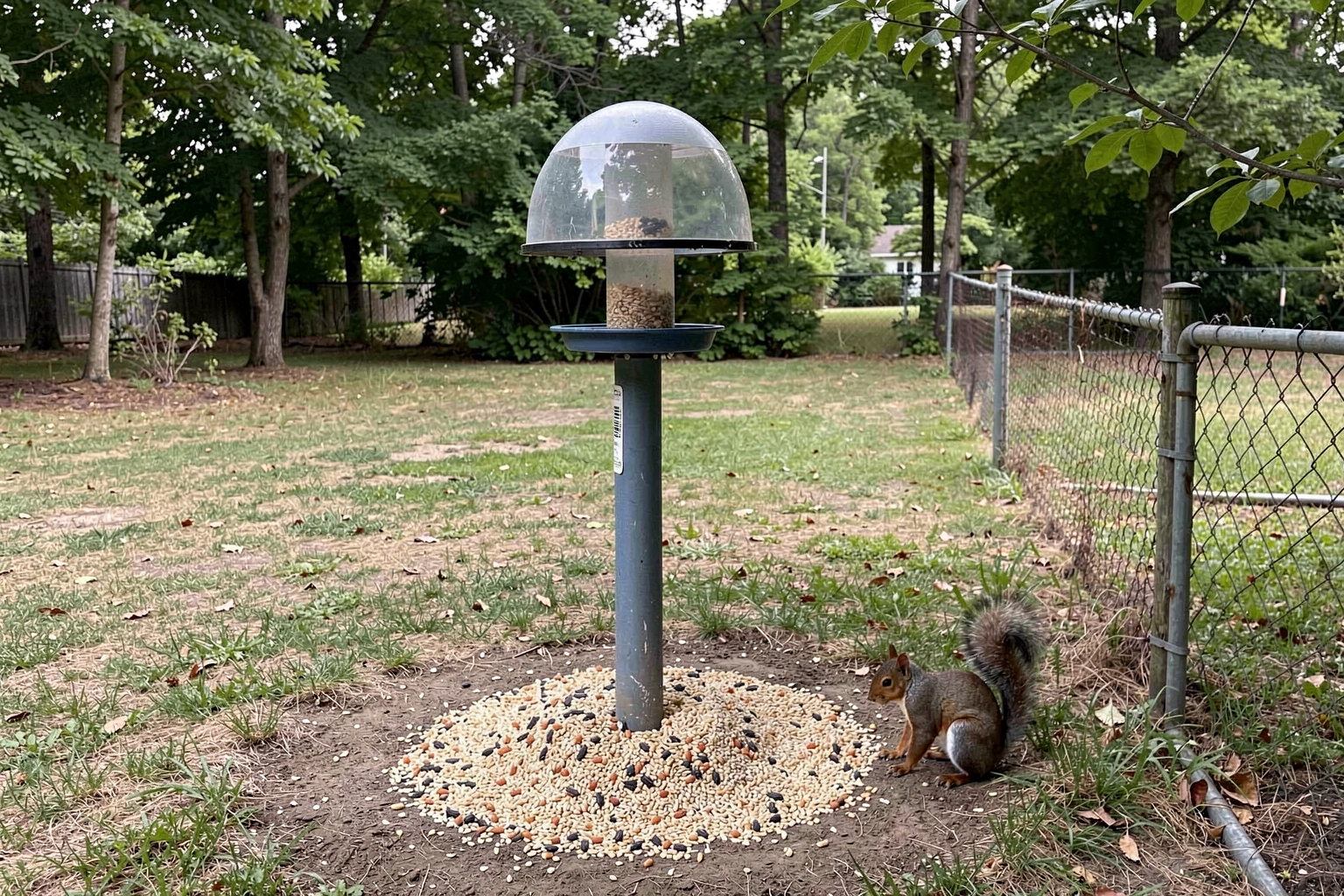
- Baffle-mounted pole feeders: a dome or cylinder baffle placed below the feeder on a smooth pole prevents climbing
- Weight-activated treadle feeders: the feeding port closes when something heavier than a small bird (like a squirrel) lands on it; Wildlife Illinois specifically recommends these
- Cage or shroud feeders: an outer cage allows small birds in but blocks squirrels from reaching seed ports (Mass Audubon describes these)
- Avoid platform or open tray feeders if squirrels are a problem; Penn State Extension notes these offer no squirrel resistance at all
Seed choice and cleanup habits
Wildlife Illinois notes that switching to thistle (nyjer) seed reduces squirrel interest significantly because squirrels rarely bother with it. Virginia DWR recommends black oil sunflower and safflower as top choices for birds; safflower is also less attractive to squirrels than sunflower. FWC advises using shelled seed and avoiding red milo because rejected milo accumulates on the ground and draws in squirrels and other wildlife.
Virginia DWR also recommends raking under the feeder area regularly to remove fallen seed hulls and waste. MassWildlife strongly warns against letting fallen seed accumulate because it attracts squirrels and the predators that follow them. Texas Parks and Wildlife recommends cleaning feeders weekly using a 14 percent bleach solution to prevent mold and aflatoxin buildup. Florida FWC suggests bringing feeders inside at night to reduce overnight wildlife access entirely.
What to do right now if squirrels are raiding your feeder
If you are dealing with this problem today, here is a practical sequence you can work through without waiting for new equipment to arrive.
- Move the feeder immediately: even shifting it further from trees, fences, and walls reduces access. Aim for the 10-foot height and 4-foot clearance FWC recommends
- Rake and clear the ground below the feeder: remove all fallen seed today. This eliminates the easy fallback meal that keeps squirrels returning
- Check your seed: discard anything that is clumped, smells musty, or has been sitting through rain. Refill with fresh, dry seed
- Switch seed types temporarily: put in safflower or nyjer instead of sunflower or corn while you sort out your setup; squirrels are far less interested in these
- Add a baffle: a simple dome baffle on the pole below the feeder costs under $20 at most hardware or garden stores and is one of the most effective single upgrades you can make
- Consider a diversion station: Penn State Extension describes placing a separate, cheaper food source (like plain corn) well away from the bird feeder to draw squirrels away from expensive sunflower seed
- Bring the feeder in at night: this alone removes a significant portion of squirrel feeding time, especially for dawn-active gray squirrels
Alternatives if you want to stop squirrel access completely
If you want birds only and no squirrels, the most reliable long-term approach is a weight-activated feeder on a baffled pole at least 10 feet high and 4 feet from any jumping point. King County Public Health recommends using a squirrel-proof feeder with a tray and managing fallen seed rigorously. Combined with weekly cleaning using a bleach solution and daily seed checks, this setup largely removes squirrels from the equation without harming them.
P|One thing that does not work well: mixed seed bags with lots of millet and milo. The birds toss what they do not like to the ground, and squirrels clean it up from below. Switching to single-ingredient seed like black oil sunflower or straight safflower, offered in a squirrel-resistant feeder, is a cleaner solution on every level.
A quick checklist for managing squirrels and bird feeders
- Feeder is at least 10 feet high and 4 feet from any launching point
- A baffle or cage is installed on the feeder pole or feeder itself
- Seed is fresh, dry, and stored in a sealed container indoors
- No peanuts unless from an aflatoxin-tested source
- Ground below feeder is raked clear of hulls and fallen seed at least weekly
- Feeder is cleaned weekly with a diluted bleach solution and fully dried before refilling
- Feeder is brought in at night if squirrel activity is heavy
- Seed mix does not contain red milo or heavy fillers
- Any separate squirrel food is placed well away from the bird feeder and replaced daily
Squirrels eating bird seed is one of those backyard wildlife situations where the problem and the solution are both straightforward once you understand what is driving the behavior. They are not pests in any meaningful sense; they are just very good at finding food. Managing your setup with the right feeder, placement, and cleanup habits keeps your birds fed, your squirrels from developing a dependency on handouts, and your seed from becoming a mold risk. That is a win on all three fronts.