Several birds eat bees, but the most likely culprit in a North American backyard is the Eastern Kingbird, the Summer Tanager, or the Purple Martin. Purple Martins generally include a substantial component of Hymenoptera (wasps and bees) in their diet, according to Animal Diversity Web blank" rel="noopener noreferrer">Purple Martin diets include a substantial Hymenoptera component. Worldwide, the dedicated bee-hunters are the bee-eaters (family Meropidae), colorful perch-hunters built almost exclusively for catching flying stinging insects. If you are in Europe or Africa and watching a bird pluck bees out of midair from a wire or branch, you are almost certainly looking at a bee-eater. In a typical US or Canadian backyard, you are more likely dealing with a flycatcher, a tanager, or occasionally a woodpecker near a hive tree. Here is how to pin down exactly which bird you are seeing and what to do about it.
What Bird Eats Bees? Identify Bee-Eating Birds Fast

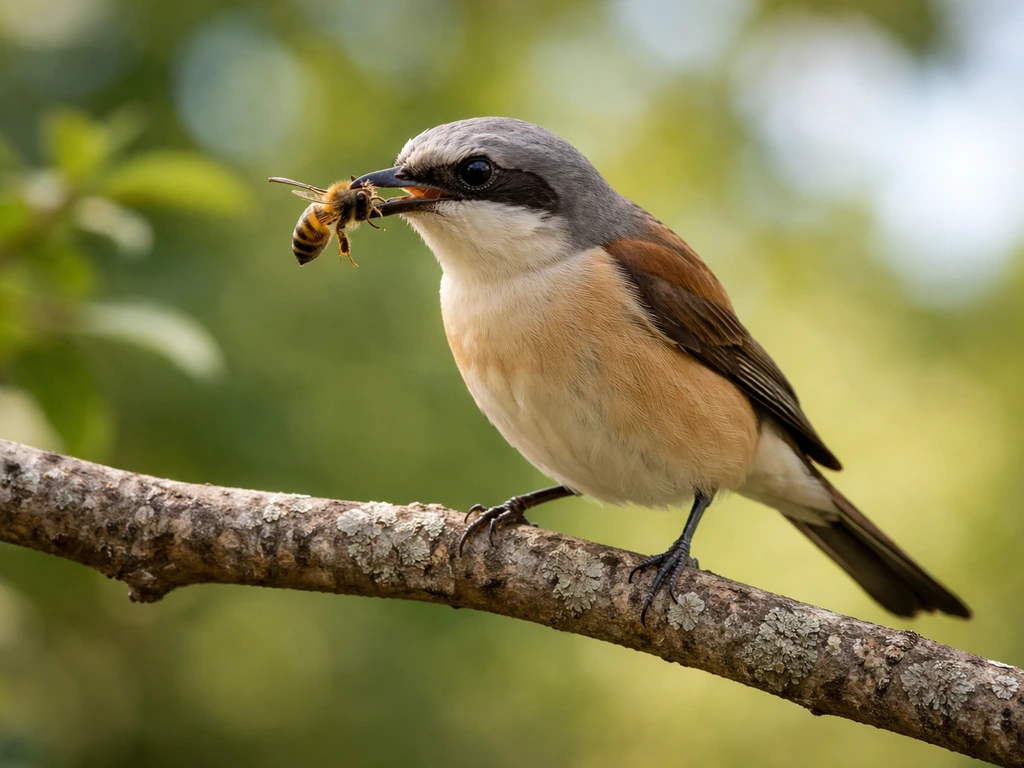
Birds that actually eat bees
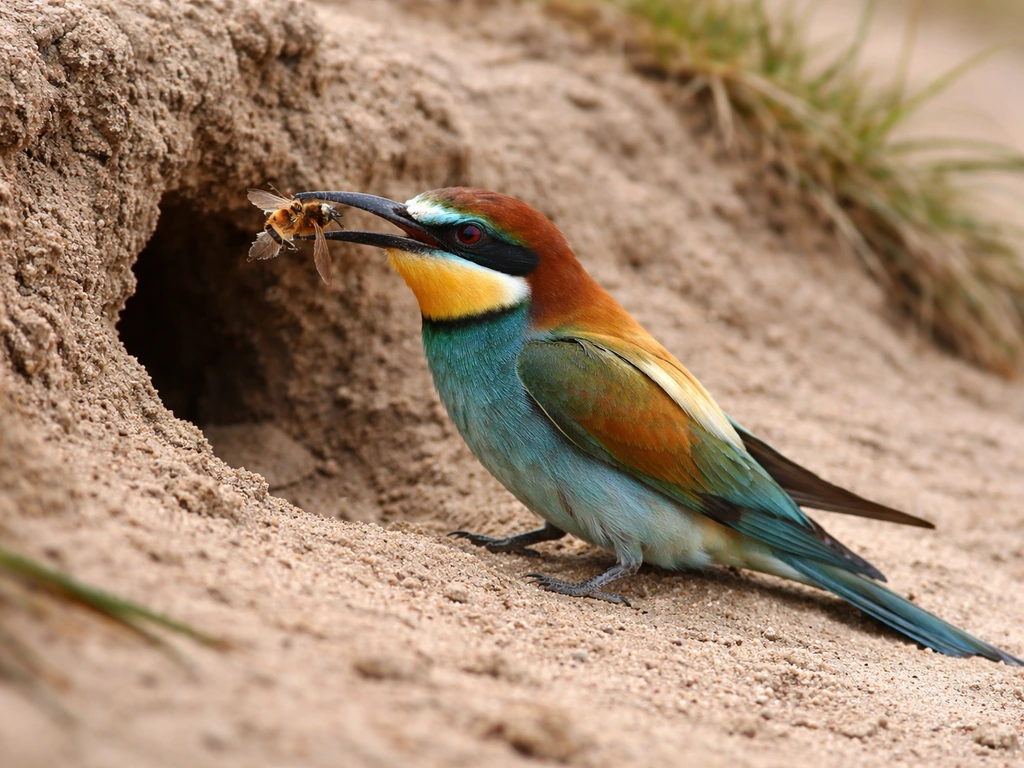
Not every bird that snaps at a flying insect is eating a bee, but several species are known and documented bee predators. Many of the same species that hunt bees also eat ticks, so the bird you see may help reduce other small pests too. The bee-eater family (Meropidae) is the gold standard: species like the European Bee-eater and the Green Bee-eater are specialized aerial hunters that catch honeybees and wasps from a perch, fly out to snag them, return to the perch, and then blank" rel="noopener noreferrer">beat the insect against a hard surface to discharge the stinger before swallowing. That stinger-removal behavior is a reliable field observation if you can see it. Outside the bee-eater family, documented bee-eaters include the Summer Tanager (the only entirely red bird in North America, known to eat bees and wasps at nests), the Eastern Kingbird, and several other flycatchers. Perhaps surprisingly, juvenile Australian Magpies have been documented persistently eating honey bees, showing that bee predation is not limited to specialist families. Tit species in European forests have even been recorded entering black woodpecker cavities used by feral honeybee colonies and pecking directly at honeycomb.
| Bird | Region | Prey Type | Feeding Style | Visual Clue |
|---|---|---|---|---|
| European Bee-eater | Europe, Africa, Asia | Honey bees, wasps, hornets | Perch hunter, aerial sally | Vivid blue-green, chestnut back, long tail points |
| Green Bee-eater | South Asia, Africa | Honey bees, wasps | Perch hunter, aerial sally | Bright green, rufous crown, black eye-stripe |
| Summer Tanager | North America | Bees, wasps, nest larvae | Hovers, snatches, beats prey | All-red male; yellow-green female |
| Eastern Kingbird | North America | Bees, wasps, flying insects | Aerial sally from exposed perch | Black/white, white tail tip band |
| Purple Martin | North America | Bees, wasps, dragonflies | High aerial pursuit | Dark iridescent blue-black |
| Great Tit / Blue Tit | Europe | Honey bee brood in cavities | Cavity raiding | Yellow breast (Great Tit); blue cap (Blue Tit) |
| Australian Magpie (juvenile) | Australia | Honey bees | Ground or low perch hunting | Black and white, juvenile has grey tones |
It is worth noting that there is an important ecological distinction between honey bees managed for pollination or honey production and the hundreds of wild native bee species. Birds generally do not discriminate, and they will take whatever flying insect they can catch. But if you are seeing birds near a managed hive, that situation is somewhat different from a bird snatching solitary wild bees from flower patches.
How to ID the bee-eating bird in your yard
Start with size and silhouette. A bird catching bees in flight will almost always launch from an exposed perch: a fence post, a power line, a bare branch, or the top of a shrub. That sit-and-wait approach is the single most useful behavioral clue. Watch where the bird lands, then watch it launch, intercept something in the air, and return. If it repeatedly beats something against its perch before swallowing, you have almost certainly got a bee-eater or a kingbird-type flycatcher using the stinger-removal technique.
- Size: Bee-eaters are roughly sparrow-to-starling sized with long, pointed wings and, in several species, elongated tail feathers. Kingbirds are robin-sized with a flat-topped head profile. Summer Tanagers are similar in bulk to a House Sparrow but noticeably chunkier.
- Flight pattern: Short, direct sallies from a perch (not sustained hovering) are the hallmark. The bird returns to roughly the same perch after each catch.
- Time of day: Most hunting happens in mid-morning to early afternoon when bees are most active and warmth keeps insects flying.
- Location clues: Near beehives or managed hives, near dense flower patches, or around cavity-riddled trees (woodpecker holes can double as honeybee colony sites).
- Stinger-removal behavior: Watch for the bird rubbing or whipping the caught insect against a branch before tilting its head back to swallow. This almost always means stinging prey.
- Color: In North America, a completely red bird catching bees near a wasp nest is almost certainly a Summer Tanager. A black-and-white bird with a crisp white tail-tip band is an Eastern Kingbird.
If you are in Europe or Africa and see a vividly colored, slender bird with a long pointed bill launching from a wire to chase flying insects, check the bee-eater family first. The European Bee-eater in particular is almost unmistakable: a mosaic of chestnut, yellow, turquoise, and green, with a long narrow tail projection. The Green Bee-eater is smaller and predominantly bright green with a rufous-orange crown.
What draws bee-eating birds to your yard in the first place
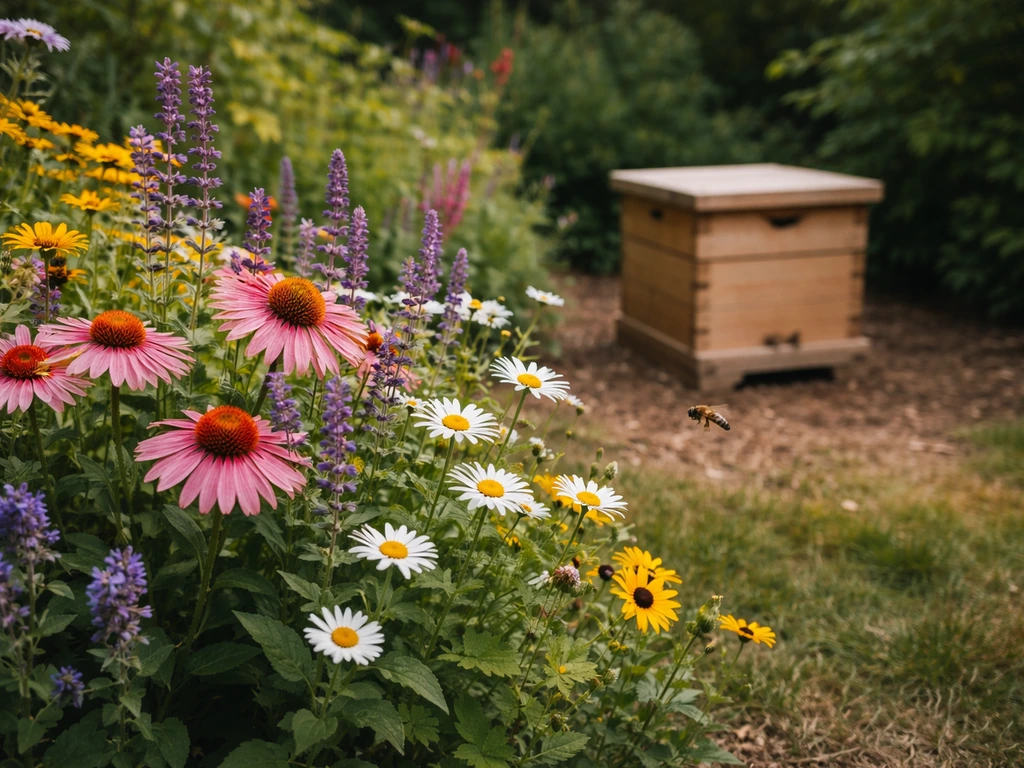
Bee-eating birds follow the food, and the food follows flowers, hives, and bare ground. If your yard has several of the following, you are naturally more likely to attract birds that eat bees and similar stinging insects.
- Dense flowering plants that draw large numbers of pollinators, especially flat-topped flowers where bees land and linger (making them easy to target).
- A managed beehive or feral bee colony in a tree cavity, which concentrates thousands of bees in a predictable location.
- Exposed perches: tall fence posts, dead branches, utility lines, or any open vantage point with clear sightlines to open foraging space.
- Nearby water sources, which attract both insects and birds.
- Open lawn or bare-ground patches where ground-nesting bees and wasps build colonies, providing a concentrated prey source at or near ground level.
- Woodland edges or scattered trees, which are preferred nesting habitat for flycatchers, tanagers, and kingbirds.
Woodpecker excavation activity is also indirectly relevant: black woodpecker cavities, for example, are frequently adopted by honeybee swarms, and once a bee colony establishes in a cavity-riddled snag near your yard, it can become a reliable hunting ground for any bird opportunistic enough to exploit it.
Reducing stings without pushing birds away
If stinging insects near your home are the core problem you want solved today, the goal is to reduce the concentration of bees and wasps near human activity zones without destroying habitat that supports birds or native pollinators. Here is a practical plan.
Manage ground nests carefully
Many bees (and some wasps) nest in the ground, and disturbing those nests unnecessarily is both harmful to pollinators and increases your sting risk. Avoid tilling or repeatedly turning soil in areas where you have seen bees entering the ground, especially in spring and summer. Covering bare soil entirely with plastic mulch or thick organic mulch prevents access to existing nests and can trap bees that try to emerge, increasing agitation around the entrance. If a ground nest is in a low-traffic area of the yard, the safest approach is simply to mark it and give it space until the colony naturally winds down in late summer or fall.
Adjust mowing and watering timing
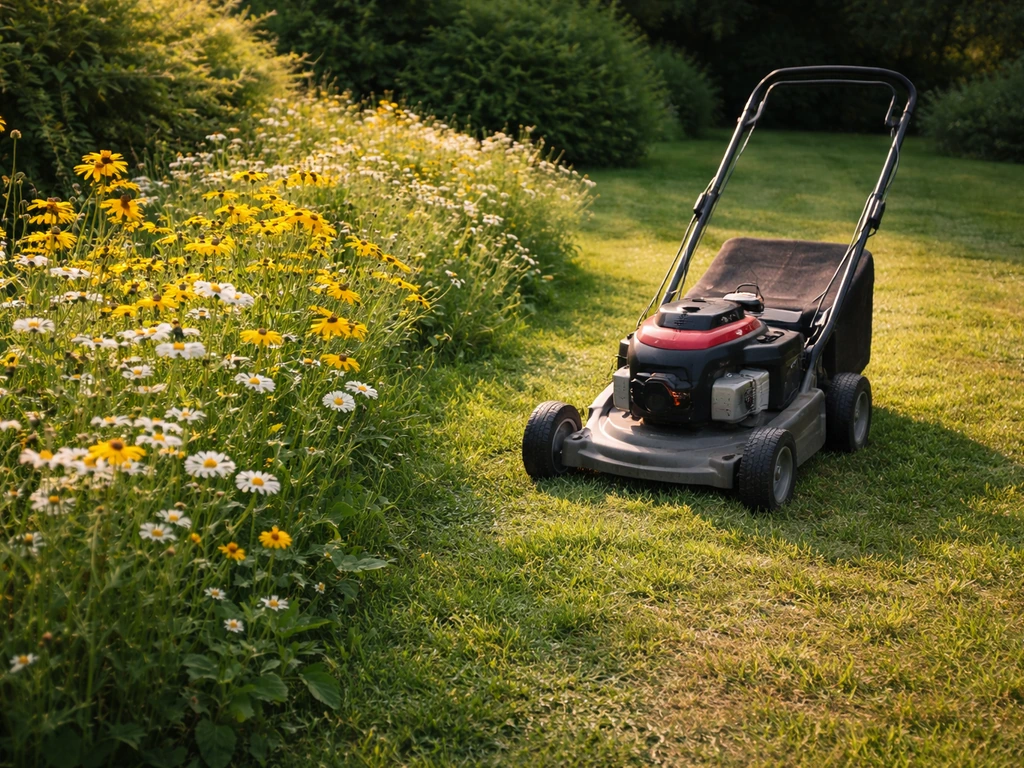
Mowing when bee-attractive flowers are in full bloom sends foragers into a panic and increases sting risk sharply. Hold off mowing until late afternoon or evening when foraging activity drops, or wait until bloom periods pass. Similarly, overhead irrigation during peak daylight hours drives bees off nesting sites and foraging patches erratically, increasing the chance of defensive stings near people. Water in the early morning or evening instead.
Relocate feeders and attractants away from activity zones
Hummingbird feeders and nectar feeders attract bees and wasps directly. If you have a sting problem near a patio or play area, moving those feeders at least 20 to 30 feet away from human activity zones is a quick fix that reduces the conflict without removing the feeding opportunity for birds. Do not eliminate feeders altogether as a first response; relocation almost always solves the conflict.
Do not seal cavity trees in a hurry
If a feral bee colony has moved into a woodpecker cavity near your house, the instinct is to seal it immediately. Before doing that, check local regulations: in many areas, relocating a feral honeybee colony requires a licensed beekeeper, and sealing an active colony without removal can cause honey to melt into wall cavities or structural wood, creating a much larger problem. Call a local beekeeper first. Many will remove swarms for free.
Feeder safety, spoilage, and risks to pets and wildlife
This is where the backyard birding and bee situation intersects with risks that often get overlooked. Sugary feeders (nectar, hummingbird, fruit) are bee and wasp magnets, and they carry their own safety issues independent of stinging insects.
- Nectar feeders spoil fast in warm weather. Fermented nectar can harm hummingbirds and orioles, and it becomes a powerful attractant for bees and wasps that then cluster aggressively near the feeder. In temperatures above 80°F, change nectar every two to three days at minimum.
- Seed feeders with spilled or wet seed on the ground can grow mold quickly. Moldy seed contains aflatoxins that are harmful to birds, small mammals, and pets that investigate fallen seed. Rake up spilled seed regularly and keep the ground under feeders as dry as possible.
- Pets (especially dogs and cats) that investigate bees or wasps clustered at feeders are at real sting risk. If you have a pet that is known to snap at flying insects, either position feeders out of the pet's reach or supervise outdoor time during peak bee activity hours (roughly 10am to 4pm on warm days).
- Bird baths that sit stagnant become watering spots for bees and wasps and can also develop algae or mosquito larvae. Change the water every two to three days.
- Suet and protein feeders in summer heat can go rancid within days. Rancid fat can cause digestive issues in birds and attracts rodents and insects. Switch to no-melt suet formulas in summer or remove suet feeders entirely between May and September.
The broader principle here is that feeders in poor condition or wrong placement are not neutral: they actively create risks for birds, wildlife, and pets. A well-maintained feeder in the right spot is a net positive. A neglected one is a liability.
Clearing up the myths: bees vs. wasps vs. 'flying insects'
The single biggest source of confusion in this topic is that most birds described as 'bee-eaters' actually eat a wide mix of stinging and non-stinging flying insects, and they are not always distinguishing between a honeybee, a yellowjacket wasp, a bumblebee, and a large fly. This matters for a few practical reasons.
Myth: The bird eating bees in my yard is targeting my hive specifically
Almost never true for wild birds. Birds like kingbirds and tanagers are opportunistic. They are not staking out your hive the way a bear does. They take bees because bees happen to be abundant, slow-moving enough, and predictably located. If you remove the concentration point (move the hive, reduce the flower-dense patch near the patio), the bird typically moves on.
Myth: If a bird eats bees, it must be a bee-eater species
Bee-eaters (Meropidae) are not found in North America at all. If you are in the continental US or Canada and you see a bird eating a bee, it is a different species entirely, most likely a flycatcher, tanager, or swallow. The name 'bee-eater' refers to a specific Old World family, not to any bird that eats a bee.
Myth: Birds can eat wasps and yellowjackets but not bees (or vice versa)
Both wasps and bees are taken by the same birds. The bee-eater's stinger-removal technique works on both. Summer Tanagers are well documented eating both bees and wasps, including raiding paper wasp nests for larvae. If you are trying to ID the bird in your yard, do not assume it is targeting only one insect type. A bird you are watching catch 'bees' near a flowering bush may well be taking a mix of bumblebees, solitary bees, hover flies, and the occasional yellowjacket, all caught and processed the same way. The topics of birds eating wasps and birds eating yellowjackets are closely related to this one, and many of the same species show up across all three questions. You can apply the same identification logic for the question of what bird eats yellow jackets.
Myth: Honey bees and wild bees are the same concern
From a bird's perspective, a bee is a bee. But from a conservation and management perspective, there is a real difference. Honey bees (Apis mellifera) are managed livestock in most contexts. Wild native bees, which include hundreds of species of solitary ground-nesters and cavity-nesters, are wild pollinators with their own ecological role. Bird predation on either is natural and not something that needs to be stopped. What you should not do is try to poison, trap, or remove bees to protect birds from them, or try to deter birds to protect bees. Both populations are self-regulating, and predation pressure from birds is ecologically normal.
Quick action checklist for today
- Watch the bird for five minutes from a comfortable distance: note where it perches, how it launches, and whether it beats prey against a surface before swallowing.
- Use the ID table above to narrow down the species based on color, size, and region.
- If bees or wasps are the sting problem: locate the nest source (ground burrow, cavity tree, structure overhang) before taking any action.
- Move any sugary feeders or nectar sources at least 20 to 30 feet from patios, doors, or play areas.
- Check all feeders for spoiled seed, rancid suet, or fermented nectar and clean or replace as needed.
- If a feral bee colony is in a tree cavity near your house, call a local beekeeper before sealing anything.
- Adjust mowing and watering to early morning or evening to reduce bee agitation during the day.
- Keep pets supervised during peak bee activity hours if your yard has a known stinging-insect concentration.
FAQ
If I see a bird catching insects near my hive, does that automatically mean it is eating bees?
Not necessarily. Many flycatchers and swallows snap at flying insects and can take bumblebees, hover flies, wasps, or solitary bees. The most reliable confirmation is the processing step, especially stinger removal (the bird beats the insect against a perch before swallowing). Without that, it is safer to describe the bird as an insect hunter rather than a confirmed bee eater.
What if the bird drops the insect instead of beating it on the perch?
That usually argues against bee-eaters and against the classic kingbird-style stinger-removal behavior. Some birds handle prey by swallowing quickly, probing, or taking insects to a different location to feed nestlings. Try watching for repeated “launch, intercept, return to same perch” cycles, and check whether there is a nest nearby where prey is carried.
How far away do I need to move nectar or hummingbird feeders to reduce bee-and-wasp activity?
Relocation of feeders helps most when they are moved at least 20 to 30 feet away from where people sit, play, or walk. Also consider vertical placement. Hanging a feeder higher can reduce crowding at ground-level bee flight paths, while still keeping it available for birds. If activity stays intense, move it again rather than assuming distance alone will fix it.
Do birds selectively target honey bees, or will they eat native wild bees too?
Most opportunistic bee-catching birds do not distinguish between honey bees and wild native bees. If “bee eating” is happening near flowers, ground nesting areas, or cavity sites, it can involve native solitary bees as well. That is why broad poison or removal efforts can backfire by harming the pollinators you are trying to protect.
Is it safe to seal a feral honeybee colony in a wall or wood cavity right away?
Usually no. Check local rules and conservation guidance first, because active colony removal or relocation often requires a licensed beekeeper. Sealing too early can trap bees inside, cause structural damage, or create long-term odor and repair costs. Calling a beekeeper first is the quickest way to avoid creating a bigger containment problem.
I think I saw a true “bee-eater,” what should I check if I am in the US or Canada?
True bee-eaters (family Meropidae) are not present in the continental US or Canada. If you are seeing a bird in North America that looks like a “bee-eater,” it is very likely a flycatcher or tanager. Focus on silhouette and behavior: exposed perch hunting, intercepting in midair, and the presence or absence of stinger-removal processing.
How can I tell whether the “bee” I am seeing is actually a wasp or a large fly?
Watch the prey’s flight pattern and size. Wasps and some flies are often faster and more erratic, while bumblebees and many solitary bees have more predictable foraging arcs around flowers. Even when you cannot identify the insect, you can still use the bird’s handling method to distinguish specialist stinger-removal predators from general insect hawkers.
Should I mow or water as usual to keep birds that eat bees away?
Changing lawn practices can reduce sting risk, but it will not reliably deter bee-eating birds. Instead of trying to chase birds off, delay mowing when bee-attractive blooms are actively foraged, and irrigate early morning or evening. This reduces bee foraging intensity near people, which indirectly reduces the “food concentration” the birds are exploiting.
Are there non-lethal ways to manage the situation without harming birds or pollinators?
Yes. Reduce concentrations of stinging insects near human activity zones by relocating feeders, avoiding unnecessary soil disturbance in ground-nesting areas, and mulching exposed soil to reduce access to nests. For existing activity in a specific cavity or tree, use the local beekeeper route rather than trapping or poison, and aim for spacing between nesting hotspots and patios.
Do birds that eat bees also eat wasps and yellowjackets?
Often yes. Many of the same species take both bees and wasps, and the processing can be similar if the bird can remove or neutralize stingers. When you see repeated stinger-removal behavior, assume the bird may be targeting a mix, including paper wasps and yellowjackets, not only honey bees.