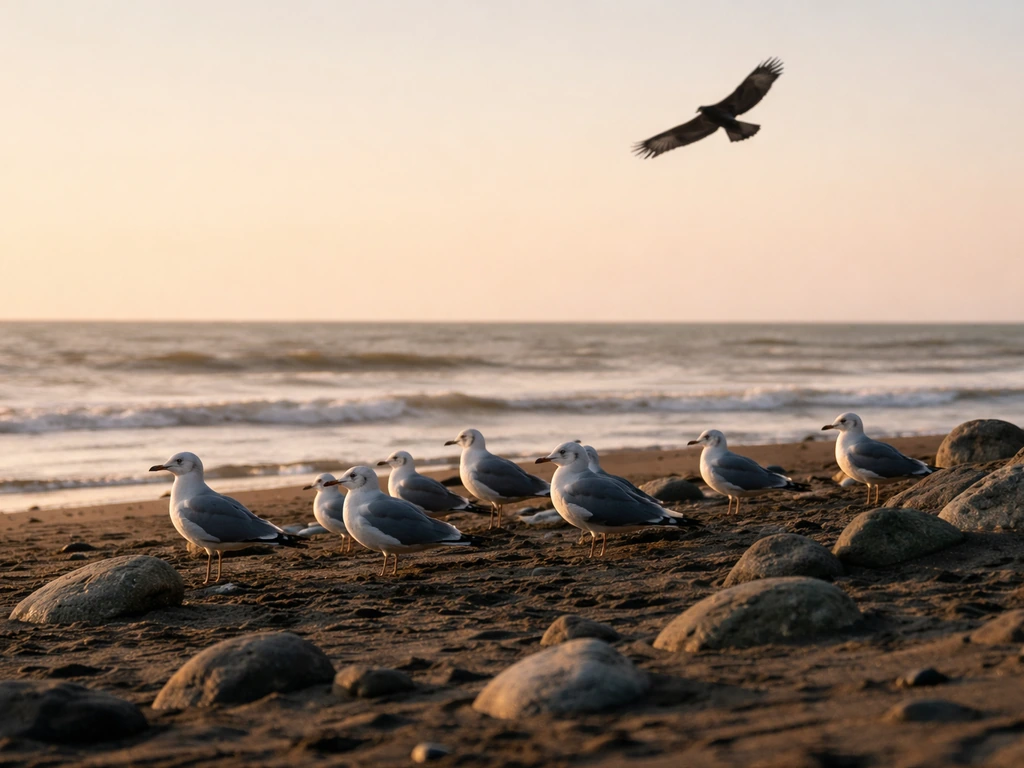
The birds most likely eating fish near you are osprey, herons (great blue heron being the most widespread), kingfishers, cormorants, bald eagles, and depending on your coastline, gulls and terns. Osprey eat almost nothing but fish. Great blue herons and cormorants are close behind. The others range from "fish is a major part of the menu" to "fish when it's convenient." Which one you're watching right now comes down to how it's hunting, where it's standing, and what time of day it is.
What Bird Eats Fish? Top Fish-Eaters and How to Identify Them

Maya Bennett
5 May 2026
Birds that commonly eat fish (quick shortlist)
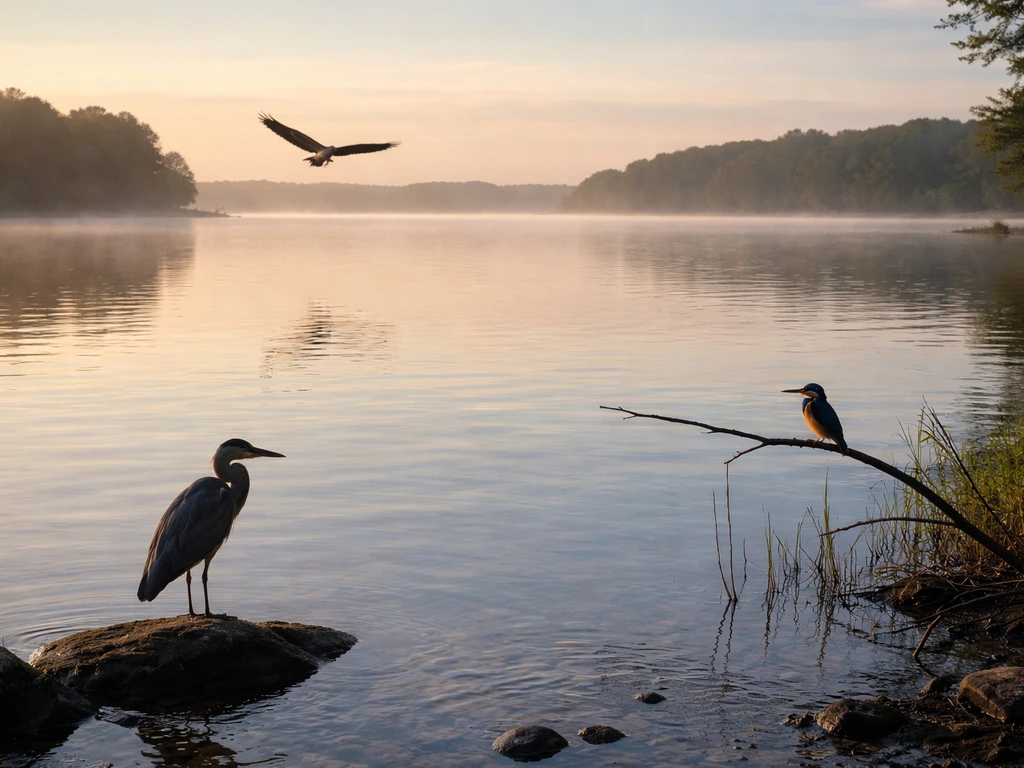
Here are the species you're most likely to encounter, ranked roughly by how fish-dependent they are:
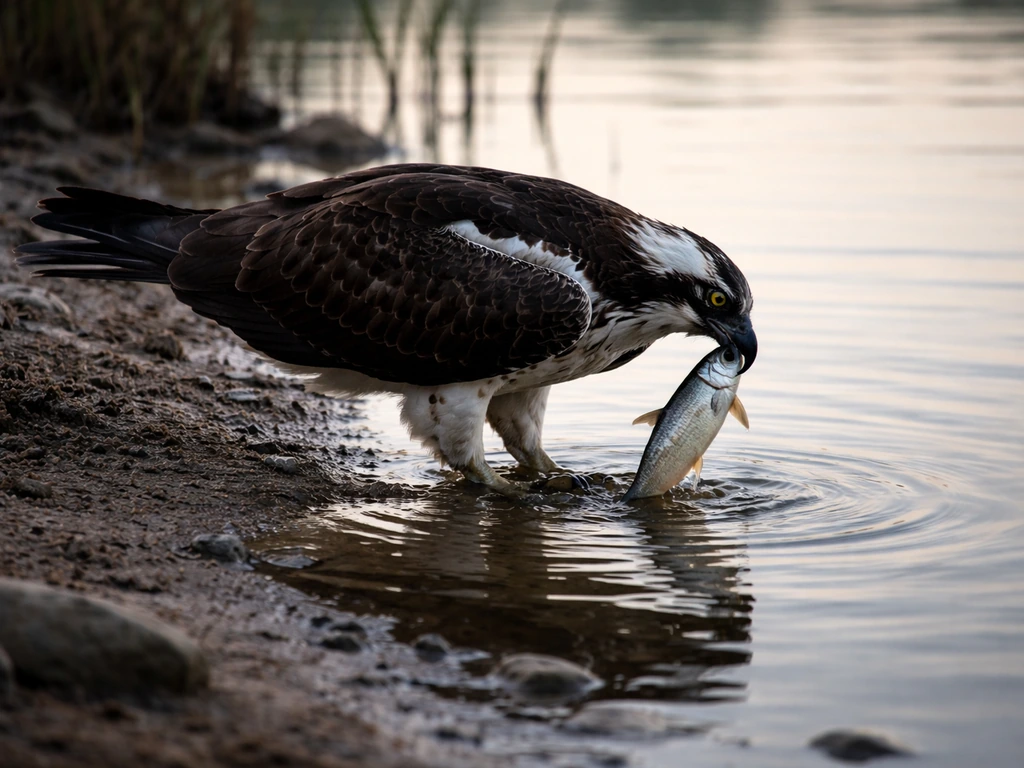
- Osprey: fish make up roughly 99% of the diet. The most specialized fish hunter in North America.
- Bald eagle: fish account for 56–90% of the diet depending on location and season. Opportunistic rather than specialized.
- Great blue heron: fish are the dominant prey, caught by wading and spearing in shallow water.
- Belted kingfisher (North America) / common kingfisher (Europe): fish make up about 60–67% of the diet.
- Double-crested cormorant: almost entirely fish, caught by diving underwater.
- Black-crowned night heron: primarily fish, hunted mainly at night and twilight.
- Gulls and terns: fish are a significant food source but both groups are highly opportunistic.
If you're in coastal or open-ocean settings, add pelicans, gannets, and mergansers (diving ducks) to that list. For the purposes of this guide, the freshwater and near-shore species above cover the vast majority of what backyard birders and nature observers actually encounter.
How to tell which fish-eating bird you're seeing
The fastest way to narrow it down is to watch how the bird is hunting. Each species has a very different technique, and those techniques are more diagnostic than plumage alone, especially at a distance.
Osprey: hover then plunge feet-first
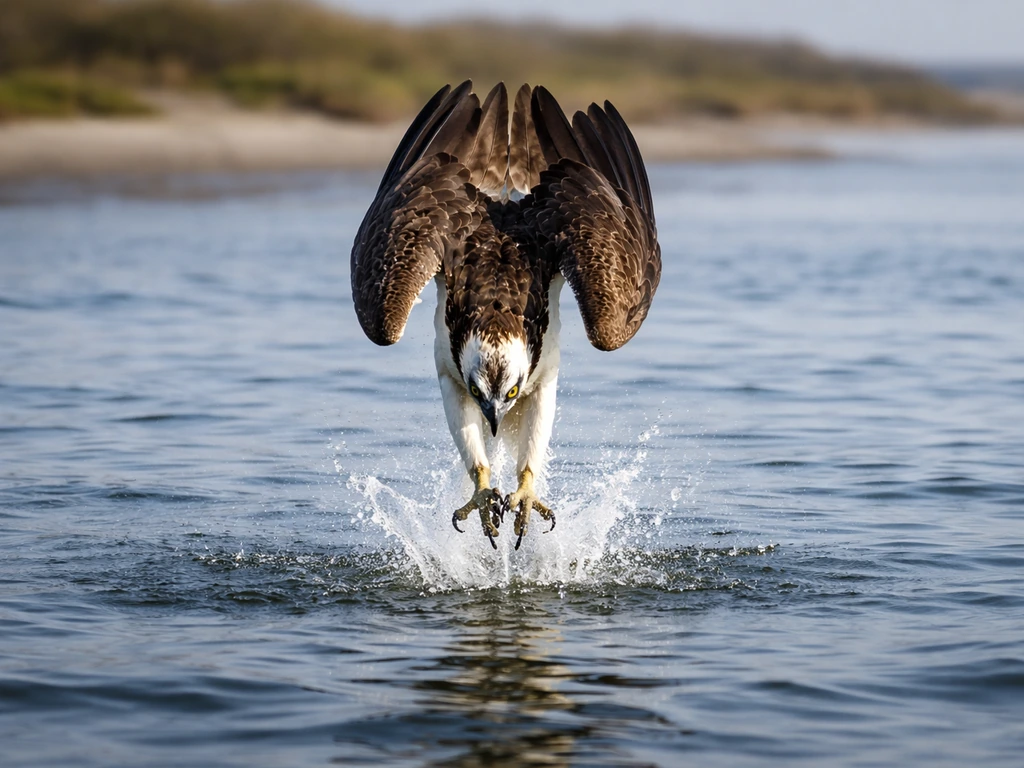
If you see a large raptor hovering over open water and then diving feet-first into the surface, that is almost certainly an osprey. No other common fish-eating bird does this combination. They locate a fish from height, pause in a hovering position with wings beating, then tuck and plunge talons-first. They also have a distinctive bent-wing silhouette in flight, a dark brown back with a white underside, and a dark eye-stripe across a white head.
Bald eagle: big, broad, and opportunistic
Bald eagles are massive, with a wingspan up to 8 feet. Adults have the unmistakable white head and tail. They don't hover and plunge like ospreys. Instead they may swoop low over the water and snatch a fish near the surface, wade in shallow water during spawning runs, or simply steal a fish from an osprey mid-air. If you're watching something that looks like an osprey but never hovers, consider the eagle.
Great blue heron: statue-still, then a lightning strike
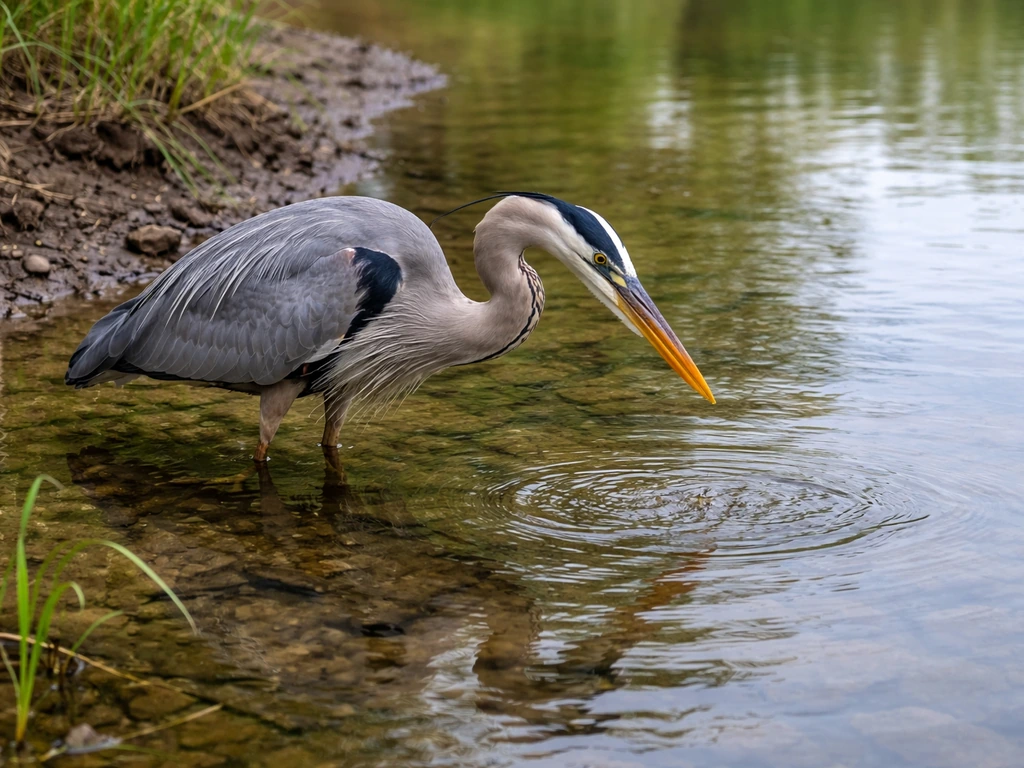
Great blue herons stand completely still in shallow water or along the bank for long stretches, then lunge forward and spear prey with a sharp, dagger-like bill. They don't plunge from the air. In flight they are unmistakable: enormous (up to 4.5 feet tall, 6-foot wingspan), slate-blue-gray, with the neck folded into a tight S-curve rather than stretched straight. Legs trail well behind the tail. If you see a large gray bird standing motionless at the water's edge, this is your most likely candidate.
Kingfisher: small, loud, headfirst dive from a perch
The belted kingfisher is far smaller than a heron, about the size of a robin but stocky, with a large head and a long, thick bill. It perches conspicuously on a branch, wire, or post directly over water, rattles loudly (a distinctive mechanical sound), then plunges headfirst into the water below. It may also hover briefly before diving. The blue-gray coloring with a chestnut chest-band on females makes it fairly easy to spot. In Europe, the common kingfisher is tiny and jewel-bright orange and blue.
Double-crested cormorant: low on the water, dives from the surface
Cormorants float very low in the water, almost submarine-like, then simply dive beneath the surface and chase fish underwater. They don't plunge from the air. After fishing, they are famous for perching upright with wings spread wide to dry off, which no other common fish-eating bird does. Look for a dark, long-necked bird with an orange-yellow face patch and a hooked bill. In flight they travel in V-shaped flocks with alternating flaps and glides.
Black-crowned night heron: if it's dark out, it's probably this
Night herons are stocky, shorter-necked than great blues, and mostly gray and black with red eyes. The key diagnostic is timing: if you're watching a fish-hunting bird at dusk, night, or pre-dawn, the black-crowned night heron is your top suspect. They use the same patient-stalk-and-spear technique as great blue herons but do most of their work in low light.
| Bird | Hunting Method | Key Field Mark | Typical Size |
|---|---|---|---|
| Osprey | Hovers, then plunges feet-first | Bent wings in flight, dark eye-stripe | Large raptor, ~24 in |
| Bald Eagle | Swoops, wades, or steals | White head and tail (adults) | Very large, up to 37 in |
| Great Blue Heron | Stands still, then spears with bill | S-curved neck in flight, slate-gray | Very tall, ~46 in |
| Belted Kingfisher | Dives headfirst from perch | Oversized head, loud rattle call | Small, ~13 in |
| Double-crested Cormorant | Dives from water surface | Spreads wings to dry; hooked orange bill | Medium-large, ~32 in |
| Black-crowned Night Heron | Stalks and spears (at night) | Stocky, red eyes, hunts at low light | Medium, ~25 in |
Where fish-eating birds live and hunt
These birds are not random. Each one tends to show up in specific water environments, and knowing the habitat can cut your ID work in half before you even raise your binoculars.
- Osprey: anywhere with clear, fish-filled water. Lakes, rivers, reservoirs, estuaries, and coastlines. They need open water where they can see fish from above.
- Bald eagle: rivers with salmon runs, large lakes, coastal areas, and reservoirs. Often spotted near osprey, since they are known to steal from them.
- Great blue heron: the most adaptable. Freshwater marshes, lake edges, rivers, wet fields, tidal flats, and even drainage ditches. If there's shallow water, there's a potential heron.
- Belted kingfisher: streams, rivers, ponds, and lake edges with clear water and an overhanging perch nearby. Rarely on open coastline.
- Double-crested cormorant: lakes, rivers, bays, and harbors. Often seen perched on rocks, piers, or channel markers near open water.
- Black-crowned night heron: marshes, lake shores, tidal areas. Active during low light; look for them roosting in trees near water during the day.
What 'mainly fish' vs 'fish sometimes' actually means
This distinction matters a lot if you're trying to understand what you're seeing or whether a species is truly dependent on your local water body. Osprey are the gold standard for 'mainly fish': roughly 99% of what they eat is fish. They are true piscivores. Cormorants are nearly as committed. Great blue herons and kingfishers lean heavily on fish but will also take frogs, crayfish, and small mammals when fish are scarce.
Bald eagles are a genuinely mixed case. In areas with salmon runs or abundant lakes, fish can make up 70–90% of the diet. But in the Aleutian Islands, a USGS study found fish as low as 10% of the diet for some nesting pairs, with birds and mammals dominating instead. So 'bald eagle eats fish' is true but incomplete. They eat whatever is easiest, and fish is only the default when it's the most available option.
Gulls and terns are in the 'fish sometimes' camp. They eat fish, especially terns during breeding season, but both groups are highly opportunistic. A gull will eat a chip off the pavement as readily as a herring. Don't use 'eating fish' as a primary identifier for a gull. Terns are more reliable; they hunt by hovering over water and plunging headfirst, similar to kingfishers, and fish are a core part of their diet during breeding.
Night herons are primarily fish-eaters but get overlooked because most people aren't watching water at midnight. If you're only observing during daytime hours, you may simply never see them feeding even if they're regularly visiting your pond or stream.
Confirming the species near your feeder or water (do this today)
If you're trying to nail down exactly what fish-eating bird is visiting your pond, stream, or backyard water feature, here's a practical sequence you can run through right now:
- Note the time of day. Daytime activity points toward osprey, herons, eagles, kingfishers, and cormorants. Dusk or overnight activity strongly suggests a night heron.
- Watch the hunting method once. Feet-first plunge from hover = osprey. Headfirst dive from a perch = kingfisher. Standing motionless then spearing = heron. Diving from the water surface = cormorant.
- Check the size. If it's obviously large (taller than a Canada goose), you're almost certainly looking at a great blue heron, bald eagle, or osprey. A small bird with a big head near a stream is almost always a kingfisher.
- Look for the post-fishing behavior. Cormorants are the only common fish-eating bird that spreads its wings and holds that pose on a rock or post after diving. That posture is distinctive and instantly diagnostic.
- Note the habitat. A crystal-clear, fast-moving stream with a perched bird overhead is kingfisher territory. Open lake or reservoir with a hovering raptor = osprey. A slow tidal flat or pond edge with a motionless gray bird = heron.
- Use a free app like Merlin (Cornell Lab) to confirm. Enter your location, date, and a size estimate. The range maps alone will cut your candidates down quickly and the photo ID feature can finish the job.
One thing worth keeping in mind: species that eat fish have counterparts that eat other animals entirely. Ospreys can look superficially like other large raptors at a distance, but no other bird hovers and plunges feet-first into water. For a quick answer to what bird eats ducks, look for species that hunt other birds, such as larger eagles and some raptors near water eats fish. Great blue herons can look like great egrets (all white) or sandhill cranes (red forehead, fly with neck extended). If the posture and hunting method match what's described above, you've got your ID.
If you're seeing something eating birds rather than fish near water, that's a different puzzle entirely. Species like peregrine falcons or even larger eagles may take waterbirds, and some raptors take prey ranging from mice to pigeons, depending on what's available. Some raptors will also take pigeons when that prey is available in their area. Some raptors also target mice, so seeing a bird take small mammals can point to a different hunting style than the ones discussed for fish. Birds of prey that will take pigeons include hawks and eagles, depending on what is available.
Safety and ecosystem issues around fish scraps and feeders
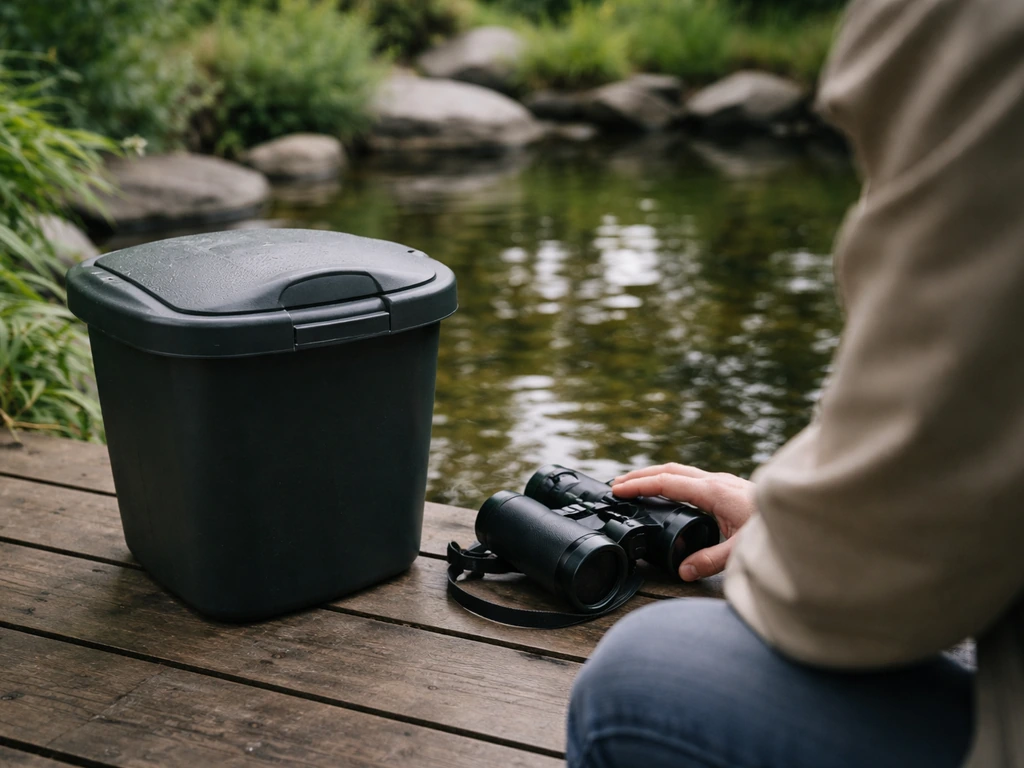
This is where I'd urge some real caution, especially if you've been thinking about tossing fish scraps into your pond or near your water feature to attract these birds. The advice from USDA APHIS, MassWildlife, the CDC, the U.S. Fish and Wildlife Service, and the National Park Service is consistent and unambiguous: do not feed wildlife, including fish-eating birds. Here's why that matters in practice.
The specific risks of using fish scraps as bait or feed
- Spoilage and contamination: fish scraps decompose fast, especially in warm months. Rotting fish near water can contaminate the water source itself and create bacterial hazards for pets, children, and other wildlife.
- Food conditioning: birds that learn to associate humans or human spaces with easy food become bolder and more aggressive over time. A food-conditioned great blue heron or osprey can become a nuisance or even a hazard around backyard fish ponds.
- Attracting unintended animals: leaving fish scraps out doesn't just attract the birds you want. It can bring in raccoons, coyotes, rats, and other opportunistic wildlife that carry disease risks into the yard.
- Predator pressure on pet fish: deliberately attracting herons, kingfishers, or cormorants to your property by feeding them raises the probability they'll start targeting your koi pond or water garden once the free food stops.
- Regulatory issues: in some states and jurisdictions, intentionally feeding certain species of wildlife (including raptors) may violate local ordinances or state wildlife codes. The NPS prohibits feeding wildlife in federal areas under CFR regulations. Always check your local rules.
What to do instead
If your goal is to attract fish-eating birds for observation, the most effective and lowest-risk approach is habitat, not food. A healthy pond with a natural fish population will draw herons and kingfishers on its own. Keep the water clear and the edges planted with native vegetation to provide cover and natural foraging opportunities. Place a perch (a bare branch or simple post near water) in a spot that gives you a clear sightline, and you'll likely have regular visitors without ever putting out a single scrap of bait.
If you keep backyard fish and want to protect them rather than attract predators, a pond net or a motion-activated deterrent sprinkler is far more effective than trying to manage bird visits directly. Great blue herons in particular can clean out a small pond fast, and they tend to return to the same reliable feeding spots daily once they find them.
The bottom line on feeders and fish scraps: standard seed feeders do not attract fish-eating birds. These are wild hunters that need live or very fresh prey, and none of the common fish-eating species will visit a seed feeder. If a large bird shows up near your feeder and you're wondering whether it eats fish, it almost certainly isn't there for the seeds. Gulls, in particular, are more likely to scavenge and opportunistically prey than to rely on fish from a feeder it almost certainly isn't there for the seeds. Check for a nearby water source, watch the hunting behavior, and use the field marks above to confirm what you're seeing.
FAQ
What bird eats fish near shore but won’t perch out in the open?
Look for a cormorant. It often stays low over the water, then dives underwater and stays submerged long enough to pursue fish. Afterward it usually perches upright with wings spread to dry, so check for that “wet, drying” posture even if you never see it hunting from a perch.
How can I tell if a bird is actually eating fish versus just fishing or stealing from another bird?
Confirm with the handling behavior. Ospreys and kingfishers usually plunge to capture, then you may see the bird depart with the catch tucked. Bald eagles may arrive already holding fish, or take fish mid-air, so look for steals (sudden pursuit, abrupt turn, fish appearing in talons) rather than repeated dives.
Do gulls or terns count as “fish-eating birds” if I see them over the water?
Terns are more reliable. If you see a hovering pause over the water followed by a headfirst plunge, fish is likely a core part of their hunting during breeding season. For gulls, “over the water” is not enough because they scavenge and will switch to whatever is easiest, including human foods on land.
What time of day is most likely for seeing a night heron eat fish?
Dusk, night, and pre-dawn are your best bets. If you observe only during daytime, you can miss them entirely even if they’re regular visitors to the same pond or stream, because their most active feeding window overlaps low light.
If I spot a big fish-eater in a marsh, what should I check first?
Start with hunting technique, not size. A heron-like bird that stands motionless and then spears from the bank is a heron (often great blue heron), while a bird that dives beneath the surface after floating low is more consistent with a cormorant. Habitat helps, but technique is the fastest diagnostic at a distance.
Can ospreys be mistaken for other raptors when they’re far away?
Yes, especially if you only see the silhouette. The key differentiator is the hovering-and-feet-first plunge into the water. If the bird never hovers and instead just swoops or snatches near the surface, consider bald eagle rather than osprey.
Do fish-eating birds ever take non-fish prey?
Frequently, especially with herons and kingfishers. Great blue herons and kingfishers lean heavily on fish, but when fish are scarce you may see frogs, crayfish, or small mammals. A single fish capture doesn’t guarantee a species is strictly piscivorous in that location at that time.
What’s the safest way to attract fish-eating birds for viewing without feeding them?
Use habitat, not bait. A healthy pond with natural fish, clear water, native shoreline plants for cover, and a simple perch near a good sightline often draws visitors naturally. Avoid fish scraps entirely, because feeding wildlife can create health and safety problems for both birds and people.
I see a bird near my pond, and it’s taking small animals instead of fish. What should I consider?
That’s usually a different hunting category than the classic fish specialists. Raptors that target mice or pigeons may be hunting on land or from mixed perches, so compare the prey-handling behavior: fish specialists typically focus on water capture and then transport from the shoreline or over water.
Will a seed feeder attract ospreys, herons, or cormorants?
Usually not. Seed feeders mainly attract seed-eaters, and fish-eating birds generally hunt live prey, not spilled seed. If you see a large fish-related bird near a feeder, it’s more likely responding to nearby water, a good hunting spot, or other opportunities than the seed itself.
What should I do if I keep backyard fish and a heron shows up?
Use physical deterrence and protection. Pond nets and motion-activated sprinkler deterrents are more effective than trying to “manage” visits by feeding. Great blue herons can remove a lot of fish quickly and often return to consistent feeding spots once they learn the route.
Next Article
What Bird Eats Seagulls? Identify the Predator Fast
Learn what bird eats seagulls, how to ID the predator by evidence, and how to reduce gulls safely at home.