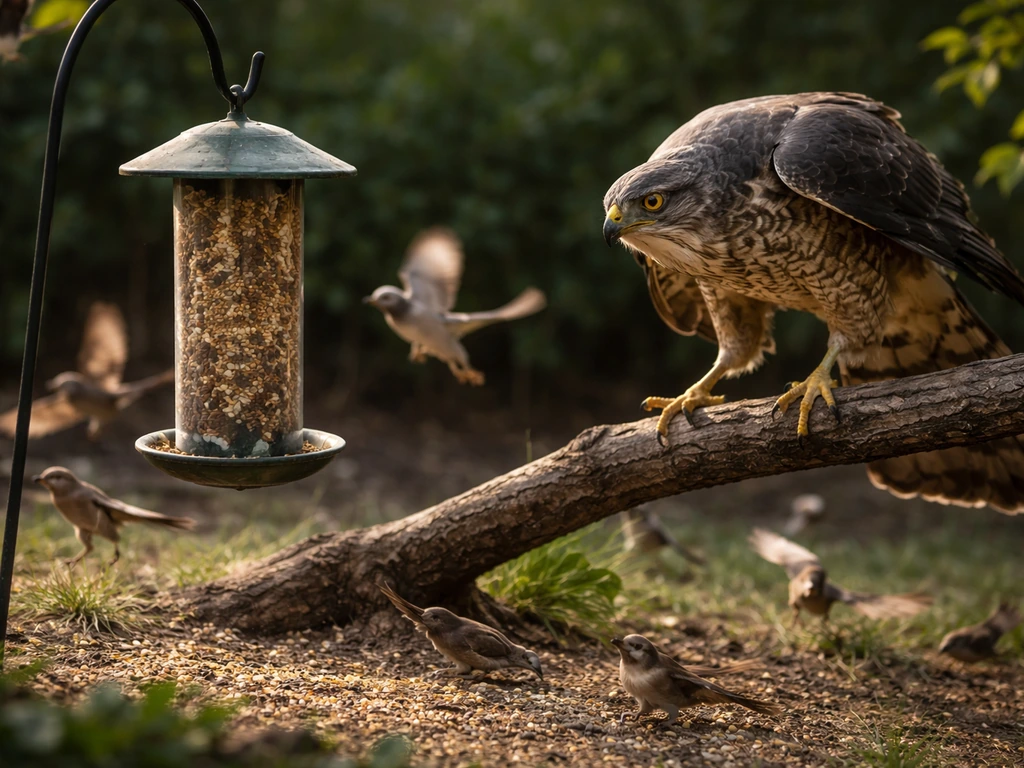
The most common birds eating other birds around backyards are Cooper's hawks, sharp-shinned hawks, and great horned owls. If you're also wondering which bird eat fire, that question belongs to a completely different set of animals than backyard predators. Cooper's hawks in particular are backyard feeder regulars, and small- to medium-sized birds make up roughly 82% of their diet. Sharp-shinned hawks focus almost entirely on sparrow-sized birds. If you're finding feather piles near your feeder or a bird disappears in a blur, one of these three is the most likely culprit. Merlins, American kestrels, and occasionally larger raptors like goshawks round out the lineup depending on where you live and what time of year it is.
What Bird Eats Other Birds? Identify Predators and Protect Birds

Maya Bennett
1 May 2026
The usual suspects: birds that eat other birds
Not every raptor hunts songbirds as a main food source, so it helps to know which ones do it regularly versus occasionally. Not every raptor hunts songbirds as a main food source, so it helps to know which ones do it regularly versus occasionally what bird eats upside down. The list below focuses on species most likely to show up in suburban and rural backyards.
Cooper's hawk
This is the bird most backyard birders encounter. Cooper's hawks are built for ambush, using aerial surprise attacks and occasionally chasing prey on foot through brush. They actively frequent bird feeders because a crowd of songbirds is simply an easy catch. Small to medium birds dominate their diet at around 82%, and they're bold enough to fly directly into shrubs or under feeders to make a grab.
Sharp-shinned hawk
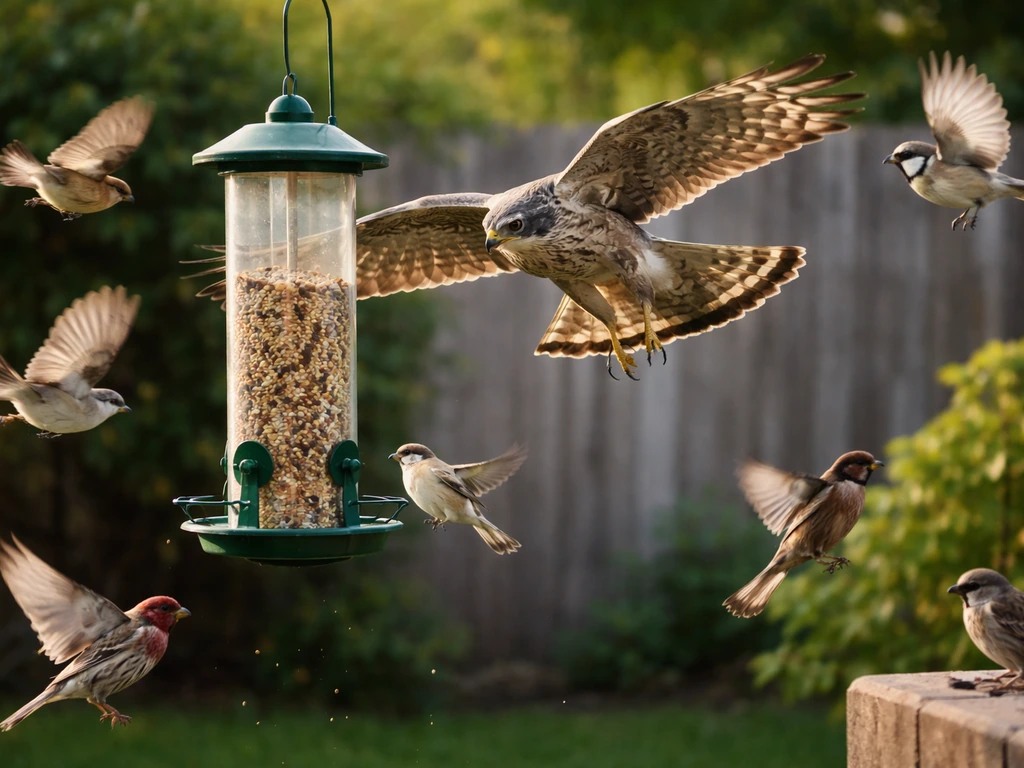
The sharp-shinned is the smallest North American accipiter, and it is almost exclusively a bird hunter. Typical prey is sparrow-sized, though it occasionally takes larger birds. Common targets include house sparrows, song sparrows, towhees, American robins, starlings, catbirds, and brown creepers. At feeders they look like a smaller, faster version of a Cooper's hawk, and the two are frequently confused.
Great horned owl
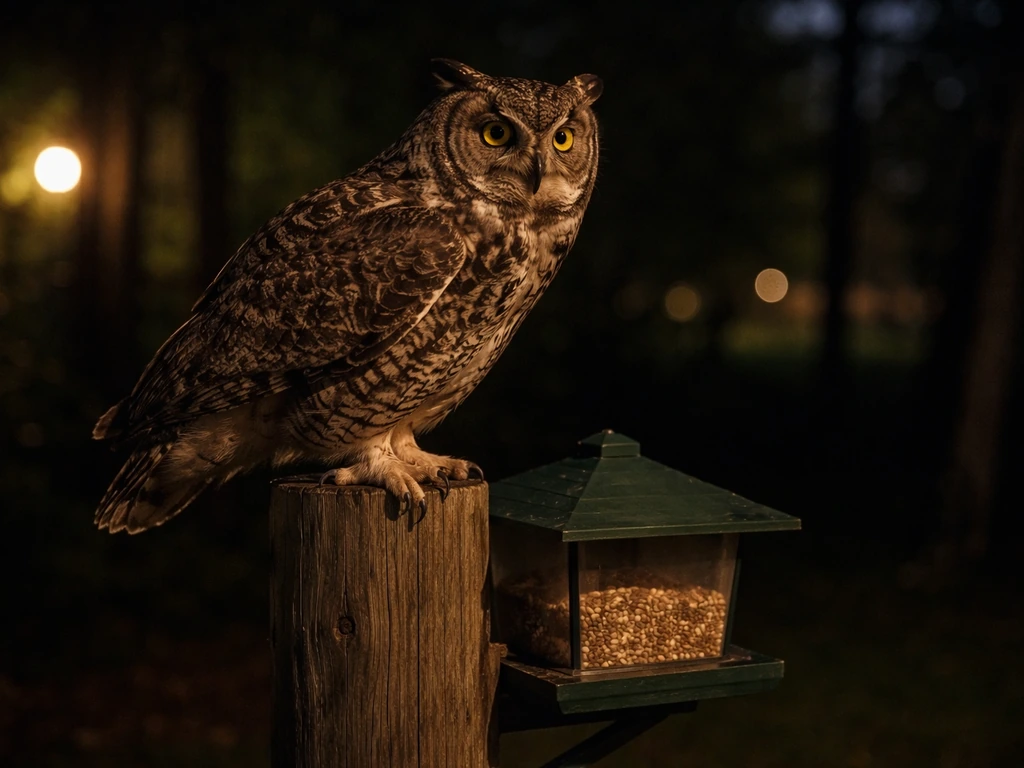
Great horned owls work the night shift. They'll take birds up to the size of ducks or other raptors, and their silent flight makes them nearly impossible to detect before a strike. If birds are disappearing at night or you find evidence in the early morning hours, a great horned owl is the prime suspect.
Merlin and American kestrel
Merlins are fast, aggressive falcons that chase small birds low over open ground or hover into the wind to spot prey before diving. American kestrels eat mostly insects in summer but do take small birds, pouncing on them with both feet and either finishing the prey on the ground or carrying it to a perch. Both species are more likely to be a factor during migration or in open habitats rather than dense suburban yards.
Occasional and opportunistic hunters
Northern goshawks, red-tailed hawks, ravens, and even crows will take birds when the opportunity arises, though songbirds are not their primary food. Bald and golden eagles can also take birds, but their range and prey size make them less relevant to most backyard situations. Swainson's hawks are opportunistic predators and will take birds, but their diet leans heavily toward insects and small mammals depending on season. The topic of whether one bird eating another counts as cannibalism is a fun related question, and it really comes down to whether the two birds are the same species.
| Species | Primary prey | When most active | Feeder threat level |
|---|---|---|---|
| Cooper's hawk | Small to medium birds (82% of diet) | Daytime, year-round | High |
| Sharp-shinned hawk | Sparrow-sized birds | Daytime, especially migration | High |
| Great horned owl | Birds, mammals, reptiles | Night | Moderate (night feeders) |
| Merlin | Small birds, insects | Daytime, migration season | Low to moderate |
| American kestrel | Insects, then small birds/mammals | Daytime, open habitats | Low |
| Northern goshawk | Medium birds and mammals | Daytime, winter irruptions | Low to moderate |
| Crow / Raven | Opportunistic, eggs, nestlings | Daytime | Low (mostly nestlings) |
How bird-on-bird predation actually looks
Raptor attacks on songbirds are fast and usually happen in two windows: early morning when birds first come to feeders (roughly 30 to 90 minutes after sunrise), and late afternoon before dusk. Owls operate from dusk through early morning. The attack itself is almost always a surprise dive or low-speed chase through cover, not a long aerial pursuit.
What you'll typically see or find afterward: a sudden scatter of feeder birds, then silence, and then a pile of feathers. Hawks often pluck their prey at the kill site before eating or carrying it off. Even though it can be disgusting, raptors sometimes kill birds to eat them rather than to leave them behind name a bird that would make a disgusting meal. The feather pile is the signature sign. Owls tend to swallow smaller prey whole and carry larger prey away, so evidence can be harder to find in the morning. You may also find a partially eaten carcass in a shrub or on a fence post where the hawk perched to feed.
- Feather scatter with no blood usually means a hawk plucked prey before eating
- Feathers bitten or chewed near the base suggest a mammal predator, not a bird
- Clean kill with few feathers and no carcass often points to an owl
- Partial carcass left on a flat surface or post suggests a hawk interrupted mid-meal
- Birds disappearing overnight with no morning evidence points to owl activity
Identifying the predator from what's left behind
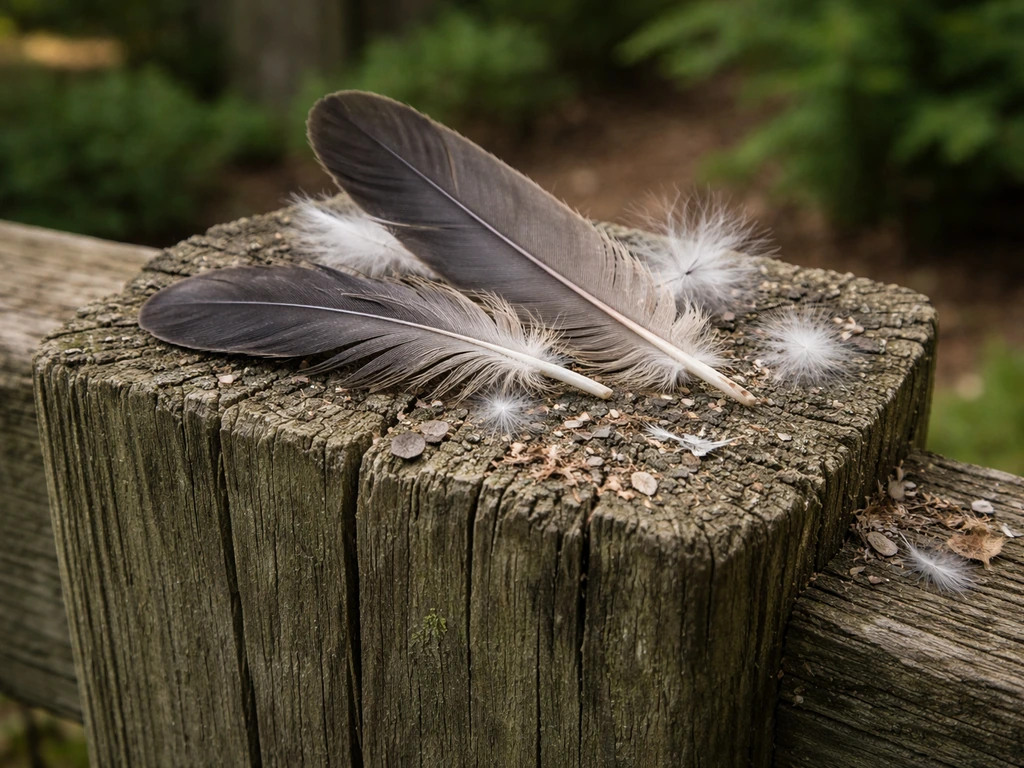
You don't need to see the bird to figure out what's visiting your yard. The evidence it leaves is usually enough to make a confident ID.
Feathers and pluck sites
Hawks and owls pluck feathers differently. Hawk-plucked feathers often have a clean break at the shaft. Owl-plucked feathers may show a different pattern. USDA APHIS guidance specifically notes that feather patterning at a kill site can help distinguish hawk kills from owl kills. If you find a tidy circle of small feathers on a flat surface like a deck railing or a stump, a hawk almost certainly used it as a plucking post.
Silhouette and flight pattern
Accipiters like Cooper's and sharp-shinned hawks have a distinctive flap-flap-glide flight pattern with rounded wings and a long tail. Cooper's hawks are crow-sized; sharp-shinned are roughly jay-sized. A kestrel hovers in place before diving. A merlin makes direct, fast, low passes. Great horned owls have large ear tufts visible when perched and fly with deep, slow wingbeats.
Pellets and droppings
Owls regurgitate pellets containing bones, feathers, and fur from prey they can't digest. Finding a pellet below a regular perch tree is a reliable sign of owl activity. Hawks produce smaller, looser pellets. Raptor droppings (white, liquid splashes on horizontal surfaces below a perch) are another useful marker of a regular hunting site near your yard.
Time of day as a clue
If birds disappear or feathers appear during daylight, your suspect is almost certainly a diurnal raptor: Cooper's hawk, sharp-shinned hawk, merlin, or kestrel. If the evidence shows up overnight or in the first minutes of morning light, think great horned owl first. Screech owls can also take small birds but are more likely to focus on insects and mice.
What to do today to protect the birds at your feeders
You can make meaningful changes right now without harming the predator (which would be illegal under the Migratory Bird Treaty Act anyway). The goal is to reduce how easy your feeder setup makes it for a hawk to pick off birds.
- Move feeders within 3 feet of a window or dense shrub so birds can escape into cover quickly. Hawks need open airspace to make a clean strike.
- Add a brush pile or dense evergreen shrub within 6 to 10 feet of feeders. Sparrows and finches will use it as an instant escape hatch.
- Remove open perch sites around the feeder area, like dead snags or exposed fence posts that a hawk would use as a hunting launch point.
- Use cage-style feeders with wire mesh surrounds. Small songbirds fit through easily; larger raptors cannot reach inside.
- Temporarily take feeders down for 1 to 2 weeks if a hawk is actively hunting your yard. Without the easy prey concentration it will usually move on.
- Avoid ground feeding during peak hawk activity seasons (fall migration and winter). Ground feeding puts birds in the most exposed position possible.
- Place feeders in the open away from fences or low horizontal surfaces that hawks use as plucking posts, so if a strike happens the hawk is less comfortable lingering.
Dense shrub cover is the single most effective long-term change. Native shrubs like viburnum, hawthorn, or holly give birds somewhere to bolt to and make hawk hunting genuinely difficult. Open, manicured yards are hunting grounds. Yards with layered vegetation are much safer for songbirds.
Feeder safety and cleanup after a predator visit
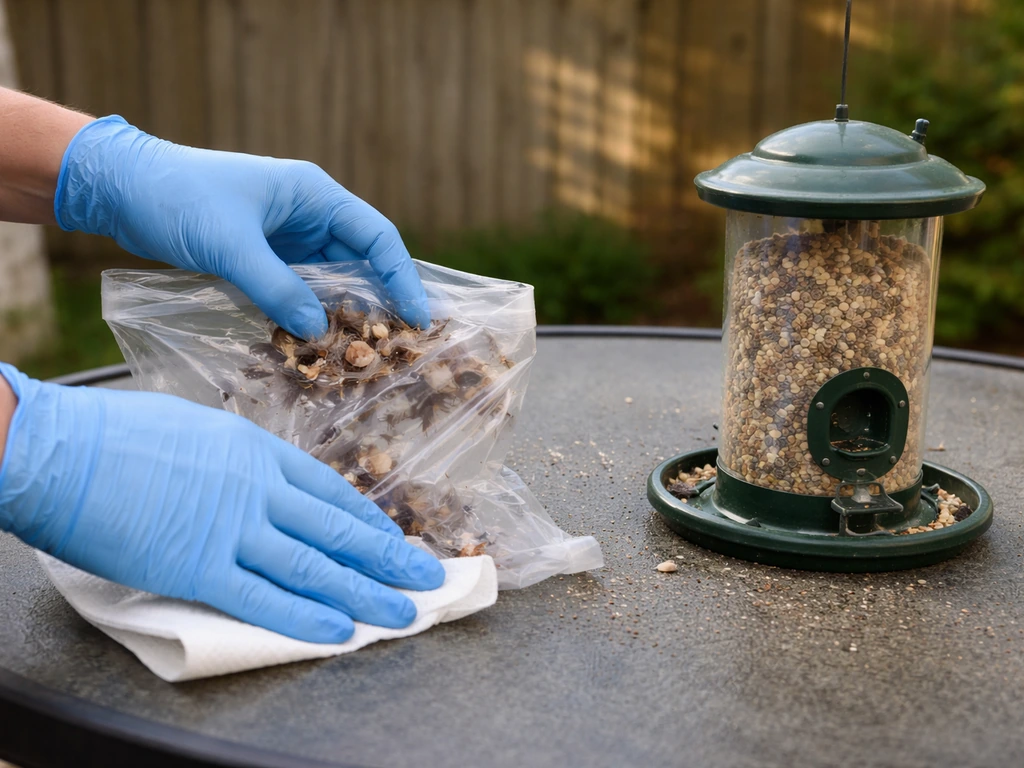
After a hawk or owl kill near your feeders, cleaning up is genuinely important. Feathers and blood can attract bacteria and, in some situations, raise disease concerns, especially during avian influenza seasons.
Removing remains safely
If you find a dead bird in or near your yard, wear disposable gloves before touching it. Double-bag the remains in plastic and dispose in your household trash. Do not handle dead wild birds with bare hands.
If you find multiple dead birds (six or more sick or dead birds in a short time), the Michigan MDARD threshold and USDA APHIS guidance both recommend contacting your state wildlife agency or state health department so they can assess and test for HPAI (highly pathogenic avian influenza) if needed. Michigan’s avian influenza updates page notes that surveillance prioritization includes [testing dead birds from die-offs of six or more birds](https://www.
michigan. gov/avianinfluenza), among other criteria. USDA APHIS has a specific reporting workflow for this and can arrange collection.
Cleaning feeders after a kill
Blood and feathers near feeders can spread pathogens to healthy birds visiting afterward. Clean any affected feeders promptly using a solution of no more than 1 part bleach to 9 parts water, which is the Cornell Lab's recommended ratio. Iowa DNR recommends cleaning feeders and water features about once a month minimum using a 10% bleach solution, and USFWS guidance (citing Cornell) suggests at least once every two weeks as a baseline. Always let feeders dry completely before refilling. A wet feeder refilled with seed creates mold quickly, which is its own disease risk independent of any predator visit.
Seed storage matters too
If a predator disrupts your feeder routine and seed sits in a warm or damp feeder for extended periods, spoilage becomes a real problem. Store bulk seed in sealed, airtight metal or hard plastic containers away from moisture and direct sun. Discard any clumped, moldy, or foul-smelling seed immediately. Spoiled seed can sicken or kill the birds you're trying to protect.
Personal safety around raptors
Audubon advises treating larger raptors like Cooper's hawks and great horned owls with real caution, specifically because of talons and bite risk. If you find an injured raptor, do not pick it up with bare hands. Use a box or thick towel, and contact a local wildlife rehabilitator immediately. Raptor rehab organizations like the Birds of Prey Foundation or Rocky Mountain Raptor Program can provide direct guidance and referrals. If you're concerned about bird flu exposure after handling any dead bird, follow CDC biosafety guidance: wash hands thoroughly, avoid touching your face, and monitor for flu-like symptoms.
Myths and common misidentifications
Several birds get blamed for songbird deaths that they didn't cause. Here are the most common ones worth clearing up.
"The crow is killing my feeder birds"
Crows occasionally take eggs and nestlings, and they'll opportunistically scavenge a carcass. But crows are not hunting adult songbirds at your feeder. Even though they can scavenge, crows do not typically hunt and kill other birds on a regular basis. If you're seeing a crow near a dead bird, it almost certainly arrived after the kill, not before. Blaming crows for songbird deaths is one of the most common backyard birder misidentifications.
"The red-tailed hawk near my yard is taking my birds"
Red-tailed hawks are the most common hawk people see perched on fence posts and power lines, so they get blamed frequently. But red-tails are primarily rodent hunters. A red-tail perched near your feeder is almost certainly watching for voles and mice, not your sparrows. The accipiters (Cooper's and sharp-shinned) are the real songbird hunters.
"That's definitely an eagle/falcon taking my birds"
Bald and golden eagles are large enough to take birds, but they're uncommon in most suburban yards and tend toward waterfowl and fish. Peregrine falcons are spectacular aerial hunters of birds but are primarily urban cliff/skyscraper nesters and rarely a factor at backyard feeders. The small, hovering bird people sometimes mistake for a peregrine is usually a kestrel, which is a much less serious threat to feeder birds.
"It must be an owl because it happened at night"
Owls are absolutely nighttime predators, but if birds are disappearing from an outdoor enclosure or cage overnight, a raccoon, rat, or domestic cat is at least as likely as an owl. Check for claw or tooth marks on feeder hardware and wire before assuming raptor.
When it might not be a bird at all
Before locking in a raptor as your suspect, rule out a few other common culprits. If you want to know what bird eats humans, it can help to start with the difference between typical bird-on-bird predation and true threats to people. The evidence they leave is different in key ways.
Domestic and feral cats
Audubon has reported on research finding that domestic cats are among the leading causes of bird deaths in suburban neighborhoods, with predation rates directly tied to local cat population density. Cat kills look different from raptor kills: feathers are often chewed rather than plucked cleanly, the carcass may have bite marks at the back of the neck, and the kill is frequently left whole rather than eaten. Cats also kill at any hour and in any weather. If you're finding whole or mostly intact dead birds with no feather scatter, suspect a cat first.
Raccoons and squirrels
Raccoons raid nests and will take injured or grounded birds. They tend to leave messier evidence than raptors: scattered debris, disturbed nest material, and sometimes partial remains with gnaw marks. Squirrels raid eggs and nestlings but rarely take adult birds.
Scavengers arriving after the fact
If you see a crow, vulture, or even a blue jay near a dead bird, that animal likely didn't kill it. Scavengers arrive after death, sometimes within minutes. The actual predator is usually long gone. The way to confirm scavenging versus active predation is to look at the feathers: a raptor pluck site has many feathers in a concentrated area, while a scavenger working on an already-dead bird tends to scatter remains more widely and messily.
How to confirm what's actually happening
- Set up a simple trail camera or phone camera pointed at the feeder area, especially around dawn, dusk, and overnight
- Note the exact time and conditions when birds scatter or go silent suddenly
- Photograph the kill site before disturbing it, capturing feather distribution, depth of plucking, and any blood patterns
- Check for footprints in soft soil or snow near the scene: raptor talons leave very different prints than cat paws or raccoon hands
- If disease is a concern and multiple birds are involved, contact your state wildlife agency rather than attempting to investigate on your own
Most of the time, a careful look at the evidence will point clearly to one culprit. Cooper's hawk, sharp-shinned hawk, or great horned owl will account for the majority of genuine raptor predation events at backyard feeders. The practical steps outlined above, especially adding cover, using cage feeders, and cleaning up promptly, are the fastest ways to make your yard safer for the birds you want to protect.
FAQ
If I see a hawk perched nearby, does that automatically mean it killed a bird at my feeder?
Not necessarily. A raptor can simply be watching for movement. True feeder kills usually leave either a localized feather pluck site (hawks) or a pellet and disturbed perch area (owls). If there is no feather scatter, no pellets, and no carcass or fragments, the hawk may have arrived after the fact or be hunting elsewhere.
How can I tell the difference between a hawk feeding on a kill and a bird that died from something else?
Look for a consistent pattern tied to a perch or plucking surface. Hawk-related kills commonly show a tight cluster of small feathers with a clean break pattern on the shafts and may include droppings under the perch. If you find multiple dead birds over a short period with little feather evidence and no clear plucking spot, consider disease or poisoning as possibilities and follow the dead-bird guidance in the article.
What if the feeder is inside a screened enclosure or a cage feeder, but birds still disappear?
Cage feeders greatly reduce easy access, but predators can still take birds at the edges where birds wait to land or at nearby cover. Check the entire “landing zone,” including railings, low shrubs, and fence lines. Also verify that your cage feeder cannot be accessed from the side openings or from perches under the feeder.
Do Cooper’s hawks and sharp-shinned hawks eat birds year-round, or is it seasonal?
They eat birds throughout the year, but the likelihood of seeing bird disappearances can rise during seasonal changes. Migration and certain times of day matter, and young birds can be easier targets when they are learning flight. If attacks cluster in early morning or late afternoon, that timing matches the accipiter hunting windows described in the article.
If birds are disappearing overnight, could it be an owl even if I never find feathers or pellets?
It can still be an owl, but evidence can be harder to find if the prey is carried away to a roosting perch or into thick cover. In that case, check for owl pellets under regular roost sites in nearby trees, and look for white or liquid droppings on horizontal surfaces near perches. Absence of feathers under your feeder does not rule out an owl.
What should I do if I find a feather pile but no carcass, where did the bird go?
Raptors often pluck feathers at the kill site, then move the remaining body to eat elsewhere, especially if the kill happened in open space. Search within a short radius for a perch, brushy cover, or a higher feeding spot. If you see pellets later, that supports an owl moving prey rather than just abandoning it.
Can I use bird deterrents like spikes, tape, or reflective items, and will that help with hawks?
They can help for some birds but they are usually less reliable for hawks compared with reducing ambush opportunities. Spikes and reflective items may also reduce perching spots for songbirds without actually improving escape cover. The highest-impact change described in the article is layered, native shrub cover, plus feeder setups that make captures harder.
If I stop feeding to prevent predation, is that better or worse for songbirds?
It can reduce feeder traffic and may lower the chance of easy ambush, but it also removes food and can concentrate feeding at fewer safe areas. If you do pause feeding, consider doing it temporarily while making structural changes (cover, layered vegetation, safer feeder design) rather than relying on feeding cessation alone.
How often should I clean feeders to prevent disease without overdoing it?
At minimum, follow the baseline schedule mentioned in the article, with more frequent cleaning if you see wet seed, mold, or blood and feathers around the feeder. After any suspected raptor kill near feeders, prompt cleaning matters. Let feeders dry completely before refilling, since a wet feeder can create mold risk even if no predator is involved.
What evidence would suggest a cat or raccoon instead of a bird-eating raptor?
For cats, carcasses are often left mostly intact, feathers may be chewed, and kills can happen any hour. For raccoons, look for disturbed nest material, scattered debris, gnaw marks, and messier remnants. If deaths appear overnight in enclosures or cages, also check for tooth or claw marks on feeder hardware before assuming an owl.
Should I be worried about handling a dead bird if I’m trying to identify the predator?
Yes, treat it as a biohazard. Wear disposable gloves, avoid bare-hand contact, double-bag the remains, and use household trash disposal as described. If you notice multiple dead or sick birds in a short time window, contact your state wildlife agency or health department so they can assess HPAI risk and coordinate collection.
What’s the easiest way to confirm which raptor is visiting, without waiting for another kill?
Focus on behavioral and visual cues rather than only carcasses. Compare flight style and size (Cooper’s, sharp-shinned, merlin, kestrel) and note timing windows (diurnal hawks around feeder rush times, owls from dusk through early morning). Camera footage, even a low-cost motion camera, can be more definitive than guessing from a single feather pile.
Next Articles
What Bird of Prey Eats Pigeons: Common Raptors & ID Tips
Which raptors eat pigeons: peregrine, Cooper’s, goshawk, merlin, red-tailed, kestrels, owls; ID tips, risks and how to保护
Which Bird Eats Mice? How to Identify Mouse Predators
Identify which birds eat mice using hunting cues, time of day, calls, and perch habits, plus safe yard steps.
What Bird Eats Ducks? How to Identify Duck Predators
Identify which birds, like hawks and owls, prey on ducks and learn proof cues and humane steps to reduce risk.