Several bird species eat penguins, but the main ones you need to know are brown skuas, giant petrels (both southern and northern species), and sheathbills. Some birds also eat fish, such as certain seabirds and raptors, so their diet can be different from penguin specialists like skuas and giant petrels what bird eats fish. Skuas and giant petrels are active, opportunistic hunters that will take live chicks and, under the right conditions, adult penguins too. Sheathbills focus almost entirely on eggs and abandoned young rather than healthy adults. If you are trying to identify which bird is responsible for penguin predation at a specific site, those three groups cover the vast majority of documented cases.
What Bird Eats Penguins? Likely Predators and How to Tell

Maya Bennett
15 May 2026
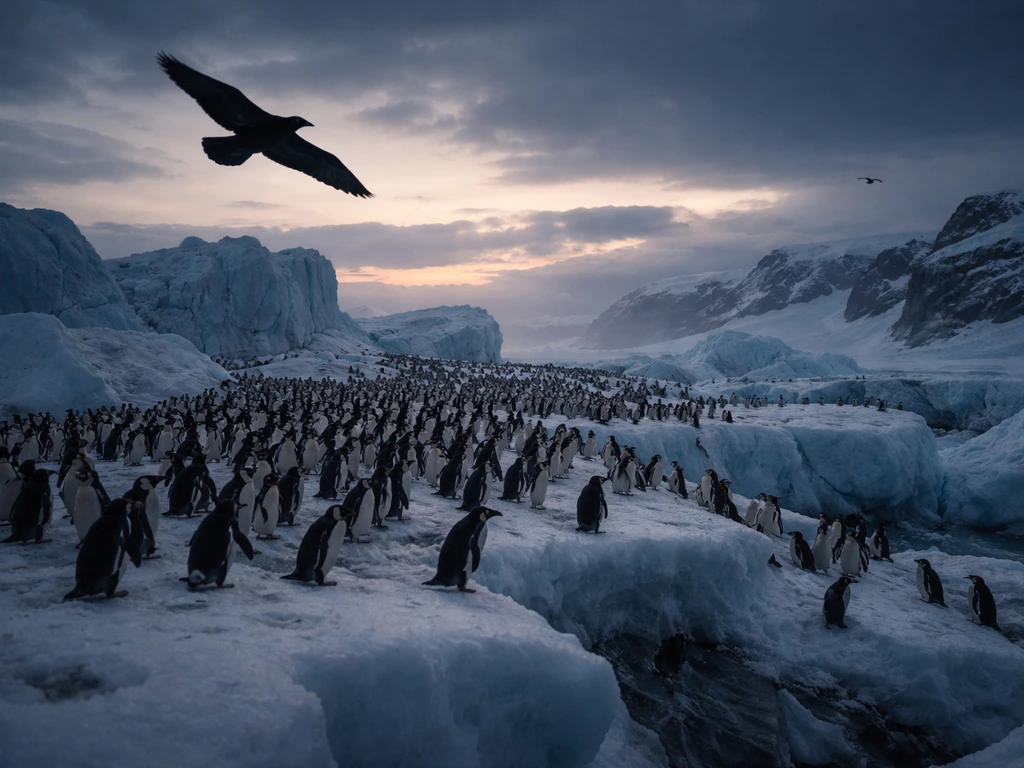
The main bird predators of penguins
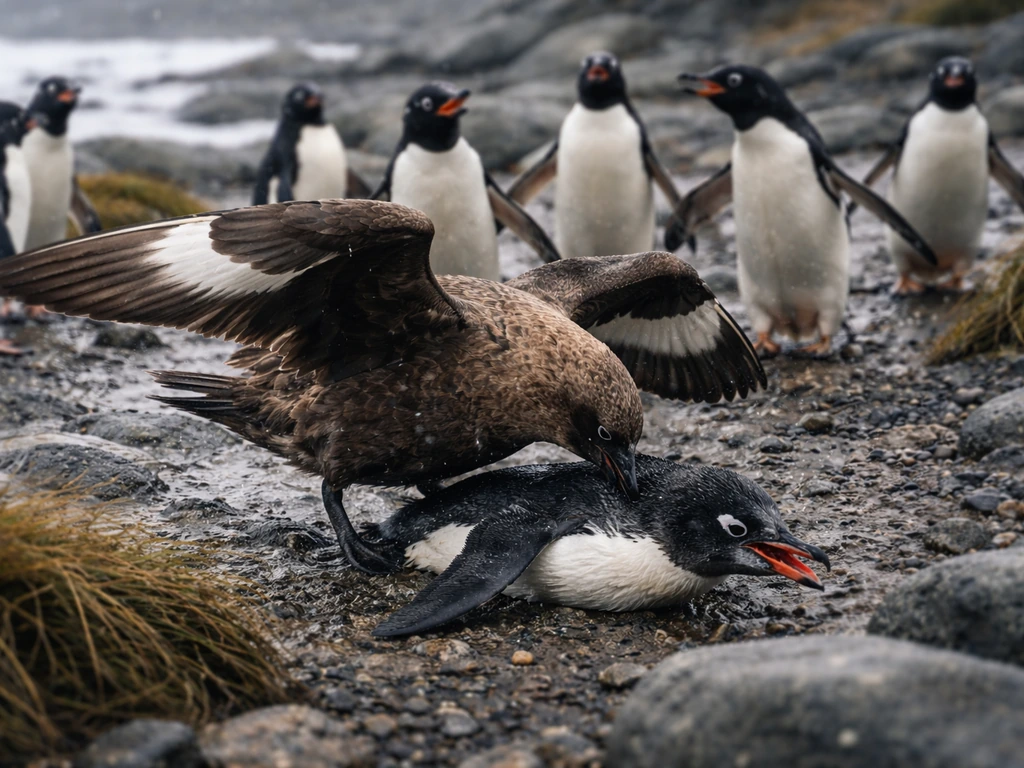
Brown skuas (Catharacta lonnbergi) and South Polar skuas (Stercorarius maccormicki) are arguably the most well-studied avian predators of penguins. They hunt actively during the breeding season, targeting eggs, small chicks, and weakened adults in and around nesting colonies. Research at Macquarie Island confirms brown skuas prey on king penguin eggs, chicks, and adults, and separate case studies around Adélie penguin colonies show South Polar skuas routinely raiding nests during incubation and early chick-rearing. Skuas are bold and social hunters, sometimes working in pairs to distract a nesting adult while a partner takes the egg or chick.
Giant petrels, specifically southern giant petrels (Macronectes giganteus) and northern giant petrels (Macronectes halli), are the most capable avian predators of adult penguins. A peer-reviewed study at Punta Tombo in Argentina documented southern giant petrels attacking live Magellanic penguins, not just scavenging carcasses as was often assumed. A separate paper from the Tristan da Cunha Islands records giant petrels actively hunting northern rockhopper penguins. These birds are large, powerful, and persistent. Adults and molting birds, which are temporarily land-bound and in poor physical condition, are especially vulnerable during these encounters.
Sheathbills (Chionis spp.) are smaller and less dramatic predators but are a real and consistent threat to penguin eggs and very young chicks. Britannica describes them as aggressive scavengers and predators that patrol colony edges looking for unattended or abandoned eggs. They rarely if ever take healthy chicks that are mobile or defended by a parent. Think of sheathbills as opportunists rather than active hunters: they exploit gaps in parental attention rather than launching direct attacks.
Caracaras, particularly striated caracaras (Phalcoboenus australis) in the Falkland Islands, are worth mentioning for southern South America. National Geographic notes that gentoo penguin eggs and chicks face risk from birds of prey including caracaras. They are bold and curious, and they can be a genuine problem around penguin colonies in that region even if their overall contribution to penguin mortality is smaller than that of skuas or giant petrels.
Chicks vs adults: who is actually at risk
Penguin chicks are far more vulnerable than healthy adults, and almost every avian predator in a penguin colony knows this. Chicks cannot outrun or outmaneuver a skua or giant petrel, and before they develop their adult plumage they have no waterproofing to escape into the sea. The period between hatching and full independence is the danger window. Research at Macquarie Island on king penguins links chick survival rates directly to environmental conditions that affect chick body condition, reinforcing that thinner, weaker chicks face higher predation pressure.
Adult penguins are not immune. Giant petrels in particular will attack healthy adults if the opportunity is right. The Punta Tombo research is striking because it showed these attacks on live adults are more common than previously assumed, especially in April when molting adults are temporarily confined to land and cannot flee into the water. An adult penguin in mid-molt is slow and stressed, making it a viable target for a large, aggressive petrel. Outside of that window, a fit adult in the water is effectively safe from birds.
Eggs are a separate category. Sheathbills specialize here, and skuas will also take eggs if a nest is left unattended, even briefly. Disturbance of nesting colonies, including by humans, can increase this risk significantly. When a parent flushes from a nest due to a perceived threat, the egg or small chick is exposed. Research near Antarctic research stations notes that human activity can attract skuas and kelp gulls to colony edges, indirectly raising predation risk through disturbance rather than direct interference.
How to identify the predator bird in the field
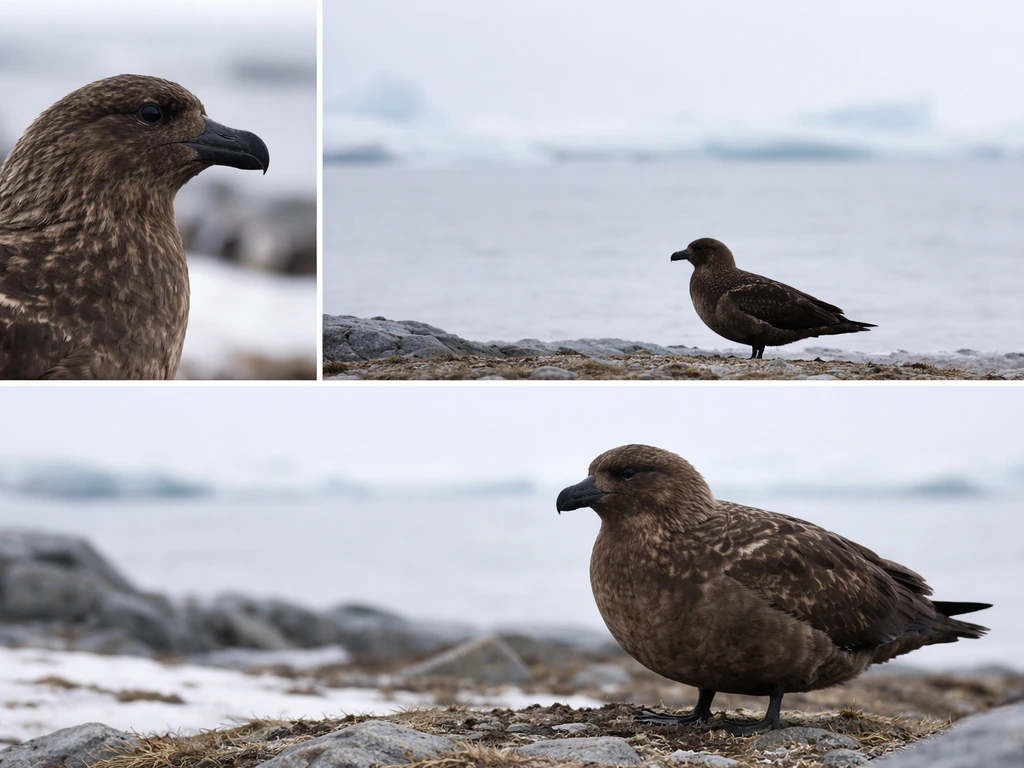
If you are at or near a penguin colony and want to identify which bird is responsible for predation, here are the practical field cues to focus on.
Brown and South Polar skuas
- Size: roughly gull-sized but more heavily built, with a thick neck and hooked bill
- Plumage: dark brown overall (brown skua) or variable pale and dark forms (South Polar skua), both with distinctive white wing patches visible in flight
- Flight: powerful, direct, and fast, often low over the colony when hunting; will hover briefly before striking
- Behavior: actively patrols colony edges; will chase other birds to steal food (kleptoparasitism); pairs often work together to distract nesting penguins
- Call: loud, barking alarm calls when territory is threatened; persistent and aggressive near nests
Southern and northern giant petrels
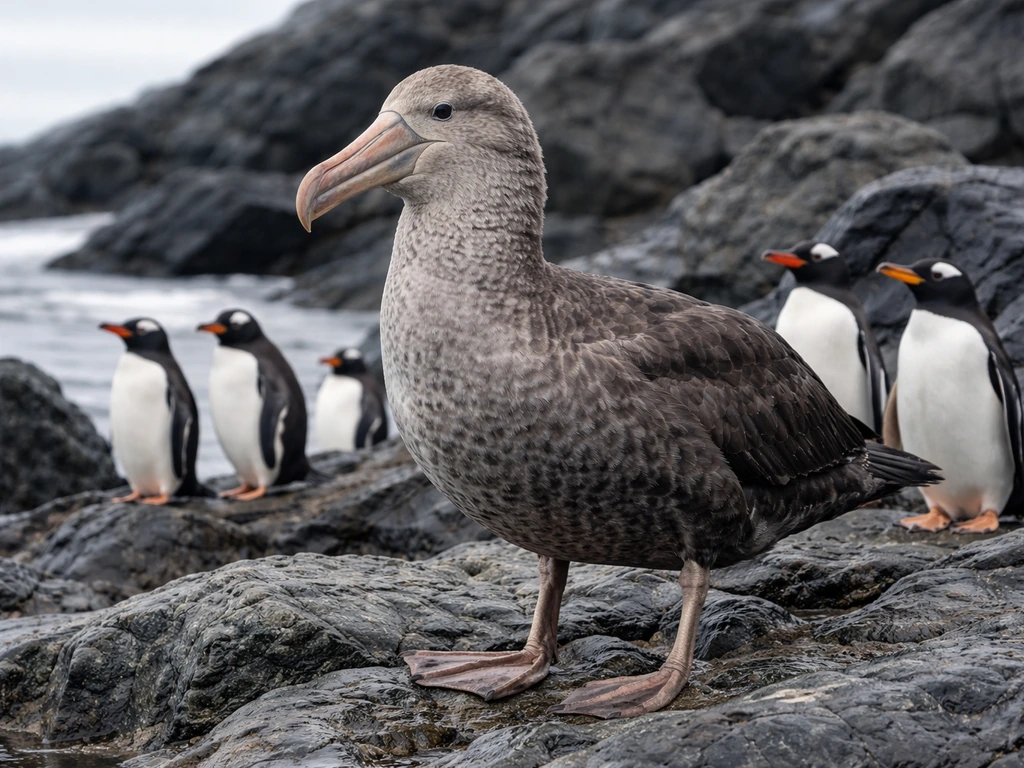
- Size: very large, close to albatross-sized, with a wingspan of up to 2 meters; unmistakable when seen next to penguins
- Bill: long, pale, and tube-nosed; the large yellowish bill is a key ID feature at close range
- Plumage: dark brown or mottled gray-brown for most birds; white morph exists in southern giant petrels
- Flight: heavy and gliding on flat wings, similar to an albatross; less agile than skuas but persistent
- Behavior: will approach live penguin groups; may stand over a downed or molting bird; known to scavenge and hunt from the same colony visit
Sheathbills
- Size: roughly pigeon-sized, the smallest bird in this predator group
- Plumage: entirely white with a pale greenish-yellow bill sheath covering the base of the beak
- Behavior: walks rather than soars; moves quietly around colony edges; runs in quickly when a penguin nest is briefly unattended
- Not aggressive toward adult penguins; presence near a nest usually signals egg or very young chick vulnerability
Myths and common mix-ups
A common misconception is that any large seabird near a penguin colony is actively predating penguins. Kelp gulls, for example, are frequently seen around colonies and can cause disturbance and harass penguins, but they are not documented predators of penguins in the same way skuas and giant petrels are. Similarly, albatrosses share breeding sites with some penguin species but do not prey on them.
Another persistent myth is that giant petrels are purely scavengers that only eat dead penguins. The Punta Tombo study specifically set out to address this assumption and found active predation on living adults. That said, giant petrels absolutely do scavenge, and seeing one feeding on a dead penguin carcass does not mean it killed the bird. Context matters: a giant petrel arriving at an already-dead bird is scavenging; one pinning a live, struggling penguin to the ground is predating.
Some online sources claim leopard seals or orcas eat penguins, which is true, but those are marine mammals, not birds. If the question is specifically about bird predators, skuas and giant petrels are the answer. That same predator-identification approach helps answer questions like what bird eats pigeons. Leopard seals are the dominant non-human predator of penguins overall, so they often appear in the same searches, but mixing them into a bird-predator discussion muddies the picture. Similarly, birds like peregrine falcons or eagles sometimes come up in internet searches but they have no meaningful ecological overlap with penguin habitat. Birds of prey that eat pigeons include hawks and falcons, which hunt them as part of their natural diet.
Where penguin predation by birds actually happens

All documented avian predation on penguins happens in the Southern Hemisphere, primarily in and around Antarctica, the Subantarctic islands, and coastal southern South America. Understanding the geography helps you immediately rule out incorrect claims.
| Predator Bird | Key Locations | Season / Timing | Primary Prey |
|---|---|---|---|
| Brown skua | Macquarie Island, South Georgia, Antarctic Peninsula | Austral summer (Oct-Feb breeding season) | Eggs, chicks, weak adults |
| South Polar skua | Adélie penguin colonies, Antarctic continent | Austral summer breeding season | Eggs, chicks |
| Southern giant petrel | Punta Tombo (Argentina), Antarctic Peninsula, Subantarctic islands | Year-round; peak attacks April (molting adults) | Chicks, molting/sick adults |
| Northern giant petrel | Tristan da Cunha, Gough Island, Macquarie Island | Breeding and non-breeding season | Chicks, adults |
| Sheathbill | Antarctic Peninsula, South Georgia, Crozet Islands | Breeding season when eggs present | Eggs, very young chicks |
| Striated caracara | Falkland Islands, southern South America | Year-round but peaks in breeding season | Eggs, chicks |
The timing of predation events is tightly tied to the penguin breeding calendar. Attacks on eggs and small chicks peak during the austral spring and summer when penguin colonies are densest and most active. Giant petrel attacks on adult Magellanic penguins at Punta Tombo were documented specifically in April, when some adults remain at the colony in a compromised state during molting while the main season winds down. If you are visiting or monitoring a colony, those seasonal windows are when predation by birds is most likely to be observed.
Feeder and food practices to avoid near wildlife areas
This might seem like an unusual section in an article about penguin predators, but it is genuinely relevant if you are a birder, researcher, or ecotourist visiting or working near penguin colonies. Human food and feeding activity at or near sensitive wildlife sites creates real ecological problems, and the research is consistent on this point.
Polar Biology research near Palmer Station on the Antarctic Peninsula found that human activity at research bases attracts predators and scavengers, specifically skuas and kelp gulls, due to waste and disturbance. If you are feeding birds or leaving food scraps at or near a penguin colony, you are effectively inviting the same birds that prey on penguin eggs and chicks to congregate in higher numbers close to those nests. USFWS and NOAA both frame this as a "hidden harm": you may not see the immediate consequence, but the altered predator density around a colony has real downstream effects on chick survival.
Practical rules to follow near any penguin colony or sensitive seabird habitat:
- Do not feed any wildlife, including skuas, gulls, or other seabirds, even if they appear bold or habituated to people
- Secure all food waste in sealed containers and remove it from the site; do not leave scraps near colony boundaries
- Avoid using bird calls or playback near active colonies, which can cause stress responses that briefly expose eggs and chicks
- Keep a respectful distance from nesting birds; even approaching a nesting penguin to photograph it can flush the parent and expose the egg to a waiting sheathbill or skua
- Never handle penguin chicks or eggs, even if they appear abandoned; parental return is more likely than it looks
- If you maintain backyard feeders at home and travel to wildlife sites, clean your gear to avoid transporting pathogens between environments
The feeding risks that apply to backyard birding, such as attracting unwanted species, spreading disease through concentrated feeder use, and altering natural foraging behavior, scale up significantly in sensitive penguin colony environments. The same principles that MassWildlife and Washington DFW use to caution against backyard wildlife feeding apply with even greater force in these ecosystems.
Practical next steps: documenting sightings and getting help
If you witness a bird predation event at a penguin colony or suspect ongoing predation at a monitored site, here is how to document it properly and get the right people involved.
- Photograph or video the predator bird and the event if it is safe to do so without approaching closer or causing additional disturbance. Capture the bird's size relative to the penguin, bill shape, plumage, and flight behavior.
- Record the date, exact time, GPS coordinates or precise location description, weather conditions, and the number of predator birds involved. Note whether the predator was hunting or scavenging.
- Note the prey type: egg, small chick, large chick, or adult, and whether the penguin appeared healthy, molting, or already injured before the attack.
- Use a consistent file naming convention for your photos and videos, such as: predation[date][location]_[time]. The Greater Farallones National Marine Sanctuary recommends this format for wildlife disturbance documentation.
- Report the sighting to the relevant authority for the location: the national Antarctic program station manager, a marine sanctuary contact, a wildlife rehabilitation service, or a national park wildlife officer depending on where you are.
- If you believe a penguin is injured and needs help, contact a licensed wildlife rehabilitator rather than intervening directly. USFWS guidance is clear that well-meaning intervention by untrained members of the public can cause more harm than good.
- If you are at a research station or as part of an organized tour, report the observation to the station's wildlife monitoring team or the tour operator's naturalist guide. Many Antarctic programs have standardized predation reporting forms.
- Share observations with citizen science platforms like eBird if you are in a documented monitoring area, using the appropriate observation category for predator-prey interactions.
For nature educators working with students, penguin predation by birds like skuas and giant petrels is an excellent case study in apex scavenger and predator behavior, colony defense strategies, and how human disturbance intersects with natural predation pressure. The peer-reviewed literature from Punta Tombo and Macquarie Island is accessible and rich in behavioral detail that translates well to classroom discussion. It also connects naturally to broader topics around seabird ecology, including why birds like giant petrels and skuas are ecologically similar in some ways to birds that prey on other familiar species closer to home.
One final point worth making: if your interest in bird predation extends beyond penguins to other waterbirds and coastal species, the same predator identification skills apply across a range of contexts. Understanding how to read a predator's flight style, bill shape, and colony behavior will serve you whether you are watching interactions at a penguin colony in the Subantarctic or observing seabird dynamics closer to home.
FAQ
If I see a large seabird near penguins, how can I tell whether it is actually preying on them?
Not reliably. Kelp gulls and many other seabirds can hover, harass, or scavenge around colonies without targeting penguins. A stronger clue is behavior around nesting, for example, skuas often raid nests and may work as a pair, while giant petrels typically show persistence and power during attacks on adults.
How can I distinguish a giant petrel scavenging a dead penguin from actively hunting a live one?
Yes. If the penguin is alive and struggling while the bird is pinning, gripping, or repeatedly attacking, that supports active predation. If the bird arrives after death and just feeds with no struggle to immobilize, it is more consistent with scavenging.
Which bird is most likely to be responsible depends on whether the victim is an egg, a chick, or an adult, so how do I judge that quickly?
Prefer timing and life stage rather than only bird size. Eggs and very young chicks are most often taken by sheathbills and skuas, while adult takeovers are most consistent with giant petrels, especially during periods when adults cannot quickly retreat to the sea (for example, molting).
Why do bird attacks on adult penguins seem to spike at certain times of year?
Molting changes the risk level. Adults that are confined to land and are slow or stressed are far easier targets for giant petrels, so observations in late austral seasons and around peak molting periods are more likely to include adult attacks.
What is the most common way humans unintentionally increase bird predation at a penguin colony?
Human activity can raise predation odds indirectly by increasing predator presence and nest disturbance. Even brief nest flushes, such as when people approach, can expose eggs or small chicks long enough for skuas or sheathbills to exploit.
If I want to document a suspected bird attack, what details matter most so the observation is useful to researchers?
Record the victim state and your distance, plus what the bird did in the moment. Useful notes include whether the penguin was alive, whether parents were present, whether the bird carried an egg or chick, and whether the bird lingered to feed or continued attacking.
If I observe a bird feeding near a penguin carcass, does that automatically mean the bird killed it?
Giant petrels can still show up feeding on carcasses, and that alone does not confirm killing. A key decision rule is whether the event centers on immobilizing a living penguin versus arriving to feed after death.
Are there any red flags that a “bird eats penguins” claim is incorrect or misleading?
Yes, based on geography and hemisphere. Bird predation on penguins is documented in the Southern Hemisphere, so claims tied to Northern Hemisphere locations are often mistaken or mixing in non-bird predators.
Could a common bird-of-prey like a falcon or eagle eat penguins, or is that usually misinformation in penguin predator discussions?
Usually, yes. If the event involves a bird of prey that can appear in searches, it is typically not within the documented penguin predator set. In other words, internet mix-ups often pull in raptors that eat similar prey types but are not known as meaningful penguin predators.
Are there any regional exceptions where another bird regularly matters besides skuas, giant petrels, and sheathbills?
Yes for certain sites, not necessarily for every colony. Caracaras, particularly in parts of southern South America, can raid eggs and chicks, but the overall, most consistently documented impacts on penguin mortality come from skuas, giant petrels, and sheathbills depending on life stage.
Citations
A peer-reviewed study at Punta Tombo reports observed predation attempts by southern giant petrels on live Magellanic penguins, with seasonal timing noted as attacks occurring in April and during periods when some penguin adults remain at the colony (e.g., molting) while chicks may have already left.
https://pmc.ncbi.nlm.nih.gov/articles/PMC11043616/
A journal article (Ardea) documents giant petrels hunting northern rockhopper penguins (Eudyptes moseleyi) at the Tristan da Cunha Islands, providing direct observational support for avian predation on penguins (not just scavenging).
https://bioone.org/journals/ardea/volume-96/issue-1/078.096.0116/Giant-Petrels-Macronectes-Hunting-Northern-Rockhopper-Penguins-Eudyptes-moseleyi-at/10.5253/078.096.0116.pdf
A peer-reviewed paper on Macquarie Island lists terrestrial predators of king penguins—including eggs/chicks/adults—including giant petrels (Macronectes halli and M. giganteus) and brown skuas (Catharacta lonnbergi). The paper also links observed/chick outcomes to environmental conditions affecting chick condition and predation likelihood (seasonal breeding context).
https://academic.oup.com/icesjms/article/79/7/2084/6656014
A research thesis compiles evidence that brown skua diet includes penguin remains in the stomach contents of brown skua chicks, supporting that skuas obtain penguin prey to provision their young during the breeding season (i.e., chick-associated provisioning).
https://s3-ap-southeast-2.amazonaws.com/figshare-production-eu-utas-storage2718-ap-southeast-2/40973870/Travers_whole_thesis.pdf
The Smithsonian Ocean overview states that skuas are notorious for attacking nesting penguins to steal young, while sheathbills search around penguin colonies for abandoned eggs; it also notes that giant fulmars are known to kill juveniles and chicks and that related avian predators can target incapacitated penguins.
https://ocean.si.edu/ocean-life/seabirds/penguins
Britannica describes sheathbills as aggressive predators of penguin eggs and young (and also other seabirds), indicating the prey category is strongly skewed toward eggs and young rather than healthy adults.
https://www.britannica.com/animal/sheathbill
A peer-reviewed ornithology paper explains that penguin chicks may aggregate after parents abandon them initially; it describes how abandonment/aggregation relates to survival constraints under extreme conditions, and it also notes that chick-aggregation patterns can be influenced by human disturbance.
https://academic.oup.com/auk/article/126/3/688/5148458
A peer-reviewed study notes that giant petrels are sensitive to direct/indirect human disturbance at nesting sites, and it also reports that research bases can attract predators/scavengers (e.g., skuas/kelp gulls) due to anthropogenic activities such as disturbance and waste, potentially changing predation risk in colonies.
https://link.springer.com/article/10.1007/s00300-024-03243-y
A peer-reviewed study on Adélie penguins testing human activity/disturbance treatments reports no significant difference in breeding success (including chick survival measures) between disturbance treatments in the study’s experimental context—useful for distinguishing “disturbance” from guaranteed predation increases.
https://www.sciencedirect.com/science/article/pii/0006320795000607
The U.S. Fish & Wildlife Service emphasizes the ecological downsides of feeding wild birds and discusses considerations such as disease risk and ecological justification for feeding; it provides an authoritative baseline for why feeding can alter wildlife behavior and health.
https://www.fws.gov/story/feed-or-not-feed-wild-birds
USFWS warns that human food is not appropriate for wild animals and that feeding wildlife can create “hidden harm,” framing feeding as behavior that changes natural dynamics and can lead to health and welfare issues.
https://www.fws.gov/story/hidden-harm-feeding-your-local-wildlife
MassWildlife advises the public not to provide food for wild animals, stating that feeders can artificially increase local densities and increase disease spread risk; it also notes that seed/litter can attract many other wildlife types, including potential predators.
https://www.mass.gov/info-details/avoid-feeding-wildlife
Washington DFW describes wildlife feeding risks including increased vulnerability to predation and disease; it discourages public winter feeding practices as not effective/beneficial state-wide and emphasizes risk tradeoffs.
https://wdfw.wa.gov/species-habitats/living/wildlife-feeding
Audubon discusses how feeding wild animals (including via feeders or “tourist hangouts”) can increase disease transmission risk and affect wildlife behavior; it supports cautious, harm-reduction framing for observers who consider feeding.
https://www.audubon.org/news/to-feed-or-not-feed
Olympic National Park guidance explicitly states not to approach, startle, or feed wildlife, and notes feeding/harassing wildlife can be prohibited and subject to enforcement—supporting “do not feed” and “keep distance” advice near sensitive wildlife sites.
https://www.nps.gov/olym/planyourvisit/wildlife-safety.htm?fullweb=1
NPS’s wildlife-watching ethics guidance includes prohibitions/avoidance of feeding, touching/teasing/frightening/intentionally disturbing wildlife, and also advises staying quiet and not using bird calls or wildlife calls that attract animals.
https://www.nps.gov/subjects/watchingwildlife/7ways.htm
USFWS provides guidance that if an animal truly needs help, the public should locate a licensed wildlife rehabilitator and avoid actions that break laws; it frames safety, legal compliance, and appropriate referral.
https://www.fws.gov/story/what-do-if-you-find-baby-bird-injured-or-orphaned-wildlife
Greater Farallones’ reporting page says photographing/video recording of a wildlife disturbance incident is important for confirming details afterwards and gives a structured attachment naming convention (type/date/source/location/time).
https://farallones.noaa.gov/eco/seabird/seabird_report.html
NPS’s ethical wildlife viewing page emphasizes a “long-distance relationship,” includes a “Do Not Feed Wildlife” principle, and notes that some animals can become conditioned to seek human food—supporting harm reduction for observers near colonies.
https://www.nps.gov/sajh/planyourvisit/ethical-wildlife-viewing.htm
NOAA’s marine wildlife viewing guidance states: keep your distance and do not feed/attract wildlife; it explains that feeding/attracting can disrupt normal feeding cycles, cause sickness/death from unnatural/contaminated food, and habituate animals to people.
https://oceanservice.noaa.gov/facts/ocean-etiquette.html
NPS guidance includes a direct admonition to never feed wildlife, supporting practical ‘do not feed’ behaviors for public audiences near sensitive wildlife habitats.
https://www.nps.gov/articles/000/idkt_feedingwildlife.htm
Penguins International presents an informational overview about penguin predators (including birds) aimed at public understanding, which can be used as a myth-busting entry point—though it should be cross-checked against peer-reviewed records for claims of specific prey types and conditions.
https://www.penguinsinternational.org/friend-or-foe-knowing-penguin-predators-part-ii/
A peer-reviewed case report describes interactions between Adélie penguins and South Polar Skuas, referencing that skuas frequently prey on penguins’ eggs/chicks; it gives context for cross-species behavior and seasonal breeding-time interactions near stations/colonies.
https://www.mdpi.com/1424-2818/13/5/181
The Smithsonian Ocean page states that skuas target nesting penguins to steal young and that sheathbills skirt around colonies to find abandoned eggs—useful for prey-type targeting (eggs/young vs adults) as a general rule-of-thumb supported by mainstream educational reference.
https://ocean.si.edu/ocean-life/seabirds/penguins
The Polar Biology paper links human activity at Antarctic research sites to predator/scavenger attraction (e.g., skuas/kelp gulls) and notes disturbance can lead to energetic/behavioral responses that expose eggs/chicks to predation risk.
https://link.springer.com/article/10.1007/s00300-024-03243-y
National Geographic’s gentoo penguin entry states that gentoo eggs/chicks are vulnerable to birds of prey like skuas and caracaras; this supports prey-type vulnerability (eggs/chicks) for at least one penguin species.
https://www.nationalgeographic.com/animals/birds/facts/gentoo-penguin
Wikipedia claims giant petrels are aggressive and can kill other seabirds primarily penguin chicks and sick/injured adults; this can be used only as a starting pointer and should be confirmed with primary literature.
https://en.wikipedia.org/wiki/Northern_giant_petrel
Wikipedia notes that skuas’ nesting season diet includes seabird eggs/chicks (including penguins) and that skuas can kill live penguin chicks and sick/injured adults; treat as non-primary background until validated with published colony studies.
https://en.wikipedia.org/wiki/Skua
Next Articles
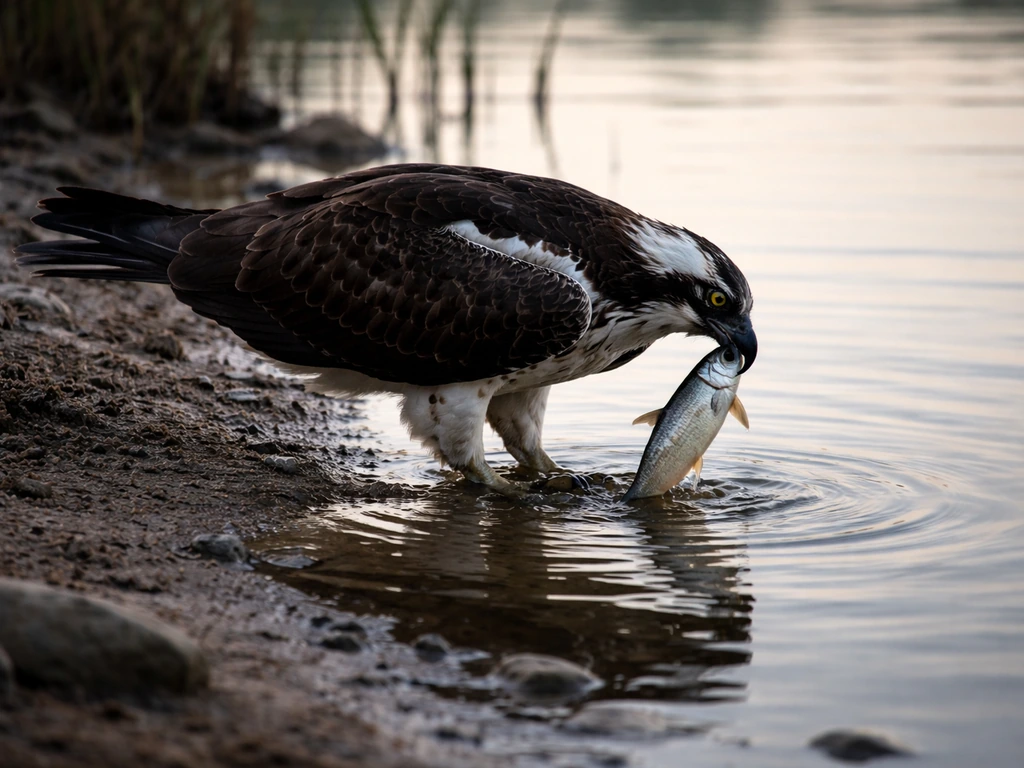
What Bird Eats Fish? Top Fish-Eaters and How to Identify Them
Top fish-eating birds near water and field ID tips, plus how to confirm safely without attracting risky wildlife.
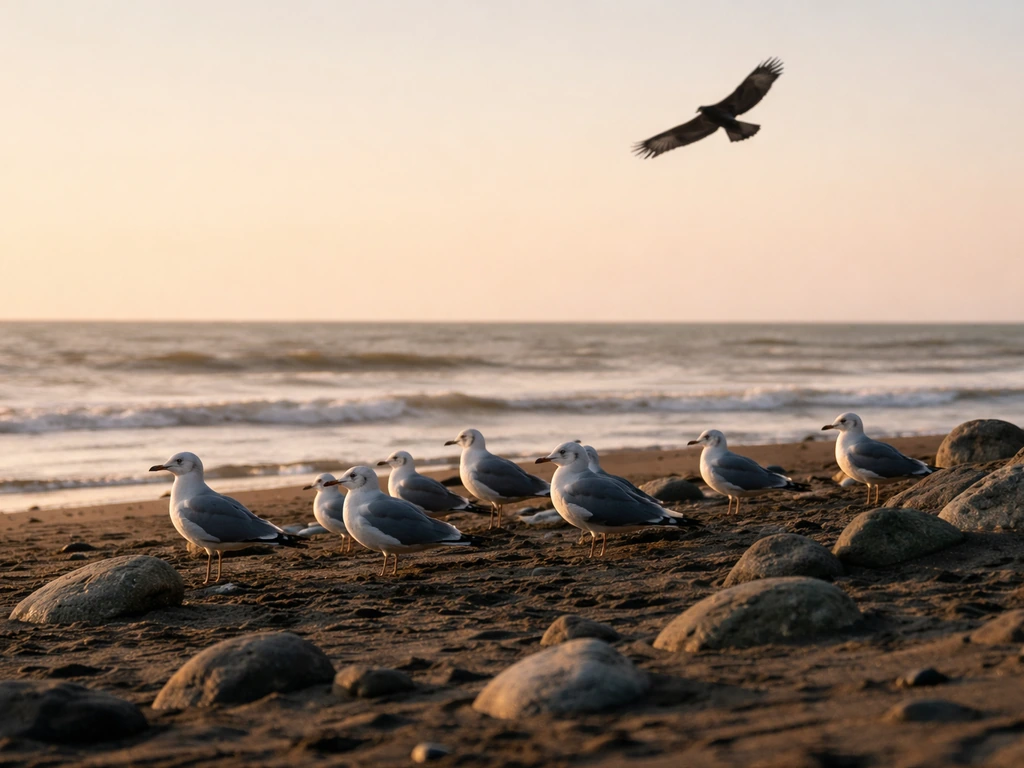
What Bird Eats Seagulls? Identify the Predator Fast
Learn what bird eats seagulls, how to ID the predator by evidence, and how to reduce gulls safely at home.
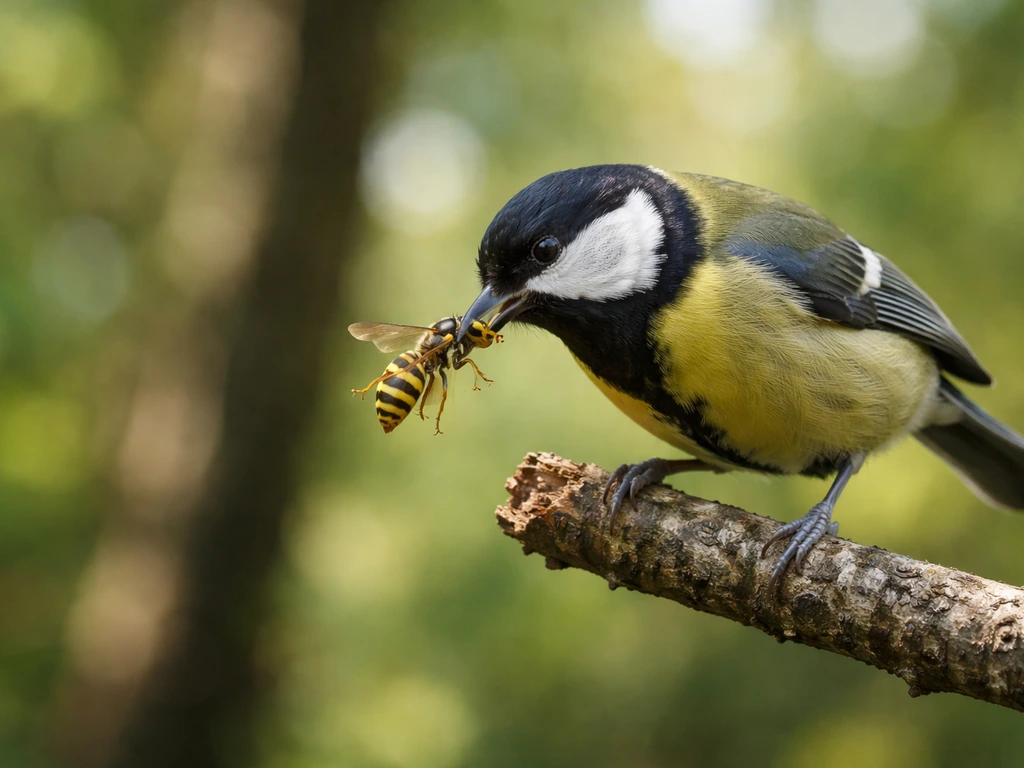
What Bird Eats Wasps? Identification and When It Happens
See which birds eat wasps, how to confirm wasp hunting vs scavenging, and safer steps to observe at home.