The bird you're most likely watching eat upside down is a White-breasted Nuthatch, a Black-capped Chickadee, or a Brown Creeper, depending on where you're seeing it. If you ever wonder what “disgusting” looks like in bird feeding, name a bird that would make a disgusting meal, and then set your sights on safer, wild-appropriate observations instead. Nuthatches are the standout performers here: they routinely creep headfirst down tree trunks and hang completely inverted at suet feeders.
What Bird Eats Upside Down? How to Identify and Attract Them

Maya Bennett
2 May 2026
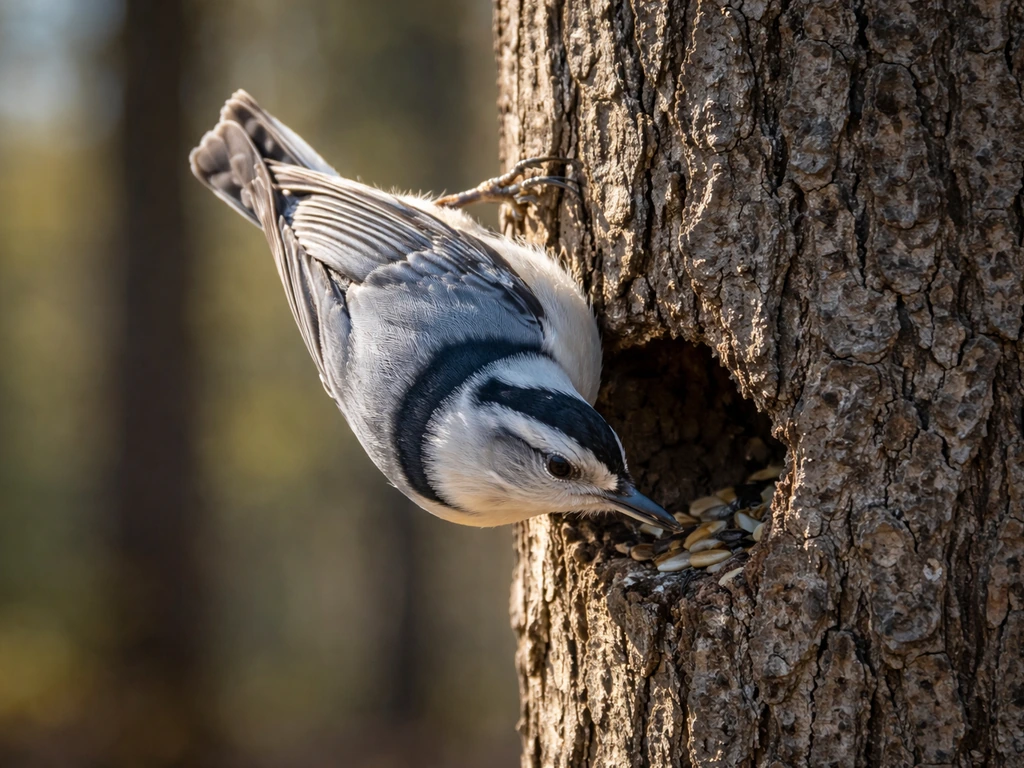
Chickadees do it too, dangling from branch tips to pick at the undersides. Brown Creepers work tree bark almost like living wallpaper, though they tend to spiral upward rather than go fully inverted. If it's doing acrobatics at your feeder or on a trunk, one of these three is almost certainly the culprit.
Birds known for upside-down feeding
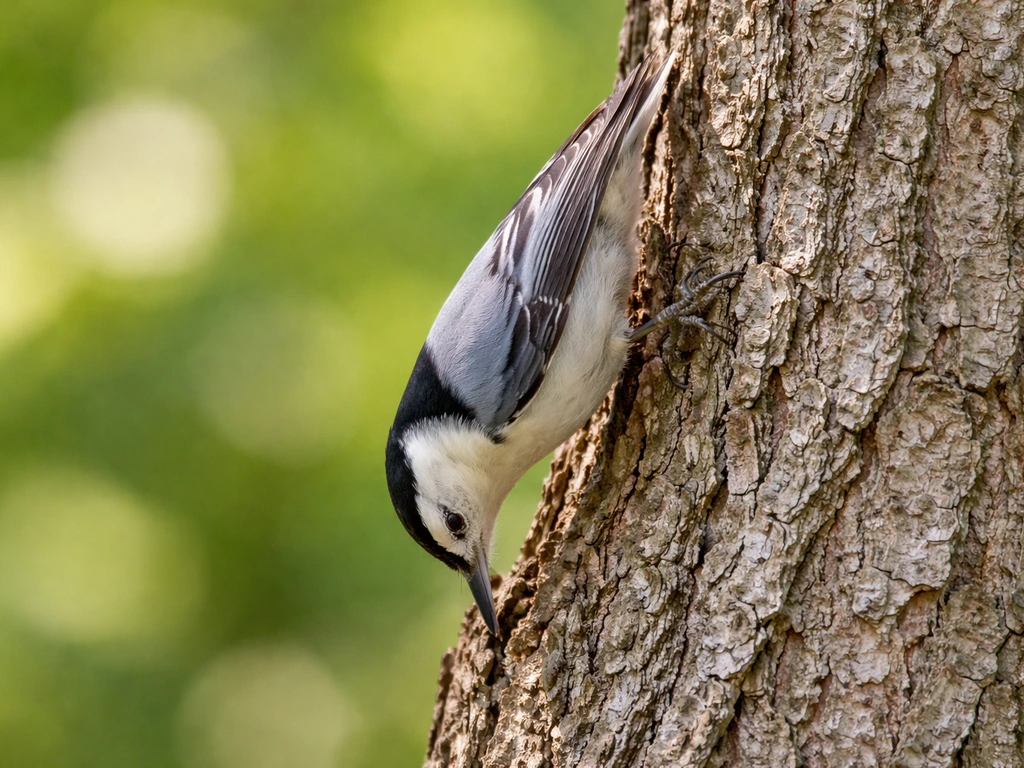
A handful of backyard species have turned upside-down foraging into a genuine survival strategy. Here are the main ones you're likely to encounter.
White-breasted Nuthatch
This is the classic upside-down bird. Nuthatches are built for it: short legs, strong feet with long claws, and a long, thin, slightly upturned bill that works like a probe. They walk headfirst down tree trunks, which is something almost no other common backyard bird does habitually. At suet feeders, they'll hang completely inverted and chisel away at food. The Missouri Department of Conservation flat-out calls nuthatches 'the upside-down birds' when describing mixed winter flocks. If you see a bird going down a trunk headfirst, stop there: it's almost certainly a nuthatch.
Black-capped Chickadee
Chickadees are small, compact, and incredibly agile. They forage by hopping along twigs and branches, and they regularly hang upside down to pick at the undersides of branches where insect eggs and cached food hide. The National Park Service notes they forage 'not only upright, but also upside down,' specifically to reach insect eggs on the underside of twigs. At feeders, they grab a seed, zip off, and are back in seconds. Their upside-down moves are quick and opportunistic rather than the sustained, deliberate headfirst crawling you see from nuthatches.
Brown Creeper
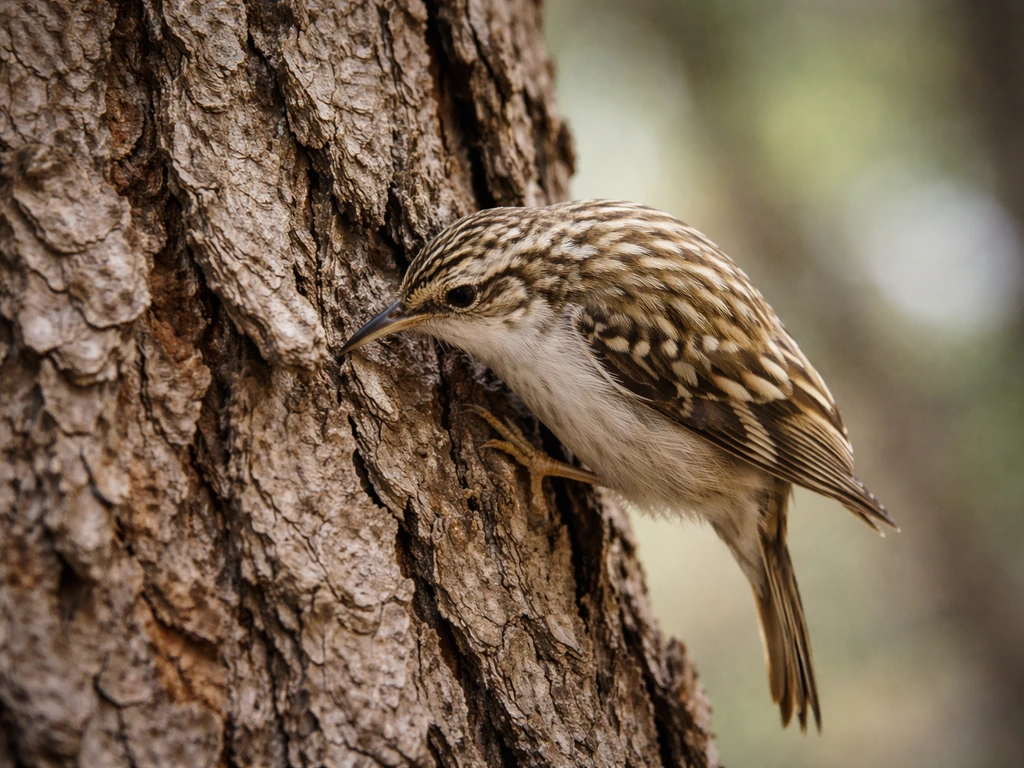
Brown Creepers are less flashy but worth knowing. They're about five inches long with a long, slender, down-curved bill perfectly shaped for probing bark crevices. Their technique is to start at the base of a tree trunk and spiral upward, bracing themselves with a stiff tail like a woodpecker does. Once they reach the top, they drop to the base of a nearby tree and start again. They don't hang upside down in the dramatic nuthatch sense, but they do cling to bark at all angles while working the underside of limbs. Because they're streaky brown and blend almost perfectly with bark, they're easy to miss entirely.
Woodpeckers and other clingers
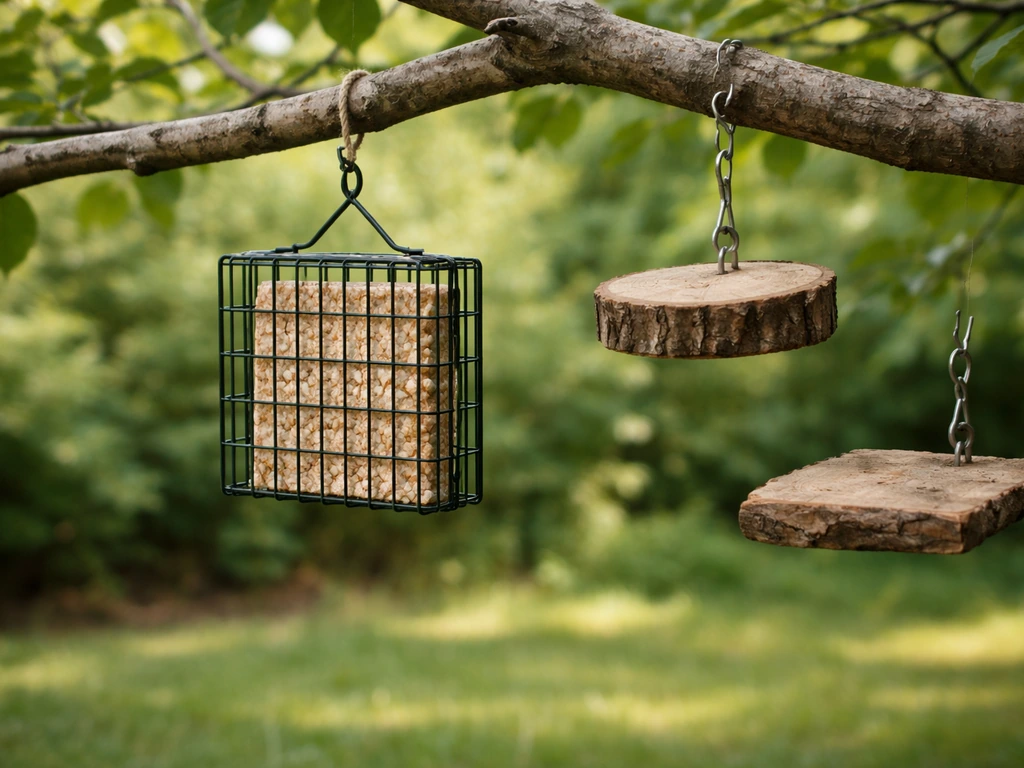
Downy and Hairy Woodpeckers will feed at suet cages in inverted positions, especially on feeders designed to make access harder for starlings. They use their stiff tail feathers as a brace, the same way Brown Creepers do. They're not as committed to the fully upside-down posture as nuthatches, but they'll absolutely do it when the food is there. Project FeederWatch specifically notes that suet cages accessible only from the bottom let woodpeckers, nuthatches, and chickadees feed by clinging upside down while discouraging starlings.
How to identify the species at your feeder or on a tree
Location is your first clue. A bird doing upside-down moves on a tree trunk is almost certainly a nuthatch or Brown Creeper. A bird dangling from a branch tip is more likely a chickadee. A bird at a suet cage hanging from below could be any of the three main species, plus woodpeckers.
| Species | Size | Key field marks | Typical upside-down location | Direction of travel on trunks |
|---|---|---|---|---|
| White-breasted Nuthatch | ~6 inches | Blue-gray back, white face/underparts, black cap, long thin bill | Tree trunks, suet feeders | Headfirst downward |
| Black-capped Chickadee | ~5 inches | Black cap and bib, white cheeks, compact round body, short thin bill | Branch tips, seed/suet feeders | Any angle on twigs and branches |
| Brown Creeper | ~5 inches | Streaky brown back (camouflaged), white underparts, long down-curved bill, stiff tail | Tree trunks only | Spiraling upward |
| Downy Woodpecker | ~6-7 inches | Black and white pattern, small red patch (males), short chisel bill | Suet cages, tree trunks | Any angle, tail-braced |
Pay attention to bill shape. A long, thin, slightly upturned bill = nuthatch. A short, stubby bill = chickadee. A long, slender, strongly down-curved bill = Brown Creeper. A stout chisel bill = woodpecker. Bill shape alone will separate these species in most lighting conditions.
Watch the direction of trunk travel. Nuthatches go down headfirst. Creepers go up. Woodpeckers move in short hops in any direction but use their tail as a prop. Chickadees rarely spend sustained time on trunks at all: they prefer branches and feeders.
Feeder setup and food choices that attract upside-down eaters
The single best thing you can do to attract nuthatches, chickadees, and woodpeckers is put out a suet cake in a cage-style feeder. For extra benefit, use an upside-down suet feeder: one where the cake is accessible only from below. This design, highlighted by Project FeederWatch, lets strong clingers like nuthatches and woodpeckers feed easily while making it genuinely difficult for European Starlings, which can't cling inverted for long. That means more food for the birds you actually want to see.
For chickadees, a tube feeder with perches or a small platform works well, but they'll also use the suet cage. Sunflower seeds (especially black-oil sunflower) and shelled peanuts are top choices. Chickadees will cache seeds and are drawn to feeders that let them grab and go quickly.
Brown Creepers almost never come to feeders. Your best strategy for attracting them is to leave dead or rough-barked trees standing if it's safe to do so, and to smear suet directly into bark furrows on a nearby tree. Some birders have success with this, especially in winter when insects are scarce.
- Hang an upside-down suet feeder at about eye level, roughly 5 to 6 feet off the ground, away from dense shrubs where cats can hide.
- Use high-quality no-melt suet in warm weather (above 50°F) to prevent rancidity and spoilage.
- Add a tube feeder with black-oil sunflower seeds within a few feet of the suet cage to create a multi-feeder station.
- Place feeders within 10 feet of trees or shrubs so birds have quick escape cover, but keep them at least 3 feet away from windows to reduce collision risk.
- For Brown Creepers, smear suet paste directly into bark furrows on a nearby rough-barked tree in winter.
Diet and insect preferences behind upside-down behavior
Upside-down feeding isn't showing off. It's a smart strategy for accessing food that right-side-up birds miss entirely. The undersides of bark, branches, and leaves are loaded with insect eggs, larvae, spiders, and overwintering pupae that birds perching upright simply can't see or reach. By approaching from below or hanging inverted, nuthatches and chickadees exploit a food source with almost no competition. They may also opportunistically take advantage of unusual meals in rare cases, including situations that resemble bird-on-bird cannibalism nuthatches and chickadees exploit a food source.
Nuthatches eat insects, spiders, beetle larvae, and seeds. In winter, when insects are scarce, they shift heavily toward seeds and suet, which is exactly when they become the most visible at feeders. Their headfirst-down posture on trunks lets them spot insects hiding in bark crevices that a woodpecker working from above might overlook.
Chickadees target insect eggs and caterpillars on the undersides of twigs and leaves during warmer months, and they cache seeds (especially sunflower and pine seeds) that they retrieve in winter. The NPS notes they specifically hang upside down to pick at insect eggs on branch undersides. At feeders, they take seeds and suet, but in the yard they're working every twig.
Brown Creepers use their down-curved bill to probe bark furrows for insect eggs, larvae, spiders, and other invertebrates. The Oregon Department of Fish and Wildlife describes the bill as specifically shaped for extracting insects from the tight furrows of tree bark. They're almost entirely insectivorous throughout the year, which is why they rarely show up at seed feeders.
When upside-down feeding isn't the bird you think (lookalikes and myths)
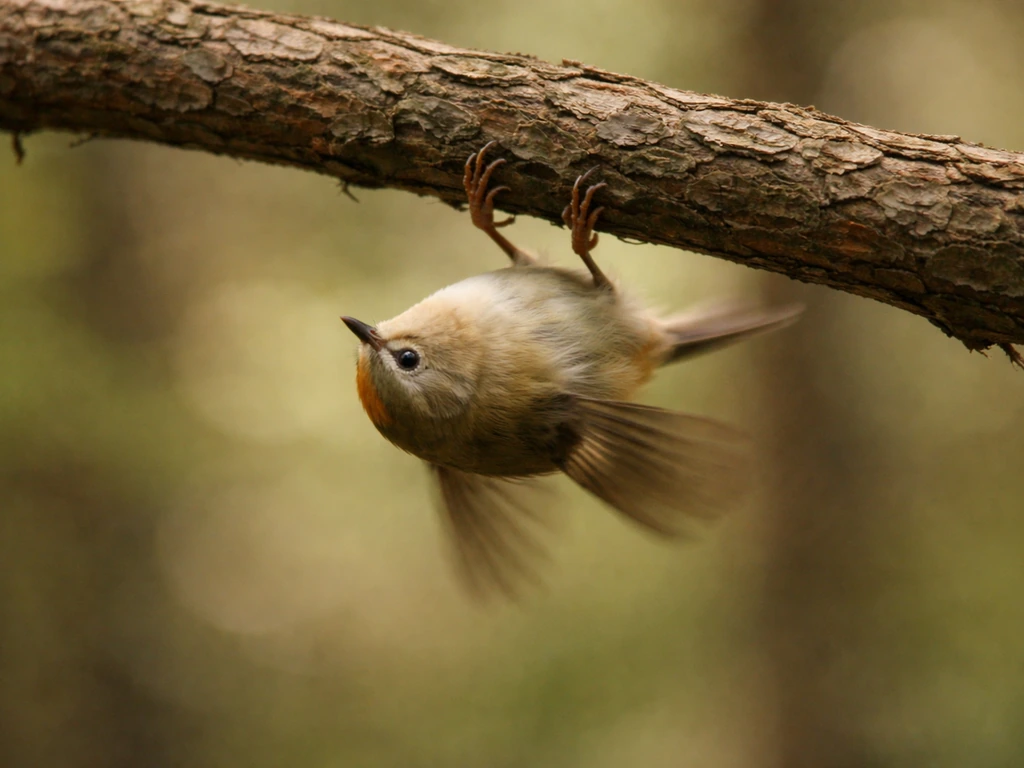
The most common misidentification is confusing a Ruby-crowned or Golden-crowned Kinglet for a nuthatch. To answer the question directly, crows may eat smaller birds, especially if they can catch them will a crow eat another bird. Kinglets are tiny, hyperactive, and they do hang upside down on branches in winter flocks. But they're much smaller than nuthatches, have thin legs, and lack that distinctive long bill and blue-gray back. The Missouri Department of Conservation specifically distinguishes nuthatches as the upside-down trunk specialists versus kinglets, which work small branches and brush. If the bird is tiny, constantly flicking its wings, and staying in low shrubs or small trees rather than on big trunks, it's probably a kinglet, not a nuthatch.
A few other points worth clearing up quickly:
- European Starlings can cling at feeders but struggle to sustain the inverted position: they mostly perch upright. If your feeder is getting hammered by a group of noisy iridescent birds, those aren't your upside-down specialists.
- Red-breasted Nuthatches behave almost identically to White-breasted Nuthatches but are smaller and have a rusty-orange breast and a bold black eye stripe. Same headfirst-down behavior, different look.
- House Sparrows and House Finches sometimes cling awkwardly at suet, but they prefer to perch right-side-up and lack the claw grip strength for sustained upside-down feeding.
- The idea that any bird habitually eating upside down is doing something unusual or unhealthy is a myth. It's a highly adapted, normal foraging behavior for these species.
It's also worth noting that some birds do genuinely unusual things with food. If you are instead wondering which bird eat fire, know that none of the upside-down feeders described here are known for that, and the “fire-eating” idea is more myth than bird behavior. If you're curious about birds that consume other birds or have surprising predatory diets, those behaviors are in a different category entirely from the acrobatic foraging we're talking about here.
If you are wondering what bird eats humans, keep in mind that those rare predator stories are in a totally different category than typical upside-down feeding behavior consume other birds. If you want to discuss birds eating other birds, try looking for a safer, non-graphic explanation elsewhere in the guide birds that consume other birds. Some people wonder, for example, will a crow eat another bird, but that's a different kind of behavior than upside-down feeding.
Some bird species do sometimes eat other birds, which can look like cannibalism in the wild. If you're wondering what bird eats other birds, note that those are true predators and are not the same as the upside-down feeders described here birds that consume other birds. The upside-down feeders are insect and seed specialists, not predators.
Safety and best practices for bird feeding
Attracting birds to your yard is rewarding, but a poorly maintained feeder can become a disease source for the very birds you want to help, and potentially for your pets and family. Here's how to keep your setup low-risk.
Cleaning schedule and method
Clean seed feeders every two weeks as a baseline. In warm or wet weather, or during periods when local salmonella outbreaks have been reported, clean weekly. Audubon recommends scrubbing feeders and letting them dry completely before refilling: a wet feeder refilled immediately is an invitation for mold. For a deep clean, Flathead Audubon and PetMD both recommend a solution of nine parts water to one part bleach, scrubbing all surfaces after removing debris, rinsing thoroughly, and letting the feeder air-dry fully before putting it back up.
Seed storage and spoilage
Store seed in airtight metal or heavy-duty plastic containers away from heat and moisture. Seed left in a hot car or damp garage goes rancid and can grow mold and aflatoxins quickly. Smell your seed before filling the feeder: rancid or musty smell means toss it. Suet degrades fast in warm weather, so switch to no-melt suet formulas once temperatures regularly exceed 50°F. Regular suet left out in summer can turn rancid within days, coating feathers with oil and causing digestive problems in birds.
Pet safety around feeders
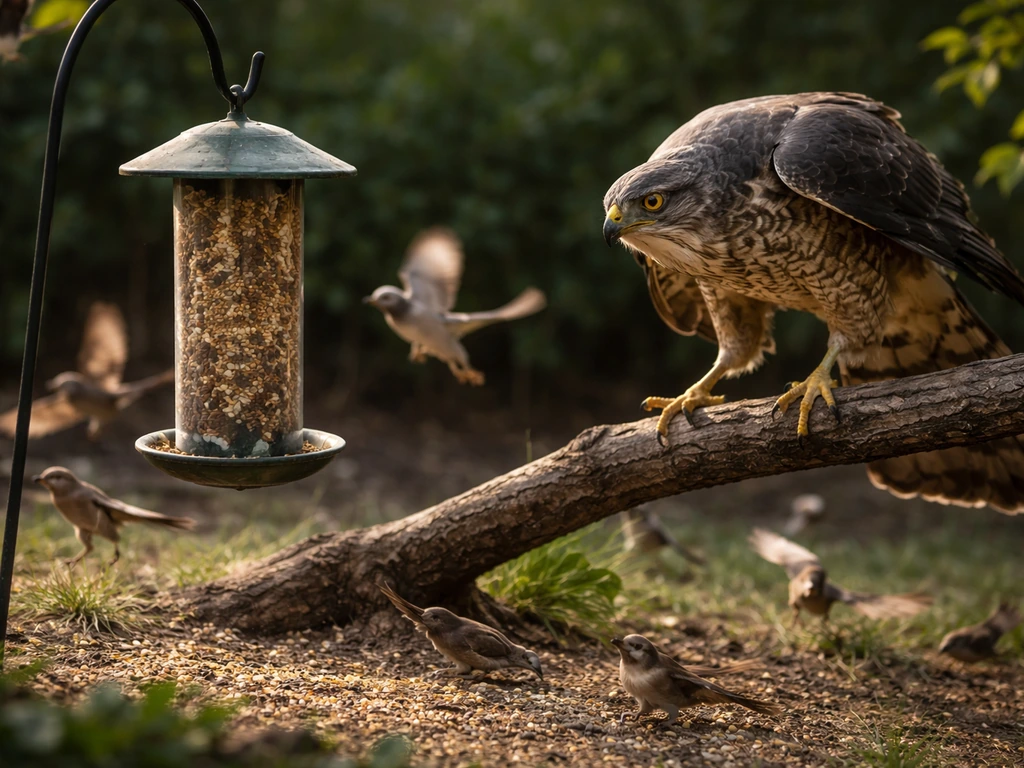
Bird droppings accumulate under feeders quickly and can carry Salmonella, Campylobacter, and other pathogens. The CDC recommends disinfection of surfaces contaminated by bird droppings and emphasizes hand-washing after any contact with feeder areas. Keep dogs from sniffing or eating seed hulls and droppings beneath feeders. Cats are a different concern in two directions: they're at some risk from contaminated environments, and they're also a genuine predator threat to the small birds you're attracting. The ASPCA cautions that pets should not consume unknown or potentially contaminated food items. If you have outdoor cats, raised or baffled feeder poles can at least give birds a safer escape window.
Quick safety checklist
- Clean feeders every two weeks minimum; weekly in warm, wet, or high-traffic periods.
- Use a 9: 1 water-to-bleach solution for deep cleaning; rinse and fully air-dry before refilling.
- Store seed in airtight containers in a cool, dry place; discard any musty or rancid seed.
- Switch to no-melt suet when temperatures exceed 50°F consistently.
- Keep ground under feeders raked and clear of old hulls and droppings.
- Wash hands after handling feeders, seed, or anything in the feeder area.
- Keep pets away from feeder droppings and seed debris.
- If you notice sick or dead birds near your feeders, take feeders down, clean thoroughly, and wait two weeks before putting them back up.
What to do right now
If you want to confirm which upside-down bird is visiting your yard today, start by watching where it feeds. On the trunk going headfirst down: nuthatch. On branch tips hanging briefly: chickadee. Spiraling up a rough trunk: Brown Creeper. Then check the bill shape against the table above. If you don't have a suet feeder yet, that's the single best first step for attracting all three. Pick up an upside-down cage-style suet feeder, hang it near a mature tree, and fill it with a no-melt suet cake. Give it a week. The nuthatches and chickadees will find it, and once they're regulars, spend five minutes watching how they move. You'll have a confident ID within a few visits.
FAQ
If a bird goes upside down at my feeder, does that always mean it is a nuthatch, chickadee, or brown creeper?
Not always. Woodpeckers can hang upside down at bottom-access suet cages, and kinglets may appear upside down in winter but are much smaller and usually stay in shrubs or small branches. True confirmation comes from the combo of feeder type, location on the trunk or branch, and bill shape.
How can I tell the difference between a chickadee and a nuthatch when both can hang upside down at feeders?
Watch how long they stay inverted and where they forage. Nuthatches often spend sustained time headfirst on larger trunks and keep moving along the bark, while chickadees usually make quick trips, grabbing food and returning to branches or perches. Also, nuthatches have the long, slightly upturned probing bill.
What do I do if my suet feeder has birds upside down but starlings are also taking over?
Use a cage-style suet feeder that is difficult to reach from the side, or switch to an upside-down style where access is primarily from below. If starlings still persist, consider lowering the feeder, adding a baffle to block perching, and using smaller meal amounts so food is available when target species arrive.
Why do I see nuthatches upside down on the tree but not at my suet feeder?
Timing and food presentation matter. Nuthatches may prefer a particular height, the view line from their perches, or the exact suet texture. Place the feeder near mature trees, hang it at a working height they can reach easily, and switch to no-melt suet in warm weather since poor texture or oiliness can reduce visits.
Can brown creepers be attracted to feeders if I live in an area where they are common?
Sometimes, but reliably is hard because they are mainly insect-focused. If you want to try, keep a rough-barked tree or a small natural trunk nearby if it is safe, smear suet directly into bark furrows on that tree, and expect fewer visits than nuthatches or chickadees.
My bird is upside down, but the bill shape does not match the usual guide. What’s the best next step to ID it?
Re-check size and posture together. Kinglets are tiny with thin legs, and they typically work smaller branches. Woodpeckers have a stouter chisel bill and brace with the stiff tail on bark. If you still cannot be sure, take a short video and compare wing flicking, trunk versus branch preference, and how they move over several minutes.
Are there seasons when upside-down feeding behavior changes?
Yes. In warmer months, chickadees focus more on insect eggs and caterpillars, so you may see fewer frequent visits to suet. In winter, when insects are scarce, both nuthatches and chickadees shift toward seeds and suet, which usually increases upside-down activity at feeders.
How often should I clean an upside-down suet feeder, and what is a common mistake?
Clean at least every two weeks, and more often during wet weather or when illness reports are common. A frequent mistake is refilling a feeder before it fully dries after scrubbing, which can encourage mold and reduce feeder safety.
Does storing suet or seed in the garage really make that much difference?
Yes. Heat and moisture can ruin seed and make suet go rancid faster, and rancid food can deter birds. Store in airtight containers away from heat sources, and if the seed smells musty or off, discard it rather than trying to “mix it in” with fresh.
If I put out an upside-down feeder, will it harm or stress the birds?
It should not, if the feeder is stable and the food is reachable. Bottom-access designs are meant to suit strong clingers, but ensure the feeder is not positioned where birds have to awkwardly scramble, and keep it clean so birds are not forced to feed on residue or spoiled food.