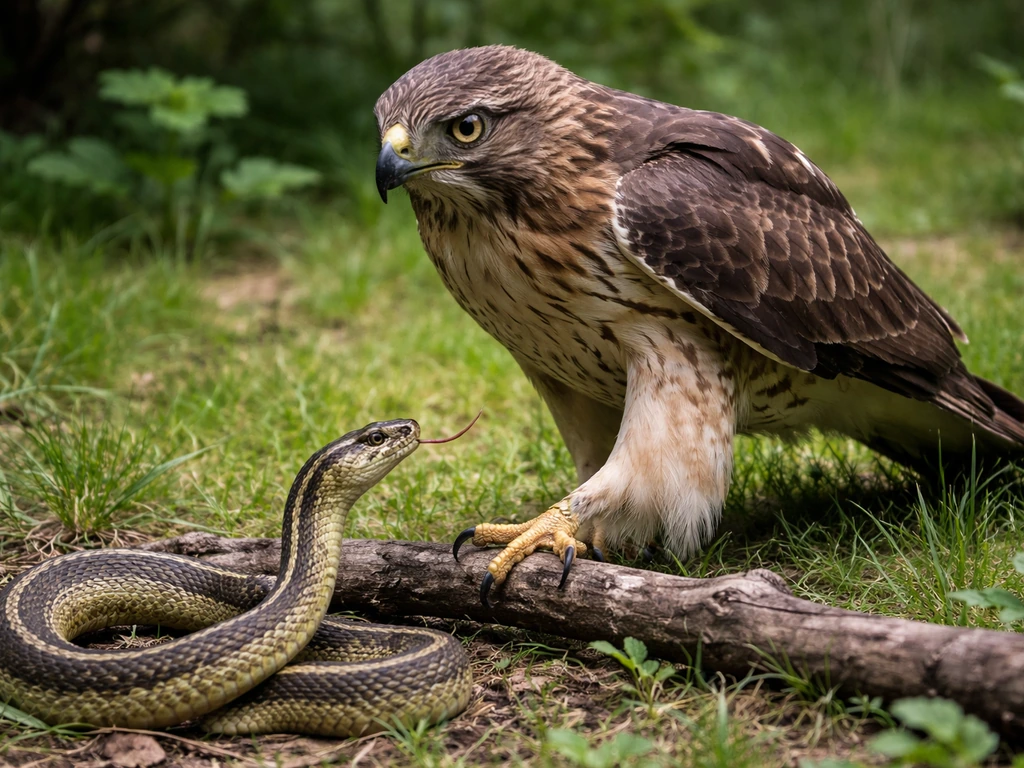
Birds are eaten by a surprisingly wide cast of predators: domestic cats (responsible for an estimated 1.3 to 4.0 billion bird deaths per year in the US alone), hawks, owls, raccoons, rats, snakes, foxes, weasels, corvids, and even, in rare cases, large praying mantises. Which one you are dealing with depends on what stage of life the bird is at (egg, nestling, fledgling, or adult), where it is (nest, feeder, open ground), and what time the predation happened.
What Will Eat a Bird: Predators, ID, Feeder Safety Tips

Maya Bennett
10 Aug 2026
Who eats backyard birds and why it matters
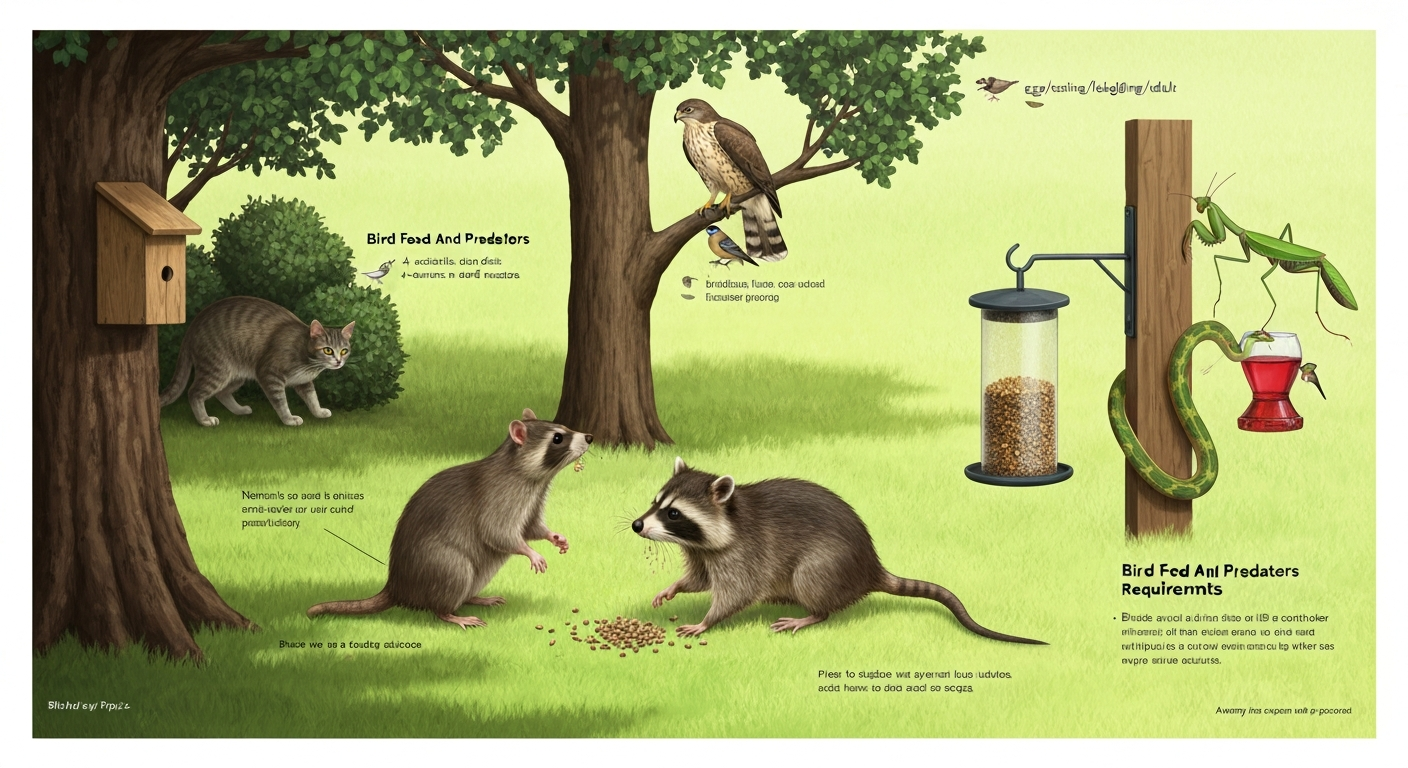
If you run a backyard feeder or maintain nest boxes, predation is not just an abstract wildlife fact. It directly shapes which birds survive in your yard, what risks your setup creates, and whether your feeder is attracting more than the birds you intended. A feeder full of seed can draw sparrows and finches, but it can also signal a reliable hunting ground to a Cooper's Hawk, and the spilled seed underneath can pull in rats that then raid nearby nests at night. Understanding predator identities and behaviors is the first practical step toward a safer yard for birds, and for small pets.
This article works through each major predator group with species-level detail, shows you how to identify which predator visited your yard from the evidence left behind, and gives you concrete steps to reduce risk at feeders and nest sites. It also addresses the diet questions that often come up alongside predation: whether birds eat snakes or snails, whether rats genuinely eat birds, and what the science says about common myths.
At-a-glance predator groups
Bird predators fall into five broad groups. Each group leaves different evidence, operates at different times, and targets different life stages. This overview gives you a quick mental map before the species profiles below.
| Predator Group | Common Examples | Typical Target | Active Time | Most Diagnostic Sign |
|---|---|---|---|---|
| Mammals (domestic) | Cats | Fledglings, adults, nestlings | Dawn, dusk, night | Feathers in a pile, no carcass |
| Mammals (wild) | Raccoons, foxes, weasels, rats | Eggs, nestlings, adults | Mostly night (some day) | Nest destruction, tracks, scat |
| Snakes | Rat snakes, corn snakes, garter snakes | Eggs, nestlings | Night (often) | Empty nest, no remains |
| Raptors | Cooper's, Sharp-shinned, Red-tailed, owls | Adults, fledglings | Day (hawks), night (owls) | Plucked feather cluster, breast meat removed |
| Corvids & passerines | Crows, jays, shrikes, magpies | Eggs, nestlings | Daytime | Broken eggshell pieces near nest |
| Invertebrates & other | Praying mantis, large lizards | Hummingbirds, tiny birds | Day | Bird caught at feeder/flower |
Mammalian predators: species profiles
Domestic cats
Cats are the single largest human-linked cause of bird mortality in North America. The Loss et al. (2013) study published in Nature Communications estimated free-ranging domestic cats kill between 1.3 and 4.0 billion birds annually in the United States, with a median of roughly 2.4 billion. Both owned cats allowed outdoors and unowned/feral cats contribute to these numbers, with unowned cats responsible for the majority. Cats are opportunistic, patient ambush hunters. They will stake out a feeder, crouch under a bush near a bird bath, or wait near a nest site. Signs of a cat kill include a loose pile of feathers with no carcass, occasional claw marks on low-hanging branches, and cat tracks (round, no claw impressions visible) nearby. Fledglings on the ground during their first few days out of the nest are especially vulnerable.
Raccoons
Raccoons are major egg and nestling predators, particularly for ground-nesting and low-nesting species like ducks, killdeers, and cavity nesters using low nest boxes. USGS research on duck nest predation confirms raccoons are a primary cause of nest failure, and dense vegetation like Phragmites increases the likelihood of raccoon encounters with nests. Raccoons are strong and dexterous: they will pull apart a nest box entrance, overturn platform feeders, and reach into cup nests from a branch. Signs include a destroyed or partially destroyed nest, missing eggs or nestlings, torn nest structure, and raccoon handprints (five-fingered, elongated) in soft soil or on wooden posts.
Foxes
Red and gray foxes take ground-nesting birds, fledglings on the ground, and occasionally birds roosting low in shrubs. Foxes are mostly crepuscular and nocturnal hunters and rely heavily on hearing to locate prey. A fox kill typically leaves feathers scattered over a wider area than a cat kill, sometimes including some of the carcass. Fox scat is often left near feeding areas and resembles a twisted, tapered dropping containing feathers, fur, and bone fragments.
Weasels and minks
Long-tailed weasels, short-tailed weasels (ermine), and American mink can enter small cavities, raid nest boxes, and kill multiple nestlings or adults in a single visit. Studies on island and ground-nesting bird populations consistently identify Mustela species as significant threats, and introduced weasel populations have caused serious nest failure in vulnerable populations. Signs include dead nestlings with bite wounds to the head or back of the skull, a disturbed but intact nest structure, and the occasional small cylindrical scat near the nest box.
Rats
Norway rats (Rattus norvegicus) and roof rats (R. rattus) are documented predators of bird eggs and nestlings. Camera-trap studies confirm rats depredating both artificial and real nests, and research on Pacific island bird populations shows introduced Rattus species can dramatically reduce nesting success. In peri-urban yards, rats attracted to spilled bird seed are the same rats that may raid nearby nest boxes or ground nests at night. They tend to eat eggs in place (leaving shell fragments in or near the nest) or carry eggs short distances. Signs include broken eggshell pieces inside or just outside the nest box, gnaw marks on wooden nest box entrances (rats enlarge holes to enter), and rat droppings (small, dark, spindle-shaped) near the structure.
Snake predators: species profiles and how they take birds
Snakes are some of the stealthiest nest predators precisely because they leave so little evidence. A snake takes an egg or nestling whole and leaves an empty nest with no shell fragments, no feathers, and no tracks. That clean disappearance is the most telling sign. DeGregorio et al. (2014) reviewed snake nest predation in North America and found that rat snakes (Pantherophis spp., including the eastern rat snake and corn snake) account for the majority of documented snake nest predation events. They are climbing snakes and will ascend poles, trees, and nest boxes with ease.
Garter snakes (Thamnophis spp.) are smaller and more likely to take eggs and nestlings from low ground nests or from nests within easy reach. Black racers and coachwhips are fast-moving, open-country species that take fledglings on the ground. Larger snakes like black rat snakes can consume entire clutches of eggs or a full brood of nestlings in one visit. Snake predation most commonly happens at night, even when the snake scouts the nest by day, which is why a nest full of healthy nestlings at dusk can be empty by morning. A separate article on this site covers whether snakes eat birds in greater depth and the specific circumstances involved.
Raptors and owls: identifying the hawks that visit your yard
Raptors are the most dramatic and most visible bird predators at backyard feeders. The two you are most likely to see hunting among feeders in North America are the Sharp-shinned Hawk and Cooper's Hawk, both Accipiters built for maneuverability through dense vegetation. Telling them apart takes practice: Cooper's Hawks are crow-sized with a larger, more rounded tail; Sharp-shinned Hawks are smaller (robin-to-jay size) with a square-tipped tail. Both hunt in sudden, low, fast ambush attacks, often waiting in nearby cover before bursting in.
| Species | Size | Typical Prey at Feeders | ID Feature | Hunting Style |
|---|---|---|---|---|
| Sharp-shinned Hawk | Robin to jay sized | Sparrows, finches, small songbirds | Small, square-tipped tail, thin legs | Fast low ambush through cover |
| Cooper's Hawk | Crow sized | Starlings, doves, medium passerines | Rounded tail, thick neck, larger head | Sustained pursuit, feeder stakeout |
| Red-tailed Hawk | Large (chicken sized) | Larger birds, small mammals | Broad, brick-red tail (adults) | Perch hunting, soaring stoops |
| Great Horned Owl | Large, heavy | Adult birds up to duck sized, small mammals | Ear tufts, yellow eyes, barred breast | Nocturnal silent ambush |
| Barn Owl | Medium, pale | Small birds, voles, mice | Heart-shaped white face, pale underparts | Nocturnal, low quartering flight |
Red-tailed Hawks (Buteo jamaicensis) are the large soaring buteos commonly seen on roadside fence posts. They take a broader range of prey sizes than accipiters, including medium-sized birds, and hunt by perching and then stooping down. American Kestrels (Falco sparverius) primarily take large insects and small mammals but occasionally take very small birds and fledglings, particularly in open areas. Great Horned Owls are apex nocturnal predators capable of taking prey as large as adult ducks, Canada geese chicks, or domestic chickens. Barn Owls are lighter, open-country hunters focused mainly on rodents but will take small birds opportunistically.
Raptor predation signs are distinctive: a tight cluster of plucked feathers (often with the quills intact and pinched at the base), the breast muscles consumed and bones cleaned, and the kill site usually under a tree or on a post where the hawk perched to eat. Owl kills often happen at night and may include small, compact pellets (compressed fur and bone) near a roosting site.
If a hawk is making repeated visits to your feeder station, Cornell Lab of Ornithology guidance recommends removing feeders entirely for one to two weeks. Without the reliable prey concentration, most accipiters move on to another hunting area. This is the most effective and ethical short-term response.
Corvids, shrikes, and predatory passerines
American Crows, Common Ravens, Blue Jays, Steller's Jays, Black-billed Magpies, and Eurasian Jackdaws (where relevant) are all documented egg and nestling predators. Corvids are intelligent and persistent: they watch nesting birds to learn nest locations, then return during periods of adult absence. Multiple long-term nest monitoring datasets show crows and ravens to be among the most frequent nest predators in peri-urban and suburban settings. See blank" rel="noopener noreferrer">American Crow life history (All About Birds, Cornell Lab of Ornithology) for detailed information on crow foraging and documented nest‑predation behavior. A corvid visit typically leaves broken eggshell fragments in or near the nest, occasionally the whole nest dislodged, and sometimes the nestlings are simply gone without trace.
Shrikes (Loggerhead and Northern Shrike in North America) are small predatory songbirds that hunt other birds, large insects, and lizards. They famously impale prey on thorns or barbed wire, which is the most unmistakable sign of shrike activity. Shrikes can take small songbirds up to their own size. Other predatory passerines are rare contributors in backyard settings, but House Sparrows and European Starlings are known to evict cavity nesters from nest boxes and occasionally kill nestlings, which matters for anyone managing nest box trails.
Invertebrates and other uncommon predators
This is the category that surprises people most. Praying mantises do eat birds. A global review by Nyffeler et al. (2017) compiled 147 documented incidents of praying mantises capturing birds, with hummingbirds at feeders and flowers being by far the most common victims. Large Chinese and European mantises (Tenodera sinensis and Mantis religiosa, both introduced in North America) are the typical culprits. They position themselves on or near hummingbird feeders or large flowers and strike when a hummingbird hovers. It is rare, but it happens repeatedly in gardens across the eastern and midwestern United States. If you have hummingbird feeders, inspect the feeding ports and surrounding plants periodically, especially in late summer when mantises are at their largest.
Large orb-weaver spiders (genus Nephila, Argiope, and others) have been photographed catching very small birds in strong webs, though this is an extreme rarity and not a meaningful source of mortality in backyard settings. Large lizards (iguanas, tegus, monitor lizards) are documented nest predators in their native or introduced ranges and can be relevant concerns in Florida or the Gulf Coast where Argentine black-and-white tegus are now established. Giant water bugs (Belostoma spp.) and large centipedes have also been recorded taking nestlings in exceptional cases.
Bird diets that interact with these questions
Some of the most common search questions around bird predation run in the other direction: what birds eat. Birds eat snakes, snails, and fruit alongside the animal prey already described, and those diet behaviors show up in the yard in recognizable ways.
Birds that eat snakes include raptors (Red-tailed Hawks, Red-shouldered Hawks, and Short-toed Snake Eagles where applicable), secretary birds, roadrunners (which actively hunt and kill rattlesnakes and other venomous snakes), and various ground-foraging passerines that take small or juvenile snakes. Eastern Kingbirds and American Robins occasionally take small snakes. Seeing a large hawk carry off a writhing snake in your yard is normal predator-prey behavior, not a cause for alarm.
Birds that eat snails include Song Thrushes, American Robins, and other Turdus thrushes. Song Thrushes in particular use hard stones or stumps as anvils to crack snail shells, and research on this behavior shows anvil sites become reused focal points. In yards, this often looks like a small pile of crushed shell fragments near a rock or patio edge. European Starlings and blackbirds also take snails when other food is scarce. This behavior can be genuinely useful in gardens with slug and snail problems.
Birds that eat apples and other fruit include American Robins, Cedar Waxwings, Northern Mockingbirds, orioles, and many thrushes. Fresh apple slices or whole small apples placed in feeders are safe and appropriate for these species. The concern is spoiled fruit: rotting apple at a feeder can develop mold that causes aspergillosis (a fungal lung infection) in birds, so old fruit should be removed promptly, ideally every 24 to 48 hours in warm weather.
Rats and other rodents: will a rat eat a bird?
Yes, rats will eat bird eggs and nestlings, and this is documented with camera traps and molecular forensics rather than anecdote. Norway rats and roof rats attracted to bird feeders are the same animals that raid nearby nest boxes. Research from the University of the Highlands and Islands used experimental nests and camera traps to directly confirm Norway rat egg predation. On islands, introduced Rattus species have driven seabird populations to local extinction by destroying eggs and chicks at scale. In suburban yards, the risk is lower but real, especially for ground nests, low nest boxes, and platform nests in shrubs.
Rats rarely kill adult healthy birds, but they will scavenge dead or injured adults. Their primary impact on backyard bird populations is through nest predation: eggs disappear or are eaten in place (leaving shell fragments and yolk residue), and nestlings vanish. Gnawed nest box entry holes (enlarging the hole beyond its original diameter) and rat droppings inside or below a nest box are reliable indicators. Managing spilled seed under feeders directly reduces rat populations in the yard and, by extension, nest predation pressure.
Predator ID aids: reading the signs in your yard
Identifying which predator hit your yard is genuinely difficult without a camera trap, and research using predator DNA from eggshells confirms that visual evidence alone often leads to misidentification. That said, physical signs are still your first tool and can narrow the field significantly.
| Sign | Most Likely Predator(s) | Notes |
|---|---|---|
| Pile of plucked feathers, breast meat consumed, quills intact | Raptor (hawk or falcon) | Tight pluck site under perch or post |
| Scattered feathers over wide area, no carcass or partial remains | Cat or fox | Cats often leave no carcass; foxes may carry prey away |
| Empty nest, no eggshell fragments, no remains | Snake | Whole egg or nestling swallowed; nothing left |
| Broken eggshell in or near nest, ragged edges | Corvid, raccoon, or skunk | Corvids crack shells; raccoons crush them |
| Eggshell pieces with yolk residue inside nest box, rat droppings nearby | Rat | Rat may also enlarge the entry hole |
| Nestlings dead with bite to skull, nest mostly intact | Weasel or mink | Multiple nestlings killed at once is a weasel pattern |
| Nest box or platform feeder overturned, nest destroyed | Raccoon | Extremely strong; will dismantle nest boxes |
| Shrike-impaled prey on thorn or barbed wire | Loggerhead or Northern Shrike | Unmistakable behavior |
| Hummingbird caught at feeder | Large praying mantis | Check feeding ports in late summer |
For definitive identification, a trail camera placed facing a nest box or feeder 24 to 48 hours after a predation event is the most reliable tool available to a backyard observer. Research recommends cameras alongside genetic analysis of eggshell swabs for scientific accuracy, but for practical yard management, a basic motion-triggered camera gives you a clear answer most of the time. Set sensitivity to medium-high to capture quick passes from snakes and small weasels.
Track ID is helpful when soil is soft. Raccoon prints are hand-like with five long digits. Cat prints are round with no claw marks visible. Fox prints are oval with claw marks showing. Rat prints are small (hind foot about 2 cm) with five toes splaying from a narrow heel. Weasel tracks show five toes and often appear as paired prints due to their bounding gait.
Step-by-step: making feeders safer
Feeder placement and design are the two biggest variables you can control. A poorly placed feeder concentrates vulnerable birds in a location that predators quickly learn to exploit.
- Place feeders at least 10 feet from dense shrubs or fences that give cats and accipiter hawks concealed launch points. Give birds clear sightlines in all directions.
- Mount pole-mounted feeders on smooth metal poles with a baffle: a cone-shaped or cylinder baffle placed at least 4 feet above the ground and below the feeder prevents raccoons, rats, and snakes from climbing. Stovepipe baffles (a section of smooth metal pipe 8 inches in diameter) are especially effective against snakes.
- Use feeders with shorter perches or no perches for tube feeders to favor small songbirds over larger corvids.
- Clean up spilled seed daily. Seed on the ground is the single biggest rat attractant in a backyard. A tray feeder with drainage holes attached below the main feeder catches most spillage and keeps the ground below clear.
- Clean feeders every one to two weeks with a 10% bleach solution (1 part bleach to 9 parts water), rinse thoroughly, and allow to dry completely before refilling. Wet, moldy seed causes aspergillosis and other respiratory diseases in birds.
- Store seed in sealed metal or hard plastic bins. Rodents chew through thin plastic bags and cardboard. Metal garbage cans with secure lids work well for large quantities.
- If a hawk is actively hunting at your feeder, remove feeders for two weeks. Accipiters are creatures of habit and will move on once the food source disappears.
- For hummingbird feeders, inspect for large mantises in late summer, particularly at dawn and dusk. Relocate feeders frequently if mantis activity is high.
Step-by-step: humane rodent control and reducing attraction
- Switch to no-waste seed mixes (hulled sunflower chips, millet, or nyjer) to eliminate shell buildup on the ground that harbors rats and mice.
- Rake and remove fallen seed every morning before rats are active in early evening.
- If rats are confirmed, use enclosed snap traps (such as the Protecta enclosed bait station design without rodenticide, using peanut butter bait) placed along walls and fences where rats travel. Avoid rodenticide baits near bird feeding areas: secondary poisoning from rodenticide-killed rats is a documented cause of raptor and owl mortality.
- Seal any gaps larger than 1.5 cm in sheds, garages, or structures near the feeding area: rats enter through gaps that small.
- Install a ground-level hardware cloth apron (half-inch galvanized mesh) around the base of feeder poles to deny burrowing access beneath them.
- Stop feeding entirely for two to four weeks if rat populations are high. Disrupting the food source is the most effective first step in breaking rat habituation to a location.
- Keep compost bins sealed and away from bird feeding areas. Open compost is a major secondary attractant.
Deterrents and immediate actions: what actually works
Motion-activated deterrents work best when they are unexpected and rotated regularly. Birds (and predators) habituate quickly to static deterrents.
- Motion-activated sprinkler systems (Scarecrow-style) are effective short-term deterrents for cats, raccoons, and foxes. Rotate positions every few days.
- Motion-activated lights are useful at night for deterring raccoons and rats but will not affect determined predators over time without being paired with other measures.
- Mylar tape or spinning reflective rods placed near nest sites can deter corvids during nest building and incubation, but they lose effectiveness after a few days unless moved.
- Hawk silhouettes (window decal style) placed near feeders have limited effectiveness. Real birds learn quickly that static silhouettes pose no threat.
- For cats: the single most effective long-term action is keeping cats indoors or in a supervised outdoor enclosure (catio). Bells on collars reduce (but do not eliminate) hunting success.
- For snakes at nest boxes: a properly installed stovepipe or cone baffle on the mounting pole is the most reliable physical barrier.
- For raccoons: metal pole mounts with raccoon baffles (at least 18 inches in diameter, installed at 4+ feet height) prevent climbing. Raccoons are strong enough to knock over most lightweight designs.
- Avoid ultrasonic repellers: there is no reliable evidence they deter cats, raccoons, or other predators in field conditions.
Common myths and quick facts
Several persistent myths about bird feeding and predation are worth addressing directly, because acting on bad information can harm the birds you are trying to help.
| Myth | Reality |
|---|---|
| Cooked rice kills birds by expanding in the stomach | False. Rice (cooked or uncooked) does not expand dangerously inside birds. Uncooked rice is harder to digest and offers less nutrition, but it is not toxic or physically dangerous. |
| Bread is fine as a supplemental bird food | Mostly false. Bread provides almost no nutritional value for birds and, when fed in quantity, contributes to metabolic bone disease (especially in waterfowl, known as angel wing). Offer it rarely if at all. |
| Large garden spiders regularly eat birds | Rare to extremely rare. Documented cases involve very small birds caught in exceptional web sizes. Not a meaningful predation source in most yards. |
| Touching a nestling will cause the parent to abandon it | False. Most birds have a poor sense of smell and will not abandon a nestling that a human has touched. Return fallen nestlings to the nest promptly. |
| Praying mantises don't eat birds | False. A reviewed dataset of 147 documented incidents confirms mantises (especially large introduced species) capture hummingbirds at feeders regularly. |
| Hawk decoys permanently deter birds of prey | False. Live hawks habituate to static decoys within days to weeks. |
| Spoiled seed only affects the flavor, not bird health | False. Moldy seed contains aflatoxins and Aspergillus spores that cause fatal respiratory disease in birds. Discard any seed with visible mold or clumping. |
| Cats with bells can't catch birds | Partially false. Bells reduce hunting success but do not eliminate it. Studies show belled cats still catch significant numbers of birds. |
Seasonal and maintenance checklist
Early spring (March to April)
- Deep-clean all feeders and nest boxes before nesting season begins.
- Install or check baffles on nest box poles before birds begin prospecting.
- Check for rat signs (gnawed wood, droppings) around nest boxes and repair entry holes that have been enlarged.
- Remove feeders or scale back if a hawk has established a hunting route near the station.
Breeding season (May to July)
- Monitor nest boxes weekly for signs of predation (empty nest with no eggshells, destroyed nest material).
- Set up a trail camera if you suspect snake or rat activity.
- Clean up seed spills daily to reduce rat activity near active nests.
- Avoid placing fresh fruit at feeders without removing old fruit within 24 to 48 hours.
- Check hummingbird feeders for large mantises from late June onward.
Late summer and fall (August to October)
- Mantis populations peak: inspect hummingbird feeders daily in late summer.
- Migrating accipiters pass through in September to October and may concentrate at well-stocked feeders.
- Switch to sealed metal seed storage as rats begin seeking winter food sources.
- Deep-clean feeders at the end of the season before storing.
Winter (November to February)
- Great Horned Owls begin nesting in late January to February; if you hear territorial hooting, they may be denning close to your yard.
- Rat activity around feeders often increases in winter. Tighten up seed storage and spill management.
- Check feeder mounting hardware for ice and snow damage that may compromise baffles.
- If a persistent hawk is hunting the feeder station, remove feeders for two weeks before reinstalling.
Emergency response: what to do right now
- Nest box empty with no remains and no eggshells: suspect snake. Install a stovepipe baffle on the mounting pole tonight.
- Nest destroyed, eggs gone, raccoon prints in soil: add a cone or raccoon baffle to the pole and switch to a metal mounting pole if using wood.
- Feather pile at feeder site, no carcass: cat kill. Adjust feeder height, remove low cover nearby, and consider motion-activated sprinkler.
- Rat droppings inside nest box: clean box immediately with bleach solution, seal entry hole to correct diameter for the intended species, set enclosed snap traps along nearby fence lines.
- Hawk actively hunting feeder daily: remove all feeders for two weeks.
Quick answers to related questions
Can a bird eat a snake? Yes. Raptors including Red-tailed Hawks, Red-shouldered Hawks, and roadrunners regularly eat snakes as a significant part of their diet. Some corvids and large passerines take very small or juvenile snakes. This is normal predator-prey behavior and an example of snakes and birds occupying both roles in the same food web.
Does a snake eat a bird? Yes, and frequently. Rat snakes (Pantherophis spp.) are the most commonly documented nest predators among North American snakes, taking eggs, nestlings, and fledglings. Snakes swallow prey whole, leaving an empty nest with no physical remains, which is the most recognizable sign. Larger snakes take larger birds; most backyard snake predation involves eggs and nestlings rather than healthy adults.
Can birds eat apples? Yes. Many fruit-eating species including robins, waxwings, mockingbirds, and orioles readily eat apple. Offer fresh slices or small whole apples and remove them within 24 to 48 hours in warm weather to prevent mold. Avoid apples with pesticide coatings.
Does a bird eat snails? Yes. Song Thrushes use hard surfaces as anvils to crack snail shells, and American Robins, blackbirds, and starlings also take snails regularly. Crushed shell fragments near a stone or patio edge are a reliable sign of thrush snail-eating activity in the yard.
Will a rat eat a bird? Rats will eat bird eggs and nestlings; camera-trap research confirms this directly. They rarely kill healthy adult birds but will scavenge injured or dead adults. Controlling spilled seed under feeders is the most practical way to reduce rat presence and, by extension, the rat predation pressure on nearby nests.
FAQ
What predators commonly eat backyard birds (eggs, nestlings, fledglings, adults)?
Common backyard predators include free‑ranging domestic cats (major human‑caused mortality), raccoons and striped skunks (nocturnal egg and nestling predators), rats (Rattus spp.) and other commensal rodents (eggs and chicks), climbing snakes (ratsnakes and similar colubrids that remove eggs or nestlings at night), accipiter hawks (Sharp‑shinned and Cooper’s Hawks that take small to medium passerines), larger raptors (Red‑tailed Hawks taking larger birds), corvids (crows, ravens and jays that scavenge and actively take eggs/nestlings), mustelids (weasels, mink that enter nests), and, rarely but documented, large predatory insects like praying mantises that can catch very small birds (e.g., hummingbirds). Predation risk varies by nest height, cover, time of day, and habitat.
How can I tell what type of predator attacked a nest or feeder by the signs left behind?
Use timing and remains as clues: nocturnal mammal or snake depredation often occurs at night; raptors and corvids act by day. Raccoons/skunks often break and scatter eggs and leave torn nest material; snakes frequently remove whole eggs or leave little diagnostic remains; corvids and mammals may take whole nestlings or carry remains away. Tracks, droppings, fur or feathers around the site, bite patterns on eggs (crush vs. clean removal), and nearby claw marks can help. For definitive ID, motion‑activated cameras or DNA swabs of eggshells/tissues are recommended because visual signs alone can be ambiguous.
Do snakes eat bird eggs, nestlings, or adult birds? Which snake species are most likely to do this?
Yes. Arboreal and climbing colubrids (e.g., North American ratsnakes/Pantherophis spp., corn snakes and related taxa) are the most frequently documented snake nest predators; they commonly take eggs and nestlings and sometimes fledglings at night. Snakes may swallow whole eggs or nestlings and often leave little behind, which makes camera monitoring or molecular forensics useful for confirmation.
Do birds eat snakes, and which birds do this?
Some bird species prey on snakes. Raptors such as Red‑tailed Hawks and some Cooper’s Hawks will take small snakes. Larger corvids and shrikes sometimes attack small or juvenile snakes. Specialized predators like kingfishers or secretarybirds (not typical backyard species) also take snakes. For most backyard songbirds, predation on snakes is uncommon; larger raptors and opportunistic corvids are the main bird predators of snakes.
Will rats prey on birds or their eggs in backyards? Which rat species are involved?
Yes. Commensal rats (Norway rat Rattus norvegicus and roof/black rat Rattus rattus) are documented predators of eggs, nestlings and young chicks, especially in ground, low or cavity nests and on islands. Camera studies and experimental nests show rats can substantially reduce nesting success, so rat control is an important conservation and management action where rats are present.
Do backyard birds eat apples or other human fruit scraps?
Many bird species will eat fruit. Thrushes, starlings, waxwings and some finches eat apples and soft fruit, especially in autumn and winter. Fruit can be offered safely in appropriate forms (sliced, cored, unsprayed) and is less likely to attract predators than meat‑based food. Avoid offering spoiled fruit and remove uneaten perishable food promptly to reduce rodents and fermenting hazards.
Next Article
Can a Bird Eat a Snake? Diet Facts and Backyard Safety
Yes some birds can eat snakes and some snakes eat birds. Learn real cases, predator ID, and backyard safety steps.