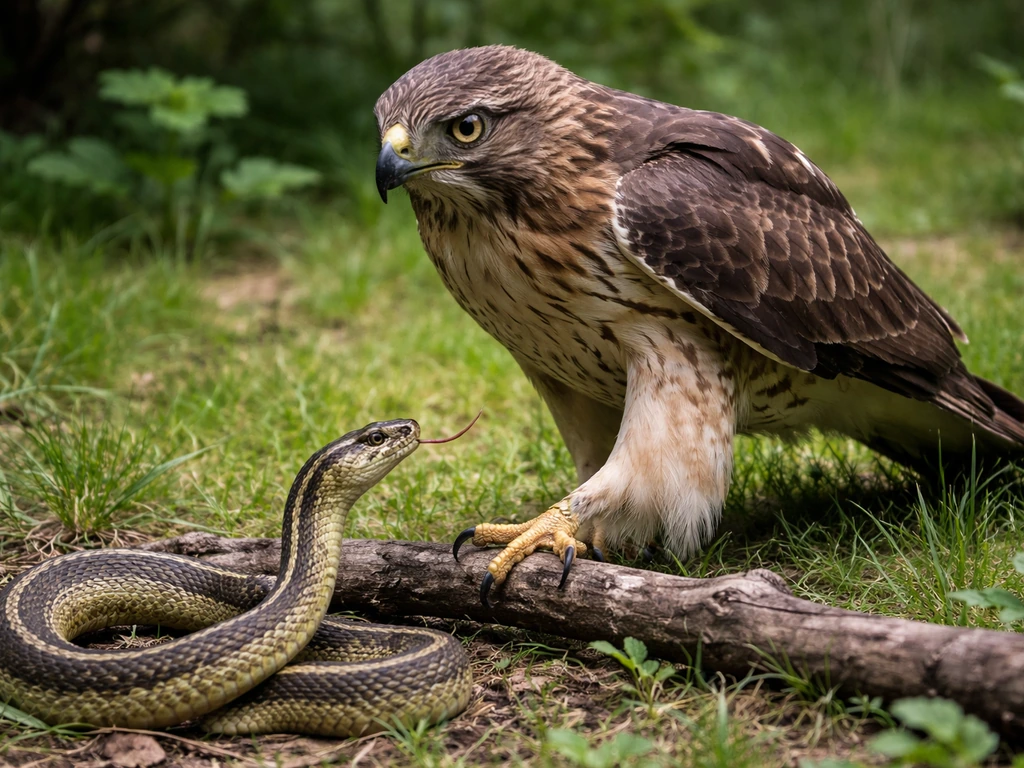
Yes, birds can eat snakes, and snakes can eat birds. Both happen regularly in the wild and, more relevantly, in backyards. The direction of the encounter depends almost entirely on the size of the bird, the size of the snake, and who spots whom first. A red-tailed hawk will pick up a gopher snake without much hesitation.
Can a Bird Eat a Snake? Diet Facts and Backyard Safety

Maya Bennett
20 Jun 2026
A loggerhead shrike has been documented killing snakes as large as a Pacific gopher snake. But flip the scenario around and a corn snake or rat snake will climb into a nest at night and swallow eggs or nestlings before you even know it happened. Neither outcome is rare. Both are worth understanding if you have a feeder, a nest box, or pets in your yard.
You might also wonder if a can bird eat apple, which is typically safe for many backyard birds in small pieces backyards.
What birds actually eat and what snakes actually eat
Most backyard birds are insectivores or seed eaters and would never tangle with a snake. But raptors and a handful of specialized predatory songbirds are a completely different story. Great horned owls regularly take reptiles including snakes as part of a broad, opportunistic diet. Red-tailed hawks list gopher snakes among their common reptilian prey. The loggerhead shrike, a small but ferocious predatory songbird, has documented kills on bull snakes, rat snakes, corn snakes, and indigo snakes. In other words, the birds that eat snakes are purpose-built hunters with strong talons, sharp bills, or both.
On the other side, snakes that target birds and bird eggs tend to be skilled climbers. Rat snakes also commonly eat bird eggs and nestlings when they raid nests at night will a rat eat a bird. Rat snakes (Pantherophis spp. ) are the single biggest documented nest predators in North America, accounting for roughly 15% of all recorded snake-on-bird-nest predation events in research datasets.
Corn snakes eat adult birds as well as eggs and nestlings. Their predation is mostly nocturnal, which is why you rarely catch it happening.
The snake climbs to the nest, swallows what it finds, and is gone before morning. It is worth noting, since this site also covers the reverse question, that snakes eating birds is actually the more common backyard scenario compared to birds eating snakes.
Birds that eat snakes vs snakes that eat birds: a quick comparison
| Species | Role | Prey Size / Type | Habitat Context |
|---|---|---|---|
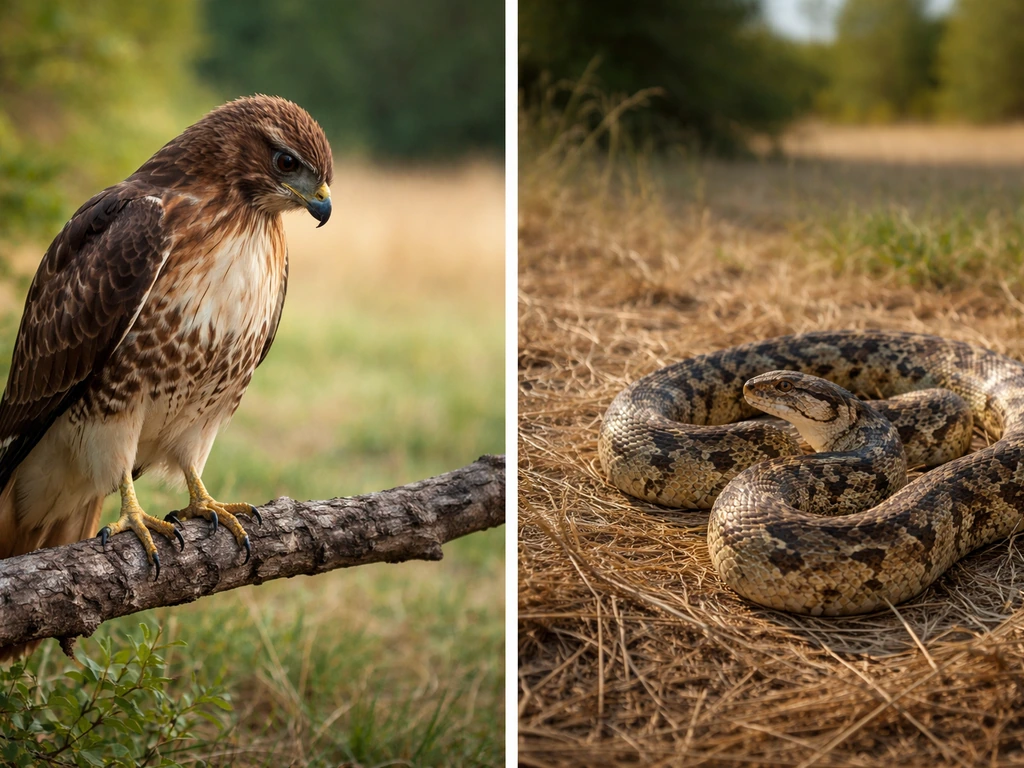
| Red-tailed hawk | Bird eats snake | Medium snakes (e.g., gopher snake) | Open fields, suburban edges |
| Great horned owl | Bird eats snake | Various snakes, minor diet component | Woodland, suburban trees |
| Loggerhead shrike | Bird eats snake | Small to medium snakes | Open scrub, farmland, suburban edges |
| Rat snake (Pantherophis spp.) | Snake eats bird | Eggs, nestlings, adult songbirds | Forest edges, backyards, tree cavities |
| Corn snake | Snake eats bird | Eggs, nestlings, small adult birds | Rural and suburban Southeast US |
| Corn snake (adult) | Snake eats bird | Adult birds (documented in research) | Low brush, ground cover, nest boxes |
How to tell if what you're seeing is actually a bird-snake encounter
People search this question for a few very different reasons, so it helps to match your situation to the right scenario before deciding what to do.
- You saw a hawk or owl fly off with something snake-shaped: This is genuine predation. Red-tailed hawks and great horned owls both do this. If it happened near a field or woodland edge, it is almost certainly real. Nothing to intervene in.
- You found a small loggerhead shrike near a dead snake: Shrikes impale prey on thorns or barbed wire. If you see a snake (or any vertebrate) skewered on a fence spike, a shrike almost certainly put it there.
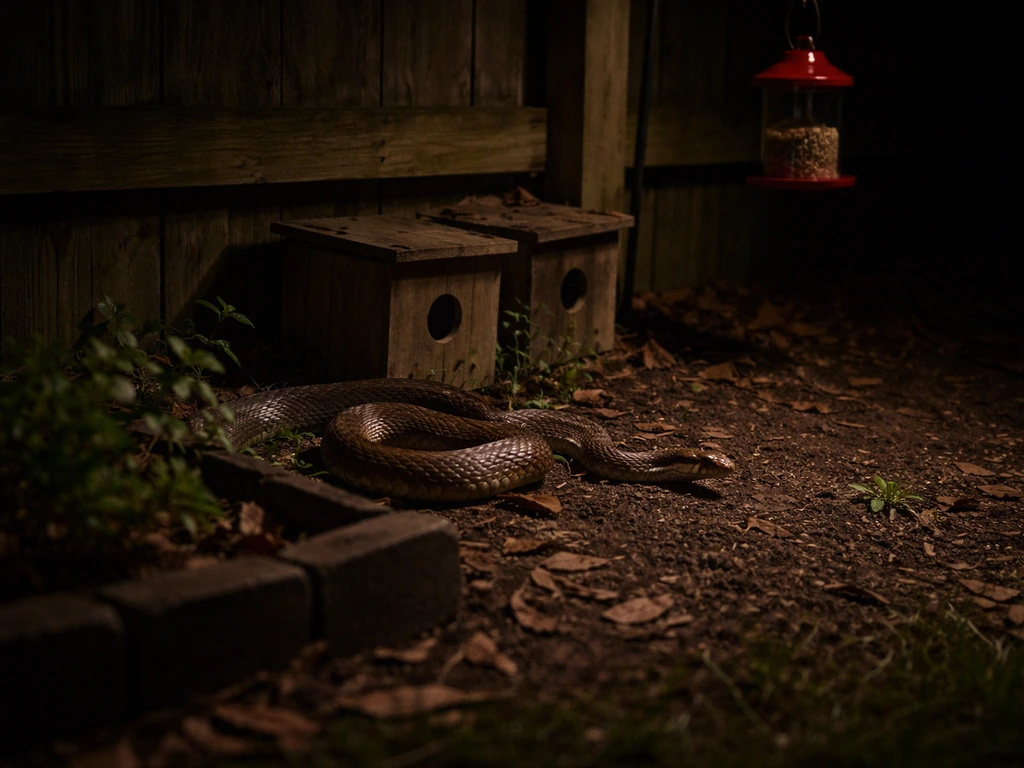
- Your nest box lost eggs or nestlings overnight with no feathers or signs of struggle: Rat snake or corn snake. Nocturnal. The snake entered, ate, and left. A greasy track or shed skin nearby confirms it.
- Small birds are dive-bombing a snake on the ground: This is mobbing behavior, not predation. Robins, mockingbirds, and blue jays mob snakes to drive them away from nests. The birds are not eating the snake.
- You found a snake near your feeders: The snake is almost certainly there because of rodents and birds attracted by spilled seed, not hunting birds directly. Feeders create a food chain that ends with snakes showing up.
- A snake is inside a nest box: It climbed in looking for eggs or nestlings. This is the most common backyard bird-versus-snake situation you will actually encounter.
How interactions play out by snake type and habitat
Rat snakes and corn snakes near feeders and nest boxes
These are your most likely backyard offenders if you run nest boxes or have low-hanging feeders. Both species climb well. Rat snake predation on nests is predominantly nocturnal and peaks during the nestling stage, meaning the window when your nest box is most vulnerable is the two weeks after hatching. Corn snakes have been documented capturing adult birds in addition to raiding nests. In suburban settings across the Southeast and mid-Atlantic, if something cleaned out your nest box without leaving a trace, a rat snake or corn snake is the most statistically likely culprit.
Raptors hunting snakes in open habitat
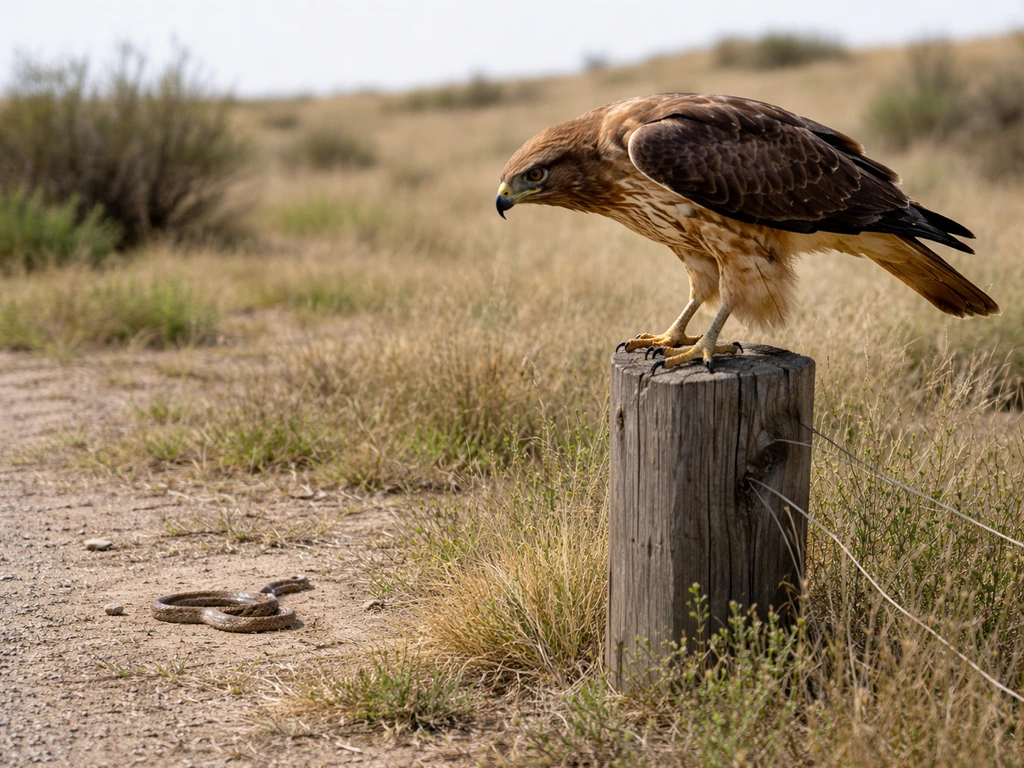
If you live near fields, open scrub, or highway corridors, you may see red-tailed hawks hunting snakes. This is straightforward predation: the hawk spots the snake from above, dives, grabs it with talons, and either kills it in the air or carries it to a perch. Great horned owls do the same thing at night. There is documented mutual mortality between great horned owls and large constrictors like the southern black racer, meaning even large, powerful birds can be injured or killed if they misjudge a snake's size. The bird-wins-always assumption is not always correct.
The loggerhead shrike: small bird, surprisingly lethal
The loggerhead shrike is probably the most interesting bird-eats-snake species for backyard birders to know about because it looks like a chunky mockingbird. It has a hooked bill it uses to kill prey larger than most people expect from a songbird-sized bird. Documented prey includes bull snakes, rat snakes, corn snakes, and indigo snakes. If you spot a loggerhead shrike in open scrub or farmland, it is actively hunting vertebrate prey including snakes.
Venomous snakes and birds: a different risk profile
Venomous snakes like rattlesnakes rarely climb to nest height, but they do hunt ground-nesting birds and can pose a direct danger to people and pets near feeders. Birds occasionally mob rattlesnakes but do not eat them in any regular documented pattern in North American backyards. So, if you are wondering whether a bird eats a snail, that is usually not a typical bird behavior like it is with snakes do not eat them. If you have a rattlesnake near your feeder or yard, the response is different from a non-venomous rat snake situation, and that is covered below.
Risk and safety for backyard birders: feeders, pets, and kids
The CDC is straightforward about this: feeding birds can attract other wildlife to your yard, and that chain of attraction ends with predators including snakes. If you are wondering “what will eat a bird,” the same backyard predator chain that brings snakes into your yard can also include raptors. Spilled seed brings rodents. Rodents bring snakes. Snakes bring raptors. That is not a reason to stop feeding birds. It is a reason to manage your setup carefully.
Feeders that are dirty, stocked with low-quality seed, or positioned badly create unnecessary risk. The U.S. Fish and Wildlife Service recommends cleaning feeders at least once every two weeks using Cornell Lab of Ornithology guidance. The NC Wildlife agency specifically recommends closing feeders temporarily if predation or disease activity spikes, placing feeders near escape cover so birds can flee quickly, and using high-quality food that does not produce a pile of rotting seed on the ground below the feeder. That ground debris is exactly what draws rodents and, by extension, snakes.
For pets and kids: if a snake is near your feeder or in your yard, keep pets and children away and observe from a distance. The CDC advises enjoying wildlife from a safe distance to avoid illness and injury. Do not try to identify a venomous snake by getting close to it. Keep pets leashed or supervised. If you cannot tell whether the snake is venomous, treat it as if it might be.
What to do right now: protect birds, handle a snake encounter, and clean up your feeder
If a snake is near your feeder or nest box today
- Do not handle it. Washington DFW and ODFW both state clearly that snakes should be left alone. Except for a rattlesnake posing immediate danger, no snake should be killed.
- If it is in your house, call animal control. The CDC says this directly. Do not try to remove it yourself.
- If it is outside near the feeder, slowly walk around it and give it space. It will move on.
- If it is a rattlesnake near where kids or pets spend time, contact a local wildlife professional. In rattlesnake territory, Washington DFW recommends exclusion fencing as a longer-term fix for high-risk areas.
- If you suspect a snake cleaned out your nest box, add a predator guard (a metal baffle on the pole). This is the single most effective physical deterrent for climbing snakes.
Feeder best practices to reduce the whole predator chain
- Clean feeders at minimum every two weeks. Use a dilute bleach solution, rinse thoroughly, and dry completely before refilling.
- Sweep up spilled seed from the ground below feeders regularly. Seed piles draw rodents, which draw snakes.
- Use high-quality seed to reduce waste. Low-quality mixes with lots of filler create more ground debris.
- Position feeders near shrubs or cover so birds can escape quickly, but keep the immediate feeder area clear enough that you can spot a snake approaching.
- Temporarily close your feeder if you notice repeated predation events. Give the area a week or two to reset.
- Use pole-mounted feeders with baffles rather than hanging feeders in areas where snakes are active.
If you or a pet are bitten by a snake
This is the one situation where immediate action matters most. The U.S. Forest Service is clear: call 911 and seek immediate medical attention for any suspected venomous snake bite. Do not try to suck out venom, cut the wound, or apply a tourniquet. Keep the bitten limb below heart level and stay as calm as possible while getting to emergency care. For pets, call an emergency vet immediately. Time matters with envenomation.
Reducing snake habitat near your yard
The U.S. Forest Service advises staying away from tall grass and leaf piles, and the same logic applies to your yard. Snakes hide in debris piles, wood stacks, and overgrown ground cover. Keeping those areas tidy near your feeder and nest box locations reduces the chances of a snake moving in. This is not about eliminating snakes from your property entirely, which is neither realistic nor desirable since most non-venomous snakes are beneficial. It is about removing the habitat features that put snakes in direct contact with your birds, your pets, and your family.
The bigger picture here is that bird-snake interactions are a normal part of the same ecosystem you are supporting when you put up a feeder. Birds eat snakes. Snakes eat birds. Understanding which direction the risk runs in your specific setup, whether that is a hawk working the field behind your yard or a rat snake eyeing your nest box, is what lets you respond practically rather than reactively. Most of the time, the best action is observation from a safe distance and a cleaner, better-managed feeding station.
FAQ
If a bird attacks or carries off a snake in my yard, should I interfere or assume it is dangerous?
Usually you should not interfere. Many backyard snake-eaters are raptors or shrikes, which can be aggressive if humans get too close, and the snake may also strike if cornered. Keep pets inside or on leash, watch from a distance, and let the interaction play out, especially near nest boxes or when you see talons or a hooked bill in use.
What signs tell me my nest box raid is likely by a rat snake versus a corn snake or a bird predator?
Look at timing and what is left behind. Rat snake predation is often nocturnal and peaks during nestling stage, and raids may leave the nest partially disturbed with less obvious “feathered remains.” Corn snakes may take eggs and also sometimes adult birds, and you may find more scattered evidence if the snake captured a larger bird. If you see daytime swooping or torn nest materials with signs of winged predators, that points more toward bird hunting behavior.
Does the size of the bird matter, and can small songbirds ever eat snakes?
In most North American backyards, small songbirds do not commonly take snakes. The birds that do are typically larger predators or specialized hunters with strong talons or a hooked killing bill, such as raptors and loggerhead shrikes. A small bird might harass a snake (mobbing) but swallowing a snake is rare without specialized anatomy and sufficient size or capability.
Can a bird eat a venomous snake like a rattlesnake?
Documented regular patterns of birds eating rattlesnakes are not common in North American backyards. Venomous snakes are more likely to be a direct threat to pets and ground-nesting birds than prey for typical feeder birds. If you see a rattlesnake near a feeder, treat it as hazardous and focus on keeping people and pets away rather than expecting a “natural cleanup.”
If I see a snake near the feeder, is it more likely chasing food or hunting birds?
Often it is both indirectly. Seed spills attract rodents, rodents attract snakes, and once a snake is present it may also opportunistically raid low nest sites. If the snake is repeatedly showing up at the same time of day, check whether rodents are active beneath or around the feeder, since reducing ground debris usually makes the area less attractive.
How close should feeders be to escape cover to reduce risk, and how do I do that safely?
Position feeders so birds have a nearby safe route to dense shrubs, tree lines, or other cover within a short flight, and avoid placing feeders in open, exposed “runway” spots where birds would be visible to hunting snakes or raptors. Also keep the ground below cleaner by minimizing seed scatter, because cover plus cleaner feeding stations reduces both exposure and rodent attraction.
Is “cleaning feeders less often” a common mistake, and what should I do instead?
Yes. Dirty feeders, moldy seed, and rotting seed piles increase disease risk for birds and create a consistent food source for rodents. Aim for regular cleaning, remove spilled seed from the ground, and consider temporarily closing feeders if you notice a spike in predator activity or unusual die-offs in nearby birds.
What should I do if I cannot tell whether a snake is venomous that is near my pets or kids?
Treat it as potentially venomous. Increase distance immediately, keep pets leashed or indoors, and do not try to relocate it or “confirm” by approaching. If someone is bitten, seek emergency medical help right away; for pets, contact an emergency vet immediately.
Are there any landscaping changes that reduce snake presence without trying to permanently remove all snakes?
Yes. Reduce hiding spots near nest boxes and feeders by trimming overgrown ground cover, clearing leaf piles and debris stacks, and keeping woodpiles organized. You are not trying to eliminate snakes, you are removing the habitat features that increase encounters between snakes, birds, pets, and people.
Next Articles
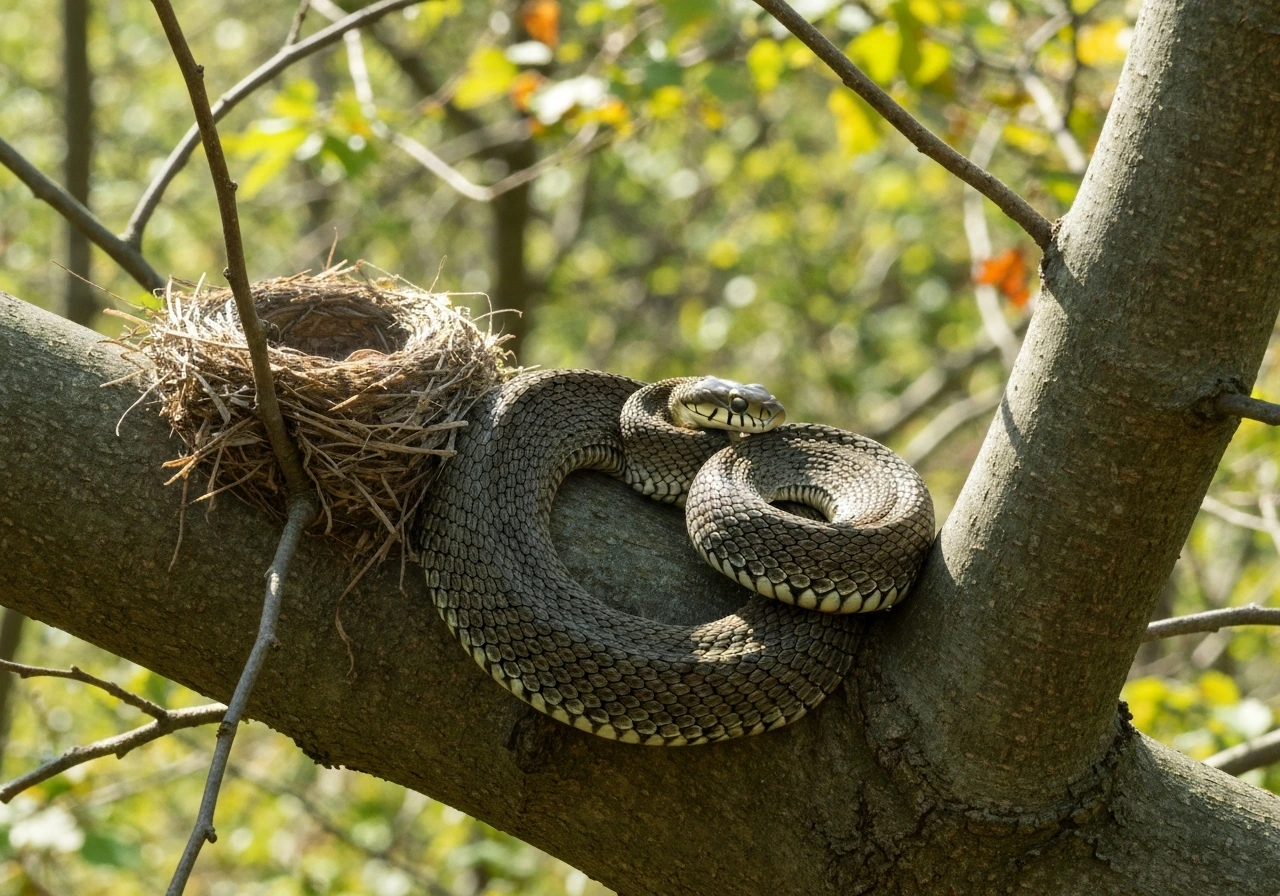
Does a Snake Eat a Bird? How It Happens and How to Reduce Risk
When snakes eat birds, which species target nests or feeder birds, and how to reduce risk safely.
What Bird of Prey Eats Pigeons: Common Raptors & ID Tips
Which raptors eat pigeons: peregrine, Cooper’s, goshawk, merlin, red-tailed, kestrels, owls; ID tips, risks and how to保护
Which Bird Eats Mice? How to Identify Mouse Predators
Identify which birds eat mice using hunting cues, time of day, calls, and perch habits, plus safe yard steps.