Yes, snakes absolutely eat birds. If you're also wondering about bird diets, you may be asking whether a bird can eat apple and how to offer it safely can bird eat apple. They target nestlings, eggs, and ground-foraging adults, and in some yards and woodland edges they are the single biggest threat to nesting songbirds. Rat snakes in particular show up in nest-camera study after nest-camera study as one of the top predators of bird nests across North America.
Does a Snake Eat a Bird? How It Happens and How to Reduce Risk

Maya Bennett
13 Jun 2026
That said, not every snake is a bird-hunter, and knowing which species pose the real risk, how they hunt, and what you can do about it makes a huge difference for backyard birders trying to protect nests and feeders. can a bird eat a snake.
Do snakes really eat birds? The direct answer
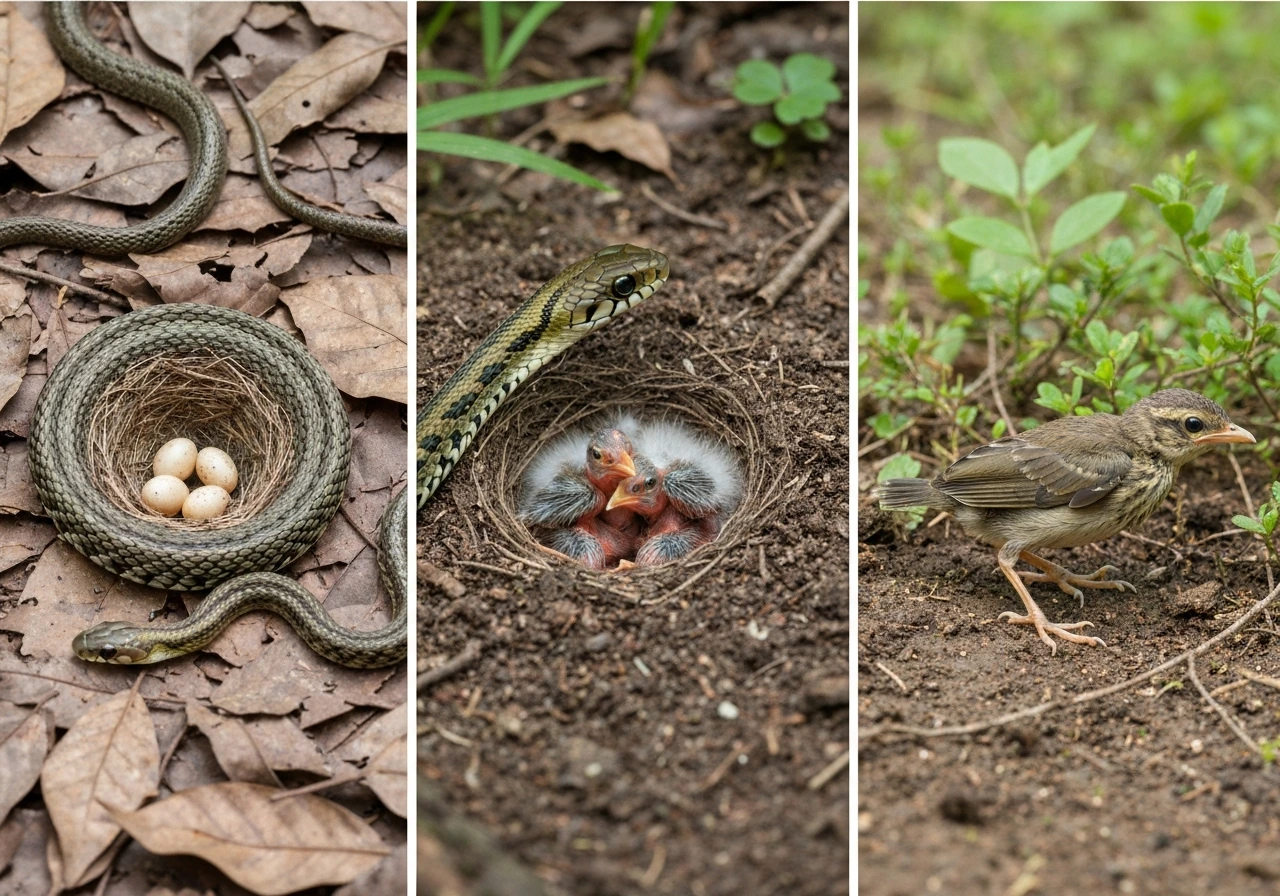
Snakes eat birds at every stage of development: eggs, nestlings, fledglings that haven't quite mastered flight, and occasionally brooding adults caught off guard. A synthesis of North American nest-camera studies found that rat snakes alone accounted for about 28% of recorded nest predation events in some datasets, putting them in the same league as mammals like raccoons and squirrels. The behavior is opportunistic but common enough that wildlife agencies in states like Washington and Minnesota explicitly warn backyard birders about it. So if you've lost a nest and you're not sure who did it, snakes belong near the top of your suspect list.
Which snakes are most likely to go after birds
Not all snakes are equally motivated to climb trees or raid nests. The biggest offenders in North America fall into a handful of species groups, and it's worth knowing them by name so you can assess your actual risk.
| Snake | Range | Main target | Climbing ability |
|---|---|---|---|
| Rat snake (Pantherophis obsoletus and relatives) | Eastern and central North America | Nestlings, eggs, brooding adults | Excellent tree climber |
| Black racer (Coluber constrictor) | Most of North America | Nestlings, ground-nesting birds | Moderate climber |
| Corn snake (Pantherophis guttatus) | Southeastern US | Nestlings, eggs | Good climber |
| Coachwhip (Masticophis flagellum) | South and western US | Ground-nesting birds, chicks | Fast ground hunter |
| Western terrestrial garter snake (Thamnophis elegans) | Western North America | Nestlings (opportunistic) | Limited climber |
| Japanese rat snake (Elaphe climacophora) | Japan | Nestlings, chicks | Strong climber |
Rat snakes are in a category of their own. In one study published in The Auk, black rat snakes accounted for 61 of 71 snake predation events identified, meaning about 86% of all snake-related nest losses were pinned on a single species. Racers and corn snakes show up in the data too, but rat snakes are the headline act. Garter snakes may seem harmless, but a documented field case from Montana recorded a Western Terrestrial Garter Snake attacking a roughly 9-day-old Dark-eyed Junco nestling, so even smaller snakes can be a threat when nestlings are within reach.
How snake predation actually happens
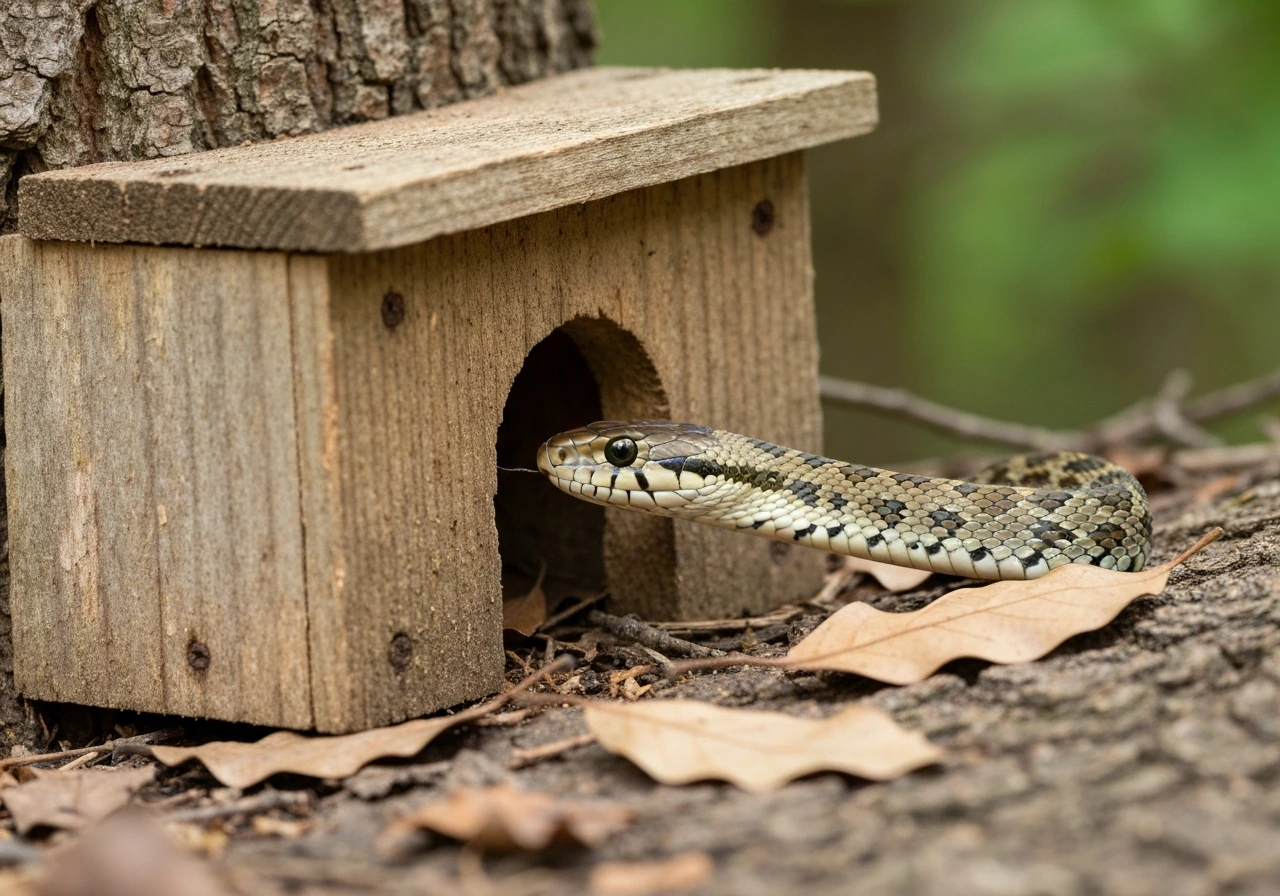
Snakes are ambush predators that rely heavily on scent and body heat detection rather than visual searching. Their hunting pattern around bird nests follows a fairly predictable sequence, and understanding it helps you spot the warning signs early.
Climbing to cavity and cup nests
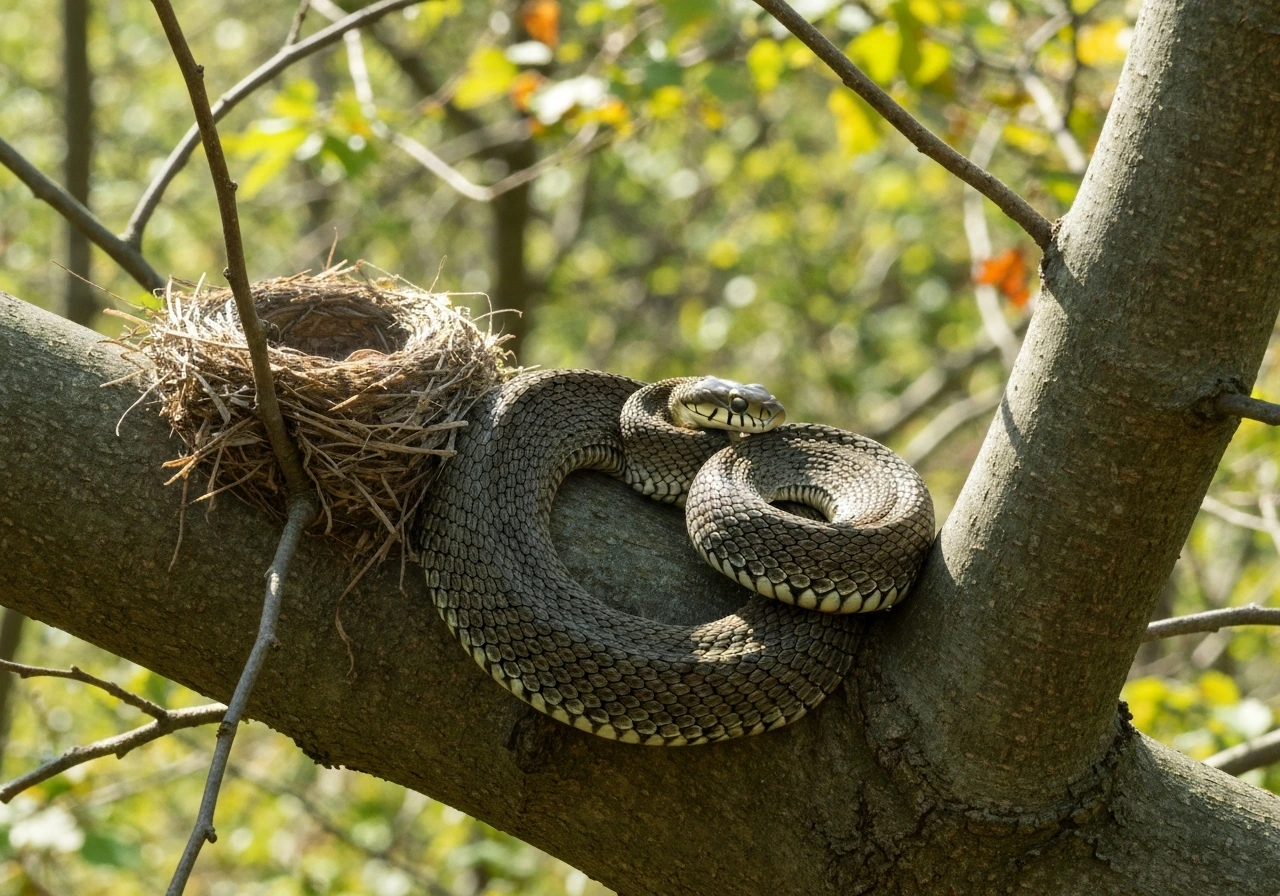
Rat snakes are remarkable climbers. They can scale rough bark, navigate nest box poles, and enter tree cavities with very little effort. They are drawn in by the scent of eggs and nestlings, and they typically enter a nest during daylight when the parent bird may be away foraging. A monitoring video study of Black-capped Vireo nests in Texas captured a Texas rat snake predating the nest on camera, showing exactly this behavior: slow approach, entry, and consumption of nestlings or eggs in one visit.
Targeting ground-nesting birds
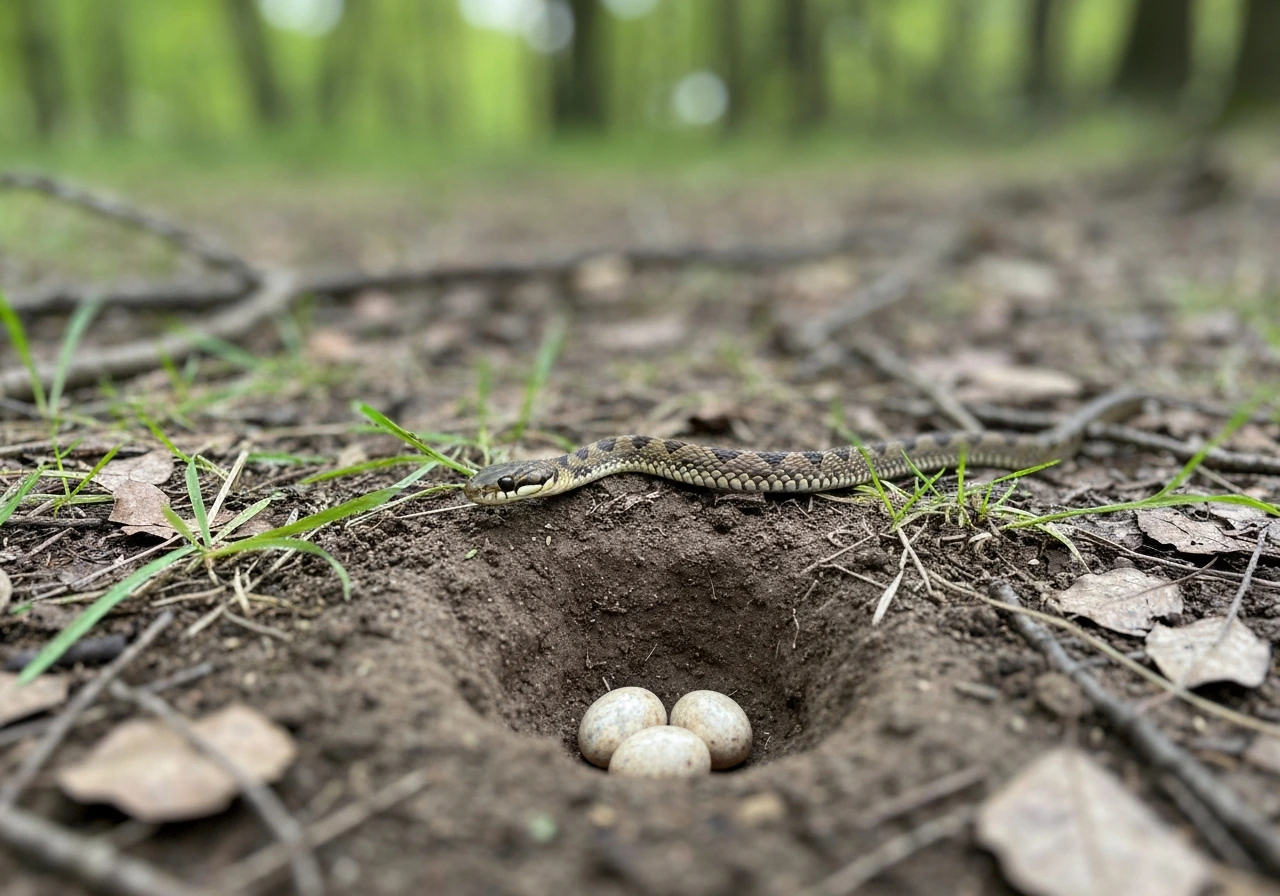
Ground-nesting species like thrushes, sparrows, and some warblers are especially vulnerable. Racers and coachwhips use speed over stealth, moving through grass and leaf litter to flush and catch birds or simply raid unattended nests. Even garter snakes, as the Montana junco case shows, will seize a nestling if the opportunity arises at a low nest site.
Eggs versus nestlings: what snakes prefer
A global review of snake predation on bird eggs found that while many snakes eat nestlings and chicks, confirmed evidence of snakes eating eggs specifically is harder to document. Fewer species are reliably recorded consuming intact eggs compared to nestlings. That doesn't mean egg predation is rare, just that nestlings are often the easier, more energetically rewarding target, especially for larger snake species.
Timing: when is risk highest?
Research using radiotelemetry and nest-camera surveillance found that rat snake and black racer activity peaks during warmer months, and that activity patterns predict when nest predation is most likely. For most of North America, that means late spring through midsummer, which coincides almost perfectly with peak songbird nesting season. If you're monitoring nest boxes or watching a nest in your yard, heightened vigilance from May through August is warranted.
Snake damage versus other predators: how to tell the difference
One of the most frustrating parts of nest predation is that you rarely catch the culprit in the act. But the evidence left behind is often distinctive enough to narrow it down. Blaming the wrong predator means you'll put your protection efforts in the wrong place.
| Predator | Typical signs left at nest | Nest structure | Eggs/nestlings |
|---|---|---|---|
| Rat snake / black racer | Nest often undisturbed, whole nestlings gone, no shells or blood nearby | Usually intact | Swallowed whole, nothing left |
| Raccoon | Nest torn apart or pulled out, eggshells with large punctures or crushed | Heavily disturbed or destroyed | Crushed shells or scattered remains |
| Cat / domestic predator | Feathers and blood nearby, sometimes carcass left uneaten | May be disturbed | Feathers and partial remains |
| Crow or jay | Eggshells cracked and emptied, sometimes outside nest | Intact or slightly disturbed | Empty shells nearby |
| Rat or mouse | Gnaw marks on eggs, small pieces of shell | May be disturbed | Crushed or gnawed shells |
| Hawk or owl | Plucked feathers around the site, clean kill | Undisturbed nest | Adult bird taken, not nestlings |
The cleanest diagnostic sign of snake predation is a completely empty nest with no trace of the contents and no structural damage. Snakes swallow prey whole, so there are no shells, no blood, and no scattered feathers. If the nest looks perfect but is simply empty, a snake is a strong candidate. Raccoons and cats, by contrast, almost always leave a mess.
If you're also dealing with what looks like predation on whole adult birds that were feeding on the ground near a feeder, the list of suspects shifts more toward hawks, cats, and rats, which I cover in related pieces on what eats birds and whether rats eat birds. If you're wondering specifically whether a rat will eat a bird, that behavior is possible in certain circumstances and depends on the species and the situation rat eat a bird.
How to reduce snake risk around feeders and nesting areas
The good news is that most of what attracts snakes to your yard is controllable. Snakes follow food, and food means rodents, insects, and vulnerable bird nests. Cut off the food chain and you cut off the snake's motivation to hang around.
Clean up what snakes use for cover
Snakes need cover to feel safe: woodpiles, brush heaps, overgrown groundcover, rock piles, and tall grass all function as snake highways and resting spots. The Minnesota DNR is direct about this: removing yard debris and woodpiles reduces habitat for both rodents and the snakes that follow them. Keep grass mowed, clear brush within a reasonable distance of nest boxes or feeders, and move woodpiles away from nesting areas if possible.
Mount nest boxes on snake-resistant poles
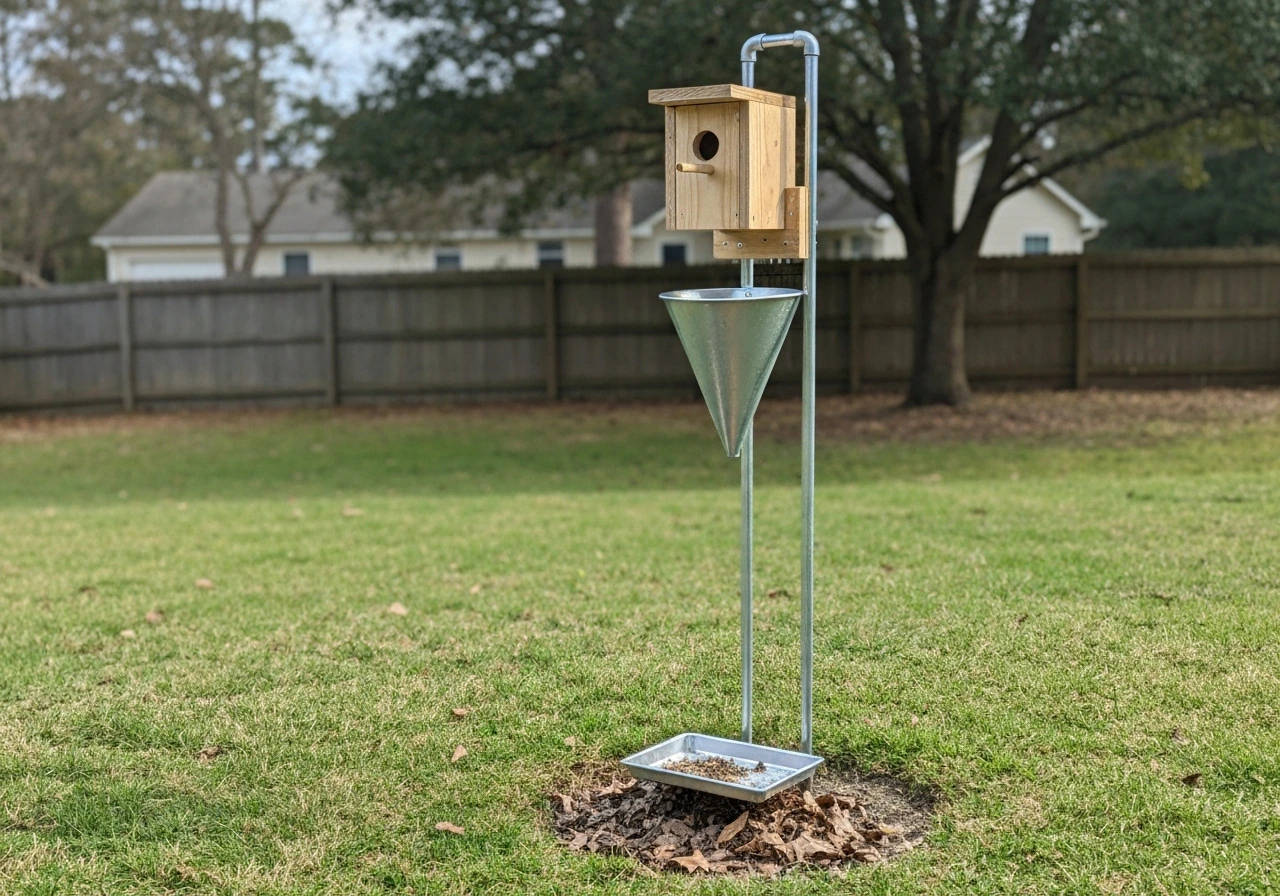
Smooth metal poles are much harder for snakes to climb than wooden posts or tree trunks. If you're using nest boxes, mount them on metal conduit poles and add a metal cone baffle at least 18 inches in diameter, positioned about 5 feet above the ground. This doesn't make the box completely snake-proof, but it dramatically reduces access from ground-hunting species. Avoid mounting boxes on fence posts directly connected to trees or brush, since that creates a bridge for climbing snakes.
Manage the rodent population
Snakes are in your yard for a reason, and that reason is almost always food. Spilled birdseed under feeders is one of the biggest rodent attractors in backyard settings. Mice and rats drawn in by seed become prey for snakes, and once snakes are patrolling your yard for rodents, a nest box or low nest is a natural bonus target. The Minnesota DNR and Washington Department of Fish and Wildlife both point to feeder seed management as a key step in reducing rodent and therefore snake pressure.
Feeder and seed safety tips to avoid attracting unwanted wildlife
Feeders are great for birds and backyard enjoyment, but a poorly managed feeder is essentially a buffet sign for every opportunistic wildlife species in the neighborhood, including the snakes that follow them. Here's what actually works.
- Use a tray or catch basin under feeders and clean up spilled seed daily. Spilled seed on the ground is the number one rodent attractor under feeders.
- Store birdseed in metal containers with tight-fitting lids. Plastic bins get chewed through; metal ones don't. This is Minnesota DNR-endorsed advice for deterring both rodents and the snakes that follow them.
- Move feeders at least 10 to 12 feet away from brush, dense shrubs, or woodpiles that provide snake cover. Distance matters.
- Bring feeders in at night during peak snake season (late spring through summer). The Minnesota DNR recommends removing seed, suet, and hummingbird feeders overnight as a summer management strategy to reduce non-target wildlife access.
- Clean feeders regularly with a 10% bleach solution (1 part bleach to 9 parts water), rinse well, and let dry before refilling. This reduces disease risk and keeps the feeder from becoming an attractant for insects that in turn bring other wildlife.
- Use weight-sensitive or enclosed feeders that limit access to smaller birds only and physically exclude squirrels and large animals.
- If predation events spike or you notice repeated disturbances, consider removing feeders entirely for two weeks. The CDC recommends this as a reset tactic to break the cycle of wildlife habituation to a feeding station.
- Place feeders near natural escape cover for birds (shrubs they can dart into) but not so close that that cover becomes snake habitat. About 5 to 10 feet from a dense shrub is a reasonable balance.
North Carolina Wildlife also recommends closing feeders temporarily if predation or disease activity spikes, which is smart advice. A two-week break disrupts the routine of any predator that has learned your feeder schedule, and it gives local bird populations a chance to disperse and become less predictable targets.
What to do if you think a snake is the culprit
Finding an empty nest or a missing clutch of eggs is alarming, but reacting rashly can cause more harm than the snake did. Here's a level-headed sequence to follow.
- Check the nest carefully without touching it. Look for the signs in the table above: empty nest with no debris points to a snake; shells, blood, or feathers suggest other predators.
- Check for the snake nearby. Rat snakes sometimes rest within a few feet of a nest they've just raided, especially in warm weather. Look in low branches, dense groundcover, or debris piles close to the nest site.
- Do not attempt to handle or relocate the snake yourself. Most predatory nest snakes are non-venomous and are legally protected under many state laws as native wildlife. Handling unfamiliar snakes also carries real injury risk.
- Document what you find. A photo of the empty nest, any shed skin nearby, or (if you see the snake) its appearance and size will help a wildlife professional identify the species and assess whether intervention is appropriate.
- If the snake is venomous (rattlesnake, copperhead, cottonmouth) or the snake is inside a structure, call your local wildlife control authority or state wildlife agency immediately. Do not try to remove it.
- If a parent bird is still returning to the empty nest, leave the nest alone. Disturbing it further can cause the adult to abandon the site entirely.
- Consider adding a baffle and switching to a snake-resistant pole mount before the next nesting season, especially if you have nest boxes in your yard.
- Report recurring nest predation patterns to your state wildlife agency or a local bird monitoring group. Citizen science data on nest predators is genuinely useful, and some programs actively want these reports.
When to actually call for help
Most snake encounters in a backyard are not emergencies. A rat snake raiding a nest box is doing what rat snakes do, and relocating it usually just means another snake moves in within a season or two. The situations that genuinely warrant a call to your state wildlife agency or a licensed wildlife control operator are: a venomous snake near a space used by children or pets, a snake that has entered your home, or repeated encounters where the same snake appears to have established territory directly at or under your feeders or nest boxes. In those cases, professional relocation is the right move, not DIY handling.
A few myths worth clearing up
One common backyard assumption is that if a nest goes missing cleanly, a neighborhood cat is responsible. Cats are significant bird predators, but they almost always leave feathers, blood, or a partial carcass. A pristine empty nest is rarely a cat. Another myth is that small snakes can't threaten birds.
The Montana garter snake case shows that even modestly sized snakes will target nestlings when they're accessible and vulnerable. And perhaps the most persistent myth is that putting mothballs around a nest box will deter snakes. Mothballs are toxic to birds, pets, and wildlife and have no meaningful effect on snake behavior.
The only things that reliably reduce snake access to nest boxes are physical baffles on smooth poles, and reducing the rodent and debris conditions that attract snakes in the first place.
If you're curious about the flip side of this predator-prey relationship, birds do sometimes prey on snakes too. If you are also wondering about birds being prey, check out what eats birds in your region. Raptors like red-tailed hawks and roadrunners are well-known snake hunters, and some corvids will mob and kill smaller snakes. The relationship between birds and snakes runs in both directions depending on species size and opportunity.
FAQ
Will any snake eat a bird, or only certain species?
Most snakes will eat birds only if they can access them, but the real risk is concentrated in climbing and nest-raiding species like rat snakes, black racers, and corn snakes. Smaller snakes can still take nestlings if the nest is low or exposed, so species isn’t the only factor, access matters.
How can I tell whether a snake or another predator caused the nest loss?
A strong snake clue is a nest that appears structurally intact but is completely empty with no shells, feathers, or blood. Predators like raccoons and cats typically leave more visible mess or partial remains, while hawks and other birds of prey are more likely to take whole adult birds away rather than leave an intact empty nest.
Do snakes eat only eggs and babies, or can they take adult birds too?
Snakes most often target eggs and nestlings, but they can take fledglings and, less commonly, brooding adults if a bird is caught on the ground or away from cover. If you see repeated ground-feeding losses near a feeder, the suspect list should expand beyond snakes to include other ground predators.
Is it true that snakes eat eggs more often than nestlings?
Egg predation is possible, but it is generally harder to document reliably than nestling predation. In many cases, nestlings are easier targets because they are slower, more sheltered, and provide more accessible, high-reward food.
When is my yard at highest risk for snake nest predation?
For much of North America, risk increases during late spring through midsummer because many of the common nest-raiding snakes are most active when songbirds are nesting. If you monitor frequently, consider ramping up checks when nests are in the nestling stage, not just when eggs first appear.
Do mothballs or other home remedies actually keep snakes away from bird boxes?
No. Mothballs are toxic to birds, pets, and wildlife, and they do not provide a meaningful snake deterrent. The effective approach is physical exclusion (baffles on smooth poles) plus removing the cover and food conditions that draw snakes in.
If I relocate a snake myself, will it stop the problem?
Relocation often does not solve the underlying issue. If food and cover conditions remain, another snake may move into the space, and predators can cycle through the same habitat over a season or two. DIY handling also increases risk, so consider professional help for recurring or high-risk situations.
What feeder practices reduce the chance that snakes will patrol my yard?
Manage seed spillage and consider reducing access for rodents by cleaning up fallen seed quickly and not letting seed accumulate under or around feeders. A helpful tactic is temporarily closing feeders for a short window if predation pressure spikes, which can disrupt a predator’s routine.
If I use nest boxes, what mounting setup gives the best protection?
Mount nest boxes on smooth metal conduit poles and add a metal baffle large enough to block climbing, positioned well above the ground. Also avoid setups that create easy “bridges,” such as boxes on fence posts connected to nearby trees or brush.
Do I need to remove all brush and grass to prevent snake visits?
You don’t need to sterilize the yard, but you should reduce the most useful snake cover near nesting and feeding areas. Focus on mowing tall grass regularly and clearing close-by brush piles or debris, since these act as rest spots and travel routes for snakes and also for their rodent prey.
Next Articles
What Bird of Prey Eats Pigeons: Common Raptors & ID Tips
Which raptors eat pigeons: peregrine, Cooper’s, goshawk, merlin, red-tailed, kestrels, owls; ID tips, risks and how to保护
Which Bird Eats Mice? How to Identify Mouse Predators
Identify which birds eat mice using hunting cues, time of day, calls, and perch habits, plus safe yard steps.
What Bird Eats Ducks? How to Identify Duck Predators
Identify which birds, like hawks and owls, prey on ducks and learn proof cues and humane steps to reduce risk.