If you spotted something large, hairy, and fast in your yard or near your bird feeders and you're trying to decide whether it's a camel spider or a bird-eating spider, here's the fast answer: camel spiders (order Solifugae) and bird-eating spiders (large tarantulas in the family Theraphosidae) are completely different animals. Camel spiders are not true spiders at all, they're arachnids in their own order, and they're almost exclusively desert creatures. True bird-eating tarantulas live in tropical and subtropical regions. Wherever you are in North America or Europe, the odds that either one is lurking near your feeder are extremely low. The bigger risk to your backyard birds comes from much more common predators, not these headline-grabbers.
Camel Spider vs Bird Eating Spider: How to Tell Them Apart

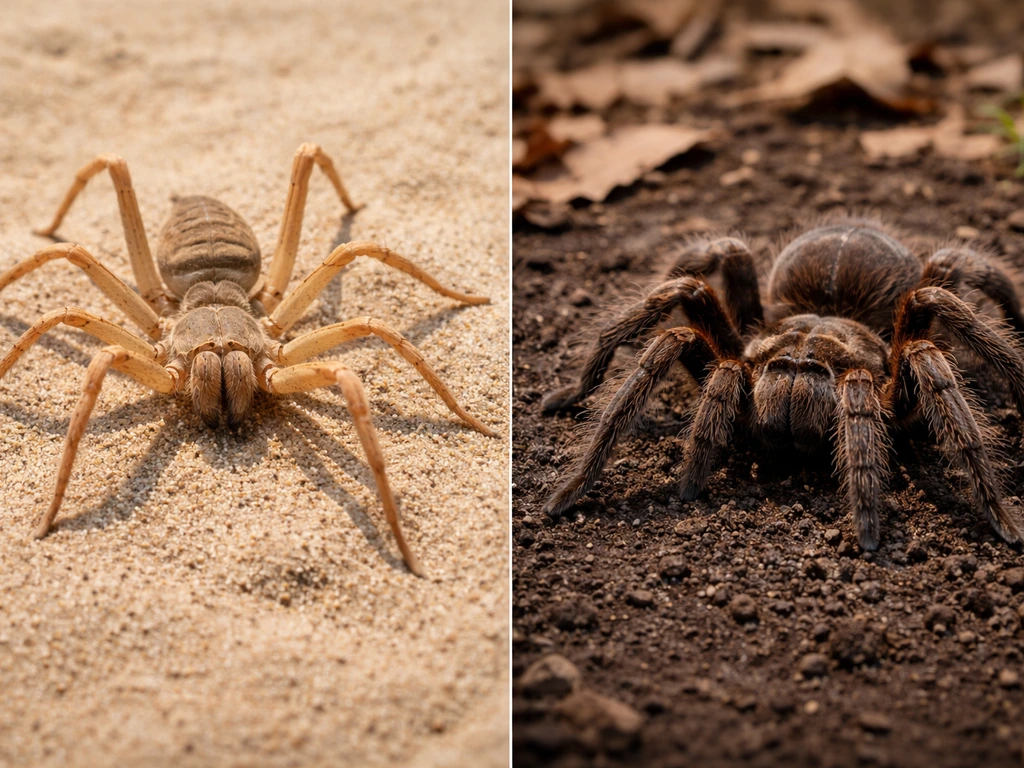
Quick ID: camel spider vs bird-eating spider side by side
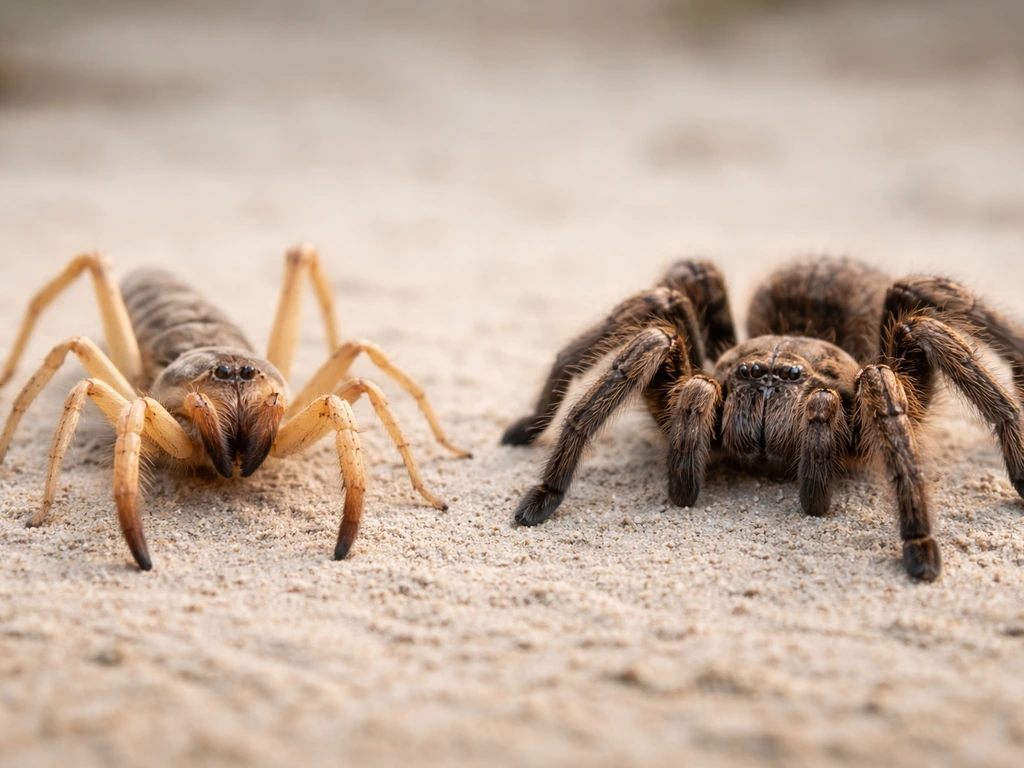
The easiest way to tell these two apart is body shape and what they're doing with their front ends. If you're trying to figure out what a bird-eating spider might actually consume, it helps to compare it with what spiders can eat in general. Camel spiders hold their pedipalps (sensory appendages) stretched forward in front of their bodies, which makes them look like they have ten legs instead of eight.
That "extra pair of legs" silhouette is the single most useful field marker. They're also distinctly flattened, fast-moving, and tend to run toward shade rather than sit still. Bird-eating tarantulas, by contrast, are built thick and round, move slowly and deliberately, and hold their front legs in a wide, relaxed spread. When threatened, a tarantula rears up and exposes its fangs in a defensive posture.
A camel spider just runs.
| Feature | Camel Spider (Solifugae) | Bird-Eating Tarantula (Theraphosidae) |
|---|---|---|
| Classification | Order Solifugae (not a true spider) | True spider, family Theraphosidae |
| Size range | 20–70 mm body length | Up to 30 cm leg span (Goliath birdeater) |
| Body shape | Flattened, elongated, segmented | Round, stocky, heavily built |
| Leg appearance | Looks like 10 legs (pedipalps held forward) | 8 legs, widely spread, slow-moving |
| Chelicerae/fangs | Massive, forward-projecting, scissor-like | Large downward-striking fangs, folded at rest |
| Movement | Extremely fast, erratic runner | Slow, deliberate, defensive rearing |
| Web use | No web at all | No web (burrow dweller) |
| Venom | No true venom glands (mostly harmless) | Venom present but not lethal to humans |
| Defensive hairs | None | Urticating hairs flicked at threats |
| Primary habitat | Arid deserts, semi-deserts | Tropical/subtropical rainforests, savannahs, burrows |
| Active period | Mostly nocturnal | Mostly nocturnal |
What people actually mean by "bird-eating spider"
The term "bird-eating spider" usually refers to large mygalomorph tarantulas, most famously Theraphosa blondi, the Goliath birdeater from South America, which holds the record as the world's largest spider by mass. The "bird-eating" name comes from a single 18th-century copper engraving by naturalist Maria Sibylla Merian that depicted one of these tarantulas consuming a hummingbird. That one image stuck, and the name never left. The Smithsonian's National Zoo is direct about it: [the Goliath birdeater doesn't actually eat birds frequently](https://nationalzoo.
si. edu/animals/goliath-bird-eating-tarantula). Its zoo diet consists mainly of insects like cockroaches. National Geographic echoes this, calling the birdeater name a historical artifact.
The spider does occasionally take small vertebrates in the wild, including lizards, frogs, and very rarely a nestling, but regular bird predation is not part of its normal ecology.
Scientifically, the term "bird-spider" has been applied across multiple large theraphosid species because of the perceived (and occasionally documented) ability to take small birds or hatchlings. A 2021 Journal of Arachnology study looked specifically at how common spider predation on bird hatchlings actually is, and the short answer is: it's rare and documented only in specific circumstances, not a routine feeding strategy. So if someone tells you bird-eating tarantulas regularly raid nests, that's an overstatement of the evidence.
Where these spiders live and how they actually hunt
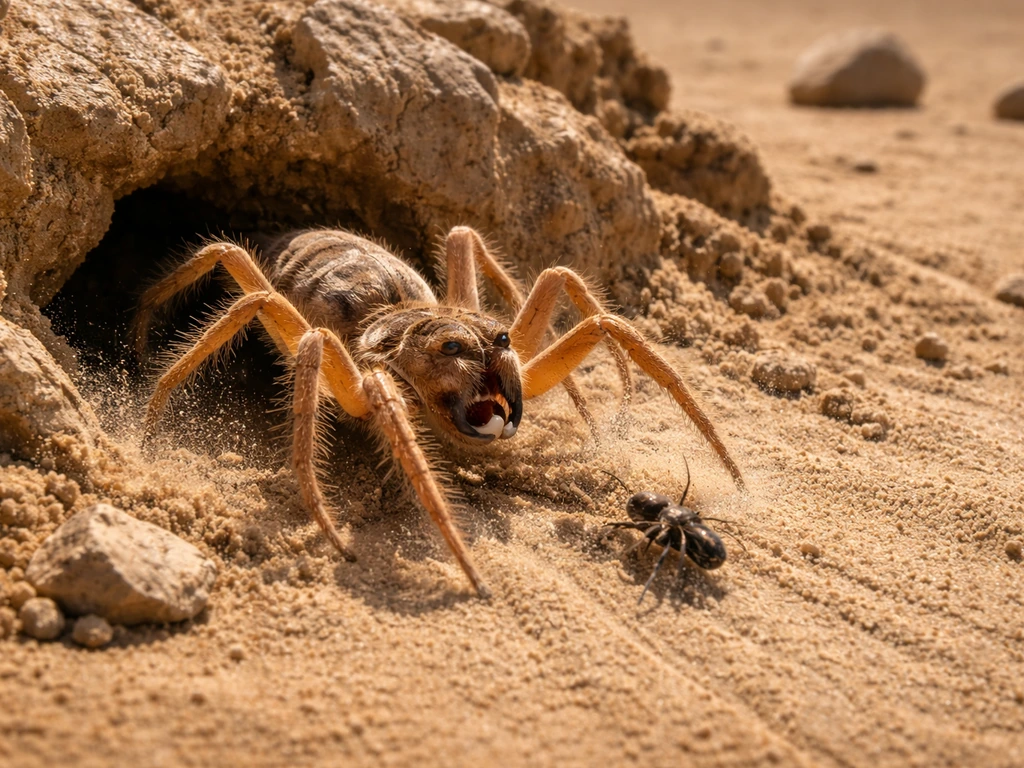
Camel spiders: desert hunters, not backyard visitors
Camel spiders (also called sun spiders or solifuges) are overwhelmingly associated with arid and semi-arid environments. Their range covers deserts across Africa, the Middle East, South Asia, Southern Europe, and the Americas, but always in dry, open terrain with little vegetation. They hunt by running prey down at high speed using their massive chelicerae, which work like powerful scissors. They don't use webs or burrows for hunting. The famous internet videos of camel spiders chasing soldiers in the Middle East are real behavior, but mostly misunderstood: the spiders are running toward shade, not attacking. National Geographic documented extensively how forced-perspective photos and misinformation turned the camel spider into an internet myth far larger than the animal itself.
Bird-eating tarantulas: tropical rainforest ambushers
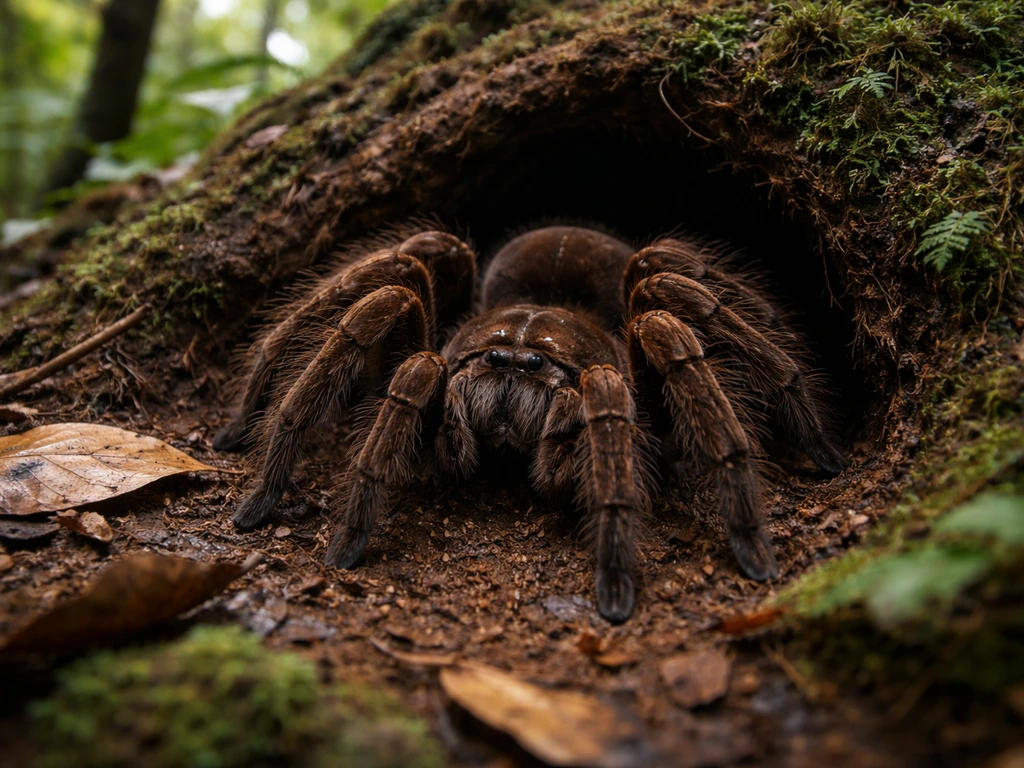
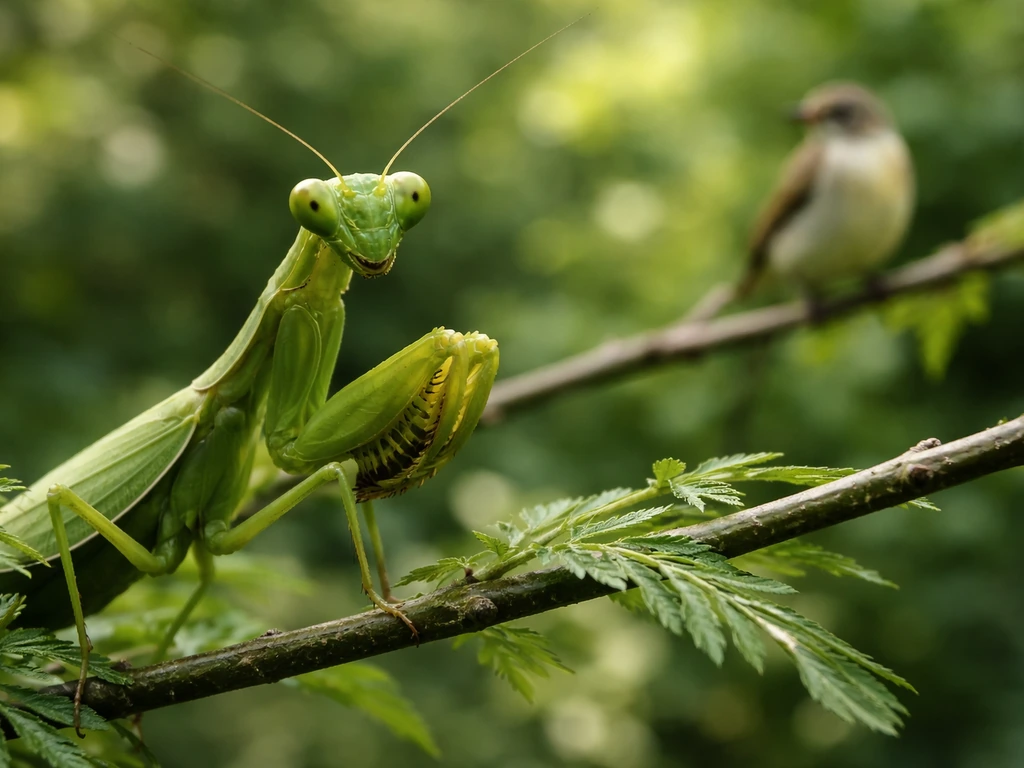
Large bird-eating tarantulas like Theraphosa blondi live in tropical rainforests, primarily in South America (Venezuela, Brazil, Guyana). The broader Theraphosidae family ranges across tropical and subtropical habitats including rainforests, savannahs, grasslands, and semi-deserts. They're ambush hunters that wait near a burrow entrance for something to walk past, then strike. Their prey is almost always insects, worms, frogs, or lizards. If you mean a mantis specifically, it generally will not target birds, and birds are not considered part of mantis feeding behavior. An actual bird capture is a rare opportunistic event, not a hunting strategy. These spiders are not found in temperate North American or European yards.
The barking spider and other common mix-ups
"Barking spider" is a common name applied primarily to Selenocosmia crassipes, the Queensland whistling spider from Australia. This species is also sometimes labeled a "bird-eating tarantula" because it belongs to Theraphosidae and is large enough to potentially take small animals. The "barking" or "whistling" name comes from its ability to stridulate, producing an audible sound by rubbing specialized hairs together. This is one of the most confusing corners of spider common names because one animal gets three different dramatic labels (barking spider, whistling spider, bird-eating tarantula) depending on who's writing about it.
The reason misidentification is so common online comes down to a few predictable patterns. People in non-desert regions photograph a large, hairy house spider or wolf spider and call it a camel spider because it's fast and leggy. People find large tarantulas and call them bird-eating spiders because that name sounds impressive. And the camel spider myth machine (largely fueled by misleading photos) makes people think these animals are common everywhere.
If you're in the continental United States and you see a fast-moving, hairy arachnid near your feeder, it is almost certainly a wolf spider (family Lycosidae) or a large house spider. Wolf spiders are harmless to birds and people. If you want the bigger context on what spiders can or cannot eat, see can a spider eat a bird, since backyard tarantula risks are often exaggerated harmless to birds.
- Wolf spider: Brown, patterned, carries egg sac on abdomen, moves fast, no web. Common in US yards. Often mistaken for camel spider or tarantula.
- Large house spider (Eratigena atrica): Brown, fast, builds funnel webs in corners. Often called a "camel spider" by panicked observers.
- Fishing spider (Dolomedes): Large, near water, can walk on water surface. Sometimes mistaken for a tarantula.
- US native tarantulas (Aphonopelma spp.): Slow, docile, hairy, found in Southwest deserts. Sometimes called bird-eating spiders but are not the same species.
- Barking spider (Selenocosmia crassipes): Australian only. Not found in North America or Europe.
Real risk check: your birds, your pets, and you
Risk to backyard birds and nesting birds
The honest answer is that neither a camel spider nor a true bird-eating tarantula poses a realistic threat to your backyard birds in a temperate setting, because neither one lives there under normal circumstances. In the rare tropical or subtropical regions where large theraphosids are native, documented predation on bird hatchlings does occur, but it's uncommon even there. If you're worried about predators at your nest boxes or feeders, the realistic threat list is cats, raccoons, squirrels, snakes, crows, jays, and hawks. Spiders are not a meaningful item on that list for most backyard birders.
Risk to pets
If a pet (especially a dog or cat) encounters a large theraphosid tarantula, the main medical concern is not the venom but the urticating hairs. Tarantulas flick these fine, barbed hairs off their abdomens as a defense mechanism. They can penetrate skin and mucous membranes and cause significant irritation, especially to eyes and noses. The Merck Veterinary Manual flags this as the primary veterinary concern with tarantulas. There are no reported human deaths from tarantula bites according to StatPearls, but a bite from a large tarantula can cause a painful puncture wound. Camel spiders, for their part, lack true venom glands and are not considered medically significant, though their chelicerae can produce a painful mechanical bite if handled.
Risk to people
Neither animal is a significant public health threat. Camel spider bites are painful mechanical injuries with no venom involved. Tarantula bites are venomous but not lethal. The blank" rel="noopener noreferrer">Goliath birdeater's venom, for example, is noted by National Geographic as not lethal to humans, though fang punctures from an animal that large are serious and should be treated medically.
National Geographic notes that the Goliath birdeater's venom is not lethal to humans. The Australian barking spider (Selenocosmia crassipes) can cause symptoms including nausea and vomiting for several hours after a bite.
General guidance from the Mayo Clinic applies here: if you're bitten by any large spider and experience systemic symptoms like nausea, vomiting, or difficulty breathing, get medical attention. Don't try to identify the spider from memory while you're dealing with a reaction.
What to do in your yard right now
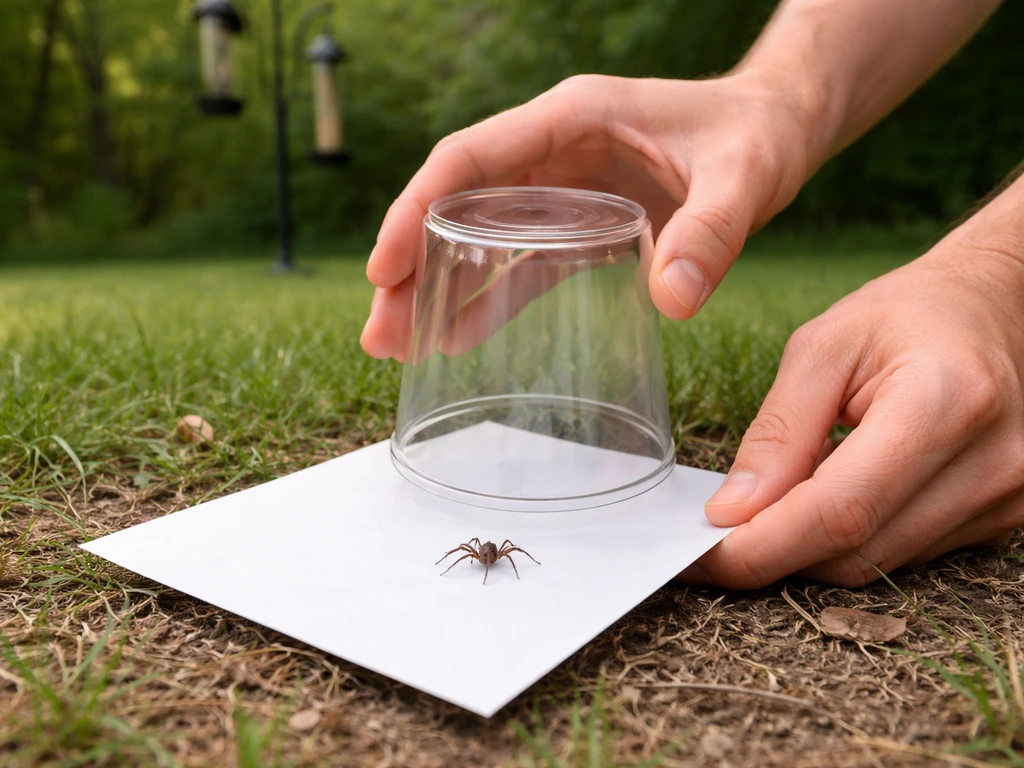
Safe observation and ID without touching anything
The best thing you can do before panicking is take a clear photo. Use your phone's zoom rather than getting close, and try to capture a shot that shows the full body, the leg arrangement, and ideally the front-end detail (pedipalps or chelicerae). If the spider is stationary, try to get a top-down shot and a side shot. Share those photos on iNaturalist or a regional entomology Facebook group and you'll usually get a confident ID within hours. Most large, fast spiders in North American yards are wolf spiders, which are genuinely beneficial: they eat insects, including pests that would otherwise damage your garden or attract more problematic wildlife to your feeder area.
How to safely move a spider you need to relocate
If the spider is somewhere you genuinely need to clear (inside a garage, near a pet area, right under a feeder), use the cup-and-paper method. Slowly approach and place a container (a glass jar or large plastic cup) over the spider, then slide a stiff piece of paper under the rim to trap it inside. Carry it outside and release it well away from the house. This works for any large spider and keeps your hands completely clear.
Do not use this method if you think you're dealing with an actual tarantula without knowing your local species: US native Aphonopelma tarantulas are docile and the cup method works fine, but in any tropical region, treat an unknown large theraphosid with more caution.
Feeder and yard management to reduce spider activity
Large spiders near feeders are usually there because feeders attract insects, and insects attract predators. Managing your feeder setup reduces the whole food chain. Keep seed spillage minimal because spilled seed draws rodents and ground-feeding insects, which in turn attract larger predators including spiders. The University of Nebraska-Lincoln's feeder guidance specifically flags seed spillage as a driver of pest activity.
Clean up standing water and dense ground cover near feeder poles, and store seed in sealed containers indoors. The Florida Fish and Wildlife Conservation Commission and the Washington Department of Fish and Wildlife both recommend reducing all food attractants around the yard to avoid drawing in wildlife that creates conflict. This advice applies just as well to managing spider pressure as it does to managing raccoons or squirrels.
When to actually call someone
Call a local pest control professional or your state's wildlife agency if you find a large, unknown spider inside your home that you cannot safely remove, if a pet or person has been bitten and is showing any systemic symptoms (not just local pain), or if you genuinely believe you've found an exotic or non-native spider species (this does occasionally happen through imported goods or plant shipments). For anything that looks like a true tarantula outside its native range, a call to your local extension office or wildlife control agency is the right move. For the far more likely scenario of a wolf spider or large house spider near your feeder, just take a photo, use the cup method, and get on with your day.
- Take a clear photo before doing anything else (full body, top-down, side view).
- Upload to iNaturalist or a regional spider ID group for a fast, accurate ID.
- If relocation is needed, use the cup-and-paper method and keep hands clear.
- Reduce feeder seed spillage and standing water to lower insect and spider activity near your birds.
- If a bite causes systemic symptoms (nausea, vomiting, breathing difficulty), seek medical attention immediately.
- If the spider can't be safely identified or removed, call a local pest control professional or wildlife agency.
FAQ
If the spider is fast but it has an “extra leg” silhouette, does that confirm a camel spider?
Not by itself. The “ten-leg” look is a strong clue for camel spiders because of forward-held pedipalps, but some wolf spiders can also look front-heavy and fast. The key check is the overall body build (camel spiders are more flattened and scurrry-run style), plus the front appendages, camel spiders hold them forward as part of their silhouette, while wolf spiders keep legs arranged more like true eight-legged spiders.
How can I tell whether I’m seeing a tarantula with urticating hairs versus a camel spider if it’s not moving?
Look for hairiness on the abdomen and watch for defensive behavior. Tarantulas may rear up, kick or flick urticating hairs when threatened, and keep a thick, rounded posture. Camel spiders typically run rather than hold a defensive stance, and they do not produce urticating hairs. If you see hairs aerosolizing near the abdomen, assume tarantula until proven otherwise.
Can camel spiders or “bird-eating” tarantulas live in temperate yards during parts of the year?
In most of North America and Europe, neither has established populations in typical suburban habitats. Single sightings are usually misidentifications of local wolf spiders, house spiders, or occasionally a transported pet. If a “bird-eating” tarantula looks truly out of place in your region, it is more likely non-native or someone’s pet than a native predator.
Do camel spiders have venom, and will they make birds sick if they bite?
Camel spiders are not considered medically significant in the way venomous spiders are. They lack true venom glands in the typical “medically relevant venom” sense, and their main harm is mechanical injury from their strong chelicerae if handled. For birds, the bigger issue is whether the spider is even native and active in your habitat, not venom exposure.
What should I do if a large spider is near my nest box, but I can’t tell what species it is?
Avoid putting your hands near it and focus on prevention. Remove food attractants first (seed spillage, dense ground cover near poles, standing water). If the spider is inside or close enough that a pet could reach it, use cup-and-paper removal for safety, then report the photo to a local extension office or wildlife group for ID.
Will a tarantula typically dig up bird nests or actively hunt hatchlings around feeders?
Regular nest raids are not typical behavior for most “bird-eating” tarantulas. Predation on small birds or hatchlings, when it happens, is opportunistic and rare, more plausible in the species’ native tropical range and under specific circumstances. In a backyard feeder context, the usual predator list is far more likely to include mammals and corvids.
If someone tells me “birds are a tarantula’s main diet,” is that ever true?
Usually no. “Bird-eating” is partly a historical label and partly based on rare events. Even large theraphosids in their native range commonly eat insects and other invertebrates, plus small reptiles and amphibians occasionally. If you’re managing feeders, treat birds as prey only in the sense that rare opportunism can happen, not as a normal hunting pattern.
Are wolf spiders, which are often mistaken for camel spiders, safe to keep around?
For most backyard situations, yes. Wolf spiders are generally beneficial because they hunt insects and do not have the “bird-eating” reputation. If you want them out of a specific spot, remove them with the cup method, but there is usually no need to eliminate them broadly because they are part of the local predator-prey balance.
How do I photograph well enough for an ID if the spider is mobile and won’t sit still?
Use your phone’s zoom to get a sharp image while staying back, and aim to capture the full body plus the front-end arrangement. If possible, take several angles quickly (top-down if it stops, side profile if it backs into a corner). Avoid repeated close approaches, especially if it might be a tarantula, and keep your hands away until you have a clear identification.
Is it ever unsafe to use cup-and-paper on a large theraphosid tarantula?
It can be. The cup method is generally safe for unknown large spiders, but with an unknown large theraphosid in a tropical or non-native context, you should be extra cautious because of urticating hairs and the possibility of a painful bite if startled. If you cannot do the move calmly and without getting close, call local wildlife control instead.
If I get bitten by a tarantula, when should I seek medical care?
Seek medical attention if you have systemic symptoms, not just local pain. Examples include nausea, vomiting, difficulty breathing, or other whole-body reactions. Also get checked for significant puncture wounds from large fangs, especially near sensitive areas like the face or eyes.
Could a “camel spider” sighting actually be an exotic pet tarantula or imported arachnid?
Yes, occasionally. People keep large tarantulas as pets, and they can escape during shipping, moving, or handling. If you’re outside the native range for large theraphosids, a large unfamiliar spider near your home should be treated as possibly non-native until an expert ID confirms otherwise.
Can a Praying Mantis Eat a Bird? What Happens in the Wild
Can a praying mantis kill a bird? Learn how mantises hunt and why most backyard birds are safe at feeders.