Bird-eating spiders are large tarantulas, and the biggest of them, the Goliath bird-eating spider (Theraphosa blondi), can reach a body length of about 4. If you want a quick visual benchmark, see what a bird-eating spider looks like for the typical coloration, hairiness, and body shape what a bird eating spider look like. 75 inches (13 cm) with a leg span up to 11 inches (28 cm). That's roughly the size of a dinner plate.
How Big Is the Bird Eating Spider? Size Range and Safety

Maya Bennett
11 Apr 2026
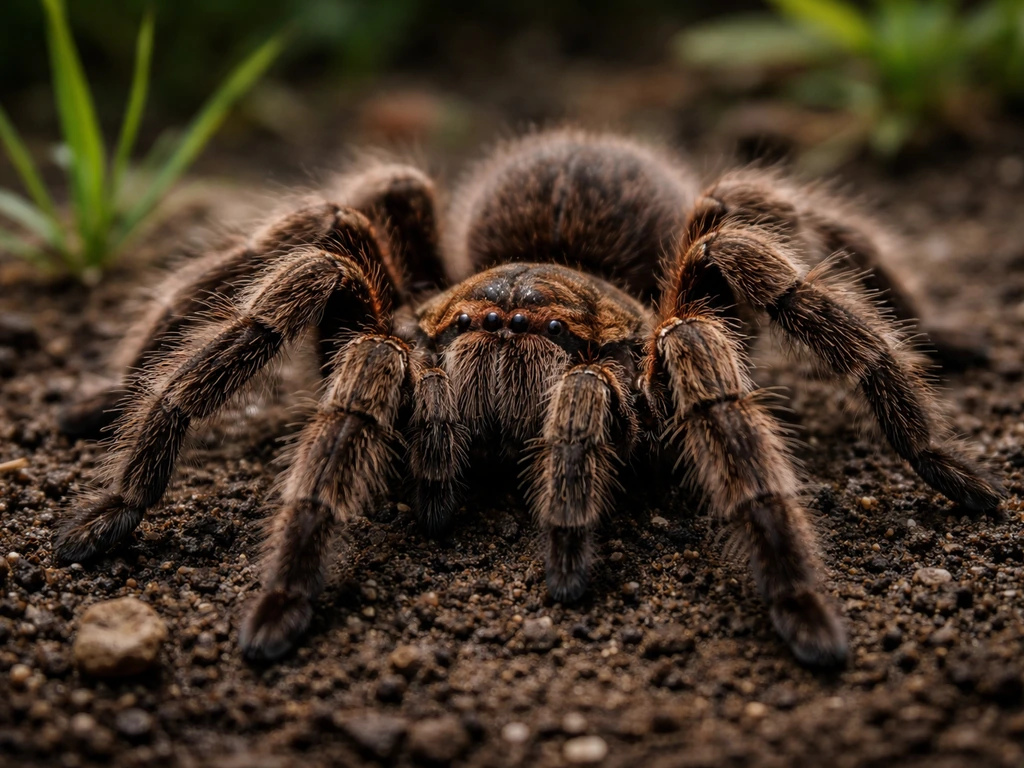
But here's the thing: most spiders people call "bird-eating" are a loose group of several tarantula species, not one single animal, and their sizes vary quite a bit depending on which species you're looking at, whether it's male or female, and how old it is.
What "bird-eating spider" actually means
The name is more of a label than a job description. It traces back to an 18th-century engraving by naturalist Maria Sibylla Merian showing a large tarantula consuming a hummingbird. That image stuck, and it gave an entire group of big tarantulas a dramatic reputation they haven't really earned. The Smithsonian's National Zoo notes plainly: "While their name has the term 'bird-eating' in it, they don't eat birds frequently." Guinness World Records agrees, stating that Theraphosa blondi "very rarely has been recorded attacking birds."
In practice, "bird-eating spider" and "birdeater" are common names applied to several large theraphosid tarantulas, most notably Theraphosa blondi (the Goliath birdeater), but also species like Lasiodora parahybana (the Salmon Pink Birdeater) and a handful of others. If you've been searching for "bird spider" or wondering can a spider eat a bird, you're almost certainly in the right territory, but the honest answer is that birds are not a standard part of these spiders' diets.
Typical size ranges: body length and leg span
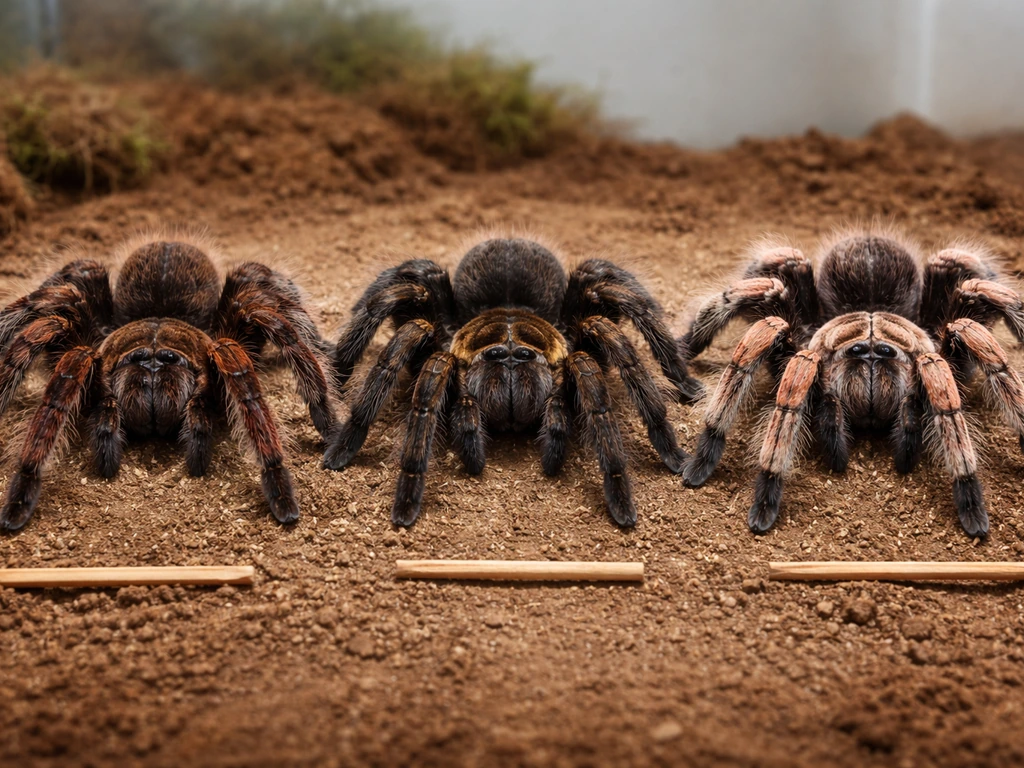
Because "bird-eating spider" covers multiple species, you'll see a real spread of sizes. Here's how the most commonly referenced birdeater tarantulas compare:
| Species | Common Name | Body Length | Leg Span |
|---|---|---|---|
| Theraphosa blondi | Goliath Birdeater | Up to 4.75 in (13 cm) | Up to 11 in (28 cm) |
| Lasiodora parahybana | Salmon Pink Birdeater | Up to 4 in (10 cm) | Up to 10 in (25 cm) |
| Theraphosa apophysis | Pinkfoot Goliath | Up to 4 in (10 cm) | Up to 10 in (25 cm) |
| Lasiodora klugi | Bahia Scarlet Birdeater | Up to 3.5 in (9 cm) | Up to 9 in (23 cm) |
The Goliath birdeater is the outlier at the top. It holds the Guinness World Record for the world's largest spider by mass and is the benchmark most size comparisons use. The Salmon Pink Birdeater is a close second and actually rivals the Goliath in leg span in some individuals. The others in the group are still enormous by any standard spider measure but sit a notch smaller than those two.
What changes spider size: sex, age, and how it's measured
If you look up bird-eating spider sizes in different places, you'll get different numbers. That's not sloppy reporting. It reflects real biological variation and some genuine confusion about measurement methods.
Sex makes a big difference
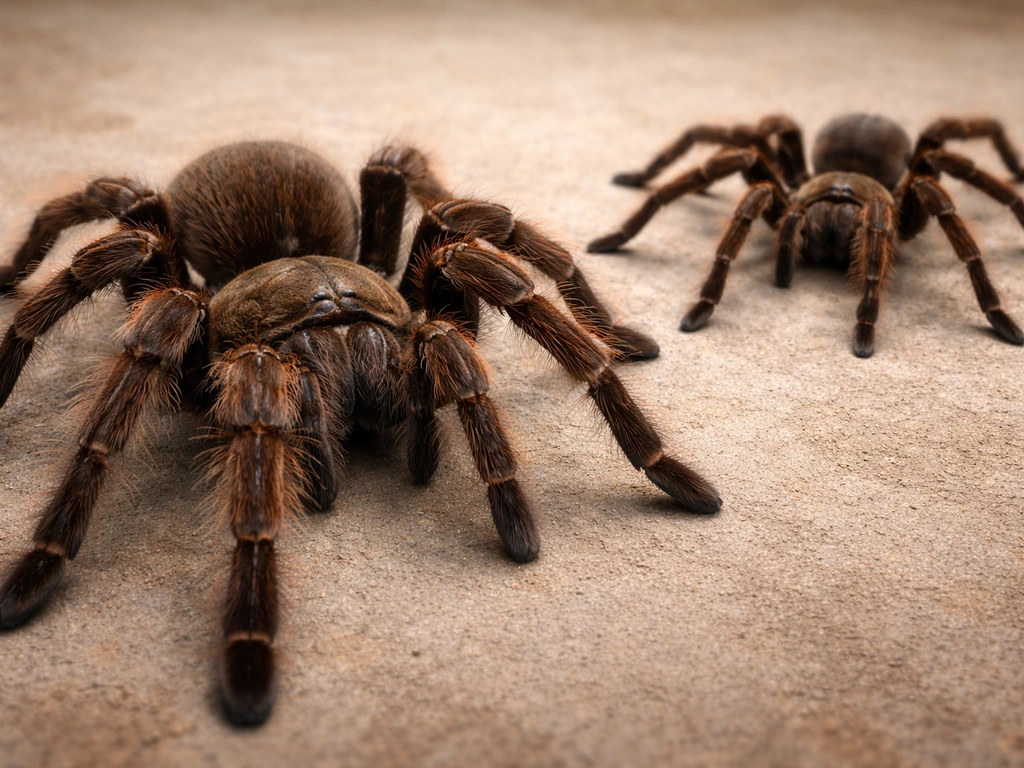
Female tarantulas in this group are significantly larger than males. A female Goliath birdeater consistently hits leg spans of 10 to 11 inches. Males of the same species rarely exceed 7 to 8 inches in leg span, and they also have shorter lifespans, typically dying within a year or two of reaching sexual maturity. When you see the record-setting size figures, you're almost always looking at a mature female.
Age and molting
Tarantulas grow by molting, shedding their exoskeleton and expanding before the new one hardens. Juveniles can look drastically different from adults, both in size and coloration. A young Goliath birdeater might have a leg span under 3 inches. Size estimates for "bird-eating spiders" almost always refer to fully mature adults, so if you've found a spider and it looks smaller than expected, age is likely why.
How the measurement is taken
Body length is measured from the front of the cephalothorax (the combined head and thorax section) to the tip of the abdomen, ignoring the legs. Leg span is measured diagonally from the tip of one front leg to the tip of the opposite back leg. These two numbers mean very different things, and mixing them up is one of the most common sources of confusion when people compare sizes online. Always check which measurement a source is using before you draw conclusions.
Is their size enough to catch birds near your feeders?
This is the question that really matters for backyard birders. The short answer: almost certainly not, and definitely not for any feeder scenario in North America or Europe.
Goliath birdeaters and their relatives are forest-floor hunters native to the rainforests of South America, primarily Venezuela, Brazil, Guyana, and surrounding regions. They hunt at night, mostly ambushing ground-dwelling insects, frogs, lizards, and small rodents. Audubon notes that because these spiders hunt primarily on the forest floor, they are simply unlikely to catch a bird under normal circumstances. Even the one documented case of a bird being caught by a Theraphosa blondi involved a female Common Scale-backed Antbird that was already tangled in a mist-net, a completely artificial situation that removed the bird's ability to escape.
So to be direct: if you're a backyard birder in North America worrying about a "bird-eating spider" showing up at your feeder and grabbing a chickadee, that scenario isn't realistic. These spiders don't live in temperate backyard habitats, and their hunting strategy doesn't involve perching birds. They're ambush predators at ground level, not aerial hunters. The question of which spider species can actually eat a bird has a longer answer, but birdeaters under ordinary conditions don't routinely make the list.
It's also worth noting that birdeaters are not the only large invertebrates that sometimes get associated with bird predation. If you've seen claims about other big arthropods going after birds, the article on whether a praying mantis can eat a bird covers another commonly searched example with the same evidence-based lens.
How to identify the spider you found
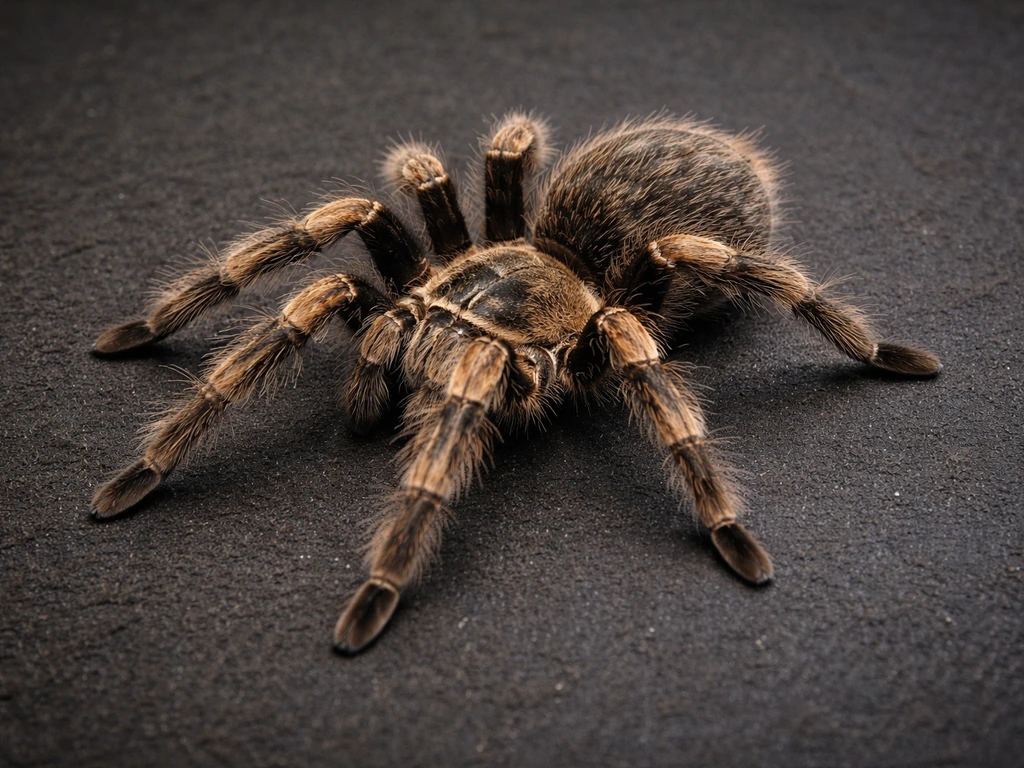
If you've spotted a very large spider and want to know whether it could be a birdeater, here are the quick visual cues to check. For a much more detailed breakdown, the guide on what a bird-eating spider looks like walks through coloration, hair patterns, and body shape across multiple species.
- Overall color: Goliath birdeaters are dark brown to black, often with a slight golden-brown sheen from their hair covering. The Salmon Pink Birdeater has distinctive pinkish-orange on the legs and abdomen.
- Hair coverage: True birdeater tarantulas are densely hairy across the body and legs. This is not the smooth, glossy look of a wolf spider or fishing spider.
- Size reality check: If the leg span is under 5 inches, it's almost certainly not a Goliath. North American large spiders (wolf spiders, fishing spiders) top out around 3 to 4 inches in leg span.
- Location: If you're in North America, Europe, or Australia, you are not looking at a wild Goliath birdeater. You'd need to be in northern South America for a wild encounter.
- Body shape: The cephalothorax is large and broad, and the abdomen is rounded and heavy-looking, especially in well-fed females.
- Defensive behavior: Birdeaters can stridulate (produce a hissing sound by rubbing leg hairs) and will flick urticating (irritating) hairs from their abdomen when threatened. If a large spider is making noise and you feel itchiness on your skin, that's a significant clue.
One species that sometimes gets confused with birdeaters in online searches is the camel spider. These are very different animals, but their size and dramatic photos cause frequent mix-ups. The comparison between a camel spider vs bird eating spider is a useful read if you've seen alarming photos circulating on social media and aren't sure which animal you're actually looking at.
Safety and next steps for backyard birders and pet owners
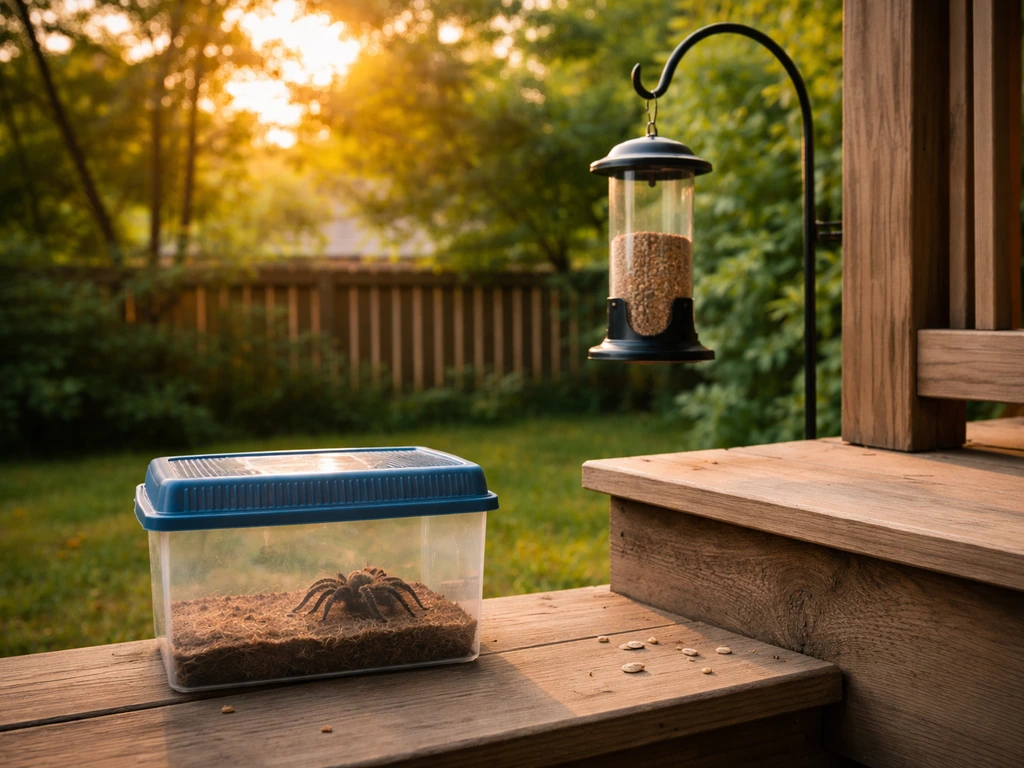
If you're a backyard birder or pet owner reading this because you're genuinely worried about spiders near your feeders, here's the practical takeaway: wild birdeater tarantulas are not a threat you need to plan for in any temperate climate. Your feeders and the birds using them face no realistic risk from any spider native to North America or Europe.
That said, if someone in your household keeps a birdeater tarantula as a pet (they are sold in the exotic pet trade), there are a few common-sense precautions worth following around birds, small pets, and children:
- Keep enclosures securely locked. Birdeaters are strong and persistent. A loose tarantula in a home with a pet bird, hamster, or young child is a stress situation for everyone involved.
- Handle with care or not at all. Urticating hairs from these spiders cause real skin and eye irritation. Wear gloves if you must handle one, and avoid rubbing your eyes afterward.
- Don't place the enclosure near bird cages. Even the vibration and smell of a large spider can stress small pet birds, which can affect their eating and health.
- If you find an escaped exotic tarantula outdoors, do not attempt to catch it barehanded. Contact a local reptile or exotic animal rescue. Large tarantulas are not dangerous to healthy adults in the way venomous snakes are, but the urticating hairs can cause serious eye damage.
- If a large, unfamiliar spider is near your yard in a temperate climate, photograph it from a safe distance and use a regional spider ID resource or iNaturalist to identify it before assuming it's something exotic.
The bottom line: the "bird-eating" label is largely historical mythology rooted in one striking 18th-century illustration. These are genuinely enormous, impressive spiders, but their size is not a reliable predictor of bird predation, and they pose no meaningful risk to backyard birds in any climate where you'd normally be running a feeder. Know what you're looking at, take sensible precautions if you encounter one in an exotic pet context, and don't let the name drive more fear than the facts support.
FAQ
Is the “dinner plate” size for a bird-eating spider based on leg span or body length?
It refers to overall scale using leg span comparisons, not abdomen-to-cephalothorax body length. If someone quotes one number and the picture looks “smaller,” they may be mixing measurement types, so ask whether the source is reporting body length or diagonal leg span.
How can I tell a male versus a female birdeater tarantula when estimating its size?
In most common birdeater species, females are the larger, longer-lived adults, and males typically have shorter adult lifespans after maturity. If you’re seeing a smaller adult with a more slender look and you know it has reached maturity, it’s more likely to be a male, which helps explain size differences.
If I find a spider with a leg span under 3 inches, does that mean it cannot be a birdeater?
Not necessarily. Juveniles molt and start much smaller than adults, so early-stage individuals can look far below adult “record” figures. Size expectations in most articles assume fully mature females, so age is the key variable.
Why do different websites list very different sizes for “bird-eating spiders”?
They may be using different measurement methods (body length versus leg span), quoting different species included under the common name, or describing individuals at different life stages. Some listings also focus on exceptional specimens rather than typical adult averages.
Can a birdeater catch birds if it’s indoors, near a window, or in a cage area with wild birds?
Risk is still low for “wild bird at a feeder” scenarios, but indoors changes the encounter dynamics. If a pet tarantula has access to open air, escape paths, or a situation where a bird becomes trapped, movement gets restricted and predation becomes more plausible than it would be outdoors.
What feeding behaviors would be a red flag if a birdeater pet owner is worried about accidental contact with birds?
A red flag is any feeding setup that leaves prey unattended long enough for the spider to roam, or any enclosure that allows the spider to climb near openings where birds could enter or get trapped. Keeping an escape-proof lid and avoiding open-air feeding in the same room as birds reduces risk.
Do birdeater tarantulas hunt from the ground only, or can they climb up enough to reach birds?
They are primarily forest-floor ambush hunters, but tarantulas can climb, especially if their enclosure or surroundings offer surfaces to scale. Even so, routine catching of perching birds still isn’t their normal pattern, and their “bird-eating” label does not predict backyard feeder behavior.
How should I measure a spider’s size if I want to compare it to birdeater numbers online?
Measure body length from the front of the cephalothorax to the abdomen tip, ignoring legs, and separately measure leg span diagonally from one front leg tip to the opposite back leg tip. Using both lets you match the metric the source is likely using.
What’s the most common mix-up between “bird-eating spider” and other animals people post online?
The camel spider (often called a “solifuge”) is frequently confused because photos are dramatic and size claims vary. If the animal has the wrong body shape or looks like it has very different proportions from a tarantula, it’s likely not a birdeater.
If I live in North America or Europe, should I assume no tarantula could ever harm birds at all?
The specific risk described for birdeater-type tarantulas is very low in temperate backyard settings because of habitat and hunting behavior. However, any large spider can potentially cause injury to very small animals if a rare trapping situation occurs, so the safety step is still to manage access and avoid letting pets or birds become stuck near a spider.