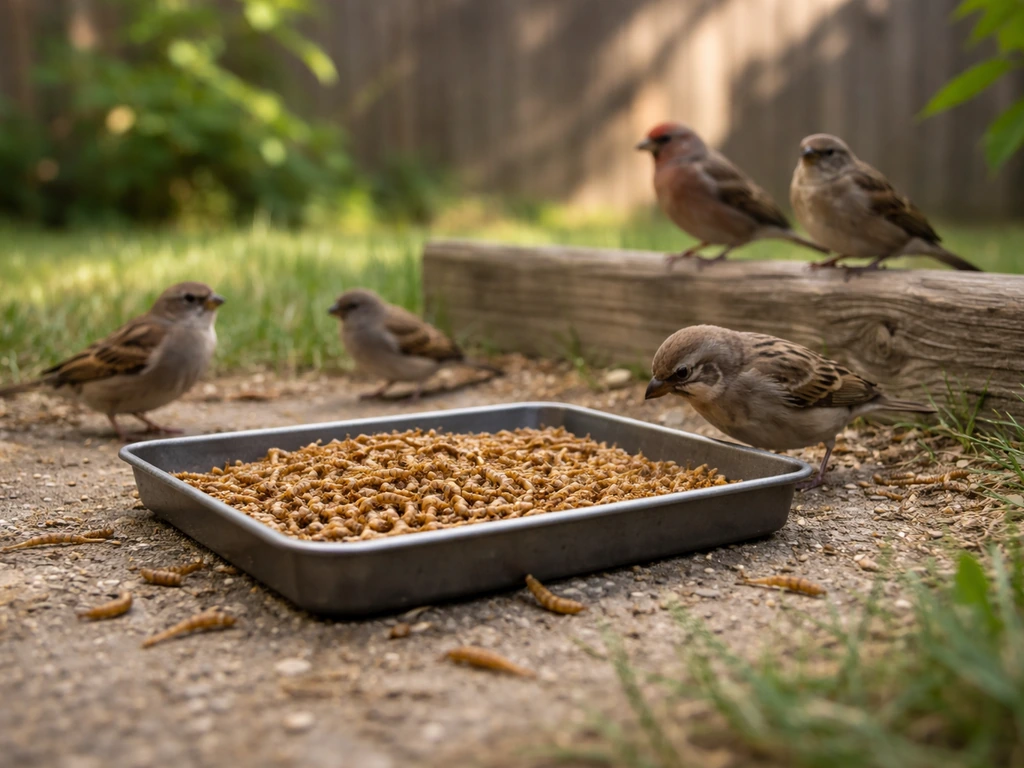
The phrase 'when a bird is alive it eats ants, when the bird is dead ants eat the bird' is a widely circulated moral proverb about time, opportunity, and karma. Goodreads’ quote page reflects that this proverb-like wording about living versus dead birds is widely circulated online as a karma or time moral message.
When a Bird Is Alive It Eats Ants: Meaning and What Birds Do

Maya Bennett
24 May 2026
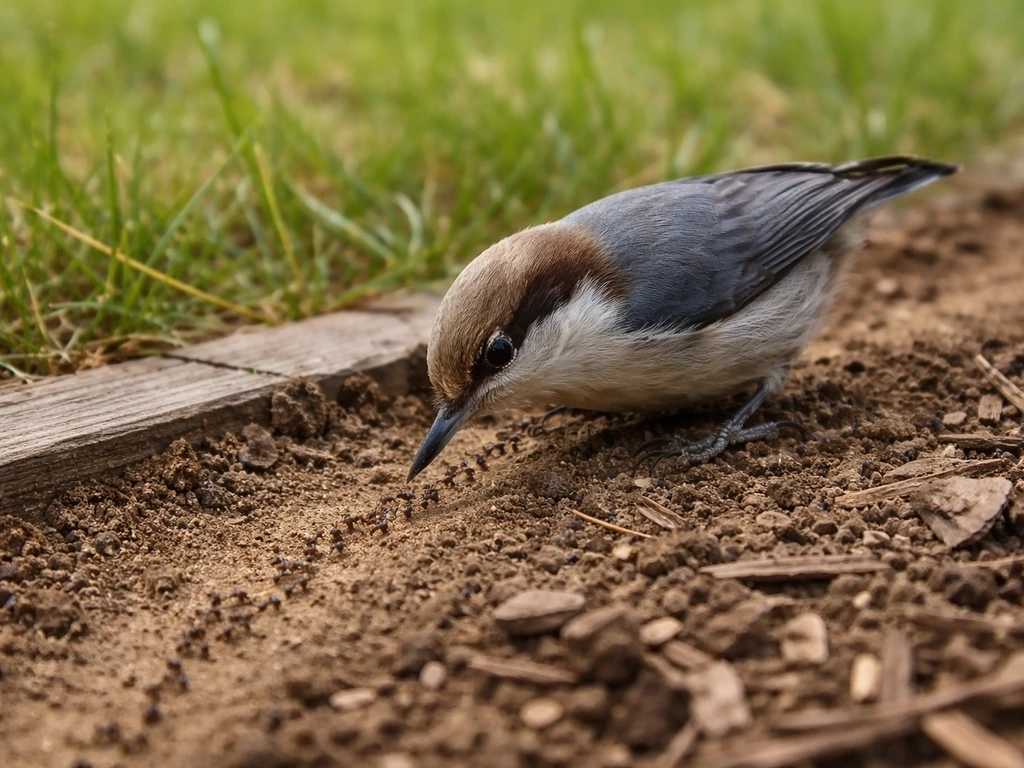
But here's the thing: it's also literally true. Many bird species do eat ants, and if you have birds foraging on the ground in your yard, there's a real chance you're watching that proverb play out in your mulch bed right now. This guide covers what the phrase actually means, which birds eat ants and how to spot the behavior, and how to manage ants around your feeders without poisoning the very birds you're trying to watch.
What the phrase actually means: literal vs. proverb
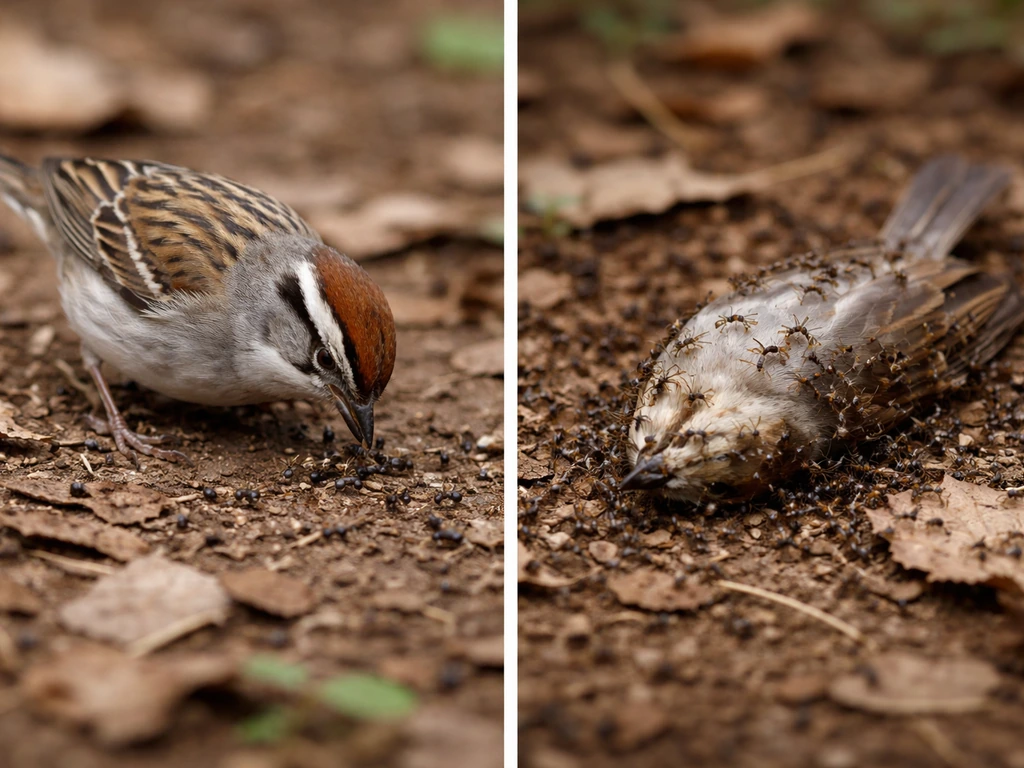
The full saying goes: 'When a bird is alive it eats ants. When the bird is dead, ants eat the bird. Time and circumstances can change at any moment.' It circulates widely online, often attributed loosely to teachings about karma or moral law, but it doesn't have a single identified historical author. Think of it less like a Shakespeare quote and more like a piece of folk wisdom that got polished up and shared across social media.
The 'karma' angle comes from how the proverb flips the predator-prey relationship. a bird eats a worm who is the predator predator-prey relationship. The bird that had the power to eat ants eventually becomes food for those same ants. That reversal is used as a teaching hook: don't be arrogant in your position, don't waste the time you have, and recognize that circumstances change. Some sites frame it as 'what goes around comes around,' but that's more of an overlay than the core message. The core message is simpler: use your time and opportunities while you have them.
The literal ecology underneath the proverb is completely accurate, which is part of what makes it stick. Birds really do eat ants, and ants really do consume dead birds. That factual grounding gives the moral lesson its weight. So when someone searches this phrase, they may be looking for the proverb's meaning, confirmation that birds eat ants, or both.
Do birds really eat ants? Yes, and here's who's doing it
Birds eating ants is well-documented, and the behavior ranges from opportunistic snacking to a full evolutionary strategy. The most specialized ant-associated birds are antbirds (family Thamnophilidae), found in the tropics. Antbirds (family Thamnophilidae) are the most specialized ant-associated birds, found in the tropics. These species follow marauding army ant swarms not necessarily to eat the ants themselves, but to catch the insects, lizards, and other small prey that the swarm flushes out ahead of it. Over 50 bird species regularly follow army ant raids in New World forests, and for some specialists, a majority of their daily food comes from swarm events. That's a legitimate dietary dependency that evolved entirely around ants.
For backyard birders in North America, the ant-eating species are more familiar. Northern mockingbirds include ants in their diet alongside berries and other insects. For example, species like northern mockingbirds and Carolina wrens are known to eat mealworms and other insects. Carolina wrens forage low to the ground near brush piles, using their curved bills to flip leaf litter and grab whatever is underneath, including ants. Robins, flickers, and sparrows are all known to take ants opportunistically. The common flicker is arguably the most committed ant-eater among backyard birds, regularly hammering into lawns specifically to reach ant colonies. The common flicker is often cited as a bird that grabs and holds worms with its strong bill.
| Bird | Ant-eating behavior | Where to look |
|---|---|---|
| Northern Flicker | Actively digs into ground for ants; a major part of its diet | Open lawns, edges near trees |
| Northern Mockingbird | Opportunistic; ants among many insect prey | Shrubs, open ground, feeders nearby |
| Carolina Wren | Ground forager; flips leaf litter with curved bill | Brush piles, mulch beds, log edges |
| American Robin | Takes ants along with worms during ground foraging | Lawns, garden beds |
| House Sparrow | Opportunistic insect eater including ants | Gravel, paved edges, feeders |
| Antbirds (tropical) | Specialized swarm followers; prey flushed by ants | Forest understory near army ant swarms |
It's worth noting a behavioral distinction that comes up in research: some birds follow ant swarms to eat the ants directly, while others use the swarm as a hunting aid to catch other prey. Both count as 'birds interacting with ants,' but the diet impact is different. For most backyard species, they're eating the ants themselves, not using them as beaters.
How to tell if your yard birds are actually eating ants
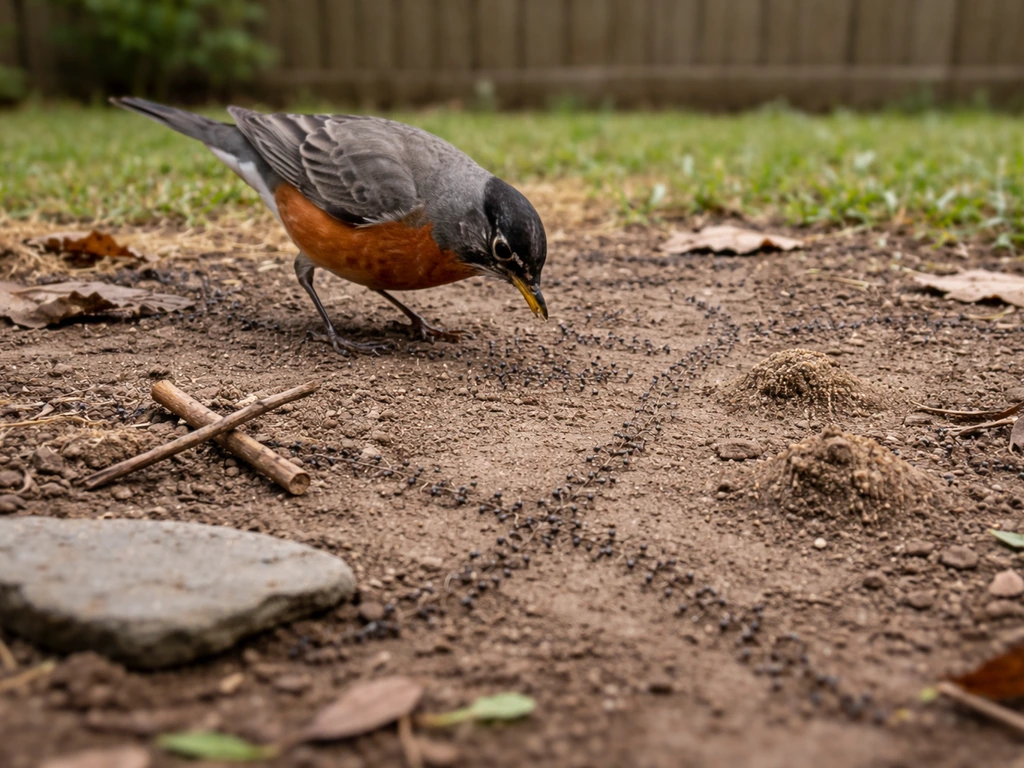
You don't need a biology degree to figure this out. You just need to watch for a few specific behaviors and match them to where your ant activity is happening.
- Look for ground foraging near ant trails: If you see a robin, flicker, or wren repeatedly returning to the same patch of lawn or mulch bed, check that spot for ant activity. Ant trails often run along pavement edges, under garden borders, or near the base of trees.
- Watch for bill-probing into soil: Flickers in particular will drive their bills into the ground repeatedly, pulling up ants. This is distinct from how they'd hunt for worms, which involves a longer sideways pull.
- Check for 'anting' behavior: Some birds deliberately rub ants on their feathers (called anting). If you see a bird pressing its wing to the ground and rubbing ants through its plumage, that's a strong confirmation ants are present and the bird knows it.
- Time your observations: Ant activity peaks on warm mornings, especially after rain. If ground-foraging birds appear predictably during warm mid-morning windows, correlate that timing with where you see ant trails.
- Log it: Use eBird to record the species and behavior with a note in the comments field. iNaturalist accepts photo observations of bird behavior and can help confirm species ID if you're unsure. Separate observations per individual bird improve accuracy.
If you want to be more systematic, mark the ant trail locations with a small flag or stone, then check whether birds are visiting those exact spots within the next few mornings. That overlap between ant activity and bird foraging is your confirmation.
The karma angle: what's true vs. what's myth
The proverb is used as a karma teaching tool, and that's a legitimate rhetorical choice. The reversal of predator and prey is real, and the message about not wasting opportunity is universal and practically useful. What it isn't is a documented spiritual law with measurable outcomes. The 'what goes around comes around' framing gets layered on top of this proverb by various wellness and spirituality sites, but that interpretation goes beyond what the proverb itself says.
The ecological truth underneath it is solid: birds that eat ants when alive become resources for decomposers, including ants, when they die. That's not karma in a supernatural sense; it's nutrient cycling and food web dynamics. The proverb earns its moral weight from the factual grounding, not from a mystical law. If you're using it to teach kids about humility or not wasting time, the literal biology supports the lesson perfectly without needing to invoke anything supernatural.
One common myth worth clearing up: some versions of the proverb suggest the bird 'deserves' its fate or that ants are getting 'revenge.' That's poetic anthropomorphism. Ants consuming a dead bird is scavenging behavior, not retribution. The moral lesson works as an analogy, not as a claim about how nature assigns justice.
Safety risks: ants, pesticides, and your feeders
This is where the practical stakes get real for backyard birders. If you have ants near your feeders or in your yard and you reach for a pesticide, you may be creating a much bigger problem than the ants themselves. OSHA warns that handling dust-form treatments (including silica-containing powders) can create inhalation hazards and recommends minimizing exposure: https://www.osha.gov/silica-crystalline OSHA — Silica, crystalline (overview).
Pesticide risks to birds and pets
Fipronil, a common active ingredient in many ant bait products, has documented toxic effects in animals and has been shown in peer-reviewed research to cause direct and indirect harm to vertebrate wildlife, including birds. Neonicotinoid insecticides, another common class used in yard ant control, have been identified by the American Bird Conservancy as a significant avian health concern, with evidence of sublethal effects even at low exposure levels. If birds in your yard are actively foraging on ants and you've recently treated your lawn or garden with either of these compound types, the birds may be ingesting treated ants or contaminated prey.
Pets face the same exposure risk. Dogs and cats that walk through recently treated areas, lick their paws, or investigate bait stations can pick up toxic doses. The EPA recommends using bait stations that physically isolate the bait so that non-target wildlife and pets cannot access it, and requires following label directions exactly, including timely removal and disposal of used bait.
Ants near feeders: what actually happens
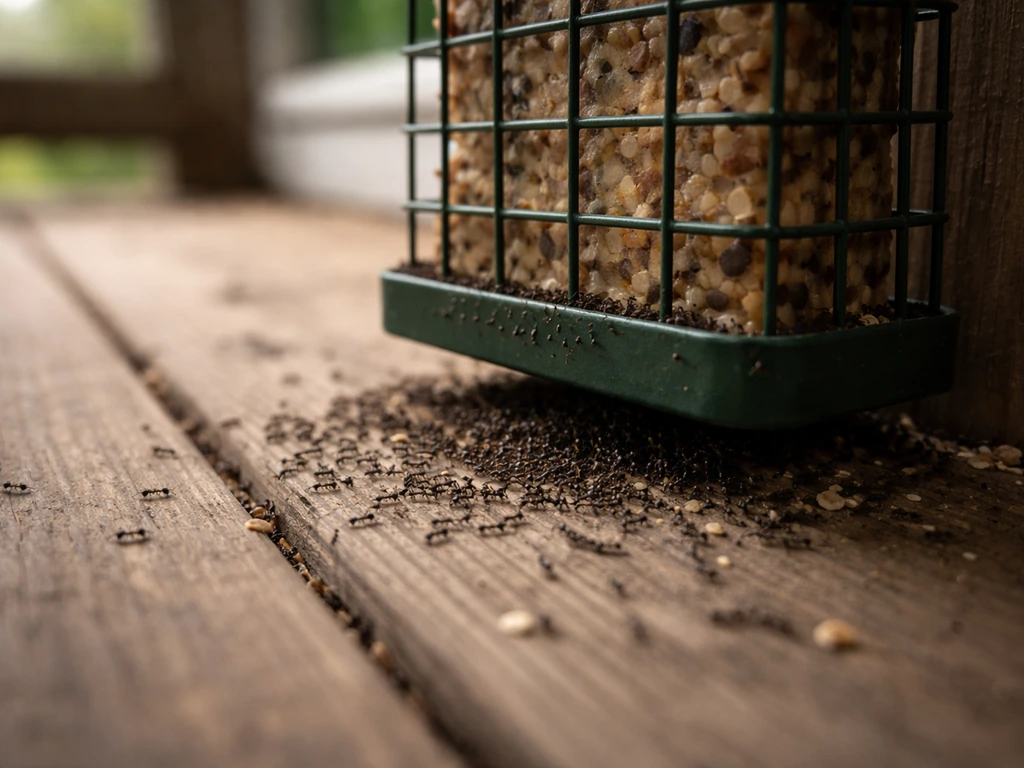
Ants are attracted to spilled seed, suet, and nectar feeders. This is mostly a nuisance issue rather than a direct danger to birds, but it can contaminate nectar with formic acid and cause birds to abandon feeders. The reflex to spray the feeder pole or surrounding area with insecticide is understandable but genuinely risky. Insecticide residue on feeder poles and bases can transfer to birds' feet and feathers.
Ant control that won't hurt your birds or pets
The good news is that effective ant management around feeders and yards does not require any pesticide that poses significant risk to wildlife. Integrated pest management (IPM) principles prioritize physical and habitat-based controls first, with targeted chemical use only as a last resort.
- Ant moats for feeders: A water-filled moat hung above the feeder creates a physical barrier ants cannot cross. This is the single most effective and completely non-toxic solution for hummingbird and nectar feeders.
- Baffles and pole guards: For seed feeders, a pole-mounted baffle prevents ants (and squirrels) from climbing up. No chemicals needed.
- Remove food sources first: Clean up spilled seed under feeders daily. Texas A&M AgriLife Extension identifies food source removal as the most important first step in ant management. Less food means fewer ants, period.
- Caulk and seal entry points: If ants are entering your home or a storage area, seal cracks and crevices around the foundation. This stops the problem at the source without any pesticide.
- Diatomaceous earth (with caution): Food-grade diatomaceous earth (DE) can be applied as a physical barrier around feeder bases. It kills ants by abrasion but is not acutely toxic to birds or mammals. However, the dust form is a respiratory irritant, NIOSH lists it as a potential inhalation hazard, and you should apply it carefully, avoiding windy conditions, and never apply it where birds bathe or where it will be heavily inhaled by pets.
- Targeted bait stations, placed correctly: If chemical control is genuinely necessary, use enclosed bait stations placed in locations that birds and pets physically cannot access. EPA guidance specifically recommends tamper-resistant bait stations for this reason. Choose borate-based baits over fipronil or neonicotinoid-based products where possible.
- Timing matters: Apply any ant control in the evening when bird activity is low and allow time for product to dry or settle before morning foraging resumes.
One approach worth skipping entirely: broad spray insecticides applied to lawns or garden beds near areas where birds forage. If flickers or robins are actively hunting insects in your lawn, a spray treatment directly contaminates their food source and their foraging habitat. The benefit of controlling ants does not outweigh the risk of poisoning the birds you've been watching.
What to do in your yard today
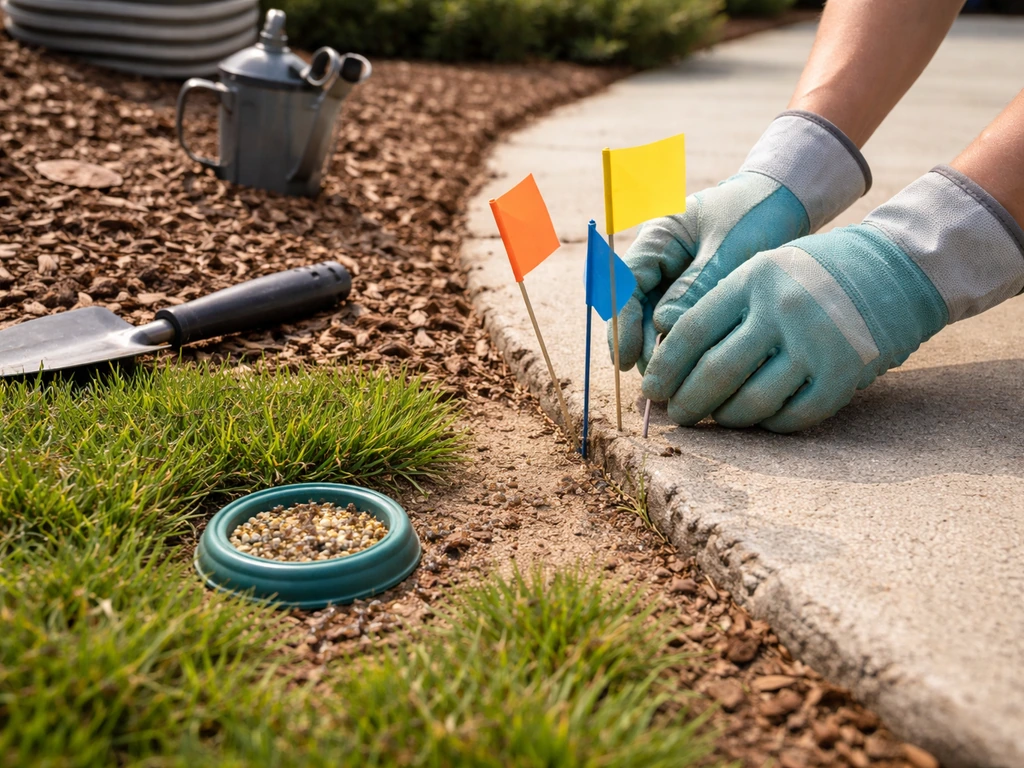
Here's a practical checklist you can run through this morning or weekend to apply everything above in your actual yard.
- Walk your yard and identify active ant trails, especially near feeder bases, mulch beds, and pavement edges. Note the locations and times you see them.
- Watch for ground-foraging birds near those same locations for the next three mornings, ideally in the first two hours after sunrise when bird activity peaks.
- Check your feeders for ant access points. If ants are reaching your nectar or suet feeders, install an ant moat or baffle before reaching for any spray.
- Clean up any spilled seed under feeders. Even a daily 60-second sweep reduces ant attraction significantly.
- If you've recently used any lawn insecticide (especially fipronil or neonicotinoid-based products), check the label's re-entry interval and keep birds away from that area by temporarily removing nearby feeders until the interval has passed.
- If you want to document what you're seeing, open eBird or iNaturalist on your phone and log the species and behavior. Note whether the bird was foraging on the ground, probing soil, or visiting known ant trail locations. These records are useful and genuinely contribute to citizen science data.
- If you decide to use diatomaceous earth, apply it in still air conditions in the evening, wear a dust mask, and avoid applying near bird baths or areas where birds dust-bathe.
The proverb's real lesson for backyard birders is actually pretty practical: the birds in your yard are doing exactly what they're built to do while they can. Your job is to not interrupt that with a chemical solution to a problem that a moat, a baffle, and a broom can fix just as well. Watch the birds, identify what they're eating, document it if you're curious, and manage pests in ways that keep the whole system working. If you were actually trying to identify what bird eats worms, keep in mind that many backyard birds switch diets, so watching feeding behavior by season matters too.
FAQ
If I see birds around an ant trail, does that always mean they are eating the ants?
Not necessarily. Birds can eat ants directly, but in some cases they are using ants indirectly by feeding on insects and small animals that get flushed out by ant activity (for example, around swarm events). The quick check is what the bird is actually holding or swallowing when it pauses, if you see ants in the bird’s bill, it is direct ant foraging.
How can I tell whether a bird is truly targeting ants versus just walking through an area with ants?
Watch for ant-focused foraging: birds that repeatedly hammer, probe, or flip leaf litter in specific spots are likely targeting ants or ant larvae. If instead the bird is mostly taking seed or suet and only briefly passes the ant area, the ants may be incidental and you are seeing two activities that overlap rather than a diet switch.
Will the birds in my yard keep eating ants year-round?
Birds can change what they eat by season, age, and local conditions. Even common ant-eaters may shift toward berries, caterpillars, or other insects when those foods are abundant. A practical way to confirm what is happening in your yard is to note bird species and behavior for 3 to 7 days, then repeat after a weather or seasonal change.
Could bird exposure happen even if I only use ant bait and not spray pesticides?
Yes, and it’s one reason ant bait can be risky. If ant bait attracts birds’ prey insects, or if birds ingest ants carrying bait, toxic exposure can occur even without direct contact with the bait station. When using any product, place bait where birds cannot reach it, keep pets away, and remove any spent bait exactly as the label directs.
What are the safest non-chemical ways to stop ants near feeders without harming birds?
For many yards, the best first step is physical exclusion around food and habitat cleanup. Use baffles on feeders, keep ground feeders clean and elevated where possible, sweep up spilled seed daily, and manage vegetation or leaf litter where birds probe. These reduce both ant access to food and the need for birds to forage in risky spots.
My birds stopped visiting the feeder after ants showed up. What should I fix first?
If birds abandon feeders after ant activity, it is often because ants are competing for food or contaminating nectar and suet areas, not because the birds are “scared.” In that situation, switch to feeder styles that reduce ant access (smooth poles, ant moats, frequent cleaning) rather than applying insecticides directly to feeder poles or bases.
How soon after treating for ants could birds be affected?
Yes. A bird is more likely to pick up treated ants or contaminated prey soon after treatment, especially during the first days when bait or residues are still active. If you used a pesticide recently, delay feeder placement near treated zones, thoroughly rinse feeder parts you can safely clean, and avoid disturbing treated soil while birds are actively foraging.
Is it accurate to interpret the second half of the proverb as ants “getting revenge”?
The “ants are getting revenge” idea is a storytelling overlay. In nature, ants consuming dead birds is typically scavenging and nutrient cycling, not retribution. Use the proverb as an analogy for changing circumstances, but avoid assuming nature is “assigning justice.”
What should I do if birds keep returning to the same ant-heavy spot even after cleanup?
Yes. Some ant species aggressively defend food sources, and birds can get stuck repeatedly foraging at the same spot. If you notice persistent ant activity at a single bird-foraging location, reduce the attractant (spilled seed, dirty trays) and move the bird-friendly food source farther away until ant pressure drops.
Can I identify the bird just by watching it eat ants?
If you are trying to identify a bird based on ant-eating behavior, behavior alone can mislead because multiple species probe the ground. Use at least two additional cues, size and shape, call or song, and what else they take (for example, suet versus seed). Also note time of day, since many ant-foraging bouts cluster in morning or late afternoon.
Next Article
What Bird Eats Mealworms? Backyard Guide to Dried Worms
Learn which backyard birds eat dried mealworms and how to offer them safely with feeders, timing, and troubleshooting ti