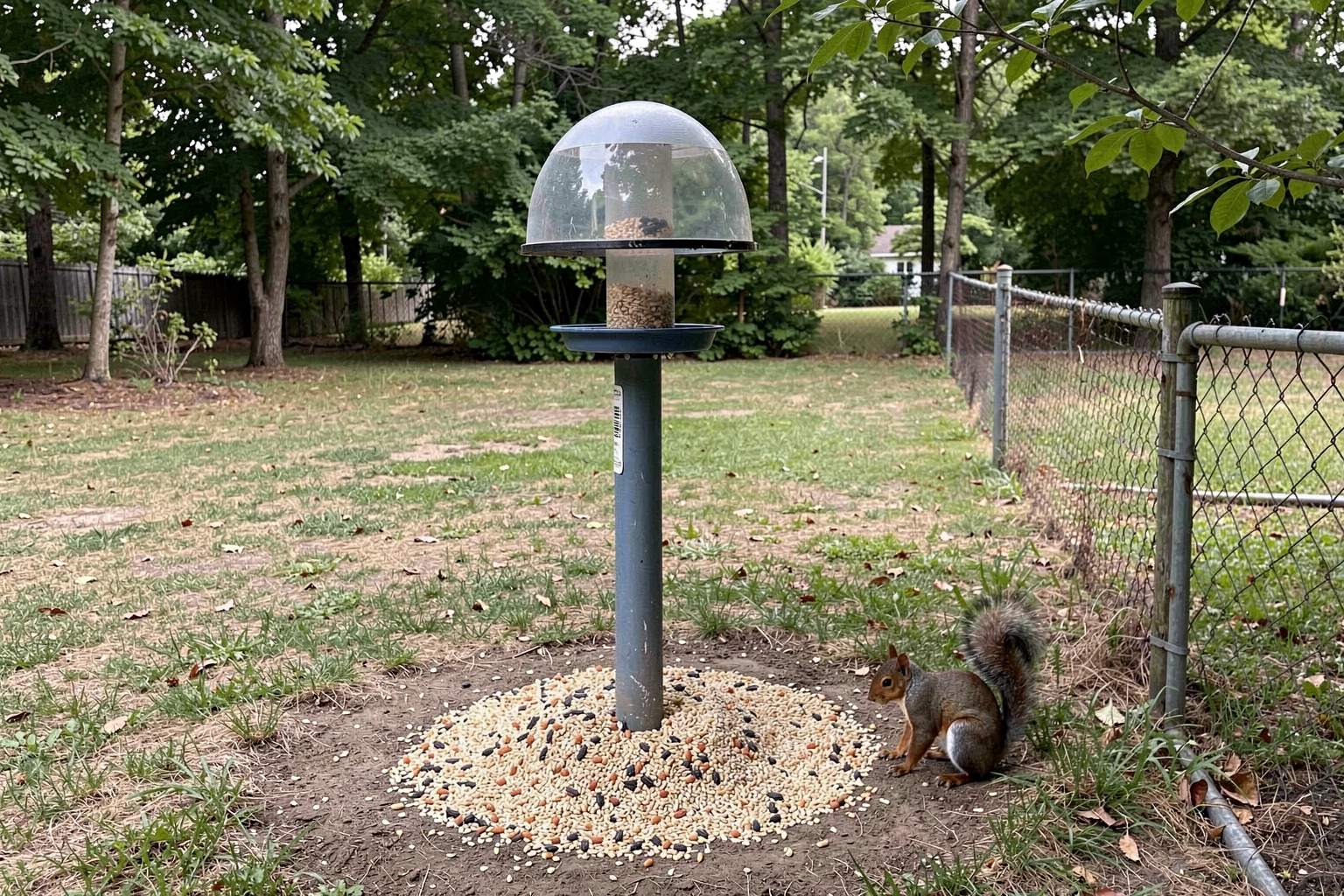
Yes, chipmunks do eat bird eggs
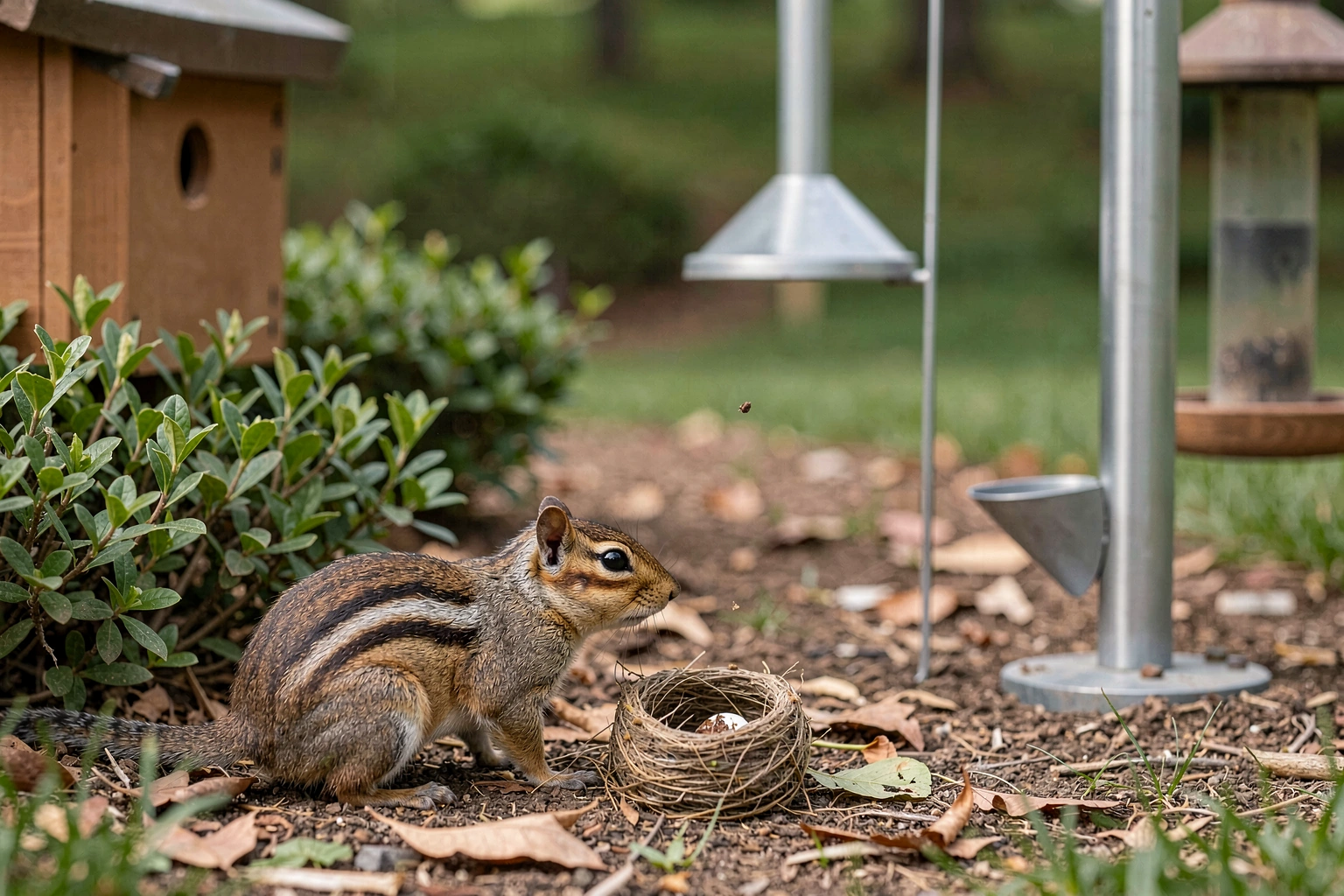
Chipmunks absolutely eat bird eggs, and it happens more often than most backyard birders expect. Eastern chipmunks (Tamias striatus) are documented egg predators in multiple peer-reviewed studies, including an artificial-nest experiment that confirmed chipmunk predation on both quail and house sparrow eggs, and field observations of chipmunks taking eggs and young from active nests in Indiana. The Maine Department of Agriculture even lists egg predation explicitly on its chipmunk pest page. So if you have a nest going missing in your yard and chipmunks are around, they are a very real suspect.
This isn't a freak occurrence either. Research published in Nature found that chipmunks can be significant enough egg predators that ground-nesting birds actually avoid nesting in territories with heavy chipmunk activity. That's a meaningful behavioral shift, and it tells you chipmunks aren't just occasional opportunists grabbing a stray egg. They're regular enough at it to shape where birds choose to build nests in the first place.
What chipmunks normally eat and why eggs end up on the menu
Chipmunks are primarily seed eaters. Their usual diet is heavy on nuts, seeds, berries, fruit, and mushrooms. Mass Audubon adds insects, insect larvae, slugs, snails, and earthworms to that list. The Maine DACF also includes grains and salamanders. The point is that chipmunks are opportunistic foragers, not strict vegetarians. They eat whatever is calorie-dense and easy to grab.
Bird eggs fit that description perfectly. They're high in protein and fat, easy to crack open, and often found at or near ground level where chipmunks and squirrels already spend most of their time. If a chipmunk stumbles across a nest while foraging, there's little stopping it from taking an egg. Spring and early summer are when this is most likely to happen, because that's when birds are actively nesting and chipmunks are out of torpor and aggressively building their food caches.
How to tell if a chipmunk is the one raiding your nest
Identifying the actual predator is the most important step before you do anything else. A lot of animals eat bird eggs, and the fix for a chipmunk problem is different from the fix for a snake or a crow problem. Here's how to narrow it down.
Look at the damage pattern
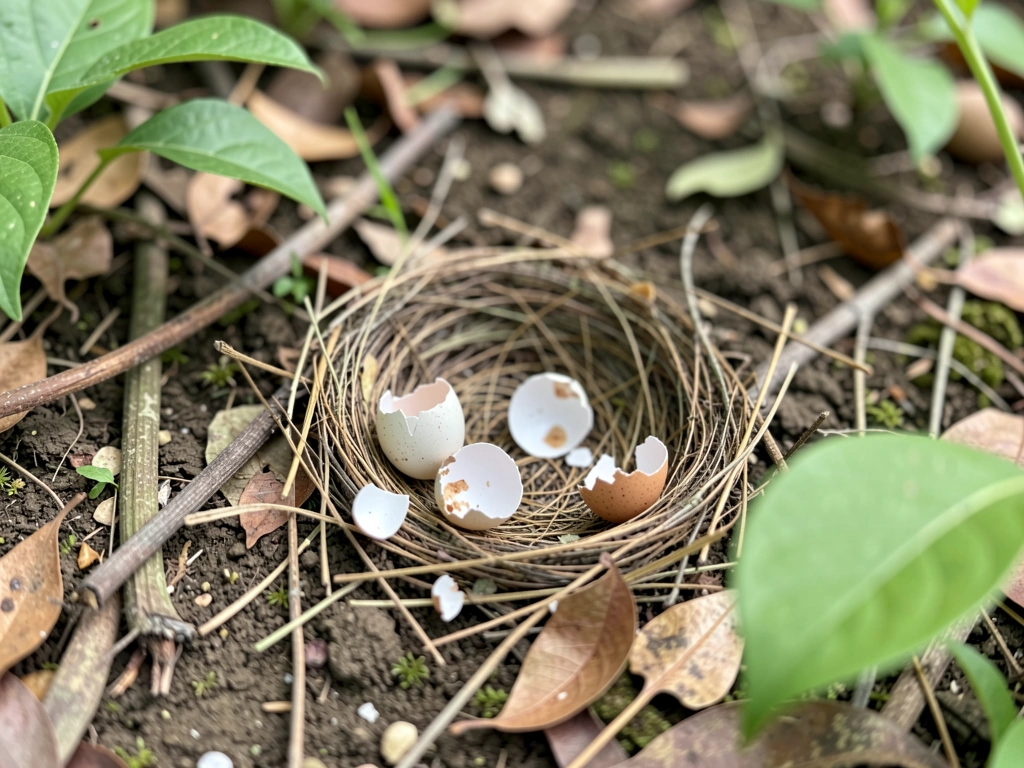
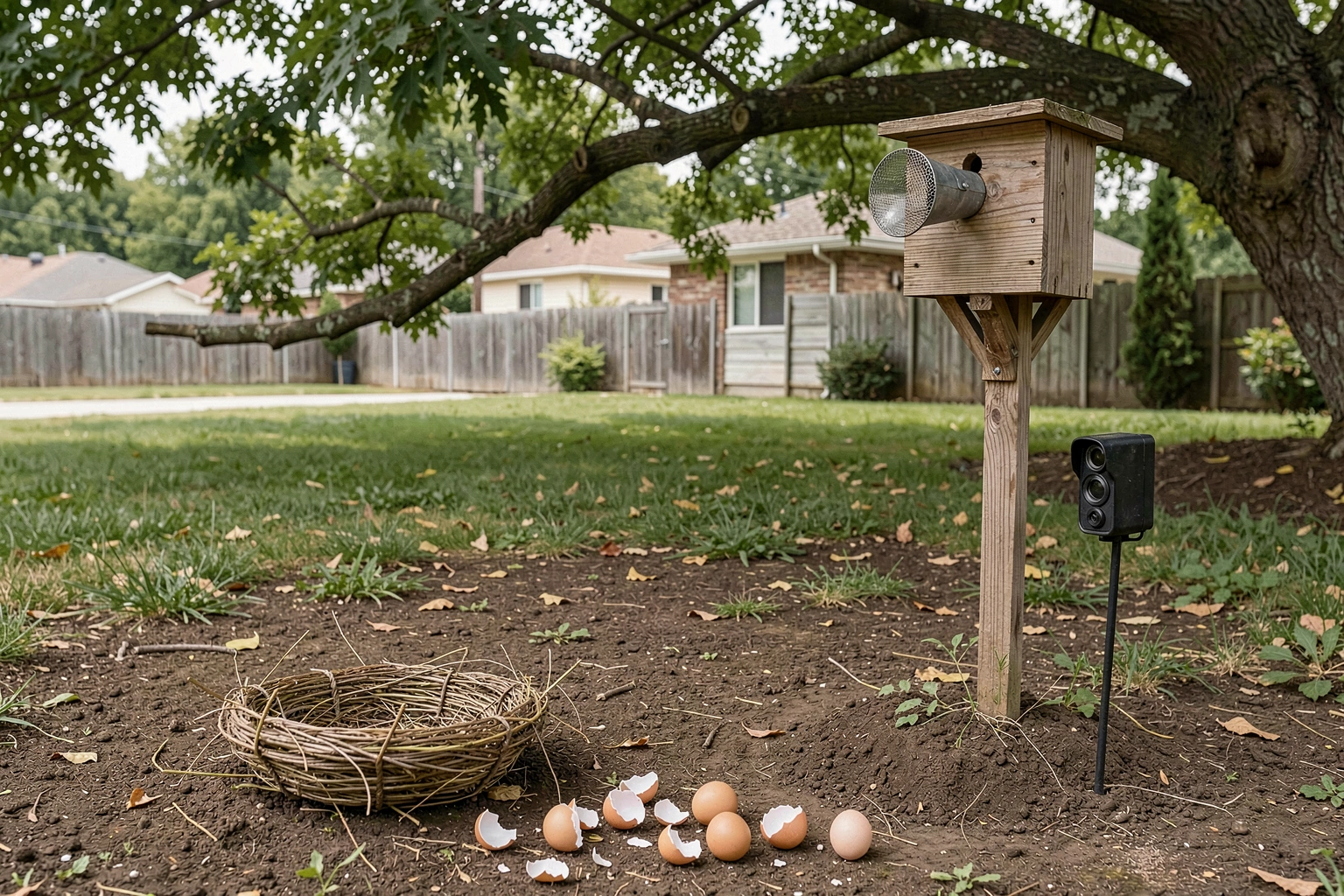
Chipmunks leave distinctive signs. Because they're small mammals with teeth, they tend to crack or gnaw shells rather than puncture them cleanly. Research on artificial-nest depredation studies notes that small-mammal attackers leave different tooth and bite marks compared to birds, which create puncture holes, or snakes, which typically swallow eggs whole with no shell fragments left behind. If you find shell pieces with rough, chewed edges near or below the nest, a small mammal like a chipmunk is a strong candidate.
Compare your suspect list
| Predator | Egg damage signs | Typical nest height targeted | Active time |
|---|
| Chipmunk | Cracked/gnawed shells, fragments near nest or on ground | Ground to low shrub | Daytime |
| Squirrel | Similar gnawed shells; may gnaw into nest box entrance | All heights; will climb | Daytime |
| Snake | Eggs gone with no shell fragments; nest undisturbed | Ground to mid-height | Daytime or night |
| Crow/Jay | Punctured shells, may carry eggs away | All heights | Daytime |
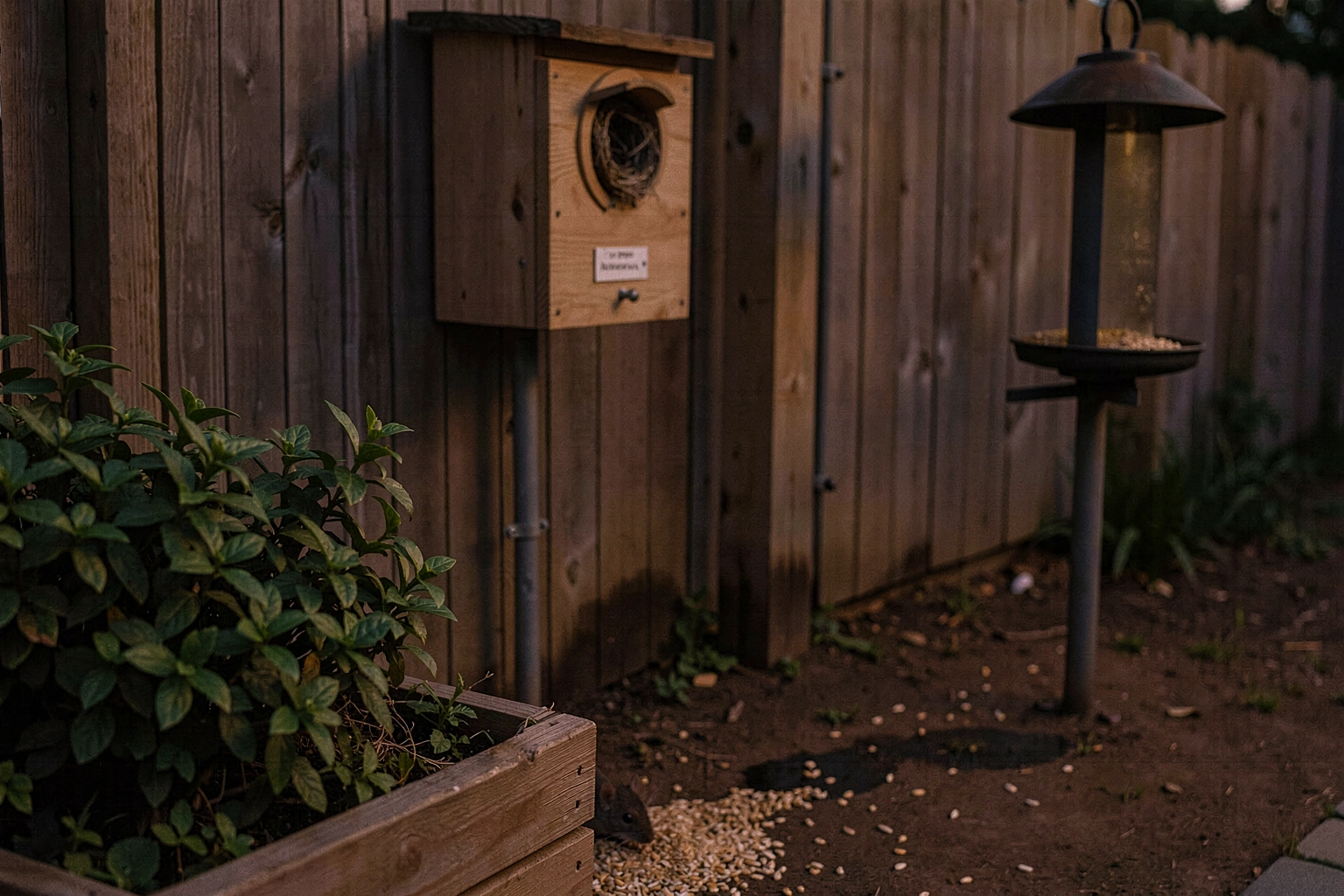
| Rat | Gnawed shells, similar to chipmunk but often at night | Ground level preferred | Mostly night |
If you're seeing losses during the day and finding chewed shell fragments on the ground below a ground or shrub-level nest, rats are another possibility worth keeping in mind, especially if losses happen at night.
Check for chipmunk activity nearby
If you're already seeing chipmunks foraging within 20 to 30 feet of the nest, that's a meaningful signal. Chipmunks have relatively small home ranges and they forage systematically. A burrow entrance nearby is an even stronger indicator. You don't need to catch one in the act to make a reasonable judgment call.
What you can do right now to protect the nest
If you've confirmed or strongly suspect chipmunk predation, here are steps you can take today. Most of these are low-cost and won't disturb the nesting birds if done carefully.
- Stop feeding near the nest immediately. Bird feeders attract chipmunks and squirrels. Massachusetts wildlife guidance specifically notes that small mammals are drawn to bird-feeding stations, and reducing food sources near nesting areas cuts down predator traffic. Move feeders at least 30 feet from any active nest.
- Clear ground cover within a few feet of the nest. Dense leaf litter, woodpiles, and low shrubs give chipmunks cover to approach undetected. Tidying up the immediate area won't disturb most open-cup nests and removes the concealment chipmunks rely on.
- Set up a trail camera if you have one. Even a basic motion-activated camera pointed at the nest will tell you within 24 to 48 hours exactly what's visiting. This prevents you from wasting time on the wrong deterrent.
- For nest boxes: add a predator guard or baffle to the mounting pole right now. A stovepipe-style baffle or cone baffle placed on the pole below the box is one of the most effective physical barriers available. Maryland DNR and NestWatch both recommend these specifically for deterring squirrels, chipmunks, raccoons, and snakes.
- For open-cup nests: your options are more limited without disturbing the birds, but reducing nearby attractants and cover is still worthwhile.
Deterrents that actually work (and are safe for birds)
For nest boxes, a smooth metal pole with a baffled predator guard is the gold standard. Chipmunks and squirrels can't grip smooth metal the way they can wood or rough plastic. The baffle should be positioned so the bottom of the box is at least 5 feet off the ground and the baffle itself is at least 18 inches below the entrance hole. Cornell Cooperative Extension and NestWatch both support this approach, and it works against a wide range of predators, not just chipmunks.
Hardware cloth can be useful for protecting specific areas around ground nests, though you have to be very careful not to trap or stress the nesting bird. If you go this route, use 1/2-inch by 1/2-inch mesh (which is documented for excluding rats and similar-sized mammals) and create a loose cage around the nest area rather than a tight enclosure. Leave clear entry and exit paths for the parent bird. This is a more advanced approach and worth trying only if the nest location makes it practical.
Repellents and scent deterrents
Some gardeners report success with predator urine granules or strong-scented deterrents placed around the perimeter of a nesting area, but these have limited research support for chipmunks specifically and require frequent reapplication, especially after rain. They're a reasonable supplement to physical barriers but shouldn't be your primary strategy.
Feeder management as a longer-term fix
If you feed birds year-round, switching to a feeder design that minimizes spillage and repositioning it well away from nesting areas will reduce how many chipmunks are attracted to your yard overall. Mass Audubon recommends tube feeders with trays and cleaning up spilled seed regularly. Fewer chipmunks in the yard means less predation pressure on your nesting birds.
What not to do, and when to call for help
Avoid these common mistakes
- Don't use snap traps or poison near active nests. Poisons can harm non-target wildlife including the birds you're trying to protect, and snap traps placed carelessly can injure birds, cats, and other animals.
- Don't move or relocate the nest yourself. Active bird nests are protected under the Migratory Bird Treaty Act. Moving a nest, even with good intentions, is illegal for most songbird species and can cause the parents to abandon it.
- Don't try to handle chipmunks. They can bite and, while the risk is low, chipmunks can carry diseases. Harassment is also ineffective since other chipmunks will fill the territory quickly.
- Don't assume the problem is solved after one day of no predation. Chipmunks are persistent. Keep your deterrents in place through the full nesting cycle.
- Don't use sticky traps anywhere near the nest area. Birds can become fatally entangled in them.
When to bring in a wildlife professional
If you've put physical barriers in place and are still losing eggs consistently, or if the predation is happening to a species of conservation concern in your area, it's worth contacting your state wildlife agency or a licensed wildlife control operator. They can do a proper site assessment and, in some cases, install more robust exclusion solutions. If you suspect the predation is coming from a protected or rare animal rather than a common pest species, a wildlife professional is the right call before you take any action at all.
Quick action checklist
- Confirm chipmunks are active near the nest (burrows, daytime sightings within 30 feet).
- Check shell fragments for gnawed or chewed edges rather than punctures or missing eggs with no trace.
- Move bird feeders at least 30 feet from the nest today.
- Reduce ground cover and debris near the nest to cut off chipmunk approach routes.
- Install a predator baffle on any nest box pole if you haven't already.
- Set up a trail camera if the predator is still unconfirmed.
- Keep deterrents in place through the entire nesting cycle, not just until you stop seeing predation for a day or two.
- Contact your state wildlife agency if losses continue after barriers are in place.