Several bird species genuinely eat wasps, and the three you're most likely to actually see doing it in a backyard or open area are the Summer Tanager, the Eastern Kingbird, and the Western Kingbird. Summer Tanagers are probably the most specialized wasp hunters in North America. Loggerhead Shrikes will also take wasps and other stinging insects, though their behavior looks very different. If you just watched a bird snatch something out of the air near a wasp nest or actively foraging area, one of these four is almost certainly what you saw. Some birds also eat ticks, but the ones that are best known for tick-eating are different from the wasp-hunting species discussed here.
What Bird Eats Wasps? Identification and When It Happens

Maya Bennett
3 May 2026
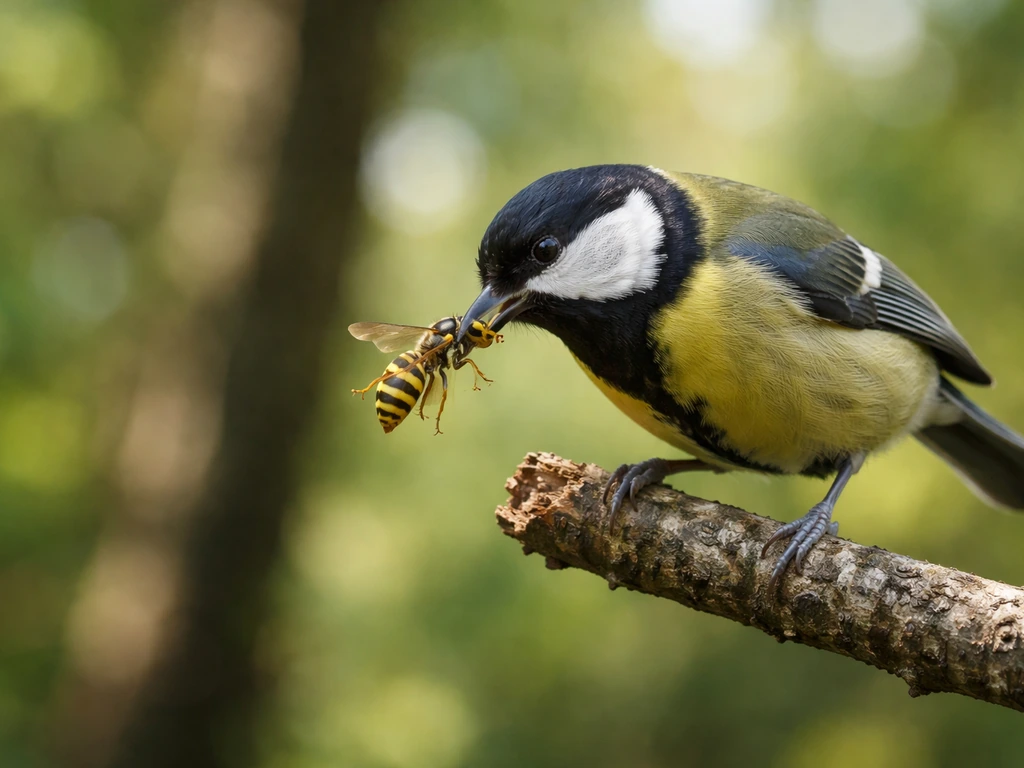
Birds that actually eat wasps (and when it happens)
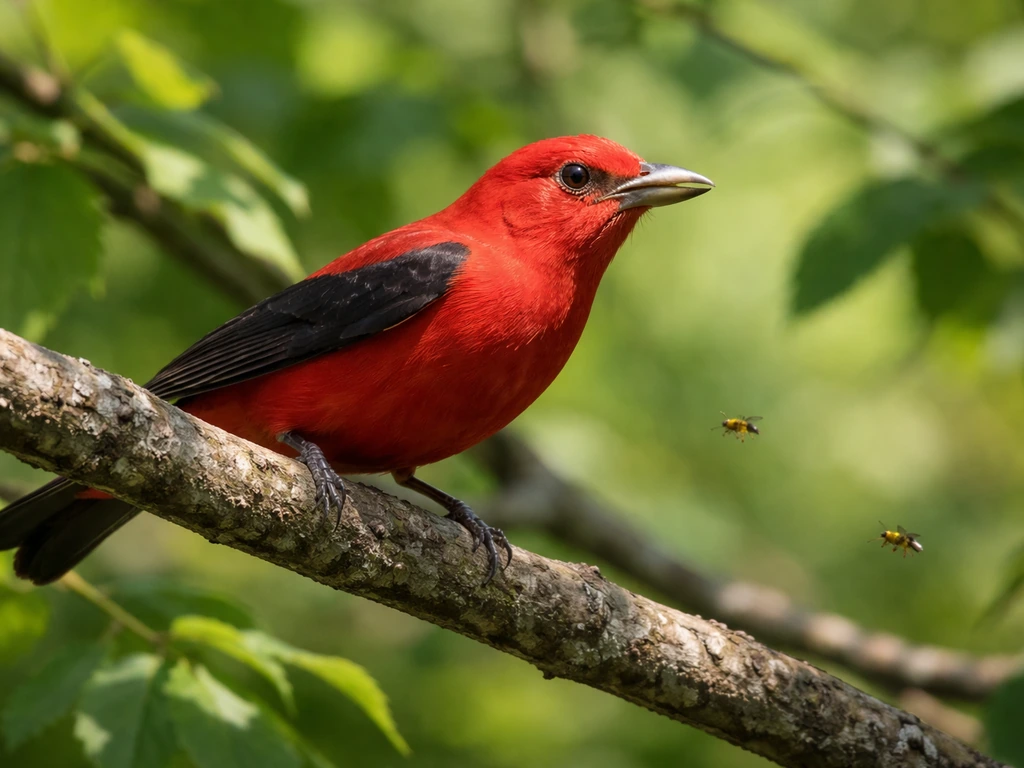
Summer Tanagers are the standout wasp specialists. The male is a solid, brilliant red, which makes him easy to spot even in dense foliage. These birds catch bees and wasps on the wing, fly to a nearby perch, slam the insect against the branch until it stops moving, then wipe it firmly against the bark to scrape off the stinger before swallowing it. That wiping behavior is key. If you watch a bird carefully rubbing something against a branch before eating it, there's a good chance it just caught a stinging insect. Summer Tanagers also tear into paper wasp nests to eat the larvae inside, so you might see one hovering around or clinging to a nest structure rather than chasing adults in the air. This behavior is most common from late spring through summer, peaking when wasp colonies are large and active.
Eastern and Western Kingbirds are flycatchers, and wasps are a documented part of both species' summer diets, typically May through September for Eastern Kingbirds. They hunt by perching on a high, exposed spot like a fence wire or dead branch, then sallying out to snatch insects mid-flight with audible bill snaps before returning to the perch. Western Kingbirds will also hover briefly, then drop onto prey. Neither species uses the same careful stinger-removal routine as the Summer Tanager, though they do seem to handle stinging insects without getting hurt, likely by striking the insect at an angle that avoids the abdomen.
Loggerhead Shrikes are the odd one out. They're not primarily wasp specialists, but they will take wasps and other large insects as part of their broader diet. The giveaway is what happens after the catch: shrikes impale prey on thorns, barbed wire, or sharp sticks to store it and to help tear it apart later. Seeing an insect or small animal stuck on a thorn spike near your yard is almost certainly shrike behavior, sometimes called a "larder." Shrikes are less common than kingbirds in most backyards, but if you're in open scrubby habitat, they're worth watching for.
Common backyard species and their wasp-catching behavior
| Bird | Range / Season | How It Hunts Wasps | Key ID Clue |
|---|---|---|---|
| Summer Tanager | Southern/central US, spring–fall | Catches in flight; slams and wipes on branch before eating; raids nests for larvae | Wiping behavior on branch; solid red (male) or olive-yellow (female) |
| Eastern Kingbird | Eastern/central US, May–Sept | Sallies from perch, snaps insect in mid-air, returns to perch | Bold white tail-tip band; aggressive aerial pursuit |
| Western Kingbird | Western/central US, spring–fall | Perches on wire/fence, flies out to snap prey; also hovers then drops | Yellow belly, pale gray head, perches on wires |
| Loggerhead Shrike | Much of US, year-round in south | Strikes prey and impales it on thorns or barbed wire for storage | Black mask, hooked bill, impaled prey visible nearby |
Other birds, including various flycatchers, swallows, and even some warblers, catch flying insects and may occasionally take a wasp opportunistically, but none of these are reliable wasp-targeting species the way the ones above are. If you're trying to encourage natural wasp control in your yard, the kingbirds and Summer Tanager are your realistic allies.
How to tell if you're actually watching wasp predation
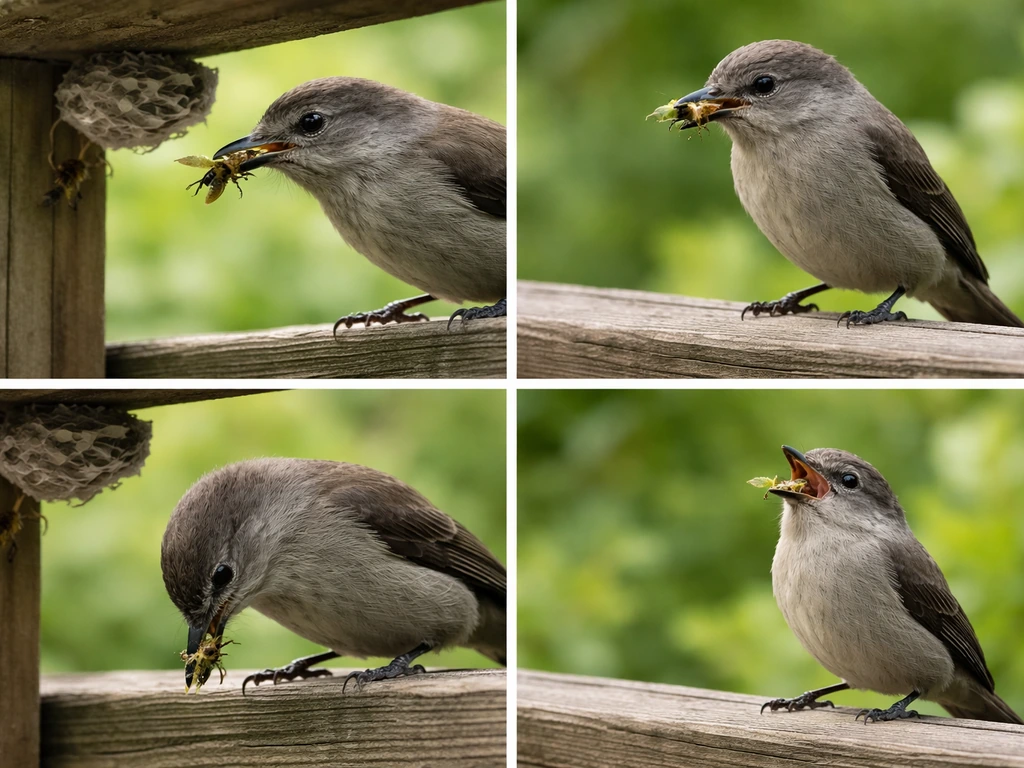
This is where a lot of backyard observers get confused. Not every bird near a wasp is eating one, and not every insect a bird grabs is a wasp. Here's how to read what you're actually seeing. You may also be wondering, can bird eat honey, and whether honey feeders change the kind of insects birds go after.
Signs you're watching real wasp predation
- The bird catches something mid-air near an active wasp nest or foraging area, returns to a branch, and rubs it firmly against the bark before eating. This is the Summer Tanager stinger-removal routine.
- You hear an audible bill snap as the bird closes on a flying insect. Kingbirds make a distinctive click.
- The bird makes repeated sallies from the same perch over several minutes, each time returning with something. This is classic flycatcher/kingbird hawking.
- The bird hovers briefly, then drops to take something from mid-air or foliage, then returns to a perch with prey in its bill.
- The bird clings to or hovers near a paper wasp nest and pecks at the structure, not just the surrounding air. That's a Summer Tanager going for larvae.
- You find an insect impaled on a thorn or barbed wire. That's a shrike, and wasps are fair game for the larder.
Things that look similar but aren't wasp predation
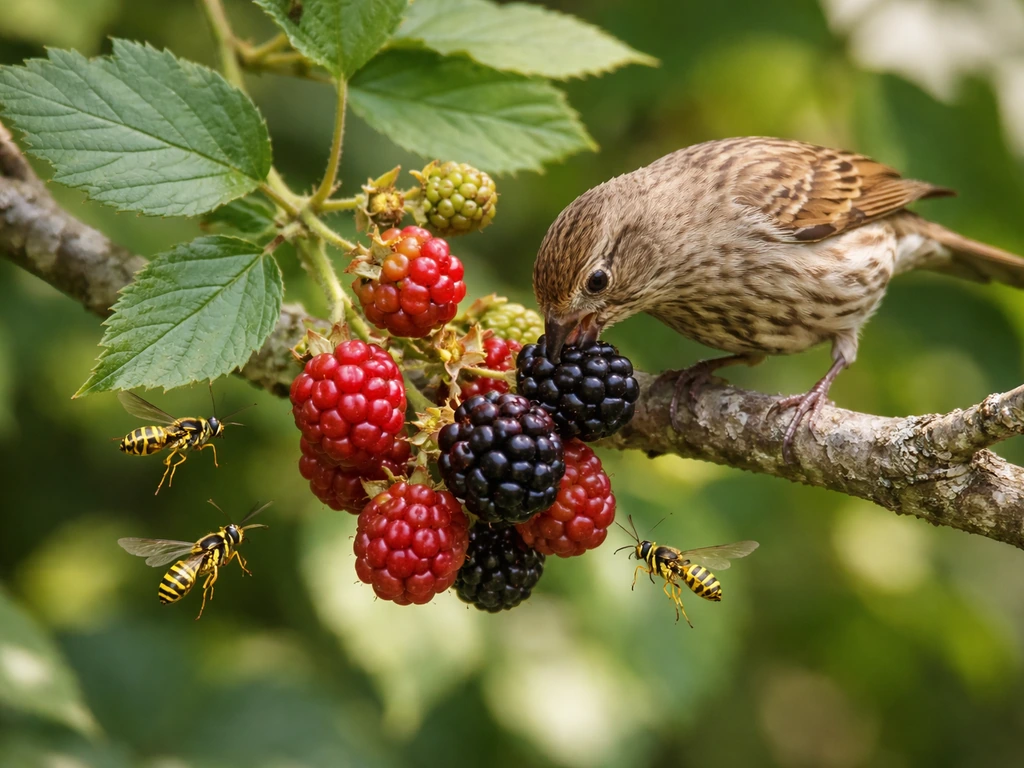
- A bird picking at fruit, berries, or a hummingbird feeder near where wasps are also foraging. The bird is after the food source, not the wasps. Wasps are just attracted to the same spot.
- Scavenging behavior, where a bird pokes at something on the ground near a wasp. Grackles and starlings do this constantly and are almost never targeting the wasps themselves.
- A bird snatching gnats, flies, or small moths near your feeder. Not all mid-air insect catches are wasps, especially if the prey is very small or slow.
- Birds near a yellowjacket trap. Yellowjackets attracted to meat or sweet bait around a trap may pull in insect-eating birds nearby, but the birds are usually responding to overall insect activity, not specifically hunting the trap's contents.
The most reliable confirmation is the sequence: catch, perch, process (wipe or slam), swallow. If you see all four steps with a yellow-and-black insect, you're watching real wasp predation. A bird that just grabs something and immediately swallows it without any processing is more likely taking something softer and sting-free.
Wasps around your yard: what the risk actually looks like for pets and kids
Yellowjackets and paper wasps are not aggressive when they're foraging away from their nest, but they will sting when disturbed, threatened, or accidentally touched. One surprising question is what bird eats yellow jackets, and the safest bets are the same wasp hunters that target other stinging insects Yellowjackets and paper wasps. Stinging risk jumps sharply in late summer and fall when colonies are at peak size and food becomes scarcer. Pets, especially dogs that snap at flying insects, are genuinely at risk. A dog that gets stung repeatedly inside the mouth or throat can have a serious reaction. Kids who stumble on or too close to a ground-level yellowjacket nest are also in real danger, since yellowjackets will pursue and sting repeatedly.
The bigger practical issue for backyard birders is that the same things that attract birds to your yard can also attract wasps. Rotting fruit, open pet food, meat scraps, and sugary drinks are documented yellowjacket attractants. If you're putting out fruit to attract Summer Tanagers (which does work, since they forage on berry bushes and fruit trees), you may be pulling in more wasps at the same time. That's a tradeoff worth knowing about upfront.
Steps to reduce stinging-insect exposure near your observation area
- Remove fallen or rotting fruit from under trees. Yellowjackets are strongly attracted to fermenting fruit and will swarm it.
- Keep pet food bowls inside or pick them up immediately after feeding. Meat and protein-based pet food is one of the most reliable yellowjacket attractants.
- Use tight-fitting lids on garbage cans and empty them frequently. Open trash is a major yellowjacket scavenging target.
- Cover sugary drinks when eating or observing outside, especially in late summer when wasp colonies are largest.
- Do not set up bird feeding areas directly next to known wasp nest locations. Maintain distance between nesting areas and where pets and kids spend time.
- If you want to trap yellowjackets, use traps baited with heptyl butyrate or meat bait, which attract yellowjackets but not honey bees, so you reduce wasp pressure without harming pollinators.
Do bird feeders attract wasps?
Yes, certain feeder types and foods do pull in wasps, particularly yellowjackets. Hummingbird feeders with sugary nectar are a common problem, especially if they drip or have wide feeding ports. Fruit and jelly feeders meant for orioles can also draw wasps. Suet, if it sits in warm weather and begins to smell, will attract yellowjackets. Standard seed feeders are less of a direct attractant, but spilled seed on the ground can lead to fruit fermentation if mixed with fallen fruit nearby, or attract other insects that in turn pull in wasps.
The practical fix is not to stop feeding birds, but to manage the feeders more carefully. Use hummingbird feeders with bee guards or ant moats, which physically block wasp access. Clean feeders regularly so nectar doesn't ferment or drip. Move feeders that are getting heavy wasp attention at least 10 feet away from where people and pets spend time. If wasps are at a fruit feeder, try switching to enclosed feeders where access is restricted to birds with longer bills.
One thing worth keeping in mind: wasps attracted to your feeder area are the same wasps that might attract a Summer Tanager or kingbird. If you've seen wasp activity near your feeding station and a brightly colored bird starts showing up and making aerial sallies, you may have accidentally created a pretty ideal hunting ground for one of these species. The birds benefit from the insect activity even if the wasps are inconvenient for you.
It's also worth noting that bees can face similar feeder-related dynamics. If you're curious about which birds target bees specifically, that's a closely related question with a lot of overlap in species. If you're wondering what bird eats bees, the answer overlaps with some of the same insect hunters, but the details vary by species and habitat. Yellow jackets also come up frequently enough in their own context that there are some differences in behavior and risk worth understanding separately.
What to do right now if you want to observe safely
If you just spotted a bird you think was eating wasps and you want to watch more closely, here's a practical approach that keeps your observation safe without putting pets, kids, or yourself at unnecessary risk.
- Stay back at least 10 to 15 feet from any area where wasps are actively foraging or where you suspect a nest. Use binoculars rather than moving closer.
- Do not disturb the wasp nest or wave at wasps to see how the bird responds. Disturbing the nest increases stinging risk dramatically and changes the bird's behavior anyway.
- Note the bird's perch spots and return points. Kingbirds and shrikes use the same perches repeatedly, so if you watch the perch, you'll see the behavior again.
- Look for the processing step. If the bird returns to a branch with something in its bill and rubs or slams it before eating, you've confirmed stinger-removal behavior.
- Keep pets indoors or on a leash and away from the foraging area while observing. Dogs in particular should not be near active wasp foraging zones.
- Take photos or short videos if you can. Bill shape, tail markings, and body color will help you confirm the species later using a field guide or bird ID app.
- Check the area for paper nest structures under eaves, in shrubs, or in the ground nearby. Knowing where the nest is helps you set a safe observation perimeter.
- If you want to encourage these birds to return, avoid treating the wasp nest with pesticides immediately. The insects are the food source. Focus instead on managing the human-use areas of your yard separately from the foraging zone.
You don't need to do anything elaborate to watch wasp-eating birds. The best thing you can do is reduce the attractants that pull wasps into spaces where people and pets are active, then step back and let the birds work. Summer Tanagers, kingbirds, and shrikes are genuinely effective at reducing wasp numbers in a local area, and they do it without any pesticide risk at all. Identify the bird, clean up the food attractants, set a safe distance, and enjoy the show.
FAQ
How can I tell the difference between a bird that eats a wasp and one that just grabbed a similar-looking insect?
Look for processing behavior. Real wasp predation usually includes a catch, a perch, a handling step (for example, wiping against bark or slamming to stop movement), then swallowing. If the bird swallows immediately with no wiping or pecking against a surface, it is more likely taking a non-stinging insect.
Do Summer Tanagers, kingbirds, or shrikes go after wasps year-round?
Most wasp-eating is seasonal. Summer tanagers are most active from late spring through summer, and Eastern kingbirds are typically May through September. If you see wasp-hunting behavior outside those windows, it can still happen, but it is less reliable than during peak wasp activity.
What time of day am I most likely to see birds hunting wasps?
Wasp foraging and bird flycatching tend to be most noticeable when insect activity is highest, often during warmer daylight hours. If you have to choose, check mid to late morning through afternoon, then reassess when wasp activity drops.
Are yellowjackets and paper wasps eaten the same way, and does it change the risk to me?
The birds eat stinging insects, but your risk still depends on how close you are to the wasps’ activity. Yellowjackets are more likely to sting repeatedly if disturbed. Even if a bird is doing the hunting, stay back from nests and avoid moving around under/near active openings.
Will bird activity mean there are wasps right next to my feeder or nest?
Not always. Birds can hunt for wasps in one area while you only notice the bird later at a distance. Still, if you see repeated aerial sallies originating from the same spot near a nest, fruit, or nectar source, assume wasps are concentrated there and increase your safety distance.
Is it safer to watch from close to the feeder if birds are handling the wasps?
No. Birds reduce wasp numbers, but they do not eliminate stinging risk, and you can still disturb wasps while trying to get a better view. The safest approach is to step back, manage attractants, and watch from a distance where you are not blocking flight paths.
What should I do if my hummingbird or oriole feeder is drawing a lot of yellowjackets?
Switch to hummingbird feeders with bee guards or ant moats, and stop using any feeder setup that leaks or drips. For fruit or jelly feeders, use enclosed feeders that restrict access to birds with longer bills, and keep the area clean so sticky food does not ferment or spread on surfaces.
Can birds become targets for wasp stings, and why don’t they get hurt as much as you’d expect?
They often manage stinging risk by how they strike and process prey. For example, kingbirds do not use the same wiping method as Summer Tanagers, yet they tend to handle stingers by striking in a way that avoids the most vulnerable body regions. Also, the birds catch prey in quick moments rather than hovering directly at a wasp’s defense zone.
If I see an insect “larder” near my yard, does that automatically mean shrikes are eating wasps?
Not automatically. Loggerhead Shrikes impale prey on thorns or sharp sticks to store it, and that pattern is the key clue. However, the stored insects may include many large items, not exclusively wasps, so use the overall behavior, not just one stuck insect, to estimate what is being taken.
What is the best way to encourage natural wasp control without creating a bigger wasp problem?
Reduce the things that attract wasps to human activity areas: limit exposed sugary liquids, manage fruit and pet food, and clean feeders frequently. Place bird feeders farther from where people and pets spend time, at least around 10 feet, and consider shifting to designs that restrict wasp access. Then let the birds hunt in the safer perimeter you create.
Next Articles
What Bird Eats Bees? Identify Bee-Eating Birds Fast
Find which bird eats bees, wasps, and stinging insects, with quick backyard ID tips and sting-safe fixes.
What Bird Eats Ticks? Species and Yard Tips That Help
Learn which birds eat ticks, how they hunt, how to attract them safely, and what to do this week for tick control.
What Bird of Prey Eats Pigeons: Common Raptors & ID Tips
Which raptors eat pigeons: peregrine, Cooper’s, goshawk, merlin, red-tailed, kestrels, owls; ID tips, risks and how to保护