Yes, birds can eat peanut butter, and many wild and captive species genuinely love it. The key conditions are using the right product (unsalted, no xylitol, no added sugar), offering it in small amounts, keeping it fresh, and mixing it with a dry binder like cornmeal or oatmeal so it isn't too sticky. Plain, natural peanut butter or unsalted peanuts are among the highest-energy foods you can put out at a feeder, especially valuable in cold weather when birds need extra calories fast. That said, peanut products carry real hazards: aflatoxin mold, rancidity, Salmonella contamination, and toxic additives like xylitol can all cause serious harm. The verdict is: fine to feed with care, genuinely risky if you're careless about freshness, hygiene, or product choice.
Can Bird Eat Peanut Butter? Safe Feeding Guide for Birds

Wild backyard birds that eat peanut butter (and a few that don't)
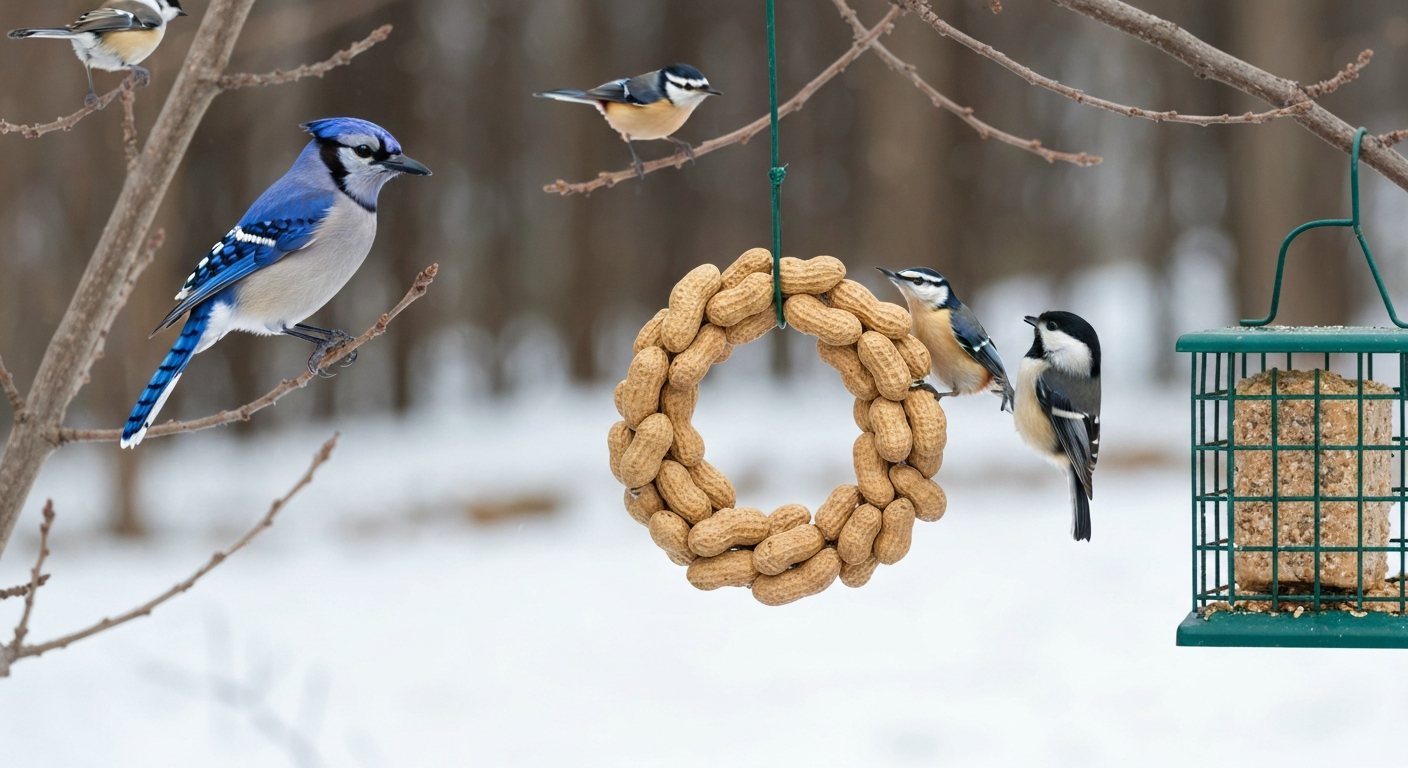
Most of the species you'll see at a North American feeder will take peanuts or peanut butter in some form. For a quick species guide, see what bird eats peanuts. Cornell Lab's Project FeederWatch lists peanuts and peanut butter as accepted by a wide range of common feeder birds, particularly in fall and winter when fat-rich foods give them a thermal edge. Here are the species you're most likely to attract, with quick ID notes so you know what you're looking at.
| Species | Quick ID cues | Peanut/PB preference | Notes |
|---|---|---|---|
| Blue Jay | Bright blue back, white underparts, bold black necklace, crested head; 9–12 in | High — takes whole in-shell peanuts and peanut butter smears | Will cache peanuts; often dominant at feeders |
| White-breasted Nuthatch | Blue-gray back, rusty-buff flanks, white face, black cap; walks headfirst down tree trunks; 5–6 in | High — peanut butter smeared in bark crevices or log feeders | Wedges whole peanuts in bark to crack open |
| Black-capped Chickadee | Black cap and bib, white cheeks, gray back; 4–5 in | Moderate-high — prefers shelled peanut pieces or peanut butter mixed with suet | Energetically active in cold; benefits most from fat-rich foods |
| Tufted Titmouse | Gray above, white below, rust flanks, pointy gray crest; 5–6 in | Moderate-high — peanut butter suet and shelled peanuts | Closely related to chickadees; visits same feeders |
| Downy Woodpecker | Smallest N. American woodpecker; black-and-white checkered back, short bill, males have red nape patch; 5–7 in | High — peanut butter suet cakes and smeared bark | Drills into suet and smear feeders; year-round visitor |
| Hairy Woodpecker | Larger version of Downy (7–10 in), longer bill relative to head size | High — same preferences as Downy | Distinguish from Downy by bill length and overall size |
| Red-bellied Woodpecker | Barred black-and-white back, red cap (full on males, only nape on females); faint reddish belly; 9 in | High — readily visits peanut-butter suet feeders | Common in eastern/southeastern US |
| Northern Cardinal | Males: brilliant red all over, crested; females: warm brown with red tinges and crest; 8–9 in | Moderate — prefers shelled peanuts; will take peanut-butter suet | Larger bill suited to cracking shells |
| Song Sparrow | Heavy brown streaking, central breast spot, rounded tail; 5–7 in | Low-moderate — may take broken peanut pieces from ground | Not a feeder specialist for nuts; ground forager |
| American Robin | Orange-red breast, dark gray-brown back; 9–11 in | Low — not a typical feeder visitor; frugivore/insectivore | Rarely visits peanut feeders; prefer berries and worms |
Robins and most warblers, swallows, and flycatchers are insect and fruit specialists and won't typically visit a peanut butter feeder at all. Don't worry about accidentally harming them with a smear feeder; they just won't use it. The birds most at risk from improperly prepared peanut butter are the feeder regulars listed above, precisely because they visit so frequently.
Pet and captive birds: who can have it and who should skip it
Companion birds are a different story from wild feeders. Because a captive bird's entire diet is under your control, even a high-fat treat like peanut butter carries more weight nutritionally. Veterinary guidance from sources like VCA Animal Hospitals is consistent: the dietary base for parrots and other psittacines should be a formulated pellet plus fresh produce, with seeds and nuts kept to a small treat fraction (roughly 10–15% of total intake at most). Peanut butter fits into that treat category, and here's how common companion species stack up.
| Species | Quick ID / common features | Can they eat PB? | Recommendation |
|---|---|---|---|
| African Grey Parrot | Medium-large; entirely gray plumage with bright red tail; highly intelligent; 12–14 in | Yes, occasionally | Tiny smear on a vegetable or a half-peanut as an infrequent treat; fat-rich diet worsens hepatic lipidosis risk |
| Budgerigar (Budgie) | Small parakeet; green/yellow base with black scalloping; blue cere on males; 6–7 in | In very small amounts | A fingernail-sized smear maximum; budgies are prone to obesity on high-fat foods |
| Cockatiel | Small crest, orange cheek patches, gray body (wild type); 12–13 in | Yes, sparingly | Half a shelled peanut or a small smear 2–3 times per week max |
| Amazon Parrot | Stocky, mostly green with species-specific color patches; 10–18 in depending on species | Yes, but cautiously | High obesity risk in captive Amazons; keep peanut treats rare (once or twice per week, one peanut) |
| Macaw | Large, long tail, bare facial patches, strong hooked bill; 20–42 in | Yes, occasionally | Larger birds tolerate nuts better but still risk fatty liver with overuse; limit to a few nuts per week |
| Lovebird | Small, stocky, short tail, bright face coloration; 5–7 in | Yes, very sparingly | Same obesity caution as budgies; small treat only |
| Canary / Finch | Small, 4–5 in; canaries yellow/orange; finches variable; seed-focused diet | Not recommended | Seed and soft-food diet is the norm; high-fat peanut products can cause digestive upset; offer mealworms for protein instead |
| Softbills (toucans, mynahs) | Variable; typically insect/fruit specialists | Not recommended | Digestive systems not suited to high-fat nuts; iron storage disease is a risk in toucans; avoid |
For any captive bird, the rule is the same: peanut butter is a treat, not a staple, and the product must be plain (no salt, no xylitol, no hydrogenated oils, no added sugar). If your bird is already on a seed-heavy diet rather than pellets, adding peanut butter on top just compounds the fat and deficiency problem. Talk to an avian vet before introducing any new food if your bird has a history of weight issues or liver problems.
Choosing the right form: raw vs roasted, shelled vs in-shell, and what peanut butter label to pick
Raw vs roasted peanuts
Roasted peanuts are the safer option for feeders. Peer-reviewed food science research shows roasting reduces aflatoxin concentration significantly compared with raw peanuts, with some processing methods achieving 90–98% reductions. Raw peanuts can carry higher fungal loads if they haven't been stored correctly, and aflatoxin B1 is a potent liver toxin and immunosuppressant in birds (poultry science reviews confirm that even low-level aflatoxin exposure causes liver pathology and growth problems). Always buy dry-roasted, unsalted peanuts from a reputable commercial source with quality controls, rather than bulk bins where turnover and storage conditions are unknown. Roasting doesn't guarantee zero aflatoxin, so freshness and dry storage still matter.
Shelled vs in-shell
Both work. Blue jays and larger woodpeckers are enthusiastic in-shell peanut fans and will happily carry whole pods away to cache. Smaller birds like chickadees and nuthatches do better with shelled (kernel) peanuts or halved pieces they can manage. Aflatoxin can originate in both shells and kernels, so removing the shell doesn't eliminate contamination risk entirely, but shelled peanuts from tested commercial lots are generally consistent in quality. In-shell peanuts do give birds behavioral enrichment and are harder for squirrels to grab quickly, which is a practical bonus.
Choosing peanut butter
Read the label carefully before buying peanut butter for birds. The only acceptable ingredients are peanuts and possibly a small amount of salt (though salt-free is better). The products to avoid absolutely are those containing xylitol (a sugar alcohol found in some low-sugar or 'natural' peanut butters), added sugar, honey coatings, chocolate, or heavy seasoning. Xylitol is a documented animal toxin, well-established as dangerous in dogs and increasingly flagged in avian contexts by the ASPCA Animal Poison Control Center. Natural-style peanut butter (just peanuts, no hydrogenated oils) is a good choice because it avoids trans fats, but it separates on standing and goes rancid faster than stabilized commercial brands, so buy it in small quantities and keep it refrigerated once opened.
Using peanuts in suet mixes
Peanut pieces or peanut butter incorporated into a suet block is one of the most effective high-energy feeder foods you can offer in winter. The fat base (rendered lard or beef suet) combined with peanut butter creates a calorie-dense cake that woodpeckers, nuthatches, and chickadees will visit repeatedly through cold days. Avoid vegetable shortening or hydrogenated oils as the fat base; rendered lard or unsalted beef suet are the traditional and recommended choices for bird suet.
How to offer peanut butter at your feeder: step-by-step methods
Method 1: Smear feeder or log feeder
- Start with a purpose-made log feeder (a section of untreated branch or log with 1-inch holes drilled every few inches) or a flat bark-platform feeder.
- Mix peanut butter with an equal volume of plain cornmeal or oatmeal until you get a crumbly, stiff paste. This dry binder is recommended by Cornell Lab specifically to reduce any stickiness risk for smaller birds.
- Pack the mix firmly into the holes or spread a 3–5mm layer on rough bark surfaces.
- Hang the log feeder on a branch or shepherd's hook at least 5 feet off the ground.
- Replace the contents every 3–5 days in cool weather (sooner in warm weather above 70°F/21°C) or as soon as the mix looks oily, dark, or smells off.
- Scrape out old mix before refilling, and wash the feeder with hot soapy water weekly.
Method 2: Pinecone and branch smear
- Collect a large, open pinecone (or use a store-bought natural pinecone with scales spread open).
- Prepare the cornmeal-peanut butter mix as above.
- Using a butter knife or spoon, work the mix deep between the pinecone scales.
- Tie a length of natural twine around the base of the cone and hang it from a branch or hook in a shaded spot.
- Replace every 3–5 days; discard immediately if the mix has turned dark or smells rancid.
Method 3: Suet cage with homemade peanut butter suet block
- Prepare suet mix following the recipe in the safe recipes section below.
- Pour the warm mix into a square plastic container (roughly 4x4 inches) or a commercial suet mold.
- Allow to cool and harden completely at room temperature or in the refrigerator.
- Pop the finished block out and place it in a wire suet cage feeder.
- Hang the cage on a tree trunk or pole at least 4–5 feet high and away from fences cats can use to approach.
- Replace the block every 5–7 days in cool weather; every 2–3 days when temperatures exceed 70°F (21°C), as fat goes rancid faster in heat.
Method 4: Hopper and platform feeders for shelled peanuts
- Use a mesh-bottomed hopper or platform feeder designed for peanuts (mesh allows water drainage and airflow).
- Fill with dry-roasted unsalted shelled peanut halves or whole kernels.
- Offer only as much as birds can consume in one day to minimize sitting time and moisture exposure.
- Check daily and remove any peanuts that look dark, shriveled, or have a musty smell — these may carry aflatoxin.
- Wash and dry the feeder tray thoroughly before each refill.
Method 5: In-shell peanut presentation for jays and large woodpeckers
- Use a dedicated peanut wreath feeder (a wire ring that holds whole in-shell peanuts) or simply scatter a handful on a flat platform.
- Offer only dry, uncracked in-shell peanuts bought from a tested commercial source.
- Replace any peanods that show dark spots, mold, or a musty odor immediately.
- Limit the quantity to what birds can take in roughly half a day to prevent prolonged moisture exposure, especially in humid weather.
Real risks you need to know about
Aflatoxin and mold
Aflatoxin B1, produced by Aspergillus molds that grow on peanuts under warm, humid conditions, is probably the most serious risk associated with feeding peanuts to birds. The FDA's compliance guidance sets action levels for aflatoxins in animal feed at 20 micrograms per kilogram (ppb) for many finished feeds, but any detectable level is best avoided in birds given how sensitive poultry-family studies show they are. Aflatoxicosis in birds causes liver damage, immunosuppression, poor growth, and in severe cases death. The practical takeaway: buy peanuts and peanut butter from large, reputable manufacturers with quality testing programs, store everything cool and dry, and discard anything that looks or smells suspicious. Aspergillus section Flavi and Aflatoxins: Occurrence, Detection, and Identification in Raw Peanuts and Peanut‑Based Products, Frontiers in Microbiology reports that storing peanuts dry (kernel moisture <7%) and cool reduces fungal growth and aflatoxin risk Aspergillus section Flavi and Aflatoxins: Occurrence, Detection, and Identification in Raw Peanuts and Peanut‑Based Products — Frontiers in Microbiology reports that storing peanuts dry (kernel moisture <7%) and cool reduces fungal growth and aflatoxin risk.. Don't feed peanuts bought at farmers markets or bulk bins unless you know the storage conditions.
Rancidity
Peanut butter and whole peanuts go rancid as their fats oxidize, especially in heat and sunlight. Natural (unstabilized) peanut butter deteriorates faster than commercial stabilized brands and should be refrigerated once opened. Rancid peanut butter smells sour or paint-like and tastes bitter. While rancidity is primarily a quality and palatability issue, oxidized fats can promote inflammation and reduce the nutritional value of the food. Food science guidance recommends storing peanuts below 41°F (5°C) and below 70% relative humidity for best quality and lowest microbial risk. In practice, this means you should never leave peanut butter sitting in a sunny feeder through a warm afternoon, and you should replace it every few days regardless.
Salt, sugar, xylitol, and additives
Excess dietary salt disrupts electrolyte balance in birds; high sugar has no place in a bird's diet; xylitol is a verified toxin in companion animals (thoroughly documented in dogs by ASPCA Animal Poison Control, and flagged as an emerging concern in other species). Always read the ingredient list of any peanut butter before using it at a feeder. This is a non-negotiable check.
Choking risk
There's persistent concern that straight thick peanut butter can stick to a bird's palate or throat. Cornell Lab's BirdNotes recommendation to mix peanut butter with cornmeal or oatmeal to a crumbly texture addresses this directly. Offering thin smears rather than thick blobs and avoiding peanut butter in very hot weather (when it becomes even stickier) are sensible precautions, particularly for smaller birds.
Obesity and nutritional imbalance
For captive birds especially, peanut butter is calorie-dense and fat-heavy. Veterinary nutrition resources are clear that seed and nut-heavy diets in companion birds are associated with obesity and hepatic lipidosis (fatty liver disease). Peanut butter should supplement a pellet-and-produce diet, not replace it. For wild birds, overfeeding at one feeder is less of a concern since they range widely, but it can encourage overly sedentary behavior and dependency.
Salmonella and disease transmission
Peanut butter has been implicated in major multistate Salmonella outbreaks in humans, and Salmonella is an established disease pathogen in wild feeder birds, particularly pine siskins, American goldfinches, and common redpolls. Bird feeders concentrate birds at a single contact point, making oral-fecal transmission highly efficient. Project FeederWatch and USGS wildlife health guidance recommend removing feeders entirely for 2–4 weeks if you observe sick or dead birds nearby, then cleaning and disinfecting before resuming use. Regular feeder cleaning (weekly minimum) is the main prevention tool.
Attracting predators and pests
Peanut butter smells strongly and can attract squirrels, raccoons, rats, and even bears in some regions. Rats and mice drawn to feeders can carry disease risks of their own and create pest problems in your yard. Manage this by using baffled poles, taking feeders in at night if mammal pressure is high, and not leaving excess peanut butter sitting out. Bears are a legitimate concern in rural and semi-rural areas; check local wildlife agency guidelines if you're in bear country.
Risks to household pets
Peanut butter itself isn't acutely toxic to dogs or cats in the way xylitol-containing peanut butter is, but peanut products sitting in outdoor feeders or on the ground can become contaminated with Salmonella, aflatoxin, or other bird fecal pathogens. Prevent dogs and cats from eating fallen seed, old peanut butter, or anything from under or around a bird feeder. If you have questions about antibiotics intended for birds, for example, whether can humans take bird antibiotics, consult a human physician or a veterinarian rather than using avian medications yourself. Keep suet cakes and peanut feeders out of reach of ground-level pets.
Storage, handling, and feeder hygiene
How you store peanuts and peanut butter before and after they go into the feeder matters as much as what product you buy. Here are the standards I follow, based on food safety and wildlife health guidance.
- Store shelled peanuts in an airtight container at below 41°F (5°C) and less than 70% relative humidity. A dedicated sealed container in a cool pantry or refrigerator works well.
- Keep natural peanut butter refrigerated once opened; use within 2–3 months of opening for best quality. Stabilized commercial peanut butter can be kept in a cool pantry but should still be used before the best-by date.
- Never use peanuts or peanut butter that smells musty, rancid (sour or paint-like), or looks discolored or moldy. When in doubt, throw it out.
- Buy in quantities you can use within 4–6 weeks. Bulk buying may seem economical but extended storage increases aflatoxin and rancidity risk.
- Rotate stock: use older product first and label containers with the date opened.
- Wash your hands before and after handling peanut butter or peanuts for bird feeding, especially before touching your face or food.
- Use dedicated utensils (a butter knife or spoon) for feeder preparation that are washed separately from kitchen utensils used for human food.
- Clean feeders weekly or more often during warm weather. Wash with hot soapy water, then disinfect with a 1:9 bleach-to-water solution (roughly 10% bleach), soak for 3–5 minutes, rinse thoroughly, and allow to dry completely before refilling. This protocol is recommended by USGS wildlife health guidance.
- Remove feeders immediately and clean them if you see sick, lethargic, or dead birds nearby. Keep them down for 2–4 weeks to interrupt disease transmission as recommended by Project FeederWatch.
Simple safe peanut butter recipes for feeder birds
Basic peanut butter smear mix
- Measure 1 part unsalted, no-additive peanut butter (natural or commercial, no xylitol).
- Add 1 part plain dry cornmeal (or plain rolled oats for a slightly different texture).
- Mix thoroughly until you get a stiff, crumbly paste that holds its shape when pressed but doesn't stick to your fingers.
- Optional: add 1/4 part raisins (seedless), dried mealworms, or sunflower chips for extra variety.
- Pack into log feeder holes, spread on rough bark, or press onto a pinecone.
- This quantity: roughly 2 tablespoons of finished mix per feeder hole or per palm-sized bark area.
- Replace every 3–5 days in cool weather (below 60°F/15°C), every 2 days above that.
Peanut butter suet block
- Melt 1 cup of rendered lard or unsalted beef suet in a saucepan over low heat. Do not let it boil.
- Remove from heat and stir in 1/2 cup unsalted natural peanut butter until fully melted and combined.
- Add 1 cup plain yellow cornmeal, 1/2 cup rolled oats, and 1/2 cup shelled unsalted sunflower seeds. Stir well.
- Optional: add 1/4 cup dried mealworms or finely chopped unsalted peanut pieces.
- Pour into a 4x4 inch mold or clean plastic container lined with parchment paper.
- Refrigerate until set solid (at least 2 hours, preferably overnight).
- Cut into blocks and store unused portions in an airtight container in the freezer for up to 3 months.
- Place one block in a wire suet cage and hang at the feeder. Replace every 5–7 days in cool weather, every 2–3 days in warm weather.
Portioning and serving size guidance
For wild birds, a good rule of thumb is to offer only what can be consumed in roughly half a day, then replenish rather than overfilling. This minimizes time the food spends exposed to humidity, sunlight, and pests. For a typical backyard feeder attracting 5–10 birds, that's roughly 2–4 tablespoons of peanut butter mix or a quarter-block of suet per session. For captive companion birds, a peanut butter treat should be a fingernail-sized smear (roughly 1/4 teaspoon) or 1–2 whole peanuts, no more than 2–3 times per week, within a diet that is primarily pellet-based.
When peanuts aren't the right choice: alternatives for protein and fat
There are situations where peanut products aren't ideal: you're feeding softbills or toucans that can't process high-fat nuts safely, you're dealing with an ongoing feeder disease event, you have a captive bird on a vet-recommended low-fat diet, or you simply can't source peanuts from a reliably clean supplier. In those cases, there are solid alternatives that cover the same protein and fat nutritional roles.
| Alternative | Best for | Key benefit | Notes |
|---|---|---|---|
| Dried mealworms | Wild feeder birds, canaries, softbills, captive birds during moult or breeding | High protein, readily accepted by most species | Soak briefly in water before offering to increase moisture content; buy from reputable suppliers to avoid contamination |
| Live mealworms | Robins, bluebirds, thrushes, wrens; captive insectivores | High palatability and enrichment value | Require a dish with smooth sides to prevent escape; replace daily |
| Plain unsalted sunflower seeds (hulled) | Most feeder birds; all finch and parrot species | High fat and energy; widely accepted; lower aflatoxin risk than peanuts | Hulled seeds reduce mess and waste at feeders |
| Nyjer (thistle) seed | Goldfinches, siskins, redpolls | High fat, fine-grained and easy for small bills | Use a dedicated nyjer feeder with small ports |
| Commercial suet without peanuts | Woodpeckers, nuthatches, chickadees | High fat energy; easier to source reliably | Choose plain or insect-flavored suet cakes with no artificial additives |
| Safflower seeds | Cardinals, chickadees, titmice; squirrel-resistant | Good fat and protein; squirrels tend to avoid it | Effective substitute in feeders where squirrel pressure is high |
| Tree nuts (walnuts, almonds, hazelnuts — unsalted, shelled) | Jays, woodpeckers, larger parrots | Varied fat and nutrient profile; lower aflatoxin risk than peanuts if properly sourced | Offer in small pieces; some species that eat large hard-shelled nuts can manage whole pieces but cracking helps smaller birds |
If you're interested in which birds specifically seek out different kinds of nuts, there's useful territory to explore around species that tackle whole, hard-shelled nuts in the wild, which goes beyond the typical peanut feeder and into some fascinating foraging behavior. For more on species that eat whole hard-shelled nuts, see our detailed guide on can bird eat nuts.
Troubleshooting and myth-busting
Myth: Peanut butter will choke or suffocate a bird
This is probably the most persistent concern I hear, and it's worth addressing clearly. There is no documented veterinary evidence of birds choking on peanut butter when offered in thin smears or mixed with a dry binder. Cornell Lab's BirdNotes specifically recommends the peanut butter plus cornmeal technique to manage texture, not because the risk is clinically proven but as a sensible precaution. Very thick globs of peanut butter in a hot feeder are a worse idea simply because they become stickier in warmth and go rancid faster, not necessarily because they're a choking hazard. Keep smears thin, use a binder, and you're well within safe practice.
Myth: All peanut butter is the same; any jar from the pantry will do
Absolutely not. Some popular peanut butter brands formulated for humans include xylitol as a sweetener, particularly low-sugar or reduced-calorie versions. Xylitol is toxic to animals and potentially hazardous to birds. Always read the ingredient list before offering any peanut butter to birds or pets. The safest choice is a plain, two-ingredient product: peanuts and possibly a small amount of salt, nothing else.
Question: Can birds handle large, hard-shelled nuts?
Some birds are purpose-built for cracking tough shells. Blue jays, nutcrackers, and several woodpecker species are well-equipped to deal with larger, harder nuts through bill-hammering and wedging. Smaller birds like chickadees and titmice can manage pieces but struggle with intact walnuts or hickory nuts. If you want to offer larger nut varieties, crack or halve them first for smaller feeder visitors. Jays and crows will handle most hard-shelled nuts on their own given a solid surface.
Question: My birds aren't touching the peanut butter feeder. What's wrong?
- The peanut butter may have gone rancid: replace with fresh product and check the smell before offering.
- Location may be wrong: woodpeckers and nuthatches prefer feeders placed against or near tree trunks; open-sky feeders may not attract them.
- Birds may need time to discover a new feeder: allow 1–2 weeks for local birds to find it, especially in summer when natural food is abundant.
- The mix may be too dry or too wet: adjust cornmeal ratio to get a firm but slightly sticky texture that clings to the feeder surface.
- Competing feeders offering sunflower seeds or nyjer may be preferred: try placing the peanut butter feeder in a different zone of your yard.
Question: Is it safe to offer peanut butter in summer?
You can, but with extra vigilance. Peanut butter and suet go rancid much faster in warm weather and can harbor bacterial growth (including Salmonella) more quickly. In temperatures above 70°F (21°C), replace peanut butter mixes every 1–2 days rather than every 3–5 days, offer smaller quantities so nothing sits for long, and consider switching primarily to dried mealworms and hulled sunflower seeds in the hottest months, reserving peanut products for cooler periods. Suet cakes specifically should only be offered in cool weather or with a commercial 'no-melt' formula rated for warm conditions.
Quick-reference do's and don'ts
| Do | Don't |
|---|---|
| Use plain unsalted peanut butter (peanuts only, or peanuts + minimal salt) | Use peanut butter with xylitol, sugar, honey, chocolate, or heavy salt |
| Mix peanut butter with cornmeal or oatmeal for smear feeders | Offer thick, straight peanut butter blobs, especially in warm weather |
| Replace feeder contents every 2–5 days depending on temperature | Leave peanut butter or peanuts sitting in a feeder for weeks |
| Buy peanuts from reputable, commercially tested sources | Buy from unmarked bulk bins or unknown sources with no quality controls |
| Clean feeders weekly with hot soapy water + 10% bleach solution | Skip cleaning or only rinse feeders with water |
| Store peanuts and peanut butter cool, dry, and airtight | Store in a warm pantry or leave containers open between uses |
| Remove sick or dead birds and take feeders down during disease events | Continue using feeders if you observe diseased or dead birds around them |
| Keep feeder areas inaccessible to dogs and cats | Allow pets to eat fallen peanut products or forage under feeders |
FAQ
Can a bird eat peanut butter — is it safe?
Short answer: Yes, most wild and many captive bird species can safely eat peanut butter in small, controlled amounts as a high‑energy treat. It’s especially useful in cold weather or during nesting when extra calories help. However, peanut products carry food‑safety (Salmonella, aflatoxin), nutritional (high fat) and ingredient (xylitol, excessive salt/sugar) risks, so use plain, well‑stored peanut butter or roasted/shelled peanuts and follow hygiene and portion recommendations (Cornell Lab; FDA/CDC guidance).
Which backyard wild birds commonly eat peanuts or peanut butter?
Common acceptors: blue jays, nuthatches, chickadees, titmice, woodpeckers (downy, hairy, pileated often accept suet blends), cardinals, some sparrows and some grosbeaks. These species will take shelled peanuts, peanut pieces, or peanut‑butter smears from feeders. Project FeederWatch and Cornell resources list peanut products as useful high‑energy foods for these species.
Which birds should not be given peanut butter or whole peanuts?
Some granivores and nectarivores (e.g., many warblers, hummingbirds) will ignore peanuts; small tiny‑billed finches and some delicate species can choke on large chunks. Companion parrots can eat peanuts but vets caution they should be treats, not a diet staple because of high fat and nutrient imbalance (VCA, IVIS). Very young nestlings should not be fed sticky peanut butter due to aspiration and choking risk.
What forms of peanuts/peanut butter are safest to offer?
Preferred: commercially roasted, unsalted, plain peanut butter (no xylitol, minimal added sugar or salt) and shelled, roasted peanuts (halved or crushed for small species). Avoid: peanut butters with xylitol, excessive salt, chocolate, or spices. Raw peanuts may carry higher aflatoxin risk; roasting reduces but does not eliminate it. Store all peanuts cool, dry, sealed to limit mold and mycotoxin growth (FDA, peer‑reviewed studies).
How should I prepare peanut butter for bird feeders (consistency and mixes)?
Use plain peanut butter; for smear feeders or pinecone treats mix with dry ingredients (1:1 to 2:1 by volume) such as rolled oats, crushed cornmeal, or finely chopped shelled peanuts to reduce stickiness and choking risk. For suet cakes blend peanut butter into rendered suet or lard with oats and seeds (follow suet recipes for ratios). Refrigerate natural peanut butter if not used quickly to slow rancidity.
Step‑by‑step: how to offer peanut butter safely at a feeder (smear feeder method)
1) Choose plain, unsalted peanut butter without xylitol. 2) Mix with oats/cornmeal if desired (reduces stickiness). 3) Smear a thin layer on a clean, rough surface (pinecone, fat feeder, tree bark protector, or dedicated smear board). 4) Place feeder in a sheltered, visible spot near cover but away from windows to reduce collisions. 5) Monitor consumption and clean feeder surfaces weekly or immediately if soiled. 6) Remove or deep‑clean feeders during suspected disease outbreaks (2–4 weeks recommended). (Cornell Lab feeder hygiene guidance.)
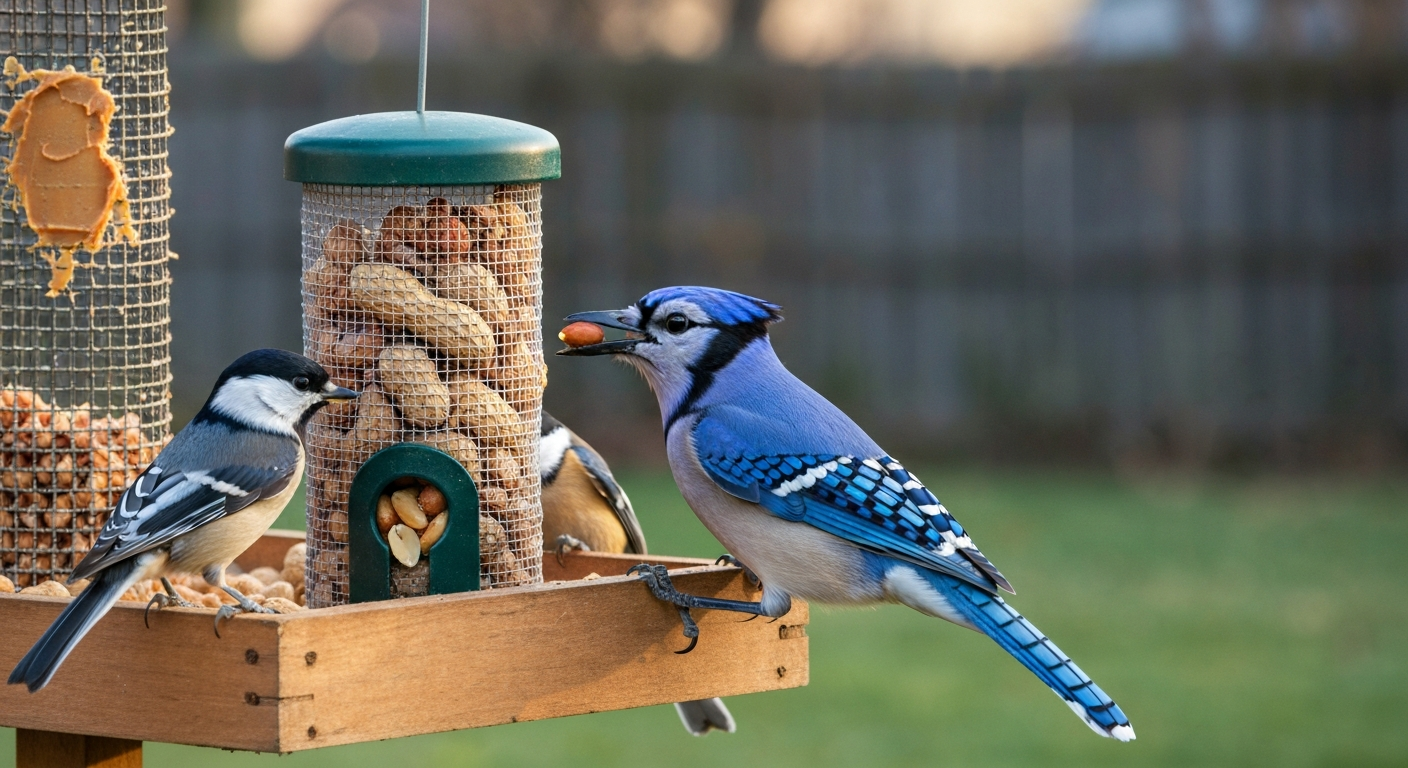
Can birds eat nuts? Practical guide: which species, safe types & prep, risks, feeders, portioning, ID tips.
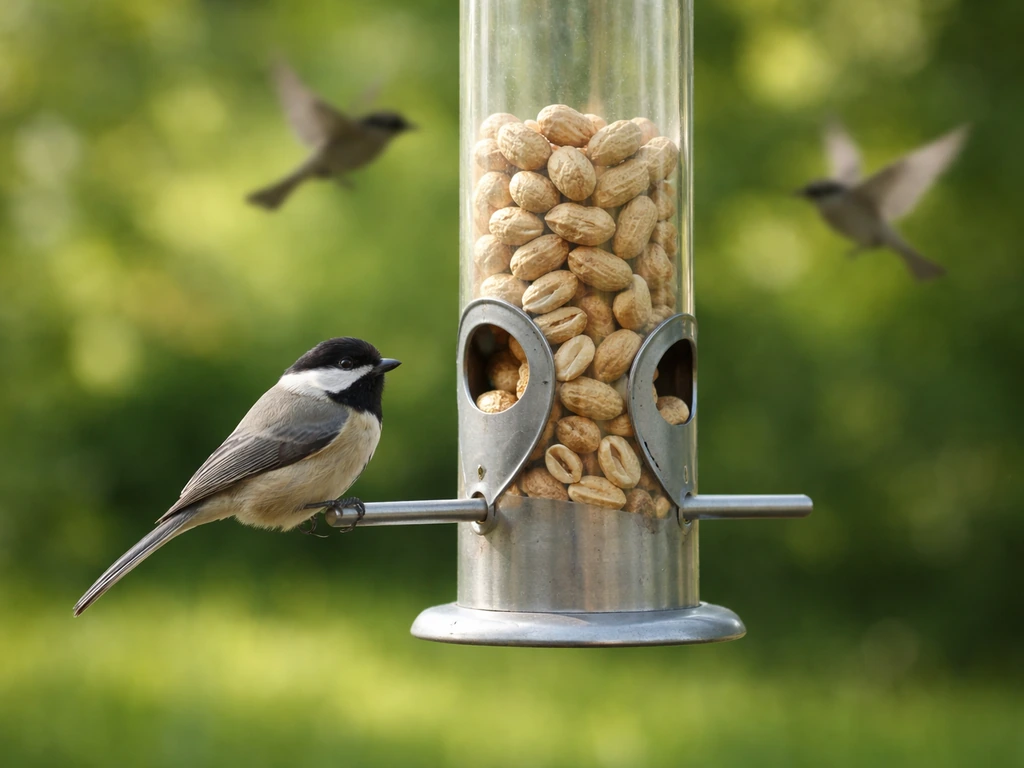
Identify peanut-eating birds and feed safely: species cues, peanut types, storage, hygiene, and myths vs risks.
Which raptors eat pigeons: peregrine, Cooper’s, goshawk, merlin, red-tailed, kestrels, owls; ID tips, risks and how to保护