The birds most likely eating peanuts at your feeder are blue jays, woodpeckers, titmice, nuthatches, and chickadees. Cardinals and finches will join in too, especially with shelled peanuts. That short list covers the vast majority of peanut visitors across North America, though which ones show up at your yard depends on your region, what form of peanut you're offering, and what feeder you're using. Here's how to confirm who's visiting and how to do it safely.
What Bird Eats Peanuts? ID Guide and Safe Feeding Tips
Maya Bennett
5 Jun 2026
The birds most likely eating your peanuts
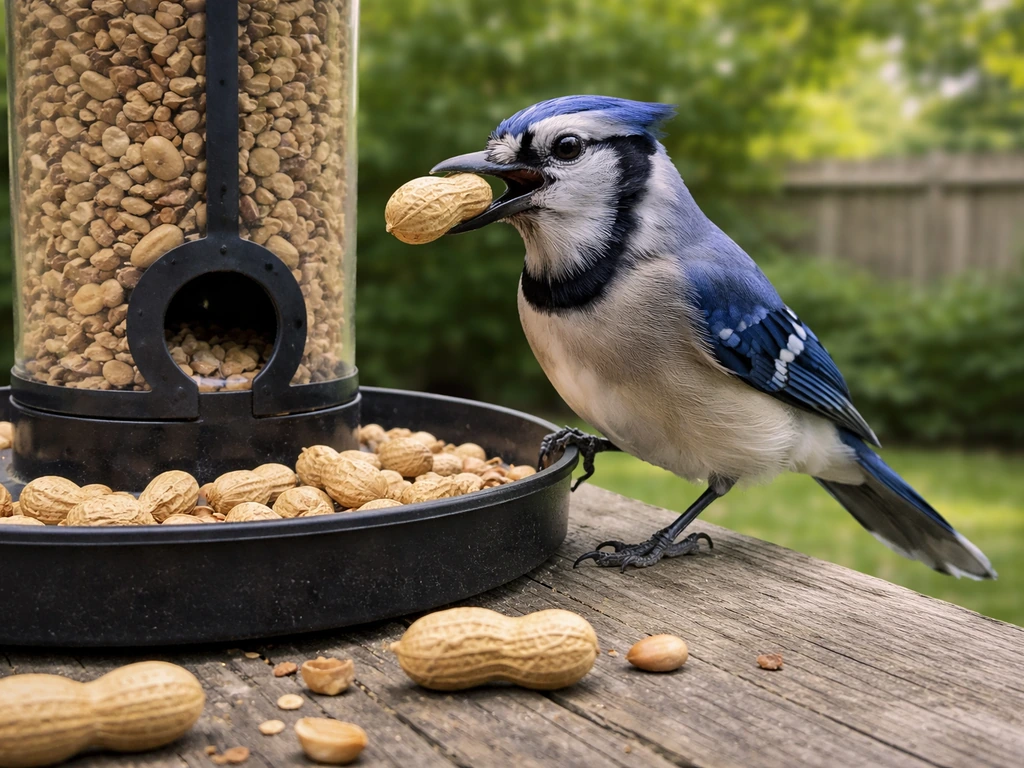
A handful of species account for almost all the peanut action at backyard feeders. Blue jays are usually the boldest and most visible. They'll arrive, grab one or even several whole peanuts, and fly off to cache them. Woodpeckers (especially Downy, Hairy, and Red-bellied in the East, and Acorn Woodpeckers in the West) are enthusiastic peanut fans and will cling to a mesh peanut feeder for long stretches.
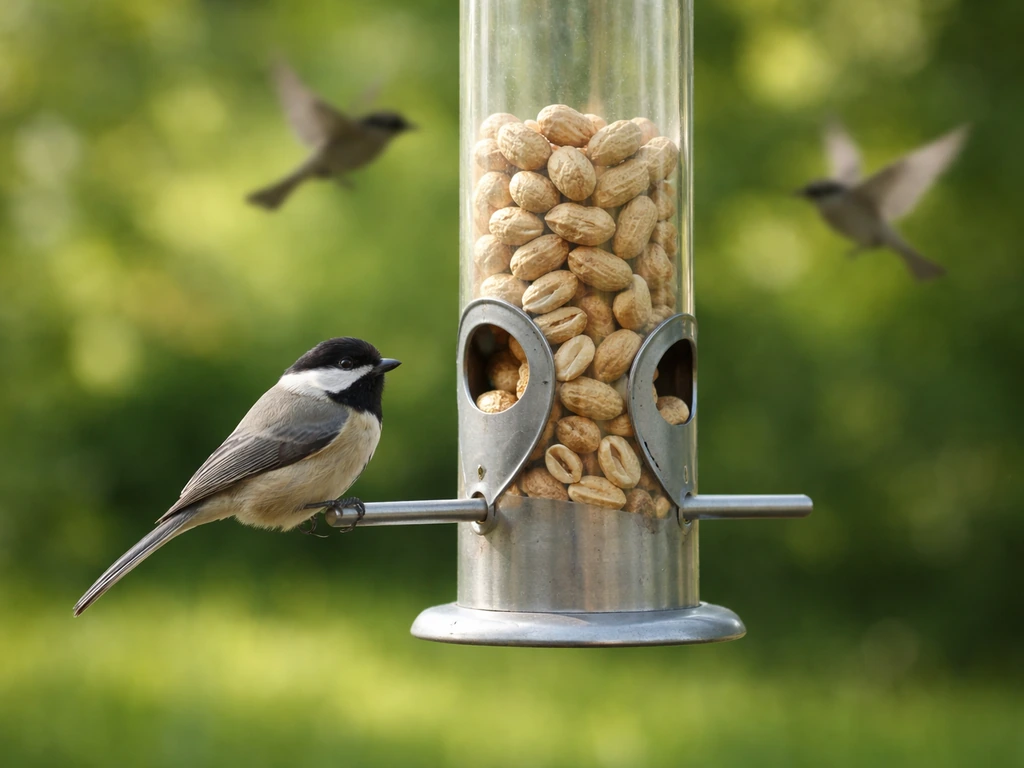
Tufted titmice and Black-capped or Carolina chickadees are quick, grab-and-go visitors that prefer peanut pieces or hearts over whole in-shell nuts. White-breasted and Red-breasted nuthatches round out the core group. They're the birds that creep headfirst down tree trunks and feeders, and they love peanuts in any form. Northern cardinals and house finches will take shelled peanut pieces too, though they're not as reliably drawn to peanuts as they are to sunflower seeds.
Region matters here. If you're in the West, Steller's Jays replace Blue Jays as the dominant loud peanut-grabber. Scrub-Jays (now called California or Woodhouse's Scrub-Jays depending on your range) are famously peanut-obsessed and will land near you to take them from your hand if you're patient enough. In the East and Midwest, Tufted Titmice dominate the smaller-bird peanut visits. In forested areas, you may get larger woodpecker species like Pileated taking peanuts from platform feeders or suet cages. The species list shifts, but the groups (jays, woodpeckers, nuthatches, chickadees, titmice) stay consistent.
Quick ID cues to figure out who's at your feeder
You don't need binoculars or a field guide open to narrow down who's eating your peanuts. Watch these four things: size, beak shape, feeding posture, and how they take the food.
| Bird | Size | Beak | Posture / Behavior | Peanut preference |
|---|---|---|---|---|
| Blue Jay | Robin-sized, blue and white, crest | Stout, pointed | Perches upright, grabs whole peanut and flies off fast | Whole in-shell or shelled |
| Downy/Hairy Woodpecker | Sparrow to Robin size, black-and-white, red patch (male) | Chisel-like, straight | Clings vertically to mesh feeder or suet cage | Shelled halves or peanut pieces |
| Tufted Titmouse | Small, gray, prominent crest, black forehead | Short, conical | Quick visits, flies off with one piece at a time | Shelled peanut hearts/chips |
| Black-capped / Carolina Chickadee | Tiny, black cap and bib, white cheeks | Short, sharp | Grabs one piece, retreats to nearby branch to eat | Shelled peanut pieces |
| White-breasted Nuthatch | Compact, blue-gray back, white face, no neck | Long, slightly upturned | Creeps headfirst down feeder or tree | Shelled peanuts or pieces |
| Northern Cardinal (male) | Robin-sized, all red, large crest | Heavy, orange, conical | Perches and cracks/eats in place | Shelled peanut pieces |
| House Finch | Small, streaky brown, male has red head/breast | Short, curved | Feeds on platform or tray, stays longer | Shelled peanut chips |
One key behavior tip: if something is taking whole peanuts in the shell and burying them in your lawn or garden, that is almost certainly a jay or a squirrel, not a small songbird. If your peanuts are disappearing fast with no birds visible, look for squirrels. Gray squirrels, fox squirrels, and chipmunks all raid peanut feeders aggressively and are often mistaken for birds when the feeder is viewed quickly from a window.
Peanuts in the shell vs shelled vs peanut butter: which birds prefer what
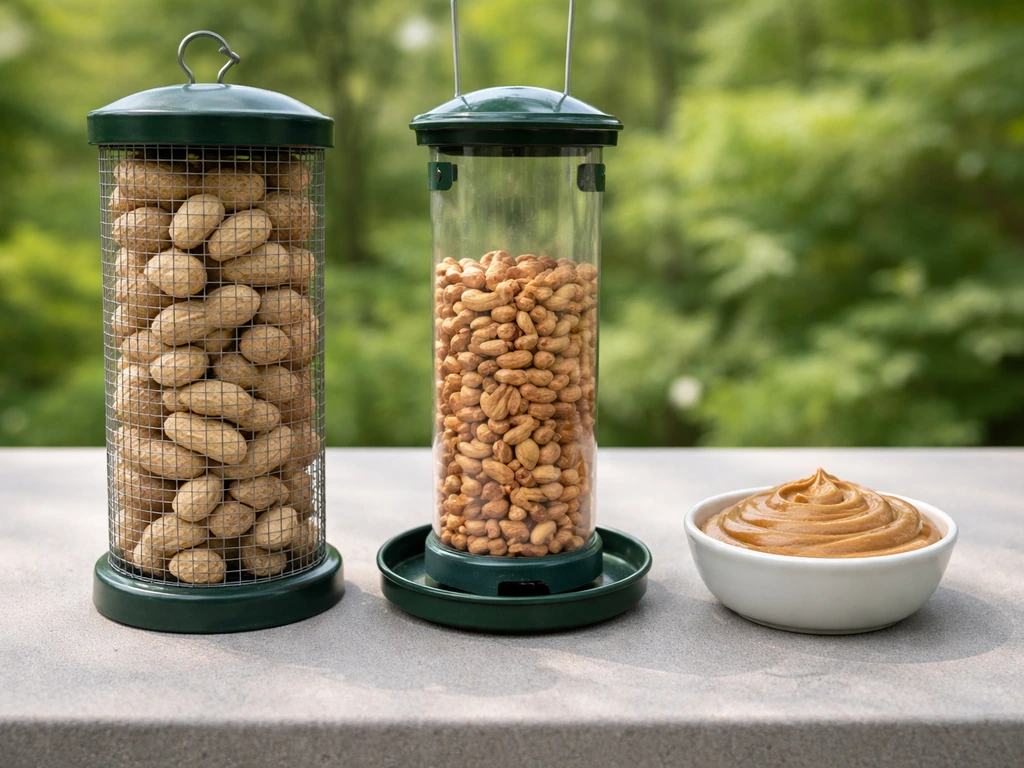
The form of peanut you offer matters more than most people realize. It directly determines which birds can actually use what you're providing, and getting this wrong means you're feeding squirrels and jays while the chickadees and nuthatches you wanted watch from a distance.
| Peanut form | Best for | Not ideal for | Feeder type |
|---|---|---|---|
| Whole peanuts in the shell | Blue jays, Steller's/Scrub-Jays, larger woodpeckers, crows | Chickadees, titmice, small finches (too hard to open) | Platform feeder, wreath/ring feeder, tray |
| Shelled peanut halves/hearts | All peanut-eating birds: jays, woodpeckers, titmice, nuthatches, chickadees, cardinals, finches | No major exclusions | Mesh tube feeder, hopper feeder, platform, suet cage |
| Peanut chips/pieces | Small birds: chickadees, titmice, nuthatches, finches | Jays (will eat but often prefer larger pieces) | Tube feeder, hopper feeder, tray |
| Peanut butter | Woodpeckers, nuthatches, chickadees, titmice, jays | Avoid in hot weather (can smear on feathers) | Smeared on bark, log feeder, or mixed into suet |
If you want the widest variety of visitors, shelled peanut halves or hearts are your best all-around option. They're accessible to every bird on the list without the size barrier of in-shell peanuts. Whole peanuts in the shell are great if your main goal is attracting jays or you want to watch the behavior of birds trying to extract them. Peanut butter is worth trying for woodpeckers and nuthatches in cooler months. There's a lot more to the peanut butter question, including what to watch out for in summer heat, so it deserves its own careful look.
How to offer peanuts safely
Feeder type and placement
The right feeder makes a real difference for both bird access and your own maintenance burden. A mesh tube feeder or cylinder designed for peanuts is the most versatile option. It lets woodpeckers, nuthatches, and chickadees cling and feed while making it harder for squirrels to clean out the whole thing at once. Feeders with shorter perches will favor small birds like titmice and chickadees and naturally exclude larger birds like grackles. A cage-style peanut feeder also works well because it lets clingers like nuthatches feed upside-down, which is how they naturally prefer to eat.
For placement, keep woodpecker and nuthatch feeders well off the ground and near trees where these birds already travel. Platform or tray feeders placed lower work for ground-feeding birds but attract more squirrels and mammals. If you want to attract multiple species, use two feeders: one elevated mesh tube for clingers, and a tray or platform at a different height for perching birds like jays and cardinals. Keep feeders away from dense shrubs at ground level where cats can hide, and place them either within 3 feet of a window (to reduce collision speed) or more than 30 feet away.
How much to put out
Only put out as many peanuts as birds will eat in one to two days. Peanuts go rancid and can mold quickly, especially in warm or humid weather. A small daily fill is much better than a large weekly fill. This also helps you monitor what's actually being eaten versus what's sitting and spoiling.
Storing peanuts and preventing spoilage
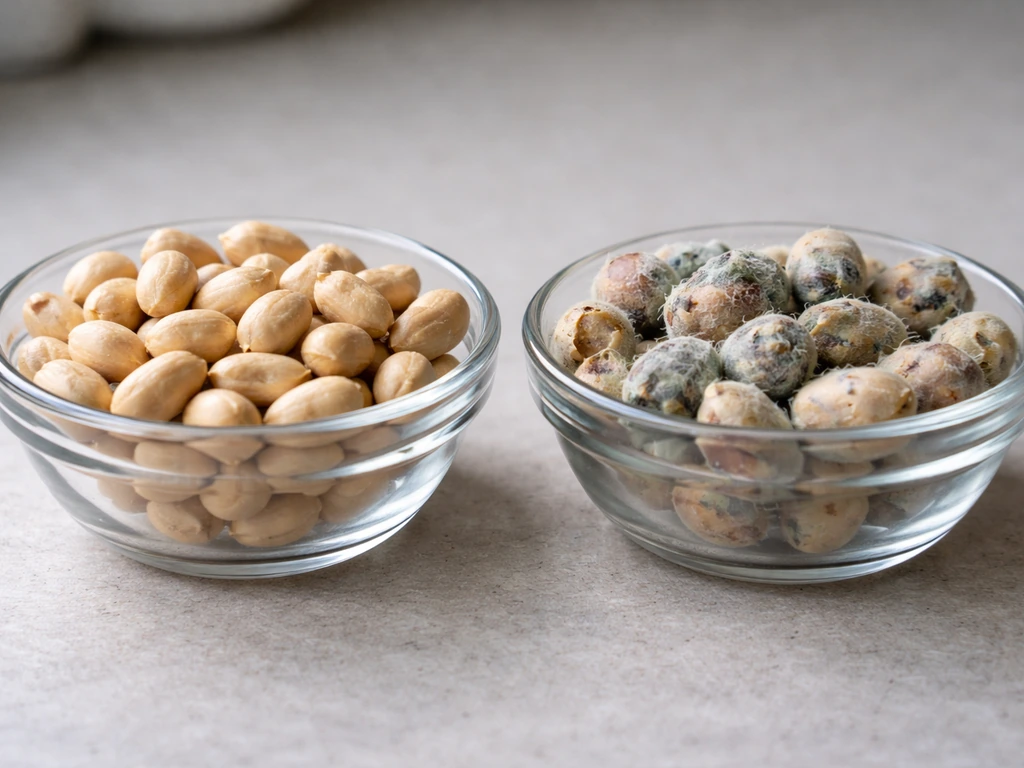
Peanuts are one of the higher-risk bird foods when it comes to spoilage. They go rancid faster than seeds, and they're highly susceptible to aflatoxin-producing molds, particularly Aspergillus species. The FDA actively monitors aflatoxin levels in peanuts because of the health hazard they pose. For birds and the wildlife around your yard, moldy or rancid peanuts are a real danger, not just a quality issue.
- Store peanuts in an airtight container in a cool, dry location. A sealed plastic bin in a garage or shed works well.
- Don't store large quantities for more than 4 to 6 weeks in warm weather. In winter, sealed peanuts keep longer.
- Check for any musty smell, oily or greasy feel, or visible mold before filling your feeder. If in doubt, throw them out.
- Don't mix old peanuts with new ones. Empty and inspect the container before adding a fresh batch.
- Avoid buying in bulk if you won't use it quickly. Buy smaller quantities more often.
- Never offer peanuts that have been sitting in a wet feeder or exposed to rain without drying the feeder first.
Feeder cleaning is just as important as proper storage. Clean peanut feeders more frequently than seed feeders because the oils from peanuts accelerate bacterial and mold buildup on feeder surfaces. Rinse the feeder and scrub off residue, then disinfect it in a solution of 1 part bleach to 9 parts water (let it soak for at least 10 minutes per CDC guidance), rinse thoroughly, and let it dry completely before refilling. Cornell Lab's All About Birds recommends cleaning every two weeks as a baseline, but during wet weather, high traffic, or if there are reports of sick birds in your area, clean weekly or even more often.
Risks to pets and backyard wildlife from spoiled or inappropriate peanuts
This is the part most backyard birders overlook until something goes wrong. Moldy peanuts under or around feeders are a genuine hazard to dogs and cats that sniff or eat dropped food. The FDA is explicit about this: aflatoxin contamination in moldy peanuts can cause aflatoxin poisoning in pets, with symptoms that include sluggishness, loss of appetite, vomiting, diarrhea, jaundice, and unexplained bruising or bleeding. If your dog is a ground-sniffer around the feeder area, dropped and rotting peanuts are a real risk.
For wild birds, the bigger disease risks at peanut feeders are bacterial (salmonella, E. If a bird is sick, offer help by focusing on safe food and proper husbandry, and consult a wildlife rehabilitator rather than trying to give antibiotics meant for birds or humans disease risks. coli spread at shared surfaces) and viral (avian pox). The U.
S. Fish and Wildlife Service notes that close contact at shared feeder surfaces makes pathogen transmission between birds easy. Avian pox, caused by avipoxviruses, is highly contagious between birds and has been reported in many species. If you notice birds with warty growths on their faces or feet, or multiple sick-looking birds at your feeder, stop feeding temporarily.
The Missouri Department of Conservation recommends stopping artificial feeding for several days to help slow spread when avian pox is suspected locally.
- Wear rubber gloves when cleaning feeders. Humans can contract salmonella from contaminated feeders or sick birds.
- Sweep up dropped peanuts under feeders regularly, especially before they get wet and start to mold.
- Keep pets away from the ground beneath peanut feeders if you can't clean up daily.
- If a pet shows symptoms of aflatoxin poisoning after spending time near a feeder, contact a vet immediately.
- Never offer peanuts mixed with other foods that have gone stale or moldy. The whole mix becomes a hazard.
Why you're not getting peanut-eaters (and who's really taking them)
If you've set out peanuts and the expected birds aren't showing up, a few things are usually to blame. First, it takes time. Birds in a new yard may need days or even two weeks to find a new feeder. Be patient and consistent. Second, feeder placement matters a lot. Woodpeckers and nuthatches especially need to feel close to tree cover. A feeder in the middle of an open lawn is much less likely to attract them than one within 10 to 15 feet of a tree.
Squirrels are the number one peanut thief at most feeders. They're fast, persistent, and they'll empty a peanut feeder before most birds get a chance. If peanuts are disappearing quickly without bird sightings, squirrels are the most likely cause. A baffled pole or squirrel-proof cage feeder will help. Chipmunks are second on the list, especially with ground-level peanuts or tray feeders. Raccoons are typically nighttime visitors, so if your feeder is being hit after dark, that's likely who's responsible.
Feeder competition also plays a role. Blue jays are dominant at feeders and will displace smaller birds like chickadees and titmice. If jays are monopolizing your peanut feeder, adding a second feeder with peanut pieces in a smaller mesh cage (where jays can't fit as easily) gives the smaller birds a better chance. Woodpeckers can also chase off nuthatches at suet and peanut feeders. Having two feeding spots reduces this kind of competition significantly.
Finally, check the peanuts themselves. If peanuts are rancid or have been sitting out in wet weather, birds often won't touch them. Their smell discrimination is better than ours. Fresh peanuts after a feeder refresh often bring birds back the same day.
If you've troubleshot all of the above and still aren't getting visitors, look at what else the birds in your area prefer. Peanuts are closely related to other high-fat offerings like nuts and suet, and understanding what birds eat more broadly, including harder large nuts like walnuts and acorns, can help you figure out which species are in your yard and what it will take to attract them reliably.
Birds can also eat many kinds of nuts, but availability depends on the species and whether the nuts are suitable and offered in a safe form. Some birds, like jays, can handle hard, large nuts by cracking them open and caching the pieces jays can handle hard, large nuts.
Your action plan for today
- Buy a bag of shelled peanut halves or hearts from a wild bird supply store. This form works for every peanut-eating species on the list.
- Set up a mesh tube or cylinder peanut feeder within 15 feet of a tree, at least 5 feet off the ground.
- Fill with only a day or two's worth of peanuts to start. You'll quickly learn how fast they go.
- Watch for the five main visitors: jays (large, loud, grabs and leaves), woodpeckers (clingers, chisel beak), titmice (small, crested, quick grabs), nuthatches (headfirst descent, no visible neck), and chickadees (tiny, black cap, grabs one piece and retreats).
- Check for squirrels. If they're cleaning out the feeder before birds arrive, add a pole baffle or switch to a cage-style feeder.
- Store leftover peanuts in a sealed container in a cool, dry location. Smell-check before every fill.
- Clean the feeder every two weeks minimum with a 1: 9 bleach-to-water solution. Soak 10 minutes, rinse, and dry completely before refilling.
- Sweep up dropped peanuts under the feeder regularly, especially if pets have access to the area.
FAQ
Can I feed birds peanuts in peanut butter, and is any brand safe?
Yes, but use caution: choose plain, unsalted peanut butter and smear a very thin layer or offer it in a feeder that allows woodpeckers and nuthatches to work it safely. Avoid peanut butter with sugar, chocolate, xylitol, or salt, and never leave thick peanut-butter blobs out longer than you would whole peanuts, because it can spoil and attract more pests.
If I want more small birds like chickadees and nuthatches, should I always use shelled peanuts?
Shelled peanuts and peanut hearts are generally safer for small birds because they do not require the size and strength to crack shells. However, jays, woodpeckers, and squirrels still show up for shelled peanuts, especially if the feeder is easy to access, so you may still need a squirrel-resistant design.
How can I tell whether peanuts are being cached by birds or squirrels?
If you see squirrels burying peanuts, that usually means they are caching food, not that birds are “hiding” it. A quick way to separate the two is to check below the feeder for fresh digging and scattered shells, and to look for visible squirrel tracks or tail flicking near the ground, especially after you refill.
What feeder changes work best to stop squirrels from eating all the peanuts?
A mesh tube, cage-style feeder, or a peanut feeder with small openings typically reduces squirrel access because squirrels cannot reach or extract peanuts as easily. Add a baffle to any pole-mounted setup and avoid placing the feeder on a line of access, like near branches, fences, or low roof edges that squirrels can launch from.
What should I do if birds stop eating after a few days?
Do not keep filling the feeder after it looks like birds have stopped visiting. If the peanuts are getting damp, turning rancid, or being soiled by repeated visits, birds will often refuse them. Dump, replace with fresh peanuts, and clean the feeder before refilling so you are not rewarding mold buildup.
Is it safe for dogs and cats if they might eat dropped peanuts?
Yes. Peanuts can be risky for pets if they are moldy or if your pet eats dropped, rotting pieces under the feeder. Clean up shell and peanut debris regularly, and keep dogs and cats away from the feeder area, especially in wet weather when mold develops faster.
If I see sick birds at my peanut feeder, should I stop feeding and for how long?
If you suspect avian pox or other sickness at the feeder, pause peanut feeding and remove or thoroughly clean feeders after the pause. Look for consistent signs such as warty growths on faces or feet, and avoid crowding by spacing feeders farther apart or temporarily switching to safer, less-contested foods only if wildlife officials recommend continuing feeding locally.
When is the best time of year, and what weather conditions, for feeding peanuts?
Timing and weather matter. In cold months, higher-fat foods like peanut butter are more useful, but in hot or humid weather, peanuts can spoil quickly and attract more pests, so use smaller daily amounts and check more often. Also expect a learning curve after moving feeders, often several days up to two weeks.
Next Articles
What Bird of Prey Eats Pigeons: Common Raptors & ID Tips
Which raptors eat pigeons: peregrine, Cooper’s, goshawk, merlin, red-tailed, kestrels, owls; ID tips, risks and how to保护
Which Bird Eats Mice? How to Identify Mouse Predators
Identify which birds eat mice using hunting cues, time of day, calls, and perch habits, plus safe yard steps.
What Bird Eats Ducks? How to Identify Duck Predators
Identify which birds, like hawks and owls, prey on ducks and learn proof cues and humane steps to reduce risk.