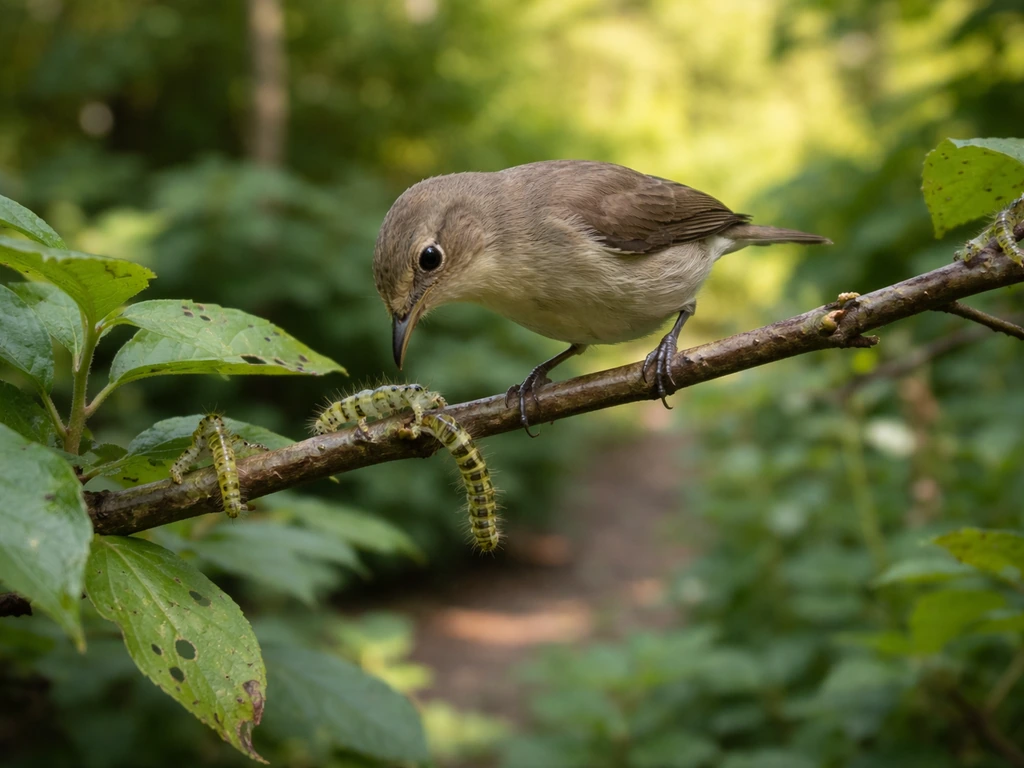
Chickadees, orioles, brown thrashers, flycatchers, and warblers are the birds most likely eating caterpillars in your yard right now. These species rely on caterpillars as a primary protein source during nesting season (roughly April through August), and if you have deciduous trees, shrubs, or garden beds with caterpillar activity, at least one of them is probably already working your property. The trick is knowing what to look for and how to make your yard a place they keep coming back to.
What Bird Eats Caterpillars? Identify and Attract Them

Maya Bennett
16 Jun 2026
Why caterpillars matter so much to birds
Caterpillars aren't just a snack for birds, they're closer to a superfood. Audubon describes moth caterpillars as nature's nutritional jackpot for nesting birds, packed with the protein and fat that baby birds need to grow fast. A single clutch of chickadees can require hundreds of caterpillars per day. That's why so many bird species spike their insect intake during spring and summer even if they eat seeds or fruit the rest of the year. Understanding this seasonal demand is key to both finding these birds and supporting them.
The birds most committed to eating caterpillars fall into two groups: dedicated insectivores like warblers, flycatchers, and kinglets that eat insects almost exclusively, and generalist songbirds like thrashers, orioles, and robins that shift heavily toward insects during breeding season. Both groups are worth knowing.
The most common caterpillar-eating birds: who to look for and where
Here's a practical rundown of the species you're most likely to see eating caterpillars. These are organized by how and where they hunt, which makes them easier to identify in the field.
Black-capped and Carolina chickadees
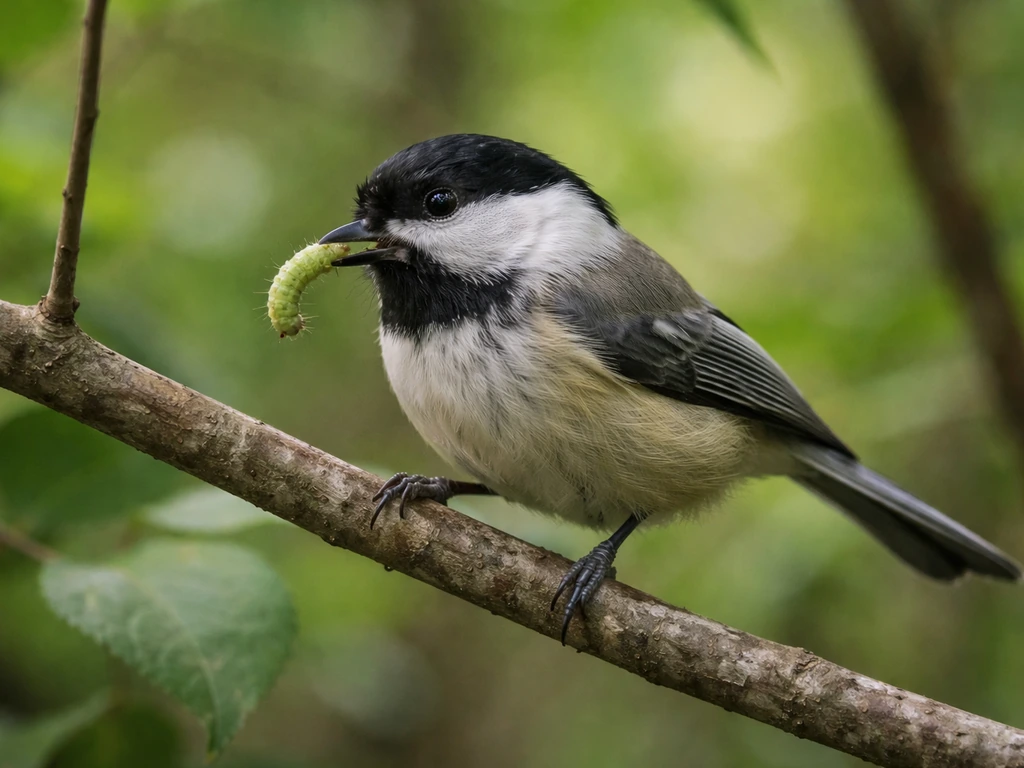
Chickadees are your most reliable caterpillar hunters. The US Forest Service notes that black-capped chickadees eat caterpillars heavily in summer, including hairy species like early-stage gypsy moths and tent caterpillars that other birds skip. They forage by gleaning foliage: hopping branch to branch, hanging upside down from leaves, and picking caterpillars directly off stems and undersides of leaves. Black-capped chickadees dominate the northern US and Canada; Carolina chickadees cover the Southeast. Both behave the same way in the yard.
Baltimore orioles
Baltimore orioles are one of the few birds that actively seek out hairy, spiny caterpillars that most birds avoid. Audubon Field Guide’s Baltimore oriole profile also notes that the species eats caterpillars in summer, including hairy caterpillars that many other birds avoid hairy, spiny caterpillars that most birds avoid. Cornell Lab documents their appetite for tent caterpillars, gypsy-moth caterpillars, and fall webworms during breeding season, often eating dozens per day while feeding nestlings. They forage high in the canopy of large deciduous trees, so look up. Adult males are unmistakable with their bright orange and black coloring. Females are a muted yellow-orange and easier to miss. They're eastern birds, breeding across much of the eastern and central US.
Brown thrashers
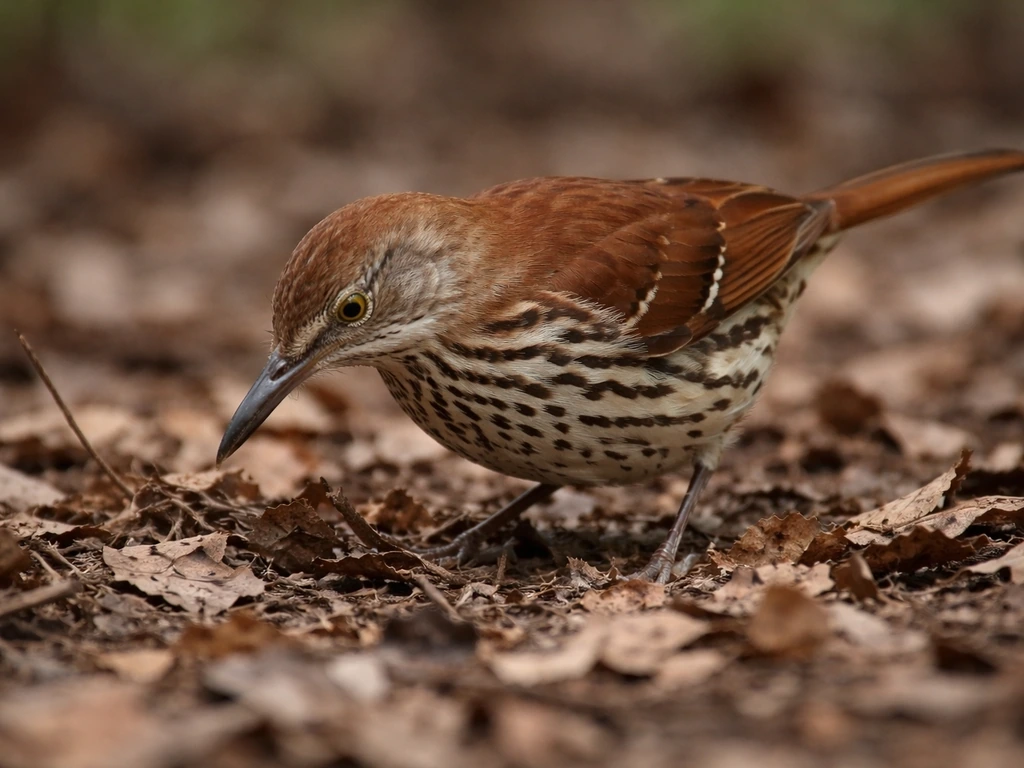
Brown thrashers are ground-level hunters with a long, rusty-brown body, heavy streaking on the chest, and a noticeably long curved bill. Cornell Lab lists tent caterpillars, gypsy-moth caterpillars, and cutworms as regular food items. They use that bill to flip leaf litter and dig into soil, so you'll see them working the base of shrubs and along garden edges. They're primarily eastern and central US birds and strongly prefer shrubby, brushy habitat.
Flycatchers: willow flycatcher, eastern wood-pewee, and relatives
Flycatchers are aerial hunters: they perch on exposed branches and dart out to snatch insects mid-flight, including caterpillars that are dangling from silk threads or moving along bare branches. Audubon's field guides list caterpillars among the nestling food for willow flycatchers, and the eastern wood-pewee follows the same pattern. They're small, brownish-olive birds with subtle wing bars, best identified by their hunting behavior and distinctive calls. Look for them perching upright on dead branches at the edge of wooded areas.
Warblers and kinglets
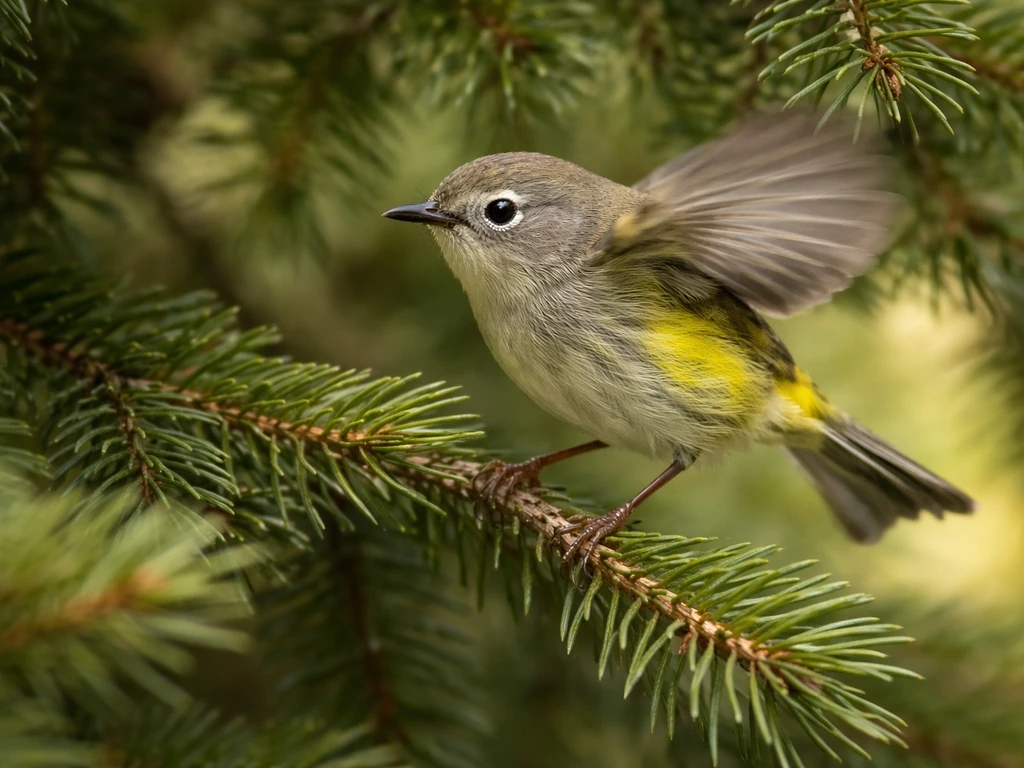
Warblers are small, fast-moving foliage gleaners that work through tree canopies at impressive speed during migration and breeding. Yellow-rumped warblers, yellow warblers, and chestnut-sided warblers are particularly active caterpillar hunters. Kinglets (ruby-crowned and golden-crowned) are even tinier and constantly hover-glean at leaf surfaces, picking off small caterpillars and insect eggs. The NPS notes that kinglets shift from insects in summer to seeds in winter, so spring through summer is when they're most useful as caterpillar predators.
| Bird | Region | Foraging Style | Caterpillar Types Taken |
|---|---|---|---|
| Black-capped chickadee | Northern US, Canada | Foliage gleaning, hanging upside down | Hairy caterpillars, tent caterpillars, gypsy moth larvae |
| Carolina chickadee | Southeastern US | Foliage gleaning | Similar to black-capped chickadee |
| Baltimore oriole | Eastern/central US | High canopy foraging | Tent caterpillars, gypsy moth, fall webworms, hairy types |
| Brown thrasher | Eastern/central US | Ground foraging, leaf flipping | Tent caterpillars, cutworms, gypsy moth larvae |
| Willow flycatcher | Widespread US | Aerial sallying from perch | Caterpillars, flying insects |
| Eastern wood-pewee | Eastern US | Aerial sallying from perch | Caterpillars, flying insects |
| Yellow warbler | Widespread US | Active foliage gleaning | Small caterpillars, insect larvae |
| Ruby-crowned kinglet | Widespread US (spring/fall) | Hover-gleaning at leaves | Small caterpillars, insect eggs |
How to confirm you're watching a caterpillar hunter: behavior clues
The hunting style tells you almost as much as the species ID. If you're not sure what bird you're watching, these behavior patterns are reliable confirmation that caterpillars are likely on the menu.
- Foliage gleaning: Bird moves slowly along branches, peering at leaf surfaces and undersides, picking items off with its bill. Classic chickadee and warbler behavior. Peak activity in morning.
- Hover-gleaning: Bird briefly hovers in front of a leaf or branch tip before plucking something off. Kinglets and some warblers do this constantly.
- Ground flipping: Bird uses its bill to toss leaf litter or dig into loose soil. Brown thrashers and robins are the usual suspects. Look for this near shrub bases.
- Aerial sallying: Bird perches upright, then makes a short flight to snag something from a branch or mid-air, and returns to the same perch. This is classic flycatcher behavior.
- Visiting silk tents or webs: If you have tent caterpillar colonies on cherry or apple trees, watch for orioles and chickadees making repeated visits to the same tree or branch.
- Feeding nestlings from foliage: During May-July, watch for adults making rapid back-and-forth trips from trees to a nest location carrying visible items. This almost always means insects and very often caterpillars.
Timing matters too. Most caterpillar hunting happens in the morning, especially during the first two to three hours after sunrise. Activity slows through midday and picks up again in late afternoon. Peak season is late April through early July in most of the US, which lines up tightly with nesting season and the peak abundance of caterpillars on host plants.
How to attract caterpillar-eating birds to your yard
The single most impactful thing you can do is plant native trees and shrubs. Caterpillars need native plants to complete their life cycles, and native plants host dramatically more caterpillar species than non-native ornamentals. No caterpillars means no caterpillar-eating birds, no matter how many feeders you put up.
Plant choices that drive caterpillar bird activity
- Native oaks (Quercus spp.): Support more caterpillar species than almost any other tree in North America. A single oak can host hundreds of moth and butterfly larvae.
- Native cherries and plums (Prunus spp.): Major host plants for tent caterpillars and many moth species, which attracts orioles and chickadees heavily.
- Willows (Salix spp.): Excellent host plants for caterpillars, and the name of the willow flycatcher is no coincidence.
- Native viburnums and elderberries: Shrub-level hosts that attract thrashers and ground-feeding birds.
- Goldenrod and native milkweeds: Herbaceous plants that support caterpillar diversity in garden beds.
Water and cover
A shallow birdbath (2 inches deep or less) positioned near shrubs or tree cover will draw in chickadees, warblers, and thrashers quickly. Change the water every one to two days to prevent mosquito breeding and bacterial growth. Moving water (a dripper or small recirculating fountain) is significantly more attractive to insectivorous birds than still water. Dense shrub plantings give brown thrashers and ground foragers the shelter they need to feel safe working leaf litter nearby.
Nesting support
Chickadees readily use nest boxes with a 1.125-inch entrance hole. Mount them 5 to 15 feet high on a pole or tree, away from direct sun. Flycatchers and thrashers are cavity-avoiders and nest in dense shrubs or tree forks, so thick native plantings serve them better than boxes. Leaving dead branches and snags standing (safely, away from structures) gives flycatchers preferred hunting perches.
Do feeders actually help with caterpillars? What works and what doesn't
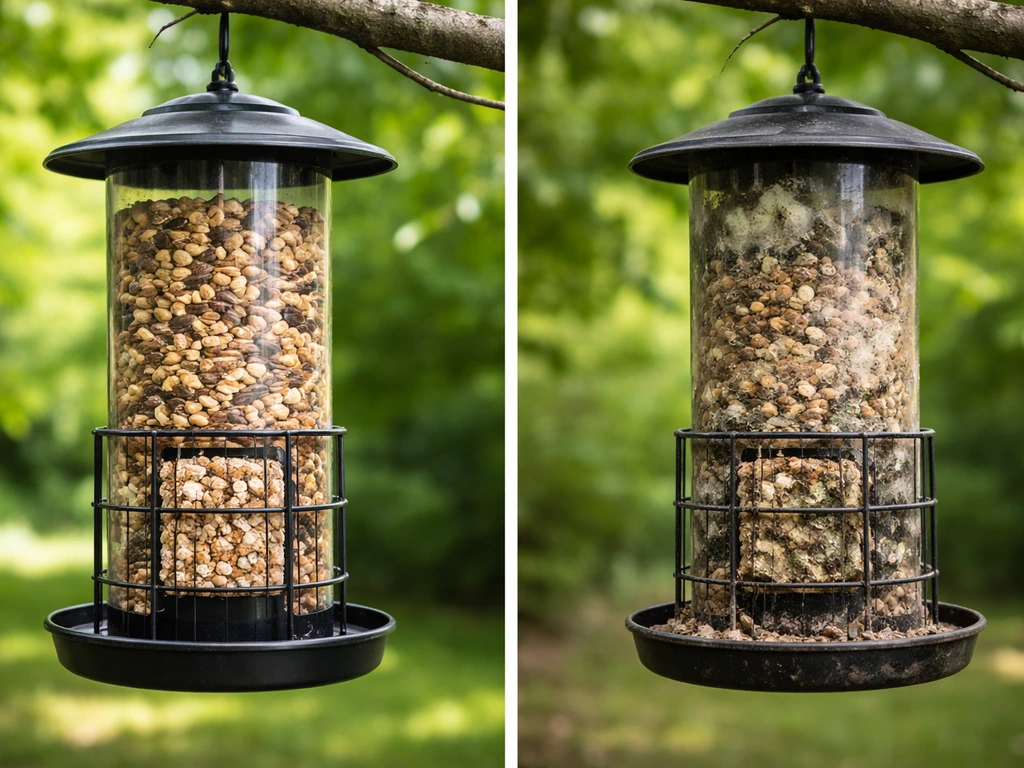
Here's the honest answer: feeders don't replace habitat when it comes to caterpillar-eating birds. Chickadees and warblers come to feeders for seeds and suet, but they find their caterpillars by foraging through foliage, not at a feeder tray. If you want caterpillar predators active in your yard, plant native trees. Feeders are a supplement, not a solution.
That said, feeders can keep caterpillar-eating birds in your general area so they spend more time foraging nearby. Here's what actually helps versus what to avoid:
| Feeder Option | Effect on Caterpillar-Eating Birds | Verdict |
|---|---|---|
| Black-oil sunflower seeds | Attracts chickadees year-round; keeps them in your area during nesting season | Good |
| Suet (plain or insect-blend) | Particularly attractive to chickadees, woodpeckers, nuthatches; insect suet mimics natural protein sources | Good |
| Dried mealworms | Directly attractive to orioles, robins, bluebirds, and thrashers; good bridge protein source | Good |
| Oriole nectar feeders (sugar water) | Attracts Baltimore orioles, keeping them on-site while they also forage caterpillars | Good as supplement |
| Bread or crackers | No nutritional value, can cause digestive issues; attracts starlings and house sparrows that compete with insectivores | Avoid |
| Generic mixed seed with milo | Attracts sparrows and doves but rarely insectivorous birds; can lead to seed buildup and mold | Avoid |
| Cooked or processed foods | Can introduce bacterial pathogens; dangerous to birds and nearby wildlife and pets | Avoid completely |
One thing worth knowing: Baltimore orioles specifically will take dried or fresh mealworms from platform feeders, and this can be a great way to confirm their presence while supplementing what they're finding in the canopy. It won't replace their need to forage, but it builds a reliable routine for them.
Staying safe: seed storage, spoiled feed, and protecting pets and wildlife
This is the part most backyard birders skip, and it causes real problems. Insectivorous birds already face risks from pesticides, habitat loss, and cat predation. Poorly managed feeders add more risk without meaning to.
Seed storage done right
Store seed in a hard-sided metal or thick plastic container with a secure lid, away from heat and moisture. Warm, damp seed grows mold fast, and aflatoxins from moldy seed can kill birds. Buy seed in quantities you'll use within four to six weeks. If seed smells musty, looks clumped, or has any visible mold, throw it out. Don't put it in a compost pile where wildlife can access it.
Feeder hygiene
Clean feeders every one to two weeks with a 10 percent bleach solution (one part bleach to nine parts water), rinse thoroughly, and let dry completely before refilling. This matters especially for tube feeders where wet seed can pack and rot at the bottom. Ground feeders and platform feeders should be cleaned even more frequently because droppings accumulate directly on the food surface.
Protecting pets and other wildlife
Outdoor cats are the single largest human-related cause of songbird death in North America, and insectivorous birds foraging low in shrubs or on the ground are particularly vulnerable. Keep cats indoors or use a secure catio. If you have dogs, make sure feeder areas are dog-free zones during active bird foraging hours. Spoiled or inappropriate food at feeders can also attract raccoons, rats, and opossums, which then raid nests, so tight food management protects the birds you're trying to support. Remove suet and mealworm feeders during extreme heat (above 90°F) because these foods spoil within hours and can cause salmonella outbreaks in bird populations.
If you're using pesticides or insecticides in your yard, stop. This is non-negotiable if you want caterpillar-eating birds. Pesticides reduce the caterpillar population the birds depend on, and secondary poisoning (birds eating pesticide-affected caterpillars) is a documented risk. Organic pest management and tolerating some caterpillar damage on ornamental plants is the tradeoff for a yard full of active insectivorous birds.
Not seeing caterpillar hunters yet? Work through this checklist
If you've been watching your yard and still aren't spotting active caterpillar hunters, run through these common issues:
- Check your trees: Are they native species? Non-native ornamentals like Bradford pears, burning bush, or Norway maples host very few caterpillar species. Replace or supplement with native oaks, cherries, or willows.
- Check for pesticide use: Any recent spraying in your yard or by neighbors can crash local caterpillar populations and drive birds elsewhere.
- Check the season: Most caterpillar hunting peaks May through July. Outside this window, you'll see far less activity even if your habitat is good.
- Check for cats: Free-roaming cats in the yard or neighborhood suppress ground and low-shrub foraging birds dramatically. Even occasional cat presence keeps birds away.
- Check feeder hygiene: Moldy, stale, or spoiled food drives birds away. A dirty feeder is worse than no feeder.
- Check water: Add or refresh a shallow birdbath with moving water if you haven't already. This single change often brings in warblers and other insectivores that wouldn't otherwise stop.
- Check timing: Are you looking at the right time? Shift your observation to the first two hours after sunrise and try again.
- Be patient with warblers and flycatchers: These species aren't year-round residents in most areas. They peak during spring migration (April-May) and nesting season (May-July). If you're outside those windows, they may simply not be there yet.
- Consider nearby habitat: If there are no mature deciduous trees within a few hundred yards, the bird populations you're trying to attract may not be established in your immediate area. Long-term habitat planting is the only real fix.
The good news is that most of these are fixable, and even small changes like adding a native tree, setting up a dripper, or cleaning a feeder can produce visible results within days during active nesting season. If you're also curious about which birds target other insects like flies, dragonflies, Japanese beetles, or butterflies, many of the same species overlap, and the habitat strategies here will support all of them.
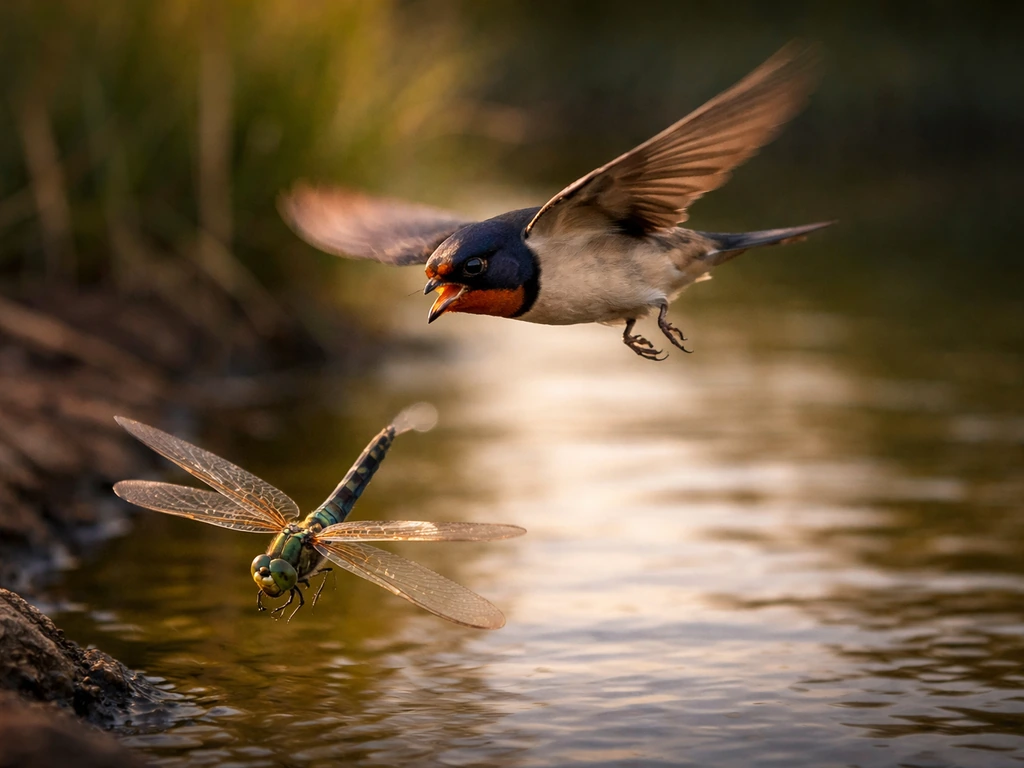
Some birds will also eat Japanese beetles, so the same insect-friendly habitat can help there too. Some birds also eat dragonflies and other flying insects, so it can help to identify what bird does that in your area. Some birds specialize in catching flies too, so you might see them when you wonder what bird eats flies which birds target other insects like flies.
FAQ
How can I tell if the birds I see are actually eating caterpillars, not just insects in general?
You can confirm caterpillar feeding by looking for bird behavior first, then the evidence. Insects-focused songbirds often work foliage continuously and move branch to branch, rather than pausing at feeders. If you see adults repeatedly entering nearby shrubs or trees with bills working quickly, check again at those exact spots, since feeding usually peaks in the first couple hours after sunrise.
If I plant more “pollinator” plants, will I automatically get more birds that eat caterpillars?
Yes, but the effect depends on what you plant. If you add native host plants that caterpillars can complete their life cycles on, you will see more caterpillar activity and therefore more caterpillar-eaters. If you plant non-native ornamentals, you may still attract birds, but caterpillar populations often stay too low to support heavy nesting-season foraging.
Will bird feeders bring in chickadees, orioles, or warblers if I do not have caterpillars yet?
Feeding does not bring caterpillar-eating birds to your yard by itself, because they locate caterpillars by foraging through foliage. However, orioles can form a strong routine at feeders if you offer mealworms on a platform, and that can increase the likelihood that they will also search the surrounding canopy for what they need. Think of feeders as a supplement to habitat, not a replacement.
Can I use insecticides and still expect birds to eat caterpillars in my yard?
It can, especially if you use pesticides that suppress caterpillars. Even “targeted” spraying can reduce the caterpillar base that insectivorous birds rely on, and birds may also be exposed when they eat contaminated prey. The safest approach is to pause pesticide use and switch to non-chemical pest management, along with accepting some leaf damage on host plants.
What are the most common feeder mistakes that could reduce the birds I want to attract?
Two big red flags are seed spoilage and feeder hygiene. Moldy or clumped seed can harm birds, so discard anything musty or with visible mold. Also clean feeders at least every one to two weeks, and more often for ground and platform feeders where droppings accumulate on the food surface.
What feeder types work best specifically for caterpillar-eating birds?
Use food and water that match the birds’ real foraging. Chickadees and warblers mainly hunt on plants, so extra seed or suet helps them stay longer but will not generate caterpillars. For the species that will use feeders, mealworms on platforms can help, but you should still prioritize native trees and shrubs for the actual caterpillar supply.
Do birdbaths help caterpillar-eating birds, and how should I place one?
Yes. A shallow birdbath near cover can draw in foliage-foraging birds, but you also need safe placement. Keep water very close to shrubs or tree edges, change it every one to two days, and consider a dripper or fountain because movement attracts more insectivorous birds than still water.
When is the best time of day to watch for birds eating caterpillars?
Timing is a major lever. Morning is usually the strongest for caterpillar foraging, especially the first two to three hours after sunrise, and late afternoon can ramp activity again. If you only check at midday, you might assume the birds are not present when they are simply less active.
Should I put up a nest box to attract birds that eat caterpillars, or focus on plants instead?
For cavity-avoidant birds like flycatchers and brown thrashers, nest boxes are often less useful than dense native cover. If you do use boxes, place them correctly, but thick shrubs, tree forks, and snag availability for perching usually matter more for attracting the birds that hunt by perching and darting or working leaf litter.
My yard gets birds but not caterpillar hunters, what should I troubleshoot first?
If you do not see caterpillar hunters, start with likely blockers: low native host plant coverage, pesticide exposure, lack of dense cover near food or water, and late-day or occasional observation. Also check whether feeders are keeping birds in the right area without adding unsafe risks like spoiled seed or dirty troughs.