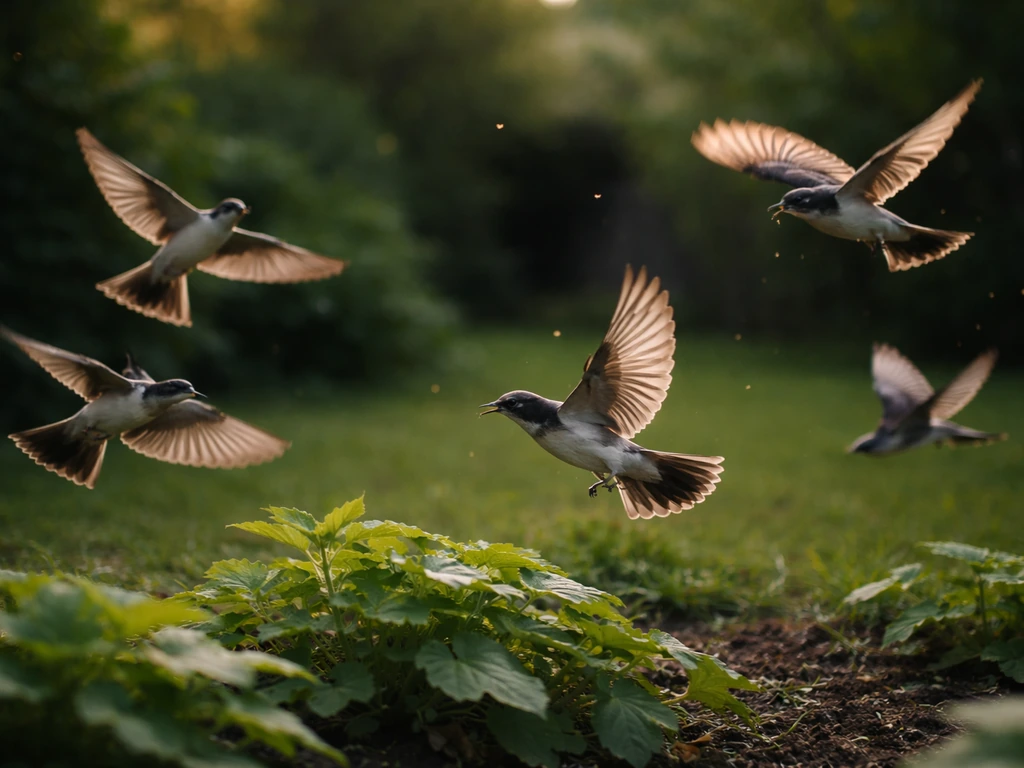
Several common backyard birds eat butterflies, but not all of them are specialists. Some birds will also eat invasive pests like Japanese beetles. The biggest butterfly hunters you're likely to see in a North American yard are eastern kingbirds, eastern phoebes, scissor-tailed flycatchers, barn swallows, northern mockingbirds, and at monarch overwintering sites in Mexico, black-headed grosbeaks and black-backed orioles. Most of these birds are generalist insectivores that will grab a butterfly when one crosses their path, not dedicated butterfly hunters. That distinction matters a lot when you're trying to figure out what's actually happening in your garden.
What Bird Eats Butterflies? Identify Likely Culprits Today

Maya Bennett
8 Jun 2026
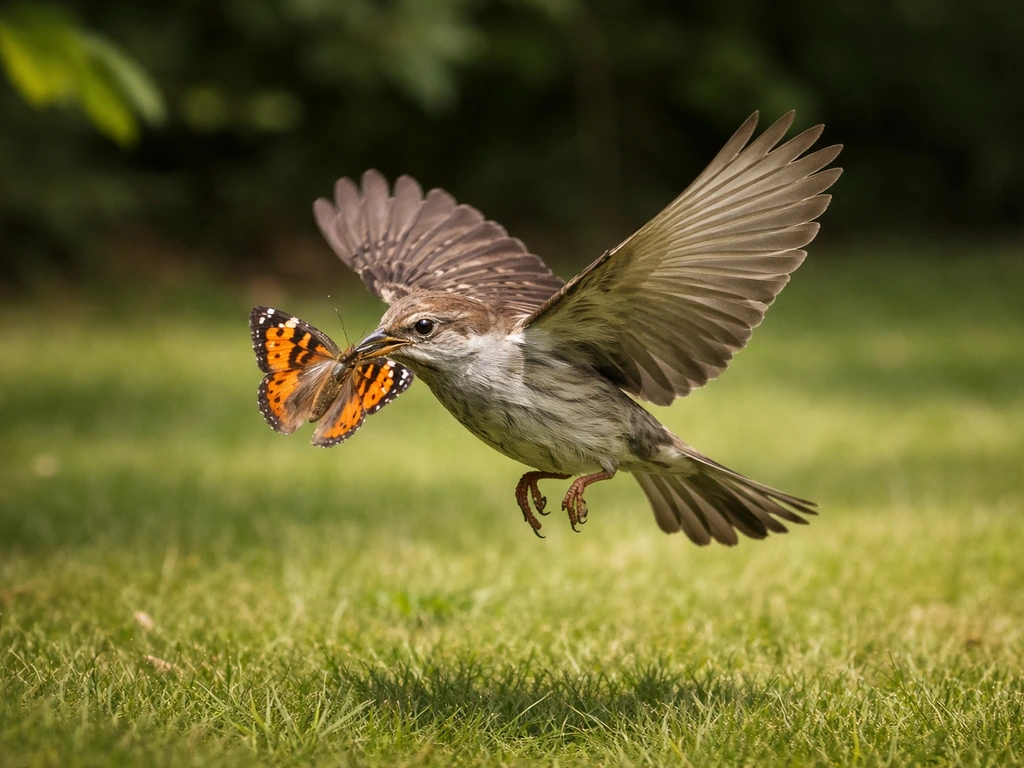
Bird species that eat butterflies (and why they do it)
Butterflies are insects, so any bird with an insect-heavy diet is a potential butterfly predator. The degree to which a species targets butterflies specifically depends on hunting style, habitat, and season. Here's a practical rundown of the birds most likely responsible for what you're seeing.
Aerial hunters: flycatchers and swallows
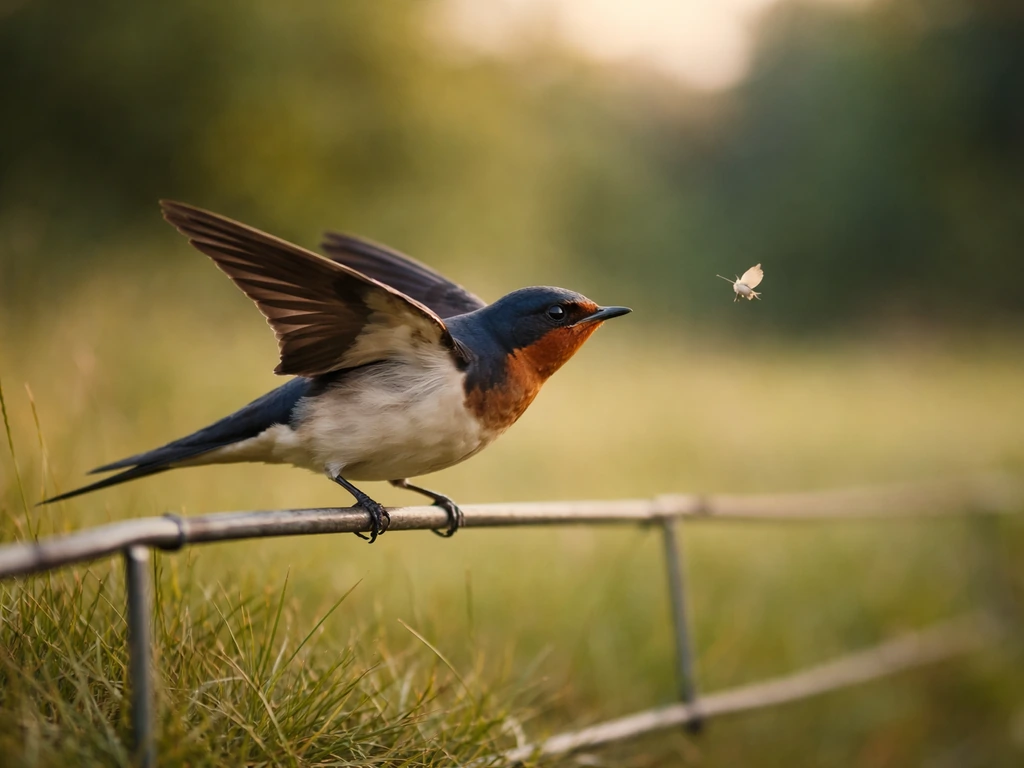
Eastern kingbirds are probably the most visible butterfly catchers in eastern and central yards. blank" rel="noopener noreferrer">They sit on an exposed perch, like a fence post, wire, or dead branch, watch for movement, then fly out fast and direct to snatch an insect mid-air before returning to the same perch. That style of hunting, called aerial hawking or sallying, puts them right in the flight zone of nectaring butterflies. Eastern phoebes do the same thing from lower perches, often near water, and they pump their tails constantly while waiting, which makes them easy to spot. Scissor-tailed flycatchers in the south-central US behave almost identically and will take butterflies that wander through open areas.
Barn swallows work differently. They forage on the wing continuously rather than perching between strikes, sweeping low over fields, meadows, and garden edges. Research on their diet at foraging sites confirms they select flying insects based on size and availability, and larger-bodied butterflies are well within their target range. You're more likely to see swallow predation on skippers and small sulphurs than on large monarchs.
Ground and shrub foragers
Northern mockingbirds are opportunistic and their summer diet is dominated by insects. Documented prey lists include adult butterflies among the arthropods taken. They forage by running along the ground and snapping up insects, but they'll also lunge at flying insects from a low perch. Because mockingbirds are territorial and loud, you usually know when one is working your yard.
The monarch exception: grosbeaks and orioles
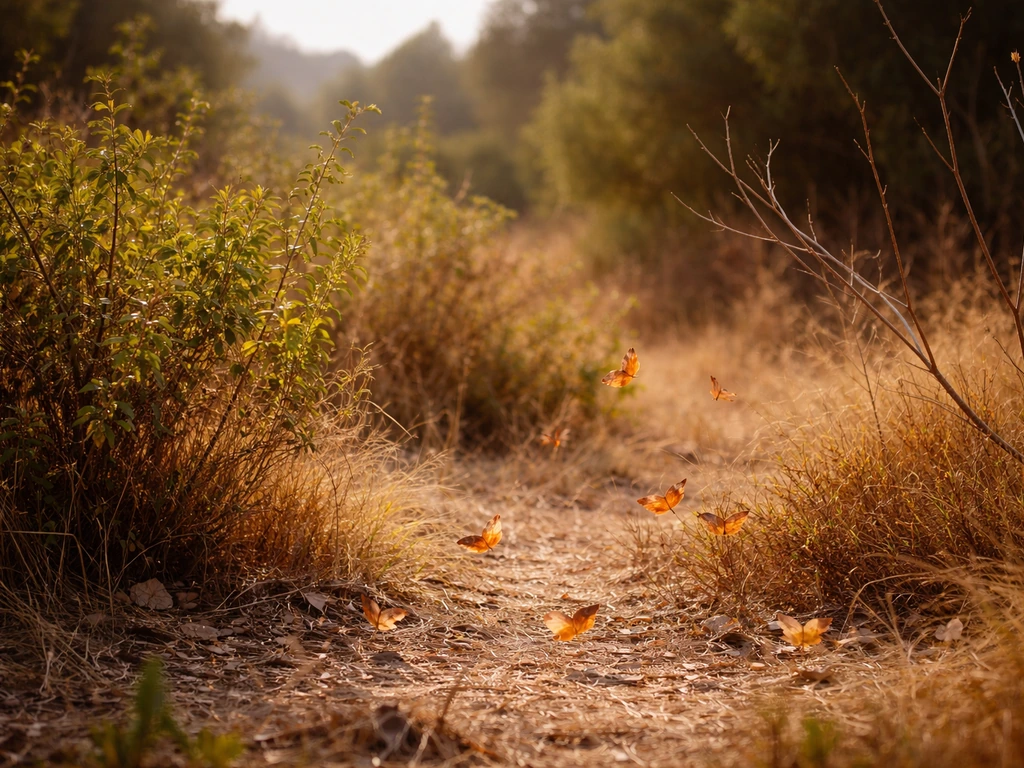
At overwintering sites in central Mexico, black-headed grosbeaks and black-backed orioles are the primary butterfly predators and the numbers are genuinely striking. Field estimates at those sites put combined kills at roughly 4,550 to 34,300 monarchs per day across measured colonies, averaging around 15,000 per day under certain conditions. Grosbeaks and orioles have evolved to handle monarch toxins (cardenolides) that deter most other birds. Orioles eat the inner body while avoiding the more toxic wings and abdomen skin; grosbeaks metabolize the toxins. This kind of specialized predation isn't happening in your backyard in the U.S. but it's worth knowing about because it explains why "butterflies" and "birds" are connected in the scientific literature.
Wood warblers and other occasional hunters
Wood warblers eat arthropods of all kinds and are documented opportunistic predators on diverse small prey. Studies also describe great tit behavior where the bird grabbed a butterfly from below in a flowering shrub, then tore off the wings before eating it, a neat example of a small perching bird handling a butterfly efficiently. Analogous behavior shows up in various North American passerines, especially during migration when energy demands are high and whatever insects are available get eaten.
How to figure out which bird you're seeing in your yard right now
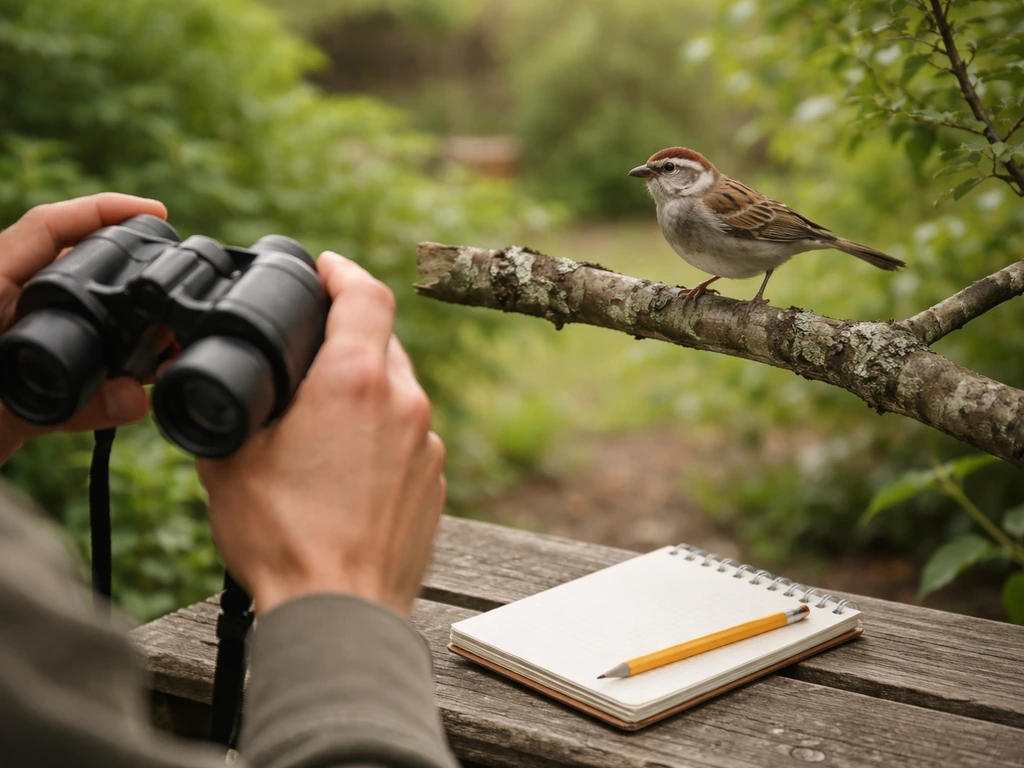
The fastest way to narrow down the culprit is to watch the hunting behavior, not just the bird itself. Each group has a recognizable style.
| Bird | Hunting Style | Typical Perch | Key ID Cue |
|---|---|---|---|
| Eastern Kingbird | Sallies from perch, returns after catch | High exposed perch, wire, dead snag | White terminal tail band, dark back, aggressive toward larger birds |
| Eastern Phoebe | Perch-and-snatch from low position | Low branch, fence, near water | Bobs/pumps tail constantly, dark head, no eye ring |
| Scissor-tailed Flycatcher | Sallies from perch, long tail dips in flight | Exposed wire or post in open country | Extremely long forked tail, salmon-pink flanks |
| Barn Swallow | Continuous aerial foraging | None while hunting (perches on wires at rest) | Deeply forked tail, rusty throat, swooping low flight |
| Northern Mockingbird | Ground runs + lunges + perch snatching | Shrub tops, fences | Long tail, white wing patches in flight, loud varied song |
| Black-headed Grosbeak | Forages in trees, crushes prey with bill | Tree canopy or branches | Large orange-brown body, thick pale bill, bold head pattern |
Sound is underrated as an ID tool. Eastern kingbirds give sharp, crackling "dzeet" calls and are often heard before seen. Mockingbirds are unmistakable because they run through dozens of imitated songs in sequence, especially at dawn. Eastern phoebes say their own name in a raspy, two-note call. If you're near open fields in the south-central U.S. and see an improbably long-tailed bird dropping off a fence line, that's almost certainly a scissor-tailed flycatcher.
Is it actually bird predation, or something else?
If you're seeing fewer butterflies in your yard and wondering if birds are to blame, the honest answer is: birds are usually not the main cause. There are more likely explanations, and it's worth ruling them out before pointing at the kingbird on your fence. Some dragonfly-eating birds are also insect hunters, so their presence can overlap with butterfly predators in the same areas what bird eats dragonflies.
Signs that point to actual bird predation
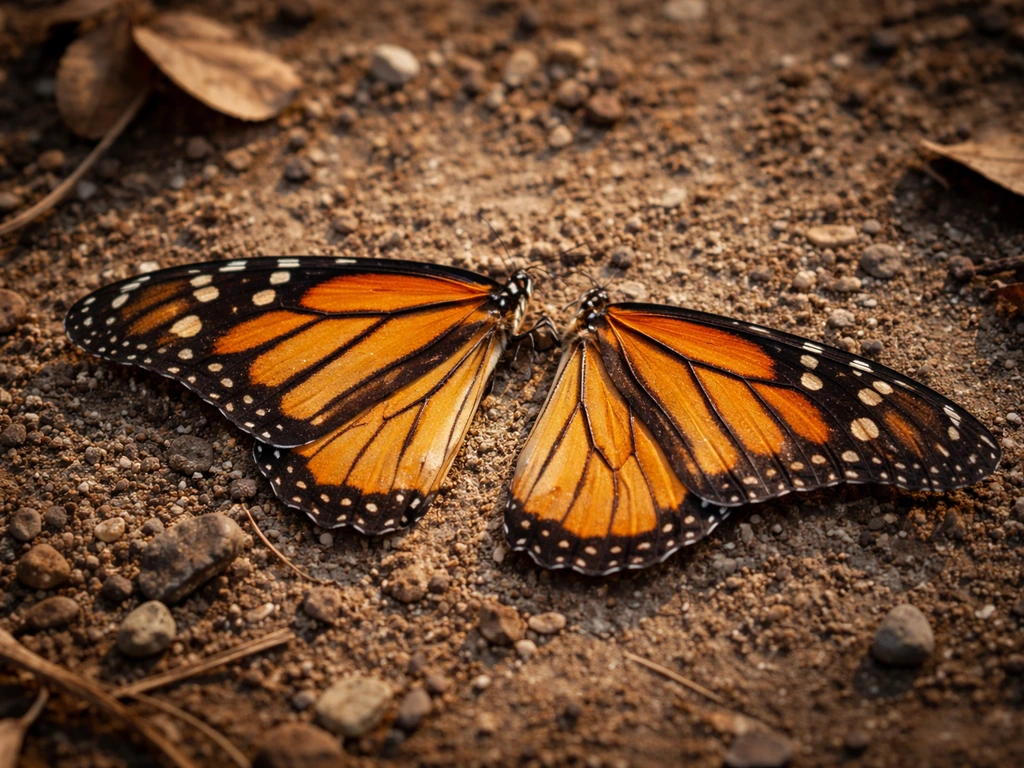
- Butterfly wings found on the ground with the body absent or partially eaten (birds typically tear wings off and eat the abdomen)
- Wings still folded together as if the butterfly was grabbed at rest, rather than spread open
- You directly observe a bird striking and carrying a butterfly
- Butterfly damage concentrated near specific perch sites like fence lines or dead snags
Signs that point to other causes
- Butterflies found dead or sluggish but intact, no wing damage: likely pesticide exposure, particularly from neonicotinoids in treated nursery plants or nearby agriculture
- Caterpillar die-offs on host plants without obvious bird activity: systemic insecticide residues in plant tissue are a well-documented cause, and research shows some systemic pesticides can be lethal to monarch caterpillars at leaf-tissue concentrations that appear harmless to other insects
- General population decline over weeks or months: habitat loss, host plant removal, or weather stress rather than predation
- Butterfly with ragged or notched wing edges but still alive and flying: likely an older predation attempt (possibly by a bird) where the butterfly escaped, or a near-miss from another predator like a spider or praying mantis
USGS and Xerces research make it pretty clear that neonicotinoid insecticides are widespread in the environment, including in garden soils, water, and pollen, and that home-garden applications sometimes occur at higher concentrations than agricultural use. Xerces Society also notes that neonicotinoids can persist and move through the environment, potentially harming pollinators even when applications happen months before bloom, with concerns extending to aquatic invertebrates and broader ecosystem impacts neonicotinoid insecticides are widespread in the environment. If butterfly numbers are declining in your yard, look at what you're planting and whether those plants came from a pesticide-safe source before blaming the birds.
How to attract insect-eating birds without tanking your butterfly population
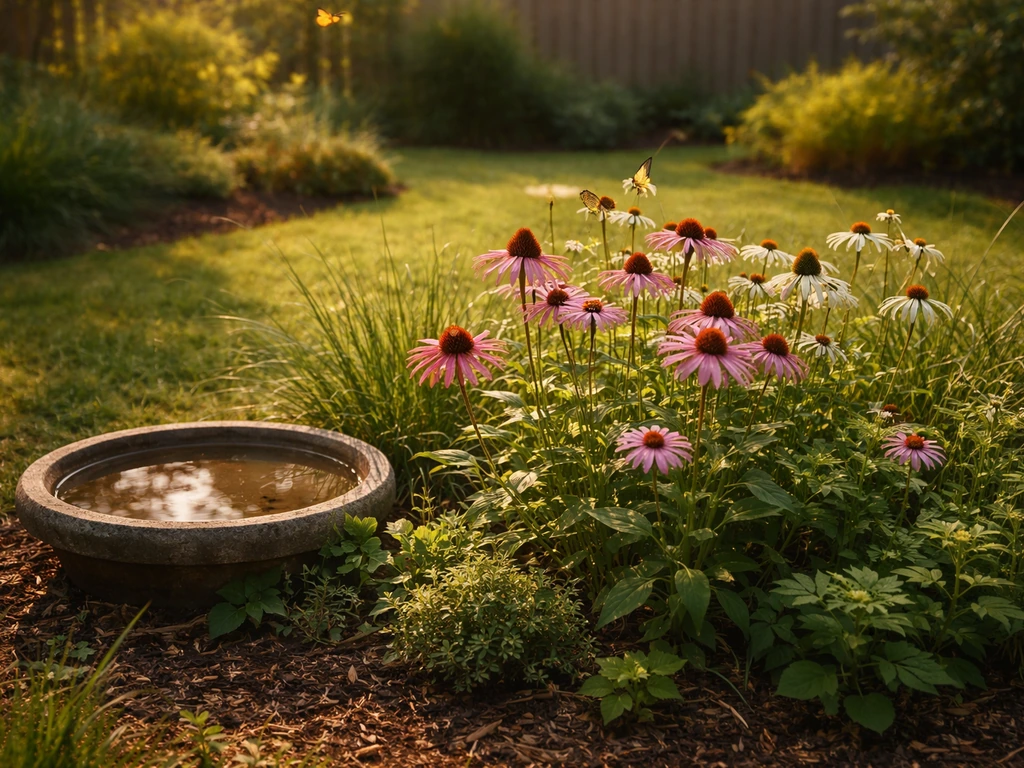
Here's the good news: the same habitat choices that support insectivorous birds tend to support butterflies too, as long as you avoid pesticides. The conflict is mostly avoidable.
- Plant native species. Research has directly linked native plant cover to higher insect diversity, which in turn supports insectivorous bird populations. Nonnative plant-dominated yards produce fewer herbivorous insects, which starves insectivores and also provides fewer caterpillar host plants for butterflies.
- Avoid neonicotinoid-treated plants. Ask your nursery directly. Treated plants can look healthy but carry systemic insecticide residues in pollen and leaf tissue that harm butterfly larvae and adults. Xerces has a list of nurseries committed to pollinator-safe stock.
- Add low shrubs and mid-height perches for flycatchers and phoebes. These birds need a sightline to hunt from, not a seed feeder. A dead snag, wire, or open branch near a garden bed is enough.
- Keep a brush pile or hedgerow edge. Mockingbirds and phoebes use dense low cover. This habitat also shelters butterfly overwintering adults and chrysalises in some species.
- Install a shallow water source. A ground-level birdbath or dish with pebbles for landing attracts both insectivores and butterflies as drinkers.
- Skip broad-spectrum pesticides entirely if your goal is any kind of insect or bird diversity. Even insecticides marketed as "safe" can have non-target effects on Lepidoptera.
It also helps to think in terms of scale. Flycatchers and swallows eat hundreds of insects per day during nesting season, but a single healthy garden with diverse native plantings produces insect populations in the thousands. The birds aren't depleting the butterfly resource, they're part of the same food web. The things that actually collapse butterfly numbers are habitat loss, host plant removal, and pesticides.
Do bird feeders make butterfly predation worse?
This is a fair question and the research gives a nuanced answer. Supplemental feeding does increase overall bird abundance and diversity in yards, and some of that increase includes insectivorous species. Studies have found that feeders can indirectly affect arthropod abundance on nearby plants, essentially by concentrating more bird traffic in a small area. One study found that supplementary feeding restructured urban bird communities and had measurable effects on at least one native insectivore species.
That said, standard seed feeders mostly attract granivores (sparrows, finches, doves) rather than the flycatchers and swallows that actually hunt butterflies. Those aerial insectivores don't use seed feeders at all. The birds most likely to prey on butterflies are habitat-driven, not feeder-driven. A nyjer or sunflower feeder is unlikely to cause a measurable increase in butterfly predation pressure.
Where feeders can create indirect pressure is through suet or mealworm feeders, which do attract insectivores like bluebirds, phoebes, and warblers. If you're running mealworm feeders near a butterfly garden during peak butterfly season, that's a more plausible pathway for increased insect predation, though it's still competing with all the other insects in the yard rather than targeting butterflies specifically.
Safe feeder practices: protecting birds, pets, and wildlife
Whatever your setup, feeder hygiene and storage habits matter more than most people realize. Moldy or spoiled seed is a real hazard, and not just for birds.
Cleaning your feeders
Iowa DNR recommends cleaning feeders and waterers with a 10 percent bleach solution roughly once a month, and making sure the feeder is completely dry before refilling. Damp seed breeds Aspergillus mold, which causes a respiratory fungal disease in birds called aspergillosis. This isn't rare. BirdNET identifies it as one of the primary disease risks associated with poorly maintained feeders. The CDC also recommends wearing gloves when handling and cleaning feeders, especially given current avian influenza concerns, and washing hands thoroughly afterward.
Seed storage
- Store seed in a sealed, hard-sided container (metal or heavy plastic) in a cool, dry location
- Don't keep more than a two to four week supply at a time during hot or humid months
- Check stored seed for clumping, off smells, or visible mold before putting it in the feeder
- Discard seed that has gotten wet in the feeder rather than leaving it to dry and re-contaminate
Risks to pets and other wildlife
Cats that roam near feeders are a documented threat to visiting birds, but the risk also runs the other way. Moldy seed and droppings concentrated under feeders can attract rodents, which in turn attract raptors, raccoons, and other wildlife that may cause problems for outdoor pets. Ground-feeding birds, especially mourning doves and juncos, scratch seed onto the ground, which accelerates spoilage and rodent attraction. Using a tray under a hanging feeder helps, as does raking up seed hulls regularly.
The CDC notes that direct contact with wild bird droppings or feeder surfaces carries a small but real disease transmission risk for both people and pets, particularly for avian influenza, Salmonella, and Histoplasma. Keeping dogs and cats away from feeder areas and wash stations is a simple preventive step most people skip.
A quick myth-bust worth making
People sometimes assume that because a bird eats butterflies, it must be bad for the garden or the local butterfly population. The reality is that the birds covered here, flycatchers, phoebes, swallows, and mockingbirds, are overwhelmingly beneficial insect predators whose diets happen to include butterflies occasionally rather than primarily. Some birds also specialize in eating caterpillars, so you may see different predation targets depending on the species.
Their presence is a sign of a healthy insect food web, not the cause of butterfly decline. If your butterfly numbers are dropping, the most useful places to look are pesticide use, host plant availability, and habitat loss, not the phoebe on the fence post.
Similar logic applies to birds that eat flies, caterpillars, dragonflies, and beetles: generalist insectivores are doing ecological work across all those prey groups simultaneously, and framing any one of them as a pest rarely holds up.
FAQ
How can I tell if a bird is actually eating butterflies versus just passing by my garden?
Watch for a pattern, the bird’s hunting route and repeated return to the same perch or flight line. Kingbirds and phoebes typically sally from a spot and land back at the same place, mockers make frequent running lunges, and swallows hunt continuously at low height. If you only see the bird once and no repeated capture attempts happen near nectar or host plants, it’s likely incidental.
Are monarch butterflies more likely to be eaten in my backyard than other butterflies?
In most U.S. yards, it’s usually not monarch-specific predation. Many of the likely backyard culprits are generalist insectivores that take whatever crosses their path, and monarchs can be targeted when they are abundant or easy to catch. True monarch-tuned specialists are mainly discussed for overwintering sites in Mexico, not typical northern backyards.
Do birds prefer smaller butterflies over larger ones?
Often, yes. Aerial hunters that select insects by size and ease of capture may take skippers and smaller sulphurs more readily than large, heavy butterflies. That doesn’t mean larger species never get taken, but you’re more likely to notice predation on the smaller, more maneuverable targets.
What time of day should I watch to catch evidence of butterfly predation?
Start at dawn for species that announce themselves early, like mockingbirds with long song sequences. Also spend time during peak butterfly activity, especially on sunny, calm days. For perch-hunters, hunting bouts tend to look like short cycles of scanning, sallying, and returning to the same perch.
Could a “bird attack” just be mistaken for something else like wasps or dragonflies?
Yes. Several predators look similar in a casual glance because they all catch flying insects. If the pattern is constant, high-speed pursuit near fields with uninterrupted foraging, that can point to swallows or other aerial predators. If captures happen near water edges and involve low-perch sallies, phoebes are a common match. Observing the capture-and-return behavior is the fastest way to sort this out.
If I reduce pesticides, will my butterfly numbers bounce back quickly even if birds are still around?
Often yes, because the biggest drivers tend to be habitat loss, host plant availability, and pesticide impacts on eggs, larvae, and adult nectar resources. The recovery timeline depends on what was affected most. If larval host plants were treated or eliminated, you may need to replant and allow multiple weeks for new larvae to emerge, not just wait for adult butterflies to return.
Do bird feeders increase butterfly predation pressure in my yard?
Usually not in a direct, measurable way when you use standard seed feeders, because the birds that hunt butterflies are aerial insectivores rather than granivores. The more plausible feeder-linked effect is indirect, for example suet or mealworm feeders increasing local insectivore activity. If you want to avoid raising insect predation near a butterfly garden, keep mealworm and suet feeders away from peak butterfly activity zones.
Where should I place feeders if I want to protect butterflies?
Place feeder stations downwind and away from nectar and host plant clusters, ideally on the opposite side of your yard from where butterflies are landing most. Also avoid putting insect feeders right next to butterfly beds during peak season. Even without targeting butterflies, more insectivorous bird traffic can change which insects (including butterflies) get intercepted.
What’s the safest way to keep feeders hygienic if I’m also trying to support butterflies?
Clean feeders and waterers regularly and let everything fully dry before refilling. Use the recommended bleach dilution for feeder sanitation, and avoid handling spoiled feed. Moldy seed is a real respiratory hazard for birds. If you maintain butterfly habitat, separate your feeder cleanup area from butterfly plant beds so you don’t spread contaminated debris.
Can cats or other pets increase problems around butterfly gardens even if birds are beneficial?
Yes. Cats near feeder areas can reduce bird activity while still allowing disturbance that affects butterfly behavior and shelter use. Also, droppings and spoiled seed can draw rodents, which can in turn attract raptors and other wildlife. Using trays under hanging feeders, cleaning up hulls, and preventing pet access to feeder zones helps reduce this knock-on effect.
Should I worry about diseases from bird droppings under feeders?
There is a small but real risk from contact with wild bird droppings or feeder surfaces. Take practical precautions, keep pets away from feeder areas, and wash hands thoroughly after cleaning. If you handle feeders yourself, gloves reduce exposure. Keeping a tidy, dry area under feeders also reduces buildup of contaminated material.
If birds are eating butterflies occasionally, does that mean butterflies are not declining due to human impacts?
Not necessarily. Finding a bird that takes butterflies is not the same as proving it is the cause of population decline. The garden-level explanations that usually matter most are pesticide exposure, loss or poor quality of larval host plants, and overall habitat degradation. Birds are part of the same food web, and their occasional takes can even be a sign of a functioning insect community.
Next Article
What Bird Eats Flies? Identify Fly-Eating Birds in Your Yard
Identify fly-eating birds by behavior and look, plus safe yard steps to attract swallows, kingbirds, and more.