If you are asking 'what eats a small bird,' you might actually be asking one of two very different questions: who is killing the birds in your yard, or what do small birds themselves eat? Both are common searches, so let me split those apart right away before you go troubleshooting the wrong thing. After that quick clarification, I will walk you through every likely predator, how to figure out which one is responsible, and what you can do today to stop the losses.
What Eats a Small Bird: Predators, Clues, and Fixes

Maya Bennett
22 Mar 2026
First: Are You Asking About a Bird's Diet or Its Predators?
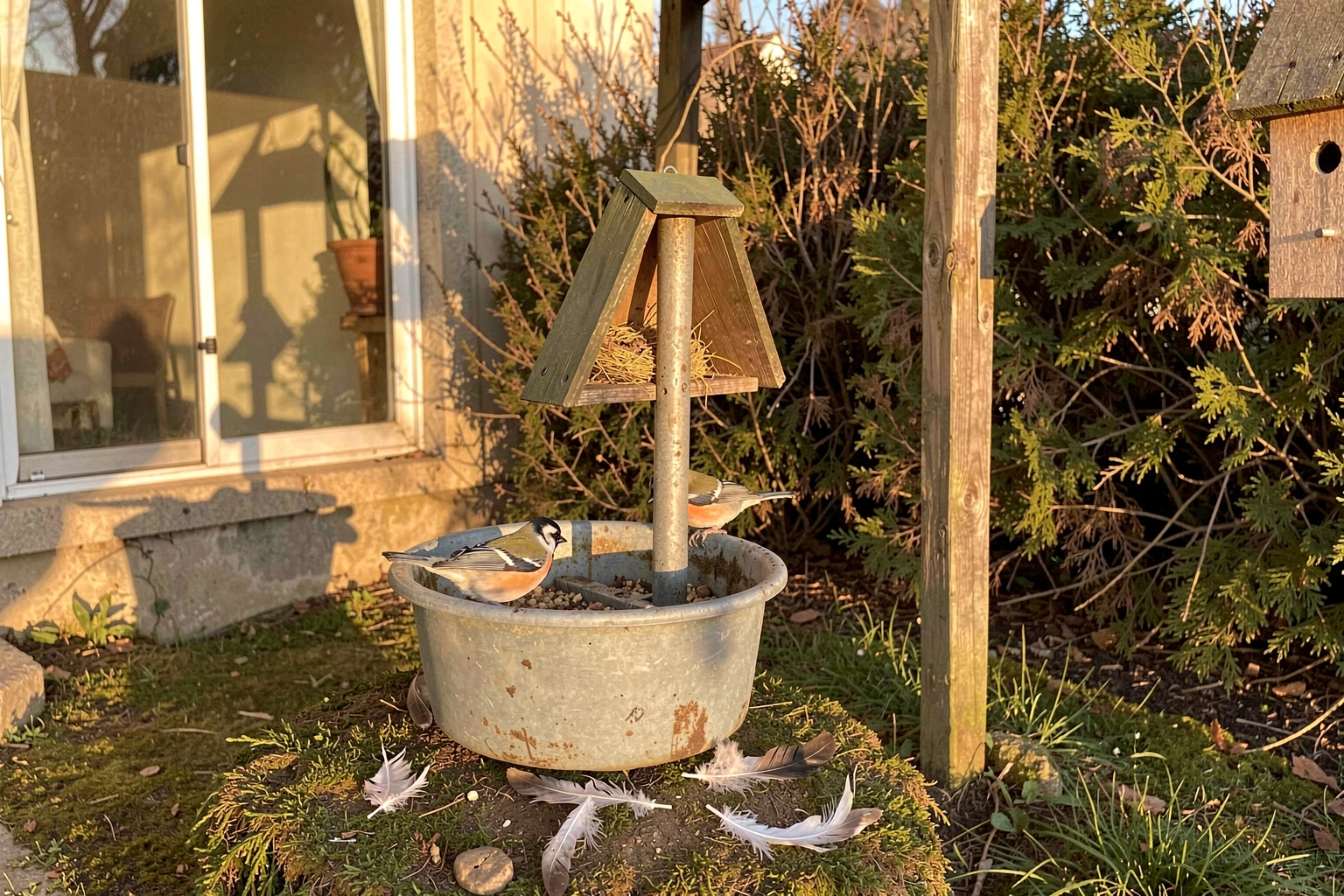
This matters more than it sounds. A lot of people searching 'what eats a small bird' are actually trying to figure out what to feed a bird they found, rescued, or are keeping. Others are watching something pick off their backyard songbirds and want to know who is responsible. These are completely different problems with completely different solutions, so let me address both quickly.
What Small Birds Eat (The Bird's Own Diet)
Most small backyard birds, think house sparrows, chickadees, finches, wrens, and nuthatches, eat a mix of seeds, insects, berries, and plant material depending on the season. In spring and summer, insects and larvae make up a huge portion of their diet because they need the protein, especially when raising chicks. In fall and winter, seeds and berries dominate. If you are trying to feed or rehabilitate a small bird, the species matters a lot. Seed-eaters like finches do well on black-oil sunflower seeds. Insectivores like wrens need mealworms or soft invertebrates. Never feed a wild bird bread, milk, or generic pet food. If you found an injured or orphaned bird, contact a licensed wildlife rehabilitator rather than trying to feed it yourself.
Who Eats Small Birds (The Predator Question)
If you are watching birds disappear from your yard, finding feathers, or noticing fewer birds at your feeder, you are dealing with a predator. This is the main focus of the rest of this article. The good news is that the signs left behind, the timing, and the location of remains almost always point to one specific type of predator. Let's narrow it down.
The Most Common Predators of Small Birds
Small birds have enemies coming from three directions: the air, the trees and shrubs, and the ground. Knowing which zone your predator is operating from cuts your suspect list in half immediately.
Air Predators: Hawks and Falcons
The Cooper's hawk and the Sharp-shinned hawk are the two most common backyard bird killers in North America. Both are built specifically to hunt small birds in tight spaces, weaving through trees and shrubs at speed. The Cooper's hawk is about the size of a crow; the Sharp-shinned is closer to a jay. Merlins and American kestrels also take small birds, though kestrels more often hunt insects and mice. Great horned owls and barn owls will take small birds at night if the opportunity is there, though they usually prefer rodents.
Tree and Shrub Predators: Jays, Crows, and Snakes
Blue jays and American crows are opportunistic predators that will raid nests and take nestlings or eggs. They are not typically chasing adult songbirds on the wing, but they are a real threat to nesting birds. Rat snakes, black racers, and corn snakes are excellent climbers and will raid nest boxes and tree cavities for eggs and chicks. If you are losing birds from a nest box rather than at a feeder, a snake is a very likely culprit. Larger species like gray ratsnakes can clean out an entire nest box in one visit.
Ground Predators: Cats, Raccoons, and More
Domestic and feral cats are, by a significant margin, the leading human-linked cause of bird deaths in North America. Studies consistently put the number of birds killed by cats in the hundreds of millions annually across the continent. Raccoons are strong, clever, and will raid low feeders and ground-level nest boxes at night. Opossums, foxes, and weasels (including mink and ermine in northern areas) will take birds they can catch on or near the ground. Rats are worth mentioning too: they are drawn to spilled seed under feeders and will kill and eat small birds if they can catch them, particularly at night in a confined space like a nest box.
How to Figure Out Which Predator You Are Dealing With
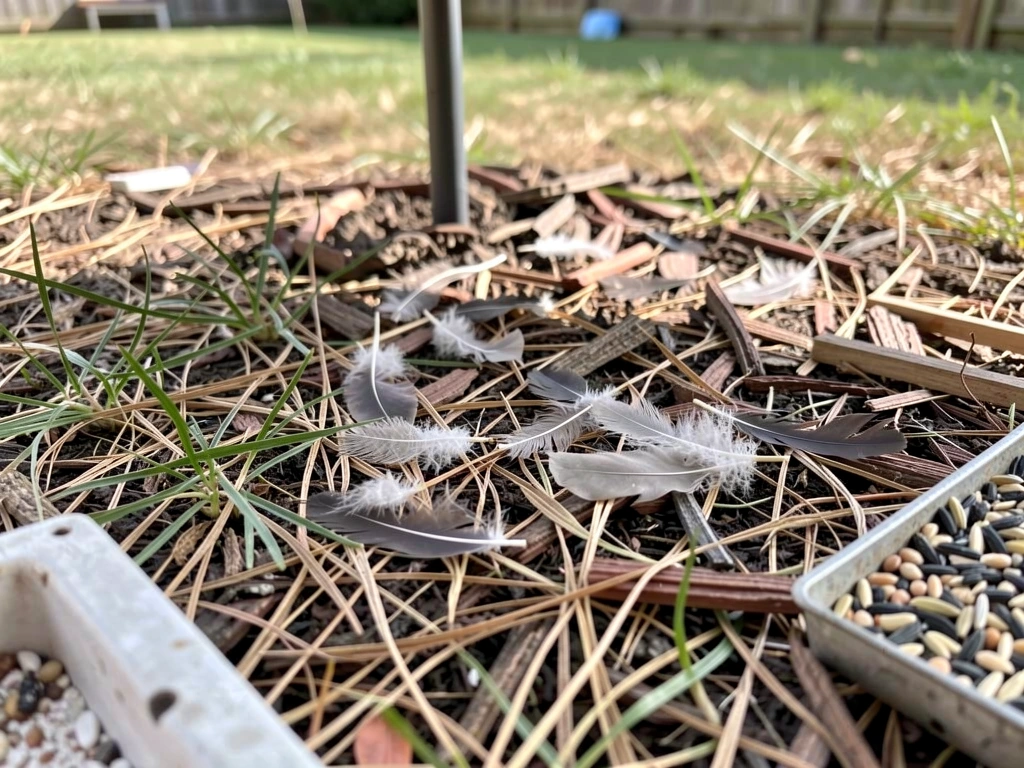
You do not need to catch the predator in the act. The clues left behind are usually enough to identify the culprit with reasonable confidence. Check these four things: timing, location, what remains are left, and the pattern of loss.
| Clue | Most Likely Predator |
|---|---|
| Pile of plucked feathers, no carcass, during the day | Cooper's hawk or Sharp-shinned hawk |
| Feathers scattered widely, bird eaten in place, day or night | Larger raptor (Red-tailed hawk, Great horned owl) |
| Bird brought to your door or porch, sometimes intact | Domestic cat |
| Nest box emptied of eggs or chicks, no adult bird missing | Snake or raccoon |
| Nest box raided at night, scratch marks on the pole or box | Raccoon |
| Birds missing from the ground under a feeder, at night | Cat, fox, or opossum |
| Nestlings missing, eggshells present, corvid activity nearby | Blue jay or crow |
| Birds disappear in a sudden panic, feeder abandoned for days | Accipiter hawk (Cooper's or Sharp-shinned) |
Timing is one of the best diagnostic tools you have. Hawks hunt during daylight, mostly in the morning and late afternoon. Cats hunt at any hour but are most active at dawn and dusk. Raccoons and opossums are almost entirely nocturnal. Owls are strictly night hunters. If your losses are happening at midday, you are almost certainly looking at a hawk. If losses happen overnight and you find scattered feathers or a dead bird with bite marks around the neck, think cat or mammalian predator.
What to Do Right Now to Protect Small Birds
You do not have to wait to act. Here are concrete steps you can take today, organized by the type of threat you are most likely dealing with.
If a Hawk Is Hunting Your Feeder
- Move feeders closer to dense shrubs or brush piles where small birds can dart for cover. Hawks need open airspace to attack effectively.
- Add a brush pile within 10 feet of your feeder. A loose pile of branches 3 to 4 feet high gives birds an escape route the hawk cannot easily follow.
- Temporarily take feeders down for 3 to 5 days. Hawks learn feeding patterns quickly. Disrupting the schedule often causes them to move on to a different hunting ground.
- Do not use netting over feeders. Birds can become entangled and die.
- Remember: hawks are federally protected. You cannot legally harm, trap, or relocate them.
If Cats Are the Problem
- Keep feeders at least 5 feet off the ground and on poles with baffles (cone-shaped guards) that cats cannot climb around.
- Remove ground-level brush within 6 to 8 feet of feeders. Cats use cover to stalk.
- Talk to your neighbors if a specific cat is the culprit. A simple, non-confrontational conversation solves this more often than people expect.
- Consider motion-activated sprinklers near feeding areas. They are effective and harmless.
- If feral cats are the issue, contact your local animal control or a Trap-Neuter-Return program.
If Raccoons or Snakes Are Raiding Nest Boxes
- Install a metal stovepipe baffle on the pole below any nest box. This is the single most effective barrier against raccoons and snakes climbing up.
- Move nest boxes away from tree branches or fences that raccoons or snakes can use as a bridge.
- Use a nest box with a proper entry hole size: 1.5 inches for chickadees, 1.25 inches for wrens. A properly sized hole prevents larger animals from reaching inside.
- Check boxes weekly during nesting season so you catch problems early.
Smarter Feeding and Habitat Habits That Reduce Predation Long-Term
Feeders are essentially a gathering point that draws birds into one predictable location, which also makes them easier targets. You cannot eliminate that risk entirely, but you can design your setup to make birds much harder to catch.
- Use tube feeders or caged feeders instead of open platform feeders. Caged feeders physically block large birds and mammals while still letting small songbirds feed.
- Place feeders in the open, at least 10 feet from any large shrub or tree that a cat or hawk could use for ambush cover, but close enough to a smaller escape-cover shrub that birds can flee to safety.
- Clean up spilled seed daily. Seed on the ground attracts rats, which in turn attract larger predators and create a second layer of risk.
- Offer multiple small feeders spread around the yard rather than one large central feeder. This reduces crowding and means a single predator cannot pick off multiple birds at once.
- Plant native shrubs with dense branching (hawthorn, holly, viburnum) near feeding areas. These give birds safe roosting and escape spots that most predators struggle to navigate.
- Avoid feeders with long open perch bars. Smaller perches favor small songbirds and make it harder for larger predatory birds to land and wait.
- If you are also interested in what squirrels might be doing at your feeders and whether they pose a risk to birds, that is worth a separate look, as the predator dynamics are more nuanced than most people expect.
Confirming the Culprit with Cameras and Observation
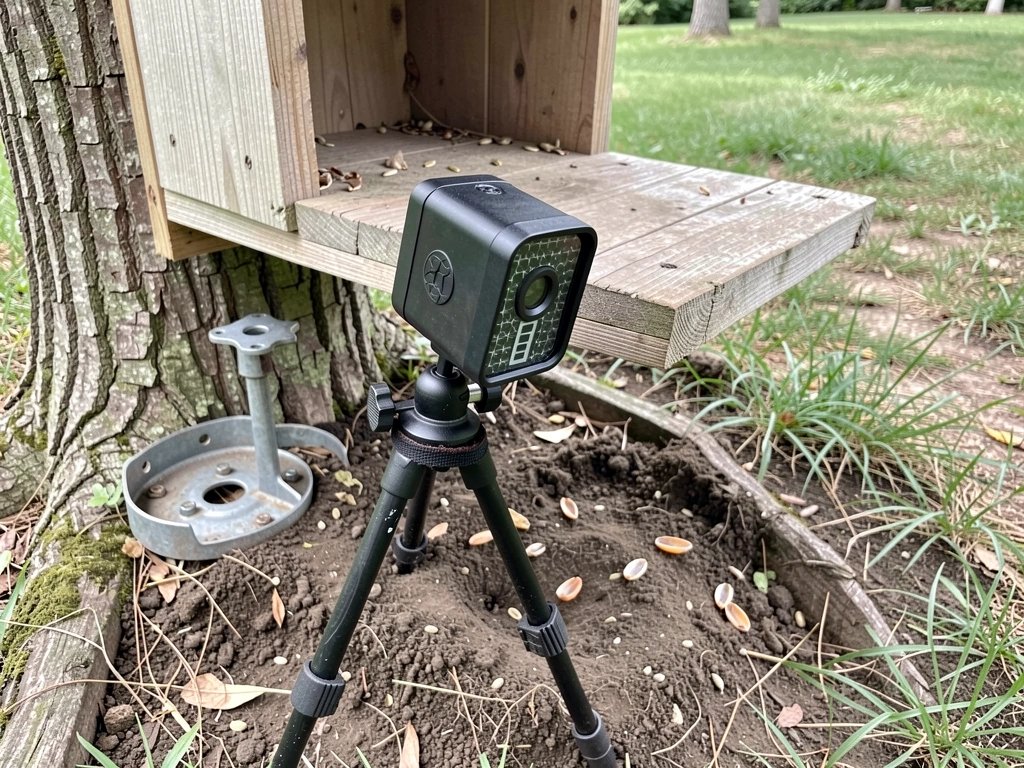
If you are still not sure what is responsible after checking the clues above, a basic wildlife camera (also called a trail camera or game camera) is the fastest way to get a definitive answer. You can buy a decent one for $30 to $60 at most outdoor or hardware stores, or order one online. Set it up within 10 to 15 feet of your feeder or nest box, pointed at the area where incidents are happening. Most cameras have motion-triggered video and a night mode. Give it 48 to 72 hours and you will almost certainly have footage of whatever is visiting.
If you do not want to buy a camera, timed observation works almost as well for daytime predators. Sit inside near a window at dawn and again in mid-morning for two or three days. Hawks typically return to successful hunting areas on a predictable schedule. You will often see the predator within a few sessions if you are patient and quiet.
When to Escalate Beyond DIY Solutions
Most backyard predation situations resolve on their own with the habitat and feeder adjustments above. But there are times when you should bring in outside help. If you have a feral cat colony establishing itself near your property and trapping has not worked, your local humane society or animal control agency has more tools available. If a hawk is so habituated to your yard that it is sitting on a perch and actively waiting even after you have moved feeders and removed easy hunting conditions, contact your state wildlife agency or a licensed wildlife educator. They can assess whether relocation is warranted, though in most cases it is not. If you are finding dead birds that show signs of disease (discharge, unusual posture, neurological symptoms before death) rather than predation wounds, that is a separate problem that warrants a call to your state wildlife veterinarian or the USGS National Wildlife Health Center.
The bottom line: most small bird predation in a backyard setting comes down to one of four culprits, namely Cooper's hawks, domestic cats, raccoons, or snakes, and the timing and evidence at the scene will almost always tell you which one. Start with the habitat and feeder fixes today, get a camera up if you need confirmation, and you will have a much clearer picture and a safer yard within a week.
FAQ
What eats a small bird at my feeder versus at my nest box, and how can I tell the difference quickly?
At feeders, look for short, repeat visits near the ground cover and check for missing birds plus scattered seed hulls, claw marks, or bite-like damage. At nest boxes, the key sign is a breach of the entrance or cavity plus missing nestlings or eggs, which most often points to climbers like snakes, squirrels, or raccoons rather than hawks.
If I find feathers but no obvious blood, could it still be a hawk or is it usually something else?
Yes, hawks often leave a “cleaner” scene, sometimes just a few feathers and a partial carcass, because they can dismember prey. If you see lots of body fragments dragged away, that is more consistent with mammalian predators like cats or raccoons, which may carry parts off to feed elsewhere.
Do window collisions get mistaken for predation?
They can. Birds struck by glass often leave nearby feathers, but you will usually see them clustered under or along a straight line from a reflective surface, and there is often no bite or neck puncture pattern. If carcasses appear only after high-risk weather (fog, bright sun, storms) and near glass, adjust lighting and add window treatments before assuming a predator.
How can I tell whether my yard problem is a predator or illness in the birds?
Predation typically produces a sudden drop at the same site with identifiable wounds (bite marks, head/neck damage, torn tissue). Illness more often shows multiple birds dying over a wider area with abnormal behavior beforehand, droppings that look unusual, or no consistent timing tied to one location.
Will moving the feeder really help if the predator is already watching my yard?
It can, especially if you change both the distance from cover and the feeding pattern. For example, raising feeders and keeping them away from dense shrubs reduces ambush access. If the same predator keeps returning within 48 to 72 hours despite changes, a camera is the best next step to confirm whether it is habituated.
Is it safe to feed birds “more” to make up for losses?
Not always. More feeding can increase the number of birds at a single high-value spot, which can amplify predation. If you suspect cats, raccoons, or snakes, reduce feeder attractiveness temporarily and switch to feeding methods that offer quicker escape routes, then reassess after predator identification.
What is the safest way to observe a suspected hawk without disturbing or encouraging it?
Use passive observation from inside and avoid approaching the hunting area. Keep pets indoors during peak times (dawn and late afternoon for many hawks), and do not try to “scare it off” repeatedly. Persistent harassment can increase risk for birds and can even teach a predator that your yard is a reliable target.
If I set a wildlife camera, what placement mistakes should I avoid?
Avoid placing it too close (within a few feet) where it can spook animals or get knocked, and avoid aiming only at the feeder face. Point it to capture the approach path, including the gap between cover and the feeding area, and ensure night vision is not washed out by nearby bright surfaces.
Are squirrels ever responsible for small bird deaths, and how do I avoid misidentifying them?
Yes, squirrels can raid nest boxes and sometimes tear at weaker nestlings. They often leave scratch marks, chewed wood, or pulled nesting material rather than the distinct bite pattern you see with snakes or mammals, and their activity is often daytime and near climbing routes.
What if the predator is a cat, how should I handle it without escalating the situation?
Do not confront the cat directly. Instead, keep your property cat-deterrent friendly by eliminating cover near feeders, bring pets in during high-risk hours, and report ongoing feral cat activity to your local animal control or humane society so they can assess options.
Could a rat be the culprit even if I never see rats outside?
Yes. Rats are most likely to appear around spilled seed and under feeders, especially at night, and they can kill small birds in confined spaces like nest boxes. If your main sign is missing birds plus heavy seed scatter, focus on cleanup, feeder design, and waste seed control before assuming a larger predator.
When should I contact outside help, and who is the right contact?
Contact local animal control or humane society when feral cats are established. Contact your state wildlife agency or a licensed wildlife educator when a hawk is persistently hunting the same spot despite habitat and feeder changes. If you find dead birds with disease-like signs, contact your state wildlife veterinarian or the appropriate national wildlife health authority rather than predator-focused mitigation.
Next Articles
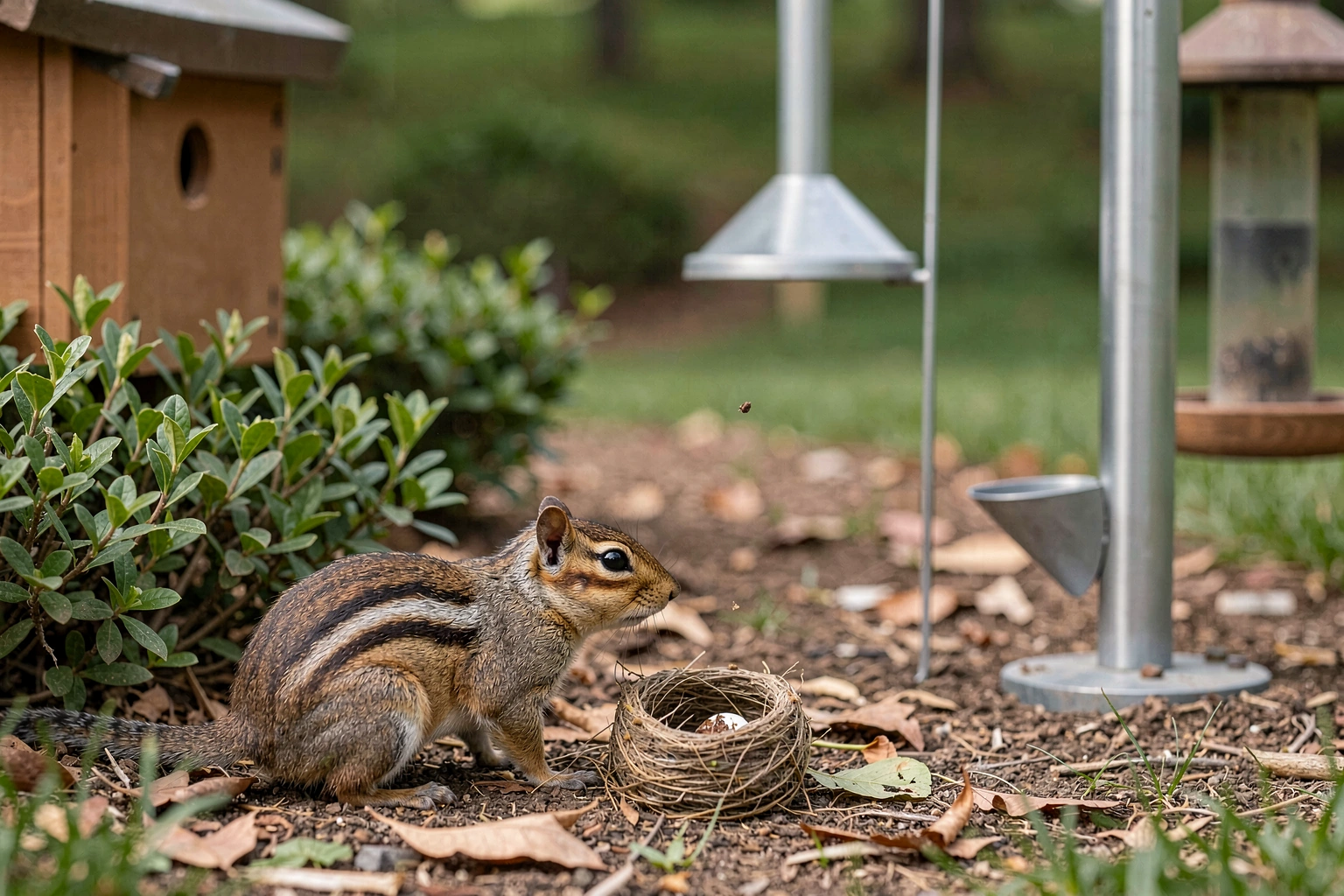
Do Chipmunks Eat Bird Eggs? How to Tell and Protect Nests
Do chipmunks eat bird eggs? Learn how to confirm the predator and protect nests with safe, effective deterrents.
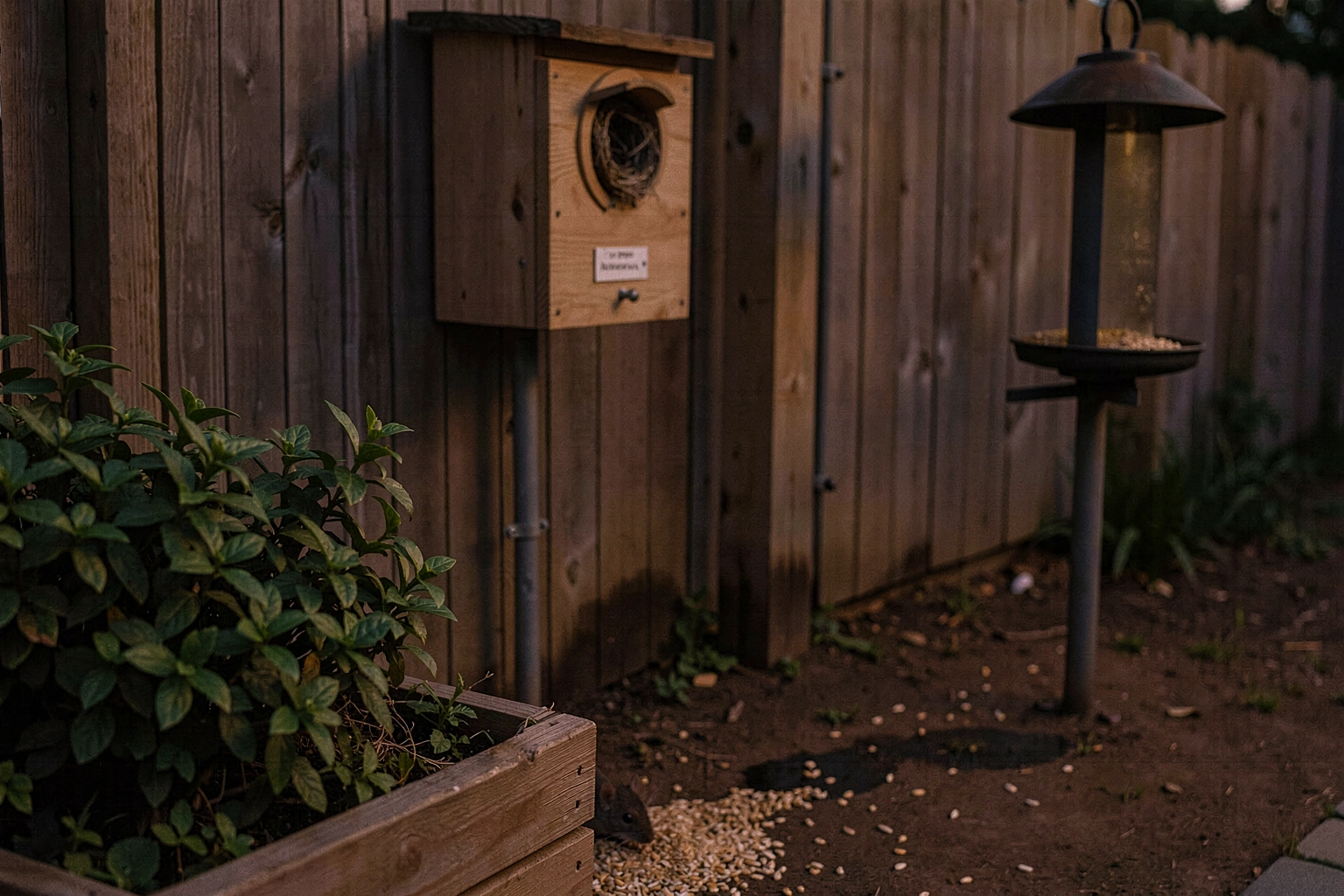
Do Rats Eat Bird Eggs? How to Confirm and Prevent It
Learn if rats eat bird eggs, how to confirm damage fast, and practical steps to prevent nest access safely.
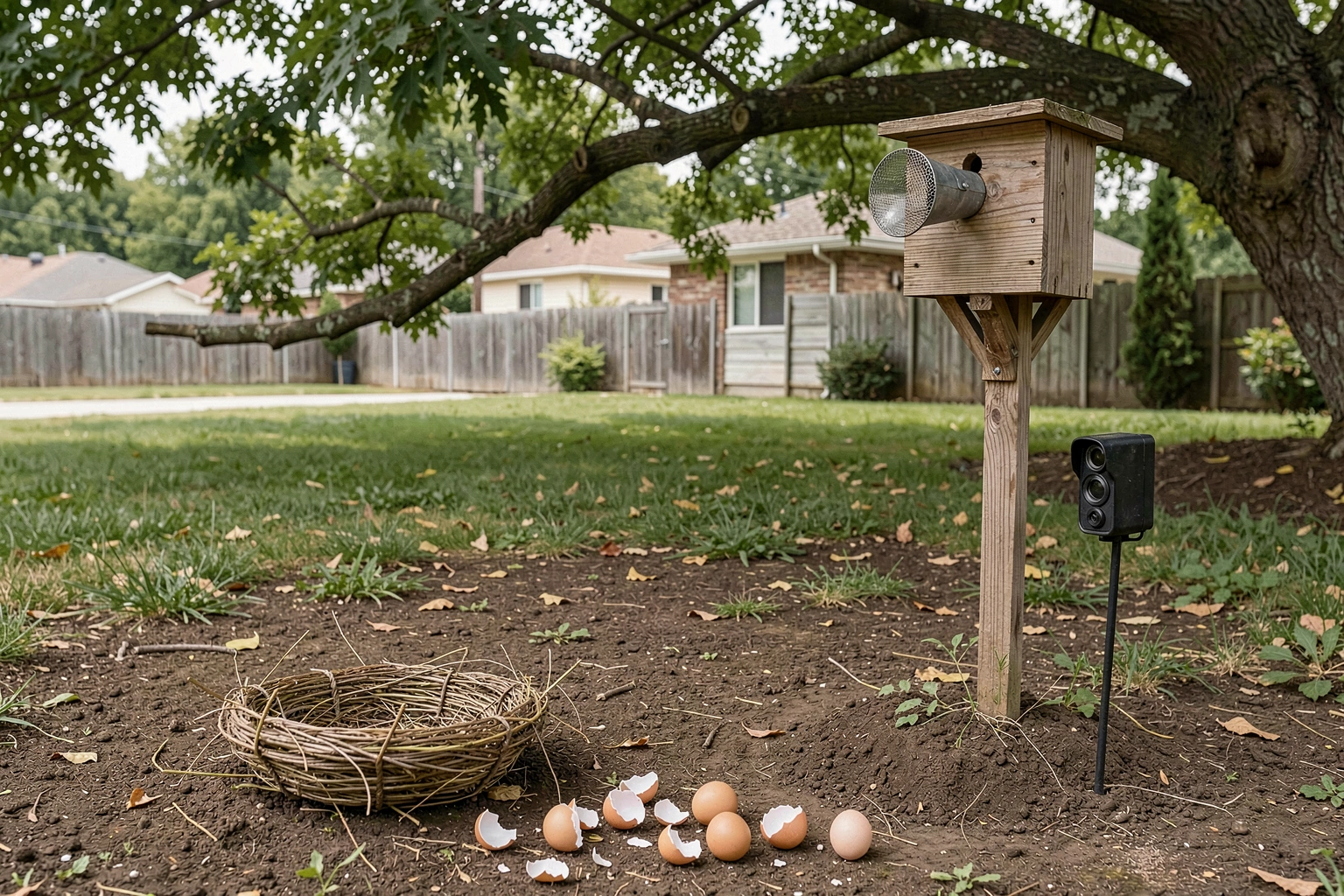
Do Squirrels Eat Bird Eggs? USA Guide and Prevention
Learn if squirrels eat bird eggs in the USA, which types do it, and how to prevent and confirm nest raids.