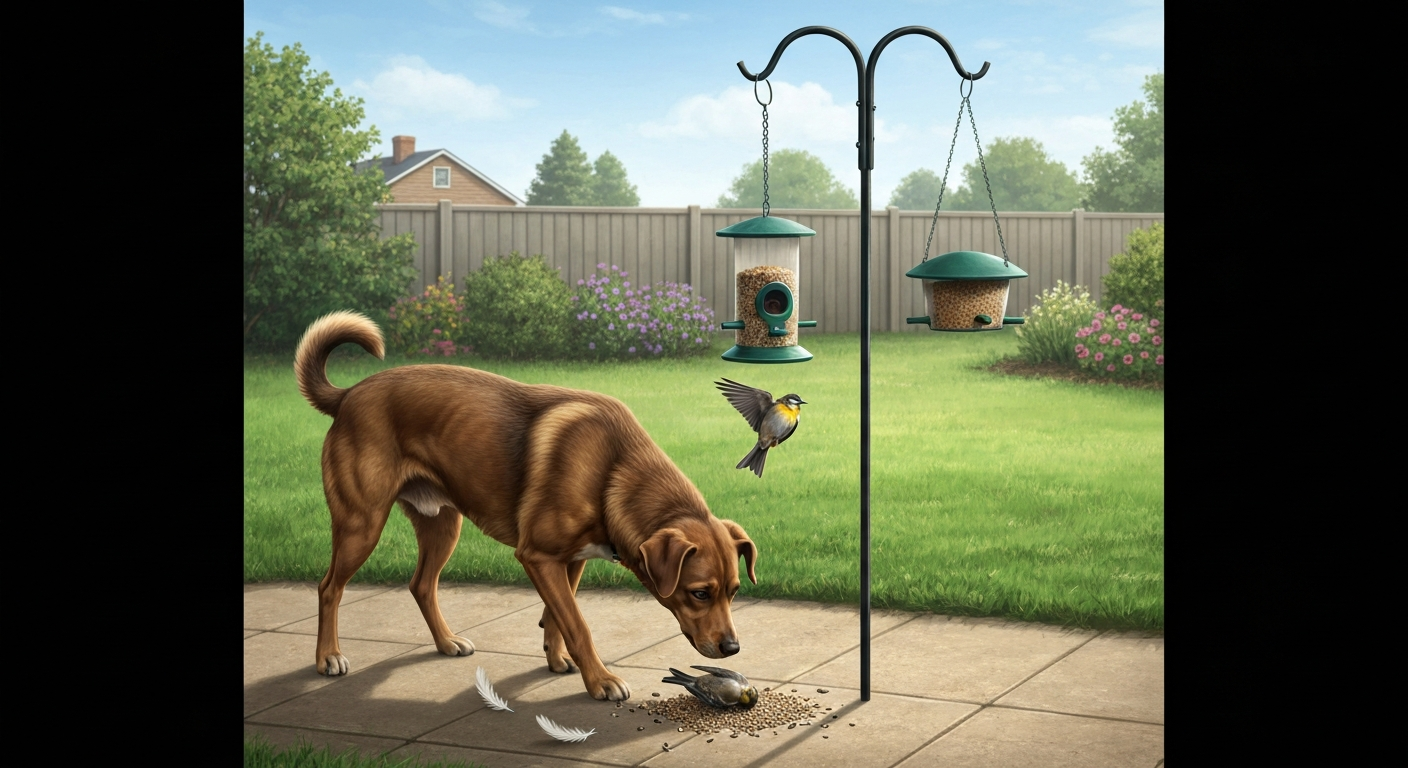
Dogs eat birds because predatory behavior is hardwired into them, and for most dogs the act of chasing, catching, or scavenging a bird is rewarding in itself, not just a sign of hunger. If your dog just ate a bird, stay calm: most healthy adult dogs pass an avian carcass without serious complications, but there are specific warning signs you need to watch for in the next 24 to 72 hours, and a handful of scenarios that warrant a same-day call to your vet. For details on whether and how a dog can digest a bird, see the section titled 'Can a dog actually digest a bird.' can a dog digest a bird.
Why Did My Dog Eat a Bird? Quick Risks, Care & Prevention Steps

Maya Bennett
13 Aug 2026
What to do right now
Before you do anything else, get your dog away from the bird. Check inside the mouth gently for feathers, bone fragments, or anything lodged in the throat. Note whether the bird looked sick or was already dead when your dog found it, because that changes the risk picture significantly. Then work through this checklist.
- Calmly remove your dog from the area and put them on a leash or in a safe space
- Check the mouth and throat for visible bone fragments, feathers, or large pieces that could cause choking
- Do NOT induce vomiting unless a vet specifically instructs you to — sharp bone fragments traveling back up can cause more damage
- Note what type of bird it was (songbird, pigeon, waterfowl) and whether it appeared dead before your dog found it
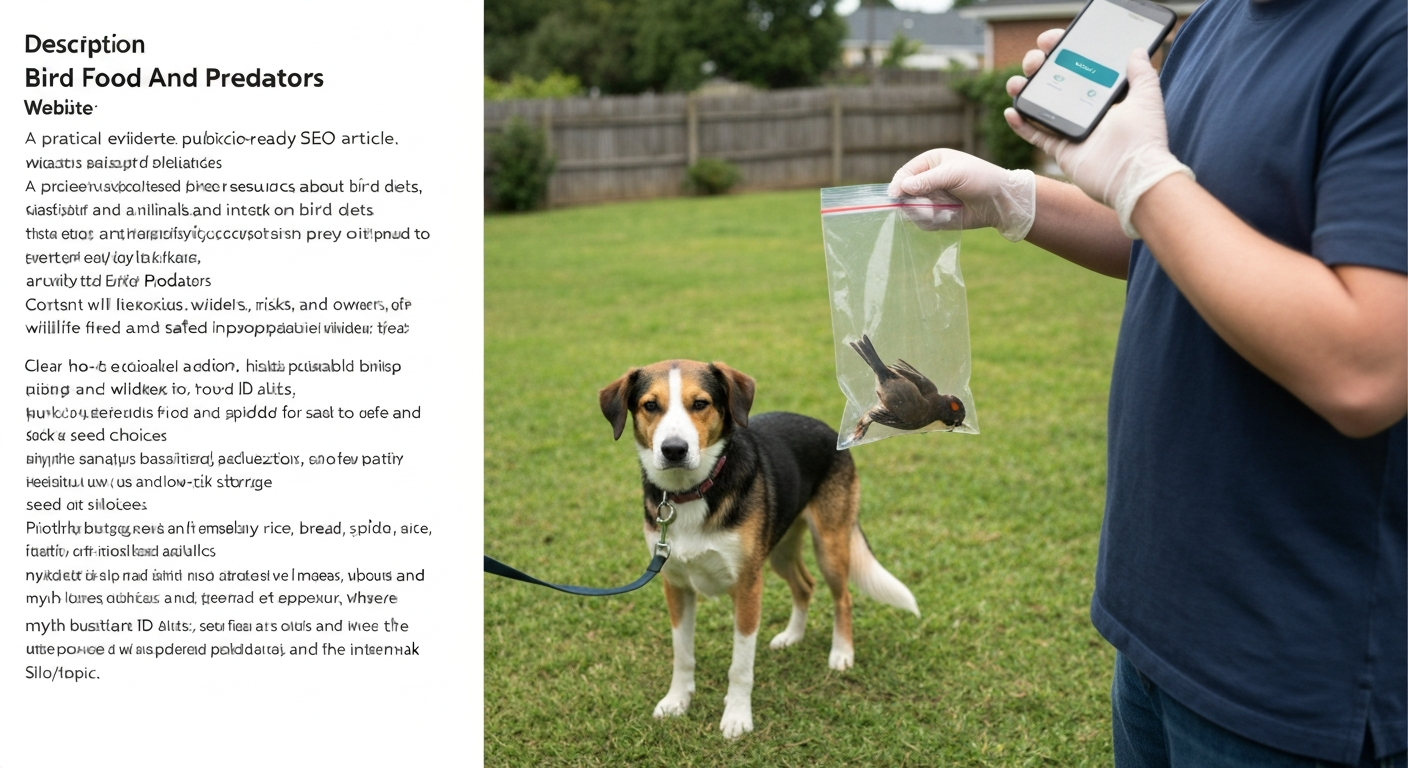
- If possible, collect the carcass using gloves and place it in a sealed bag — your vet or local health authority may want it
- Wash your hands thoroughly and keep young children away from the area
- Call your vet and describe what happened; if your dog is gagging, drooling heavily, showing respiratory distress, or has visible bleeding, treat it as an emergency
The table below summarizes the key warning signs and the correct response for each. Use it as a quick reference in the first hour after the incident.
| Warning sign | What it may indicate | What to do right now |
|---|---|---|
| Gagging, pawing at mouth, drooling heavily | Bone or feather lodged in throat or esophagus | Emergency vet visit immediately |
| Stridor (high-pitched breathing) or blue-tinged gums | Airway obstruction — acute emergency | Emergency vet visit immediately, do not wait |
| Repeated vomiting within 1–2 hours | GI irritation, obstruction, or sharp bone fragment | Call vet now; monitor for blood in vomit |
| Bloody stool or vomit | GI perforation or mucosal erosion | Emergency vet visit immediately |
| Lethargy, weakness, or collapse | Systemic infection, toxin, or internal injury | Emergency vet visit immediately |
| Abdominal distension or dog guarding abdomen | Obstruction or gas buildup | Call vet now; do not wait overnight |
| Coughing or labored breathing after eating | Aspiration of bone fragment or feathers | Emergency vet visit immediately |
| Neurologic signs (ataxia, seizures) | Possible toxin, lead/shot exposure, or severe infection | Emergency vet visit immediately |
| Single episode of vomiting, normal energy | Mild GI upset — common and usually resolves | Monitor closely; call vet if it continues |
| Loose stool starting 12–72 hours later | Possible Salmonella or Campylobacter infection | Call vet; mention the bird ingestion explicitly |
Watching your dog over the next 24 to 72 hours
The critical monitoring window runs from the moment of ingestion through about 72 hours. Most bone-related problems reveal themselves within the first 24 hours; bacterial infections like Salmonella typically show signs within 12 to 72 hours after exposure, though Campylobacter can take slightly longer and the course can last up to three weeks. Your dog may seem completely fine right after eating the bird, and that is genuinely reassuring, but do not drop your guard in the first three days.
Check your dog every few hours during day one. Look for changes in energy, appetite, posture, and bathroom habits. A dog that is eating normally, moving comfortably, and producing normal-looking stools 48 hours after the incident is in a much lower-risk category. A dog that is quiet, not interested in food, or straining to defecate needs a vet call regardless of whether anything dramatic happened immediately after ingestion.
- Hours 0–6: Monitor for choking, gagging, and acute respiratory signs — these are the most urgent
- Hours 6–24: Watch for repeated vomiting, refusal to eat, or visible distress
- Hours 12–72: Watch for diarrhea (especially bloody or mucous-heavy), fever, or lethargy consistent with bacterial infection
- Days 3–7: Continue watching stools for softness, blood, or unusual frequency — Campylobacter symptoms can be delayed
- Call an emergency vet immediately if: your dog cannot breathe normally, gums go pale or blue, vomit or stool contains blood, or the dog collapses
If your vet is managing a known bone fragment conservatively (meaning not removing it right away), current veterinary protocols typically involve repeat X-rays within 36 to 48 hours to confirm the fragment is moving through the GI tract and not lodging. Do not skip that follow-up appointment.
Why dogs eat birds in the first place
The honest answer is that dogs are predators, and birds are prey. Modern ethology research, including a 2024 ethogram of the canine predatory sequence, describes a chain of behaviors: search, orient, approach/eye, stalk, chase, bite, kill, dissect, and consume. A dog does not need to complete the whole sequence to eat a bird. Some dogs go straight to scavenging a carcass they stumble across. Others run through every step from stalk to swallow. The key point is that each step in the sequence is intrinsically reinforcing, meaning the chase itself is rewarding, separate from any hunger signal. That is why a well-fed, well-loved dog will absolutely still eat a bird given the opportunity.
Prey drive
Certain breeds were selectively developed to pursue and capture animals. Terriers, sighthounds, herding dogs, and many sporting breeds have a strong genetic predisposition to chase and bite moving targets. For these dogs, a bird flying low is practically irresistible. But prey drive is not exclusive to working breeds, it is present in virtually all domestic dogs to some degree and can be expressed in any individual regardless of breed.
Scavenging
Dogs are opportunistic scavengers by nature, and a dead bird on the ground is exactly the kind of resource their ancestors evolved to exploit. If your dog found the bird already dead, this is almost certainly what happened. This is actually more common in backyard settings than an active hunt, especially if you have a bird feeder that occasionally results in birds striking windows or leaving the area sick and weak.
Curiosity and exploratory mouthing
Dogs explore the world primarily through their nose and mouth. A young dog or a dog that has not encountered birds before may mouth or chew a bird primarily out of novelty. This exploratory behavior can quickly escalate to consumption, especially once the dog gets a taste and experiences the reinforcement that comes with it.
Hunger and learned behavior
A genuinely hungry dog is more likely to eat anything it encounters, including birds. Additionally, if a dog has eaten a bird before and faced no aversive consequence, that experience becomes part of its history, operant conditioning means the behavior is more likely to repeat. This is why prevention after the first incident matters as much as managing the immediate aftermath.
How to safely remove bird parts and preserve the carcass for your vet
Acting quickly but calmly here is important. Do not get bitten trying to pry your dog away, and do not reach blindly into a dog's mouth if they are showing resource guarding. Here is the safest way to handle both the dog and the evidence.
- If your dog still has the bird in its mouth, use a firm but calm 'drop it' or 'leave it' command. If trained on this cue, most dogs will comply. If not, trade for a high-value treat held near (not in) the nose.
- Do not physically force the mouth open or grab at the bird if the dog is showing teeth or stiffening — leash the dog and lead them away instead, then let them drop it naturally.
- Once your dog has released the bird, leash them and move them indoors or to a contained space immediately.
- Put on disposable gloves before touching the carcass. Use a plastic bag turned inside-out to pick it up (like picking up dog waste), then seal the bag.
- If the bird appears to have been dead for some time, looks emaciated, or was found during a period of local avian disease activity, do not discard it — label the bag with the date and location and refrigerate it (not freeze) until you can contact your vet or your state/local animal health authority.
- Take a phone photo of the bird (through the bag if needed) for visual reference — species identification can matter for disease risk assessment.
- Wash all surfaces the carcass touched with a disinfectant appropriate for outdoor use, and wash your hands thoroughly with soap and water for at least 20 seconds.
- Bring the bagged carcass to your vet appointment if you can, or describe the bird in as much detail as possible.
Can a dog actually digest a bird?
In many cases, yes, a dog's stomach acid and digestive system are capable of breaking down soft tissue, feathers, and even some small bones. A small songbird eaten by a medium-to-large dog is often processed without obvious incident. However, 'often' is not the same as 'always,' and the variable that changes everything is the bones.
Raw bird bones are somewhat more flexible and less likely to splinter than cooked ones. Cooking makes bones brittle, causing them to fracture into sharp shards that are far more likely to puncture the esophagus, stomach lining, or intestinal wall. A 2022 JVIM case series on bone foreign bodies in dogs found heterogeneous outcomes: some gastric bones passed or were digested without immediate complication, while esophageal or sharper fragments caused severe esophagitis, perforation, or required surgical removal. The location of the bone in the GI tract matters enormously. A bone that passes the stomach and enters the small intestine without catching is likely to continue through. One that lodges in the esophagus or catches in the small intestine is a surgical problem.
If your dog grabbed a cooked chicken carcass from the trash, the risk profile is different and higher than a dog that caught and ate a raw wild bird. Cooked bones are consistently cited by veterinary surgeons as higher risk, and the American College of Veterinary Surgeons treats cooked bone ingestion as a more urgent evaluation scenario. If you are wondering more broadly whether dogs can fully digest birds, the short answer is that soft tissue and small raw bones usually digest, but there are no guarantees with larger or cooked bones, and your vet needs to assess based on what type of bird was eaten and how much of it.
What bones look like on imaging (and why X-rays matter)
Bird bones are often less radiopaque (visible on X-ray) than mammalian bones, which means some fragments may not show clearly on a standard radiograph. Your vet may use contrast imaging or rely on clinical signs alongside plain X-rays. Do not assume a 'clean' X-ray means there are no bone fragments, always discuss this limitation with your vet explicitly.
Disease and toxin risks: what your dog was actually exposed to
This is the section most pet owners underestimate. The bones get all the attention, but the disease risk from a wild bird is real and warrants a clear-eyed look.
Bacterial infections: Salmonella and Campylobacter
Wild birds, particularly songbirds that congregate at feeders, are well-documented carriers of Salmonella and Campylobacter. The CDC's 2021 Salmonella outbreak linked to wild songbirds included at least one dog that tested positive, underscoring that this is not a theoretical risk. In dogs, infection may cause diarrhea (sometimes bloody), vomiting, fever, and lethargy, though some dogs shed bacteria without showing clinical signs at all. The incubation period for Salmonella is typically 12 to 72 hours; Campylobacter illness can develop over a similar period but may persist for up to three weeks. Both are zoonotic, an infected dog can contaminate your household and potentially pass the organism to family members, particularly children, elderly individuals, or immunocompromised people. Your vet can confirm infection via fecal culture or PCR testing.
Avian influenza (HPAI H5N1)
This is the risk that has changed significantly since 2021. Highly pathogenic avian influenza H5Nx (clade 2.3.4.4b) has been documented in multiple mammalian species following contact with or consumption of infected birds. Dog infections are uncommon but documented. The CDC HAN (2022) documents spillover of HPAI A(H5N1) clade 2.3.4.4b into multiple mammal species and recommends caution when pets consume wild birds or raw poultry CDC Health Alert Network: Highly Pathogenic Avian Influenza A(H5N1) — recommendations for investigations/precautions (HAN, 2022). The FDA, CDC, and USDA/APHIS have all issued guidance recommending caution if pets consume wild birds or raw poultry products during periods of active HPAI activity. If your dog ate a bird that appeared sick or was found dead during a time of known local HPAI activity, contact your vet and your state's animal health authority promptly. Wear gloves when handling the carcass, and do not discard it until you have spoken with an authority who can advise on testing. This is a scenario where erring on the side of caution is genuinely warranted.
Parasites
Birds can serve as paratenic (transport) hosts for several parasites that dogs can then acquire through ingestion. These include trematodes (Alaria spp. and related flukes), certain cestodes like Mesocestoides and Spirometra species, and other helminths. Diagnosis typically requires fecal flotation, sedimentation, or the Baermann technique for lungworms; some parasites require serology or post-mortem identification. Treatment depends on the parasite identified but commonly involves praziquantel or fenbendazole, sometimes at extra-label doses and durations under veterinary supervision. If your dog regularly catches or scavenges birds, a fecal exam every six months is a reasonable precaution.
Lead and shot exposure
If the bird your dog ate was a game bird from a hunting area, there is a non-trivial chance it contained lead shot or lead fragments from rifle ammunition. Lead toxicity in dogs causes neurologic signs: ataxia, tremors, blindness, and seizures in severe cases. If your dog ate a bird in or near a hunting zone, tell your vet explicitly, lead appears on X-ray as discrete metallic densities, and chelation therapy may be needed.
What your vet will do and what to expect at the clinic
When you bring your dog in after eating a bird, here is the general sequence your vet will likely follow, and what questions you should be ready to answer.
The physical exam
Your vet will start by examining the mouth and throat for lodged fragments, then palpate the abdomen for pain, distension, or abnormal masses. They will check mucous membrane color, heart rate, and respiratory rate. Be prepared to tell them: what type of bird was eaten, approximately how much of it, how long ago, and whether the bird appeared sick or was already dead. Mention any local HPAI activity or whether the bird was from a hunting area.
Imaging: X-rays and beyond
Radiographs of the chest and abdomen are standard when bone ingestion is confirmed or likely. For further guidance on management of gastrointestinal foreign bodies in dogs, see Gastrointestinal foreign‑body obstruction in dogs, Cornell University College of Veterinary Medicine (canine health topics) Gastrointestinal foreign‑body obstruction in dogs — Cornell University College of Veterinary Medicine (canine health topics). Your vet will look for radiopaque fragments, signs of obstruction (gas patterns, dilated bowel loops), or free air in the abdomen (indicating perforation). As noted above, some bird bones are not well visualized on plain X-ray. If there is concern but imaging is inconclusive, contrast studies or ultrasound may be used. For confirmed but clinically stable bone fragments in the stomach, re-check imaging within 36 to 48 hours is typical to confirm progression.
Endoscopy and surgery
If a bone fragment is lodged in the esophagus or stomach and cannot pass safely on its own, endoscopy is the preferred first approach, it is less invasive and has a high success rate for accessible fragments. If the object is in the small intestine, has caused perforation, or endoscopy fails, surgical intervention (gastrotomy or enterotomy) is the next step. The survival rate for surgically managed GI foreign bodies is high when treated before perforation occurs, which is exactly why monitoring for deterioration and acting quickly matters.
Deworming, bloodwork, and supportive care
If parasitic exposure is suspected, your vet may recommend a fecal exam at the visit and again two to three weeks later to catch any parasites that were not yet shedding eggs at the time of the incident. Bloodwork helps assess systemic inflammation, infection, or organ compromise. Supportive care for GI upset typically includes anti-nausea medication, probiotics, a bland diet for several days, and fluids if the dog is dehydrated. For bacterial infection, antibiotics are prescribed based on culture sensitivity results where possible, empiric antibiotic use for uncomplicated GI signs in dogs is actually debated in current veterinary literature, so your vet will weigh that decision carefully.
Questions worth asking your vet team
- Are there any bone fragments visible on imaging, and where are they located?
- Do I need to bring back a fecal sample in two to three weeks to check for parasites?
- Given the bird appeared sick/was found dead, should I notify the local animal health authority?
- What specific signs should trigger an emergency visit in the next 72 hours?
- Is my dog at risk of spreading anything to my family, and what hygiene steps should I take at home?
Preventing future dog-bird encounters
Once your dog has eaten a bird, the behavioral reinforcement has happened and prevention becomes more important than ever. Fortunately, there are practical, layered strategies that address both the dog's access and the bird's vulnerability in your yard.
Feeder placement and design
Position feeders at least five feet off the ground and away from low shrubs where a dog could launch from. Tube feeders and feeders with small perches reduce the amount of seed scatter on the ground, which is what attracts ground-feeding birds (and dogs) to the base of the feeder station. Clean up fallen seed daily, decomposing seed and bird droppings on the ground are a health risk for dogs even without a live bird involved. Seed storage matters too: improperly stored seed can grow mold and harbor bacteria that affect both birds and any dog that investigates the storage area.
Removing carcasses promptly
Birds that strike windows, are killed by another predator, or die from disease near your feeder are prime targets for a scavenging dog. Make a habit of doing a quick walk of your yard before letting your dog out, especially in spring and fall when window strikes are most common. If you find a dead bird, remove it with gloves before your dog has access to the area.
Supervision, leash habits, and training
A solid 'leave it' and 'drop it' trained with positive reinforcement are among the most valuable skills you can give a dog in a bird-rich backyard. Work on these cues in low-distraction environments first, then gradually proof them around greater stimuli. Long lines (a 15- to 30-foot training leash) allow your dog freedom while keeping you in control. Dogs with high prey drive should not have unsupervised access to areas where birds congregate. Enrichment activities, puzzle feeders, nose work, appropriate chew items, reduce the behavioral vacuum that makes bird chasing more likely.
Wildlife safety and legal considerations
Most wild bird species in North America are protected under the Migratory Bird Treaty Act. This does not mean your dog will face legal consequences for eating a bird, but it does mean that if you find a sick or injured bird in your yard, you should contact a licensed wildlife rehabilitator rather than attempting to care for it yourself. Handling wild birds without appropriate permits is restricted, and bringing an injured bird indoors where your dog has access creates exactly the kind of situation you want to avoid. Report unusual numbers of dead birds in your area to your state wildlife agency, this kind of community reporting is how outbreaks of avian disease, including HPAI, are tracked and managed.
Common myths worth clearing up
A few questions come up constantly after a dog eats a bird, and the answers are worth addressing directly. Many people wonder what actually happens if a dog eats a bird, the answer depends heavily on what the bird was, whether it was raw or cooked, how much was eaten, and the dog's size and health status. For most incidents involving a small wild bird and a medium or large dog, the outcome is unremarkable. The greater risks are bacterial, parasitic, or bone-related, not the act of eating feathers and meat itself.
Another common worry is whether a dog can get sick from eating a bird, and the honest answer is yes, they can, though many do not. For a focused discussion on that question, including likely illnesses, timelines, and when to call your vet, see can a dog get sick from eating a bird. Salmonella, Campylobacter, and parasitic exposure are real possibilities, not remote hypotheticals. The risk is higher if the bird appeared sick or was found dead, if there is active HPAI in your area, or if the bird was a waterfowl that could be carrying a broader range of pathogens. 'Will a dog eat a bird?' is almost always answered with yes, given the opportunity, because the motivations are multiple and the behavior is deeply reinforced, which is why prevention, not just incident response, needs to be part of your long-term plan.
One myth that needs direct busting: 'my dog eats raw food, so bird bones are fine.' Raw bird bones are lower risk than cooked ones, but they are not risk-free. Sharp fragments can still occur, and the bacterial and parasitic risks from wild birds are entirely separate from the bone issue. The controlled environment of a commercial raw diet is very different from a dog eating an unknown wild bird of unknown health status in your backyard.
FAQ
Quick answer: Why did my dog eat a bird?
Most commonly because of prey drive or scavenging: dogs have an innate predatory motor sequence (search → stalk → chase → bite → kill/dissect → consume) that can be rewarding even when they aren’t hungry. Other common reasons are opportunistic scavenging of a carcass, exploratory mouthing/novelty, learned food‑reinforcement history, or true hunger. Often more than one motive applies.
Immediate step‑by‑step checklist after you discover your dog ate a wild bird
1) Stay calm and remove your dog from the area. 2) Note what you saw (alive, injured, or dead bird; any feathers, bones swallowed; time). 3) If the dog is choking, gagging, coughing, struggling to breathe, or drooling with obvious airway obstruction → go to an emergency vet now. 4) If the dog is breathing and acting normally, monitor closely and call your veterinarian for advice; describe species (if known), whether bird appeared sick, and timing. 5) Do not force your dog to vomit unless instructed by a vet. 6) Collect photos of the bird (if safe) and keep anyone from touching the carcass without gloves. 7) Follow the monitoring timeline (see below) and seek veterinary care for any worrying signs.
What warning signs mean I should seek veterinary care right away?
Emergency signs: persistent vomiting, repeated/bright red or dark bloody diarrhea, abdominal pain or distension, lethargy/collapse, respiratory distress/stridor, choking/gagging, visible oral trauma/bleeding, high fever, neurologic signs (seizures, ataxia), or signs of shock. If any of these appear — go to an emergency vet immediately.
Short table: Risk signs and recommended owner actions
Risk sign → Action Choking / severe respiratory distress → Emergency vet now (don’t attempt blind oral removal) Persistent vomiting or bloody diarrhea → Contact vet / urgent visit Lethargy, collapse, fever, seizures → Emergency vet now Mild/no signs but recent ingestion of bird bones or sick‑appearing bird → Call vet; consider monitoring plus imaging within 24–48 hours No signs and bird looked healthy → Home monitoring + call vet if anything changes (watching 48–72 hours)
Can dogs digest birds and bird bones?
Dogs can digest soft tissues of birds; small, soft bones (especially raw) sometimes pass or are partially digested. However avian bones — particularly cooked bones — can fracture and splinter, causing choking, esophageal lodgement, mucosal injury, obstruction, or perforation. Whether a bone will cause problems depends on bone size/shape, whether it splintered, where it is in the GI tract, and the dog’s clinical signs. Veterinarians use imaging and serial exams to decide conservative management versus endoscopy or surgery.
What infectious or toxic risks come from eating wild birds?
Potential (generally uncommon) risks include: enteric bacteria (Salmonella, Campylobacter) that can infect or be shed by the dog and pose household risk; helminths and fluke parasites (e.g., Alaria, Mesocestoides, Spirometra) acquired from infected birds; and in rare/outbreak situations, avian influenza (HPAI H5Nx) or other zoonotic viruses—documented spillover has occurred in some regions. Lead or shot exposure is possible if the bird was shot. Risk varies by bird species, local disease activity, and whether the bird looked sick or was found dead.
Next Article
Will a Dog Eat a Bird? Risks, First Aid, Prevention Guide
Will a dog eat a bird? Learn likelihood, health risks, emergency steps, and prevention tips for yard birds and pets.