Yes, a dog will eat a bird if given the chance, and it happens more often than most owners expect. Emergency Care, PubMed Central (review of small animal emergency presentations and complications) notes that Clinical emergency and surgery references list the major complications after ingestion of sharp/rigid foreign material (including bird bones): choking/airway obstruction, esophageal impaction or perforation, gastric or intestinal obstruction, perforation with peritonitis, and secondary septic or inflammatory complications that may require endoscopy or exploratory abdominal surgery Emergency Care — PubMed Central (review of small animal emergency presentations and complications). Whether your dog catches a live bird, finds a dead one near the feeder, or grabs a fledgling on the lawn, the instinct is real and the health risks that follow are serious enough to take seriously. Most dogs won't hunt birds the way a hawk would, but the underlying drive is there in nearly every breed, and opportunistic scavenging near backyard feeders makes bird ingestion a genuine everyday risk for pet owners.
Will a Dog Eat a Bird? Risks, First Aid, Prevention Guide

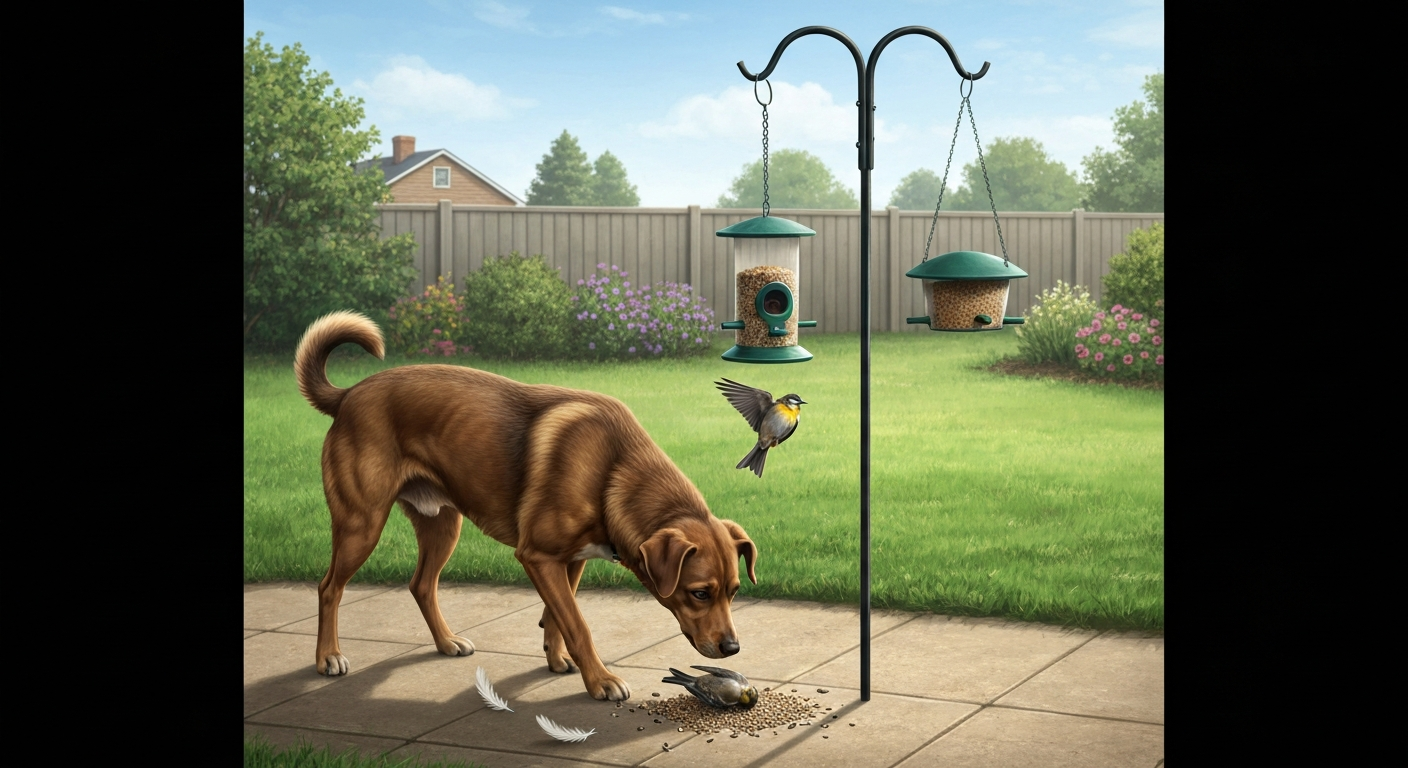
Why dogs chase and eat birds
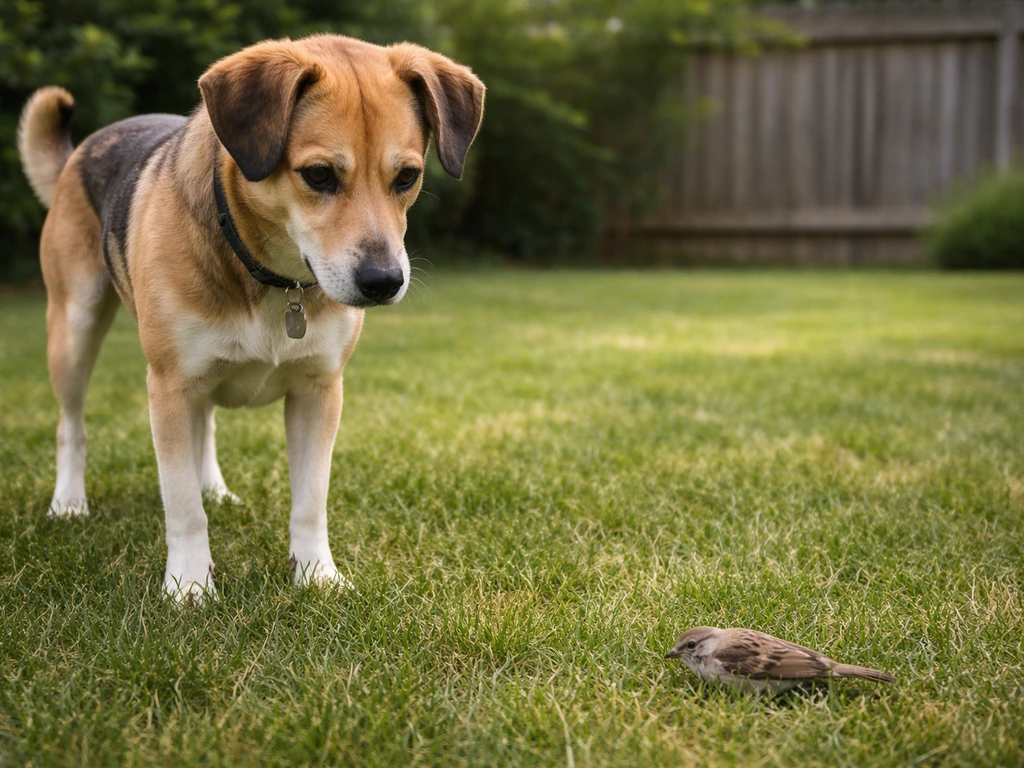
Dogs are descended from predatory carnivores, and even the most pampered couch dog carries a version of what behaviorists call the predatory sequence: eye, stalk, chase, grab/kill, dissect, consume. Research on canine behavior shows that most domestic breeds express only a truncated version of this sequence, so many dogs will chase enthusiastically but never actually catch or eat a bird. Some breeds, however, particularly terriers, retrievers, hounds, and herding dogs, have motor patterns that push further along that chain. A spaniel bred to flush and retrieve is going to be far more likely to pick up and mouth a downed bird than a greyhound that just loves the chase.
Opportunism is the bigger driver day to day. A dog doesn't need a strong prey drive to eat a dead bird it finds under your feeder. Scavenging is equally natural: dogs evolved as opportunistic feeders and a bird carcass smells interesting, protein-rich, and available. Younger dogs especially will grab and gulp almost anything novel. There's also a learned component: a dog that got away with eating a bird once will often seek the opportunity again. This is worth keeping in mind when you're deciding how to manage your yard.
What actually happens if a dog eats a bird
The outcome depends on several factors: was the bird wild or domestic, raw or partially decomposed, intact or already torn apart, and how much did the dog eat? Some dogs eat a small wild bird and show no symptoms at all. Others end up in the emergency clinic. Here are the main medical risks to know about.
Bone splinters and physical injury
Bird bones, especially cooked ones, are brittle and splinter into sharp fragments. Veterinary guidance consistently flags cooked poultry bones as a choking and perforation hazard. Raw bird bones are somewhat more pliable, but they are not safe either, particularly if the dog gulps them quickly. Retrospective clinical data show that bones are among the most common surgically retrieved foreign bodies in dogs, accounting for around 44% of cases in some reviews. Bone fragments can cause choking and airway obstruction, become impacted in the esophagus, cause gastric or intestinal obstruction, or perforate the gut wall and trigger peritonitis, a life-threatening abdominal infection that requires emergency surgery.
Bacterial and parasitic infections
Wild birds carry a range of pathogens that can infect dogs. Salmonella is perhaps the best-documented: a CDC-investigated multistate outbreak in 2020 to 2021 linked to wild songbirds confirmed that at least one dog whose owner frequented feeders acquired the same Salmonella Typhimurium strain as the human cases. Wild birds also commonly carry Campylobacter jejuni and Campylobacter coli, bacterial species associated with gastroenteritis in both dogs and people. Protozoal parasites including Giardia and Cryptosporidium have been detected in wild birds, and while interspecies transmission is not inevitable, ingesting infected tissue or droppings is a plausible exposure route. Symptoms to watch for: vomiting, diarrhea (sometimes bloody), lethargy, and reduced appetite within 24 to 72 hours.
Avian influenza and other viral risks
During active HPAI (highly pathogenic avian influenza) outbreaks, the CDC advises that pets exposed to sick or dead wild birds should be evaluated by a vet. Documented spillover of recent H5 strains to mammals, including domestic animals, has occurred. This doesn't mean every dead bird is an HPAI risk, but if you're seeing unexplained bird die-offs in your area, the calculus changes significantly, and your vet and local wildlife authority need to know.
Secondary poisoning: lead and rodenticides
A bird your dog finds may not have died naturally. USGS National Wildlife Health Center documentation confirms that predators and scavengers eating carcasses containing lead fragments from hunting ammunition can acquire secondary lead poisoning. Anticoagulant rodenticide exposure is a separate documented pathway: a bird that ate poisoned bait can pass enough rodenticide to cause delayed coagulopathy in a dog that eats the bird. The ASPCA Animal Poison Control advises that if there is any chance a bird was poisoned, owners should call a poison control service or vet immediately and should not attempt to induce vomiting at home, because vomiting sharp bone fragments increases injury risk.
What dogs can and can't digest from a bird
A dog's digestive system is acidic and fairly robust, which is why many dogs eat birds and pass the remains without incident. Soft tissues, including muscle, organ meat, and even small amounts of skin and fat, are generally digested without problem. Small, fine bones like those from songbirds may dissolve in stomach acid, particularly if the dog's stomach is empty and acid concentration is high. That said, this is not reliable enough to bet on. Feathers are largely indigestible and will usually pass through or be vomited up. They don't cause harm on their own, but a large clump of feathers can theoretically contribute to a gastrointestinal obstruction. The greatest risks are from larger, sharper bones and from whatever pathogens or toxins the bird was carrying, not from the feathers or soft tissue itself. For more detail on whether dogs can digest birds, see can a dog digest a bird.
Immediate steps to take right now
If you catch your dog eating a bird or find evidence that it already happened, act quickly and calmly. Here's what to do in order.
- Remove your dog from the area and secure it on a leash or indoors to prevent it from consuming more of the carcass.
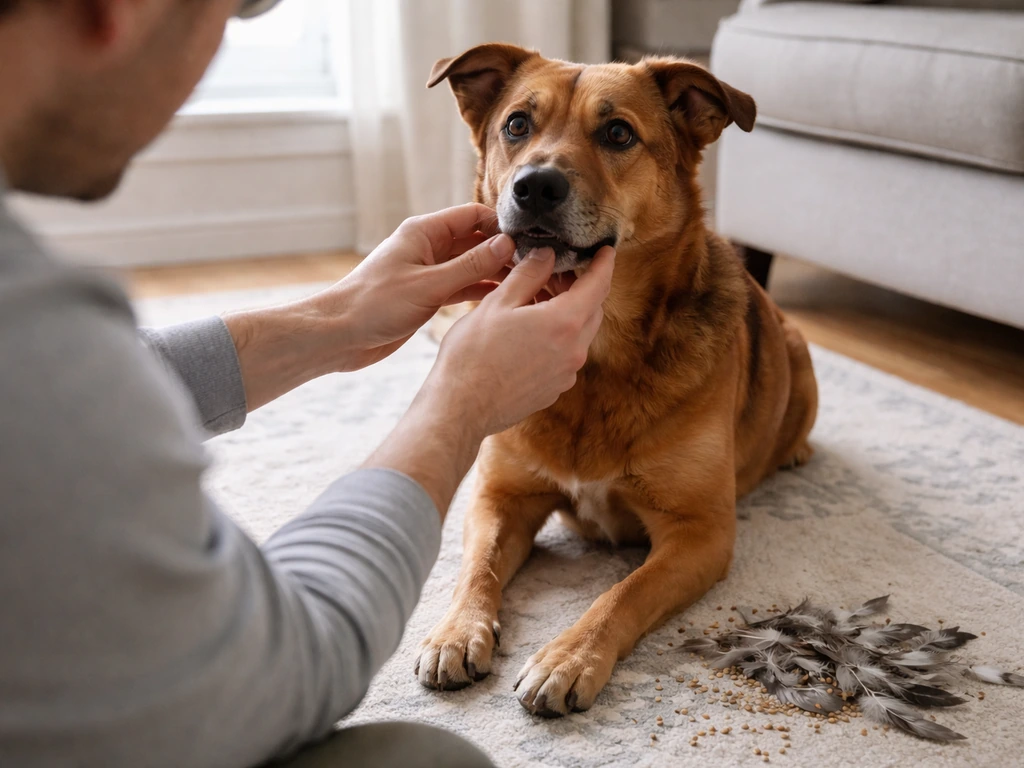
- Do not reach into your dog's mouth to remove material unless there is active choking and an obvious obstruction you can safely grasp. Attempting to retrieve bone fragments can push them deeper.
- Check your dog's mouth and throat briefly for any bone pieces visibly lodged, without putting your fingers at risk of a bite.
- Put on gloves before handling the bird carcass or any area the dog was feeding in. Use a bag or stick to avoid direct contact with your hands.
- Collect and bag the carcass or any remains if possible. Note the species if you can identify it, and whether the bird appeared sick or was already dead when found. Photograph it if you can do so without touching it.
- Note the time of ingestion, an estimate of how much was consumed (whole bird, partial, just feathers), and whether your dog is showing any immediate symptoms such as gagging, coughing, drooling, or pawing at its face.
- Call your vet or an emergency animal clinic and relay these details. If rodenticide or lead poisoning is a possibility, also call the ASPCA Animal Poison Control Center (888-426-4435 in the US).
- Wash your hands thoroughly with soap and water after handling anything in the area, even if you wore gloves.
Emergency signs and how to monitor at home
Not every bird-eating incident leads to an emergency, but some do, and the window for intervention matters. Use the checklist below to guide your monitoring. If your dog shows any of the signs in the urgent column, go to a vet immediately, don't wait to see if things improve.
| Sign or symptom | Timeframe | Action required |
|---|---|---|
| Choking, gagging, pawing at face or mouth | Immediate (within minutes) | Emergency vet now |
| Labored or noisy breathing, blue-tinged gums | Immediate | Emergency vet now |
| Repeated vomiting (more than 2 to 3 times) | Within hours | Call vet immediately |
| Vomiting blood or dark/tarry stools | Any time | Emergency vet now |
| Visible distress, hunched posture, or rigid abdomen | Within hours | Emergency vet now |
| Lethargy or collapse | Any time | Emergency vet now |
| Anorexia (refusing food for more than 12 hours) | Within 12 to 24 hours | Call vet today |
| Diarrhea (especially bloody or lasting more than 24 hours) | Within 24 to 72 hours | Call vet, monitor closely |
| Mild single vomiting episode, then normal behavior | Within hours | Monitor at home, contact vet if it recurs |
| Feathers in stool with no other symptoms | Within 24 to 48 hours | Monitor, no immediate action needed |
| Pale gums, weakness, or signs of bleeding (possible rodenticide) | 24 to 72 hours or later | Emergency vet now |
At home monitoring should continue for at least 72 hours after ingestion. Keep a simple log noting your dog's eating, drinking, bowel movements, energy level, and any unusual behavior. This log will be genuinely useful if you end up calling the vet or if symptoms appear later than expected.
When to call the vet and what to tell them
Call your vet any time you are unsure. That said, the following specific triggers make a call non-negotiable rather than optional: any immediate choking or breathing difficulty, repeated vomiting, bloody stool or vomit, suspected poisoning (rodenticide or lead), known HPAI activity in your area, or your dog is a puppy, elderly, immunocompromised, or has a pre-existing gastrointestinal condition. Veterinary guidance (Digestive System, Liver, and Abdominal Cavity, PubMed Central (Veterinary reference chapter)) lists immediate choking or breathing difficulty, repeated vomiting, bloody stool or vomit, and delayed signs (24–72+ hours) of obstruction or perforation as indications for urgent veterinary evaluation Digestive System, Liver, and Abdominal Cavity — PubMed Central (Veterinary reference chapter).
When you call, try to have this information ready: the approximate time of ingestion, what type or size of bird it appeared to be, how much the dog consumed (whole, partial, feathers only), whether the bird appeared sick or dead before the dog found it, your dog's weight and breed, any current medications, and what symptoms if any you are already seeing. Your vet may ask you to bring the dog in immediately, monitor at home with specific instructions, or may recommend imaging (X-ray) to check for bone fragments or obstruction. In cases where a bone perforation is suspected, exploratory surgery may be the recommended next step.
Handling and disposing of a bird carcass safely
How you handle the leftover carcass matters both for your own safety and for any wildlife reporting obligations you may have. Follow these steps.
- Always use nitrile or latex gloves. If gloves are unavailable, use a plastic bag inverted over your hand as a barrier.
- Pick up the carcass with a shovel, tongs, or the inverted bag. Avoid touching it directly.
- Place it in a sealed plastic bag, then a second bag. This double-bag method contains odor and any ectoparasites.
- Dispose of it in a covered outdoor trash bin, not in your compost. Do not bury it in a yard accessible to your dog or wildlife.
- If the bird is banded (has a metal leg band), note the band number if visible, then report it online to the USGS Bird Banding Laboratory (reportband.gov in the US), the Canadian Bird Banding Office, or your national equivalent. This is simple, takes two minutes, and contributes to real scientific data.
- If the bird is a species you believe may be a protected native species (most wild songbirds, raptors, and migratory birds are protected under the Migratory Bird Treaty Act in the US), you are not required to report a carcass found in your yard under most circumstances. However, if you find multiple dead birds of the same species in a short period, contact your state wildlife agency or the USGS National Wildlife Health Center, as it may indicate a disease event.
- During active HPAI advisories, if the dead bird is a waterfowl, raptor, or crow, follow your state or federal wildlife authority's current guidance on carcass reporting. These requirements can change during outbreak periods.
- Wash hands, tools, and any surfaces the carcass touched with soap and water, followed by a diluted bleach solution (1 tablespoon bleach per gallon of water) on hard surfaces.
How to quickly tell if a bird might be protected or ill
You don't need to be an ornithologist, but a basic visual check helps you know whether to escalate the situation. In the US, virtually all wild native birds are legally protected, so the more useful question is whether the bird may have died from disease or toxin exposure rather than a simple predator strike or window collision.
- Raptors (hawks, owls, eagles) and waterbirds (ducks, geese, herons) found dead have higher public-health significance during HPAI seasons. Report these to your state wildlife authority.
- Multiple birds of the same species dead in a small area suggests a disease event or toxin exposure. Report this and keep your dog away.
- A metal leg band means the bird is part of a research or monitoring program. Note the number and report it.
- A bird that appeared sick or disoriented before it died (witnessed or reported by neighbors) raises the risk of pathogen exposure.
- Common backyard songbirds like sparrows, finches, and starlings found singly are the lowest-concern scenario, but still represent a Salmonella and Campylobacter exposure risk for your dog.
- Waterfowl, corvids (crows, ravens), and raptors found dead in 2025 to 2026 should be treated with higher caution given ongoing HPAI surveillance in North America.
Prevention: feeder placement, yard setup, and dog management
Most of what I've described above is entirely preventable with some practical yard management. The single biggest risk factor is allowing your dog unsupervised access to areas where birds congregate, especially beneath and around feeders where dead or sick birds fall and seed debris accumulates.
Feeder and yard layout
- Mount feeders at least 5 to 6 feet off the ground and away from surfaces dogs can jump from, such as fences or deck furniture.
- Use feeders with a catch tray to reduce seed and debris falling to the ground, which attracts not just birds but sick birds and scavengers.
- Clean fallen seed and bird droppings from below feeders at least twice a week. Decomposing seed and droppings are where Salmonella concentrations are highest.
- Consider placing feeders in a section of the yard that can be physically separated from dog access, using a gate or temporary fence.
- Remove or reduce ground feeders if your dog regularly patrols the yard. Platform feeders at low heights are the most accessible for your dog and the highest-risk configuration.
- Spoiled or moldy seed attracts birds in distress, which in turn increases the chance of your dog finding an easy target. Store seed in sealed containers and refresh feeders every few days in warm weather.
Dog management strategies
- Supervise outdoor time whenever possible, especially in early morning when birds are most active at feeders.
- Teach and reinforce a reliable 'leave it' command. This is the single most useful behavioral tool in this situation and takes consistent, short training sessions to develop.
- Keep dogs on a long line in the yard if their recall is unreliable and birds are present.
- After rain or overnight, do a quick scan of the yard for fallen birds before letting your dog out.
- Dogs that frequently hunt birds despite training may need a muzzle during unsupervised yard time, particularly during fledgling season in late spring and early summer when young birds are on the ground.
Myth-busting: common questions about dogs and birds
A few misconceptions come up regularly when this topic is discussed online, and they're worth addressing directly.
Myth: raw bones from birds are always safe because dogs evolved eating raw prey. Reality: while raw bones are less likely to splinter than cooked ones, they are not risk-free, particularly if swallowed in large pieces or if the dog has any gastrointestinal narrowing or prior obstruction history. Small songbird bones may pass safely; larger bones from waterfowl or pigeons are a much more serious proposition.
Myth: if the dog doesn't vomit right away, it's fine. Reality: intestinal obstruction and perforation can develop over 24 to 72 hours. Some of the most serious cases show minimal early symptoms. Monitoring for at least three days is the medically appropriate standard.
Myth: birds that die naturally under feeders aren't a disease risk. Reality: birds that die at feeders are more likely to have died from disease (including Salmonella) than from, say, a window strike. A study of feeder-associated Salmonella outbreaks is exactly why the CDC flagged wild songbird feeders as a transmission environment. Treat any dead bird under your feeder as a potential pathogen source.
Myth: dogs can't catch healthy birds, so this only applies to already-dead ones. Reality: wildlife hospital data from Australia show that dog attacks are a measurable admission category, accounting for roughly 9% of admissions in one Queensland study, with release rates of only about 26% post-attack. Dogs, particularly younger or high-drive ones, do catch and injure live birds, and fledgling season significantly increases that opportunity.
A quick note on related risks worth reading about
If your dog has already eaten a bird and you're trying to understand what to expect medically, the detailed breakdown of digestion risks and what a vet will actually assess is covered in depth in the companion pieces on whether dogs can digest birds and whether dogs can get sick from eating a bird. If you're trying to understand the behavior behind why it happened, especially if it was unexpected or out of character, the article on why dogs eat birds explores the behavioral triggers and breed-specific factors in more detail. Read more on why did my dog eat a bird for detailed behavioral triggers and breed-specific factors. And if you've already been through this and want to know exactly what the vet visit might involve and what to watch for step by step, what happens if my dog eats a bird walks through the clinical picture from ingestion through recovery.
FAQ
Quick answer: will a dog eat a bird and how likely is it?
Yes — dogs can and do eat wild birds. Likelihood depends on the individual dog (breed, age, prey drive, training), the bird species/size, and opportunity (unsupervised access, injured or fledgling birds, or birds at feeders). Many dogs will chase birds; fewer will capture and consume them. Wildlife‑rehabilitation data and clinical reports show dog attacks are a measurable cause of wild‑bird injury and admission, but frequency varies by region and dataset.
Why do dogs chase or eat birds?
Several reasons, often overlapping: 1) Predatory sequence: dogs can show a shortened carnivore sequence (see → stalk → chase → grab/kill → dissect → consume). Certain breeds express more of this sequence. 2) Opportunistic feeding/scavenging: dogs eat available high‑protein items. 3) Prey drive and play: puppies and high‑drive adults may catch birds as hunt/play behavior. 4) Learned/food motivation: if bird tissue or spilled seed is rewarding, the behavior repeats. 5) Curiosity or scent attraction: injured or sick birds and spilled seed or spoiled food attract dogs.
What immediately can happen if a dog eats a bird (medical risks)?
Possible immediate and delayed complications include: choking or airway obstruction; oral/esophageal injury from beaks or claws; bone splinters causing perforation of the esophagus, stomach or intestines; gastric or intestinal obstruction needing endoscopy or surgery; bacterial (Salmonella, Pasteurella) or Campylobacter infection; protozoal or parasitic exposure (Giardia, Cryptosporidium); exposure to avian pathogens (including avian influenza in outbreak settings); poisoning from lead shot or contaminated/poisoned birds (rodenticides, pesticides); vomiting, diarrhea, abdominal pain, lethargy and systemic illness. Cooked poultry bones are particularly prone to splintering and are high risk.
What parts of a bird can and cannot be digested and how digestion affects risk?
Dogs can digest soft tissues and feathers to varying degrees; feathers are mostly indigestible keratin and often pass or form hairball‑like masses. Small, flexible bones (very small wild songbird bones) may pass but can still cause sharp injury; many bird bones are thin and brittle—cooked bones splinter easily and carry high risk. Large or rigid bone fragments may obstruct or perforate the digestive tract. Digestion does not neutralize pathogens (bacteria, parasites) or remove toxicants (lead, rodenticide fragments), so microbial and poisoning risks remain after ingestion.
Immediate step‑by‑step actions if you see or suspect your dog ate a bird
1) Safely remove the dog from the carcass/area to prevent more ingestion and limit human exposure (use gloves if available). 2) Note time, what parts were eaten, and collect/secure any remaining carcass in a sealed bag for vet inspection/local authorities. 3) Look for immediate signs: choking, coughing, drooling, gagging, breathing difficulty — if present, seek emergency veterinary care now. 4) If no airway signs, monitor closely for 24–72 hours for vomiting, anorexia, abdominal pain, bloody stool, lethargy or fever. 5) Do NOT induce vomiting at home unless a veterinarian or poison‑control center instructs you to do so (sharp fragments can cause more damage on retching). 6) Call your veterinarian or a pet poison‑control line for advice; have details ready (dog size/weight, time of ingestion, cooked vs raw, presence of shot/poison suspicion, photos of bird/carcass).
Which signs require immediate veterinary attention (vet‑advice triggers)?
Seek urgent care if you observe: • Any signs of airway compromise (choking, severe coughing, noisy/fast/difficult breathing). • Repeated or forceful vomiting, persistent gagging, inability to keep water/food down. • Abdominal pain, distention, reluctance to move, severe lethargy. • Bloody vomit or black/tarry stool (melena) or fresh blood in stool. • Unexplained bleeding, bruising or weakness (possible rodenticide/lead). • Fever, collapse, or progressive worsening over 24–72 hours. If the bird was known or suspected to be poisoned, shot, or sick with reportable disease (e.g., suspected avian influenza in your area), call your vet immediately and notify local public‑health/wildlife authorities as advised.