For most pet birds, a conservative starting point used by avian vets is roughly 4 to 10 mg of standardized silymarin extract per kilogram of body weight per day, given orally, but that range comes almost entirely from extrapolation of poultry research and mammalian pharmacokinetics, not from controlled clinical trials in parrots, cockatiels, or finches. Restoring Activity of Milk Thistle ... in Poultry and Other Animal Species (MDPI, 2023) – table of avian experimental doses notes that Because avian PK/PD data for silymarin are scarce, published avian experimental doses (e.g., pigeon 10 mg/kg, 100 mg/kg; quail feed 250–2000 mg/kg feed) are the only species‑specific numeric anchors in the literature; these should not be assumed safe for all pet or wild species without clinical oversight. Before you give your bird anything, talk to an avian veterinarian. Milk thistle is not a casual treat supplement, and the gap between what the research actually shows and what some pet forums claim is significant.
How Much Milk Thistle to Give My Bird: Safe Dosing Guide

Should you even consider milk thistle for your bird?
Milk thistle (Silybum marianum) has a real and documented role in supporting liver function in mammals, and avian vets do sometimes recommend it, particularly for birds with confirmed liver disease, heavy-metal toxicity, or prolonged exposure to fatty diets. So it is not quackery. But the honest answer is that the peer-reviewed evidence specific to companion birds is thin, the dosing data is largely borrowed from poultry experiments and mammalian pharmacokinetics, and product quality in retail supplements is wildly inconsistent. If your bird has been diagnosed with hepatic disease by a vet and that vet suggests milk thistle as a supportive treatment, this article will help you understand what you are giving, how to choose a product, and how to administer it safely. If you are thinking of giving it preventively because you read a forum post, that is a conversation worth having with your avian vet first.
What milk thistle actually is and why the liver angle matters
Milk thistle seeds contain a group of flavonolignans collectively called silymarin. The main bioactive constituent is silybin (also written as silibinin), which exists as two diastereomers, silybin A and silybin B, alongside isosilybin, silychristin, silydianin, and the polyphenol taxifolin. When you buy a standardized extract, the label percentage refers to this silymarin complex, not to pure silybin alone, which matters when you are trying to calculate a dose.
The proposed mechanisms are genuinely interesting: silymarin acts as a free-radical scavenger, stabilizes hepatocyte cell membranes, modulates inflammatory signaling pathways including NF-kB and MAPK, and appears to support hepatocyte regeneration. These effects have been demonstrated in cell culture and mammalian models. The liver-support reputation is not invented. The caveat is that almost all of this mechanistic work was done in rodents, dogs, or humans, and avian liver physiology, enzyme distribution, and metabolic rate differ enough that you cannot simply assume the same thing happens in a cockatiel.
On the pharmacokinetics side, silymarin has poor and formulation-dependent oral bioavailability even in mammals. It is heavily conjugated in the gut and liver, excreted through bile, and undergoes enterohepatic recirculation that produces secondary plasma peaks. Metabolism, Transport and Drug–Drug Interactions of Silymarin reports that silymarin/silibinin are extensively conjugated (glucuronide/sulfate), excreted in bile, and undergo enterohepatic recycling that produces secondary plasma peaks. The elimination half-life in humans is roughly 4 to 6 hours. This matters for birds because avian metabolic rates are generally much higher than mammalian rates, which could mean faster clearance and a shorter effective window per dose. No published avian pharmacokinetic data for silymarin exists in companion species, which is a real problem for precise dosing.
What the science actually says about birds specifically
The most directly relevant controlled avian study tested milk thistle in White Carneaux pigeons challenged with aflatoxin B1 (a serious liver toxin). Birds were fed diets providing approximately 10 or 100 mg of 80% standardized silymarin per kilogram of body weight per day. The result: no consistent histopathologic hepatoprotective effect was found at either dose level in that acute challenge model. That is a humbling finding and worth sitting with before you assume milk thistle will protect your bird from liver stress.
Poultry production research is more numerous but messier to interpret. Broiler, laying hen, quail, and duck studies have used milk thistle seed, seed cake, or standardized silymarin in feed at inclusion levels ranging from a few hundred to several thousand milligrams per kilogram of feed. Some studies report improvements in oxidative stress markers, gut health parameters, and reduced impact of mycotoxin exposure. Others show no benefit. A few show reduced feed intake and weight loss at very high inclusion levels, which is a real safety signal. The heterogeneity across studies reflects genuine species, dose, and formulation differences, not just noise.
For companion psittacines (parrots, cockatiels, conures, lovebirds) and passerines (finches, canaries), there are essentially no randomized controlled trials. Published avian vets and a handful of exotic animal pharmacology texts acknowledge this gap and recommend conservative extrapolation with close monitoring. That does not mean the supplement is useless for these birds, but it does mean you are operating on limited evidence, and the burden of caution sits entirely with you and your vet.
Who this guidance is actually for
Different readers come to this question from very different situations, and the appropriate level of caution shifts accordingly.
- Pet-bird owners (psittacines, passerines, softbills): You are most likely to encounter a legitimate clinical reason to use milk thistle, typically because an avian vet has suggested it for a bird with diagnosed liver disease, heavy-metal toxicity, or fatty liver syndrome. This is the group for whom the dosing guidance in this article is most applicable, provided you work with a vet.
- Backyard birders: You should not be supplementing wild birds at your feeder with milk thistle. Wild birds visiting feeders are not under your medical care, their health status is unknown, and adding supplements to feeder food or water is not appropriate practice. Offering clean, species-appropriate food (seeds, suet, fresh water) is where your role ends.
- Wildlife rehabilitators: Licensed rehabilitators sometimes use milk thistle for oiled or toxin-exposed birds in their care, following guidance from supervising veterinarians. If you are not yet licensed, work with your mentor vet and do not dose independently.
- Nature educators: Understanding milk thistle's role in avian health is valuable for teaching context, but classroom or demonstration birds should only receive supplements under direct veterinary supervision.
When to absolutely not use milk thistle
Do not give milk thistle to a wild bird you have found injured or sick in your yard. This is not a minor caution. Wild birds have legal protections in most countries (the Migratory Bird Treaty Act in the US, for example), and medicating them without a license is both legally problematic and practically dangerous. Wild birds are often in a state of severe physiological stress, their weight is unknown, and administering any supplement without knowing the animal's health status can cause direct harm. The right move is to contact a licensed wildlife rehabilitator immediately. They have the training, the legal authorization, and the veterinary backup to assess and treat the animal properly.
Do not use milk thistle as a preventive supplement without veterinary input, especially in birds that appear healthy. There is no evidence that routine supplementation prevents liver disease in companion birds, and introducing any bioactive compound to a healthy bird's diet carries the risk of unintended interactions or palatability problems that could reduce overall food intake.
Do not use milk thistle in birds with known allergies or sensitivities to the Asteraceae (daisy) plant family, as cross-reactivity has been documented in mammals. Do not combine it with medications metabolized by cytochrome P450 enzymes without vet guidance, since silymarin has documented CYP interactions in mammalian models, and these pathways matter in birds too.
Whole seed, standardized extract, or tincture: which form actually makes sense for birds
The product form you choose has a major impact on what your bird actually receives. Here is a practical comparison.
| Product Form | Silymarin Content | Dose Precision | Bird-Friendliness | Notes |
|---|---|---|---|---|
| Whole dried seed | Low (~1.5–2% silymarin in crude fruit) | Very low | Moderate (some birds accept seeds) | Hard to reach therapeutic silymarin doses; inconsistent intake; seeds can go rancid |
| Standardized dry extract (capsule/powder) | High (30–65% silymarin, varies by product) | High if product is third-party verified | Good when mixed into soft food | Best option for dosing accuracy; verify label claims with third-party testing |
| Alcohol tincture | Variable; alcohol base problematic for birds | Low | Poor (alcohol is toxic to birds) | Avoid standard alcohol tinctures entirely for avian use |
| Glycerin-based liquid extract | Variable | Moderate | Better than alcohol tinctures; some birds accept | Check that no xylitol or artificial sweeteners are added |
The standardized dry extract in powder or capsule form is the most practical for achieving a measurable dose in companion birds. Look for a product standardized to at least 70 to 80% silymarin and, critically, verified by an independent third-party lab. Commercial supplement testing has repeatedly found that many retail milk-thistle products contain significantly less silymarin than the label states, which means your dose calculation could be off by a wide margin. Products with USP verification marks or independent lab certificates of analysis are preferable. Avoid any product containing artificial sweeteners, particularly xylitol, which is toxic to birds, or added herbs that have not been evaluated in avian species.
How dosing decisions are made (and why the numbers come with asterisks)
There is no established, evidence-backed therapeutic dose for silymarin in companion parrots or passerines. What exists in the literature are experimental dosing ranges from poultry and pigeon studies, plus extrapolations based on allometric scaling from mammalian data. Allometric scaling uses body weight and metabolic rate to estimate doses across species, but it is well documented that this approach often fails to predict maintenance doses reliably in birds because of wide variation in avian CYP enzyme distribution, metabolic rate, phylogeny, and age. Use it as a rough starting point, not a precise prescription.
Published experimental ranges give us some numeric anchors. The pigeon study used 10 to 100 mg of 80% silymarin extract per kilogram of body weight per day. Coturnix quail studies used dietary inclusion levels of 250 to 2000 mg per kilogram of feed. These are experimental ranges, not clinically validated therapeutic doses, and the pigeon study at those levels did not demonstrate hepatoprotection against acute aflatoxin challenge. Many avian exotic vets apply a conservative clinical starting point in the lower end of or below the experimental pigeon range, typically in the 4 to 10 mg/kg/day silymarin range for companion birds, titrated upward only with monitoring and under veterinary supervision.
The maximum-caution position is this: if you do not have a confirmed diagnosis, a known body weight, a third-party verified product, and a supervising avian vet, you should not be calculating a dose at all.
Species-group considerations at a glance
| Species Group | Body Weight Range (typical) | Clinical Data Availability | Conservative Starting Range (silymarin) | Vet Involvement Required? |
|---|---|---|---|---|
| Psittacines (large: macaws, cockatoos, Amazons) | 300 g – 1.5 kg | None specific; extrapolated from poultry/pigeons | 4–10 mg/kg/day under vet guidance | Yes, always |
| Psittacines (small: budgies, parrotlets, lovebirds) | 30–80 g | None specific; high metabolic rate increases uncertainty | Use lowest end of range; very limited data | Yes, always |
| Cockatiels | 75–120 g | None specific | Approach with extreme caution; no validated dose | Yes, always |
| Passerines (canaries, finches, sparrows) | 10–40 g | None specific; allometric extrapolation unreliable at this size | Not recommended without avian vet and laboratory backup | Yes, always |
| Waterfowl (ducks, geese) | 1–5 kg | Limited; some duck studies exist in poultry literature | Poultry feed-inclusion ranges may be referenced by vet | Yes |
| Raptors (hawks, owls, falcons) | 150 g – 5+ kg | No published companion raptor-specific data | Rehabilitator/vet decision only | Yes, licensed rehabilitator required |
How to actually give it: mixing, delivery, and keeping stress low
Administration method matters almost as much as dose. Birds that refuse supplemented food get zero benefit, and force-feeding a stressed bird carries its own risks of injury, aspiration, and immune suppression. Here is a practical approach that works in most companion bird settings.
Mixing into soft food
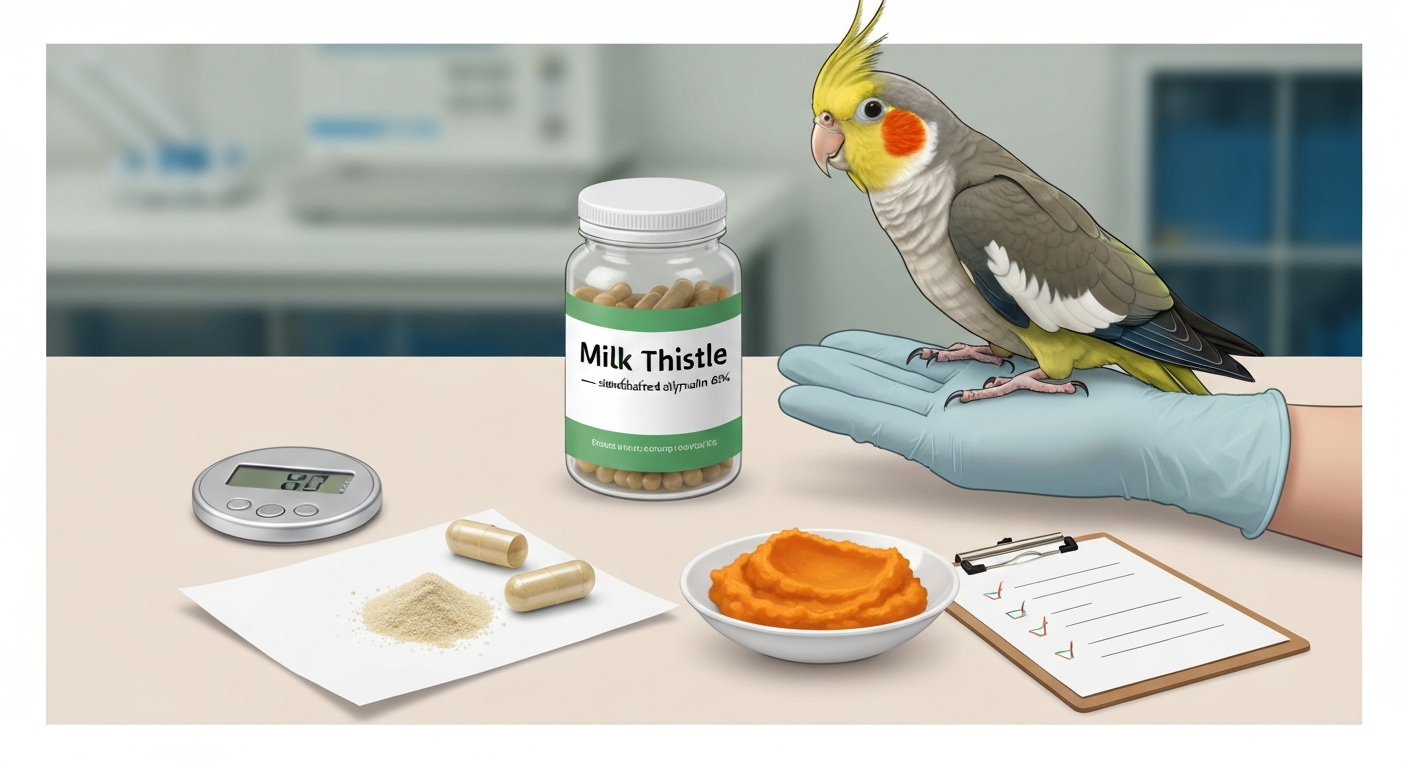
For psittacines and most companion birds, opening a verified standardized-extract capsule and mixing the measured powder into a small amount of a food the bird already enjoys (mashed cooked sweet potato, soft pellet mash, or a small piece of banana) is the most reliable delivery method. Use a precise gram-weight scale to measure the powder, not a volumetric spoon, because powder density varies significantly between products. Prepare only the amount needed for one meal; do not prepare large batches in advance, as silymarin degrades with heat, light, and moisture.
Liquid delivery for small or resistant birds
For very small birds (finches, canaries, small budgies) or birds that refuse supplemented food, a glycerin-based liquid extract (alcohol-free, xylitol-free) can be delivered via a small syringe directly into the beak in tiny volumes. Use a 1 mL oral syringe and deliver slowly to the side of the beak, never directly into the throat, to minimize aspiration risk. Never add it to drinking water as the only delivery route: you cannot control how much the bird drinks, and in group housing it becomes impossible to dose individuals.
Frequency and timing
Given the short half-life of silymarin in mammals (approximately 4 to 6 hours) and the likelihood that avian clearance is at least as fast, twice-daily dosing is generally preferred over once-daily when a therapeutic effect is the goal. Divide the daily dose in half and give with the morning and evening meal. Always give with food to reduce any gastrointestinal irritation, which is the most common adverse effect even in the mammalian literature. For birds that are already eating reduced amounts due to illness, adjust the food vehicle volume down so the bird actually consumes the whole supplemented portion.
24-hour handling considerations
Any bird receiving milk thistle supplementation should be weighed at the same time each day (before the morning meal) using a gram-weight scale. Weight loss of more than 2 to 3% of body weight over 48 hours is a warning sign that the bird is not eating adequately, possibly because the supplemented food is unpalatable. Keep a simple daily log of weight, food consumed, droppings character (color, consistency, volume of urates and feces), and any behavioral changes. If the bird is more fluffed, less active, or passing abnormal green or very watery droppings, contact your avian vet before continuing. Birds are physiologically fragile and can deteriorate rapidly; 24-hour observation is not optional when introducing any new bioactive compound.
Species-specific administration notes
- Large psittacines (macaws, cockatoos, Amazons): Generally easier to dose in soft food; most accept mashed food vehicles. Monitor beak condition and weight daily.
- Small psittacines and cockatiels: Higher metabolic rate means faster potential clearance and also faster deterioration if something goes wrong. Keep doses at the absolute low end; weigh daily with a kitchen gram scale accurate to 1 g.
- Passerines (canaries, finches): Tiny body mass (10–40 g) makes any dosing error proportionally large. Liquid delivery at fractional milliliter volumes is required. Avian vet input is non-negotiable.
- Waterfowl in rehabilitation: Typically dosed via gavage or mixed into tube-fed formula under veterinary supervision; not appropriate for owner administration.
- Raptors: All raptor care falls under licensed wildlife rehabilitation. Milk thistle is occasionally used in heavy-metal or rodenticide-exposed raptors under supervising vet protocols. No independent administration.
Contraindications, drug interactions, and storage
Silymarin inhibits certain cytochrome P450 enzymes (CYP3A4, CYP2C9) and drug transport proteins in mammalian models, which means it can theoretically alter the metabolism of other medications your bird may be taking. Common avian medications of concern include azole antifungals (itraconazole, voriconazole) and some antibiotics metabolized hepatically. Tell your avian vet about every supplement your bird receives before starting anything new. Interaction data specific to birds is essentially absent, so caution is the only defensible position.
Store your milk thistle product in a cool, dark, dry location, tightly sealed. Heat, humidity, and light degrade silymarin over time. Do not store it near the stove, in a sunny window, or in a bathroom cabinet. Check the expiry date and the appearance of the powder (it should be uniform, with no clumping, discoloration, or off-smell) before each use. If you are using a product with a certificate of analysis from an independent lab, keep that document so you can reference the actual measured silymarin content rather than relying on the label claim.
Signs it might be helping (or not)
In a bird receiving milk thistle for diagnosed liver disease, you should see your avian vet recheck blood chemistry (AST, GGT, bile acids) at 4 to 6 week intervals to assess whether hepatic markers are improving. Do not rely on behavioral observation alone as a measure of liver function; birds hide illness well. On the practical side, a bird that is eating well, maintaining weight, passing normal droppings (formed dark feces with white urates and clear liquid urine), and behaving normally is at minimum not being harmed. A bird that is losing weight, passing yellow-green or watery droppings, becoming fluffed, or reducing vocalization and activity needs veterinary assessment immediately, not continued supplementation.
Myths and related questions worth addressing
Because milk thistle is a supplement given in liquid or food form, readers sometimes conflate questions about what birds can drink or digest. If you’re also curious about saltwater tolerance in birds, see our companion note on which bird can drink salt water for species that can safely ingest saline water. For related concerns about handling and contact, see is bird saliva good for you to learn whether exposure to bird saliva poses any health considerations. A few things worth clearing up directly. For a concise answer about lactose and whether birds can drink milk, see can bird drink milk for practical guidance and risks.
Birds cannot digest dairy milk. Avian digestive systems lack the lactase needed to break down lactose, and milk causes GI disturbance. The fact that milk thistle comes from a plant called milk thistle is etymological coincidence, not a nutritional connection. The plant is named for the white marbling on its leaves, not for any dairy content. Similarly, glycerin-based liquid extracts of milk thistle are not the same as milk or any animal-derived fluid, and are appropriate only in the alcohol-free, additive-free forms described above.
Bird hydration is worth mentioning here because birds receiving any kind of supplement should always have constant access to fresh, clean water. If you’re curious about avian fluids beyond plain water (for example, what is bird saliva drink), consult a veterinarian or trusted avian-husbandry resource for accurate guidance. Some birds (like certain desert-adapted species or those physiologically adapted to extracting moisture from food) have very efficient water-conservation mechanisms, but companion birds kept in heated indoor environments have higher water needs than their wild counterparts. Never substitute supplemented water for plain fresh water. For related practical guidance on keeping water available and how much a toy or novelty drinking bird requires, see our short piece on does the drinking bird need water. Always offer plain water alongside any food-based supplementation.
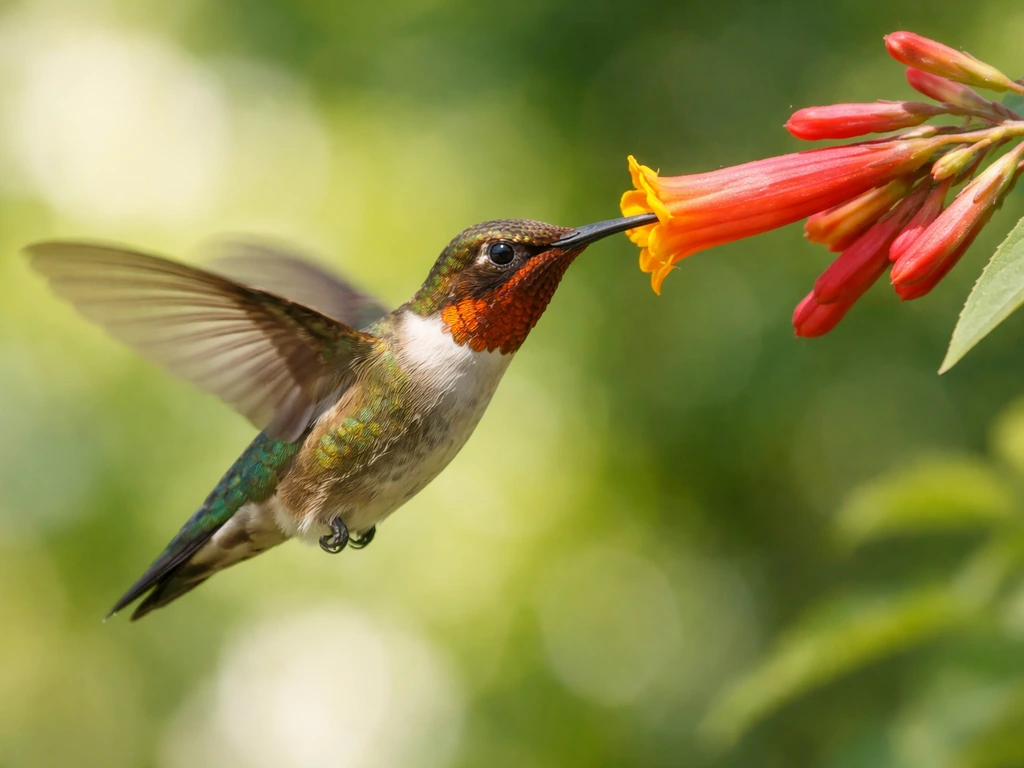
Nectar-feeding birds such as hummingbirds, lorikeets, and sunbirds have highly specialized digestive systems adapted to high-sugar, low-fiber diets. Milk thistle supplementation has no documented place in the diet of nectar specialists, and altering the gut environment of these birds with plant-derived flavonolignans could disrupt their unique microbiome and rapid glucose metabolism. If you care for nectar-feeding birds, direct any supplement questions specifically to an avian vet experienced with these species.
A quick-reference checklist before you start
- Get a confirmed diagnosis from an avian veterinarian: milk thistle is supportive therapy, not a first-line treatment for unknown illness.
- Weigh your bird accurately in grams on a calibrated gram scale before calculating any dose.
- Choose a standardized dry extract with an independent third-party lab certificate of analysis confirming silymarin content.
- Confirm the product contains no alcohol, xylitol, artificial sweeteners, or unevaluated herbal additives.
- Start at the conservative lower end of any vet-recommended range and do not self-escalate the dose.
- Administer twice daily with food to reduce GI irritation and account for short half-life.
- Weigh the bird daily before the morning meal and log weight, droppings, and behavior.
- Schedule a follow-up blood chemistry recheck with your vet at 4 to 6 weeks.
- Stop and contact your vet immediately if the bird loses more than 2 to 3% of body weight in 48 hours, passes abnormal droppings, or shows reduced activity.
- Never give milk thistle to a wild bird without working through a licensed wildlife rehabilitator and supervising vet.
FAQ
What is milk thistle and what active compounds matter for birds?
Milk thistle (Silybum marianum) seed contains a mixture called silymarin — a group of flavonolignans (principally silybin/silibinin, isosilybin, silychristin, silydianin) plus taxifolin and other polyphenols. Silybin is the main bioactive constituent. Proposed mechanisms (from mammal and in vitro work) include antioxidant/free‑radical scavenging, membrane stabilization, modulation of inflammatory signaling, and support for hepatocyte regeneration. Avian‑specific pharmacology is poorly characterized, so these mammalian mechanisms are only suggestive for birds.
Is there good scientific evidence that milk thistle helps birds?
Direct, high‑quality clinical evidence in pet or wild birds (psittacines, passerines, raptors) is minimal. Most avian data come from poultry, quail, pigeons or laboratory models with mixed results: some studies show improved oxidative markers or partial protection against mycotoxin challenges; others show no clear hepatoprotective effect. Because species, dose form, and experimental conditions vary widely, efficacy for individual pet or wild birds is unproven and should be treated cautiously.
Who might consider milk thistle for birds and when is it appropriate?
Appropriate users and contexts (with caveats): - Wildlife rehabilitators working under license and protocol, when used as part of a supervised treatment plan. - Avian veterinarians prescribing silymarin as an adjunct for suspected hepatic insult. - Experienced pet‑bird owners only when advised by an avian vet. - Nature educators generally should not administer herbal medications to wild birds; use only for trained, supervised collections. Never medicate wild birds without a licensed rehabilitator or vet.
What product forms exist and which are preferred for birds?
Common forms: whole seed, ground seed/meal, standardized dry extracts (powder/capsules), liquid extracts/tinctures, and combined supplements. Preferred approach for precise dosing and safety: use standardized silymarin extract (dry extract with labeled % silymarin) dispensed or recommended by an avian veterinarian. Whole seed is lower and variable in active content and may be useful as a dietary supplement in poultry settings but is poor for controlled dosing in pet birds. Avoid alcohol‑based tinctures for small pet birds unless a vet directs a safe, measured dose.
How much milk thistle do studies show for avian species? (What numeric anchors exist?)
Published avian experiments provide numeric anchors but are not definitive dosing recommendations for all species: - White Carneaux pigeons (experimental): ~10–100 mg/kg body weight/day of an 80% silymarin preparation (no consistent protection in that study). - Quail/poultry feed studies: inclusion levels equivalent to several hundred to 2,000 mg/kg feed (variable outcomes). These published ranges show that experimental doses have spanned roughly 10–100 mg/kg/day for extracts in some bird models; however, direct translation to pet species is uncertain and requires large safety margins.
If an avian vet approves use, what conservative starting doses could be considered for pet birds?
Because of sparse species data, use conservative, vet‑supervised dosing with safety factors: - Very small psittacines (budgies, small conures, parrotlets): start ~5 mg/kg silymarin extract once daily; monitor closely. - Medium psittacines (cockatiels, cockatiels-size to smaller amazons): start ~5–10 mg/kg once daily. - Larger parrots (African greys, Amazons, macaws) and raptors: start ~5–15 mg/kg once daily. If using a standardized extract expressed as silymarin (e.g., 40% silymarin), calculate mg of extract to deliver the intended mg of silymarin. Reduce frequency or dose for very young, stressed, or systemic‑ill birds. Always confirm formulation strength and consult an avian veterinarian before starting.
Which Bird Drinks Nectar from Flowers? How to Spot Them
Learn which nectar-feeding birds visit flowers, spot them by behavior and beaks, and set up safe feeders today.