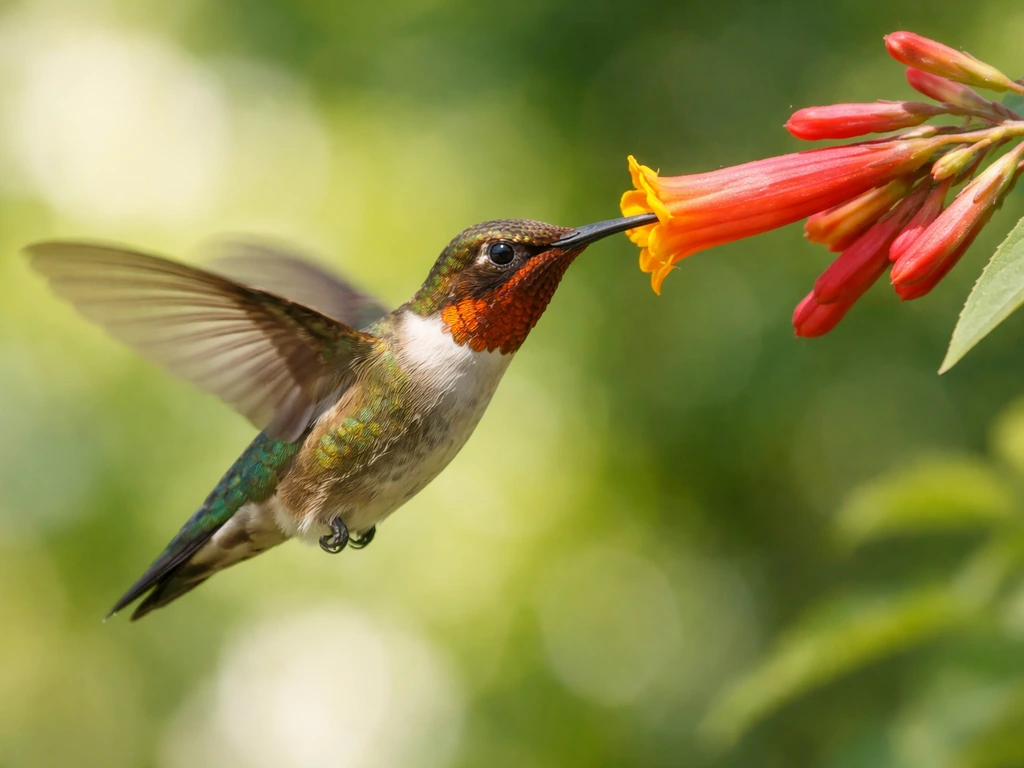
Hummingbirds are the nectar-drinking birds most backyard birders in North America will encounter, and they are by far the most specialized for it. Globally, sunbirds (family Nectariniidae) across Africa and Asia and honeyeaters (family Meliphagidae) in Australia fill the same role. All three groups share the same core traits: long, narrow bills shaped to fit flower tubes, tongues engineered to pull nectar up rapidly, and a strong pull toward brightly colored, tubular blooms. If you are watching a small bird hovering in front of a flower or a feeder and drinking from it, you are almost certainly looking at one of these.
Which Bird Drinks Nectar from Flowers? How to Spot Them

Maya Bennett
27 Jun 2026
How nectar-feeding birds are identified
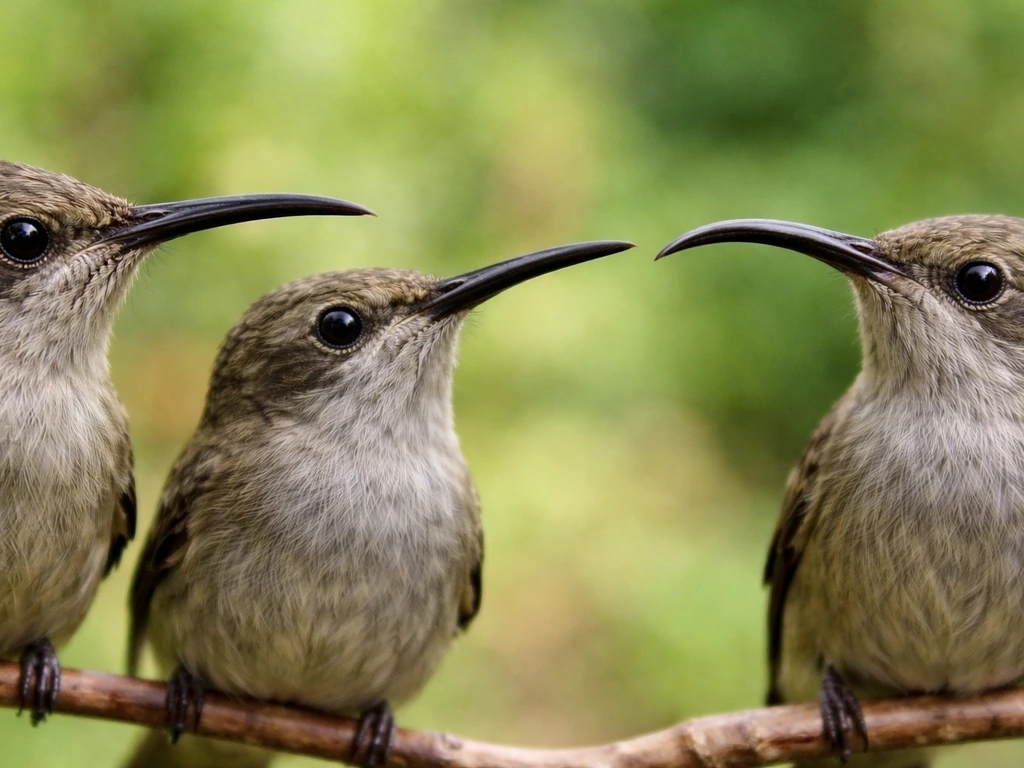
The easiest starting point is anatomy. Nectar-feeding birds have bills that are noticeably long relative to their body size, often curved or needle-thin, and sized to match the corolla tube of the flowers they visit. Hummingbird bill length, for example, frequently mirrors the exact depth of the tubular flowers in their territory. This is not a coincidence; it is the result of co-evolution between bird and plant.
The tongue is equally diagnostic, even if you cannot easily see it in the field. Hummingbird tongues work via a fluid-trap mechanism: the tongue tip has lamellae (tiny fringed edges) that unfurl as the tongue enters nectar, then collapse inward to trap liquid as the tongue retracts. This happens dozens of times per second. Sunbirds use a different but equally clever system: recent research published in 2026 describes an intralingual suction mechanism involving a tube-like tongue structure and pressure differentials. Both systems are far more efficient than simply lapping. The practical takeaway for identification is that these birds drink fast and repeatedly, and the tongue action is invisible to the naked eye.
Body size and color also help. Hummingbirds are tiny (most North American species weigh 3 to 6 grams), often iridescent, and may flash bright throat patches called gorgets. Sunbirds are slightly larger and similarly metallic. Honeyeaters vary more in size and coloration but share the curved-bill silhouette.
Birds that drink nectar from flowers
Here are the main groups and species you are likely to encounter, organized by region:
| Bird Group | Region | Key Species Examples | Feeding Style |
|---|---|---|---|
| Hummingbirds (Trochilidae) | Americas (North, Central, South) | Ruby-throated, Anna's, Rufous, Black-chinned, Broad-tailed | Hover or briefly perch; insert bill into tubular flowers or feeders |
| Sunbirds (Nectariniidae) | Africa, Middle East, South/Southeast Asia | Purple Sunbird, Olive-backed Sunbird, Greater Double-collared Sunbird | Perch and probe; occasionally hover briefly |
| Honeyeaters (Meliphagidae) | Australia, New Guinea, Pacific islands | New Holland Honeyeater, Rainbow Lorikeet (related), Eastern Spinebill | Perch and probe; brush-tipped tongue gathers pollen and nectar |
| Orioles (Icteridae/Oriolidae) | North America, Europe, Asia | Baltimore Oriole, Orchard Oriole | Perch and probe; nectar is supplemental, not primary diet |
| Lorikeets (Psittacidae) | Australia, Pacific | Rainbow Lorikeet, Scaly-breasted Lorikeet | Perch; specialized brush tongue laps nectar from flowers |
If you are in North America, your list basically starts and ends with hummingbirds for true specialized nectar-feeding. The Ruby-throated Hummingbird is the only species regularly seen east of the Mississippi. In the western US you may encounter Anna's, Rufous, Black-chinned, and Broad-tailed hummingbirds, among others. Orioles will visit nectar feeders and probe flowers, but nectar is a supplement for them rather than a dietary cornerstone, so they are not in the same category physiologically.
How to confirm nectar-feeders by behavior and flower choice
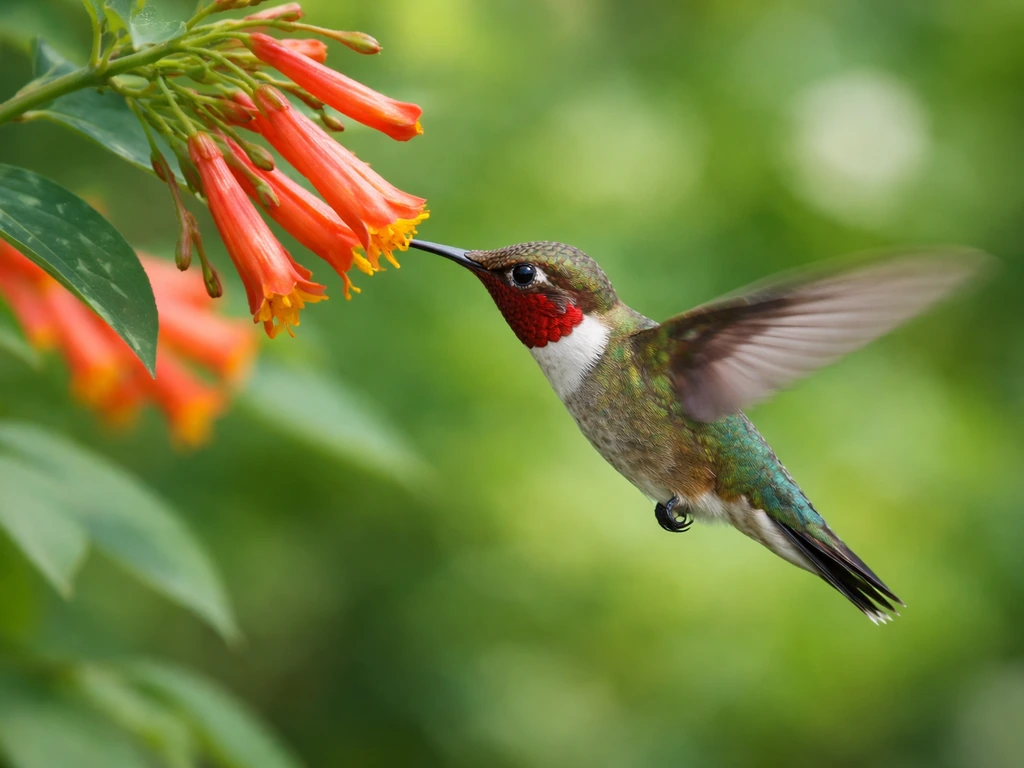
Hovering is the single most reliable behavioral clue for hummingbirds specifically. No other North American bird sustains a hover in front of a flower the way a hummingbird does. They beat their wings roughly 50 to 80 times per second and hold position with remarkable precision while inserting the bill into the flower. Sunbirds and honeyeaters, by contrast, almost always perch before probing, so if you are outside the Americas and you see a bird perching to drink from a flower, those groups are more likely.
Flower type is another strong signal. Nectar-feeding birds are drawn to tubular, brightly colored flowers, particularly red, orange, and pink blooms in the Americas (hummingbirds) and red, orange, or purple in African and Asian habitats (sunbirds). The tube length tends to match the bird's bill. Wide, open, flat flowers are pollinated by insects rather than birds, so a bird probing a flat daisy-style flower is almost certainly not a nectar specialist.
Watch for a darting, purposeful flight path between specific flower clusters or feeders. Hummingbirds establish and defend feeding territories, so you may notice the same individual returning to the same flowers or feeder repeatedly throughout the day. That territorial behavior is a solid confirmation sign.
Quick field checklist to confirm a nectar-feeding bird
- Long, narrow, often curved bill relative to body size
- Hovering in front of flowers (hummingbirds) or perching and probing (sunbirds, honeyeaters)
- Visiting tubular, brightly colored flowers (red, orange, pink, purple)
- Rapid tongue movement visible at close range or on video
- Territorial behavior: returning to the same feeding spots, chasing other individuals away
- Tiny body size with iridescent or metallic feather coloration
What to do today to attract nectar birds safely
The best long-term strategy is native flowering plants. Audubon consistently points to native tubular flowers as the primary nectar source, with feeders playing a supplemental role during migration and nesting seasons. If you are planting today, prioritize trumpet vine, salvia, bee balm, cardinal flower, and native honeysuckle for hummingbirds. These plants provide natural nectar volumes, do not require mixing, and double as habitat. For sunbirds outside North America, aloes, proteas, and grevilleas are similarly well-matched to local species.
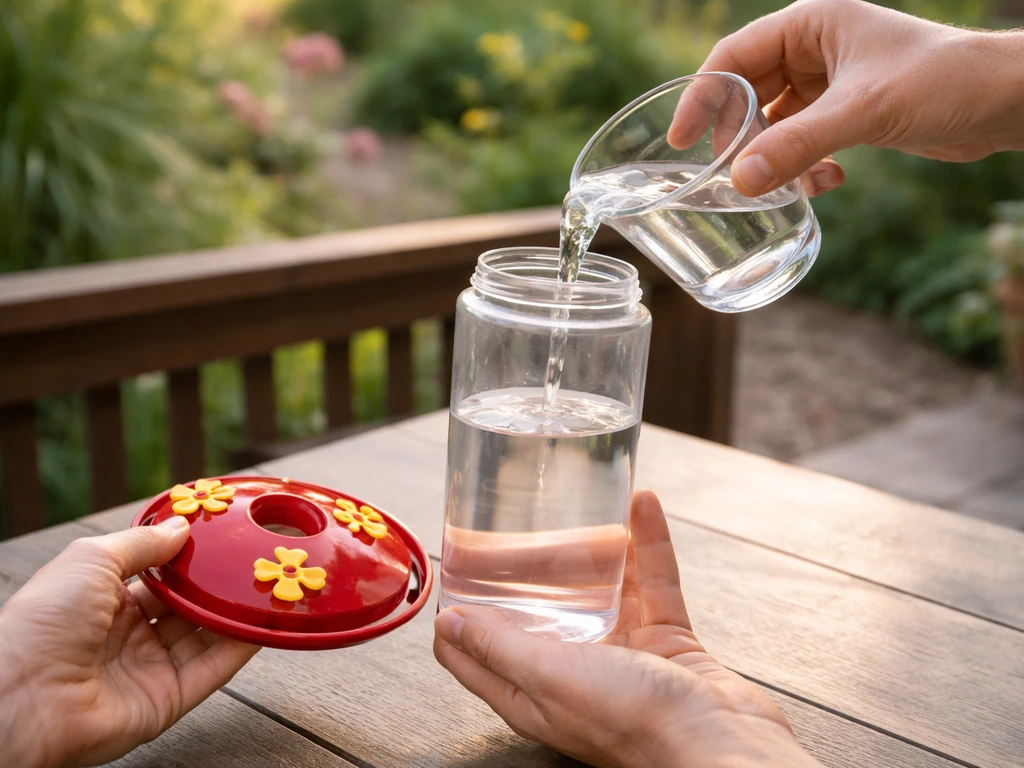
If you want to set up a feeder now, the recipe is simple and exact: one part plain white granulated sugar dissolved in four parts water. Milk thistle supplements should only be given to birds under guidance from an avian veterinarian, because the correct dosage depends on the bird’s species and health and the risk of adverse effects how much milk thistle to give my bird. That is the consensus guideline from Audubon, the Smithsonian National Zoo, and the International Hummingbird Society. Boil the water briefly to help the sugar dissolve and to reduce microbial contamination, then let it cool completely before filling. Extra solution can be refrigerated for up to one week.
Feeder placement matters more than most people realize. Hang your feeder in a shaded spot, not in full afternoon sun. Heat accelerates fermentation of the sugar solution, which turns it cloudy and potentially harmful. A shaded location gives you more time between cleanings, though you still need to clean regularly regardless.
Safety and risk considerations for nectar feeding and feeders
Feeder hygiene is the single biggest safety issue in nectar feeding, and it is one that is easy to underestimate. A feeder left uncleaned for more than a few days in warm weather can develop mold, bacterial growth, and fermented sugar, all of which can sicken or kill hummingbirds. Audubon recommends cleaning feeders every two to three days using a bottle brush and hot tap water. Salt water is not something nectar-feeding birds need, and you should avoid adding it to feeders which bird can drink salt water. If the nectar looks cloudy at any point before that interval, clean it immediately and start fresh.
For your own safety when cleaning, the CDC advises wearing disposable gloves when handling bird feeders and avoiding cleaning them in kitchen or food-preparation areas. If you are wondering whether bird saliva is good for you, the safer choice is to avoid handling birds and to focus on feeder hygiene instead is bird saliva good for you. This reduces the risk of zoonotic exposure, which is particularly relevant if you have compromised immunity or are cleaning after a period of heavy bird activity.
What you put in the feeder matters just as much as how clean you keep it. The don't list is short but non-negotiable:
- No honey: it ferments rapidly and can cause fatal fungal infections in hummingbirds
- No artificial sweeteners: they provide no calories and offer no energy value to birds
- No red dye or food coloring: unnecessary and potentially harmful over time
- No brown sugar, raw sugar, or turbinado: these contain molasses, which hummingbirds cannot process well
- No juice or fruit additives: they introduce sugars and acids that accelerate spoilage
Pets and other wildlife can be attracted to hummingbird feeders too. Cats are a predation risk for hummingbirds that hover low or perch near feeders, so feeder placement at height and away from ambush cover is worth considering. Ants and bees are also drawn to nectar; use a feeder with a built-in ant moat and bee guards to keep the solution clean and reduce competition that can deter hummingbirds.
It is also worth briefly noting that nectar feeding is fundamentally different from other fluid-based bird diets. Birds drinking salt water (like certain seabirds) have entirely different physiological adaptations, and nectar-feeders should never be compared to birds that can tolerate salt solutions. Milk is similarly inappropriate for any bird, nectar-feeder or otherwise, since birds lack the digestive enzymes to process lactose safely.
Common misidentifications and myths to watch out for
The single most common misidentification is the hummingbird clearwing moth. This insect hovers in front of flowers, sips nectar, and moves with striking similarity to a small hummingbird. The USDA Forest Service and Missouri Department of Conservation both flag it as the number-one hummingbird lookalike. The key difference: moths have a proboscis (a long, tube-like mouthpart that coils when not in use), not a beak. If you look closely, you will also notice the compound eyes, scaled wings, and the fuzzy, non-feathered body. Hoverflies and large bumblebees can also cause momentary confusion near flowers, but the hovering and flower-probing behavior of the clearwing moth is genuinely hummingbird-like enough to fool experienced observers at a glance.
Another myth: any bird visiting a flower is a nectar drinker. Bird saliva is sometimes discussed in the context of nectar-feeding, but it is distinct from what hummingbirds and other nectar birds actually drink bird saliva drink. Sparrows, warblers, and even some finches may visit flowers to eat insects sheltering inside them, or to pick off petals, without drinking nectar at all. The behavioral and anatomical tests above, especially bill shape and hovering, are what separate true nectar-feeders from opportunistic visitors.
People also sometimes assume that if a bird is at a hummingbird feeder, it must be a hummingbird. Orioles, house finches, and woodpeckers will all occasionally drink from nectar feeders. If you are using a Drinking Bird as a water source in your space, you still need to ensure it has water so it can keep cycling does the drinking bird need water. Orioles in particular are regular feeder visitors and are attracted to the same orange-scented or oriole-specific feeders. This is not a problem, but it can create misidentification if someone assumes only hummingbirds have learned to use nectar feeders.
Finally, the red-dye myth is worth addressing directly. Many commercial nectar products and older advice suggested adding red food coloring to attract hummingbirds faster. There is no evidence this works, and some evidence suggests dyes may be harmful over repeated exposure. The red color on most modern feeders is sufficient to attract hummingbirds. Plain 1:4 sugar water in a red feeder is all you need.
FAQ
If a bird is sipping from a flower but never hovers, is it still drinking nectar?
It can be, but hovering is the strongest clue for hummingbirds specifically. In many regions, sunbirds and honeyeaters often perch first, so look for a long, narrow bill that fits into tubular blooms, and notice repeated probing into the same flower or feeder.
How can I tell a moth or other insect is not a nectar-feeding bird if it moves like one?
Check for a proboscis, not a beak. The hummingbird clearwing moth has a long tube-like mouthpart that coils when inactive, plus scaled wings and a fuzzy body rather than feathers. Up close, also look for compound eyes and non-feathered texture.
Do I need to use warm water or boil the solution every time I refill?
Boiling briefly is mainly to dissolve sugar and reduce microbial contamination, so you do not have to keep the solution hot. Let the mixture cool completely before filling, and discard any nectar that becomes cloudy or smells fermented, even if it has been less than the usual cleaning interval.
What is the safest way to refrigerate leftover nectar, and does it still work if it looks darker?
Refrigerate in a clean, tightly sealed container. Color can shift slightly, but cloudiness, surface film, or an off smell are warning signs. If the nectar looks cloudy before the next scheduled cleaning, clean the feeder and start fresh.
Can birds drink nectar from any sugar, like brown sugar or honey?
No. Use plain white granulated sugar only, because other sugars and additives can change osmotic balance and promote fermentation or introduce unwanted compounds. Avoid “natural” sweeteners and syrups, and do not add flavorings or dyes.
Why do some hummingbirds stop visiting a feeder even when there are plenty of flowers nearby?
Common causes are heat-driven fermentation (feeder in full sun), insufficient cleaning, or lack of matching flower shape. Also check for repeated disturbance, competition from bees, or a nearby predation risk. Moving the feeder to shade and adding a bee guard and ant moat often restores traffic.
What feeder height and placement reduces risk from cats and other predators?
Place the feeder high enough that a cat cannot easily reach it from cover, and avoid mounting it close to shrubs or fences where an ambush approach is easy. A location that is visible to you but not reachable in one leap helps hummingbirds tolerate visiting for longer periods.
If I see a bird at my nectar feeder, how do I know if it is actually consuming nectar versus just pecking or catching insects?
True nectar-feeders usually probe and drink repeatedly with a bill shape that matches the flower tube or feeder port. Birds that only pause briefly, peck around openings, or hover at the edges are often insect pickers or opportunistic visitors rather than specialized nectar drinkers.
Should I put the feeder in direct morning sun or is shade always better?
Shade is generally better because it slows fermentation and keeps the solution from turning cloudy quickly. If morning sun is unavoidable, monitor more closely and shorten the cleaning interval during warm stretches.
Can I add salt or “electrolytes” to nectar to help birds?
Do not add salt. Nectar-feeding birds rely on a sugar-water mixture, and adding electrolytes or salt can be harmful. Stick to the 1:4 plain sugar-to-water ratio and focus safety efforts on cleanliness.
Is milk or plant-based milk ever appropriate for birds at nectar feeders?
No. Milk is not appropriate for nectar-feeding birds or other wild birds because they do not have the enzymes to process lactose safely. If you want supplemental calories, use nectar sugar solution only, and keep the feeder hygiene strict.
How often should I clean the feeder during cool versus hot weather?
In warm weather, keep to the shorter end of the guidance (about every two to three days) and clean immediately if you see cloudiness. In cooler temperatures you may stretch slightly, but if the nectar spoils faster at your specific location, follow the “clean when cloudy” rule instead of the calendar.
Next Article
Is Bird Saliva Good for You? Risks and Safer Tips
Is bird saliva healthy for humans? No. Learn risks, myths, and safer feeder and handling tips to reduce germs.