Northern cardinals, tufted titmice, and Carolina wrens are the three bird species with the strongest documented evidence for eating brown marmorated stink bugs, confirmed by DNA detection in fecal samples from orchard studies in the southeastern U.S. Beyond those three, a wider group of generalist insectivores, including American robins, gray catbirds, Eastern towhees, house wrens, black-capped chickadees, mockingbirds, and loggerhead shrikes, are plausible stink-bug consumers based on their diet breadth and foraging behavior, though hard molecular evidence for most of them is thin. The honest truth is that bird predation on stink bugs is real but sporadic, and no single bird species is going to clear your yard or orchard of them on its own.
What Bird Eats Stink Bugs: Backyard Species & How to Attract

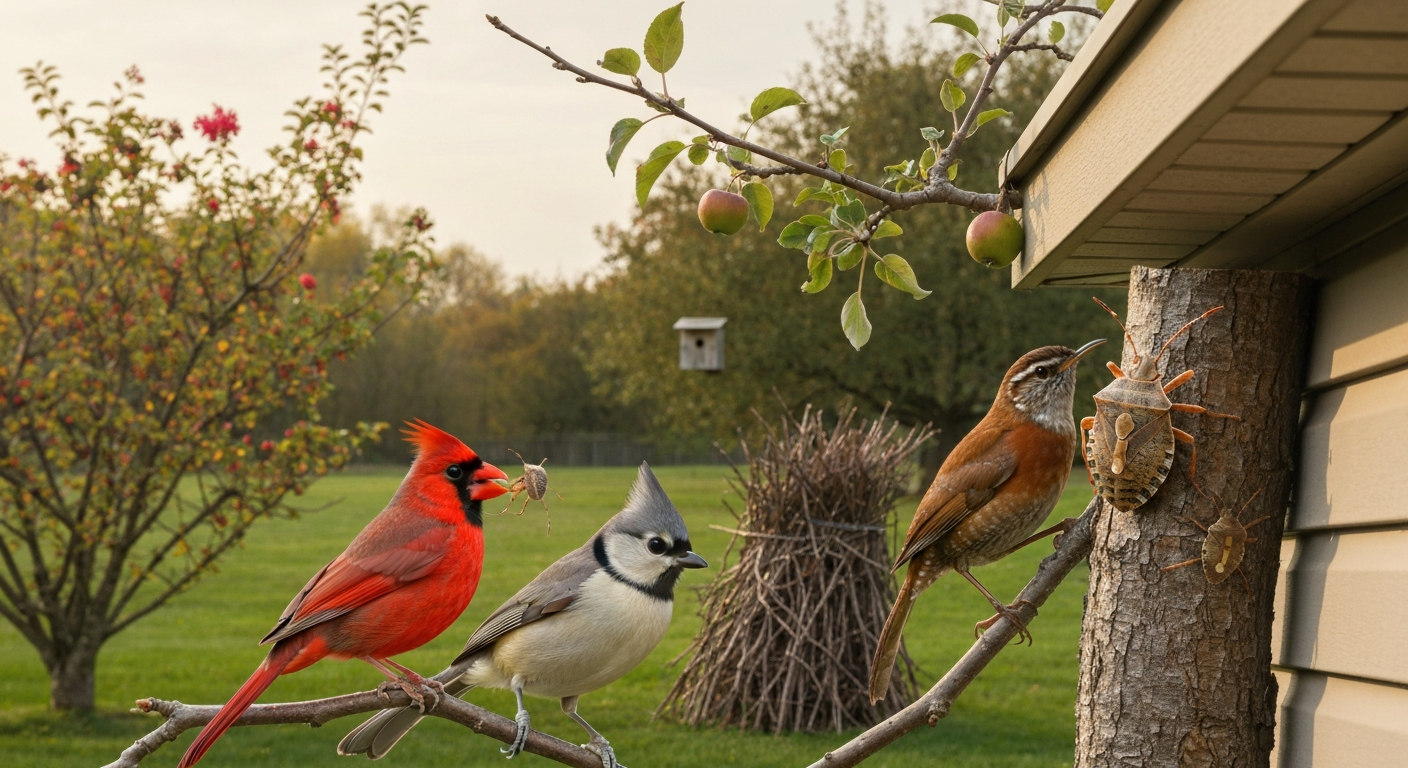
Which birds eat stink bugs: the quick answer
A 2020 DNA-based fecal screening study published in Insects (PMC) examined 278 samples from 19 bird species in southeastern U.S. orchards and found brown marmorated stink bug (Halyomorpha halys) DNA in exactly three species: Northern cardinal, tufted titmouse, and Carolina wren. Low Incidence of Avian Predation on Halyomorpha halys, Insects (PMC) reports H. halys DNA in Northern cardinal, tufted titmouse, and Carolina wren from southeastern U.S. orchard fecal samples Low Incidence of Avian Predation on Halyomorpha halys — Insects (PMC) reports H. halys DNA in Northern cardinal, tufted titmouse, and Carolina wren from southeastern U.S. orchard fecal samples.. That is the most direct, scientifically controlled evidence we have. Outside that study, field naturalists, extension researchers, and Cornell diet accounts point to a broader list of opportunistic takers, but the evidence for most of them is observational or inferred from diet breadth rather than molecular confirmation.
- Northern cardinal (Cardinalis cardinalis): DNA confirmed in fecal study
- Tufted titmouse (Baeolophus bicolor): DNA confirmed in fecal study
- Carolina wren (Thryothorus ludovicianus): DNA confirmed in fecal study
- American robin (Turdus migratorius): plausible, ground-foraging omnivore, diet records include large insects
- Gray catbird (Dumetella carolinensis): plausible, known to eat large insects and berries
- Eastern towhee (Pipilo erythrophthalmus): plausible, ground-gleaning insectivore
- Black-capped and Carolina chickadees: plausible, frequent insectivores at the same habitat level as titmice
- Northern mockingbird (Mimus polyglottos): plausible, wide dietary opportunist
- Loggerhead shrike (Lanius ludovicianus): plausible with a unique processing advantage (impaling)
- Eastern bluebird and flycatcher species: plausible aerial or perch-drop hunters of flying insects
Documented species: what the evidence actually says
It is worth being precise about the word 'documented' because it gets used loosely in backyard birding content. In this context, documented means either molecular detection of stink-bug DNA in bird gut contents or feces, published field observation with species and prey identified, or reliable naturalist records with photographic or behavioral confirmation. Anything else, including diet inference from known food preferences, is better described as plausible or likely.
The southeastern orchard fecal study is the strongest evidence available. It found an overall low incidence of H. halys predation across all 19 species sampled, but cardinal, titmouse, and Carolina wren stood out as the only confirmed detections. That low overall rate matters: it tells us that even in environments where stink bugs are abundant, most birds are not eating them regularly. A 2019 PLOS ONE molecular gut-content survey in cotton and soybean agroecosystems reinforced this picture, finding negligible frequencies of Pentatomidae DNA across a wide range of generalist predators. Anecdotal naturalist reports (including multiple credible nature blog accounts) do describe Carolina wrens and tufted titmice finding overwintering stink bugs in house eaves and curtain folds, carrying them to a perch, and processing and eating them, which aligns with the molecular data.
Likely predators: backyard insectivores and opportunists
Even without molecular confirmation, several common backyard bird groups have strong dietary and behavioral reasons to take a stink bug when they encounter one. These fall into three rough functional categories: ground gleaners, bark and foliage foragers, and aerial hunters.
Ground gleaners
American robins, Eastern towhees, and gray catbirds all forage at or near the ground by flipping leaf litter, probing soil, and picking large invertebrates from the surface. Stink bugs that fall from vegetation or crawl across mulch beds are well within the size and movement profile these birds key on. Robins are especially well-studied omnivores and routinely take large beetles, caterpillars, and other conspicuous insects, making stink bug consumption entirely plausible, even if unconfirmed by gut analysis. If you are interested in which other insects these same ground feeders target, robins and catbirds overlap considerably with the birds documented eating cicadas and ladybugs in suburban landscapes.
Bark and foliage foragers
Chickadees, titmice, wrens, and nuthatches work tree bark, branches, and dense shrub foliage where stink bugs rest and aggregate, especially in late summer and fall. Titmice are confirmed consumers per the fecal study, and chickadees share nearly identical foraging niche and habitat use, making them strong candidates. Carolina wrens are especially notable because they also probe into sheltered structural gaps, which explains the consistent naturalist reports of wrens finding overwintering stink bugs in buildings and eaves.
Aerial hunters and cache-and-process predators
Flycatchers (Eastern phoebe, great crested flycatcher) and tree swallows take flying insects mid-air, and stink bugs do fly, particularly during dispersal to overwintering sites in September and October. Loggerhead shrikes occupy a unique position: they routinely impale large, chemically defended prey on thorns or barbed wire and return later to eat, a strategy that may allow them to wait until defensive compounds dissipate. This 'cache and process' behavior has been noted in the context of other noxious prey and makes shrikes plausible consumers of stink bugs even when other birds reject them.
Quick-reference table: likely predators, seasonality, and evidence strength
| Bird Species | Foraging Type | Season Most Likely | Evidence Strength | Notes |
|---|---|---|---|---|
| Northern cardinal | Seed and large insect forager, shrub level | Late summer, fall | Strong (DNA fecal detection) | Confirmed in orchard fecal study |
| Tufted titmouse | Bark and foliage gleaner | Year-round, peak fall | Strong (DNA fecal detection) | Confirmed; forages same habitat as stink bugs |
| Carolina wren | Ground and gap prober | Year-round, peak fall/winter | Strong (DNA fecal detection) | Also takes overwintering bugs in structures |
| Black-capped/Carolina chickadee | Bark and foliage gleaner | Late summer, fall | Moderate (diet analogy to titmouse) | Shares nearly identical niche with titmouse |
| American robin | Ground gleaner | Late summer, fall | Low-moderate (diet breadth inference) | Takes large insects opportunistically |
| Gray catbird | Ground and shrub gleaner | Late summer | Low-moderate (diet breadth inference) | Wide insect diet; shares habitat |
| Northern mockingbird | Ground and shrub generalist | Late summer, fall | Low (observational) | Broad opportunist; unconfirmed for stink bugs |
| Eastern towhee | Ground gleaner (leaf litter) | Late summer, fall | Low (diet analogy) | Picks large invertebrates from ground |
| Loggerhead shrike | Perch hunter, impaler | Fall (overwintering dispersal) | Low (behavioral inference) | Impaling may neutralize chemical defense |
| Eastern phoebe / flycatchers | Aerial hawker | Late summer, fall dispersal | Low (aerial prey profile match) | Stink bugs fly during fall dispersal |
| Tree swallow | Aerial hawker | Late summer | Very low (general insectivore) | Takes flying insects; stink bugs are large |
Species diet profiles: the key backyard players
Northern cardinal
Cardinals are primarily seed eaters but shift substantially toward insects in late spring through fall, especially when feeding nestlings. For more on birds that commonly eat both berries and insects, see which bird eats berries and insects. Males are brilliant red with a prominent crest and a thick orange-red bill built for cracking seeds, which also works well on hard-shelled insects. They forage at shrub level and on the ground, picking prey visually. The DNA fecal confirmation from southeastern orchards is meaningful because it happened in a real, complex landscape where the birds had many food choices and still selected stink bugs at a detectable rate.
Tufted titmouse
The tufted titmouse is a bold, active forager with a gray back, pale underside, rust-colored flanks, and a distinctive upright crest. It works tree bark and branch surfaces in a manner similar to chickadees, hovering briefly to grab prey. Titmice are known to take large insects including moths, beetles, and caterpillars, and they will hammer harder prey items against a branch to break them apart. That hammering behavior is likely how they handle the tough exoskeleton of a stink bug. They cache food and return to process it, which may also help with chemically defended prey.
Carolina wren
Carolina wrens are small but remarkably bold, rusty-brown above with a buffy underside and a long upturned tail. They probe into every crevice, gap, and debris pile looking for insects and spiders. This probing behavior puts them directly in contact with aggregating overwintering stink bugs in sheds, garages, leaf piles, and wall voids. The naturalist reports of wrens carrying stink bugs from eaves to a nearby perch to process them are entirely consistent with the fecal DNA confirmation. If you have wrens in your yard, they are probably your single best natural stink bug encounter point.
Chickadees (black-capped and Carolina)
Chickadees are among the most studied insectivorous backyard birds and are well-documented consumers of caterpillars, beetles, and a wide range of arthropods. They forage identically to titmice, often in the same mixed flocks, and their absence from the fecal detection study may simply reflect sampling variance rather than genuine avoidance. Cornell diet accounts confirm arthropods make up a major portion of their diet outside winter, and their size and bill strength are compatible with handling a stink bug. Chickadees and titmice frequently appear together in discussions of which birds eat insects in suburban settings.
Loggerhead shrike
The loggerhead shrike is a robin-sized bird with a gray back, black mask, and a hooked bill. It is the only North American songbird that routinely impales prey on thorns, spines, or barbed wire for later consumption. Research on shrikes and other aversive prey suggests the caching and delay strategy may allow volatile defensive compounds in prey like stink bugs to break down before the bird returns to eat. While there is no molecular confirmation of stink-bug consumption in shrikes, the behavioral mechanism to handle chemically defended prey is uniquely well-developed in this species.
How to visually ID stink-bug-eating birds and spot the behavior
Knowing which birds to watch is half the task. The other half is recognizing when you are actually seeing a bird eat a stink bug versus handling some other large insect. Stink bugs are shield-shaped, roughly 14 to 17 mm long for adult H. halys, mottled brown with alternating light and dark banding on the abdomen edge. A bird carrying one will typically hold it sideways in the bill, and you may see it fly to a perch and begin manipulating the insect before swallowing.
- Watch titmice, wrens, and chickadees working eaves, roof lines, wood piles, and dense shrubs in early fall, these are prime stink-bug aggregation sites
- Look for a bird carrying a broad, flat, dark insect to a horizontal perch and repeatedly striking it against the branch before swallowing
- Robins patrolling lawn edges near foundation plantings in September and October may pick up ground-level stink bugs moving toward overwintering sites
- Shrikes, if present, will often be seen flying to a thorny shrub, hawthorn, or wire fence with prey; look for the black mask and hooked bill
- A bird that briefly bites an insect and then drops it or shakes its head vigorously has likely encountered the stink bug's defensive secretion, this rejection behavior is a confirmation of the species
- Flycatcher species (phoebe, great crested) perched on an exposed branch and making sallying flights in late summer may intercept flying stink bugs during their dispersal period
When and where birds eat stink bugs: seasonality and context
Stink bug biology drives the timing. Brown marmorated stink bugs in the eastern U.S. produce one to two generations per year. Nymphs emerge from egg masses in late spring, pass through five instars across summer, and adults begin dispersing toward overwintering shelters (buildings, woodpiles, dense vegetation) in late September through November. A second, smaller wave of activity occurs in early spring when overwintering adults emerge. This means there are two primary windows when bird predation is most plausible.
The first is mid to late summer, when late-instar nymphs and young adults are active on host plants (fruit trees, ornamentals, garden vegetables) and ground-foraging or foliage-gleaning birds are most likely to encounter them. The second is early fall dispersal, when flying adults are interceptable by aerial hunters like flycatchers and swallows, and when titmice, wrens, and chickadees begin finding aggregating bugs in sheltered spots. Overwintering aggregations inside structures are where the wren and titmouse naturalist observations predominantly occur, and this aligns with the confirmed DNA detections from the orchard study, which was conducted in fall.
Geographically, H. halys is now established across most of the continental U.S., southern Canada, and parts of the Pacific Northwest, so the bird interaction window is relevant for a broad range of backyard birders. Native stink bug species (green stink bug, southern green stink bug, kudzu bug) follow similar seasonal patterns and are likely consumed by the same bird groups.
Are birds actually effective and safe biological control for stink bugs?
What the research says about effectiveness
The short, evidence-based answer is: not reliably, and not by themselves. The southeastern orchard fecal study found a low overall incidence of H. halys predation even in species that were confirmed consumers. The 2019 PLOS ONE molecular gut-content survey in cotton and soybean systems found negligible Pentatomidae DNA across most generalist predators sampled. Sentinel egg mass experiments consistently show that native arthropod predators, particularly spiders, ants, and hemipteran predators, dominate stink bug egg predation while vertebrate (bird) predation rates are modest and context-dependent. A 2020 study in The Condor even found that birds suppress corn pests but can inadvertently release pests in soybean systems, underscoring that the net effect of birds in pest management is variable and landscape-specific. The Condor (2020) reported birds can suppress pests in corn but release them in soybean crops within a mixed prairie–agriculture system The Condor (2020) reported birds can suppress pests in corn but release them in soybean crops within a mixed prairie–agriculture system..
This does not mean birds have zero value. In a backyard setting with a modest stink bug presence, regular wren and titmouse activity near building eaves and wood piles may meaningfully reduce the number of bugs that successfully overwinter indoors. But at orchard or farm scale, or during a high-pressure invasion year, bird predation will not prevent damage on its own. Multistate extension programs (StopBMSB, NE1944) and IPM consortia consistently advise using physical exclusion, pheromone monitoring traps, and targeted sanitation as the primary homeowner tools, with biological control treated as supplemental at best.
Risks to bird health from stink bug defensive chemistry
This is a genuinely important and underreported point. Stink bugs are not just unpleasant smelling; their defensive secretions are chemically active compounds, primarily short-chain alkenal aldehydes like (E)-2-decenal and related hydrocarbons including tridecane, produced in metathoracic and dorsal abdominal glands. A 1986 experimental study on European blackbirds (Turdus merula) demonstrated that pentatomid secretions act as topical irritants to the beak and mouth, producing aversive reactions and prey rejection. This is a real cost to the bird. Repeated exposure may discourage individual birds from taking stink bugs, which partly explains why, even in stink-bug-rich environments, predation rates remain low. There is no evidence that occasional stink bug consumption causes lasting harm to birds, but the chemical deterrence is real and shapes predation behavior.
For pet owners with backyard birds, there is a related question about whether pet exposure to stink bugs (via foraging or contact) poses a risk. The same defensive compounds that deter wild birds can cause drooling, pawing at the mouth, and temporary oral irritation in dogs and cats that bite or eat stink bugs. In wild birds the reaction appears to be primarily aversive rather than toxic at natural exposure levels, but this is worth noting if you keep backyard poultry or pet birds that have outdoor access.
Common myths worth correcting
- Myth: Stink bugs are toxic to birds. Reality: Defensive compounds cause oral irritation and prey rejection but are not documented to be acutely toxic to birds at natural consumption levels. Aversive does not mean lethal.
- Myth: Attracting more birds will control your stink bug problem. Reality: Predation rates are low even in confirmed consumer species. Birds are a supplemental pressure, not a control agent.
- Myth: All insectivorous birds will eat stink bugs. Reality: Many species appear to reject or avoid them due to chemical defenses. Only three species have molecular confirmation, and overall rates across 19 sampled species were low.
- Myth: Stink bugs are safe and nutritious for all birds. Reality: The defensive chemistry causes measurable oral irritation. Birds that do eat them typically process them carefully (hammering, impaling, waiting) before consuming.
- Myth: Native predators will naturally regulate brown marmorated stink bug invasions. Reality: Multiple studies conclude native predator pressure, including birds, is insufficient alone to prevent crop damage or indoor invasions.
How to attract stink-bug-eating birds to your yard (practical steps)
If you want to give the confirmed and likely species the best chance of finding and eating stink bugs in your yard, the most effective approach is improving habitat quality rather than adding feeders for these particular species. Titmice, wrens, and chickadees respond strongly to structural habitat features and native plant diversity. Here is what actually works based on Cornell Garden for Birds guidance and extension recommendations.
- Plant native trees and shrubs: native oaks, serviceberries, dogwoods, and viburnums support far higher insect diversity and abundance than exotic ornamentals, which means more food for resident insectivores year-round
- Keep brush piles and woody debris: wrens actively probe these for overwintering insects including stink bugs; a loose pile of branches near a foundation planting is prime wren habitat
- Maintain a layer of leaf litter under shrubs and trees: ground-gleaning birds like towhees and robins use this extensively, and it harbors the insects they hunt
- Provide a reliable water source: a shallow bird bath with a dripper or bubbler attracts wrens, titmice, and chickadees reliably and encourages them to stay in the yard
- Add nest boxes sized for wrens and chickadees: resident birds that breed on-site are present year-round and will patrol the yard through stink bug overwintering season
- Avoid broad-spectrum insecticides: neonicotinoid-treated plants and spray programs reduce the insect prey base that supports insectivores; eliminating this allows bird-beneficial insect populations to recover
- Delay fall garden cleanup: leaving plant stems, seed heads, and debris until late winter keeps overwintering insect aggregations (including stink bugs) accessible to birds through the season
Feeder and seed safety considerations
Feeders do not directly attract insectivorous birds to eat stink bugs, but they can support resident populations of titmice, chickadees, and wrens through winter so those birds are present and active when stink bugs become available again in spring. If you are running feeders with this goal, keep seed dry and rotate stock regularly; moldy seed can cause aspergillosis in birds, and moist feeders in warm weather attract rodents and wasps. Suet feeders are particularly effective for titmice, wrens, and chickadees in winter. Clean feeders every one to two weeks with a dilute bleach solution (one part bleach to nine parts water), rinse thoroughly, and dry before refilling.
If birds are not enough: IPM alternatives that actually work
Because bird predation on stink bugs is genuinely limited, it is worth knowing what does work for homeowners. Multistate extension programs and StopBMSB research recommend an integrated approach rather than relying on any single method.
- Physical exclusion: seal gaps around windows, doors, utility penetrations, and soffits before the fall dispersal window (late August to September); this is the single most effective homeowner action for preventing indoor invasions
- Pheromone monitoring traps: available through garden centers and online; useful for tracking pressure levels and timing interventions rather than as a standalone control method
- Vacuuming indoor aggregations: a standard approach for overwintering bugs that have already entered; dispose of the bag promptly as captured bugs will release odor
- Row covers and fine mesh netting for high-value garden plants during nymph season (June to August)
- Kaolin clay as a physical deterrent on fruit tree foliage, supported by research as a reduced-risk option for home orchardists
- Targeted, reduced-risk insecticides (spinosad, pyrethrin-based products) for high-pressure situations on food plants, used per label and timed to nymph emergence
The bottom line on birds and stink bugs
Northern cardinals, tufted titmice, and Carolina wrens are the documented stink bug consumers, and a wider group of backyard insectivores will take them opportunistically. For related information on predators of other small insects, see what bird eats ladybugs. But the research is clear that bird predation rates are low overall, stink bug chemical defenses are a real deterrent, and no bird species provides reliable population control at scale. The value of encouraging insectivorous birds in your yard is real but modest for stink bug management specifically. It is better understood as one layer of a habitat-rich, insecticide-reduced yard that supports birds, reduces pest pressure across many species simultaneously, and gives you the genuine pleasure of a wren disappearing under your eave with a stink bug in its bill.
FAQ
Which backyard and wild bird species are documented or likely to eat stink bugs?
Documented (molecular or observational): Northern cardinal, tufted titmouse, and Carolina wren (DNA detected in fecal samples). Likely or plausible opportunistic predators based on diet and behavior: American robin, mockingbirds/thrushes, chickadees, titmice, flycatchers, swallows (for flying instars), and shrikes (which impale and process large or defended prey). Evidence types: PCR/DNA fecal screens, published natural‑history observations, species diet accounts (Cornell All About Birds), and local naturalist reports. Strength of evidence varies by species (see next Q).
How strong is the evidence that these birds eat stink bugs?
Evidence strength ranges from strong to weak: Strong (direct molecular detection or verified observation) for Northern cardinal, tufted titmouse, and Carolina wren (fecal DNA studies). Moderate for species with frequent insectivory and observational reports (robins, mockingbirds, chickadees, titmice, shrikes). Weak or inconsistent for many other species—large molecular and sentinel‑egg studies show overall low incidence of detectable avian predation on brown marmorated stink bug (Halyomorpha halys) across agroecosystems. Key study types: PCR gut/fecal screens, sentinel‑egg experiments, direct observation/feeding trials.
Are birds effective biological control agents for stink bugs (e.g., brown marmorated stink bug)?
Generally no—birds are not a reliable, season‑long control for H. halys or similar pentatomids. Multiple molecular gut‑content surveys and sentinel‑egg studies report low incidence of avian predation and modest effects on stink‑bug populations. Native arthropod predators and parasitoids often dominate egg predation. Bird effects are sporadic, species‑ and context‑dependent, and insufficient alone to prevent outbreaks; integrated pest management (IPM) is recommended instead.
Can stink bug chemical defenses (the odor/secretions) harm birds or make them avoid feeding on stink bugs?
Yes—many stink bugs produce metathoracic/dorsal gland aldehydes, alkenals, and hydrocarbons (e.g., tridecane, (E)‑2‑alkenals) that act as deterrents or irritants. Experimental trials show pentatomid secretions can cause aversive reactions in birds (beak/mouth irritation) and lead to prey rejection after an initial bite. Some birds will still consume stink bugs (especially if they can process or dry/cure them first), but defenses reduce acceptance rates and can make predation sporadic.
Do stink bugs pose risks to backyard birds or pets if birds eat them or if stink bugs get into bird seed/feeders?
Risks are generally low but real: • To birds — ingesting many chemically defended insects at once could cause temporary discomfort, regurgitation, or reduced feeding; shrikes and some insectivores can handle noxious prey but others may reject them. • To pets — pets that eat live or crushed stink bugs (or heavily infested/contaminated seed) might experience drooling, vomiting, or irritation from volatile compounds. • To feeders/seed — spoiled or insect‑contaminated seed can mold or attract secondary pests; maintain cleanliness. Evidence: chemical ecology studies of pentatomid secretions and extension guidance on feeder hygiene and pet safety.
What practical, low‑risk steps can backyard birders take to attract birds that may opportunistically eat stink bugs?
Actionable steps: 1) Provide habitat: plant regionally native shrubs and trees (multi‑layer structure) to support insect populations and shelter. 2) Offer water: birdbaths with fresh water increase bird activity. 3) Provide nesting/cover: brush piles, dense shrubs, nest boxes for cavity users (titmice, chickadees). 4) Maintain varied foraging substrates: leave leaf litter/woody debris for ground‑gleaning species (robins, thrushes). 5) Avoid broad‑spectrum insecticides and minimize pesticide use to preserve insect prey. 6) Time plantings/monitoring to local stink‑bug phenology (nymph peaks in summer, adult dispersal in fall). Evidence sources: native‑plant/bird gardening guidance and IPM recommendations.