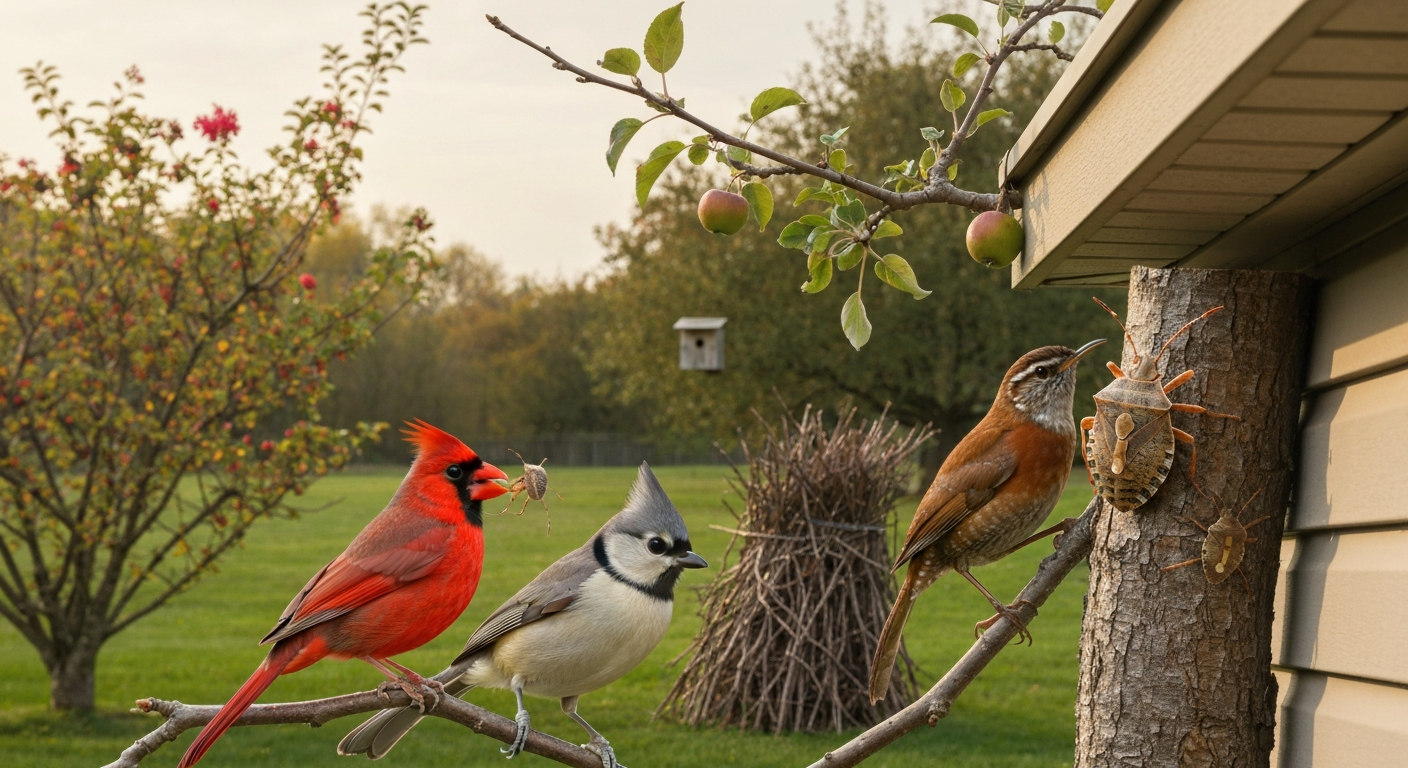
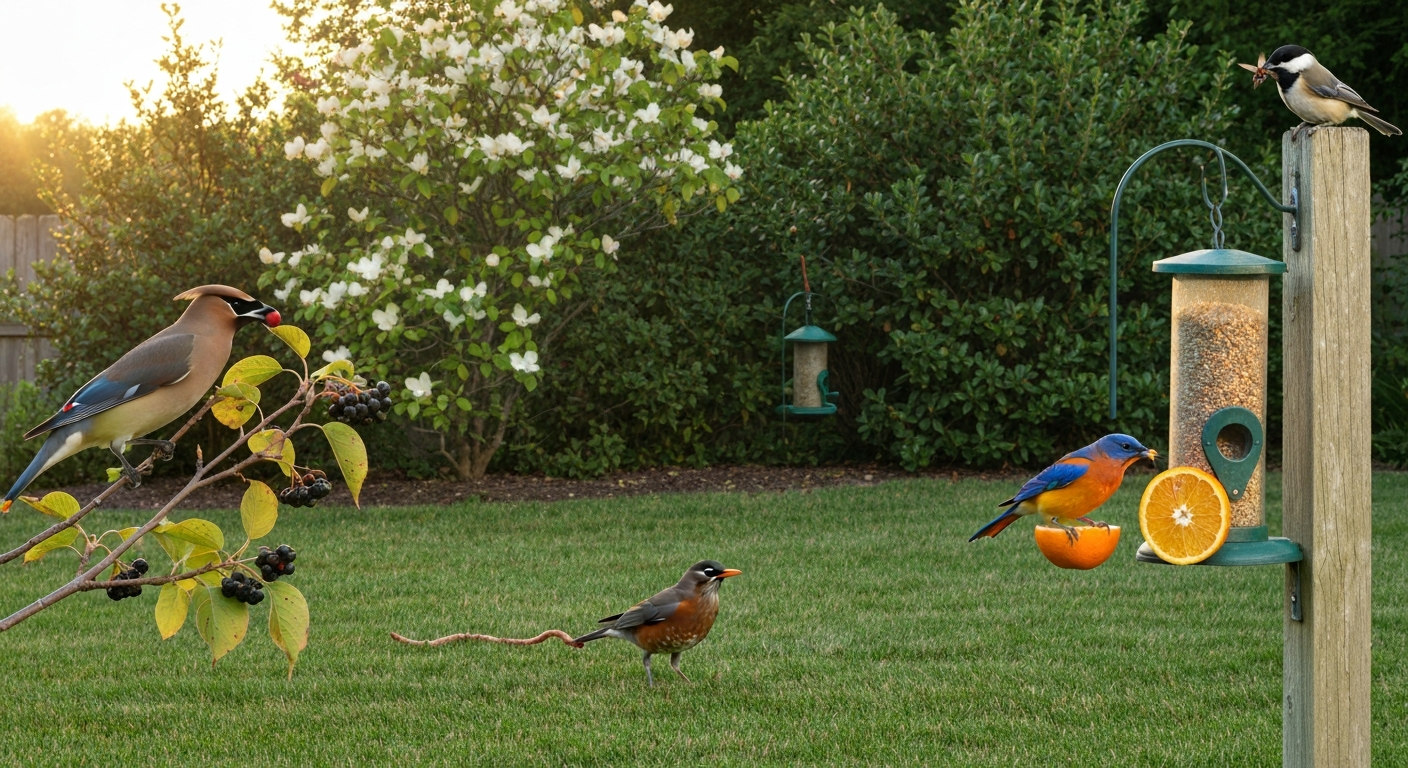
The birds most likely eating both berries and insects in your backyard are cedar waxwings, American robins, eastern bluebirds, wood thrushes, Baltimore orioles, northern mockingbirds, scarlet tanagers, rose-breasted grosbeaks, black-capped chickadees, and several warblers. Every one of them shifts its diet depending on the season: insects dominate in spring and summer when breeding demands high protein, and berries take over in fall and winter when fruit is abundant and bugs are scarce. If you want to attract them reliably, you need both native fruiting plants and the right feeder setup.
Which Bird Eats Berries and Insects: Top Backyard Species

Maya Bennett
27 Jul 2026
Who this guide is for
This article is written for backyard birders who want to know exactly which species to expect, pet owners who need to understand the safety angles around live insect feeders and fruit, and nature educators looking for solid species profiles backed by research. You will find a prioritized species list, visual ID cues you can use in the field, a diet matrix covering specific insects like cicadas, ladybugs, stink bugs, and caterpillars, seasonal timing guides, planting recommendations, feeder how-tos, and practical safety protocols for mealworms and fruit feeders. Everything here is grounded in published Cornell Lab profiles, stomach-content analyses going back to Beal (1912), and more recent supplemental feeding trials.
The top backyard species that eat both berries and insects
The list below is ranked by how reliably and visibly each species uses both food types in a typical backyard setting. Cedar waxwings top the list because they are genuinely frugivorous yet swing hard into aerial insect-catching in summer. American robins come second because they are everywhere and their seasonal shift is dramatic and easy to observe. Eastern bluebirds, thrushes, and mockingbirds follow because they make excellent use of both food sources and respond predictably to feeder and habitat changes. Orioles, tanagers, grosbeaks, warblers, and chickadees round out the list. All ten are worth targeting because each one also controls garden pest populations, making them genuinely useful beyond their visual appeal.
- Cedar waxwing: highly frugivorous year-round, switches to aerial insect-catching in summer
- American robin: earthworms and invertebrates in breeding season, heavy berry reliance in fall and winter
- Eastern bluebird: insect-focused breeder that supplements with berries in late summer and winter
- Wood thrush and other thrushes (Hermit, Swainson's, Veery): invertebrates during nesting, fruit in late summer and winter
- Northern mockingbird: opportunistic omnivore with a large fruit and invertebrate overlap throughout the year
- Baltimore oriole: insects, nectar, and fruit taken concurrently; strongly attracted to halved oranges and grape jelly
- Scarlet and Summer tanager: primarily insectivorous breeders that shift to fruit in late summer and fall
- Rose-breasted grosbeak: beetles, caterpillars, wild fruit, and seeds in proportions that vary by season
- Yellow-rumped warbler and other warblers: insect specialists that use berry-rich habitat, especially in migration
- Black-capped chickadee: high arthropod intake in spring and summer, seed and berry reliance increases in fall and winter
Species-by-species diet profiles and ID cues
Cedar waxwing
ID cues: sleek crested head, silky brown-gray plumage, bright yellow tail tip, and waxy red wingspot tips. Bill is short and slightly hooked for plucking berries. Size is around 18 cm (7 inches). Waxwings travel in flocks and can strip a serviceberry or hawthorn in minutes. In summer they pivot to sallying flights for winged insects over open water or meadows. Primary berries: serviceberry, hawthorn, dogwood, juniper, cedar, holly, and winterberry. Common insect prey: mayflies, dragonflies, flying beetles, and ants during nuptial feeding. Cedar waxwings are one of the few North American birds that can live on fruit alone for months, according to Cornell Lab profiles. This makes them a unique study in dietary flexibility.
American robin
ID cues: brick-red or orange breast, dark gray-brown back, yellow bill, approximately 25 cm (10 inches). Cocks its head sideways when listening for earthworms. In breeding season, lawns with short grass are their hunting grounds; in fall and winter, look for flocks in berry trees like holly, crabapple, and juniper. Common insect prey: earthworms, beetles, grubs, and caterpillars. Berry sources: American holly, crabapple, hawthorn, serviceberry, and pokeweed (pokeweed berries are toxic to humans but robins tolerate them). Robins are one of the easiest birds to observe making the insect-to-fruit dietary switch as autumn arrives.
Eastern bluebird
ID cues: male has vivid blue back and rusty-orange breast; female is gray-blue with a softer rust wash. Bill is slender and slightly down-curved, size around 18 cm (7 inches). Bluebirds perch on low branches or fence posts and drop to the ground for insects, a behavior called hover-gleaning. Parents provision nestlings almost entirely on invertebrates, which are higher in protein and easier to break down. Outside breeding season, they join loose winter flocks and feed heavily on dogwood, holly, and mistletoe berries. A 2022 study in the Journal of Avian Biology (Perryman et al.) found that supplemental mealworms increased protein available to nesting bluebirds and influenced nestling growth, reinforcing how protein-driven their breeding diet is.
Wood thrush and related thrushes
ID cues: Wood Thrush has a bold spotted breast, rufous-orange head, and large dark eyes adapted for low-light foraging. Hermit Thrush has a rufous tail it slowly raises and lowers. Swainson's Thrush has a buffy eye ring. All are stocky, around 17 to 21 cm, with medium-length straight bills suited to probing leaf litter. Thrushes forage on or near the ground, flipping leaves for beetles, worms, and snails. Berries become the dominant food from late summer through winter, with spicebush, elderberry, and wild grape being key sources. At feeders, platform trays at ground or low height with mealworms and fruit pieces are most effective for this group.
Northern mockingbird
ID cues: gray above, paler below, white wing patches visible in flight, long tail, about 25 cm (10 inches). Mockingbirds are aggressive territory defenders and will use a berry-laden shrub as a home base through winter. They take a wide variety of invertebrates including beetles, ants, grasshoppers, and small lizards, then pivot to berries, small fruits, and even raisins when insects are less available. Primary berry sources: yaupon holly, multiflora rose hips, pokeweed, beautyberry, and hawthorn. Their generalist behavior means a yard with both insect-attracting plants and fruiting shrubs can hold a mockingbird year-round.
Baltimore oriole
ID cues: male is brilliant orange and black with white wing bars; female is yellow-olive with duller wing bars. Bill is long, pointed, and slightly decurved, around 19 cm (7.5 inches). Orioles insert their bill into fruits and use a behavior called gaping to open and drink juice. They eat caterpillars, beetles, grasshoppers, and flying insects during the breeding season, and switch more heavily to nectar, fruit, and jelly at feeders. Halved oranges and grape jelly placed on dedicated oriole feeders from late April onward are proven attractants. Berries and fruits consumed include mulberries, serviceberries, and wild cherries.
Scarlet and Summer tanager
ID cues: Scarlet Tanager male is unmistakable with brilliant red body and black wings; female is yellow-green. Summer Tanager is all rose-red in males, yellow in females. Both have thick, slightly hooked bills around 17 to 19 cm. Tanagers are canopy specialists and most activity happens high in the tree canopy, making them easier to hear than see. During breeding they are almost entirely insectivorous, targeting wasps, bees, and their larvae (both species will raid wasp nests), caterpillars, and beetles. In late summer and fall they add mulberries, serviceberries, and other soft fruits to their diet in significant proportions.
Rose-breasted grosbeak
ID cues: male has a black hood, white underparts, and a distinctive rose-red triangular chest patch; female is brown and white with heavy streaking and a bold white eyebrow stripe. The bill is very large, conical, and pale, around 19 to 21 cm. Historical stomach-content analyses documented in U.S. species life-history profiles show substantial beetle and caterpillar intake during breeding, shifting to wild fruit, seeds, and buds outside the breeding season. At feeders they take sunflower seeds readily, but a fruit tray with berries will attract them in migration.
Warblers (Yellow-rumped and others)
ID cues: Warblers are small (around 12 to 15 cm) with thin, pointed insect-catching bills. The Yellow-rumped Warbler is especially relevant here because it has an unusual ability to digest waxy berry coatings, enabling it to winter farther north than most warblers and rely on bayberry and wax myrtle when insects are scarce. Other warblers (Black-throated Blue, Cape May) will eat berries and grape jelly opportunistically. Common insect prey across warblers: aphids, caterpillars, beetles, flies, and scale insects gleaned from foliage or bark. Yellow-rumped Warblers in particular are worth mentioning alongside cicada-eating birds, since they opportunistically take cicadas during emergence events.
Black-capped chickadee
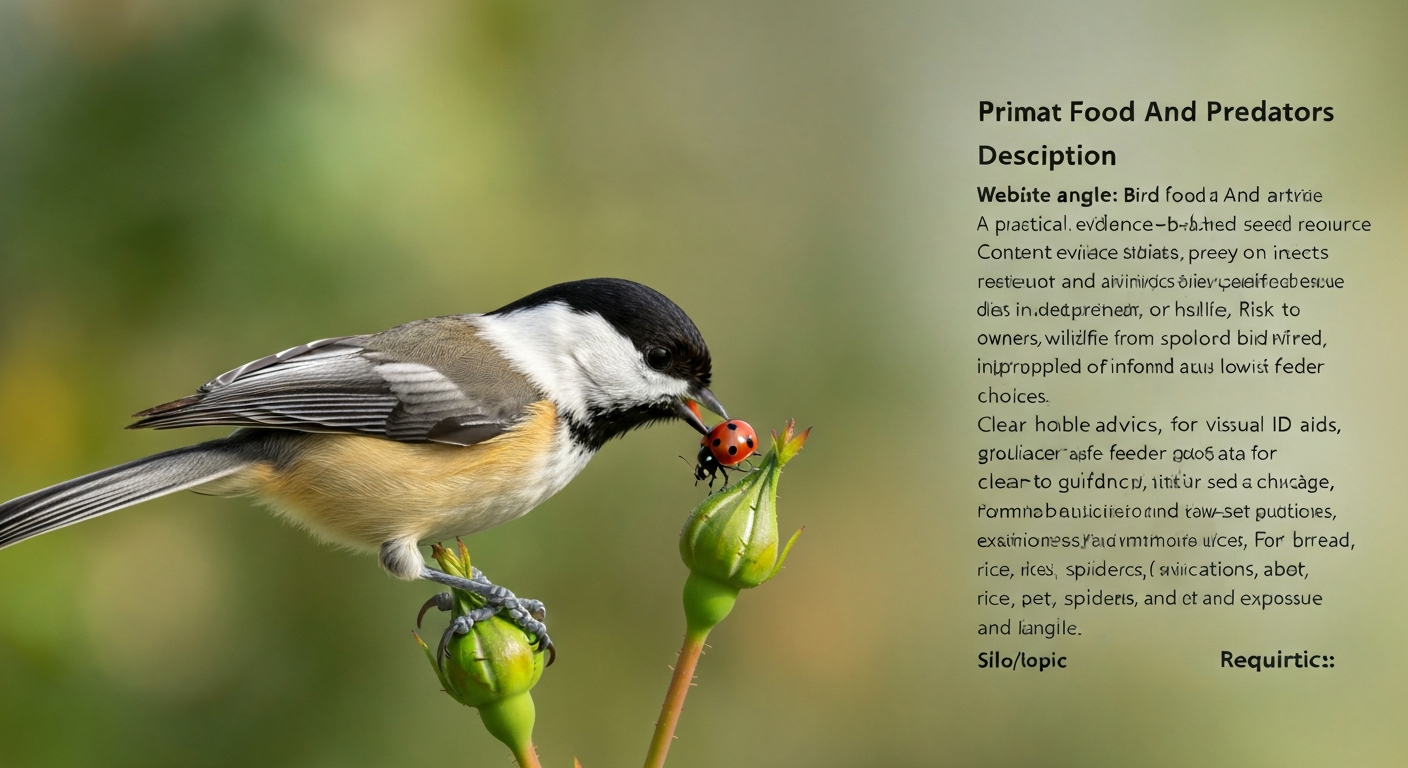
ID cues: black cap and bib, white cheeks, gray back, buff sides, about 13 cm (5 inches). Chickadees are year-round residents and highly adaptable. They cache food in fall and can retrieve thousands of hidden seeds and insects from memory. During spring and summer, chickadees consume large numbers of caterpillars, aphids, spiders, and insect eggs gleaned from bark and foliage. In fall and winter, seeds (especially sunflower and nyjer) and some berries supplement the diet. They accept dried or live mealworms at feeders readily, which is useful for birders wanting to support them through cold snaps.
Quick-reference diet matrix: which birds eat which insects and berries
| Bird | Cicadas | Ladybugs | Stink bugs | Caterpillars | Beetles | Serviceberry | Holly/Dogwood | Elderberry | Crabapple/Hawthorn |
|---|---|---|---|---|---|---|---|---|---|
| Cedar waxwing | Occasional | Rarely | Rarely | Occasional | Occasional | Yes | Yes | Yes | Yes |
| American robin | Yes | Occasional | Occasional | Yes | Yes | Yes | Yes | Yes | Yes |
| Eastern bluebird | Yes | Occasional | Occasional | Yes | Yes | Yes | Yes | Occasional | Occasional |
| Wood thrush/thrushes | Yes | Occasional | Occasional | Yes | Yes | Yes | Yes | Yes | Occasional |
| Northern mockingbird | Yes | Occasional | Occasional | Yes | Yes | Yes | Yes | Yes | Yes |
| Baltimore oriole | Yes | Rarely | Rarely | Yes | Yes | Yes | Occasional | Yes | Yes |
| Scarlet/Summer tanager | Yes | Occasional | Occasional | Yes | Yes | Yes | Yes | Yes | Occasional |
| Rose-breasted grosbeak | Occasional | Occasional | Occasional | Yes | Yes | Yes | Occasional | Yes | Yes |
| Warblers (Yellow-rumped etc.) | Occasional | Occasional | Rarely | Yes | Yes | Occasional | Occasional | Occasional | Occasional |
| Black-capped chickadee | Occasional | Occasional | Occasional | Yes | Yes | Occasional | Occasional | Occasional | Occasional |
The matrix above draws on Cornell Lab species profiles, historical stomach-content analyses, and published foraging observations. 'Yes' indicates documented, regular consumption. 'Occasional' means the food type is taken opportunistically or during specific conditions such as cicada emergence events. 'Rarely' reflects limited documentation. For deeper looks at specific insects, cicada and ladybug predation by birds, and which species take stink bugs, those topics each deserve their own detailed treatment. For a concise list of which bird eat insects, see the dedicated guide.
When and why birds switch between insects and berries
The switch is not random. It is driven by four overlapping pressures: breeding protein needs, nestling requirements, migration fuel demands, and seasonal fruit availability. Understanding the timing helps you put out the right food at the right time.
Spring and breeding season (April to July)
Nearly every species on this list ramps up insect intake during breeding. Nestlings cannot efficiently digest plant material in the first days of life and require soft, high-protein invertebrates. Eastern bluebird and wood thrush parents provision their chicks almost exclusively on insects, caterpillars, and worms. Even highly frugivorous cedar waxwings feed aerial insects to their nestlings. The shift is documented in classical stomach-content data (Beal 1912 and later USDA analyses) and confirmed by more recent fecal DNA metabarcoding studies that show a distinct spike in invertebrate family diversity during the breeding window.
Late summer and migration (August to October)
Once chicks fledge and insects begin declining with cooling temperatures, fruit and berry consumption climbs sharply. This coincides with peak fruiting of elderberry, dogwood, serviceberry, and wild grape. Many warblers and tanagers that you would never see at a berry shrub in June will suddenly appear in August. Migratory species need fast energy in a portable, easily consumed form: berries are ideal. Some species like Yellow-rumped Warblers appear to time their migration routes to follow peak berry ripening along the coast.
Fall and winter (November to March)
For year-round residents like robins, mockingbirds, and chickadees, winter is almost entirely about finding persistent fruit, stored seeds, and dormant insects hidden under bark. Holly, crabapple, hawthorn, and juniper berries that birds ignored in September become critical by January. Chickadees leverage their memory-based seed and insect cache. American robins form large nomadic winter flocks that move between fruiting trees as supplies are exhausted. Weather events can drive sudden behavioral shifts: a hard freeze that destroys remaining berry crops pushes birds to feeders quickly.
Weather-driven and opportunistic changes
Warm winter days that briefly activate insects can cause bluebirds or robins to forage on the ground when berry supplies are still available. Conversely, sudden cold snaps send even confirmed insectivores to fruit or feeder offerings. Cicada emergences (both periodical 13 and 17-year broods and annual species) create a temporary insect bonanza that pulls normally fruit-focused birds into insect-eating mode. The opportunism cuts both ways, which is part of what makes these species so adaptable and interesting to observe.
Which species take cicadas, ladybugs, stink bugs, caterpillars, and other pests
These birds are not just charismatic yard visitors. They are active pest managers. Here is how different species handle specific insects, including the ones most gardeners want controlled.
Cicadas
During periodical cicada emergences, American robins, eastern bluebirds, mockingbirds, tanagers, thrushes, and even some warblers gorge on them. The prey is large and calorie-dense. Robins and bluebirds will pivot almost entirely to cicadas during peak emergence, catching them on the ground and from low vegetation. Orioles take them from branches. The short duration of a cicada emergence means birds are exploiting a temporary surplus, which can actually reduce their visits to feeders temporarily during emergence weeks.
Ladybugs
Most birds avoid ladybugs as a primary food source because of their defensive alkaloid secretions, which taste bitter and can cause mild irritation. However, robins, bluebirds, and chickadees will occasionally consume them, particularly invasive Asian lady beetles. Young or naive birds are more likely to take them and then reject them. The avoidance of aposematic (warning-colored) insects is a well-documented behavior, so ladybug consumption is genuinely occasional across this group rather than a regular dietary component.
Stink bugs
Brown marmorated stink bugs (an invasive pest species) are taken by several of these birds, most notably robins, bluebirds, and starlings. The chemical defense of stink bugs means consumption is typically limited and birds often wipe their bills after eating one. Eastern bluebirds have been observed taking stink bugs from garden foliage and from the ground, and some research suggests that bird predation could contribute meaningfully to stink bug population reduction around orchards, though this is an active area of study rather than settled science.
Caterpillars
Caterpillars are probably the single most important insect prey category for all the birds on this list, especially during breeding season. Rose-breasted grosbeaks are particularly effective at consuming hairy or toxic caterpillars that other birds reject, including tent caterpillars and forest tent caterpillars. Orioles will eat large caterpillars like sphinx moth larvae. Chickadees and warblers glean small caterpillars and moth larvae from foliage constantly throughout spring. A single nesting pair of chickadees has been estimated to bring 6,000 to 9,000 caterpillars to a nest over one breeding cycle, making native tree plantings that host caterpillars (especially oaks) one of the most powerful things you can do to support this guild of birds.
Beetles and other common pests
Beetles are a staple prey for robins, thrushes, grosbeaks, and bluebirds. Ground-dwelling beetles like Japanese beetle grubs are taken by robins and thrushes probing soft soil. Rose-breasted grosbeaks consume adult Colorado potato beetles, which is one reason they were historically called a beneficial species by agricultural entomologists. Grasshoppers, ants, and aphids round out the common prey list, with mockingbirds being especially broad-spectrum in what they will take from garden vegetation.
Attracting berry- and insect-eating birds: plants and habitat
The single most effective long-term strategy for attracting this group of birds is planting native fruiting trees and shrubs that also host insect communities. Feeders supplement this but cannot replace it. Here is a practical planting framework organized by what each plant delivers.
| Plant | Berries/Fruit for Birds | Insect Host Value | Primary Species Attracted | Fruiting Season |
|---|---|---|---|---|
| Serviceberry (Amelanchier spp.) | Yes, high value | Moderate | Waxwing, Robin, Bluebird, Oriole, Tanager | Late spring to early summer |
| Dogwood (Cornus florida, C. racemosa) | Yes, high value | High (supports 100+ Lepidoptera sp.) | Robin, Bluebird, Thrush, Waxwing | Late summer to fall |
| American holly (Ilex opaca) | Yes, persistent winter berries | Moderate | Robin, Mockingbird, Thrush, Bluebird | Fall through winter |
| Hawthorn (Crataegus spp.) | Yes, persistent berries | High (supports many insects) | Waxwing, Robin, Mockingbird, Thrush | Fall through winter |
| Elderberry (Sambucus canadensis) | Yes, high value | High | Tanager, Oriole, Thrush, Robin, Mockingbird | Mid to late summer |
| Native oak (Quercus spp.) | Acorns (secondary) | Very high (400+ Lepidoptera sp.) | Grosbeak, Chickadee, Warbler, Tanager | Spring caterpillar peak |
| Winterberry (Ilex verticillata) | Yes, high winter value | Moderate | Robin, Bluebird, Mockingbird, Thrush | Late fall through winter |
| Wild grape (Vitis spp.) | Yes, high value | High (host for sphinx moths) | Tanager, Oriole, Robin, Thrush, Mockingbird | Late summer to fall |
| Wax myrtle/Bayberry (Morella spp.) | Yes, winter value | Moderate | Yellow-rumped Warbler, Chickadee | Fall through winter |
Native oaks deserve special emphasis. Entomologist Doug Tallamy's documented research found that native oaks support over 400 Lepidoptera species, the caterpillars of which are the primary nestling food for chickadees, warblers, and virtually every other insectivore on this list. A single native oak tree planted now pays dividends for decades of bird attraction without any feeder cost at all.
For habitat structure, aim for layering: tall canopy trees (oaks, cherries) over mid-story shrubs (dogwood, serviceberry) over low groundcover (native grasses, fallen leaves for ground foragers like thrushes and robins). Leaf litter is especially important. Thrushes, robins, and towhees flip leaves looking for beetles and worms underneath. Raking your entire yard bare removes that foraging layer entirely.
Water as a habitat tool
A moving water source, like a dripper or mister over a shallow bath, is arguably the single fastest way to pull in warblers, tanagers, and thrushes that would never visit a feeder. These species detect moving water by sound and will come in from a surprising distance. Clean the bath every two to three days to prevent mosquito larvae and algae buildup, both of which can carry pathogens relevant to birds and nearby pets.
Feeder and food recommendations for each target species
Feeders work best as a supplement to good habitat, not a substitute for it. That said, the right feeder set up correctly can dramatically increase the number and diversity of berry- and insect-eating species using your yard, especially in migration and winter.
Platform and tray feeders
For robins, thrushes, bluebirds, mockingbirds, and orioles, platform or tray feeders at ground level or on a low post (30 to 60 cm) are most effective. Cornell Lab's Project FeederWatch data consistently shows that platform feeders attract the broadest species diversity, including many species that never use tube feeders. The tray must have drainage holes so that fruit and mealworms do not pool in standing water, which promotes mold and bacterial growth. Refresh fruit and mealworms every 24 to 48 hours in warm weather.
Mealworms: live versus dried
Live mealworms are more attractive to bluebirds, robins, and thrushes than dried, but they require more management. Place them in a smooth-sided cup or dish from which they cannot easily escape. Dried mealworms are more convenient but should be rehydrated by soaking briefly in water before offering, which increases their appeal. Chickadees, warblers, and mockingbirds readily accept dried mealworms.
Source mealworms from reputable suppliers that follow hygiene protocols. Veterinary and wildlife-rehabilitation guidance recommends gut-loading feeder insects, sourcing mealworms from reputable suppliers, and following strict sanitation and husbandry protocols to reduce pathogen risk (MSD Veterinary Manual, Care of Orphaned Native Birds and Mammals) blank" rel="noopener noreferrer">MSD Veterinary Manual — Care of Orphaned Native Birds and Mammals (feeding, mealworms guidance). Commercial and production mealworms (Tenebrio molitor) can harbor Salmonella and other pathogens in poor production environments, as documented in production-setting research. This matters especially if you have dogs, cats, or other pets that might access fallen mealworms under a feeder. I recommend placing mealworm trays on a dedicated elevated tray baffle that pets cannot reach, and washing hands after handling. The 2020 research by Knutie in the Journal of Applied Ecology showed that supplemental insect feeding measurably affects nestling gut microbiota and immune function, meaning even a nutritional benefit carries management responsibility. blank" rel="noopener noreferrer">Food supplementation affects gut microbiota and immunological resistance to parasites in a wild bird species (Knutie 2020).
Oriole feeders and jelly
Dedicated oriole feeders with plastic orange-colored ports or simple spikes for halved oranges attract Baltimore and Orchard orioles from late April through August. Grape jelly is highly effective but should be offered in small amounts, no more than a tablespoon at a time, to prevent birds from getting sticky plumage. Commercially made 'no-added-sugar' jellies are preferable to heavily sweetened varieties. Remove and wash oriole feeders every one to two days in summer heat because fruit and jelly ferment quickly and fermented food can cause crop problems in birds.
Suet feeders
Suet cakes with insect inclusions (dried mealworms, crickets) attract chickadees, woodpeckers, nuthatches, and occasionally warblers and grosbeaks, particularly in cold months. In summer, use no-melt suet formulations because standard beef suet goes rancid quickly above 25 degrees Celsius and rancid suet can cause feather degradation and digestive issues. Cage-style suet feeders hung from a branch baffle reduce raccoon access.
Fruit feeders for waxwings and tanagers
Fresh or dried fruit placed on a platform tray can attract waxwings, tanagers, and grosbeaks during migration. Suitable offerings include raisins (soaked in water to soften), apple slices, blueberries, and halved grapes. Avoid dried fruit that has been preserved with sulfur dioxide, which is not well studied in birds but is unnecessary when plain dried fruit is readily available. Replace fruit daily. A tray under a fruiting serviceberry or elderberry creates a combined habitat-plus-feeder setup that is extremely effective.
Feeder placement and predator risk
Place feeders either very close to window glass (within 30 cm) to prevent lethal window strikes, or more than 10 meters away. Position platform feeders in the open away from dense shrubs where cats can ambush feeding birds. A baffle on the feeder post prevents raccoons and squirrels from reaching both seed and fruit. If you have free-roaming cats, the platform feeder placement becomes a genuine safety issue: domestic and feral cats are documented predators of ground-foraging birds including robins, bluebirds, and thrushes, and a feeder that brings birds to ground level increases that risk directly. Keep cats indoors during peak feeder activity periods (early morning and late afternoon) or site feeders on tall poles with effective baffles at a minimum.
Feeder hygiene and safe food storage
Fruit and mealworm feeders need more frequent cleaning than seed feeders because their contents spoil faster. A practical schedule: rinse fruit trays daily, scrub with a 10 percent bleach solution weekly, and allow to dry fully before reloading. Dry seed can harbor mold (including Aspergillus species) if stored in damp conditions; keep seed in airtight containers in a cool, dry location, away from pets and vermin. Botulism (Clostridium botulinum) has been documented in decaying wet organic matter at feeders, so never let wet fruit or mealworms sit for more than 48 hours in warm weather. If you find dead birds near a feeder, stop feeding immediately, clean everything thoroughly, and contact your state wildlife agency.
Quick feeder setup checklist
- Install a platform or tray feeder with drainage holes at 30 to 90 cm height for ground-foraging species
- Set up a dedicated mealworm cup or dish daily from March through August for bluebirds and robins
- Hang an oriole feeder with halved orange and small jelly portions from late April; clean every 1 to 2 days
- Hang no-melt suet with insect inclusions for chickadees, warblers, and nuthatches through fall and winter
- Place fresh or rehydrated dried fruit (raisins, apple, blueberries) on a tray during migration windows (April to May, August to October)
- Use baffles on all feeder posts to block raccoons, squirrels, and cats
- Site feeders either within 30 cm or more than 10 m from windows to minimize strike risk
- Clean fruit and mealworm feeders with dilute bleach solution weekly; rinse thoroughly and dry before reloading
- Store dry seed in sealed containers away from moisture, pets, and rodents
- Remove and discard any wet, moldy, or fermented food immediately
A note on pet safety and common myths
A few questions come up repeatedly from backyard birders with pets or children nearby. Can dogs eat fallen mealworms from under a feeder? In small amounts the risk is low, but mealworms from outdoor feeders can pick up soil pathogens, and dogs that repeatedly eat from feeder drop zones should be discouraged. Grape jelly and raisins, which are used in oriole and fruit feeders, are toxic to dogs, so keep those feeders well out of canine reach. The idea that birds eating from your feeder will leave food accessible to pets is real enough to plan around, not ignore.
On bread and rice: bread offers almost no nutritional value to wild birds and can cause gut issues in nestlings. Cooked or uncooked plain rice is not harmful in small amounts (despite a persistent myth), but it provides nothing useful either. Neither belongs in a deliberate feeder setup for the species in this article. Stick to the evidence-based offerings above and you will get better results with less spoilage and less wasted effort.
FAQ
Which common backyard bird species eat both berries and insects?
Priority species: cedar waxwing, American robin, wood thrush and other thrushes, eastern bluebird, northern mockingbird, Baltimore oriole, warblers and tanagers (e.g., scarlet/summer tanager), rose‑breasted and other grosbeaks, black‑capped chickadee and other titmice/Paridae. These species are documented omnivores/partial frugivores that take large quantities of invertebrates during the breeding season and switch to more fruit/berries in late summer and winter (sources: Cornell Lab All About Birds species accounts; life‑history compilations).
Why and when do these birds switch between insects and berries?
Why: protein/energy needs and food availability. During spring/summer breeding and nestling provisioning they prioritize high‑protein invertebrates (caterpillars, beetles, worms) for growth; as insects decline and fruits ripen in late summer and fall, birds shift to carbohydrate/fat‑rich berries for energy and migration/fattening. Timing varies by species and region but follows the breeding cycle and local phenology (documented in seasonal diet studies and stomach‑content/modern DNA diet analyses).
Which insects and berries do backyard omnivorous birds commonly eat?
Common insect prey: cicadas, caterpillars (Lepidoptera larvae), beetles (including some ground and foliage beetles), true bugs (including stink bugs), lady beetles (ladybugs), earthworms, and various flying insects (flies, moths). Common fruits/berries: serviceberry, dogwood, hawthorn, juniper/cedar berries, elderberry, wild grape, mulberry, holly, sumac, and small wild fruits. Species differ in preference and foraging method (sources: species accounts and diet studies).
How can I visually identify these species and their feeding behavior?
Visual ID cues: cedar waxwing—slender, crested, black mask, sleek plumage, often in flocks feeding on clusters of berries; American robin—medium thrush with orange breast, often on lawns pulling earthworms or at low branches taking berries; eastern bluebird—small blue and rusty, perches on wires/low posts and hawks insects or takes mealworms/berries from low shrubs; orioles—bright orange/yellow, visit halved orange and jelly feeders; grosbeaks—stout, thick conical bills for seeds and fruit; chickadees—small, black cap, glean insects from branches and accept mealworms/seed. Behavior cues: hovering/gleaning for insects, fruit‑plucking from branches, ground foraging for worms, tray/platform visits for mealworms or fruit.
Which feeder types and food attract both fruit and insect‑eating birds?
Effective feeders: platform/tray feeders with drainage (attract thrushes, robins, bluebirds); oriole feeders and halved‑orange/jelly feeders for orioles and waxwings; shallow cups/trays for live/dried mealworms to attract bluebirds, robins, thrushes, and chickadees; suet cages attract insectivorous species year‑round. Food: native berry‑bearing shrubs/trees, halved oranges/grape jelly (for orioles), fresh or dried mealworms from reputable suppliers, suet (insect‑based or suet‑blend), whole fruits (grapes, chopped apples) on platforms. Place feeders at varied heights to suit ground foragers and canopy species (guidance from state wildlife agencies and Cornell Lab).
What native plants should I plant to provide both berries and insect habitat?
Plant a mix of native berry‑producers and insect‑hosting plants: serviceberry (Amelanchier), dogwood (Cornus), hawthorn (Crataegus), elderberry (Sambucus), viburnum, sumac, native grape (Vitis), juniper/cedar, and holly (Ilex). Include native host plants (oak, willow, cherry, milkweed, goldenrod) to support caterpillars and other insect prey. Structural diversity (trees, shrubs, groundcover) extends seasonality and shelter for birds (native‑plant recommendations align with Cornell and extension resources).