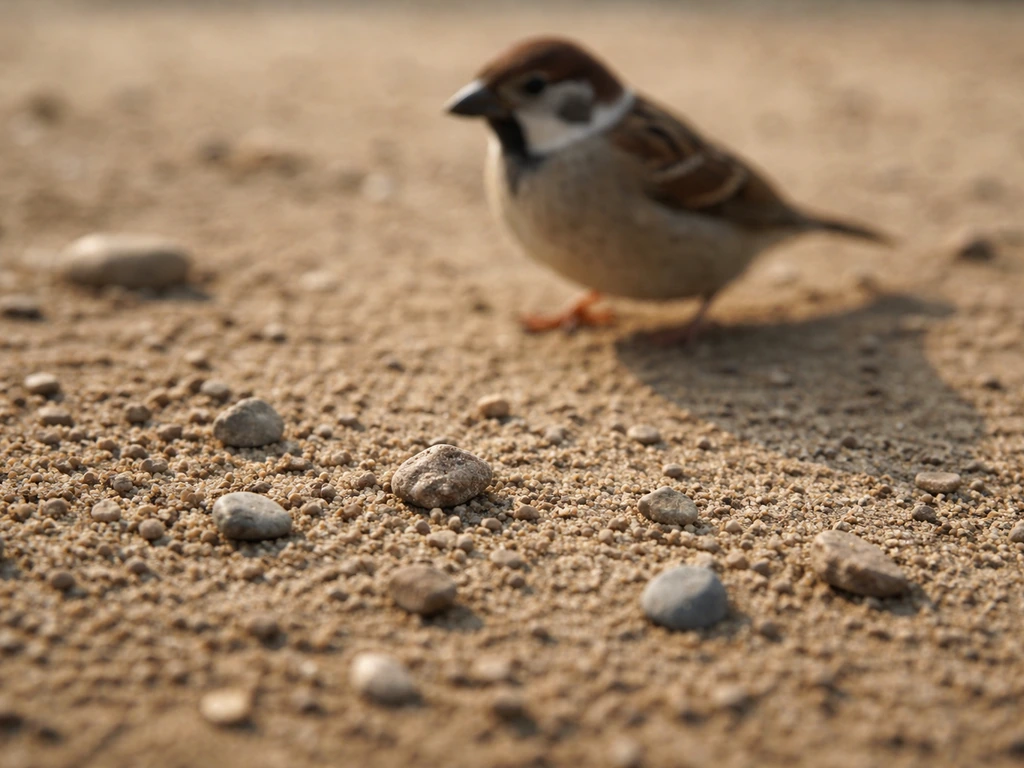
Most birds you see pecking at small pebbles on the ground are doing it on purpose: they're swallowing grit to help grind their food. Pigeons, doves, house sparrows, chickens, and many other seed-eating or grain-eating birds all do this regularly. It's not random scavenging. They're stocking their gizzard with tiny stones that act like a built-in mortar and pestle, and once you know what to look for, it's easy to spot in your backyard.
Which Bird Eats Pebbles for Grit in the Gizzard

Maya Bennett
28 Jun 2026
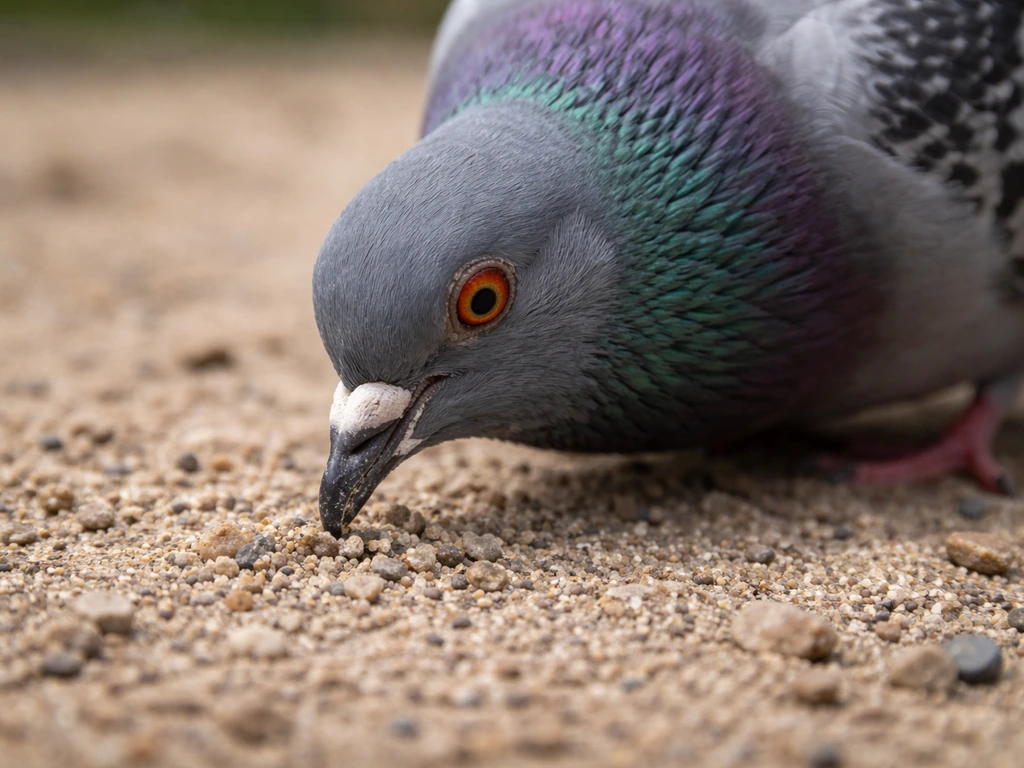
Birds that eat pebbles for digestion (grit)
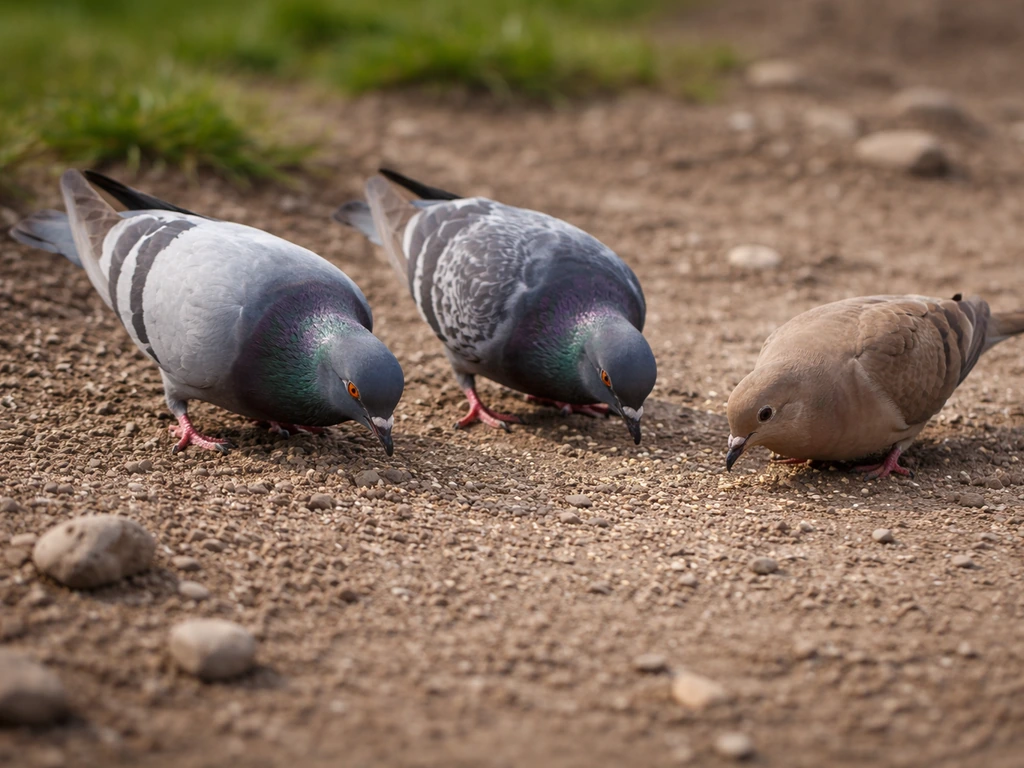
The birds most associated with eating pebbles for gizzard grit are seed-eaters and grain-eaters, because hard seeds and husks need serious grinding power to become digestible. Here are the species you're most likely to encounter doing this:
- Pigeons and doves (Rock Pigeon, Mourning Dove, Common Ground-Dove): These birds swallow seeds whole, so they depend heavily on grit to grind them down. Columbids are the textbook example of grit-dependent birds.
- House sparrows: Research specifically on house sparrows shows they actively select grit by size depending on what they're eating, and they require it to process harder food items.
- Chickens and domestic poultry: Free-range chickens pick up grit naturally from soil and gravel. Housed birds often need it provided because they can't forage for it themselves.
- Finches and other small seed-eaters: Smaller granivores like goldfinches and house finches will take grit, though their need for insoluble grit is debated more than for columbids.
- Wild turkeys and game birds (pheasants, quail): Ground-foraging game birds routinely ingest small stones as part of normal digestion.
- Waterfowl (geese, ducks): Geese grazing on grass and grain are well-known grit users. Their gizzards work overtime on tough plant material.
If you keep backyard chickens or have pet doves, this behavior is something you need to actively plan for, not just observe from a distance. Wild birds can forage for their own grit; birds in confined or managed settings often can't.
How grit works: why birds swallow small stones
Birds don't have teeth. Instead, they have a gizzard (technically called the ventriculus), which is a thick-walled, muscular second stomach that contracts powerfully to crush food. When a bird swallows small pebbles or stone chips, those particles sit in the gizzard and act as grinding media. Every time the gizzard contracts, the stones tumble against each other and against the food, pulverizing hard seeds, husks, and fibrous plant material into something the digestive system can actually absorb.
Over time, those stones get worn smooth from all the tumbling inside the gizzard. That rounding is actually a useful clue if you're trying to identify grit versus sharp construction debris or gravel in bird pellets or droppings: naturally ingested grit particles tend to be smooth and rounded, not angular. They can stay in the gizzard for months or even years, slowly wearing down and being replaced as the bird picks up new pieces.
There are two functional types of grit worth knowing about. Insoluble grit is the grinding kind: stone chips, small pebbles, and similar hard particles that stay in the gizzard and do the mechanical work. Soluble grit (like crushed oyster shell or dried eggshell) dissolves and is absorbed, supplying calcium and other minerals, especially important for egg-laying females. These are different tools for different jobs, and confusing them matters when you're deciding what to offer at a feeder setup.
Which birds are you most likely to actually see eating pebbles
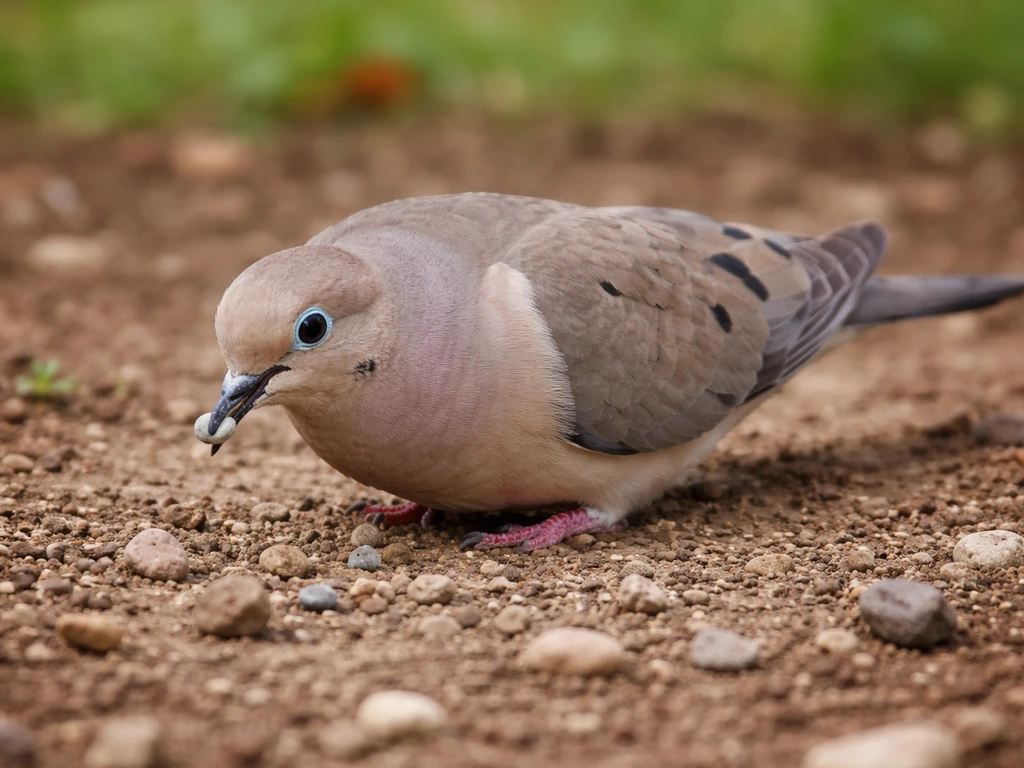
In a typical North American backyard, the birds you'll most realistically catch in the act of picking up small stones are Mourning Doves, Rock Pigeons (in urban areas), and House Sparrows. All three are common ground-feeders, and all three have a genuine, documented need for grit. A study record on grit use by House Sparrows also indicates that grit usage can be influenced by diet and grit size, supporting the idea that they ingest grit with size-specific needs. The Common Ground-Dove is another one to watch for if you're in the South or Southwest, since it forages in dusty, open, gravelly areas and will readily pick at small hard particles alongside seed mixes containing millet and canary seed.
Game birds like wild turkeys, Northern Bobwhites, and Ring-necked Pheasants also do this regularly, but you're more likely to spot it at a farm or rural property than a suburban feeder setup. If you keep backyard chickens, you've almost certainly watched them do it already: they're enthusiastic and obvious about picking up grit.
| Species | Grit Need | Where You'll See It | Notes |
|---|---|---|---|
| Mourning Dove | High | Ground under feeders, driveways, gravel paths | Swallows seeds whole; grit is essential |
| Rock Pigeon | High | Urban sidewalks, parking lots, gravel areas | Same biology as doves; very obvious foragers |
| House Sparrow | High | Ground near feeders, sandy patches | Selects grit size to match diet |
| Common Ground-Dove | High | Dusty open ground, low feeders, millet patches | Forages in gravelly, open spots specifically |
| Chicken (backyard) | High | Yard soil, gravel patches, run areas | Free-range birds self-select; housed birds need it provided |
| Wild Turkey | Moderate-High | Rural/wooded edges, open fields | Grazes on grass and grain; regular grit user |
| Goldfinch / House Finch | Moderate | Near feeders, sandy ground | Grit need lower than columbids but still present |
| Canada Goose / Mallard | Moderate-High | Shorelines, lawns, gravel edges near water | Grass-heavy diet demands good gizzard grinding |
How to tell if a bird is taking grit vs eating something else
This is the question that trips up a lot of backyard birders. A dove pecking at the ground near your feeder could be eating spilled seed, picking up grit, or both in the same foraging session. Here's how to tell the difference. If you're unsure what a bird is doing, it helps to review why might a bird swallow gravel or small stones as a baseline for what grit behavior should look like why birds swallow gravel or small stones.
Behavioral cues to watch for
- Location shift: Birds eating seed stay near the feed source. Birds taking grit often move deliberately to a different spot, like a bare gravel patch, a sandy strip, or a driveway edge, away from where the food is.
- Pecking pattern: Seed-eating involves rapid, rhythmic pecking at a concentrated area. Grit foraging looks more selective and slower, with the bird examining the surface and picking single small particles.
- Item size consistency: A bird taking grit picks up particles that are consistently very small and uniform. If it's eating spilled millet or sunflower chips, you'll see it manipulating the item differently, often tipping its head to position seeds.
- No swallowing struggle: Grit particles disappear quickly and smoothly. Seeds, especially larger ones, sometimes require the bird to reposition them in its bill.
- Grit spots vs. seed spots: If you watch a Mourning Dove walk from your feeder to the gravel edge of a path and start pecking there, it's almost certainly taking grit, not hoping grain fell 15 feet away.
- Time of day: Some birds take grit in the morning before or after a feeding session, almost like a deliberate supplement run. Watch for this pattern.
What about eggshells and snail shells?
Birds also pick up blank" rel="noopener noreferrer">crushed eggshells and snail shells, but this is usually soluble grit behavior aimed at calcium intake rather than mechanical grinding. Female birds in breeding season are especially motivated by this. If you see a bird picking at crushed shells with real interest, it's likely seeking calcium, not a grinding stone. That's still important and worth supporting, but it's a different need from insoluble pebble grit.
What to do in your backyard: offering safe grit and setting up the ground correctly
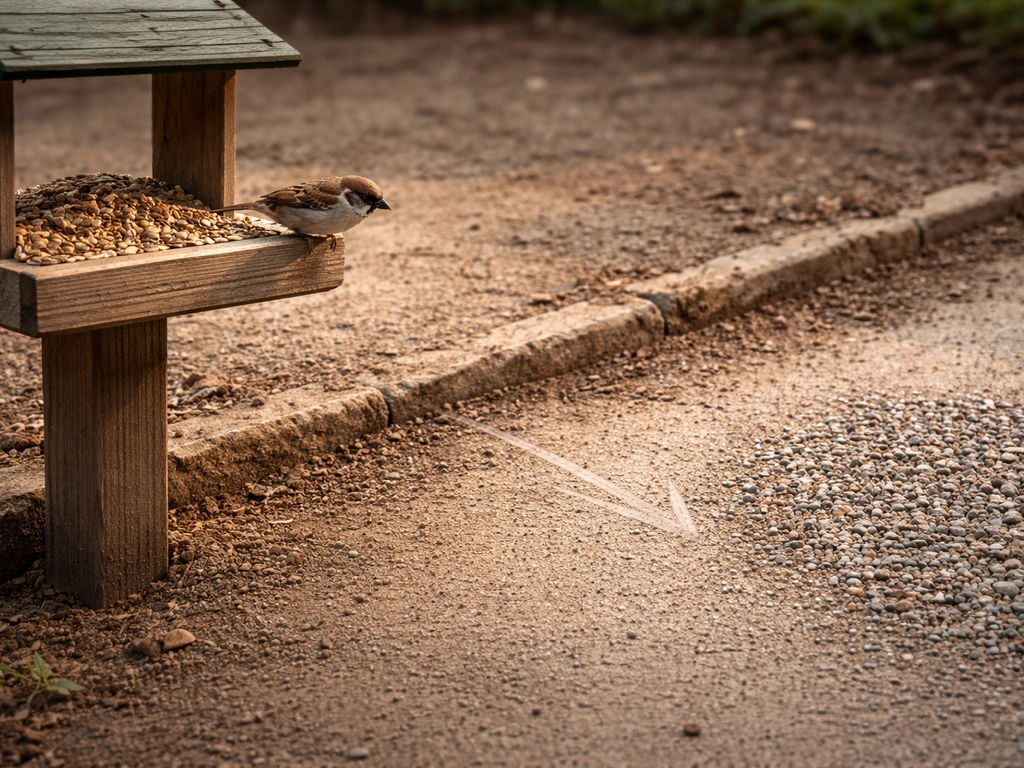
If you have ground-feeding birds, doves, or backyard chickens, there are some straightforward steps you can take today to support their grit needs without creating problems.
For wild backyard birds (sparrows, doves, finches)
Healthy wild birds in a yard with natural soil, gravel paths, or sandy patches usually find grit on their own. The best thing you can do is make sure those areas exist and aren't covered in pesticides or treated with road salt, which can be toxic if birds ingest contaminated particles. If your yard is mostly grass and impermeable surfaces, consider placing a shallow tray with coarse builder's sand mixed with small granite grit chips in a dry, sheltered spot near where birds already forage.
Crushed eggshells are a genuinely useful addition for breeding season. Cornell Lab recommends offering them on the ground or in a low dish, separate from seed feeders. If you bake your eggshells at 250 degrees Fahrenheit for about 20 minutes before crushing them, you kill off salmonella risk. Don't skip that step: raw eggshells can harbor bacteria that make birds sick.
For backyard chickens
Housed or confined chickens that eat whole grains or pellets definitely benefit from insoluble grit. Offer it free-choice in a separate container so birds can self-regulate rather than mixing it into feed. One practical guideline is roughly 20 grams per bird per week as a general starting point, refilling as needed. Use properly sized granite chips or commercial poultry grit, not fine sand. Sand particles are too small to grind effectively and can actually cause impaction if birds consume it in quantity.
For pet doves
This is where you need to be careful. Pet doves absolutely need grit because they swallow seeds whole, but overfeeding insoluble grit can cause gastrointestinal obstruction. This is different from choking, but it highlights why you should control how much grit your dove eats overfeeding insoluble grit can cause gastrointestinal obstruction. Offer only very small amounts of appropriately sized insoluble grit, and keep it separate from food. If your dove ever shows reduced appetite, fluffed feathers, or weight loss, stop offering grit and consult an avian vet. Insoluble grit can stay in the gizzard for months, so a bird that's been overfed grit doesn't just pass the excess quickly.
For parrots and psittacine birds
Don't offer insoluble grit to parrots or parakeets without a specific recommendation from an avian specialist vet. Unlike doves and pigeons, parrots hull their seeds before swallowing them, so the gizzard-grinding role of grit is much less clear. Parrots are also prone to overeating grit when stressed or bored, leading to serious impaction. This is a case where the general bird-grit rule doesn't apply cleanly.
Safety considerations: pets, wildlife, and keeping your setup clean
Setting up a grit station or ground feeding area introduces some risks that are worth thinking through before you start, especially if you have pets or other wildlife visiting your yard.
Contamination and spoilage risks
- Grit trays on the ground collect debris, droppings, and moisture fast. Clean and refresh any grit tray at least once a week, more often in wet weather.
- Don't place grit stations directly under feeders where seed hulls and droppings accumulate. Contaminated grit is a disease vector for salmonella and aspergillus mold, both of which can infect birds.
- Avoid leaving crushed eggshells out for more than a day or two. They can mold quickly in humid conditions and attract rodents.
- Never offer grit particles collected from roadsides or driveways treated with salt or chemical de-icers. Those particles look exactly like safe grit but can be toxic.
Risks to pets and other wildlife
Cats and dogs that access backyard grit stations or areas where birds have been foraging can ingest grit particles or contaminated material. This is more of a concern with spoiled eggshells or a contaminated tray than with plain stone grit, but it's worth placing any grit station somewhere pets don't normally roam. Cats in the yard also create obvious stress for ground-feeding birds, which undermines the whole point of the setup.
Wildlife like raccoons and squirrels will investigate ground trays. Raccoons in particular can defecate near food and grit sources, introducing Baylisascaris roundworm eggs into the area, which is a genuine health risk for both birds and pets. If you're seeing regular raccoon activity, elevate your grit station slightly or use a low platform feeder with a roof that limits access.
A quick safety checklist for your grit setup
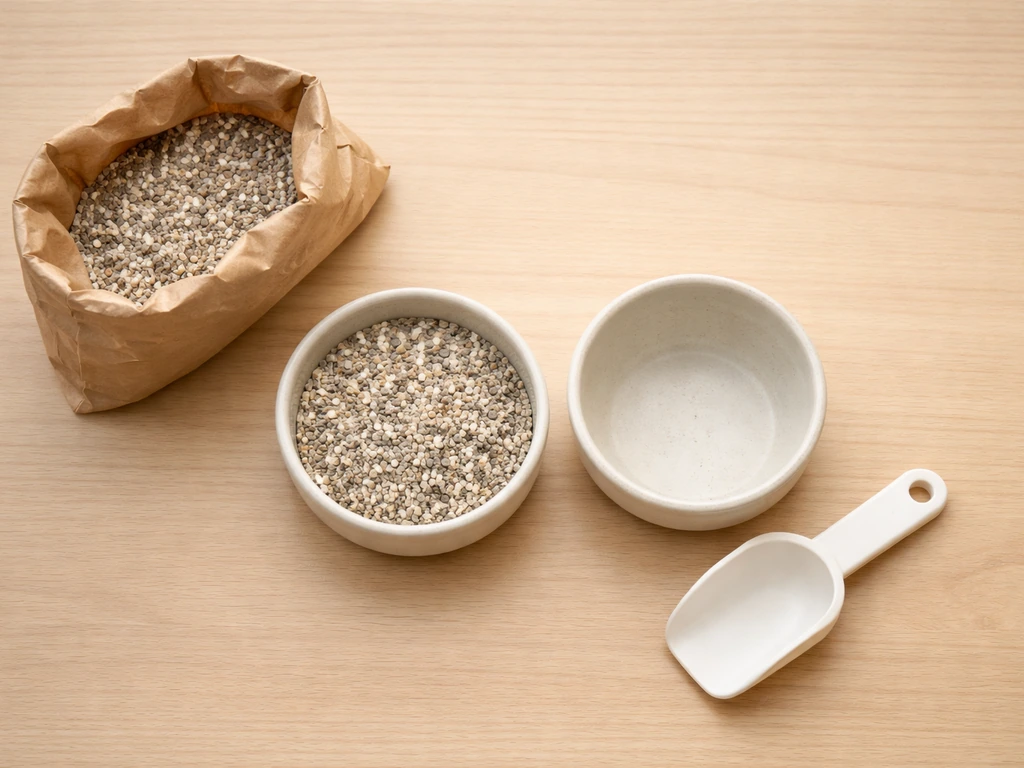
- Use commercial bird grit or granite chips from a reputable feed store, not random gravel or sandbox sand.
- Offer insoluble grit in a separate container, never mixed into seed or feed.
- Bake eggshells before crushing and offering them to eliminate salmonella risk.
- Clean grit trays weekly and replace the grit entirely if it looks wet, clumped, or soiled.
- Keep grit stations away from pet access areas and from the direct splash zone of feeders above.
- If you have pet doves, parrots, or confined chickens, consult an avian vet before settling on a grit routine, especially if you notice any digestive symptoms.
The grit-eating behavior itself is completely normal and worth supporting, but a poorly maintained setup can quickly become a contamination problem. A little routine maintenance goes a long way. If you're curious about related behaviors, birds also swallow bones for calcium (similar mineral-seeking logic), and the question of why birds swallow stones more broadly connects to some interesting gizzard biology worth exploring further.
FAQ
How can I tell grit from normal gravel when I find pebbles in droppings or pellets?
Look for rounded, smooth particles rather than sharp, angular stones, and note the size consistency. Birds that ingest grit tend to return similar-sized, worn pieces, while construction debris or garden gravel often looks more jagged and mixed in sizes.
Why do some birds seem to eat pebbles right after eating seeds, but others don’t?
Grit need depends on what the bird is currently digesting and how hard it is. Seed and husk-heavy meals usually trigger more grit picking, while softer, more processed foods may reduce the urgency, even in species that normally use grit.
Can I feed grit in a bird feeder instead of a ground tray?
For most seed or grain-eaters, a low, ground-level or shallow dish works better because these birds naturally forage on the ground. If you use a tray under a perch, keep it dry and replace grit regularly so it does not become muddy or contaminated.
What grit size is safest and most effective for backyard birds?
Choose coarse granite chips or commercial poultry grit, not fine sand. If the particles are too small, they may not grind well and can increase the risk of impaction when consumed in large amounts.
How often should I refill a grit station for chickens or doves?
Refill based on consumption rather than a fixed schedule. Because grit can remain in the gizzard for months, you want enough available for self-regulation, but not so much that it becomes a long-term, messy contamination source.
If my yard has gravel and pigeons are around, do I still need to offer grit?
Often, no. If birds have consistent access to natural soil, gravel paths, or sandy patches, they usually meet their own grit needs. Extra grit is most useful when your yard is mostly grass or surfaces are sealed and birds have limited access to hard particles.
Can I mix insoluble grit into chicken feed to make it easier?
It is usually better to keep grit separate. Mixing can lead to uneven intake, birds cannot self-regulate as well, and it increases the chance that birds consume more than they need, which raises obstruction risk in confined settings.
Do birds eat pebbles year-round, or only during nesting and breeding season?
Both patterns happen, but the need can change with diet and reproduction. Egg-laying females often increase soluble calcium intake from sources like eggshell, while insoluble grit for grinding is typically tied more to hard food intake than calendar dates.
Are crushed eggshells the same thing as pebble grit?
No. Crushed eggshells are usually treated as soluble calcium grit, they dissolve and support mineral supply. Pebble grit is insoluble and stays in the gizzard longer for grinding, so they serve different roles.
What should I do if I suspect my pet dove has eaten too much grit?
Stop offering additional insoluble grit immediately and monitor appetite, droppings, and posture. Because excess can remain in the gizzard for a long time, contact an avian vet promptly if you see reduced appetite, fluffed feathers, or weight loss.
Is grit safe for all birds, including parrots and parakeets?
Not automatically. Parrots generally hull many seeds before swallowing, so the grinding function is less clear, and they can overeat grit when stressed or bored. Only offer grit to these species with specific guidance from an avian specialist vet.
How do I protect birds from contaminated grit or treated yard surfaces?
Avoid places with pesticide residues, and keep birds away from road salt or areas recently treated with chemicals. If your yard uses winter de-icing or insect control products, consider using a dedicated grit area in an untreated dry spot instead of relying on ground grit.
Could grit stations attract unwanted animals or create health risks?
Yes. Dogs and cats can ingest particles, and raccoons may investigate ground trays and potentially contaminate the area with parasites. If wildlife activity is an issue, use a raised, roofed platform or otherwise restrict access to keep grit clean and away from pets.
Next Article
What Bird Eats Rocks to Digest Food? Grit and Gastroliths
Learn which birds eat grit or gastroliths to grind food, how gizzards use stones, and safe home feeding tips.