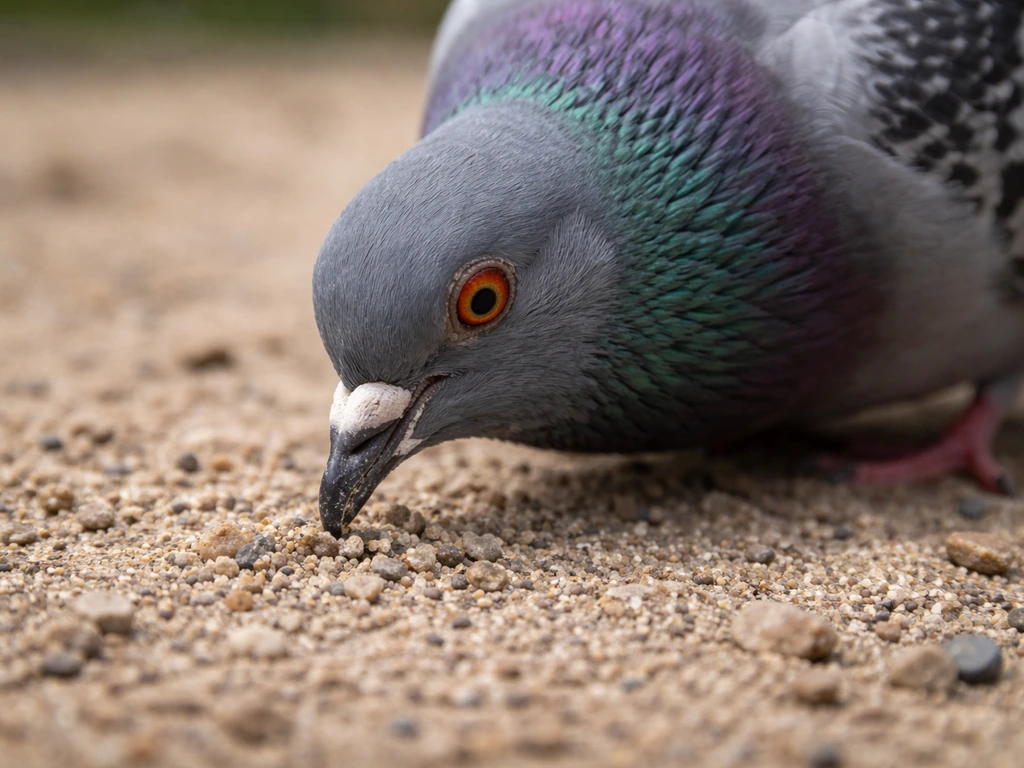
Birds swallow gravel and small stones on purpose, and most of the time it is completely normal. The stones end up in the gizzard, a muscular part of the stomach, where they act like grinding teeth to break down seeds, grains, and tough plant material. This behavior is called grit ingestion, and for many seed-eating backyard birds it is as routine as drinking water. That said, there are situations where stone-swallowing becomes a red flag: a bird eating inappropriate material, a gizzard blocked by too much grit, or a pet bird offered grit it does not actually need. Knowing the difference is what this guide is for.
Why Might a Bird Swallow Gravel or Small Stones? When It’s Normal

Maya Bennett
6 Jul 2026
Why birds eat grit: the gizzard grinding system
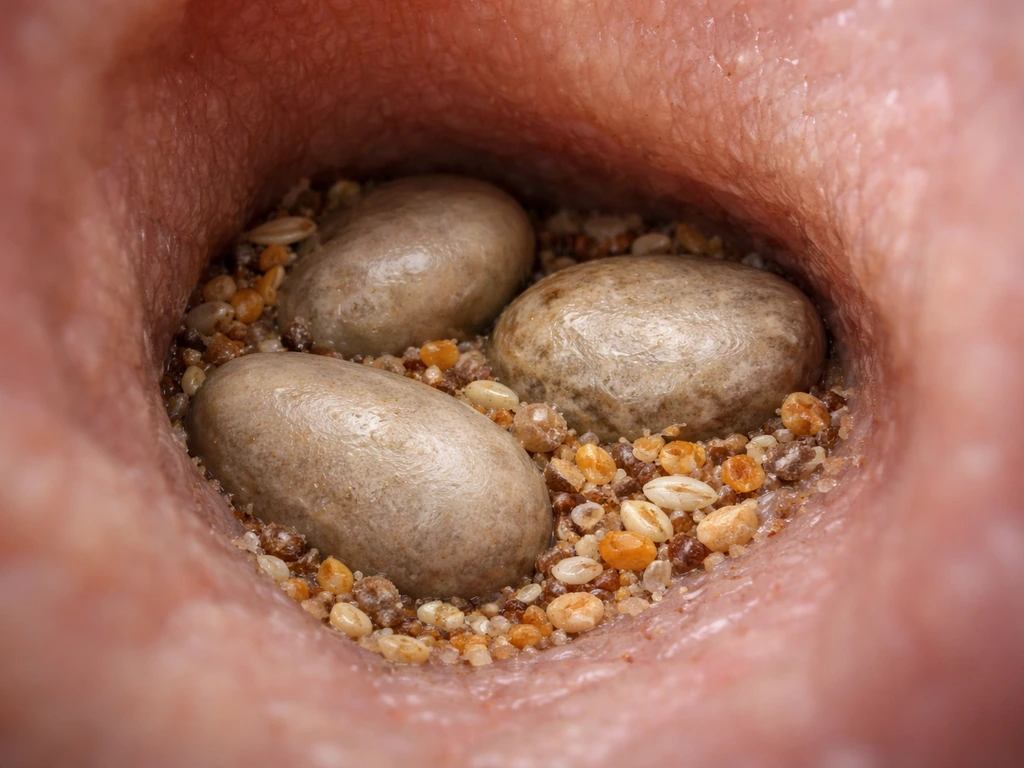
Unlike mammals, birds do not have teeth. Seed-eating species in particular need another way to physically crush food before it can be chemically digested. The gizzard, the second stomach compartment, is a thick-walled muscular chamber that contracts rhythmically to pulverize whatever is inside. When a bird swallows small stones or coarse sand alongside its food, those particles become embedded in the gizzard lining and dramatically increase the grinding force, reducing hard seeds to fine particles that enzymes can then work on efficiently. Researchers describe this as mechanical shear that improves chemical digestion efficiency downstream.
The stones a bird collects for this purpose are technically called gastroliths or gizzard stones. Particle size scales with body size: small songbirds like sparrows and finches use sand-grain-sized grit, while larger birds like turkeys or geese can use pebbles several millimeters across. Grit does wear down over time inside the gizzard, so birds replace it regularly. Mourning doves, for example, are estimated to need roughly 60 to 100 pieces of grit every single day just to maintain functional grinding capacity. That is a lot of deliberate foraging for tiny stones.
Which birds are most likely to seek out grit
Not every bird needs grit, and this is an important point. The need is almost entirely diet-driven. Birds that swallow seeds whole, without cracking them first, rely heavily on grit. Birds that crack seeds with a strong bill (like cardinals and grosbeaks) or eat mostly soft insects and fruit have less need for it. Raptors that eat meat generally do not need grinding grit at all, though they do produce pellets of indigestible bone and fur.
| Bird group | Likely grit need | Notes |
|---|---|---|
| Mourning doves and pigeons | Very high | Swallow seeds whole; actively forage for grit daily |
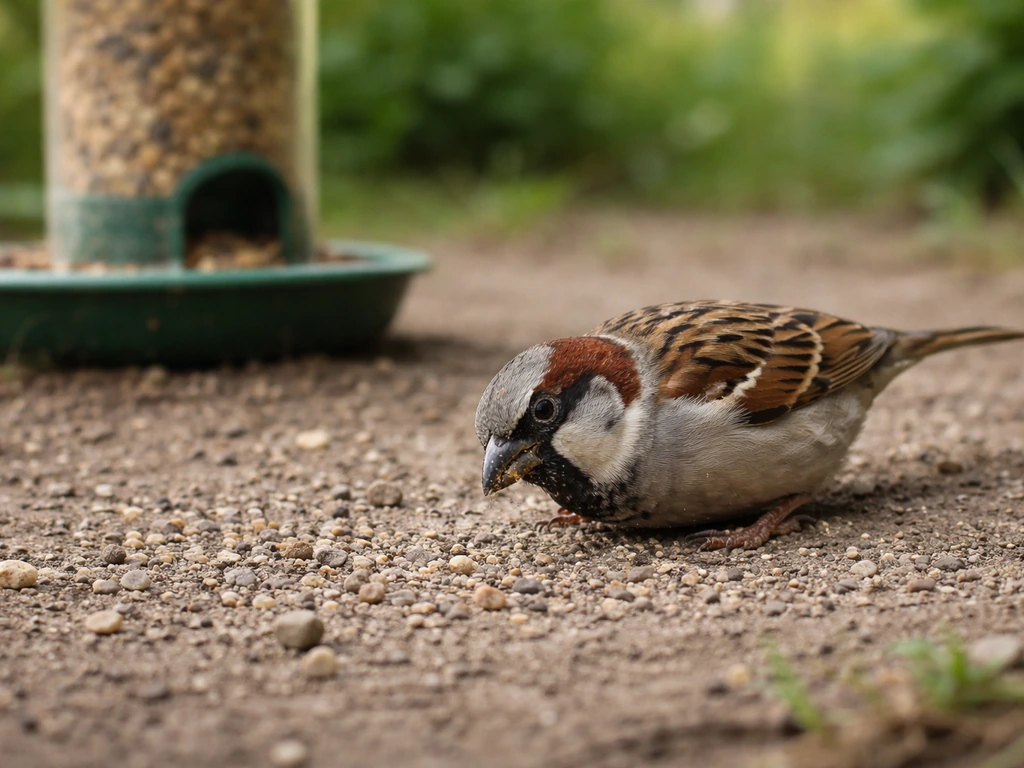
| Ground-feeding sparrows and juncos | Moderate to high | Pick up fine grit while foraging on bare soil |
| Grouse and quail | High | Documented actively seeking out stones from roadsides and bare patches |
| Finches and cardinals | Low to moderate | Strong bills crack seeds; less reliant on grit but may still ingest some |
| Robins and thrushes | Low | Primarily insect and soft-fruit diet; grit need is minimal |
| Parrots (captive) | Generally not needed | Crack seeds with the bill; grit can cause impaction in some individuals |
| Raptors (hawks, owls) | Not needed for digestion | Eject indigestible material as pellets; no grinding grit required |
Grouse are a particularly clear example of intentional grit foraging. Field observations from Montana document grouse actively seeking out and swallowing grit specifically to charge up their gizzards, especially in winter when frozen ground limits access to loose particles. You may notice similar behavior in doves and sparrows at your feeder: they will spend time poking around bare soil or a gravelly patch near the seed, which is exactly what they are supposed to be doing.
When stone-swallowing becomes a warning sign
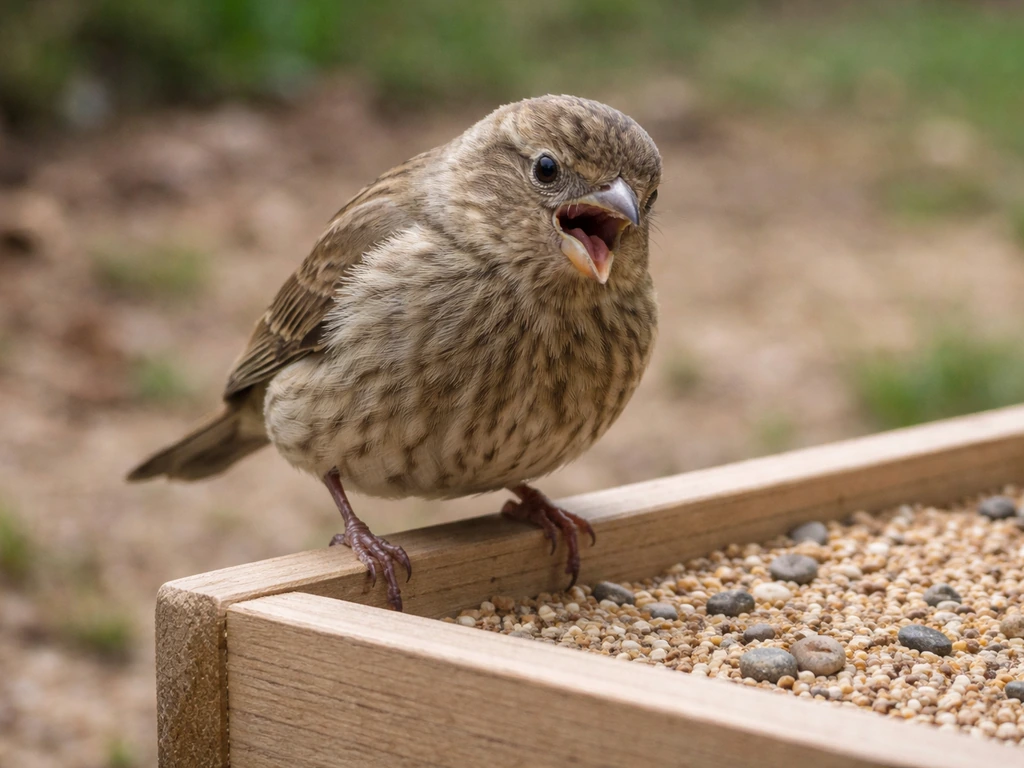
The behavior is normal until it is not. A few specific situations should prompt concern.
Gizzard impaction
If a bird ingests too much grit, or the wrong type, the gizzard can become packed and stop moving properly. This is called grit impaction of the ventriculus. The bird cannot grind or pass food, and the result is essentially slow starvation. Signs include a bird that is hunched, puffed up, not eating, passing only watery or very white droppings with little solid fecal matter, or in severe cases, vomiting. If you are wondering can a bird choke on food, note that choking and gizzard problems show up differently, and the emergency signs above should be taken seriously. This is an emergency situation, not a wait-and-see one.
Captive birds and inappropriate grit
This is especially relevant for pet bird owners. Parrots crack seeds with their beaks, so they do not need grit the way doves do. Offering loose grit to a parrot can lead to impaction because the bird may consume far more than it needs. In captive husbandry, CCAC notes that adult pigeons may consume large amounts of food and that granite grit is not essential when pelleted rations are provided, reflecting a diet-dependent need blank" rel="noopener noreferrer">granite grit is not essential with pelleted rations. Some avian vets and resources from the Association of Avian Veterinarians note that grit type and amount matter a great deal, and that what is labeled as bird grit in pet stores is not universally appropriate for all species. If you have a pet bird and are unsure whether it needs grit, ask an avian vet rather than guessing.
Exposure to dangerous material
Sometimes what looks like a bird eating grit is a bird picking up something harmful: fragments of lead fishing weights, paint chips, small pieces of metal hardware, or contaminated substrate near feeders or construction debris. Lead ingestion in particular is a serious wildlife toxicology issue. If you are seeing a bird repeatedly pecking at debris piles, paint flakes, or disturbed soil near old structures, that is worth monitoring closely and potentially removing the bird from that environment.
Observable signs that something is wrong
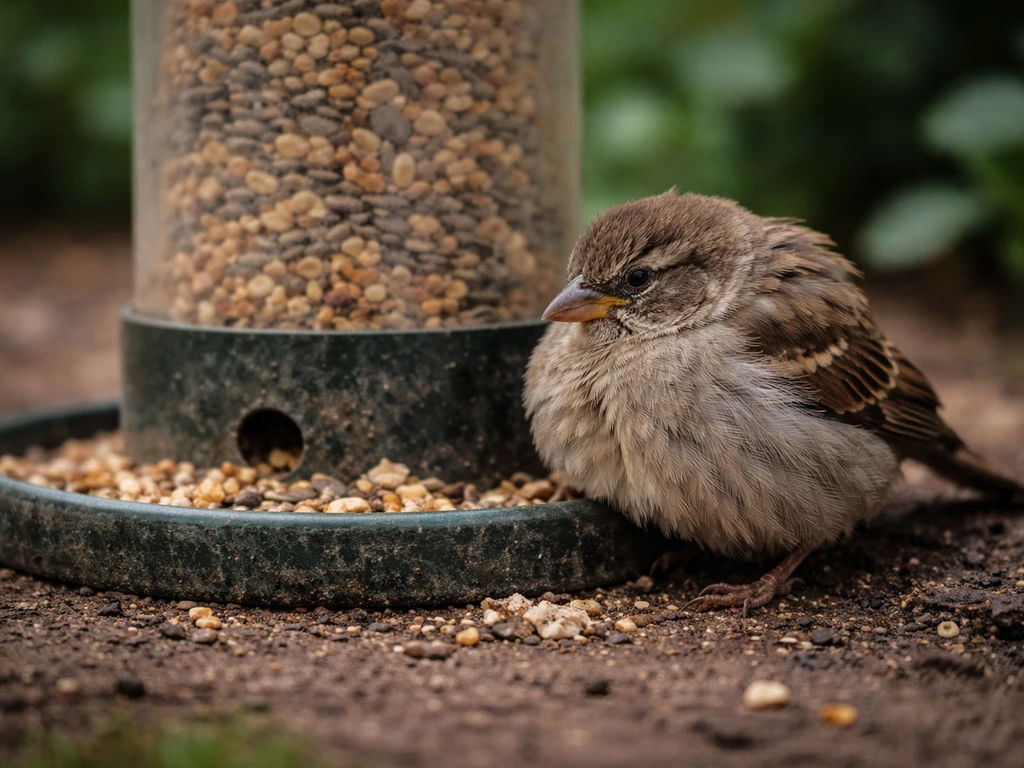
- Bird is hunched, feathers fluffed, or lethargic at or near the feeder
- Droppings are mostly liquid or chalky white with little brown/green solid component
- The bird is repeatedly opening its beak or making swallowing motions without eating
- Visible bloating or distension in the crop or abdomen
- Bird is on the ground and not flying away when approached
- Loss of coordination or head tilting
What to do at home if you are worried
If you observe a wild bird showing distress signs near your feeder, here is a practical response plan. The most important rule first: do not put food, water, or anything else into the bird's mouth. This is a widely emphasized caution from wildlife welfare guidance, and for good reason. Forcing material into a distressed bird's beak can cause aspiration (choking) or make an underlying obstruction worse. Similarly, do not attempt to massage the crop or gizzard area.
- Observe first. Give the bird a few minutes without approach. Sometimes a bird that looks distressed is simply resting or temporarily stunned.
- If it does not move off under its own power within 15 to 20 minutes, gently contain it in a cardboard box with air holes. Use a light towel to pick it up, avoid squeezing, and keep it dark and quiet to reduce stress.
- Do not offer bread, crackers, seed, or water by hand. Keep the environment calm.
- Contact a licensed wildlife rehabilitator. In the US, the U.S. Fish and Wildlife Service and most state wildlife agencies maintain referral lists. You can also search the National Wildlife Rehabilitators Association directory.
- If this is a pet bird showing impaction symptoms, this is an avian vet visit today, not tomorrow. Gizzard impaction can deteriorate quickly.
One thing worth noting: a bird that is foraging near your feeder and occasionally picking up grit from the soil, then flying off normally, does not need intervention. That is the behavior working exactly as intended. The concern threshold is a bird that is grounded, unable to fly, or showing the physical symptoms listed above.
Feeder and yard safety: where grit, seed, and disease overlap
There is a direct connection between how you manage your feeding station and whether birds around it are getting safe grit access or being exposed to something harmful. The ground beneath feeders accumulates discarded seed hulls, wet seed, bird droppings, and mold, and birds that are foraging in that zone for grit are also picking up everything that comes with it.
Moldy or spoiled seed is one of the most underappreciated hazards in backyard birding. In warm, humid summer conditions, seed in a feeder or on the ground can develop mold within a few days. If you see fuzzy patches, clumping, discoloration, or smell anything musty, that seed should go straight in the trash, not back into the feeder or scattered on the ground. The Minnesota Department of Natural Resources notes that in wet weather mold and bacteria can form on wet birdseed, whether in the feeder or on the ground, and recommends raking or sweeping up old seed and hulls under feeders. A bird picking up grit near a contaminated seed pile can ingest fungal spores or bacterial pathogens alongside the stones.
From a disease transmission standpoint, the ground under a feeder where many birds congregate is a high-risk zone. Droppings, wet hulls, and debris concentrate exactly where foraging birds are spending time. Project FeederWatch and Audubon both recommend raking or sweeping under feeders regularly to break the cycle of contamination. Spreading seed across multiple feeders also helps, because it reduces the density of birds at any one spot and lowers the chance that a sick bird contaminates a shared feeding surface.
Pet owners should pay extra attention here. Dogs and cats that access the yard can encounter contaminated ground substrate under feeders, pick up moldy seed, or in some cases eat bird droppings, all of which carry potential pathogen risks. Keeping a clean sweep zone beneath feeders reduces risk for your pets as well as the birds themselves.
Preventing problems: setting up a safer yard for natural foraging
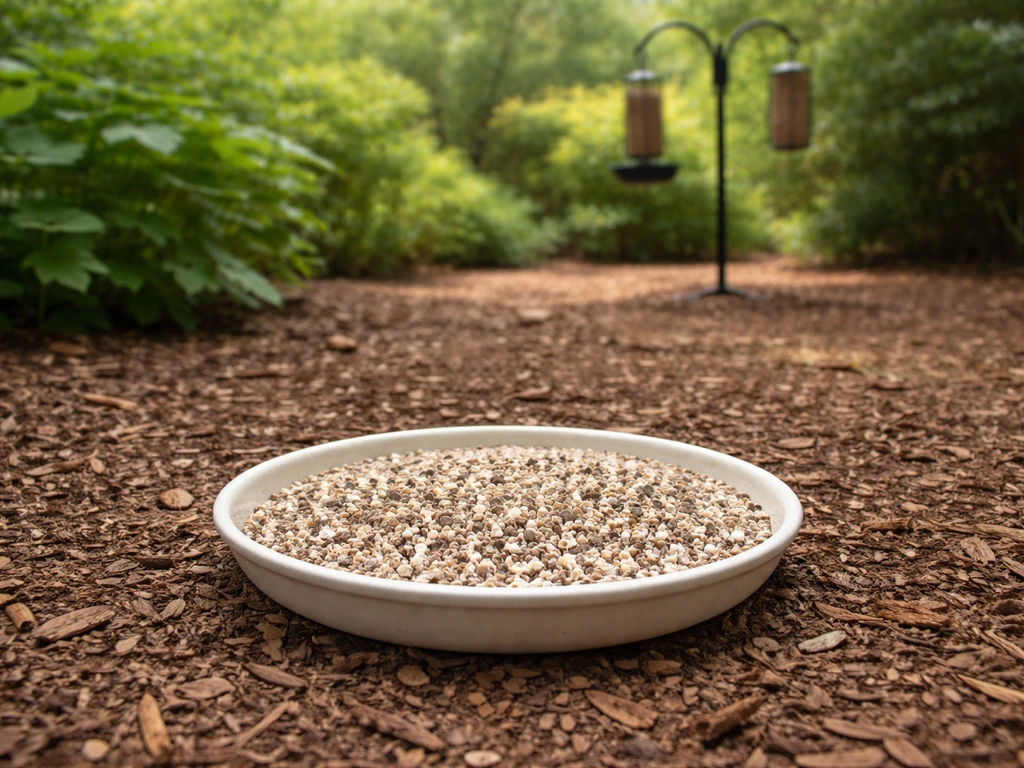
The goal is not to eliminate grit access, it is to make the grit birds find safe and the overall foraging environment clean. Here is how to set that up practically.
Provide a dedicated grit source
Instead of letting doves and sparrows pick through feeder debris, offer a small, shallow dish or tray of coarse sand, fine gravel, or commercial bird grit (appropriate for your species) a few feet away from the main feeder. This gives birds a clean, known-safe source and draws their foraging away from potentially contaminated ground. Refresh it after rain to prevent mold and compaction.
Clean feeding stations on a schedule
- Scrub feeders with a 10% bleach solution (one part bleach to nine parts water) and rinse thoroughly at least once a month, more often in summer
- Rake or sweep the ground under feeders at least weekly during warm months
- Discard any seed that looks clumped, discolored, or smells musty, no exceptions
- Store seed in airtight, rodent-proof containers away from heat and moisture
- Rotate feeder positions seasonally if possible to prevent ground buildup in one spot
Manage the ground surface around feeders
Avoid placing feeders over gravel beds that contain sharp-edged crushed stone, construction aggregate, or material that may have been treated with herbicides or pesticides. Smooth pea gravel or natural river sand is far safer if birds are going to pick through it. Keep a bare soil or short-grass patch near your feeding station where ground-foraging birds can naturally find fine grit, and check that no debris from nearby work (paint, hardware, lead flashing) is accessible in that area.
A quick prevention checklist
- Weekly: rake under feeders, check for moldy seed, top up the clean grit tray
- Monthly: full feeder scrub with bleach solution and rinse
- After rain: empty and refresh any grit dish or ground tray before it molds
- Twice a year: inspect the area around feeders for any hazardous debris (metal, paint chips, construction material)
- Ongoing: monitor birds at the feeder for signs of illness and remove any bird showing distress signals promptly
Birds swallowing gravel is one of those behaviors that looks strange until you understand what the gizzard does, and then it makes complete sense. The vast majority of the time you see a dove or sparrow pecking around on a gravelly patch, it is doing exactly what evolution designed it to do. Your job as a yard host is to make sure that patch is clean, the grit is appropriate, and you know the handful of signs that mean something has gone wrong. With the setup described here, you can support natural foraging behavior while keeping your feeding station a low-risk environment for birds, pets, and yourself.
FAQ
How can I tell if a wild bird’s gravel-swallowing is normal versus a problem?
Occasional pecking and swallowing small stones is usually normal, especially for seed-eaters. Look for reassurance signs like normal posture, regular flying and perching, and droppings that include normal dark fecal matter. Distress signs in the article (hunched puffed look, not eating, watery or mostly white droppings, vomiting) are the meaningful triggers for action.
What should I do if the gravel patch near my feeder might be contaminated (paint, hardware, construction debris)?
Foraging birds often pick up grit along with whatever is on the ground, including moldy seed and contaminants. If you see repeated debris pecking near construction materials, chipped paint, or old hardware, treat it as a potential hazard and consider temporarily removing access to that exact patch rather than only adding a grit dish elsewhere.
If I add grit to my yard, could I accidentally harm birds that do not need it?
Do not assume the bird needs “extra” grit just because you provide it. Diet matters, parrots and other seed-crackers typically need far less grit, and some birds can overconsume. If you are managing multiple species at one feeder, separate feeding zones are safer, and consult an avian vet if your species has a known grit requirement you are unsure about.
Can giving birds grit increase disease risk if the ground under my feeders gets moldy?
Yes. Mold and spoiled seed can develop quickly in warm, humid weather, and spores or pathogens can hitch a ride when birds take grit from the same contaminated ground. Remove visibly moldy seed immediately, and keep the grit source clean and covered or sheltered from rain splash and runoff when possible.
If I find a bird that seems unable to eat after swallowing stones, what is the safest next step?
If you suspect impaction or another acute problem, the most useful immediate step is to reduce handling and avoid putting anything in the bird’s mouth. Keep the environment calm and watch from a distance, then contact a local wildlife rehabilitator or avian vet, especially if the bird is grounded or worsening.
What are common do-not-do actions when a bird looks like it has gizzard trouble?
One common mistake is trying to “help” by massaging the crop or gizzard area. That can worsen an underlying obstruction and increase the risk of aspiration. Another mistake is offering forced food or water. In an emergency, focus on professional guidance and removing access to hazards, not manual interventions.
How should I set up a grit source so birds use it without digging through feeder mess?
It helps to offer a dedicated, clean grit station away from the main feeding area so birds are not hunting through feeder debris. Use a shallow tray or small dish and refresh it after rain to prevent compaction and mold. Avoid sharp or construction aggregate type surfaces that may introduce harmful fragments.
If a bird looks fine but keeps picking at gravel, when should I stop monitoring and intervene?
If you see a bird repeatedly pecking and then flying off normally, it usually indicates it is collecting grit as intended. Intervention is more warranted when you see prolonged inability to fly, sustained low energy, or the specific droppings and physical symptoms described in the article.
How does gravel and feeder ground behavior affect dogs and cats near my yard?
Yes, pets are a risk multiplier because they can ingest contaminated ground substrate, moldy seed, or droppings under feeders. Keep a clean area beneath feeding stations, prevent dogs and cats from free-access to the ground under the feeder, and clean up fallen seed promptly.
Could the gravel-swallowing behavior actually be the bird ingesting toxic materials?
If your yard includes known sources like lead fishing weights, peeling paint, or metal hardware, grit foraging can overlap with toxin ingestion. The best practical control is removing or blocking access to those debris piles and clearing the specific ground-foraging patch near the feeder rather than only adding “clean” grit elsewhere.
Next Article
Which Bird Eats Pebbles for Grit in the Gizzard
Find the bird most linked to swallowing pebbles for gizzard grit, plus how to spot it and give safe grit.