Yes, cats eat birds. That is not a myth or an exaggeration. Whether your cat is an indoor-outdoor pet or a stray that hangs around your yard, the predatory instinct is real and the impact is measurable. But if you found your cat sniffing around the bird feeder, there is a second question worth answering too: can a cat eat bird seed or bird food, and what happens if they do? Those are two very different problems, and this guide walks through both.
Do Cats Eat Birds? Can Cats Eat Bird Seed or Food?
Maya Bennett
9 Apr 2026
Do cats actually eat birds, or just hunt them?
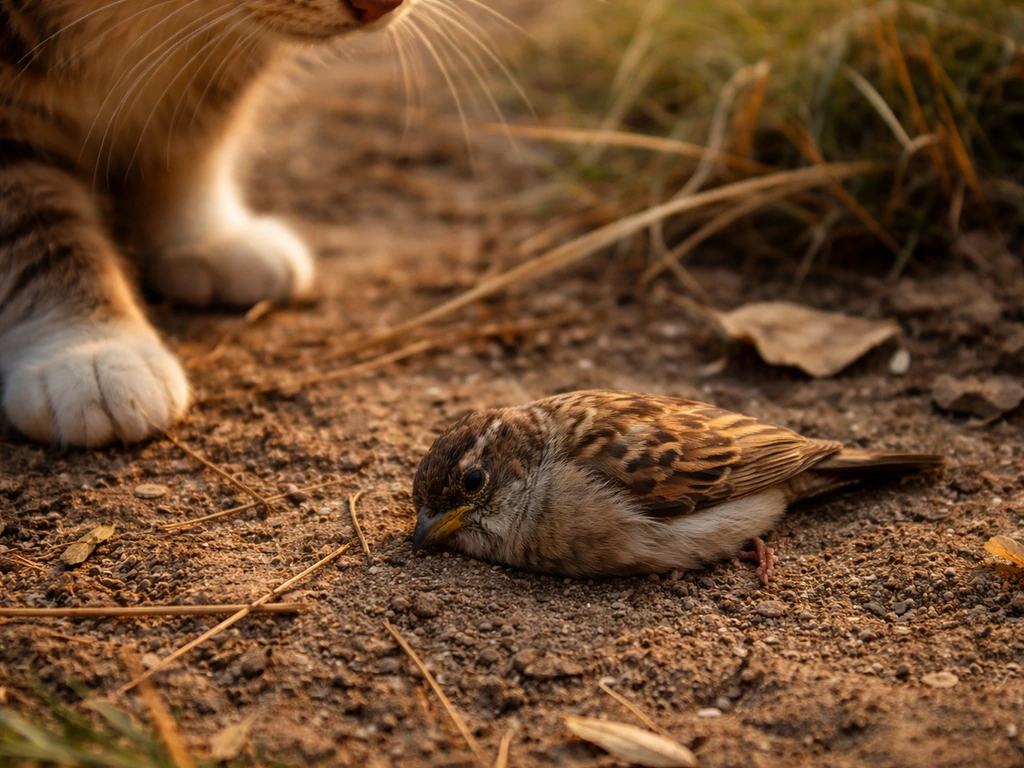
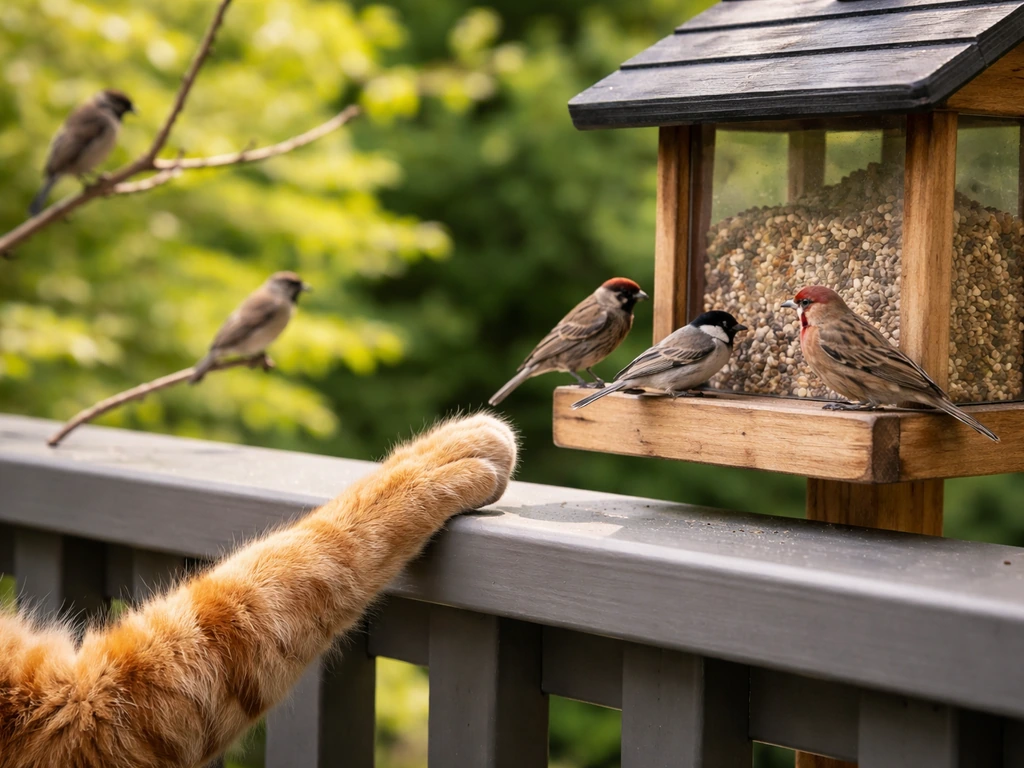
Both. Cats hunt birds out of instinct, and they often eat what they catch. A landmark synthesis published in Nature Communications estimated that free-ranging cats in the United States kill between 1.3 and 4.0 billion birds every year. That is not a rounding error. It is the single largest human-influenced source of bird mortality in North America. Across global diet studies, researchers identified 981 bird species as part of domestic cat diet, roughly 9% of all known bird species in the datasets reviewed.
The distinction between pet cats and feral cats matters here. Pet cats that roam outdoors still kill significant numbers of birds. A CSIRO review estimated that roaming, hunting pet cats kill around 186 mammals, birds, and reptiles per cat per year. Feral cats tend to kill at higher rates, but owned cats with outdoor access contribute substantially to the total. Predation tends to be concentrated close to home, within the cat's local range, which means your backyard feeder sits squarely in the danger zone.
As for what they target: cats preferentially hunt birds that are common and often near the ground. Research on domestic cat hunting behavior in France documented House Sparrow and a range of other passerines as frequently caught species. Those happen to be exactly the birds most likely to congregate under and around a backyard feeder. If a cat is able to catch a whole bird, they often will eat most or all of it, sometimes leaving behind a scatter of feathers as the main evidence.
So when someone asks "will my cat eat my bird" in the context of a pet bird inside the home, the honest answer is: the risk is real and should be taken seriously. Whether your cat will go after your pet bird depends on the individual cat and the situation, but the hunting drive does not switch off indoors.
Can cats eat bird seed, bird food, or other feeder items?
Cats are obligate carnivores. They have no nutritional reason to eat bird seed, and most cats will not actively seek it out. However, "not seeking it out" is different from "will never eat it." A curious cat, a bored cat, or a cat that is used to grazing on whatever is available can absolutely mouth or swallow spilled seed, hulls, shell fragments, suet, or mealworms from beneath a feeder. Kittens are especially prone to this kind of indiscriminate chewing.
Common feeder items a cat might ingest include mixed seeds such as sunflower and corn, peanuts and other nuts, suet or tallow cakes, and dried mealworms. None of these are formulated for cats, and some carry specific risks depending on quantity and condition. Seeds themselves are unlikely to be toxic in small amounts, but whole seeds and shell fragments can cause gastrointestinal irritation, and larger ingested pieces can theoretically create a blockage. The Merck Veterinary Manual notes that foreign-body GI obstruction in small animals typically presents with abdominal pain, vomiting, and in serious cases, shock, so any sign that a cat swallowed something sizeable warrants a vet call.
One myth worth busting: cats do not "eat bird seed" the way squirrels or birds do. If you see a cat near a feeder and assume it is there for the seed, it is almost certainly there for the birds. The seed is incidental. The birds drawn to the seed are the target.
What about the reverse question, can birds eat cat food? Cat food is high in animal protein and fat, which is not appropriate for most wild birds. A few corvids or opportunistic species might sample it, but it can displace the natural diet, attract unwanted scavengers, and spoil quickly in warm weather, creating contamination risks for other feeder visitors.
Feral cats at feeders: why this is a different problem
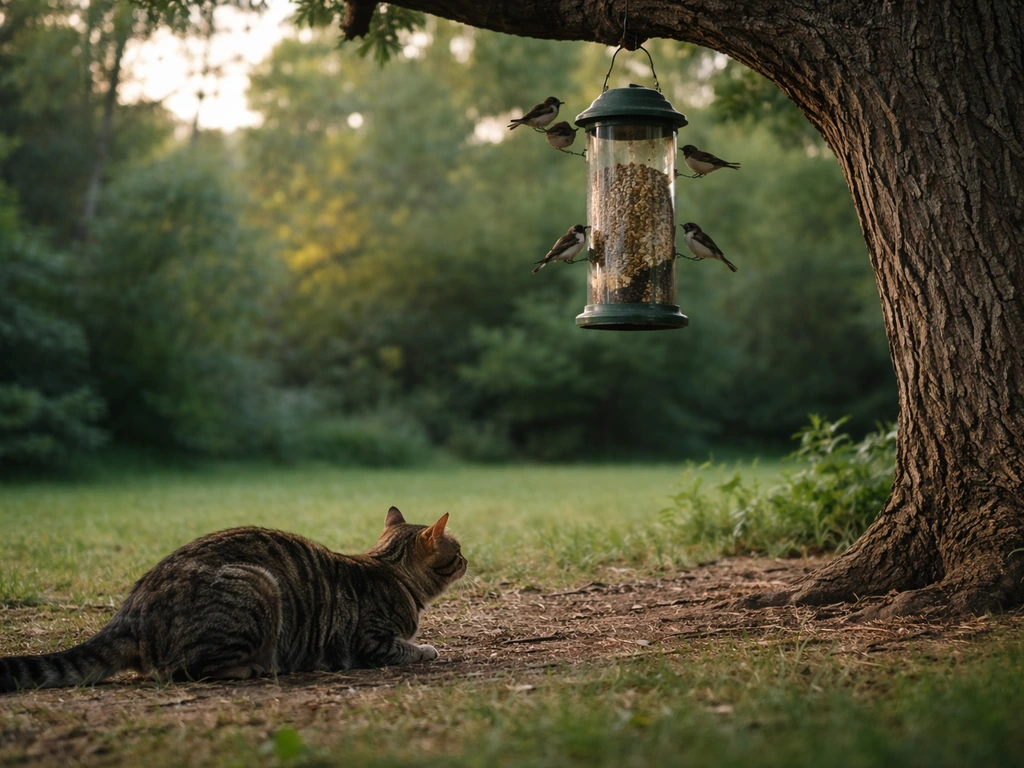
A feral or community cat near your feeder changes the risk profile significantly. Pet cats that occasionally wander outside are one thing. A feral cat that treats your feeder area as a reliable hunting ground is another. Research on supplemental feeding sites has found that predation pressure is greatest where supplemental food is most abundant, meaning your feeder is essentially creating a buffet that attracts birds and then sustains the cat that hunts them. One study of landowners in Michigan estimated that cats kill between 16,000 and 47,000 birds during a single breeding season across surveyed landscapes.
Feral cats are also more likely to eat parts of a bird they catch, including feathers and bones, than a well-fed pet cat might. Cats can also eat bird feathers, especially when they catch and consume parts of a bird. Whether cats eat bird feathers is a real question in this context, and the answer is yes, often incidentally during consumption. Feathers are not digestible and can cause GI irritation or, in rare cases, compaction. Bird bones are another concern, as small hollow bones can splinter and pose an injury risk.
Wildlife rehabilitation data reinforces how significant this problem is. Studies using records from rehabilitation centers found that cat-related causes accounted for roughly 12% of bird admissions at multiple facilities, with urban areas showing higher rates of cat-related intake. If you are running a feeder in a suburban or urban yard with known feral cat activity, you are operating in exactly the landscape where this impact is highest.
Health and safety risks from feeder food: for cats and for birds
This is where the "can cats eat bird food" question gets more serious. The risk is not just "bird seed is not cat food." The real concern is what bird seed can become when it sits in a feeder too long, gets wet, or is stored poorly.
Mold and aflatoxin
Mold is the top concern with feeder seed. Texas Parks and Wildlife notes that humid conditions and seed left in feeders can lead to mold growth, and that certain molds produce aflatoxins, which are highly toxic, especially to songbirds. Oklahoma State University Extension advises disposing of any grain that shows mold or insect activity immediately, because the risk of aflatoxin production is too high to ignore. If your cat noses around spilled seed that has been sitting on wet ground for a few days, moldy seed is a real ingestion hazard. Aflatoxin is toxic to mammals too, not just birds.
Salmonella
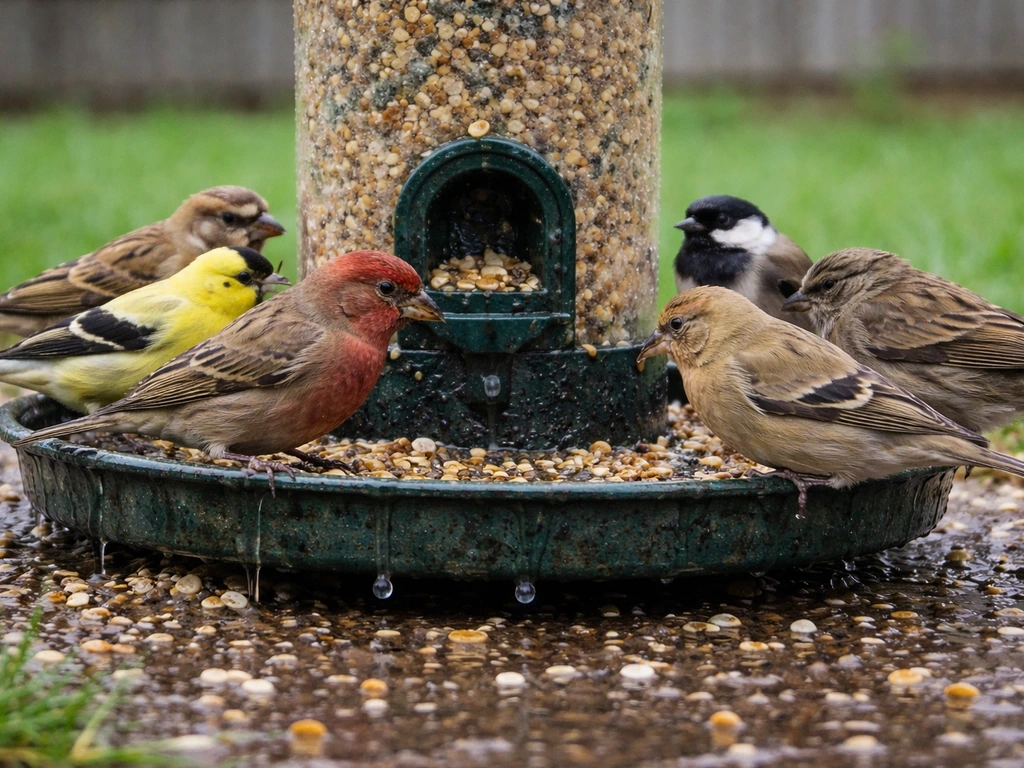
Salmonella spreads readily when birds congregate at feeders, particularly in wet or unsanitary conditions. A cat that hunts infected birds or sniffs around contaminated ground under a feeder can be exposed. Getting sick from eating a bird is a real risk for cats, and Salmonella is one of the main culprits. The SPCA BC advises blank" rel="noopener noreferrer">removing feeders entirely and discarding remaining seed during known disease outbreaks among local bird populations.
Avian influenza (H5N1)
This one matters right now. The CDC has issued guidance specifically noting that vets should take precautions with cats suspected of H5N1 exposure, and Cornell University's College of Veterinary Medicine advises washing hands and changing clothing after contact with wild birds or bird feeders. The AAHA recommends disinfecting shoes if you feed birds or walk near bird-gathering sites. If your cat is catching wild birds or scavenging near a feeder where sick birds have been present, their H5N1 exposure risk is real. Cats can contract avian influenza, and the disease can be serious. The CDC notes that some cats infected with avian influenza viruses like H5N1 can become severely ill and die, so handwashing after cat contact or cleaning activities is an important precaution About Cat Flu.
Cats can also bring that exposure risk indoors. This is not a reason to panic, but it is a reason to keep cats away from feeders and to wash your hands after handling anything related to your feeder setup.
How to keep cats away from your feeders
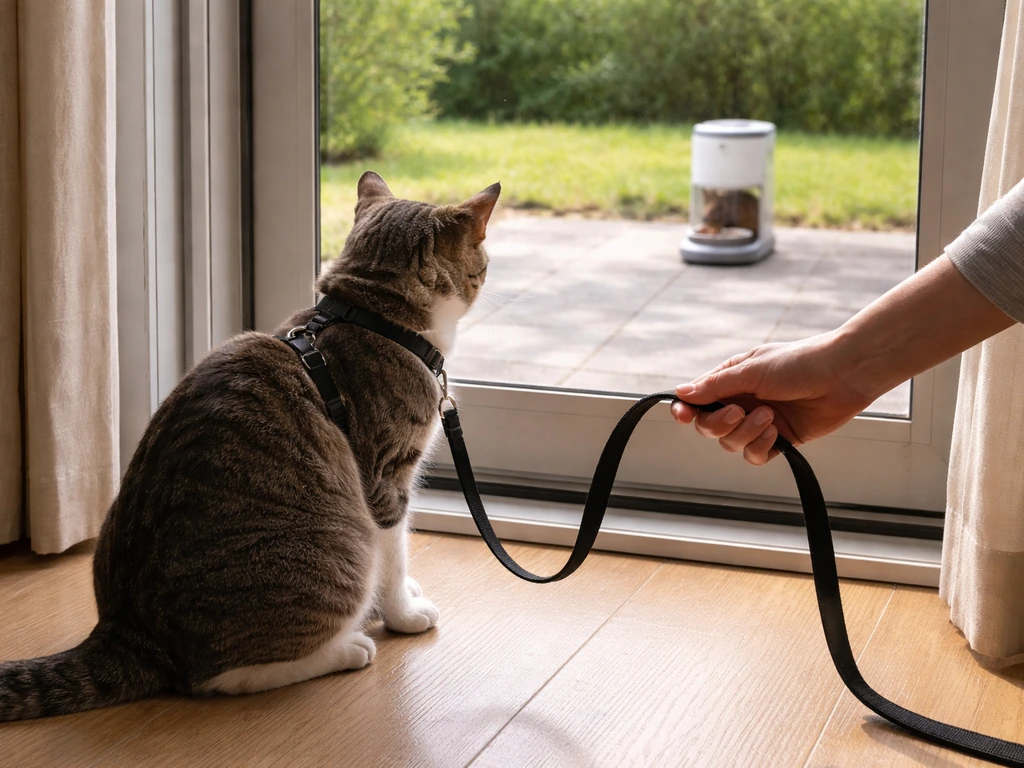
The most effective single intervention is keeping your cat indoors or supervising outdoor time. There is no placement trick, deterrent device, or barrier that works as reliably as simply not letting the cat roam unsupervised. But for households with feral cat activity or neighbors' cats, you need physical and environmental solutions too.
Feeder placement
The Humane Society recommends positioning feeders at least 12 feet away from grass, shrubs, or any vegetation that can serve as cat cover, and using a metal cone predator guard on pole-mounted feeders. The University of Nebraska-Lincoln Extension guidance suggests keeping feeders at least 10 feet away from shrubs, brush piles, and low-hanging branches that cats can use as ambush cover. Think like a bird: they need enough open space around the feeder to spot a predator approaching. Cats are ambush hunters, so removing cover removes the cat's tactical advantage.
Cat collar deterrents
For owned cats that go outside, brightly colored collar covers have genuine evidence behind them. A peer-reviewed study in the Journal of Fish and Wildlife Management tested the Birdsbesafe collar cover and found it reduced bird mortality substantially. A 2022 Frontiers study also evaluated colorful collar covers alongside bells and reported meaningful reductions in wildlife predation by domestic cats. Bells alone are better than nothing, but the bright collar cover appears more effective for birds specifically, likely because birds rely heavily on visual cues. Whether it is safe for cats to interact with bird feathers during play is a separate question, but minimizing the contact through deterrents like these is a practical first step. For a quick adjacent check on safety, see can cats play with bird feathers, since feather contact is part of the same concern.
Quick deterrent checklist
- Keep your cat indoors or supervise all outdoor time near feeders
- Mount feeders on poles at least 12 feet from shrubs, fences, or other cover
- Add a metal cone predator guard to pole-mounted feeders
- Clear ground-level debris and brush within 10 feet of the feeder
- Use a brightly colored cat collar cover if your cat does go outside
- Add a bell to the collar as a secondary deterrent
- Remove or reduce ground-feeding stations, which are highest-risk for cat predation
What to do if your cat ate bird seed or bird food
First, do not wait and see if the seed was visibly moldy, wet, or from a feeder that has not been cleaned in weeks. Those are the scenarios with real contamination risk. If the seed was fresh and dry and your cat ate a small amount, monitor for vomiting, diarrhea, or lethargy for the next 12 to 24 hours and call your vet if anything develops.
If you are not sure what condition the seed was in, or if your cat ate a significant quantity, call your vet or a poison control line immediately rather than waiting for symptoms. The Pet Poison Helpline operates 24/7 with veterinary toxicology staff who can help determine whether the situation requires emergency care or observation at home. The ASPCA advises that if your pet shows any life-threatening signs such as seizures, difficulty breathing, collapse, or unresponsiveness, go to emergency care immediately. Even for milder or uncertain situations, calling rather than waiting is always the right move.
The Red Cross lists key poisoning signs to watch for: vomiting or diarrhea, abnormal mental state, drooling or foaming at the mouth, seizures, and collapse. If you see any of these after your cat was near the feeder, treat it as an emergency.
Steps to take right now
- Remove your cat from the area and check what they may have eaten
- If the seed or food was moldy, wet, or from a dirty feeder, call your vet immediately
- If the seed was fresh and the amount was small, monitor closely for 12 to 24 hours
- Call Pet Poison Helpline (24/7) or your vet if you have any doubt about what was ingested
- Check whether your cat has also been hunting birds near the feeder, given the added Salmonella and H5N1 exposure risk
- Go to emergency care without waiting if your cat shows seizures, collapse, difficulty breathing, or unresponsiveness
A related concern worth noting: if your cat has been eating bird eggs from nests near your property, that adds another layer of risk, including exposure to bacteria and potential Salmonella. Cats eating bird eggs is more common than most people realize, especially near ground-nesting sites.
Feeder hygiene and seed storage: the practical side
Keeping your feeder clean is not just polite to birds. It directly reduces the contamination risk to any animal, including cats and wildlife, that comes into contact with the area. The same moldy seed that kills a finch is a hazard to a cat that sniffs it off the ground.
How often to clean
Audubon recommends cleaning feeders roughly every two weeks. Project FeederWatch (Cornell Lab) says every two weeks as a baseline, but more often during heavy use, warm weather, or damp conditions. California Academy of Sciences is direct about it: old wet seed grows deadly mold, and it notes that Salmonella and mold risks are both managed by cleaning and replacing seed regularly. If you see sick birds at your feeder, remove the feeder and keep it down for at least one to two weeks before restarting with completely fresh seed.
Seed storage rules
- Store seed in a cool, dry, airtight container, never in the original bag once opened
- Do not buy more seed than you can use in two to four weeks
- Inspect seed before filling the feeder: discard anything that smells musty, looks clumped, or shows visible mold
- Dispose of any seed with visible insects or webbing immediately
- Sweep up spilled seed beneath feeders regularly to prevent mold buildup on the ground
- Never refill a dirty feeder: empty and clean before adding fresh seed
A comparison of the main feeder hygiene risks
| Risk | How It Develops | Who It Affects | How to Prevent It |
|---|---|---|---|
| Aflatoxin (mold toxin) | Wet or humid seed left in feeder or on ground | Birds, cats, wildlife | Clean feeder regularly; discard moldy seed immediately |
| Salmonella | Bird droppings accumulate; birds congregate | Birds, cats (via hunting), humans | Clean every 2 weeks; remove feeder during outbreaks |
| H5N1 (avian influenza) | Contact with infected wild birds or contaminated feeder area | Cats, humans | Wash hands after feeder contact; keep cats away from feeders |
| GI obstruction | Cat ingests large seed fragments or shells | Cats | Keep cats away from spilled seed; monitor cat behavior near feeder |
Good feeder hygiene and smart storage protect everyone: the birds you are trying to feed, the cats that might wander through, and you. It is one of the most effective things you can do as a backyard birder, and it takes less than 15 minutes every couple of weeks.
FAQ
My cat licked a few grains under the bird feeder. Should I worry?
If your cat swallowed a few spilled grains from a dry feeder, the risk is often limited to mild stomach upset. The bigger concern is condition (wet, moldy, or stored improperly), and whether the cat got into large amounts of whole seeds, suet, or mealworms. If you are unsure, it is safer to call a vet or poison helpline for guidance rather than waiting for symptoms.
What symptoms mean bird-seed ingestion might be an emergency for my cat?
Bird seed stuck in the mouth or stuck hulls in the throat can cause choking or irritation, but the more common issue from “seed ingestion” is gastrointestinal irritation and, rarely, obstruction if a cat swallows large pieces. Watch closely for repeated retching, lack of appetite, distended abdomen, or severe lethargy, and seek urgent care if these show up.
Does it matter if my cat only sniffed the feeder area, not the actual birds, for avian flu risk?
For H5N1 risk, the key is exposure, not whether your cat ate the bird. If your cat has been hunting or scavenging wild birds, or you have birds or feeder material around where your cat roams, use gloves if you handle carcasses, wash hands and clothing after cleaning up, and keep the cat away from feeders. Then contact your vet promptly if you see respiratory symptoms, fever-like behavior, or weakness.
If bird seed is “not meant for cats,” is moldy seed the main problem, or are there other risks too?
Yes. Even when seeds are not toxic in small amounts, moldy seed can contain aflatoxins that harm mammals too. Also, bird feeders can accumulate contaminated droppings and bacteria on surfaces and ground. The practical decision rule is condition-based, if it is damp, clumped, or smells musty, treat it as a hazard.
What are common mistakes people make after cats interact with feeder seed?
A major mistake is assuming “no visible mold, so it is safe,” because contamination can come from wet ground under the feeder, condensation, or seed left in place during humid stretches. Another common issue is using the same area where seeds spill, so the safest approach is to clean up seed debris and replace it with fresh dry seed.
How should I store bird seed to prevent my cat from getting into it or getting sick from it?
Store-bucket setup matters. Keep cat access away from storage containers, and choose lids that cannot be punctured. Also, avoid leaving seed in open trays where a cat can reach it overnight, because a few hours of moisture can create conditions for mold and bacterial growth.
Can feeding cats regularly at home reduce the chances of them hunting birds?
Feeding birds and feeding cats can overlap in a confusing way. Bird feeders can attract cat hunting and also expose cats to sick birds, while cat food can attract predators and scavengers. If you notice cats lingering near the bird setup, prioritize moving the feeder, removing cover, and keeping the cat indoors or supervised rather than changing brands.
Do collar covers or bells fully prevent cats from catching birds?
Most collars and deterrents reduce hunting, they do not eliminate it, especially at night or in dense cover. If your yard has feral cat activity, the most reliable layer is physical separation (cat-proofing or supervision) plus feeder placement away from ambush spots. Think of deterrents as “risk reduction,” not a guarantee.
What should I do immediately after my cat brings home a wild bird or scavenges near the feeder?
If your cat is catching wild birds, you can reduce exposure by preventing contact with any carcasses and avoiding feeder cleanup with bare hands. Wear gloves when handling feeder waste or dead birds, bag it promptly, and wash hands and clothing afterward. Keep the cat away until the area is fully cleaned and dry.
Is egg-eating risk higher than seed ingestion, and what should I do if my cat eats eggs near my property?
Yes, especially if your cat is near ground nests. Egg-eating increases bacterial exposure and may include parasites, and it can also train your cat to keep checking nest areas. The best next step is to remove access to nesting zones and keep cats indoors during nesting season.
How do I reduce bird and cat interaction risk when there are neighborhood feral cats too?
If you have a mix of pet and feral cats in the area, you may need a different plan than “keep my cat inside.” Use feeder placement rules that remove ambush cover, use pole guards, and keep seed from accumulating on the ground. Track which times cats appear, then time your feeder activity and cleanup to minimize exposure windows.
Next Article
What Bird of Prey Eats Pigeons: Common Raptors & ID Tips
Which raptors eat pigeons: peregrine, Cooper’s, goshawk, merlin, red-tailed, kestrels, owls; ID tips, risks and how to保护