Eating a small amount of plain bird seed, like a handful of shelled sunflower hearts or hulled peanuts, is unlikely to hurt a healthy adult. The real risks come from contamination: mold toxins (especially aflatoxin), Salmonella bacteria, pesticide residues on treated seed, and physical hazards like hard shells or allergens. For children, pregnant people, pets, and anyone immunocompromised, even a small exposure deserves closer attention. This article walks through exactly what is in bird food, which parts are safer and which are not, and what to do the moment someone or a pet has eaten it.
What Happens If You Eat Bird Food: Risks, First Aid & Tips
Maya Bennett
17 Jul 2026
What's actually in bird food
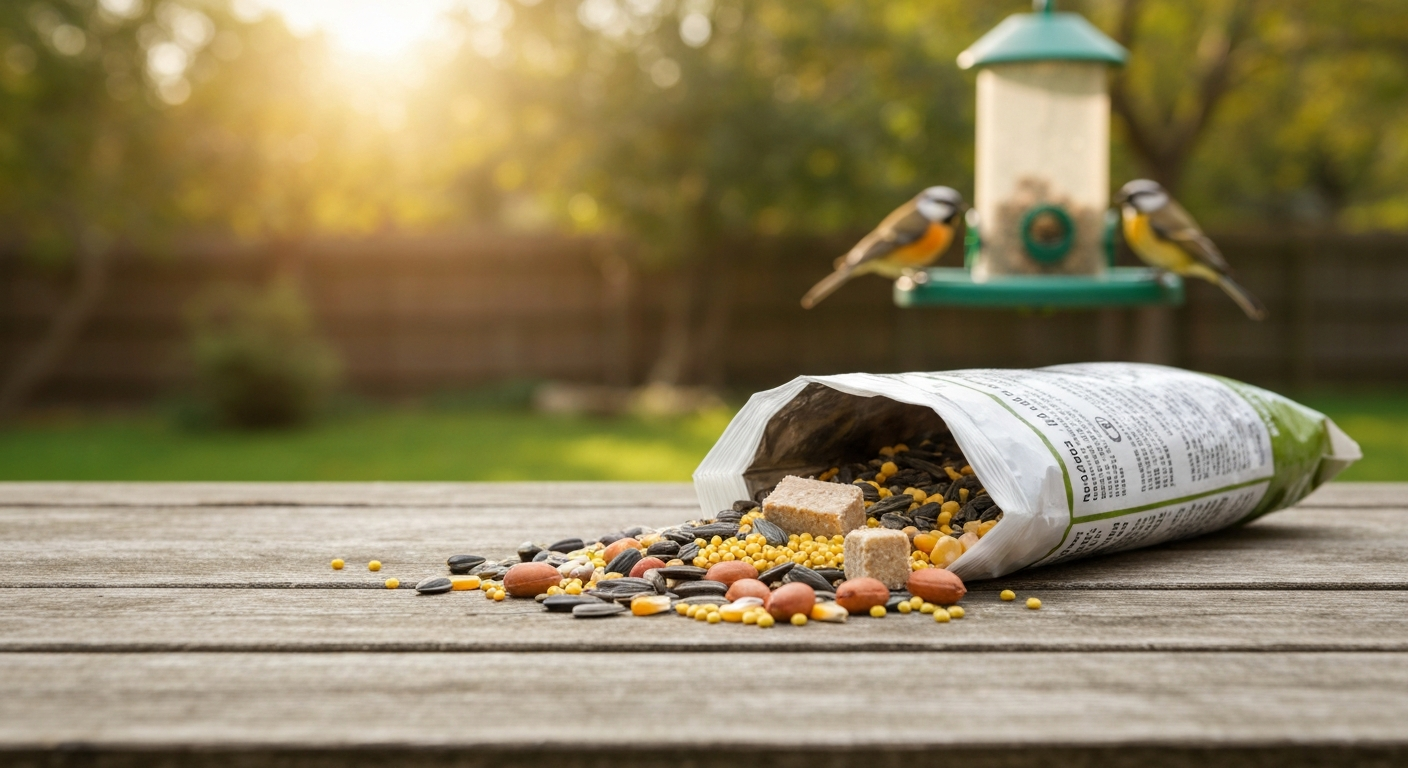
Most retail wild bird seed mixes sold in the U.S. combine several commodity seeds and grains. Knowing the ingredients matters because each one carries a different risk profile for humans and pets. Suet cakes and specialty products add rendered fat, sugars, and sometimes additives that change the picture further.
| Product type | Common ingredients | Notes |
|---|---|---|
| Standard seed mix | Black-oil sunflower (in-shell and hearts), striped sunflower, white/proso millet, red millet, cracked corn, milo/sorghum | Corn and peanuts are highest-risk for aflatoxin |
| Premium or no-waste mix | Hulled sunflower hearts, hulled peanuts, nyjer (thistle), safflower | Lower shell/choking risk; still needs proper storage |
| Suet cakes | Rendered beef or vegetable fat, corn, peanut meal, dried insects, berries, added preservatives | Fat can go rancid; additives vary by brand |
| Nectar (hummingbird) | White granulated sugar dissolved in water (4:1 water:sugar) | Homemade or commercial; no nutritional value for humans |
| Mealworms | Dried or live Tenebrio molitor larvae | High protein; cross-contamination risk if stored with seed |
| Treated/dressed seed | Any seed coated with fungicide, insecticide, or bird repellent dye | Methyl anthranilate, thiram, captan, or similar; NOT safe to eat |
Nyjer (often labeled thistle) is a tiny, oil-rich seed imported primarily from Africa and India. It is sterilized before import under USDA/APHIS rules to prevent germination of invasive plants, so the seed itself arrives heat-treated. That treatment does not make it safer to eat from a contamination standpoint, but it does mean the seed is not viable for sprouting.
Safer vs. higher-risk ingredients for humans
Not every ingredient in a bird feeder is equally risky. The split comes down to processing level, storage conditions, and whether the seed has been chemically treated. The table below gives a quick reference, and I will explain the reasons behind it in the sections that follow.
| Ingredient | Risk level for humans | Main concern |
|---|---|---|
| Shelled sunflower hearts (hulled) | Lower | Same botanical seed as human food; risk is storage mold, not the seed itself |
| Hulled/blanched peanuts | Lower-moderate | Edible, but peanuts are a top aflatoxin-risk crop; quality controls differ from human-food grade |
| White proso millet | Lower | Mild flavor, edible grain; low oil means less mold risk if dry |
| Safflower seed | Lower-moderate | Bitter taste; edible but not commonly eaten; no specific toxin risk |
| Cracked corn | Moderate-high | Corn is a leading aflatoxin substrate; cracked surfaces accelerate mold penetration |
| Milo/sorghum | Moderate | Edible grain; often included as filler; prone to mold if damp |
| Whole peanuts in shell | Moderate-high | Shell traps moisture; harder to assess internal mold; aflatoxin risk higher |
| Nyjer/thistle seed | Moderate | Tiny, hard to chew; no specific toxin risk but quality control varies |
| Suet with additives | High | Rancid fat, preservatives, artificial flavors; not formulated for human consumption |
| Treated/medicated or dyed seed | High | Chemical coatings including fungicides (thiram, captan) and bird repellents; do not eat |
The question of whether humans can safely eat bird food in a general sense gets a longer treatment in a related piece on this site, but the short version here is: plain, dry, untreated seeds from a clean, sealed bag are in a different category from mixed, corn-heavy, or moist product that has been sitting in an outdoor feeder. For a fuller discussion, see the related article titled Can you eat bird for more on when bird food might be safe to eat and when it is not.
Biological risks: mold toxins and bacteria
Aflatoxin and other mycotoxins
Aflatoxin is produced by the molds Aspergillus flavus and Aspergillus parasiticus. It is one of the most potent naturally occurring carcinogens known, and peanuts and corn, two staple bird-feed ingredients, are the commodities most frequently contaminated. A published survey of retail wild bird seed purchased in Texas found aflatoxin levels ranging from undetectable all the way up to 2,780 micrograms per kilogram (µg/kg). Seventeen percent of samples exceeded 100 µg/kg, and 83% of those contaminated samples contained corn. For context, the FDA action level for human-food peanuts is 20 µg/kg. Bird seed is not subject to those human-food action levels, so contaminated product can legally reach the shelf.
UK research also detected aflatoxin and ochratoxin A in commercial wild bird foods at point of sale, including in peanut granules and sunflower hearts. Peer‑reviewed UK analyses detected aflatoxin and ochratoxin A residues in some commercial wild bird supplementary foods at point‑of‑sale, documenting contamination of peanuts, peanut granules, and sunflower hearts Peer‑reviewed UK analyses detected aflatoxin and ochratoxin A residues in some commercial wild bird supplementary foods at point‑of‑sale, documenting contamination of peanuts, peanut granules, and sunflower hearts.. Ochratoxin A is a kidney toxin. Neither mold nor mycotoxin is detectable by smell, color, or taste at low to moderate levels, which is why visual inspection alone is not a reliable safety check. If a bag of bird seed smells musty, looks clumped or discolored, or has been exposed to moisture, treat it as contaminated and do not eat it.
For dogs, aflatoxin poisoning is particularly dangerous. FDA documents multiple voluntary recalls, including the high-profile 2020-2021 Sportmix and affiliated brand recalls, where dogs suffered liver failure and death from aflatoxin-contaminated grain ingredients. See the FDA Alert: Certain Lots of Pet Food from Multiple Brands Recalled for Aflatoxin for details on multi‑brand recalls and FDA postings when unsafe aflatoxin levels are detected. There is no antidote; treatment is supportive. If your dog ate bird seed and starts showing lethargy, vomiting, jaundice (yellow tint to eyes or gums), or abnormal bleeding, contact a veterinarian immediately and bring the seed package.
Salmonella and other bacterial contamination
A well-documented 2020-2021 multistate Salmonella Typhimurium outbreak in people in the United States was directly linked to wild songbirds and backyard feeders. Investigators found that many patients had purchased bird seed recently and had feeders on their property. The bacteria do not come from the seed itself but from birds visiting feeders: infected birds contaminate seed, feeder surfaces, and the ground below with feces. Platform and tray feeders, where seed and droppings mix directly, carry a higher contamination load than tube feeders.
Wild birds also carry Campylobacter and pathogenic E. coli. Spillover to humans is not guaranteed, but it is entirely real, as that multistate outbreak proved. The CDC's guidance from the investigation was direct: do not handle bird seed or feeders with bare hands, wash hands immediately after contact, and clean feeders regularly. If you ate bird seed directly from a feeder or scoop that had bird contact, Salmonella exposure is a genuine concern, not a theoretical one.
Zoonotic concerns and a note on eggs
Beyond Salmonella, wild birds at feeders can carry other avian pathogens. The risk of transmission to humans from casual feeder contact or from eating contaminated seed is generally low for healthy adults, but not zero. For context related to bird-source food safety more broadly, a separate resource on this site covers avian disease questions including those around eating eggs and avian pathogens in more depth. The key practical point here: do not eat seed that has been in an active feeder, and never eat seed that has had visible bird contact.
Chemical and contamination risks
Treated and medicated seed
Some agricultural seed intended for planting, not feeding, is coated with fungicide or insecticide dressings. Fungicides like thiram and captan are commonly used. These products are often dyed bright pink, red, or green specifically to signal that they are not food. Eating treated seed is a genuine poisoning risk. Thiram is toxic to humans and animals; ingestion can cause nausea, vomiting, and at higher doses, liver and central nervous system effects. If you or a child ate seed that was brightly and unusually colored, treat that as a chemical exposure and call Poison Control immediately.
Pesticide residues and rodenticide contamination
Commercial bird seed is an agricultural commodity and may carry pesticide residues from field production. Bird seed sold for wildlife use does not go through the same residue testing required for human food. Rodenticides are a separate concern: if rodents are attracted to a storage area and rodenticide bait is used nearby, cross-contamination of stored seed is possible, particularly if bait is placed in the same bins or shelving. Never store bird seed near rodenticide products, and discard any seed that has had rodent activity in or near it.
Storage cross-contamination
Storing bird seed in the same containers previously used for pesticides, fertilizer, or other chemicals is a contamination route that is easy to overlook. Use dedicated, food-grade or clearly labeled bins for seed storage. Keep seed dry, cool, and sealed; moisture above roughly 14% in stored grain is a well-established trigger for mold growth and mycotoxin production. In practice, this means: airtight container, cool location (garage or shed in temperate weather, not a hot car trunk), and turning over stock within 4-6 weeks.
Choking, allergies, and physical hazards
Hard seed shells, such as those on in-shell sunflower or whole peanuts, are a choking hazard for young children and small pets. Sunflower shell fragments can be sharp enough to scratch the throat. Hulled products remove this risk. For cats and small dogs, even hulled sunflower seeds or peanut pieces can be a choking or intestinal obstruction risk if swallowed in quantity.
Peanut allergy is the most obvious concern. Bird seed mixes almost universally contain peanuts or are processed in facilities that handle peanuts. Even products that do not list peanuts explicitly may be cross-contaminated. Tree nut allergies can extend to cross-reactive responses from some seeds. If you have a known peanut or tree nut allergy, treat any bird seed mix as a potential allergen trigger. This also applies to pets: dogs can develop peanut sensitivity, though true IgE-mediated peanut allergy in dogs is less well characterized than in humans.
- In-shell sunflower and peanuts: choking and shell-fragment risk, especially for children under 5 and small pets
- Whole peanuts: peanut allergy risk; must be assumed present in virtually all mixed seed products
- Nyjer/thistle: very small, hard seeds that can be inhaled or aspirated by very young children
- Suet cakes: large chunks can be a choking hazard; rancid fat can cause vomiting in pets
- Mealworms: some people have cross-reactive allergies to shellfish/crustaceans because of shared tropomyosin protein
Immediate first aid if someone ate bird food
What you do in the next few minutes depends on what was eaten, how much, and who ate it. Run through these steps in order.
- Stop the exposure: remove any remaining seed from reach, especially for children or pets.
- Identify what was eaten: find the bag, read the label, note whether the seed was plain/untreated or treated (bright dye, unusual color, warning label). Photograph the bag.
- Estimate the amount: a pinch or a taste from a bag is different from a child or dog eating a significant portion. Note your best estimate in grams or tablespoons.
- Check for immediate symptoms: look for difficulty swallowing or breathing (choking), rash or hives (allergic reaction), or vomiting that started within minutes (common with suet or rancid seed).
- For choking: use back blows and abdominal thrusts (Heimlich) for a conscious adult or older child. For an infant, use five back blows and five chest thrusts. Call 911 if the airway is not cleared.
- For suspected allergic reaction (hives, swelling of lips/throat, difficulty breathing): use an epinephrine auto-injector if available and call 911 immediately. Do not wait to see if it resolves.
- For chemical exposure (treated/dyed seed or suspected rodenticide): call Poison Control at 1-800-222-1222 (U.S.) immediately. Do not induce vomiting unless specifically directed to do so.
- For plain seed with no symptoms: rinse the mouth with water. A small unintentional taste of plain, untreated seed is unlikely to cause acute harm in a healthy adult; monitor for the next 24-48 hours.
- For pets: call your veterinarian or the ASPCA Animal Poison Control Center (888-426-4435) if the amount was more than trivial, if the seed was treated, or if symptoms appear.
Symptoms that change the urgency level from monitor at home to call for help include: any sign of throat or airway swelling, skin hives spreading rapidly, severe vomiting or diarrhea starting within 1-6 hours (possible bacterial contamination), confusion or extreme lethargy, or jaundice (yellow eyes/skin) appearing over 24-72 hours (possible aflatoxin liver effect). Aflatoxin symptoms are delayed and cumulative, not immediate, so a single small exposure is unlikely to cause acute liver failure, but repeated exposure from an unknowingly contaminated bag is more concerning.
When to call Poison Control or go to the ER
Not every contact with bird food needs medical attention, but some situations absolutely do. Here is the breakdown.
| Situation | Action | Contact |
|---|---|---|
| Treated/dyed seed ingested (any amount) | Call immediately, do not wait for symptoms | Poison Control: 1-800-222-1222 |
| Child under 5 ate more than a taste of any bird seed | Call to assess; provide bag details | Poison Control: 1-800-222-1222 |
| Signs of anaphylaxis (throat swelling, breathing difficulty, rapid hives) | Use epi-pen if available, call emergency services | 911 |
| Choking, object not cleared | Begin Heimlich/back blows, call emergency services | 911 |
| Pregnant person ate bird seed from an active feeder | Salmonella risk; consult healthcare provider same day | OB provider or urgent care |
| Immunocompromised person ate seed from a feeder | Bacterial exposure; consult provider promptly | Primary care or urgent care |
| Symptoms of Salmonella (fever, severe diarrhea, cramping) 6-72 hours after exposure | Seek medical evaluation; mention bird seed exposure | Urgent care or ER if severe dehydration |
| Dog or cat ate large amount of seed or suet | Call vet or animal poison control | ASPCA APCC: 888-426-4435 |
| Pet showing lethargy, vomiting, jaundice after eating bird seed | Emergency vet; possible aflatoxin | Emergency veterinary clinic |
When you call Poison Control or arrive at an ER, have the following ready: the product name and brand, the full ingredient list from the label, whether the seed appeared treated or dyed, an estimate of the amount consumed, the time of consumption, the age and weight of the person or pet, and any symptoms that have started. Having a photo of the bag on your phone saves time and can meaningfully change the guidance you receive.
Vulnerable groups, specifically children under 5, pregnant people, the elderly, and anyone on immunosuppressant medication, should be treated more cautiously across the board. For this group, a Poison Control call is appropriate even for exposures that might seem minor in a healthy adult.
Risks to pets and wildlife from bird food
Dogs are the most commonly affected pet because they forage under feeders and will eat seed, suet, and droppings together. The combination of aflatoxin-contaminated corn or peanut ingredients and bacterial load from feces makes ground-level feeder debris genuinely hazardous for dogs. Cats face a different risk: they are attracted to feeders as hunting grounds, and if they eat a sick bird directly, Salmonella transmission is documented. Cats can also choke on in-shell seeds, though they are less likely to eat large quantities of seed than dogs are.
For wild animals, spoiled or moldy seed put out in feeders can harm the very birds you are trying to help. Squirrels and chipmunks eating aflatoxin-contaminated corn from feeders have shown population-level health effects in some documented cases. The practical rule: if you would not eat it yourself (accounting for the contamination risks described above), do not put it out for wildlife.
Safe storage, feeder hygiene, and prevention
Most of the risks in this article are preventable with basic storage and hygiene. Here is what I do and recommend.
- Store seed in a sealed, airtight container in a cool, dry location; avoid hot sheds in summer or anywhere seed can get damp
- Use stock within 4-6 weeks of opening; do not top off old seed with new seed without emptying and cleaning the container first
- Clean tube and hopper feeders at least every 2 weeks with hot soapy water; soak in a 1:10 bleach solution (1 part bleach to 10 parts water) for 10-15 minutes, then rinse thoroughly and dry completely before refilling
- Platform and tray feeders accumulate feces directly on seed; clean these every 3-5 days or more often during warm weather
- Rake or sweep the area under feeders regularly to remove seed debris, hulls, and droppings, which are the primary vector for Salmonella
- Never handle feeders, seed, or dead birds with bare hands; use gloves and wash hands with soap and water immediately afterward
- Discard any seed that smells musty, looks clumped, shows mold, has been wet, or has had rodent activity nearby
- Keep dogs on leash or supervised near feeders; block access to the ground beneath feeders where contaminated debris accumulates
- If you observe sick or dead birds near your feeder during warm months, take the feeder down for at least 2 weeks, per CDC outbreak guidance
Myth-busting: rice, bread, spiders, and other common questions
Will uncooked rice hurt birds (or you)?
The idea that uncooked rice expands in birds' stomachs and kills them is a persistent myth. It does not. Birds eat whole grain rice in the wild regularly. Uncooked rice fed to birds is not harmful to them, and a few grains of plain uncooked rice ingested by a human are equally harmless. The myth almost certainly started as well-intentioned but unsupported wedding advice.
What about bread?
Bread is not in bird seed mixes, but people frequently ask whether they can supplement feeders with it. For birds, bread provides minimal nutrition and fills space in the crop that should hold seeds or insects; it contributes to a condition called angel wing in waterfowl. For humans, there is no risk from eating bread you put out for birds, but there is also no reason to do so.
Are there spiders or insects in bird seed bags?
Grain mites and various stored-product insects, including weevils and Indian meal moth larvae, do colonize poorly stored bird seed. Finding webbing, tiny moving specks, or small larvae in a bag of seed is a sign of infestation. Eating heavily infested seed is unpleasant and inadvisable, but a grain mite or weevil larva is not acutely toxic to humans. The real concern is that infested seed has typically been stored in conditions (warm, damp) that also promote mold growth. Discard it.
Can you get nutrients from eating bird food the way birds do?
Sunflower hearts and hulled peanuts do contain meaningful amounts of protein, fat, and micronutrients. In a survival scenario, clean, dry, untreated sunflower hearts or peanuts from a sealed bag would provide calories. But bird food is not formulated or quality-controlled for human nutritional use, mixes often include filler grains with little human nutritional value, and the contamination risks already covered mean this should not be a regular food source. The question of whether you could technically subsist on bird food is addressed more fully in the related piece on humans eating bird food, but the short answer is: there are much better options. For more detail, see the related article titled Can humans eat bird food which examines this question in depth.
Does eating eggs from backyard chickens pose avian disease risk?
This is a separate topic with its own nuances around Salmonella on eggshells, avian influenza in flock contexts, and safe egg handling, and it is covered in depth in a dedicated resource on this site. The brief answer relevant here: properly cooked eggs from healthy backyard chickens fed appropriate feed pose the same risks as commercially sourced eggs when handled correctly. The concern is handling, cross-contamination, and cooking temperature, not the eggs themselves.
Quick-reference checklist
- Plain, untreated seed (sunflower hearts, hulled peanuts) from a sealed, uncontaminated bag: low acute risk for healthy adults
- Corn-heavy or peanut-heavy mixes: moderate to high aflatoxin risk, especially if seed is old, moist, or smells off
- Treated or dyed seed: chemical poisoning risk, call Poison Control immediately regardless of amount
- Seed from an active feeder with bird contact: Salmonella and other bacterial risk, especially for vulnerable groups
- Any bird seed for a child under 5, pregnant person, or immunocompromised individual: call Poison Control to assess
- Pet (especially dog) ate significant amount of any bird seed or suet: call vet or ASPCA APCC (888-426-4435)
- Musty, clumped, or wet seed: discard, do not put out and do not eat
- After any feeder contact: wash hands with soap and water before eating, touching eyes, or handling food
FAQ
What happens if a person eats bird food right away?
Most often nothing serious will happen after a small accidental mouthful of dry, commercially sold bird seed (for example a few black‑oil sunflower seeds or hulled sunflower hearts). Short‑term effects can include mild gastrointestinal upset (nausea, vomiting, diarrhea, stomach cramping) especially if the mix is dusty, dirty, or spoiled. Immediate choking is possible with whole peanuts, corn kernels, or large whole seeds — be prepared to clear the airway following standard choking first aid if the person can’t breathe.
Are some bird‑feed ingredients safe for humans to eat?
Yes. Many botanical ingredients are the same species used in human foods (shelled sunflower seeds, hulled sunflower hearts, shelled/roasted peanuts, pumpkin seeds, safflower, millet, and nyjer are all edible botanically). However retail bird seed is not usually handled to human‑food grade safety standards, so 'edible' does not mean 'safe in all circumstances.'
Which bird‑feed items pose higher risk to people?
Higher risks come from: (1) spoiled/moist seed that may contain mold/mycotoxins (peanuts, corn, and grains are highest risk); (2) seed contaminated with Salmonella or other bacteria from bird droppings or storage; (3) chemically treated seeds (pesticide or seed‑treatment coatings) and dyed seed; and (4) whole hard pieces that are choking hazards (whole peanuts, corn, milo).
What are the specific biological hazards (microbes and toxins)?
Key biological risks: (a) Mycotoxins (aflatoxin, ochratoxin A) from Aspergillus and related molds — can damage the liver and, with heavy exposure, cause severe illness; (b) Bacterial contamination such as Salmonella and pathogenic E. coli — can cause gastroenteritis and sometimes more serious systemic disease; (c) Enteric organisms on feeders/birdseed that can transfer by hand contact — good hygiene reduces risk. Serious disease from a single small accidental bite is uncommon but possible with high‑level contamination or in people with weakened immunity.
What chemical hazards should I worry about?
Chemical risks include pesticide residues, seeds treated with systemic insecticide/fungicide coatings, and colored/dyed novelty mixes. Seed treatments are intended for agricultural use and can be toxic if ingested in sufficient amounts. Retail bird food is not always tested to human food standards, so avoid eating it intentionally and keep treated seed away from children and pets.
How do amounts and symptoms change the recommended response for people?
Small accidental tastes with no symptoms: rinse mouth, wash hands, monitor for 24–48 hours. Development of mild GI symptoms: hydrate, rest, and if symptoms persist >24–48 hours or worsen (fever, severe vomiting, bloody diarrhea, dehydration), contact your primary care provider or Poison Control (US: 1‑800‑222‑1222). If you know the seed was pesticide‑treated, or the person has neurologic symptoms, difficulty breathing, seizures, severe vomiting, or collapse — call emergency services or go to the ER immediately.