Yes, chipmunks can and do raid bird nests, but it happens far less often than most backyard birders assume. Their diet is mostly seeds, nuts, berries, insects, and mushrooms. Eggs and nestlings are opportunistic supplements, not a dietary staple. If you found a disturbed nest this morning, a chipmunk is possible but statistically less likely than a jay, crow, snake, cat, or raccoon. What you actually need is a way to figure out who did it, and a short list of things you can do today.
Do Chipmunks Raid Bird Nests? Signs, Proof, and Fixes

Maya Bennett
30 Jun 2026
What chipmunks actually eat (and where nests fit in)
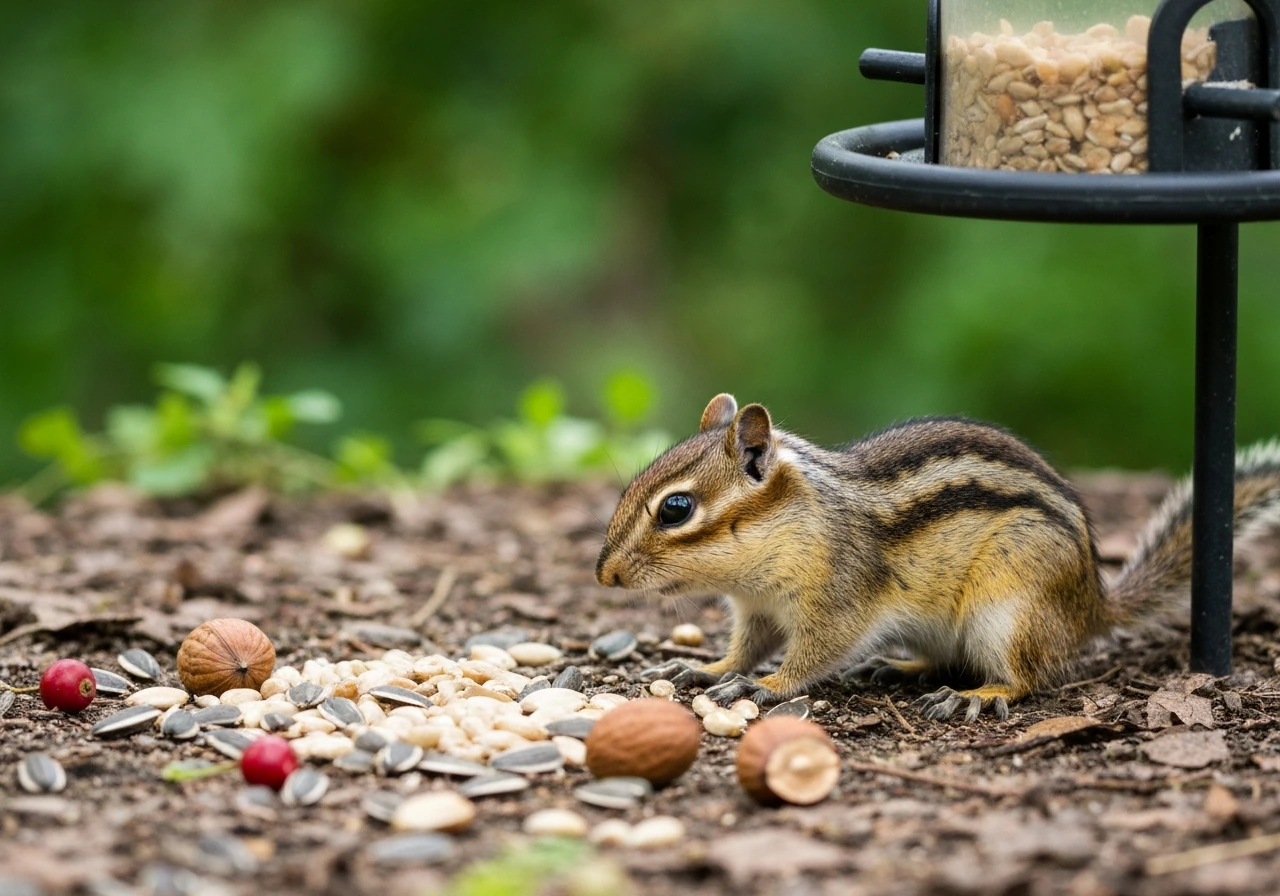
Eastern chipmunks are true omnivores, but plant foods dominate their diet by a wide margin. The Pennsylvania Game Commission's species profile lists nuts, seeds, berries, fruits, and mushrooms as their primary foods. Animal prey comes second: insects, earthworms, snails, salamanders, frogs, small snakes, and yes, young mice and birds. The North Carolina Wildlife Resources Commission similarly lists blank" rel="noopener noreferrer">bird eggs and nestlings as part of the eastern chipmunk's omnivorous repertoire. Do pigs eat bird eggs, too, or is that mostly something other animals handle? So the behavior is documented and real. It's just not what chipmunks spend most of their time doing.
Think of it this way: a chipmunk near your feeder is almost certainly there for spilled sunflower seeds or millet. Chipmunks are attracted to bird feeders where they gather spilled seed, foraging near homes when food is available blank" rel="noopener noreferrer">spilled sunflower seeds or millet. The Connecticut DEEP notes that chipmunks are reliably attracted to bird feeders where seed accumulates on the ground. That's the scenario you're most likely watching. A chipmunk that stumbles across a low nest on the ground or in a shrub during a foraging run might investigate, and if eggs or small nestlings are accessible, it may take them. But it's not hunting birds the way a snake or jay does.
When chipmunks actually target eggs or nestlings
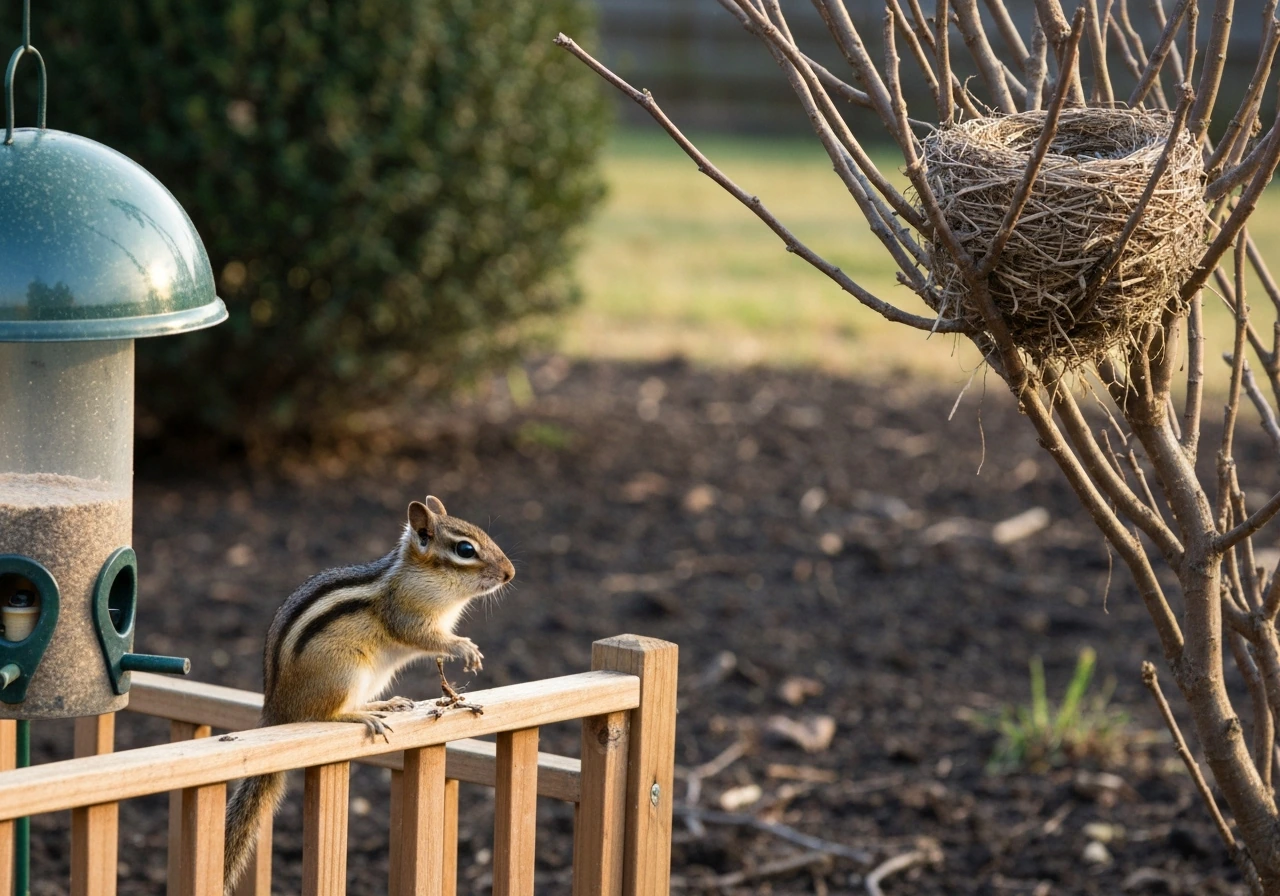
The situations where chipmunk predation becomes a real risk are fairly specific. Nests built at or near ground level are the most vulnerable. Think song sparrows, towhees, ovenbirds, or any cavity near a stone wall or log pile. A ground-nesting bird in an area with a dense chipmunk population is genuinely at risk. Nests in low shrubs under about three feet are also within reach, especially if chipmunks are moving through the area regularly to reach a nearby feeder.
Chipmunks are also more likely to go after nests in late spring and early summer when they're most active above ground, and when their pups are growing and caloric demand is higher. If you've had a cold, wet spring that reduced insect and seed availability, opportunistic nest raiding becomes more likely. Conversely, if your feeders are well-stocked, chipmunks usually have no reason to work harder for food. Well-fed chipmunks near abundant feeders are far less likely to bother with the risk of an active nest defended by parent birds.
High nests, cavity nests in trees above about five or six feet, and nests in open meadows away from chipmunk habitat are essentially off the chipmunk's menu. If your disturbed nest is a tree cavity or a box mounted on a pole, start looking elsewhere.
Is it actually a chipmunk? How to tell
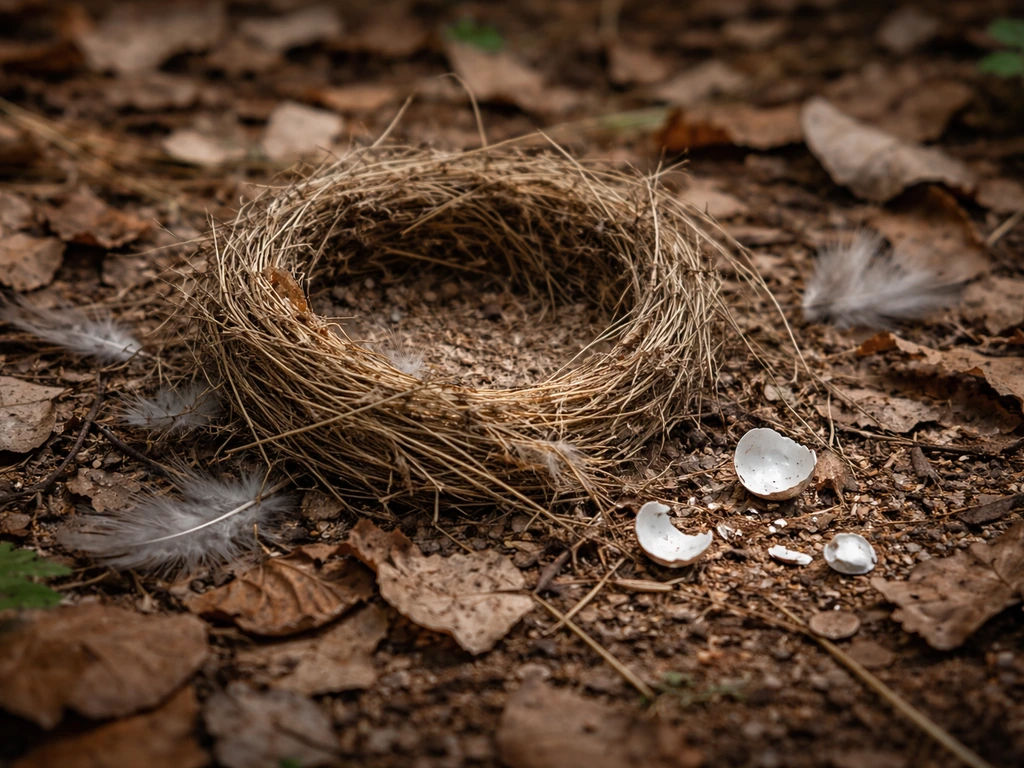
This is the part most articles skip, and it's the most useful thing I can give you. Chipmunks, squirrels, raccoons, cats, jays, crows, snakes, and opossums all raid nests, and they leave different evidence. Match the clues below to what you're actually seeing.
| Predator | Typical nest damage | Key clues |
|---|---|---|
| Chipmunk | Eggs missing or broken at the nest; nestlings gone; nest may be slightly disturbed but usually intact | Small tooth marks on eggshell fragments; daytime incident; near ground or low shrub; chipmunk tracks (tiny, four-toed front, five-toed rear) |
| Squirrel | Eggs removed or crushed; nestlings taken; nest often more heavily disrupted | Larger disturbance; may shred nest material; active during daylight; gray squirrel tracks larger than chipmunk |
| Raccoon | Nest completely torn apart; eggs and nestlings gone; nest pulled from location | Nocturnal; large five-fingered handlike tracks; nest debris scattered wide; often hits cavity boxes by reaching in |
| Cat (domestic or feral) | Nestlings taken whole; nest disturbed but not destroyed; feathers nearby | Paw prints with no claw marks; may leave scratches on tree bark; feathers and down scattered; can happen day or night |
| Blue jay or crow | Eggs cracked and contents eaten at nest; nestlings taken; clean breaks on eggshell | Daytime; may see the bird at the nest; bill-sized puncture marks or clean shell halves; loud alarm calls from parent birds |
| Snake | Eggs and nestlings gone with no debris; nest almost undisturbed | Swallowed whole, no shell fragments; slither track in soft soil or mulch; often targets low or cavity nests; silent event |
The clearest sign of chipmunk involvement is finding eggshell fragments with small gnaw marks near the nest, combined with a daytime disturbance of a low nest in a yard where chipmunks are visibly active. If the nest was cleaned out with no trace and no shell fragments, a snake is far more likely. If the nest box was ripped open or the nest was scattered over a wide area, think raccoon first.
What to do today if you have an active nest at risk
If you have reason to think a chipmunk (or any small mammal) is targeting an active nest, here's what you can actually do today without harming wildlife, violating regulations, or wasting time on methods that don't work.
- Move feeders at least 10 to 15 feet away from any known nest. Chipmunks follow food trails, and a feeder right next to a nest is an invitation to explore the whole area.
- Stop scatter feeding on the ground immediately. Tray feeders and ground feeding are the biggest chipmunk attractors. Switch to tube feeders with trays that catch seed and reduce spill.
- Clear ground-level cover within about three feet of the nest. Dense leaf litter, wood piles, and low shrubs give chipmunks approach cover. Removing it doesn't harm the birds but makes chipmunks more exposed and less confident.
- If the nest is in a nest box, add a stovepipe baffle to the pole. A smooth metal baffle about 18 inches in diameter, mounted below the box, stops chipmunks and squirrels cold. This is the single most effective mechanical fix for cavity nesters.
- For open cup nests in shrubs, a temporary physical barrier like a cone of wire mesh around the shrub base (leaving parent bird access from above) can reduce mammal access for the few weeks the nest is active.
- Check the nest only briefly and at intervals of several hours, not repeatedly. Frequent human visits can spook parents off the nest and actually increase risk.
Note that it is illegal in the US under the Migratory Bird Treaty Act to relocate or disturb most active wild bird nests. Do not move the nest. Focus your energy on modifying the environment around it.
Feeder management that reduces chipmunk pressure
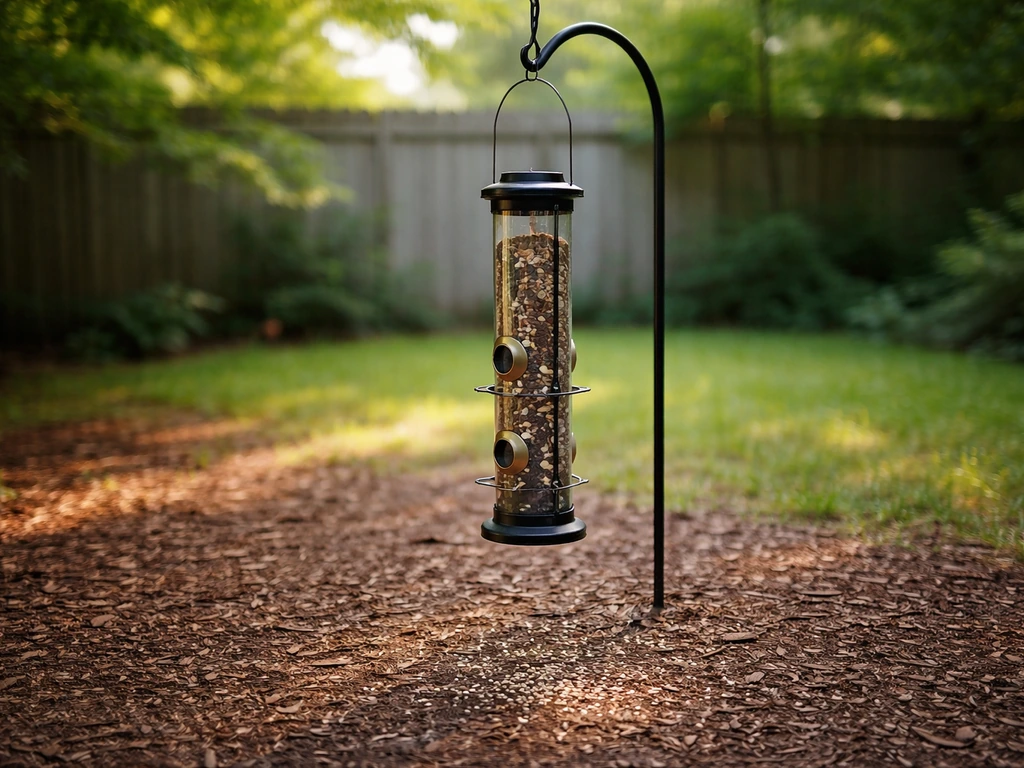
The single biggest factor drawing chipmunks into your yard is spilled or accessible seed. Managing your feeders well doesn't just protect your wallet, it genuinely lowers the chipmunk density around nesting areas. These are the changes worth making permanently, not just during nesting season.
- Switch from platform or ground feeders to tube feeders with small ports. Tube feeders are harder for chipmunks to access and spill far less seed.
- Use seed blends without millet and cracked corn if chipmunks are a problem. These cheap filler seeds are exactly what chipmunks prefer and they end up on the ground quickly.
- Fit feeders with a tray catcher underneath and empty it every two days so accumulation doesn't build up. Seed sitting in a tray for days starts to mold and also signals free food to every rodent in range.
- Consider a weight-sensitive or baffle-equipped feeder that closes under the weight of a chipmunk or squirrel. These work reliably for tube-style feeders.
- Stop putting out loose whole peanuts in shells. They are essentially chipmunk bait. If you want to feed peanut-loving birds like jays and woodpeckers, use shelled, chopped peanuts in a feeder designed for that purpose.
- Take feeders in at night from mid-spring through fall. Nighttime seed availability attracts nocturnal mammals and allows seed to absorb moisture and start spoiling.
Low-risk deterrence and habitat tweaks that actually work
I want to be honest with you here: most commercial chipmunk repellents are either marginally effective or require constant reapplication that makes them impractical. The habitat-based approaches below are slower but far more durable, and they don't risk harming birds, other wildlife, or pets.
- Reduce ground cover near feeders and nest areas. Dense plantings of low ground-covering shrubs and deep leaf mulch are chipmunk highways. Thin them out or pull leaf litter back a few feet from nest zones.
- Encourage natural predators. Red-tailed hawks, American kestrels, and foxes all keep chipmunk populations in check. Keeping a yard with some open visibility (not fully densely planted at every level) makes it less safe for chipmunks to move around freely.
- L-shaped rock or hardware cloth barriers buried 6 to 10 inches deep around a nest area can deter tunneling chipmunks, though this is mainly relevant for ground-nesting birds. It's labor-intensive but effective.
- Motion-activated sprinklers set to daytime hours can startle chipmunks away from specific areas like a shrub with an active nest. They don't harm anything and reset automatically.
- Do not use mothballs, ammonia, or predator urine products near bird nests or feeders. These can be toxic to birds, other wildlife, and pets, and their effectiveness is not supported by evidence.
Lethal trapping is legally permitted for chipmunks in most US states as they are not protected under federal law, unlike the birds they prey on. However, removing individual chipmunks from a yard with good habitat and food sources simply creates a vacancy that nearby chipmunks fill within days. Address the habitat and food first. Trapping without habitat change is a treadmill.
Seed storage, mold, and safety for pets and wildlife
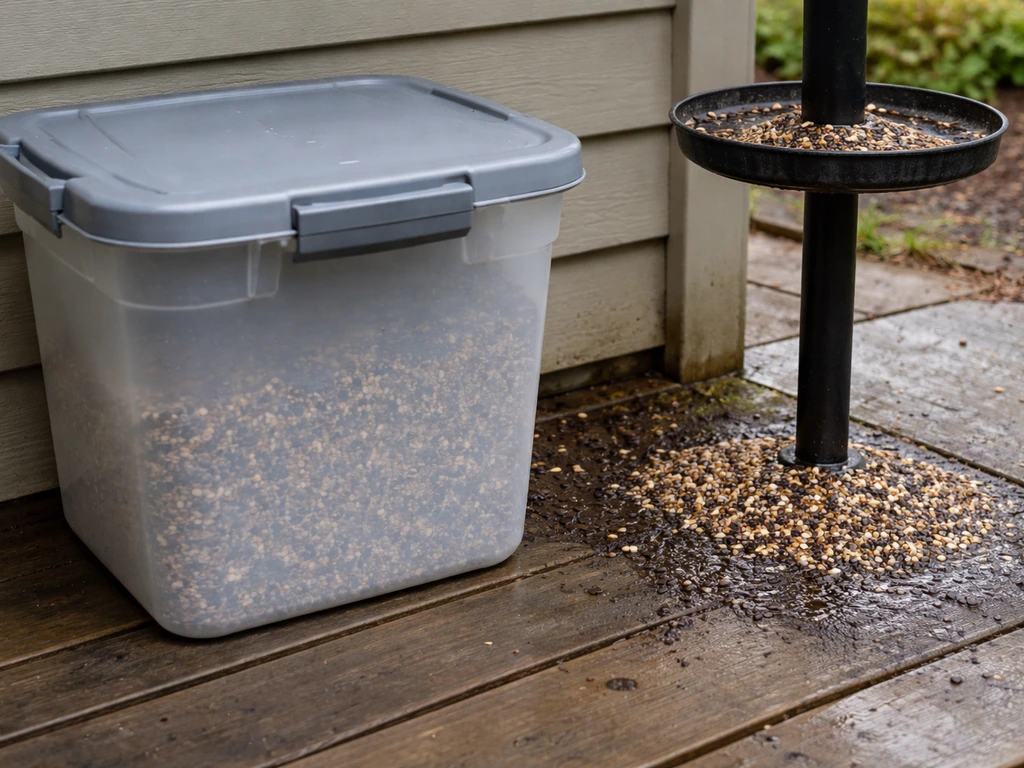
This section matters more than people realize. When chipmunks are regularly accessing seed storage or spilled seed builds up under feeders, you end up with contamination risks that go beyond just the birds. Moldy or wet seed is a real hazard.
Aspergillus mold grows quickly on wet or improperly stored birdseed, especially in warm weather. Birds that eat moldy seed can develop aspergillosis, a serious respiratory fungal infection. Chipmunks caching wet seed in burrows and then being killed or dying near pets can transfer ectoparasites like fleas and ticks. Dogs and cats that eat spilled seed, seed-contaminated chipmunk feces, or dead chipmunks near feeders face real, if uncommon, health risks.
- Store all birdseed in airtight, hard-sided metal or heavy plastic containers. Cloth, cardboard, or thin plastic bags are easily chewed through by chipmunks, mice, and rats within days.
- Never buy more seed than you can use within about four to six weeks in summer. Heat accelerates mold and insect infestation.
- Clean up spilled seed under feeders at least twice a week in warm months. Use a rake and a garden vacuum or just a stiff broom, and bag the debris rather than composting it.
- Rake and replace or turn the soil beneath feeders once a month during peak season. Seed husks and droppings accumulate and create a vector for Salmonella and Aspergillus.
- If you find a dead chipmunk near your feeder area, use gloves to dispose of it and check the area for signs of rodent activity. Dead rodents near feeding areas can indicate hantavirus risk in some regions, especially western states.
- Keep pet food indoors and never leave it outside, especially overnight. Chipmunks and other rodents attracted to bird feeders will find pet food quickly and create additional contamination paths.
For context, chipmunks are one of several small mammals that show up around feeders looking for easy calories. Mice are another well-documented visitor, and both create similar seed-contamination and hygiene issues. The good news is that the same seed storage and feeder hygiene habits that reduce chipmunk pressure also reduce mice, and the same barriers that stop chipmunks from reaching nest boxes stop squirrels too.
Quick troubleshooting checklist
Use this to work through the situation systematically rather than assuming chipmunks are the problem and acting on the wrong culprit.
- Look for shell fragments. If there are no egg fragments at all, think snake or raccoon before chipmunk.
- Check the timing. Daytime nest disturbance points toward chipmunk, squirrel, jay, or crow. Nighttime points toward raccoon, opossum, or owl.
- Look at nest height. Ground level or under three feet? Chipmunk is plausible. Above five feet or in a cavity box? Focus on raccoons, snakes, or flying squirrels.
- Check for tracks in soft soil or mud within a few feet of the nest. Measure the print: chipmunk prints are tiny, about half an inch for the front foot. Squirrel prints are about one inch. Raccoon prints look like small hands and are two to four inches.
- Assess how much seed is accessible in your yard. If feeders are spilling heavily and there's seed on the ground, your chipmunk density is almost certainly elevated. Reduce seed access first.
- If a box nest was involved, check for scratch marks on the pole below the box. Add a baffle if there isn't one already.
- Monitor the nest from a distance for 30 to 60 minutes without approaching. Parent birds returning is a good sign. Prolonged absence of parents or alarm calling nearby points to an ongoing threat.
- If predation continues despite all habitat and feeder changes, consider whether the nest location itself is fundamentally too exposed. Sometimes the honest answer is that a particular spot is a poor nest site and next season's habitat planting can create better options.
The broader takeaway is this: chipmunks are real but secondary nest predators. Skunks are another common nest predator to consider, and their diet can include bird eggs in some situations chipmunks are real but secondary nest predators. Fixing your feeder setup and seed storage reduces their presence in nesting areas as a side effect of good backyard management. That's the most practical, durable solution. Targeting chipmunks specifically while leaving the feeders wide open and seed on the ground is treating a symptom while leaving the cause untouched.
FAQ
How can I tell the difference between a chipmunk and a snake when a nest looks disturbed?
Look for small gnaw marks on shell fragments and check for nearby, daytime chipmunk activity, such as running paths through low cover. If you find a clean removal with no shell pieces, no gnawing, and no mammal signs, snakes become more likely, especially for ground nests.
Do chipmunks only raid nests on the ground, or can they take nests in shrubs too?
They more often target ground level and low shrubs under about three feet because access is easier during foraging runs. If your disturbed nest is in a higher shrub band, weigh other predators (for example, raccoons for boxes or higher access points) before blaming chipmunks.
If I see a chipmunk near my feeder, does that automatically mean it raided my nest?
Not necessarily. Chipmunks frequently visit feeders to eat spilled seed, so their presence could be unrelated to the nest incident. Treat chipmunks as a suspect only when the timing matches nest disturbance and you find nest-related clues like shell fragments with gnaw marks.
What feeder and seed changes reduce chipmunk pressure the most without harming birds?
Stop spill accumulation by using feeders designed to minimize ground drop, set up a ground seed tray cleanup routine, and store seed in lidded, rodent-resistant containers. Reducing accessible seed in the yard is the biggest lever, and it also lowers mice and squirrels.
Is it safe to use hardware cloth or barriers around a nest area if I suspect chipmunks?
Often yes, but do it carefully. Use barriers that prevent access while still allowing birds to enter at their natural routes, and avoid enclosing active nests or blocking flight paths. Start after the nest is no longer active to stay within typical wildlife protection expectations.
When is the best time to make changes if I want to prevent future nest raids?
Make the habitat changes early, before peak late spring and early summer activity. If you wait until eggs are already present, you may have less control over what predators have already learned about your food sources.
If trapping is legal, why does it usually fail by itself?
Removing one chipmunk creates a temporary vacancy that nearby chipmunks often fill quickly. Without reducing spilled seed and access routes, the new animal has the same food incentives, so nest raids tend to resume.
Should I clean up after a predation event right away?
You can remove remaining debris for hygiene, but avoid handling or relocating active nests. Wait until the nest is finished or abandoned, then clean with basic sanitation practices, because wet or spilled seed and feces around feeders can increase health risks for pets.
What seed storage and hygiene steps prevent the mold and parasite problems mentioned in the article?
Keep seed dry, use airtight containers, and avoid storing seed in damp sheds or open bins. Remove wet or moldy seed under feeders quickly, and consider reducing caching opportunities by improving feeder design and clearing spilled seed before it accumulates.
Next Article
Do Pigs Eat Bird Eggs? What to Know and How to Protect Birds
Do pigs eat bird eggs? Learn when they may scavenge nests and how to protect birds in farms or shared yards.