
Yes, skunks eat bird eggs, and they do it more often than most backyard birders expect. Striped skunks actively target the eggs and nestlings of ground-nesting birds, and spotted skunks are considered especially efficient egg predators. This isn't a rare opportunistic snack: credible wildlife authorities in multiple states list bird eggs as a regular part of skunk diet. If you have ground-level or low nests in your yard and something has been raiding them at night, a skunk is one of the first animals worth ruling in.
Do Skunks Eat Bird Eggs? How to Tell and Prevent It

Maya Bennett
5 Jul 2026
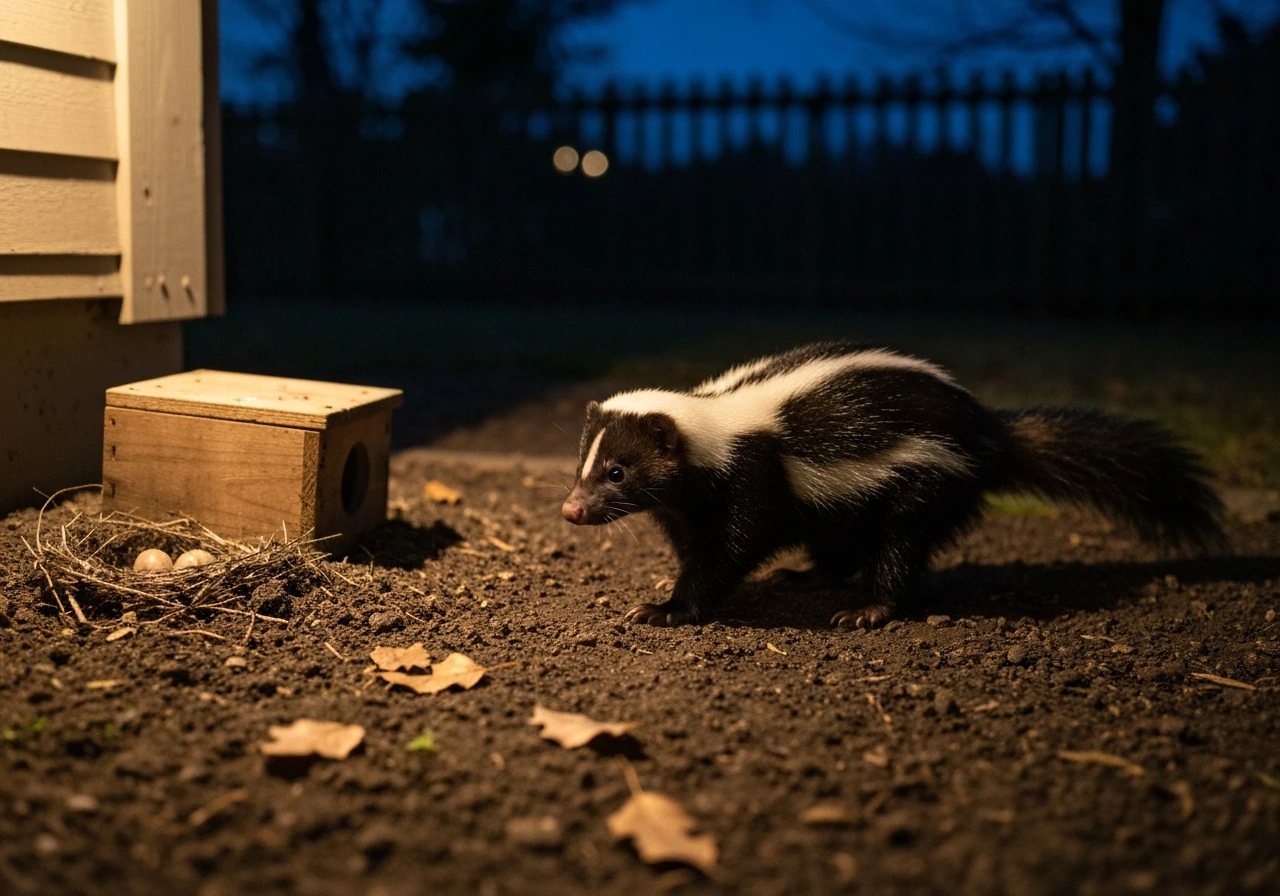
How skunks hunt eggs: timing, targets, and what they're really after
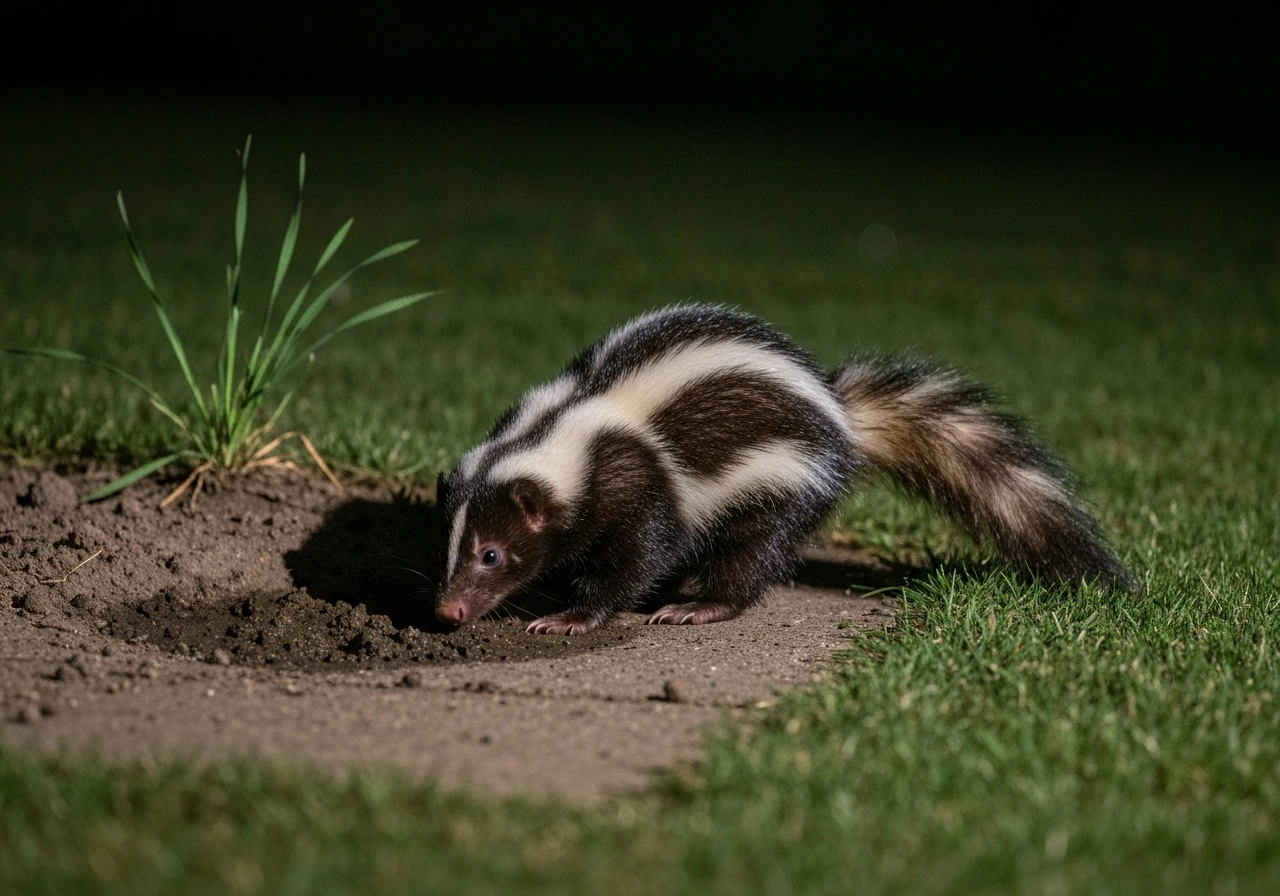
Skunks are omnivores and true opportunists. Their primary diet leans heavily on insects, grubs, and small invertebrates, so eggs aren't always what draws them into your yard. But when a skunk stumbles onto a nest, it absolutely will take the eggs. Striped skunks specifically target the eggs and nestlings of ground-nesting birds. Spotted skunks go further: Kentucky wildlife authorities describe them as 'often' eating birds' eggs, which suggests active, repeated foraging rather than occasional stumbling.
Timing matters here. Skunks are nocturnal, so the damage happens overnight. They forage from dusk through the early morning hours, which means you're unlikely to catch them in the act unless you have a trail camera set up. They don't travel far each night, typically staying within a half-mile radius of their den, so if you've seen or smelled a skunk near your property once, it's probably visiting the same areas repeatedly.
What skunks target most is accessibility. Ground-level nests built by killdeer, sparrows, towhees, or other low-nesting species are extremely vulnerable. Nests in raised boxes or trees are generally safe because skunks are poor climbers. The risk rises significantly during spring and early summer when most ground-nesting species are actively incubating eggs.
Eggs vs. adult birds: what's actually at risk in your backyard
Skunks are not predators of adult, healthy birds in any practical sense. A skunk is a slow, low-to-the-ground forager. It can't chase down a flying bird, and most adult songbirds can easily escape. The real risk is to eggs and very young nestlings that can't flee. If you have a ground-nesting species near your yard, the clutch of eggs is what's vulnerable, not the parent bird sitting nearby.
This is worth keeping in mind if you're trying to figure out what's happening around your nesting birds. A skunk isn't a threat to your resident cardinals, finches, or other birds using elevated nest boxes and raised feeders. It becomes a problem specifically when ground-nesting birds are present, or if low nest boxes are mounted near the ground without predator guards.
How to tell if a skunk did it: tracks, scat, and damage patterns
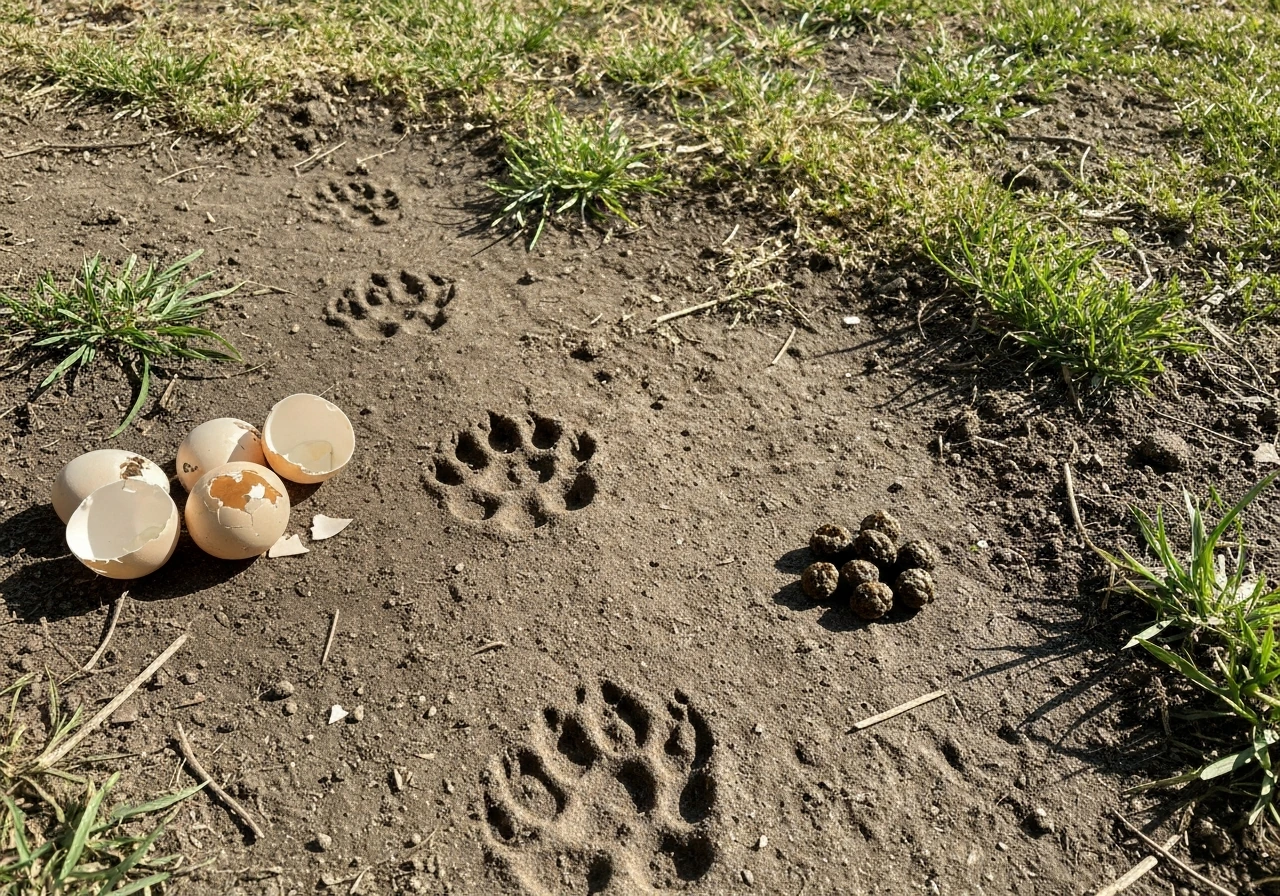
The most useful field clue is how the eggs look after predation. Washington Department of Fish and Wildlife specifically describes skunk egg damage as eggs opened on one end with the edges crushed inward. That inward-crushed edge is diagnostic. A raccoon typically makes a bigger mess and may carry eggs off entirely. A snake swallows eggs whole and leaves no shell. If you find eggshell at or near the nest with that characteristic crushed-in opening, a skunk is a strong candidate.
Tracks are the other reliable confirmation. Skunk tracks show five toes on both front and hind feet, with claw marks visible because their claws are long and non-retractable. Front prints measure roughly 1.5 inches wide and hind prints are slightly longer. You'll often find tracks in soft soil, mud, or mulch near the disturbed nest. Look for a waddling, slightly offset gait rather than a side-by-side paired pattern.
Scat is another indicator but less specific. Skunk droppings are tubular, about half an inch in diameter, and often contain insect exoskeleton fragments, berry seeds, or fur. They're typically left near den entrances or along regular foraging routes, not necessarily right at the nest site.
One more sign: nearby digging. Skunks dig shallow, cone-shaped holes looking for grubs, often leaving a cluster of small divots in lawns or garden beds. If you're seeing those holes plus disturbed ground nests, you're almost certainly dealing with a skunk. This digging pattern is also the overlap point with chipmunks, which can raid low nests as well, though chipmunk activity tends to happen during daylight hours.
| Predator | Egg damage pattern | Tracks | Activity time |
|---|---|---|---|
| Skunk | One end opened, edges crushed inward | 5 toes, claw marks visible, 1.5 in. wide | Nocturnal |
| Raccoon | Eggs crushed or removed, messy nest | 5 toes, hand-like, 2-3 in. wide | Nocturnal |
| Snake | Eggs missing, no shell fragments | No distinct tracks | Variable |
| Crow/Jay | Pecked holes, shell fragments scattered | Bird footprints | Daytime |
| Chipmunk | Eggs removed or cracked open | 4 toes front, 5 toes rear, tiny | Daytime |
Practical prevention: protecting nests from skunks
The most effective protection strategy is nest placement. If you're managing nest boxes, mount them at least five feet off the ground and add a cone-style or stovepipe predator baffle on the pole below the box. Skunks can't climb past a properly installed baffle, and this alone eliminates most skunk risk to cavity-nesting species.
For ground-nesting wild birds, which you can't relocate, the options are more limited but still useful. If you know roughly where a ground nest is on your property, you can create a small temporary barrier using hardware cloth (half-inch mesh) formed into a low cage placed loosely over the nest area. The cage needs to be open enough that the parent bird can access it but structured enough to deter a skunk from digging in. Remove it once the chicks fledge.
Reducing skunk-friendly habitat nearby also helps. Skunks den under decks, wood piles, and dense brush. If you seal off potential denning spots with hardware cloth buried at least six inches underground (to prevent digging), you reduce the chance a skunk sets up permanent residence close to nesting areas. Motion-activated lights or sprinklers near known nesting zones can deter overnight visits without harming the skunk.
Feeder and attractant management: don't accidentally invite skunks near nests
This is the part most backyard birders overlook. Skunks don't always come to your yard specifically hunting eggs. Skunks don't always come to your yard specifically hunting eggs, so if you're wondering whether other wildlife like do pigs eat bird eggs could do something similar, check the diet patterns for that animal too. They come for spilled seed, suet scraps, fruit, and grubs, and then they find the nest on the way. Managing what's on the ground around your feeders is one of the most practical things you can do.
- Use feeders with trays or catchers to reduce seed spillage on the ground.
- Bring suet feeders and any ground-level seed trays inside at dusk. Skunks forage at night, so evening removal breaks the reward cycle.
- Clean up fallen fruit from berry bushes or fruit trees near nesting areas. Skunks are attracted to fermenting fruit.
- Store birdseed in sealed metal containers, not plastic bags or open bins near the ground. Skunks are strong diggers and will get into poorly secured storage.
- Avoid scattering mealworms or other protein-rich food directly on the ground if ground-nesting birds are active nearby. This is a direct draw for nocturnal foragers.
- If you compost, use a fully enclosed bin rather than an open pile. Open compost near nesting zones is a serious attractant.
The principle here is simple: every food reward you remove from the ground near nesting habitat reduces the probability of a skunk making a repeated trip through that area. Skunks are creatures of habit and will return nightly to productive foraging zones, so cutting off the reward quickly breaks the pattern. This logic applies equally to mice and other ground-level foragers that are drawn in by spilled birdseed. Mice can also be attracted to bird food, so it's worth keeping spilled seed cleaned up and feeders managed to reduce visits from multiple species mice and other ground-level foragers.
Safety and spillover risks: pets, sanitation, and what to do if skunks keep coming back
Skunks carry rabies, and while transmission is uncommon, it's a real risk that changes how you should handle repeated close encounters. A skunk that appears disoriented, active during full daylight, or aggressive should be considered a potential rabies risk. Keep pets indoors after dusk, especially dogs, who are curious and almost always lose the encounter badly. A spray from a skunk can also cause temporary eye irritation in pets and children, so prompt flushing with clean water is the first step if that happens.
From a sanitation standpoint, if you find a disturbed nest or egg remains after suspected skunk activity, wear gloves when cleaning up. Skunk feces can carry leptospirosis and other pathogens. Dispose of debris in a sealed bag and wash hands thoroughly. Don't let dogs investigate nest disturbance sites before you've cleaned them up.
If a skunk is visiting nightly despite your prevention efforts, the humane first response is exclusion, not trapping. Seal off any denning spots under structures using hardware cloth. Use scent deterrents like ammonia-soaked rags or commercial predator urine (available at most garden centers) placed near entry points. Motion-activated sprinklers are effective and completely harmless. If exclusion doesn't work after a few weeks, contact your local wildlife control agency or a licensed wildlife removal professional. In most states, relocating skunks requires a permit, and improper relocation can spread disease and cause unnecessary stress to the animal.
A quick checklist for ongoing skunk activity management:
- Remove all ground-level food sources (seed, suet, fruit) before dusk each evening.
- Install predator baffles on all nest box poles mounted at or below 5 feet.
- Seal off potential den sites under decks, porches, and outbuildings with buried hardware cloth.
- Set up a trail camera to confirm which predator is actually visiting before investing in specific deterrents.
- If ground nests are present, place a loose hardware-cloth cage around them and monitor daily.
- Keep pets supervised at dusk and overnight during nesting season.
- Contact local wildlife control if a skunk appears ill, is active in daylight, or cannot be deterred after two to three weeks of exclusion efforts.
FAQ
If I find broken eggs, how can I tell whether it was a skunk versus another predator?
For skunks specifically, the biggest clue is where the damage is located. Focus on nests on the ground or very near it, because skunks are primarily limited by climbing ability. If the eggs are in raised nest boxes mounted well above the ground and predator guards are in place, a skunk is less likely than raccoons or climbing predators.
Could a skunk be visiting for other food first, then taking eggs on the way?
Not necessarily. A skunk may be attracted by spilled seed or suet scraps on the ground and then investigate nest areas opportunistically. If you reduce ground food rewards and still see nightly activity, that points to repeated foraging routes that should be disrupted (cleanup and feeder management are often the fastest first step).
What should I do differently if the skunk looks sick or acts strangely?
Yes, rabies risk is a reason to change your behavior even if you are not sure the animal is the culprit. If a skunk is behaving strangely, acting during daylight, or approaching pets or people, keep everyone away, bring pets indoors after dusk, and call local wildlife professionals rather than trying to scare it off close to the nest area.
What if I suspect egg raids happening during the day, would a skunk still be the cause?
It can happen, but the article’s typical timing pattern is dusk through early morning. If you are seeing egg damage only at mid-day, or you are hearing intense daytime digging, consider diurnal nest raiders (like some rodents) as more likely, since skunks are primarily nocturnal.
If I do not find all the eggshell, can the damage still point to skunk predation?
Bird eggs can be damaged even if the eggshell is partly missing. Skunks are described as opening eggs on one end with crushed edges, so look for an egg shell piece with that inward-crushed opening near the nest rather than assuming the absence of a full egg means “no skunk.”
Do predator baffles eliminate skunk risk completely, or can installation mistakes matter?
If your nest boxes are elevated, you still want to protect the pole area below the box. A baffle only works when installed correctly and securely, and if the pole has gaps or easy launch points nearby (like low shrubs or wood piles touching the pole), a skunk may still reach the box.
When using a hardware cloth cage over a ground nest, what practical details matter most?
For temporary hardware cloth barriers over ground nests, the mesh must allow the parent bird through while preventing a skunk from digging under or around it. Also remove the barrier once the chicks fledge, because keeping it in place longer can interfere with fledging behavior and may reduce nest success.
Do ammonia-soaked rags or predator urine work reliably, or are they just a temporary fix?
Yes, scent deterrents can help, but they are most effective as part of a multi-step plan. Place deterrents at entry points or along likely foraging routes, and expect reapplication based on weather and time. If you keep getting the same overnight visits, prioritize exclusion (den spot sealing) over relying only on deterrents.
How do I break the “same skunk returns nightly” pattern?
If you see the same skunk route repeatedly, sanitation and food control matter more than chasing the animal. Clean up spilled seed and stop leaving suet or fruit within reach of the ground, because skunks return to reliable food spots and will keep investigating until the reward is removed.
When is the best time to do exclusion work, before or during nesting season?
If you use exclusion, timing is important. Seal denning spots and potential hiding areas under decks or structures, especially before another nesting season peak, because a skunk that has already established a den is more likely to return. Start with hardware cloth that is buried deep enough to prevent digging.
Why does the recommended first response say “exclusion, not trapping” even if the skunk keeps coming back?
Trapping is generally the wrong first move. Use exclusion and deterrence first because trapping can be regulated, may require permits, and does not automatically solve the underlying problem (like ongoing food rewards or accessible denning spots) that keeps drawing the skunk back.