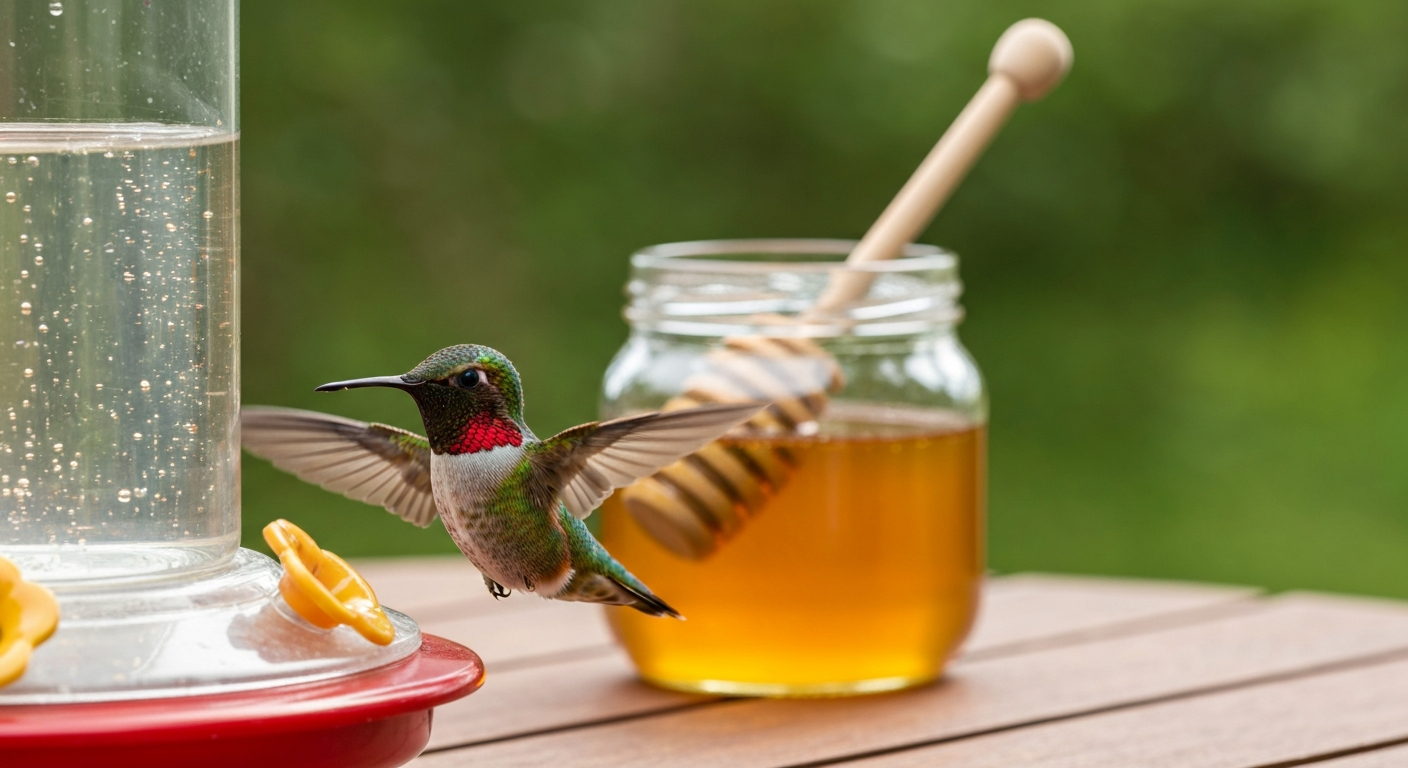
Birds should not eat honey. While it sounds harmless, and even natural, honey poses real risks: it ferments quickly in warm conditions, can carry Clostridium botulinum spores, and lacks the protein and micronutrients most birds actually need. If you keep hummingbird or oriole feeders, or you're caring for a pet or rescued bird, skip the honey entirely and use plain white sugar in water instead.
Can Bird Eat Honey? Safe Feeding Tips for Wild & Pet Birds

Maya Bennett
12 Jul 2026
Honey vs. nectar vs. bee products: not the same thing
A lot of people assume that because hummingbirds drink nectar and bees make honey from nectar, honey must be fine for birds. That logic has a gap. Natural floral nectar is a watery, low-sugar solution (typically 10 to 80 percent sucrose depending on the flower) that is consumed fresh, flows freely, and does not support rapid microbial growth the way thick, concentrated honey does. Honey is nectar that bees have enzymatically processed and dehydrated to roughly 80 percent sugar by weight. That process changes everything about how it behaves in a feeder or a bird's gut.
| Product | Sugar content (approx.) | Protein/nutrients | Microbial risk | Safe for birds? |
|---|---|---|---|---|
| Floral nectar | 10–80% sucrose (fresh) | Minimal, but consumed fresh | Low (consumed at source) | Yes, in natural settings |
| Plain white sugar solution (4:1 water:sugar) | ~20% sucrose | None, as intended | Low if changed every 2 days | Yes — recommended for feeders |
| Honey | ~80% sugar, complex mix | Trace enzymes, no usable protein | High — ferments and molds quickly | No |
| Brown sugar / molasses | ~85% sugar, iron-rich | Trace minerals | Moderate, ferments | No — iron overload risk for some species |
| Artificial sweeteners | Variable, near-zero calories | None | Low microbial, but zero energy | No — nutritionally useless |
| Bee pollen / royal jelly | Variable | High protein | Moderate if stored improperly | Not recommended for feeding |
The takeaway from that comparison is simple: honey is a processed, concentrated product that behaves very differently from natural nectar once it is placed in a feeder or offered to a bird. None of the alternatives to plain white sugar offer a meaningful benefit, and most add new risks.
Wild birds vs. pet birds: the guidance differs
Wild birds at backyard feeders
For wild birds visiting your yard, the practical rule is: do not put honey in feeders or offer it on platforms. Even a small amount diluted in water will ferment faster than plain sugar solution, especially in summer heat. Fermented liquids can expose birds to ethanol and fungal or bacterial contamination. There are also documented cases of Cedar Waxwings dying from ethanol intoxication after eating fermented berries, which tells us that birds are not immune to alcohol toxicosis. Beyond fermentation, honey placed in or near a feeder will attract bees, wasps, and yellow jackets, which can stress or injure smaller visiting birds.
Pet birds (parrots, cockatiels, canaries, lorikeets, and others)
For companion birds, the answer is a firm no. Avian veterinarians and wildlife rehabilitation sources consistently advise against honey in captive bird diets. The botulism spore risk, while different in mechanism from a full-blown outbreak (more on that below), is not worth taking when safe alternatives exist. Pet birds, especially immunocompromised or young birds, have less resilience to microbial insults than healthy adult wild birds. Lorikeets and other nectarivorous species kept as pets do best on commercially formulated nectar or a vet-recommended sucrose-based liquid diet, not honey. A small occasional lick of honey is unlikely to kill a healthy adult parrot, but there is no nutritional reason to offer it and several good reasons to avoid it.
Orphaned and injured wild birds in rehabilitation
Wildlife rehabilitators are especially firm on this point. Honey has appeared in well-meaning homemade rehydration formulas for orphaned birds, and that practice is discouraged across wildlife rehabilitation medicine. Diluted honey ferments in the crop or in a feeding syringe, and compromised birds lack the gut resilience to handle the resulting bacterial or yeast load. If you find an injured or orphaned bird, contact a licensed wildlife rehabilitator and avoid feeding anything, including honey, until you get professional guidance.
Nectar feeders: which backyard birds actually use them
If your goal is to attract nectar-drinking birds, the good news is that the correct recipe is inexpensive and easy: four parts water to one part plain white granulated sugar, boiled briefly to dissolve and then cooled. That is it. No food coloring, no honey, no flavoring. Change it every two days in summer (every four days in cooler weather) and scrub the feeder each time. Here are the North American backyard species most likely to visit a nectar feeder set up correctly.
| Species | Region | Notes |
|---|---|---|
| Ruby-throated Hummingbird | Eastern North America | Most common eastern hummingbird; males show iridescent red throat patch |
| Anna's Hummingbird | Pacific Coast year-round | One of few hummingbirds that overwinters; males have rose-red gorget and crown |
| Black-chinned Hummingbird | Western interior | Males have black chin with purple band; common in arid regions |
| Baltimore Oriole | Eastern/central North America | Males are vivid orange-black; readily use nectar feeders and fruit |
| Bullock's Oriole | Western North America | Male has orange face with black eye-line; western counterpart to Baltimore |
| Yellow-bellied Sapsucker | Eastern forests | Drills sap wells in trees; other hummingbirds and insects use the same wells |
| Red-bellied Woodpecker | Eastern woodlands | Occasionally visits sugar water or fruit; opportunistic rather than dedicated nectar feeder |
Orioles will also eat orange halves, grape jelly (in small amounts), and mealworms alongside nectar. If you set up an oriole feeder alongside a hummingbird feeder, place them a few feet apart. Hummingbirds can be territorial and may attempt to defend both, burning energy they cannot afford to waste.
Backyard insect hunters: birds that eat bees, wasps, yellow jackets, and ticks
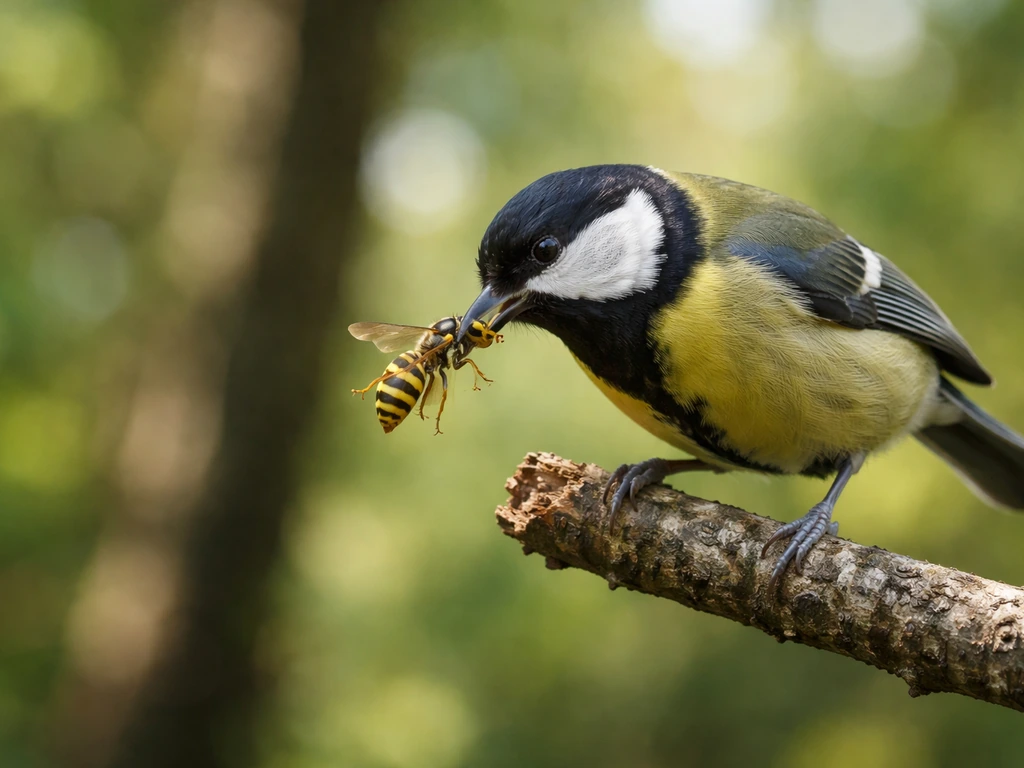
One thing worth knowing if you are worried about attracting stinging insects by mistake: some of the birds already in your yard are actively hunting those insects. For identification help and a list of species that eat wasps, see what bird eats wasps. For information on which species eat ticks, see our guide on what bird eats ticks. Aerial insectivores like the Eastern Kingbird and Eastern Phoebe capture and eat bees and wasps as a regular part of their diet. If you want more on which species prey on yellow jackets, see what bird eats yellow jackets. This is a useful counterpoint when people ask whether honey at a feeder might attract more stinging insects. It will, but the same yard that attracts those insects also supports birds that hunt them. Setting up your yard for healthy bird diversity is a better long-term strategy than inadvertently baiting stinging insects with honey.
- Eastern Kingbird: a strong aerial hunter that regularly takes bees and wasps on the wing
- Western Kingbird: western counterpart with similar hunting behavior targeting Hymenoptera
- Eastern Phoebe: a flycatcher that sallies out from a perch to snatch insects including bees
- Purple Martin: colonial aerial insectivore; diet studies show regular bee and wasp consumption
- Common Nighthawk: crepuscular hunter; catches large insects including wasps in flight
- Wild Turkey and Guinea Fowl: ground foragers known to consume ticks in significant numbers
- American Robin and other thrushes: opportunistic ground hunters that will eat ticks along with earthworms
Birds that eat bees, wasps, and yellow jackets are doing so as an evolved predator-prey behavior. If you want to know specifically what bird eats bees, see the section on backyard insect hunters for species and behavior details. These birds have behaviors and adaptations (like wiping stingers against branches before swallowing) that make them effective at it. That is a very different situation from a bird stumbling into a honey-laden feeder. The connection between these insect-hunting species and the broader question of honey is worth keeping in mind: honey essentially recreates the attractant without the predator-prey dynamic, pulling in the insects without the bird behavior that manages them.
Visual ID: quick species profiles for nectar visitors and insect hunters
Ruby-throated Hummingbird
Size: 3 to 3.75 inches, about 3 grams. The male has a brilliant iridescent ruby-red throat (gorget) that can look black in poor light, a metallic green back, and white underparts. The female is green above with a plain white throat. Both sexes have the distinctive rapid wingbeat (around 53 beats per second) and hovering flight. Diet: flower nectar, tree sap from sapsucker wells, small insects and spiders for protein. This species is entirely dependent on insects for protein, not just sugar, so even a "perfect" nectar feeder only supplements part of its diet.
Baltimore Oriole
Size: 6.7 to 7.5 inches, around 33 grams. Males are unmistakable: deep orange body with a black head, back, and wings marked with white wingbars. Females are yellowish-orange below with brownish-olive upperparts. Diet: insects, fruit, nectar, and berry pulp. Baltimore Orioles are one of the few songbirds that reliably visit nectar feeders in the eastern US. They also eat caterpillars, including hairy ones that most other birds avoid.
Eastern Kingbird
Size: 7.5 to 9 inches, around 37 to 55 grams. Dark gray-black above with a bright white terminal tail band that is one of the easiest field marks to spot. White below, with a partially concealed red crown patch rarely seen in the field. Bold and aggressive in defense of territory. Diet: primarily large insects including bees, wasps, beetles, and grasshoppers; also fruit during migration and winter.
Eastern Phoebe
Size: 5.5 to 6.7 inches, around 16 to 21 grams. Plain brownish-gray above, whitish below with a slight olive-yellow wash on the flanks in fall. No bold markings, but its habit of pumping its tail up and down while perched is a reliable ID clue. Diet: almost entirely insects caught in mid-air sallies from exposed perches; diet includes bees, wasps, flies, beetles, and small fruits in cooler months.
The evidence-based risk overview
There are five distinct risk categories worth understanding when it comes to honey and birds. None of them are speculative, and together they make a strong case for simply avoiding honey as a bird food.
- Botulism spores: Honey is a known carrier of Clostridium botulinum spores. The CDC explicitly warns against feeding honey to human infants under 12 months for this reason. While the botulism types most dangerous to birds (typically types C, D, and mosaic forms) are more commonly associated with environmental sources like decaying carcasses than with honey specifically, the spore risk from honey adds an unnecessary variable, particularly for captive or immunocompromised birds.
- Fermentation and ethanol: Diluted honey ferments faster than plain sugar solutions. The resulting ethanol is a documented cause of intoxication in birds. Cedar Waxwings have died from ethanol toxicosis after consuming fermented berries. A feeder spiked with honey in summer heat can turn into a fermentation vessel within 24 hours.
- Fungal and bacterial growth: Beyond ethanol, fermentation supports mold and bacterial colonies in feeders. Contaminated feeders can cause aspergillosis and other respiratory or gastrointestinal infections in birds, especially in warm, humid weather.
- Nutritional imbalance: Honey is almost pure sugar and trace enzymes. It provides no usable protein, no essential amino acids, and no micronutrients. For most birds, including nectarivores, feeding honey means offering empty calories that displace time and energy better spent on insects or nutritionally complete foods.
- Mad honey (grayanotoxin): A less common but real risk. When bees collect nectar from Rhododendron and related plants, the resulting honey can contain grayanotoxins, which are plant-derived neurotoxins. These cause cardiac and neurological symptoms in mammals and have been documented as a hazard in the veterinary toxicology literature. You generally cannot tell from looking at honey whether it came from a safe floral source.
Botulism and bacterial spores: what the science actually says
This is the risk that generates the most questions, so it deserves a careful, honest treatment. Here is what we know and where genuine uncertainty exists.
Clostridium botulinum spores are common in soil, sediments, and certain foods including honey and corn syrup. Spores themselves are not the danger. The danger is the neurotoxin (BoNT) those spores produce when they germinate under warm, anaerobic, protein-rich conditions. In humans, the classic high-risk scenario is feeding honey to infants under 12 months, whose gut environment can allow spore germination in a way healthy adult guts typically cannot.
For birds, avian botulism outbreaks are well-documented, but they are usually traced to preformed toxin already present in the environment, not to spore germination from ingested honey. Merck Veterinary Manual, Botulism in animals (including birds) describes avian botulism signs (flaccid paralysis, “limberneck”, respiratory compromise), recommends supportive care and notes antitoxin use in some cases, and emphasizes prevention by removing carcasses and managing water to reduce environmental toxin sources Merck Veterinary Manual — Botulism in animals (including birds). The typical outbreak scenario involves decaying carcasses, contaminated waterways, and the maggot cycle (fly larvae ingest toxin from a carcass and concentrate it; birds eat the maggots and receive a toxic dose). The toxin types most often implicated in avian outbreaks are types C, D, and mosaic forms, which differ from the type B most commonly linked to honey-associated human infant botulism.
So is honey a confirmed cause of bird botulism outbreaks? Honestly, no. Peer-reviewed outbreak literature does not prominently feature honey-fed birds as a primary botulism vector. But that does not make honey safe to offer. The absence of documented outbreak cases traced to honey feeding may partly reflect the fact that responsible wildlife and avian care organizations have been advising against it for years. It is also worth noting that the conditions inside a poorly maintained feeder (warm, sugary, partially anaerobic once mold grows in) are not entirely unlike conditions that favor microbial growth.
The cautious, evidence-consistent position is this: the botulism risk from honey is real but the mechanism is different from the more familiar human infant case, and well-documented field outbreaks are not traced primarily to honey feeding. However, the fermentation, fungal, and nutritional risks are clearer and more direct. Any one of them is sufficient reason to skip honey entirely and use the plain sugar-water recipe that every major ornithological organization recommends.
What to use instead: safe nectar feeder setup
The standard recipe from Cornell Lab, Audubon, and virtually every university extension birding program is 4 parts water to 1 part plain white granulated sugar. Boil the mixture briefly to help the sugar dissolve fully and to retard microbial growth slightly, then cool it completely before filling the feeder. Do not add red food coloring. Most quality hummingbird feeders already have red parts that attract birds without adding unnecessary dyes.
- Use plain white granulated sugar only — no honey, brown sugar, molasses, artificial sweeteners, or 'natural' sugar substitutes
- Mix at 4: 1 water to sugar (increase to 3:1 in cooler months to give birds more energy during cold snaps)
- Change nectar every 1 to 2 days in temperatures above 80°F (27°C); every 3 to 4 days below that
- Scrub feeders with a bottle brush and hot water at every change; use a dilute vinegar rinse for stubborn mold (rinse thoroughly before refilling)
- Position feeders in partial shade to slow fermentation
- Store unused sugar-water mixture in the refrigerator for no more than one week
- Keep multiple feeders if hummingbirds are aggressive; spacing them reduces territorial disputes
Signs a bird may be sick or intoxicated
If you have accidentally offered honey in a feeder, or if you find a bird behaving strangely near a feeder, knowing the warning signs helps you act quickly. Ethanol intoxication from fermented feeders can look very similar to neurological illness.
- Disorientation, inability to fly straight, or stumbling on the ground
- Head tilting or circling behavior (can indicate neurological involvement)
- Flaccid paralysis starting with the legs and wings ('limberneck' in botulism cases)
- Labored or open-mouth breathing
- Ruffled feathers combined with lethargy in warm weather
- Inability to perch or maintain upright posture
If you observe these signs, stop using the feeder immediately, remove it, and clean it thoroughly. For a wild bird showing neurological symptoms, contact a licensed wildlife rehabilitator. Do not attempt to feed or water a bird showing paralysis symptoms. For a pet bird, call an avian veterinarian the same day. Botulism in birds progresses rapidly and supportive care is most effective when started early.
Common myths, quickly addressed
Myth: Honey is natural, so it must be safe for birds. Natural does not mean safe for every species in every context. Many natural substances are hazardous: avocado is toxic to parrots, and xylitol (from birch bark) is deadly to dogs. The question is always whether the specific food matches the specific animal's physiology and the conditions of delivery.
Myth: Hummingbirds eat honey in the wild. They do not. They drink dilute floral nectar, which is a fundamentally different product. Some hummingbirds will investigate honey if it is offered, because they respond to sweetness, but that is the same reason a dog might eat chocolate. Willingness does not equal safety.
Myth: A little honey won't hurt. For a healthy adult bird, a tiny amount probably will not cause acute illness. The risk is proportional to amount, temperature, storage time, and the bird's individual health status. The issue with feeders is that birds return repeatedly, and a contaminated feeder exposes many birds over many days. One compromised bird in a bad week is one too many when the fix costs nothing.
Myth: Honey is a good energy source for sick or injured birds. This one is especially worth dispelling. Wildlife rehabilitators explicitly advise against honey in rehydration or recovery protocols. Sick birds have compromised immune and digestive systems, making them more vulnerable to exactly the microbial and fermentation risks honey presents, not less.
When to call a vet or wildlife rehabilitator
Call a licensed wildlife rehabilitator if a wild bird in your yard shows any of the neurological signs listed above, especially after feeder exposure. In the US, you can find your nearest licensed rehabilitator through the National Wildlife Rehabilitators Association or your state fish and wildlife agency. Call an avian veterinarian if your pet bird has consumed honey and shows any change in behavior, droppings, or appetite within 24 to 48 hours. Do not wait to see if symptoms resolve on their own. Botulism and ethanol toxicosis both progress, and the treatment window matters.
FAQ
Can birds eat honey — what’s the bottom-line recommendation?
Short answer: don’t feed plain honey to birds. While adult wild and pet birds will sometimes ingest honey without immediate harm, honey commonly contains bacterial spores and ferments easily; it is not a safe, balanced or recommended food for most species. Use species-appropriate alternatives (plain sugar water for hummingbirds, offered at correct dilution and changed frequently; fruit or insect sources for others) and avoid offering household honey directly.
Why is honey considered risky for birds?
Main risks: 1) Clostridium botulinum spores can be present in honey — while most avian botulism outbreaks arise from environmental sources, spores in sugar syrups are an avoidable risk. 2) Diluted honey ferments faster than sucrose solutions, promoting yeast/bacterial growth and possible ethanol production. 3) High sugar without protein/nutrients can be inappropriate for many species. 4) Sticky honey soils feathers, causes feeder fouling, and attracts stinging insects or predators. 5) Rarely, 'mad honey' from certain plants contains plant neurotoxins that can poison animals.
Is honey especially dangerous because of botulism for birds the way it is for human infants?
Honey is a recognized source of C. botulinum spores for human infant botulism, which is why infants <12 months should not be fed honey. For birds, most documented avian botulism outbreaks are linked to environmental toxin production (decaying organic matter) and invertebrate vectors rather than direct feeding of honey; however, because spores can be present in honey and feeders create conditions for microbial growth, feeding honey is an unnecessary and avoidable risk — especially for vulnerable, young, sick or captive birds.
Are there species that naturally eat honey or nectar and could tolerate honey?
Nectarivorous species (hummingbirds, lorikeets, many orioles, honeyeaters, and some sunbirds, sugarbirds and specialized parrots) are physiologically adapted to high-sugar diets. That said, major bird-care and conservation organizations advise against using household honey in feeders because honey ferments and fosters microbes quicker than recommended sucrose solutions. For pet nectarivores (e.g., lorikeets) follow species-specific, veterinarian-approved commercial diets rather than plain honey.
Which backyard species are known to visit nectar or consume bees/wasps/ticks?
Common backyard nectar visitors: Ruby-throated and Anna’s Hummingbirds, Baltimore and Orchard Orioles, some warblers/nectar-feeding woodpeckers and sapsuckers (varies by region). Species that commonly take bees/wasps or other arthropods: Eastern and Western Kingbirds, flycatchers, bluebirds, swallows, shrikes and many warblers. Some ground-foraging species and raptors may capture ticks on hosts opportunistically, but birds generally eat insects rather than blood parasites. Check local field guides for region-specific lists.
If I want to feed nectar, what should I use instead of honey and in what ratio?
For hummingbird-style feeders use a plain white granulated sugar solution: 4 parts water to 1 part sugar by volume (4:1). Boil or thoroughly dissolve and cool before filling feeders; do not add red dye. Change solution every 2–3 days in hot weather and at least weekly in cooler weather; clean feeders thoroughly each change. Do NOT use honey, brown sugar, molasses, corn syrup, or artificial sweeteners in place of sucrose.
Next Article
What Bird Eats Wasps? Identification and When It Happens
See which birds eat wasps, how to confirm wasp hunting vs scavenging, and safer steps to observe at home.