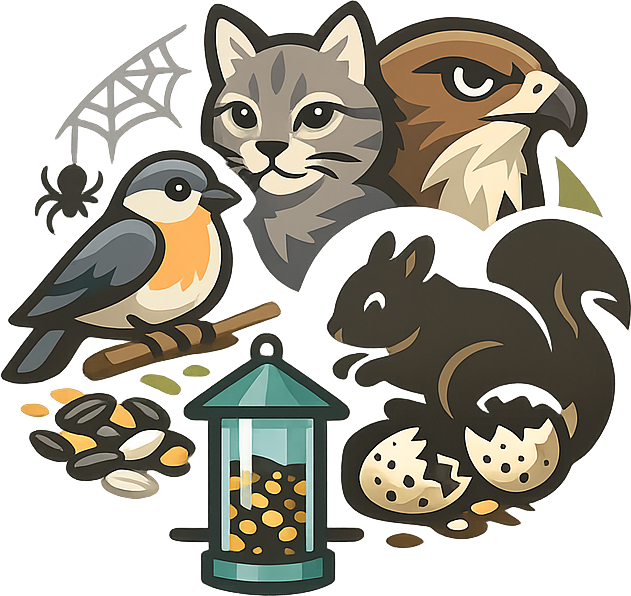
The most likely animal eating birds in a backyard or neighborhood setting is a domestic cat. All About Birds (Cornell Lab of Ornithology) estimates cats kill about 1.3, 4 billion birds each year in the U.S. alone about 1.3–4 billion birds each year in the U.S. alone. That answer might not be dramatic, but it is backed by hard numbers: the U.S. Fish & Wildlife Service estimates cats kill between 1.3 billion and 4 billion birds every year in the contiguous United States. After cats, the next most common culprits are hawks and owls, raccoons, opossums, foxes, coyotes, and snakes. The good news is that each of these predators leaves behind different evidence, so you can usually figure out exactly who did it just by looking at the scene.
What Animal Eats a Bird? Identify Predators Fast

Maya Bennett
22 Mar 2026
The most common predators that eat birds
Here is a quick rundown of the animals most likely responsible, ranked roughly by how often they show up in backyard settings across the U. Some birds can’t handle apple snails directly, but predators of snails often show up in different ways than the ones listed for backyard bird kills. S.
- Domestic cats (by far the most frequent predator of backyard birds)
- Hawks (Cooper's hawks and Sharp-shinned hawks are the most common feeder raiders)
- Owls (mostly active at night or at dusk/dawn, targeting ground feeders and roosting birds)
- Raccoons (opportunistic, mostly nocturnal, will take eggs, chicks, and adult birds)
- Opossums (similar to raccoons but tend to consume more of the carcass)
- Foxes and coyotes (more likely in rural or suburban edge areas)
- Snakes (typically target eggs and nestlings, not adult birds)
- Larger birds such as crows and blue jays (usually targeting eggs or very young chicks, not adult birds)
If you have a birdhouse, ground feeder, or open nesting box, the list above covers nearly every realistic scenario you will encounter. For smaller birds specifically, the predator pool can narrow further depending on habitat and time of day.
Read the scene: how to identify the culprit from evidence
Before you do anything else, take two or three minutes to look at the scene carefully. Do not disturb the remains yet. The way a bird is killed and left behind is like a signature, and most experienced wildlife managers can identify the predator from the evidence alone. Here is what to look for.
Feather pattern
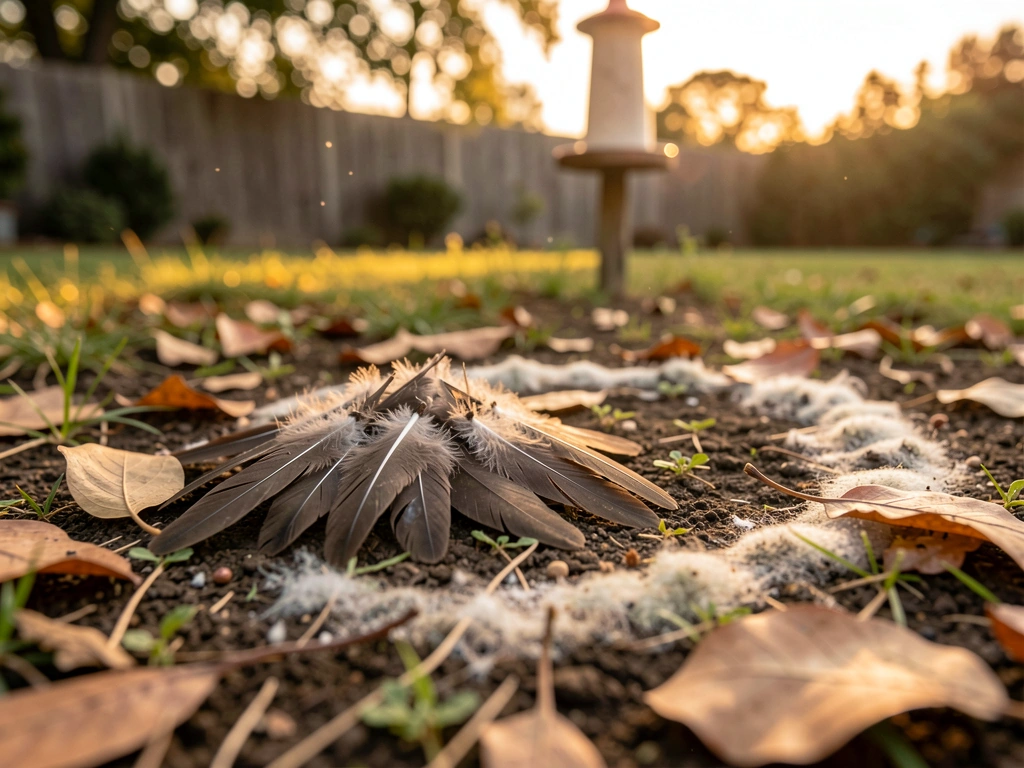
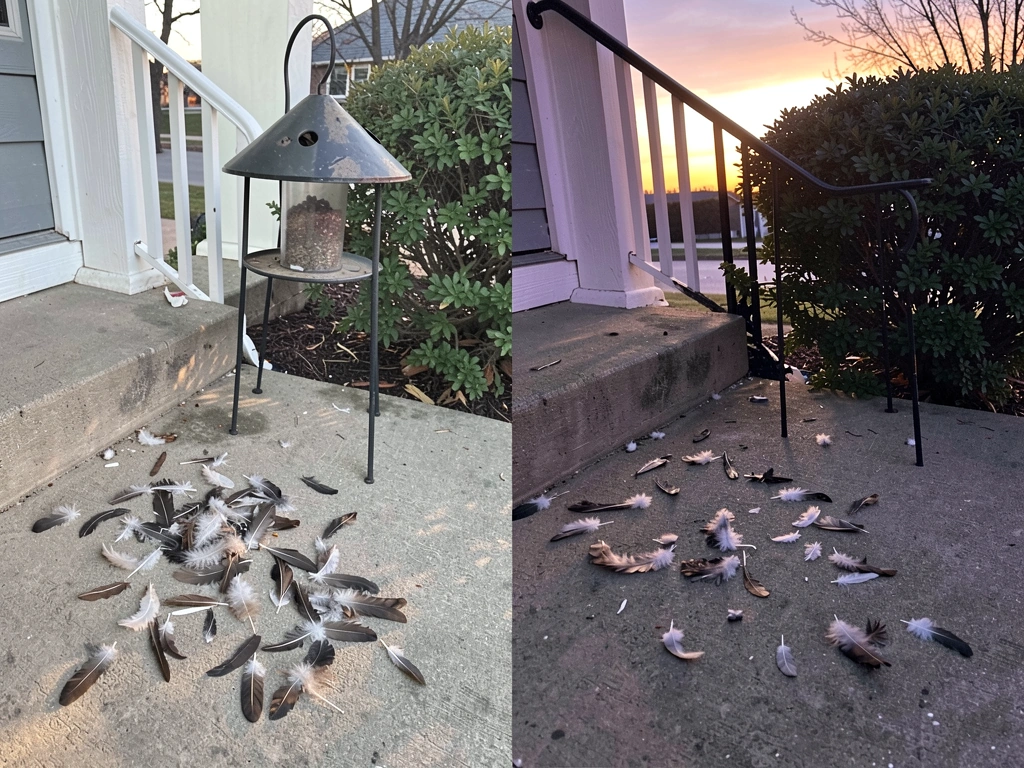
A neat pile of plucked feathers with clean quill ends is almost always a hawk. Raptors pluck their prey methodically before eating, and the USDA APHIS confirms that a pile of plucked feathers at a depredation site is one of the strongest indicators of hawk or owl activity. If you see a splash or streak of whitewash (white, chalky droppings) radiating out from the feather pile, that points specifically to a goshawk or large raptor that perched and fed on site. Scattered, torn feathers spread across a wide area with no real pile often point to a mammal, like a cat, raccoon, or fox, which tends to thrash and carry prey.
What is left of the carcass
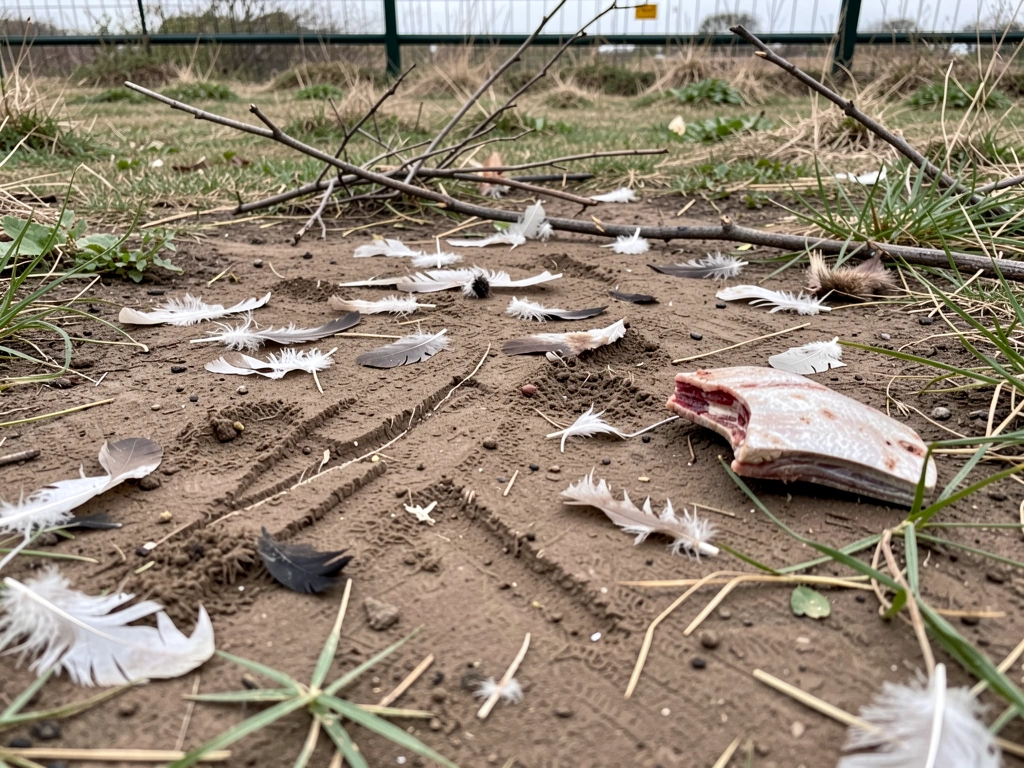
This is one of the clearest clues. University of Maryland Extension and Mississippi State Extension both provide predator identification charts that match carcass condition to likely predator. Use this table as your starting point.
| What you find at the scene | Most likely predator |
|---|---|
| Neat pile of plucked feathers, bird partially eaten or gone | Hawk or owl |
| Breast meat and entrails eaten, back bitten, scattered feathers | Raccoon |
| Whole bird consumed including feathers, only wings or feet left | Opossum |
| Whole bird completely missing, minimal or scattered feathers | Fox or coyote |
| Bird found with puncture wounds, internal injuries but little external damage | Cat |
| Eggs or nestlings gone, nest disturbed, no adult remains | Snake or crow/jay |
| Head missing, body largely intact | Owl (taking head) or weasel/mink |
Timing
Timing matters a lot. If the kill happened during daylight hours, hawks, cats, and corvids (crows and jays) are prime suspects. If it happened at night, think raccoon, opossum, fox, owl, or snake. Owls are crepuscular too, meaning they are most active right at dusk and dawn, so early morning losses that look like raptor kills often point to an owl.
Location of the attack
A kill inside a birdhouse or nest box with the box undamaged points to a snake. A kill where the entire nest box was torn apart or tipped over points to a raccoon.
How each predator type hunts and feeds
Cats
Cats are ambush hunters. They wait in cover, rush, and use their claws and teeth to subdue prey quickly. They often carry prey away from the kill site, which is why you sometimes find no carcass at all, just a few feathers near a shrub or fence. Cat-killed birds often show puncture wounds from canine teeth and claw marks on the wings and body. A bird killed by a cat can look surprisingly intact on the outside, which is why the Vermont Institute of Natural Science recommends that any bird found after contact with a cat should be examined by a wildlife rehabilitator immediately, even if it looks fine. Internal injuries and bacterial infections from cat saliva are often fatal.
Hawks and owls
Raptors hit fast and hard. Cooper's hawks and Sharp-shinned hawks, the two most common feeder raiders, dive into a flock and strike a bird in flight or on the ground. They then pluck and eat on site or carry the bird to a nearby perch. The plucked feather pile is the giveaway. Owls tend to swallow small birds whole and regurgitate the feathers and bones as a pellet, so you might find little or nothing at the scene if an owl took the bird at night.
Snakes
Snakes are almost never responsible for killing adult birds. Snakes can also occasionally eat bird seed when it is accessible, so controlling spilled seed helps reduce snake activity around your feeders. They target eggs and nestlings almost exclusively. If your nest box or nest has been cleaned out with no signs of a struggle, and the eggs or chicks are simply gone, a snake is a very likely culprit. Common snakes that raid nests include rat snakes, black snakes, and corn snakes. You might also find shed skin near the nest box as a direct confirmation.
Raccoons and opossums
Raccoons are strong and dexterous. They can open latches, pull birds through cage wire, and tip over feeders. The classic raccoon kill pattern is breast meat and entrails eaten, back bitten into, and feathers scattered around a wide area. Opossums tend to be more thorough eaters, sometimes consuming the whole bird including feathers, leaving only wings or feet. Both are almost entirely nocturnal, so nighttime losses with these patterns fit the profile well.
Foxes and coyotes
When a fox or coyote takes a bird, the bird is usually just gone. These predators carry prey away quickly and efficiently, and you may find only a small scatter of feathers or nothing at all. Foxes are quick enough to take birds at ground feeders during twilight hours. Coyotes are less nimble but will absolutely take a ground-feeding bird or one that is injured or cornered.
What to do today to protect your birds
Once you have a reasonable idea of the culprit, act fast. Here are the most effective immediate steps you can take today, matched to the most common predator types.
- Bring feeders inside tonight if you suspect a ground predator like a raccoon, opossum, or cat. Remove seed from the ground and clean up spilled seed, which attracts prey and predators alike.
- Move feeders to an open location away from shrubs and fences. Michigan DNR specifically advises against placing feeders where there is a lot of ground cover, because it gives mammalian predators a place to hide and ambush.
- Keep cats indoors starting today. The National Wildlife Federation states this is the only 100% effective method to protect birds from cats. If a neighbor's cat is the problem, a polite conversation backed by this data often helps.
- Cover any open nest boxes or birdhouses at night with a cloth or close any access holes temporarily until you can install a proper predator guard.
- If a bird was injured by a cat, do not wait. Contact a licensed wildlife rehabilitator today. Cat saliva contains bacteria that can kill a bird within 24 to 48 hours even when the bird appears outwardly healthy.
- If you suspect a hawk, stop feeding for one to two weeks. Without an easy prey concentration, the hawk will move on. This is actually the most effective short-term fix for hawk predation at feeders.
- Install a baffle or predator guard on any pole-mounted feeder today if raccoons are the issue. A cone-shaped metal baffle below the feeder makes it nearly impossible for a raccoon to climb past.
Long-term prevention: making your yard less attractive to predators
Feeder placement rules that actually work
Feeder placement is probably the single biggest factor you can control. Cornell Lab of Ornithology recommends placing feeders about 3 meters (roughly 10 feet) from natural cover as a compromise, giving birds a quick escape route while not letting predators get close enough to ambush from cover. The Tennessee Wildlife Resources Agency suggests at least 10 feet from bushes and shrubs. Colorado Parks and Wildlife recommends that feeders be at least 10 feet off the ground and 10 feet away from anything a larger animal can climb if you live in an area with raccoons, bears, or coyotes. A simple pulley system lets you achieve this without a ladder every time you refill.
Cat management strategies
If you have an outdoor cat and are not ready to make it fully indoor, the most well-researched deterrent is a belled collar. A 2010 study published in Wildlife Research found that cats with bells on their collars caught roughly half as much prey as cats without bells. That is meaningful, though it is not a complete solution. For neighbors' cats, a motion-activated sprinkler, placing feeders away from cat-accessible cover, or politely raising the issue can all help. HumaneWorld also recommends installing predator guards on pole-mounted feeders specifically to block cat access.
Nest box design and placement
Mount nest boxes on smooth metal poles rather than wooden fence posts or trees. Add a cone baffle below the box to block snakes and raccoons. Make sure the entrance hole is appropriately sized for the species you want to attract, which automatically excludes larger predators. Check the box periodically and keep a log of what you find, which will help you spot a pattern if predation is recurring.
Habitat modifications
Trim dense shrubs and ground cover near feeding areas. Remove brush piles that serve as hiding spots for cats, foxes, and other ambush predators. Keep the area under feeders clean of spilled seed, since seed attracts mice and rats, which in turn attract snakes and raptors, creating a predator concentration around your yard.
When to call a wildlife professional
Most backyard bird predation is a natural process you can manage with the steps above, but there are situations where you need professional help. Contact your state wildlife agency or a licensed wildlife rehabilitator if:
- You find an injured bird that has been attacked (any cat-contact bird should be treated as an emergency by a rehabilitator)
- A raptor is physically trapped or injured near your property
- You have a recurring raccoon or opossum problem that is not solved by basic exclusion methods
- You suspect a protected species (like a hawk or owl) is nesting on your property and is causing ongoing losses (you cannot legally harass or relocate raptors without permits)
- You find multiple dead birds in a short period, which can indicate disease rather than predation and should be reported to your state fish and wildlife agency
- A coyote or fox is showing no fear of humans, which could indicate illness and requires a professional response
Oregon Department of Fish and Wildlife advises contacting your local wildlife office for a licensed rehabilitator referral whenever you find a bird with obvious injuries like a broken wing or leg. The USFWS also directs people to state wildlife departments for guidance on birds that need care. Do not try to rehabilitate injured birds yourself unless you are licensed to do so.
Common myths and misidentifications to avoid
Myth: scavenging means the animal killed the bird
This is probably the most common misidentification. If you see a crow, vulture, or even a raccoon eating a dead bird, that does not mean they killed it. Scavengers will eat animals that died of window strikes, disease, or another predator's kill. Look at the carcass condition carefully: fresh kills from predation often show signs of struggle, claw marks, tooth punctures, or disturbed feathers in patterns consistent with a fight. If the bird is already in advanced decomposition, it almost certainly died before whatever you saw eating it.
Myth: only one predator is ever responsible
In many yards, two or three different predators are hitting birds at different times. A hawk might take birds at the feeder during the day, a cat might stalk ground feeders at dusk, and a raccoon might raid a nest box at night. If losses are happening at multiple times of day or the evidence patterns do not all match, consider that you may have more than one active predator and layer your prevention strategies accordingly.
Myth: squirrels and chipmunks are harmless to birds
Squirrels will eat eggs and nestlings, and this surprises a lot of people. They are opportunistic and can clean out a nest box quickly. If your losses are concentrated in nest boxes rather than at feeders, and you rule out snakes and raccoons, a squirrel may be worth investigating. This topic comes up often enough that it deserves its own careful look.
Myth: cats wearing bells are safe to let outside around birds
Bell collars help, but they do not eliminate the problem. Research shows they reduce predation by about half, not to zero. A cat can still learn to move without making the bell ring, and it can still catch birds that are ill, injured, or ground-feeding. The only approach proven to fully protect birds from cats is keeping cats indoors.
Myth: hawks will wipe out all your feeder birds
A Cooper's hawk or Sharp-shinned hawk visiting your feeder is alarming to watch, but hawks have territories and will move on, especially if the easy food source disappears. Taking feeders down for one to two weeks almost always breaks the habit. Hawks are also protected under the Migratory Bird Treaty Act, so you cannot trap or harm them. The good news is you usually do not need to.
The bottom line is this: look at the evidence, match it to the predator profile, take the fastest action available today (feeder location, cat indoors, baffle installed), and then build longer-term habits around feeder placement and habitat management. Most backyard bird losses are preventable once you know what you are dealing with.
FAQ
If I do not find a whole carcass, how can I tell what animal ate the bird?
Look for indirect evidence instead of the body. Cats often leave puncture marks or claw scarring on remaining feathers and may drag parts away. Foxes and coyotes usually remove the bird with little more than a small scatter of feathers. Raptors commonly leave a tight plucked-feather pile, sometimes with whitewash radiating outward if a larger raptor fed on site.
What should I do with the feathers or remains I find, without making it harder to identify the predator?
Photograph the scene first (overall view and close-ups), then collect a small sample of feathers if you need to show it to a wildlife rehabilitator. Avoid washing or disturbing the area more than necessary. Predator ID is often based on how feathers are plucked (pile vs scatter) and whether droppings are present near the pile.
Can a hawk or owl kill a bird in my nest box, or is it always a snake or raccoon?
Hawks and owls are more likely at outdoor feeders and open ground nesting sites, but they can take birds near or at the opening of a nest box. If the nest box is intact and the remains are only outside the entrance, predators other than snakes or raccoons may be involved. Use timing (day vs night) and the evidence pattern (feathers and kill site vs a box torn apart) to narrow it down.
How accurate is predator identification from timing alone (day vs night)?
Timing helps, but it is not definitive. Some predators shift behavior with weather, food availability, and your yard lighting. Treat timing as a clue and confirm with physical evidence, like claw marks and punctures (cat), plucked feather piles (hawks/owls), or wide scattered feathers with thrashing (mammals).
What if multiple predators are visiting my yard, how do I know which deterrent will actually work first?
Start with the deterrent that blocks the most likely pathway. If evidence points to cats, focus on cat management (indoor cats or effective barriers like feeder/predator guards and belled collars for semi-outdoor cats). If evidence points to night nest raids by raccoons or opossums, prioritize baffles and pole mounting before making big feeder changes.
Do belled cat collars always prevent cat predation?
No. Bells reduce capture rates but do not remove the risk. Cats can still hunt effectively, especially if they learn to move when the bell is less noticeable or if they target injured, ill, or ground-feeding birds. For full protection, the only consistently proven solution is keeping cats indoors.
Should I leave feeders up temporarily when hawks show up?
If hawks are regularly striking at your feeder, the fastest behavior change often comes from removing feeders for about 1 to 2 weeks. Hawks are protected and you cannot legally trap or harm them, so reducing the easy food source is the practical lever that breaks the visit pattern.
My birdhouse/nest box shows damage, but I also see droppings. How do I interpret that?
Droppings near a feather pile can point toward raptor feeding, while torn or tipped boxes with evidence of the contents being removed more directly suggests a mammal. If you have both damage to the box and a distinct feeding sign at the entrance area, assume more than one predator might be involved and review your timing and patterns across multiple events.
What evidence would suggest a bird died from a cause other than predation, even if something is eating it now?
Advanced decomposition and a lack of struggle marks are strong red flags for scavenging. Predators tend to leave signs like disturbed feathers in a fight pattern, claw marks, tooth punctures, or a structured plucked-feather pile. If the carcass looks old before you observed the “eater,” it is often a secondary consumer rather than the killer.
If I want to attract smaller birds, how can I reduce the chance that larger predators reach the feeder?
Use both distance and access control. Place feeders farther from cover, use predator guards where appropriate, and consider bolder physical setups like pole-mounts that are difficult to climb. Also choose feeder types and entrance designs that match the species you want, since openings that fit smaller birds can automatically exclude some larger predators.
Next Articles
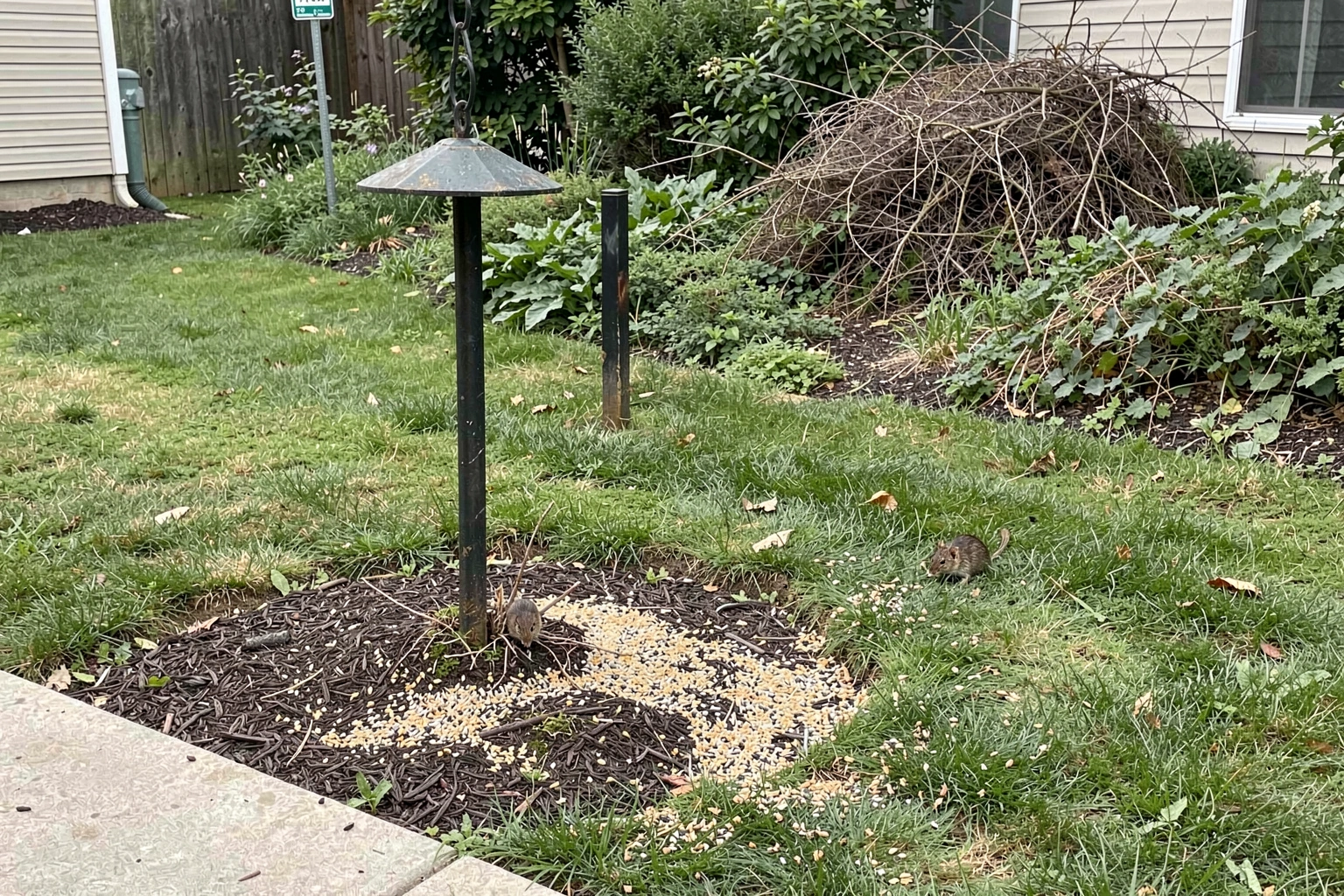
Do Snakes Eat Bird Seed? What to Do If One Shows Up
Find out if snakes eat bird seed, why they visit feeders, and what to do to deter and stay safe today.
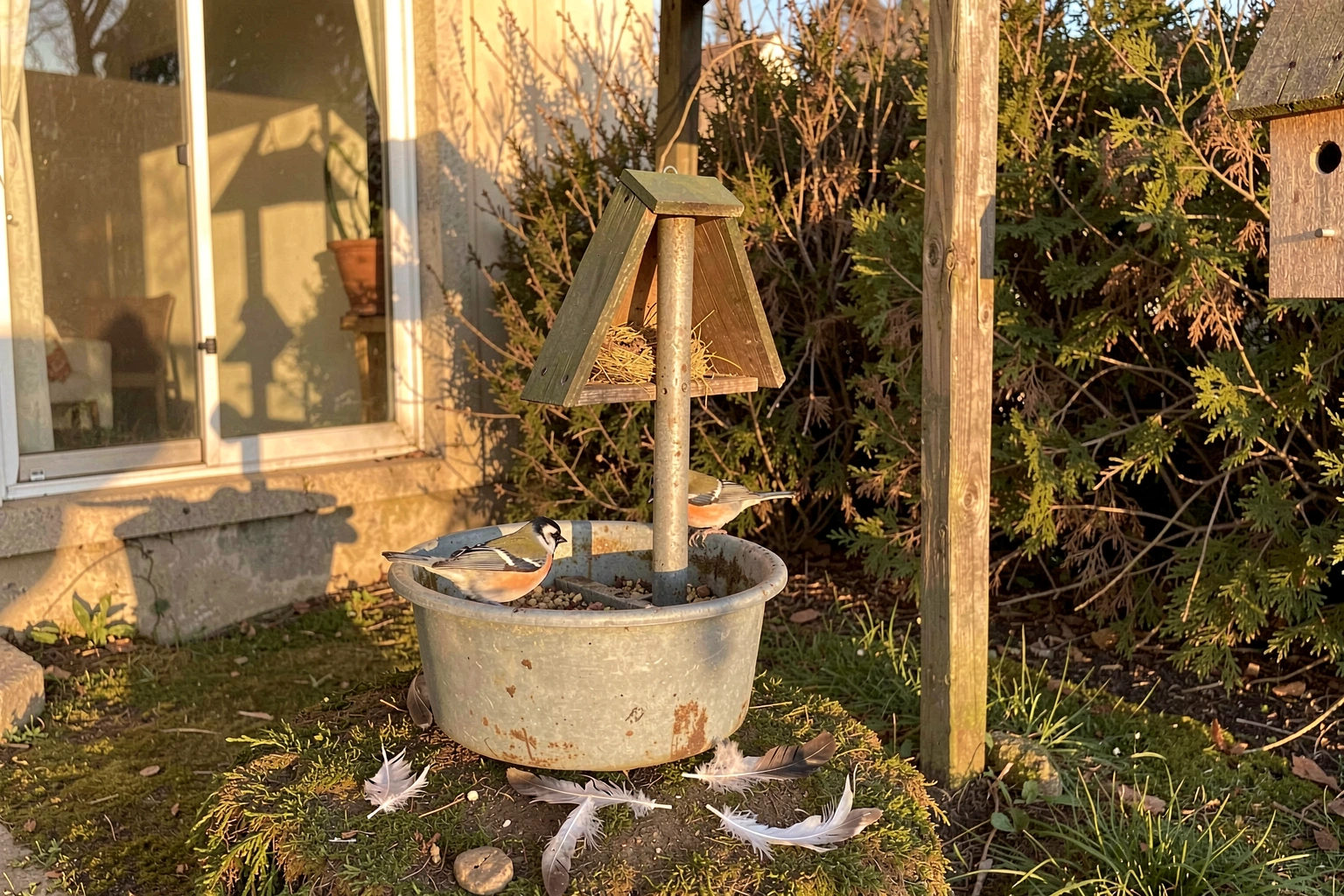
What Eats a Small Bird: Predators, Clues, and Fixes
Learn which predators eat small birds, how to spot clues, confirm culprits, and take quick steps to protect backyard bir
What Bird of Prey Eats Pigeons: Common Raptors & ID Tips
Which raptors eat pigeons: peregrine, Cooper’s, goshawk, merlin, red-tailed, kestrels, owls; ID tips, risks and how to保护