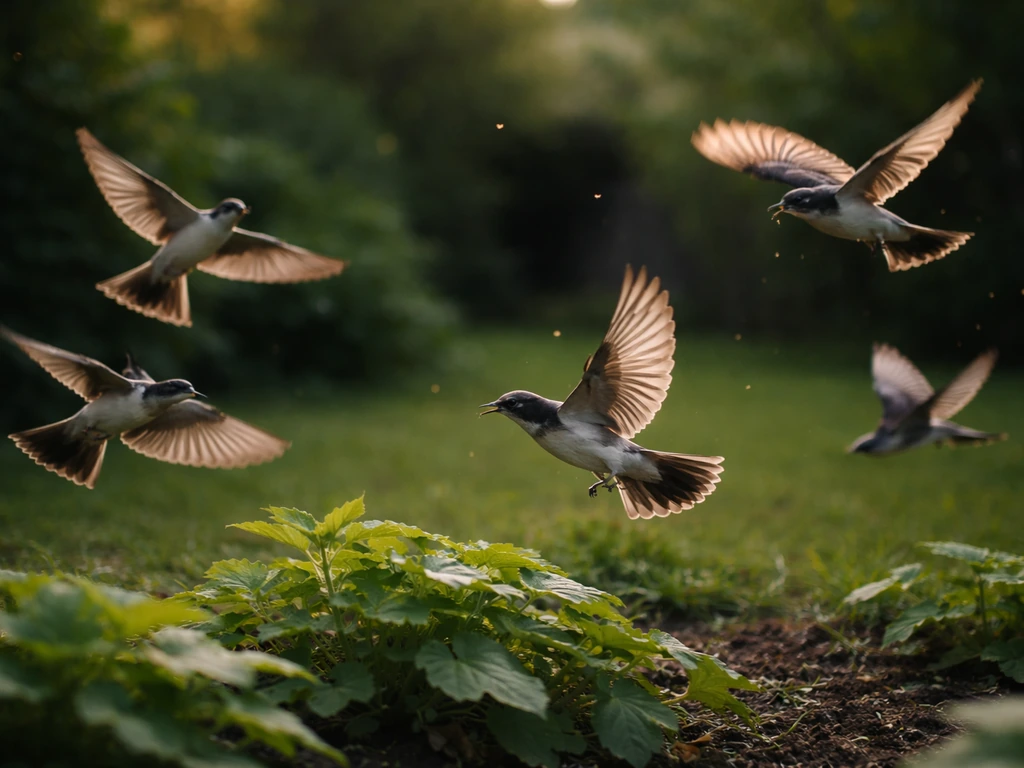
Swallows, swifts, flycatchers, and nighthawks are the birds most likely eating the flies in your yard. Barn Swallows in particular are specialists: flies (including house flies and horse flies) make up the bulk of their diet. But the honest answer is that dozens of species eat flies, and which one you're seeing depends heavily on where you live, your habitat type, and whether the flies are airborne or crawling around on the ground or near a feeder.
What Bird Eats Flies? Identify Fly-Eating Birds in Your Yard

Maya Bennett
31 May 2026
Common fly-eating bird types you'll actually see
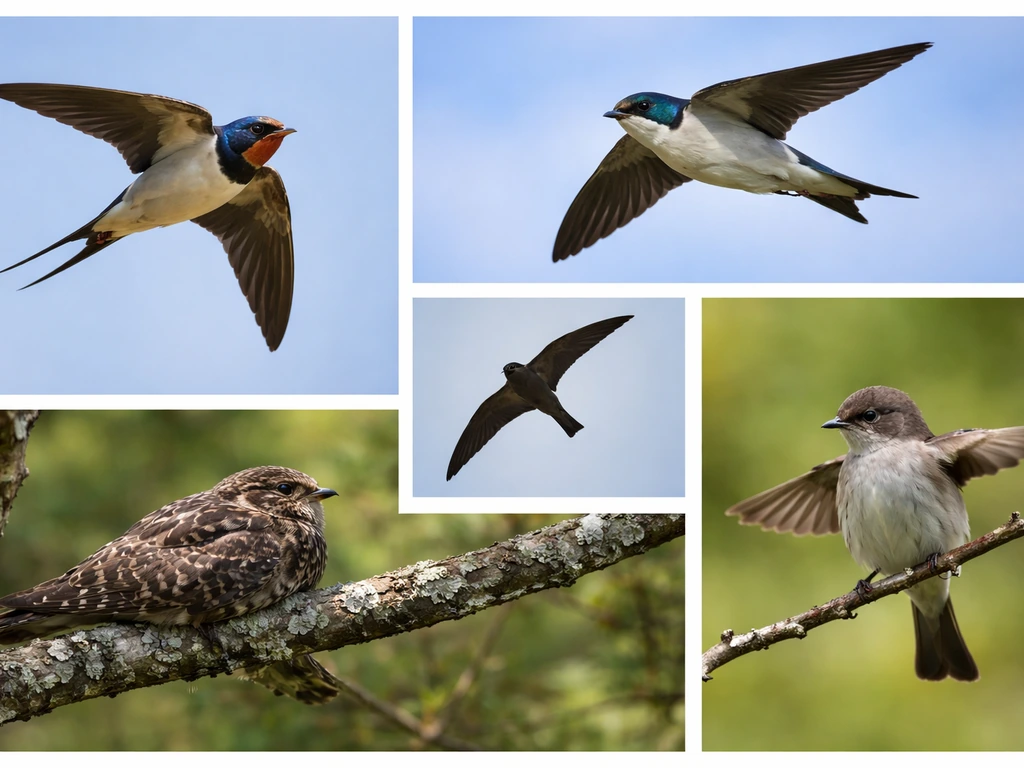
Cornell Lab groups swallows and martins, swifts, nightjars, and blank" rel="noopener noreferrer">flycatchers together as aerial insectivores, meaning birds that catch insects while flying. These are the ones you want to be thinking about when you see something darting around after flies in open air. But there's a second category that often gets overlooked: ground-foragers like Northern Mockingbirds and thrashers that pick insects (including flies) off surfaces, lawns, and around feeders. Both groups eat flies regularly; they just do it differently. Swallows, martins, and other aerial insectivores also take caterpillars when they are available in their habitat what bird eats caterpillars.
- Aerial insectivores (catch flies mid-flight): Barn Swallow, Tree Swallow, Purple Martin, Chimney Swift, Common Nighthawk, Eastern Kingbird
- Perch-and-sally insectivores (watch from a perch, dart out to catch flies): Eastern Phoebe, Great Crested Flycatcher, Eastern Wood-Pewee, Scissor-tailed Flycatcher
- Ground and surface foragers (pick flies off grass, soil, or feeder areas): Northern Mockingbird, American Robin, European Starling, Common Grackle
- Opportunistic fly-eaters (flies aren't the main diet, but they'll take them): House Sparrow, House Wren, Yellow Warbler, many other insectivores
Don't discount the opportunists. Many common backyard birds will snap up a fly when one lands nearby, even if flies aren't a staple. If you're seeing a lot of flies near a feeder or spilled seed, you may attract more ground-foragers than aerial hunters, which tells you something useful about where the fly problem is originating.
Species ID by behavior: catching flies in the air vs picking them off surfaces
The single most useful thing you can observe is how the bird is actually hunting. This tells you the species family immediately, which then narrows down your ID to just a handful of candidates.
Hawking: the mid-air catch
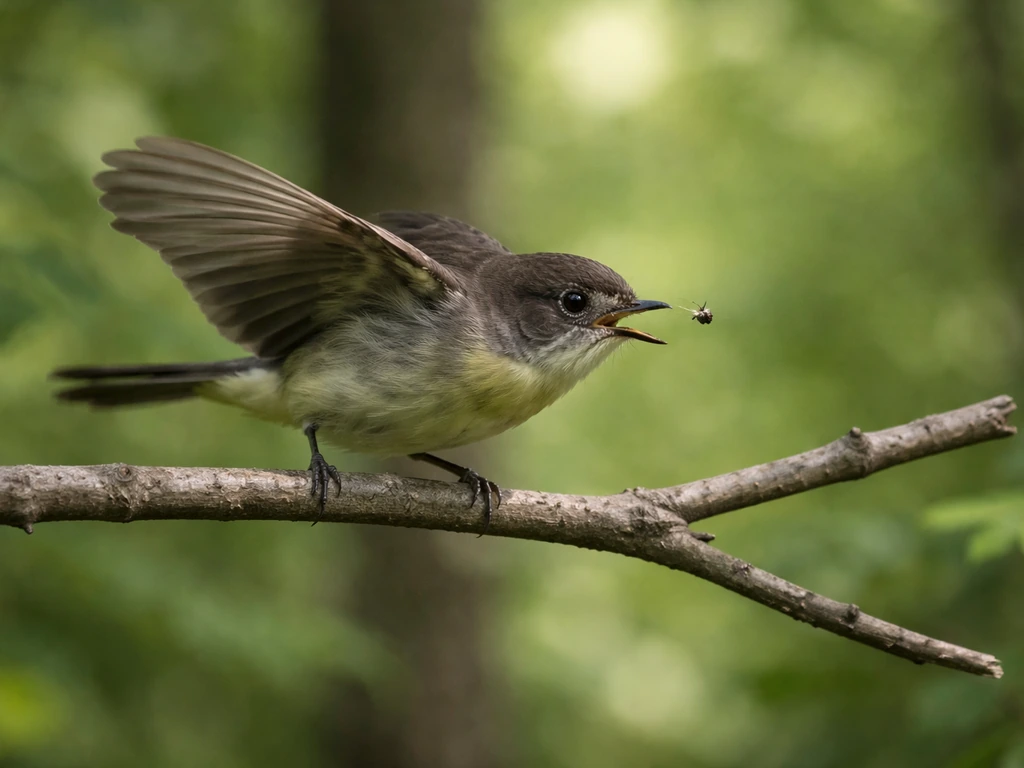
blank" rel="noopener noreferrer">Hawking is the technical term for flying out from a perch, snatching an insect in mid-air, and returning to a perch (or moving to a new one). Flycatchers are the textbook example: you'll see them sit motionless on an exposed branch or wire, then launch out in a quick, deliberate arc to grab something and swing back. Eastern Kingbirds do exactly this, sallying out from open perches to catch flying insects, especially in summer. If it looks like a small bird doing repeated short sorties from the same spot, you're almost certainly watching a tyrant flycatcher.
Continuous aerial foraging
Swallows, swifts, and nighthawks don't return to a perch between catches. All About Birds describes Common Nighthawks as grassland and open-area birds that are active at dawn and dusk (crepuscular), not exclusively night-only.
They stay airborne, banking and sweeping through the air for extended periods. Chimney Swifts are perhaps the extreme case: they fly almost constantly and are nearly never seen perched except at a nest or roost. Their wingbeat pattern is rapid and almost mechanical, with long, narrow, curved wings making them look like a flying cigar. Barn Swallows also stay low and fast, with a more fluid, graceful flight pattern and that distinctive long forked tail.
If the bird never seems to land and is just looping through the air over your yard, you're watching continuous aerial foraging.
Ground and surface picking
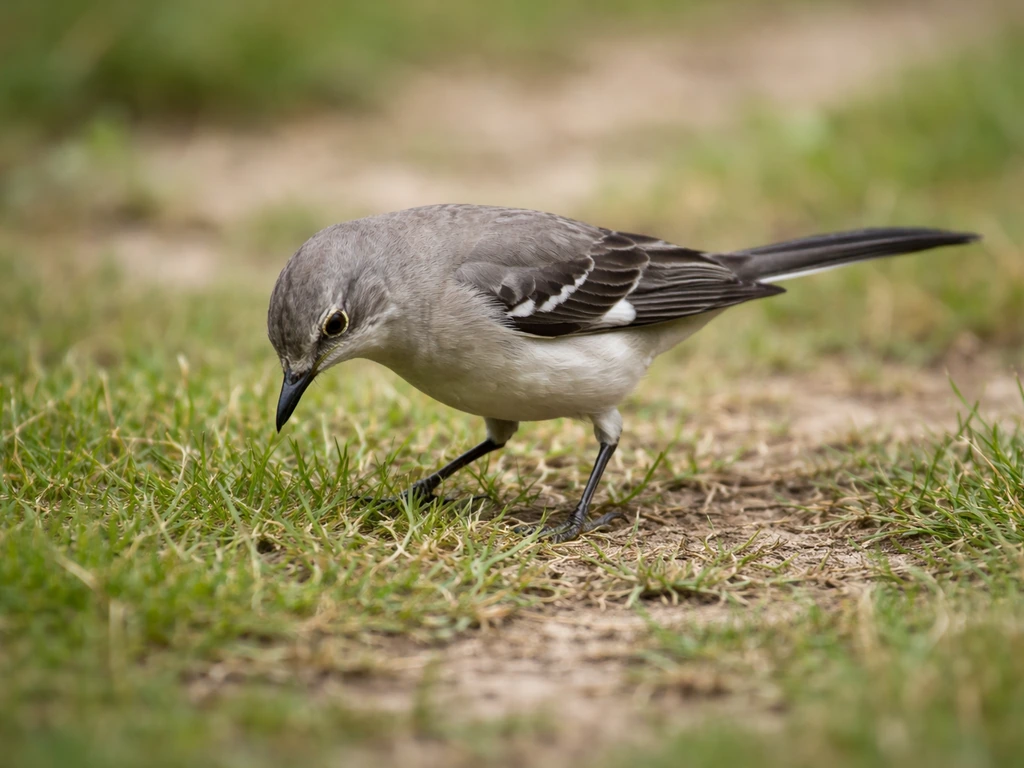
blank" rel="noopener noreferrer">Northern Mockingbirds walk and run across grass, pausing to snatch insects at or near ground level. They'll also watch from a low perch and drop down to something they've spotted below. If you see a bird actively walking across your lawn and pecking at the surface rather than flying after anything, it's foraging on surface insects, which can absolutely include flies resting on soil, around compost, or near pet waste.
Top fly-eating birds by region and habitat
| Bird | Fly-eating method | Typical habitat | When you'll see it |
|---|---|---|---|
| Barn Swallow | Continuous aerial, low over fields/water | Open fields, farms, near water | Spring through early fall |
| Tree Swallow | Continuous aerial, near water | Fields, marshes, shorelines | Spring through fall; flies make up ~40% of diet |
| Purple Martin | Continuous aerial, higher up | Semi-open country near water | Spring/summer; needs nest boxes in the east |
| Chimney Swift | Continuous aerial, rarely lands | Towns, cities, open sky | Spring through fall; flies almost non-stop |
| Common Nighthawk | Aerial, dawn and dusk | Grasslands, open areas, urban rooftops | Crepuscular; most visible at dusk |
| Eastern Kingbird | Perch-and-sally | Forest edges, open fields, roadsides | Summer; sits on exposed perches |
| Eastern Phoebe | Perch-and-sally | Near water, woodland edges, bridges | Early spring arrival; tail-wagging ID cue |
| Northern Mockingbird | Ground/surface foraging | Suburbs, gardens, open lawns | Year-round in South; summer in North |
Purple Martins deserve a special mention for anyone dealing with flies near water or open spaces. The National Park Service notes they eat flies along with dragonflies, grasshoppers, and other flying insects. They're also the birds most sensitive to housing: in the eastern U.S., they've become almost completely dependent on human-provided nest boxes and gourds, so if you want martins, you need to set up appropriate housing and open the cavities at the right time based on your region.
If you're interested in birds that hunt larger flying insects, it's worth knowing that many of the same aerial insectivores that eat flies also take dragonflies and other prey depending on what's available. The overlap between fly-eaters and dragonfly-eaters is significant, especially among swallows.
How to attract fly-eating birds safely today
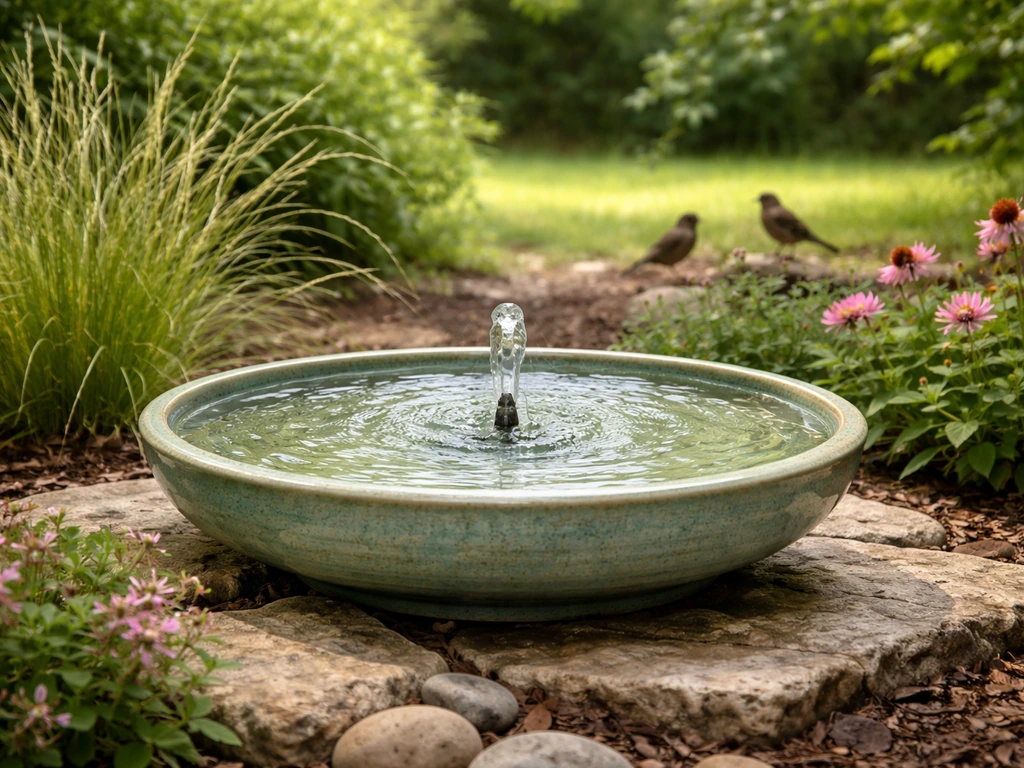
The good news is that attracting these birds mostly comes down to providing the right habitat rather than putting out food. Aerial insectivores don't visit seed feeders, so the strategy is different from standard backyard birding.
Water is the single most effective step
Cornell Lab specifically recommends focusing on water resources to support the insects that fly-eating birds depend on. A clean, moving water source (a birdbath with a dripper or small solar fountain, or even a shallow dish near garden beds) supports insects in multiple life stages and signals to aerial insectivores that there's food nearby. Keep water fresh and clean it at least once per week to prevent it from becoming a fly-breeding site itself.
Plant choices that build an insect buffet
Native flowering plants support far more insect diversity than ornamentals, and more insects mean more birds. Aim for a mix that blooms across the season. Patches of native grasses, wildflowers, and shrubs near open lawn create ideal hunting conditions for both aerial and ground-foraging fly-eaters. The key is creating edge habitat: a transition between open space (where swallows can hunt) and some vertical structure (where flycatchers can perch).
Nest boxes for martins and tree swallows
If you want Purple Martins or Tree Swallows, housing matters. Martin gourds or multi-cavity housing should be placed in open areas near water, away from trees that could shelter predators. The Purple Martin Conservation Association recommends cavities that open for easy inspection. Check your region's expected arrival window before putting housing up, because timing the opening of entrance holes correctly is important for attracting martins and discouraging House Sparrows.
Skip the broad-spectrum insecticides
This is probably the most important thing on this list. Broad-spectrum pesticides, especially neonicotinoids, kill the very insects that fly-eating birds depend on. Cornell University's wildlife health resources note that neonicotinoid toxicosis can impair reproduction, immune function, and development in exposed animals, and there's no treatment once wildlife is affected. The EPA continues to assess neonicotinoids like imidacloprid for their effects on listed species. If you spray your yard to kill flies, you're also removing the food supply that keeps insectivorous birds around, and potentially poisoning the birds directly through their prey.
- Add a moving water source (dripper, fountain, or shallow dish) and clean it weekly
- Plant native flowering species to support diverse insect populations across the season
- Create edge habitat: open hunting space adjacent to some perching structure
- Put up appropriate nest boxes for martins or swallows if your habitat fits
- Stop or reduce broad-spectrum insecticide use in the yard
- Leave leaf litter and some bare soil patches where ground-foraging birds can hunt
What NOT to do: unsafe feeding, spoiled food, and feeder hygiene
Fly-eating birds don't come to seed feeders, but your feeder setup can still make the fly problem worse if you're not careful. Spilled seed, wet hulls, and old suet all attract flies and other insects that can then draw in ground-foraging birds. That's not necessarily bad, but it can become a problem if the rotting material is also a disease vector.
Spoiled or wet seed is one of the most overlooked risks in backyard birding. Damp seed under a feeder grows mold, ferments, and becomes a fly magnet within days, especially in warm weather. This matters both because it attracts pest flies (rather than the natural insect diversity that benefits birds) and because moldy or fermented food can harm birds directly. Clean up fallen seed and hulls under your feeders regularly, and especially after rain.
Feeder cleaning schedule
Project FeederWatch recommends cleaning seed feeders at least once every two weeks, and more often during warm or damp conditions. The Minnesota DNR suggests a bleach solution of two ounces of bleach per gallon of water for thorough cleaning. Iowa DNR recommends a 10 percent bleach solution monthly for feeders and waterers, with birdbaths scrubbed and freshened at least once per week. The CDC adds that you should always wear disposable gloves when cleaning feeders and baths, and never clean them in a kitchen sink or food-prep area.
- Clean seed feeders every two weeks minimum (weekly in hot, humid weather)
- Use a diluted bleach solution (2 oz bleach per gallon of water, or a 10% solution) and rinse thoroughly
- Wear disposable gloves and clean feeders outside, never in food prep areas
- Remove fallen seed, hulls, and wet debris under feeders every few days
- Change birdbath water at least weekly and scrub the basin to prevent mosquito and fly breeding
- Discard suet that smells rancid or looks discolored; spoiled fat attracts flies and can sicken birds
- Never put out bread, table scraps, or kitchen waste near feeders; these rot quickly and draw pest flies
A note on pets: if you have dogs or cats and there are flies congregating around pet waste in the yard, you're looking at a different fly source entirely. Ground-foraging birds like mockingbirds and starlings may show up, but the real fix is waste cleanup. Attracting birds to manage a fly population that's being fed by pet waste is managing the symptom rather than the cause.
Troubleshooting: figuring out whether the bird is really eating flies
It's not always obvious what a bird is actually catching, especially at a distance. Here's how to work through the confusion practically.
Watch the hunt, not just the bird
Spend a few minutes watching the bird's actual foraging behavior rather than just trying to ID it visually. Is it chasing something you can see in the air? Is it picking at the ground? Is it returning to the same perch after each chase? If you can see it catch something mid-air on a sunny day when flies are active, and the prey is small and quick, it's almost certainly an insect, and flies are a likely candidate depending on habitat.
Match the bird to the fly type
House flies and blow flies breeding around compost or garbage will attract ground-foraging birds more than aerial hunters, because those flies spend a lot of time on surfaces. Horse flies and deer flies near water or in fields are exactly what Barn Swallows and Purple Martins are built to catch. Small, swarming midges over a pond are what Tree Swallows and swifts are hunting in large numbers. Matching the fly type to the bird helps you figure out who should be showing up.
Common confusion scenarios
"I see lots of flies but no fly-eating birds." Check whether you've been using insecticides recently, whether there's standing water that's breeding flies (which may not produce enough airborne insects to attract aerial hunters), or whether your yard is too enclosed with tree canopy for swallows to hunt comfortably. Aerial insectivores need open sky to work.
"I think the bird is eating flies but it might be something else. If you are specifically dealing with Japanese beetles, the same approach of matching the bird to the insect it prefers can help you figure out what bird eats japanese beetles in your area. " Many of the same birds that eat flies also eat caterpillars, beetles, and other insects depending on what's most available.
If you are specifically wondering what bird eats butterflies, it helps to look at the same aerial insectivore behavior and habitat clues used for fly-eaters eat flies. Many of the same birds that eat flies also hunt caterpillars when they're available. A Barn Swallow isn't going to turn down a flying ant or a moth just because it isn't a fly. Don't worry too much about confirming the exact prey.
If you're seeing aerial insectivores in your yard, they're doing good work regardless of exactly what's on the menu that day.
What to photograph and observe
- Flight pattern: continuous looping vs. perch-and-sally sorties vs. ground walking
- Wing shape: long and narrow (swifts, swallows) vs. shorter and rounded (flycatchers)
- Tail shape: forked (Barn Swallow), notched (Tree Swallow), squared (flycatchers)
- Time of day: dawn/dusk activity strongly suggests Common Nighthawk
- Location of hunting: high aerial = swifts/martins, low over fields = swallows, from perch = flycatchers, on ground = mockingbirds/thrashers
- Body size and coloration for species-level ID once you've narrowed the family
If you're regularly seeing swarms of a particular insect and want to know which birds are likeliest to respond, think about the habitat that insect prefers. Dragonfly-heavy yards near ponds attract many of the same aerial insectivores that eat flies, so there's significant overlap in the species you might attract with similar habitat improvements.
Your next practical steps: add moving water today, commit to a feeder-cleaning schedule if you run one, cut any insecticide use, and then spend ten minutes watching what's already hunting in your yard. The birds that eat flies are almost certainly already there or passing through. Making the habitat work for them is mostly about stopping the things that drive them away.
FAQ
Can I expect “fly-eating” birds to also reduce mosquitoes?
Yes, but it is usually accidental. Birds that eat flies are opportunistic for small, easy prey, so they may also catch mosquitoes, midges, or other flying insects. If the bird is regularly sallying from perches into open air, it is likely targeting small flying insects, and flies are only one possibility.
Why do I see lots of flies but no birds that catch them in the air?
Not reliably, and it depends on the hunting style. Aerial insectivores need open space and a clear hunting corridor, so if your yard is enclosed by dense canopy or clutter, they may struggle to catch anything even if insects are present. Ground-foragers will still visit, so you can see activity at the ground level even when swallows or kingbirds are absent.
Will putting out more bird feeders solve my fly problem?
Not as a primary fix. Many fly-eating birds do not reliably use seed feeders, and if you rely only on feeders you may attract birds without improving the insect population they need. The highest payoff is supporting insects with native plants and reliable water, plus removing the specific attractants like spilled seed and wet, rotting food under feeders.
Do birds eat flies enough to eliminate the fly source in my yard?
Yes, depending on what is attracting the flies. If flies are breeding in standing water, spilled produce, compost, or pet waste, birds may show up but they cannot eliminate the source. Address the breeding sites first, then observe whether aerial hunters increase over the following days.
How can I tell if a bird is catching flies mid-air or picking them off the ground?
You can, by matching behavior and perch use. “Hawking” birds (like flycatchers) typically return to an exposed perch between catches, while continuous aerial foragers (like swifts or nighthawks) stay on the wing with long, sweeping passes. If you never see perching and the bird keeps looping, expect a continuous aerial hunter rather than a perch-based one.
Will insect traps or yard sprays attract more birds that eat flies?
Insecticide exposure can reduce both the fly population and the birds’ food base. Even if you kill “target flies,” you may also remove other insects that aerial insectivores rely on, and poisoned prey can harm birds indirectly. If you want birds back, the safest approach is to stop broad-spectrum spraying and focus on habitat and water first.
Can my feeder setup be attracting more flies than it is attracting fly-eating birds?
It can, and it often does, especially if the bird shifts from aerial hunting to surface pecking. Damp seed, wet hulls, and old suet can create a micro-food situation for both flies and other insects, which brings ground-foragers closer. That can be useful, but it also risks mold growth and odors, so the cure is cleanup and a tighter feeder routine.
What if my flies seem to be around water, not in open air?
Sometimes, and the “fly” you see may be different from the fly you suspect. For example, horse flies and deer flies are often tied to fields or water edges, which changes which birds you might notice. If your flies are concentrated near a pond, expect more interest from water-associated aerial hunters like swallows and martins.
Does the time of year affect which fly-eating birds show up?
Yes, and it helps interpret bird absence. Some fly-eating species are strongly tied to a certain seasonal window, and timing matters for nest-site dependent birds like Purple Martins. If you put up housing too early or open entrances at the wrong time for your region, you may see low use even if the habitat is otherwise perfect.
What should I change first if birds do show up but the fly problem persists?
Often, but the “real” difference is where the bird catches. If birds are taking flies that rest on surfaces or crawl near ground debris, you may need to reduce attractants on the ground (cleanup, compost management, and waste control). If birds are hawking over open space, you need to keep insects plentiful without making the yard too enclosed or pesticide-treated.
Next Articles
What Bird of Prey Eats Pigeons: Common Raptors & ID Tips
Which raptors eat pigeons: peregrine, Cooper’s, goshawk, merlin, red-tailed, kestrels, owls; ID tips, risks and how to保护
Which Bird Eats Mice? How to Identify Mouse Predators
Identify which birds eat mice using hunting cues, time of day, calls, and perch habits, plus safe yard steps.
What Bird Eats Ducks? How to Identify Duck Predators
Identify which birds, like hawks and owls, prey on ducks and learn proof cues and humane steps to reduce risk.