If a backyard bird eats plastic, the most likely outcomes range from passing a small soft fragment without obvious harm all the way to a life-threatening gut blockage, internal injury, or slow starvation. The size, shape, and flexibility of the plastic matters enormously. A tiny sliver of soft wrapper is far less dangerous than a length of monofilament fishing line or a rigid fragment with a sharp edge.
What Happens If a Bird Eats Plastic and What to Do Now

Maya Bennett
1 Jul 2026
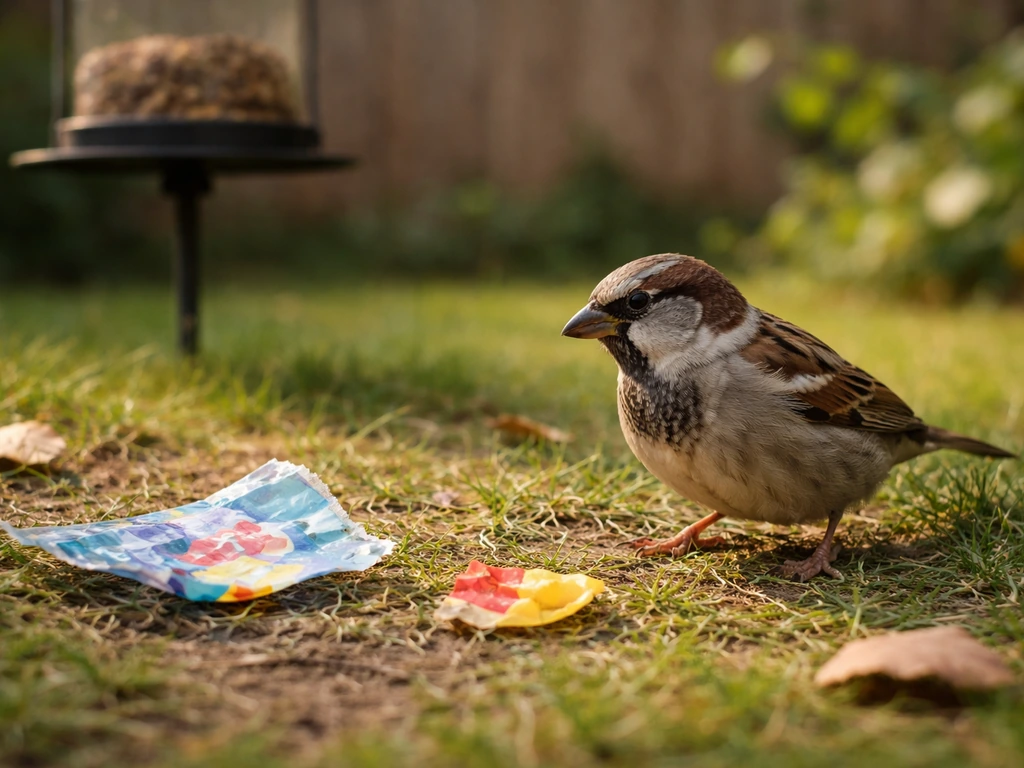
What you should do right now depends on what you actually saw, how the bird is acting, and whether you can get eyes on it again. If the bird looks sick, cannot fly, is sitting fluffed on the ground, or is gagging, treat it as an emergency and contact a licensed wildlife rehabilitator or avian vet today, not tomorrow.
If a bird eats a poisonous plant, act quickly by removing access to the plant and contacting an avian vet or wildlife rehabilitator for guidance treat it as an emergency.
What counts as 'plastic' birds eat in the yard
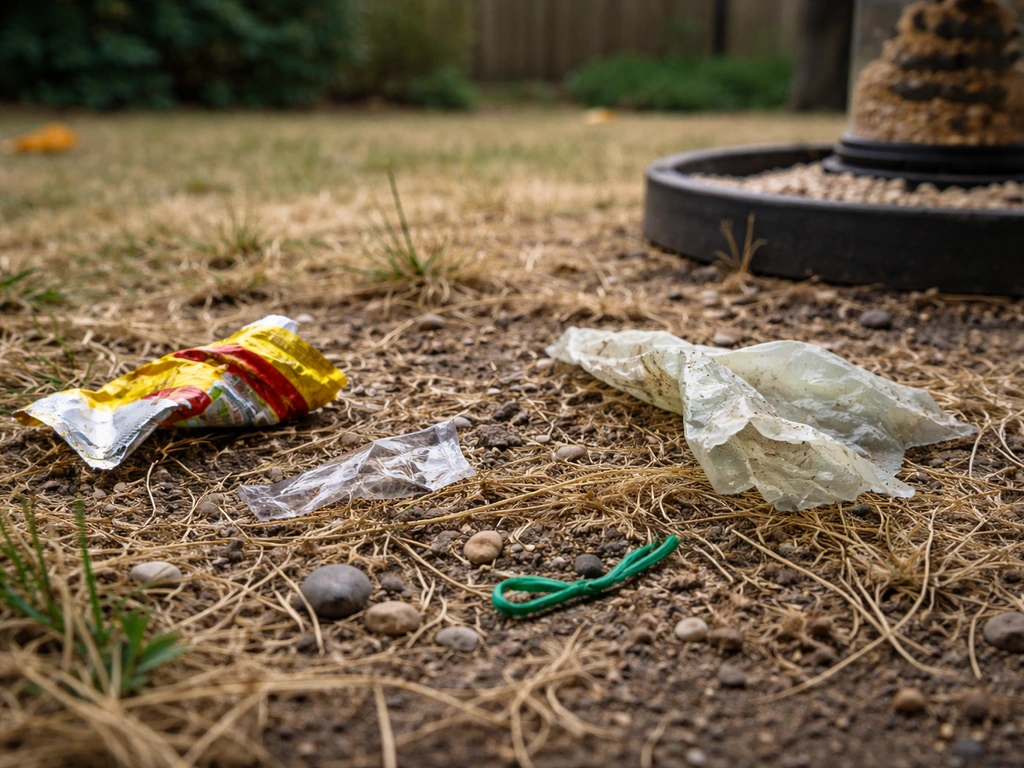
Backyard birds do not deliberately seek out plastic, but they will peck at colorful, shiny, or food-sized debris on the ground and around feeders. The pieces that end up being swallowed are usually small enough to look like a seed, a berry, a grub, or nesting material. Knowing which types show up near feeders helps you identify and remove hazards before they become a problem.
- Wrapper and bag fragments: pieces of chip bags, seed packaging, or grocery bags that blow into a yard and settle near ground-feeding areas
- Packaging ribbon and plastic ties: the thin, shiny strips used to close seed bags or attach price tags, which birds may tug at like nest-building material
- Styrofoam beads or foam pellets: shed from packaging fill and scattered near garbage cans or recycling bins; look like pale seeds to ground feeders
- Fishing line and monofilament: draped over branches or tangled in shrubs near water or docks; even a short length can be swallowed or cause entanglement
- Twist ties and bread bag clips: dropped near picnic tables or outdoor kitchens; small enough to be swallowed whole by medium-sized birds
- Plastic mesh and netting: berry netting or fine produce bags birds get tangled in and may ingest fiber strands from while struggling free
- Microplastic debris: tiny granules from degrading bottles or garden containers that blend in with grit and gravel that birds deliberately swallow for digestion
Fishing line deserves its own mention because it is both an ingestion and an entanglement risk. Even a few inches of monofilament wrapped around a leg, wing, or neck can cut off circulation and kill a bird within hours. Wildlife agencies classify loose fishing line as one of the most dangerous single items a bird can encounter in a backyard or waterside setting.
Most likely outcomes and symptoms after ingestion
The research on plastic ingestion in birds comes mostly from marine species like albatrosses and shearwaters, but similar pathways apply to backyard birds. Clinical reviews and case evidence point to four main harm mechanisms: physical blockage, internal injury, reduced food intake leading to emaciation, and chemical leaching from contaminated plastics.
Gut obstruction and impaction
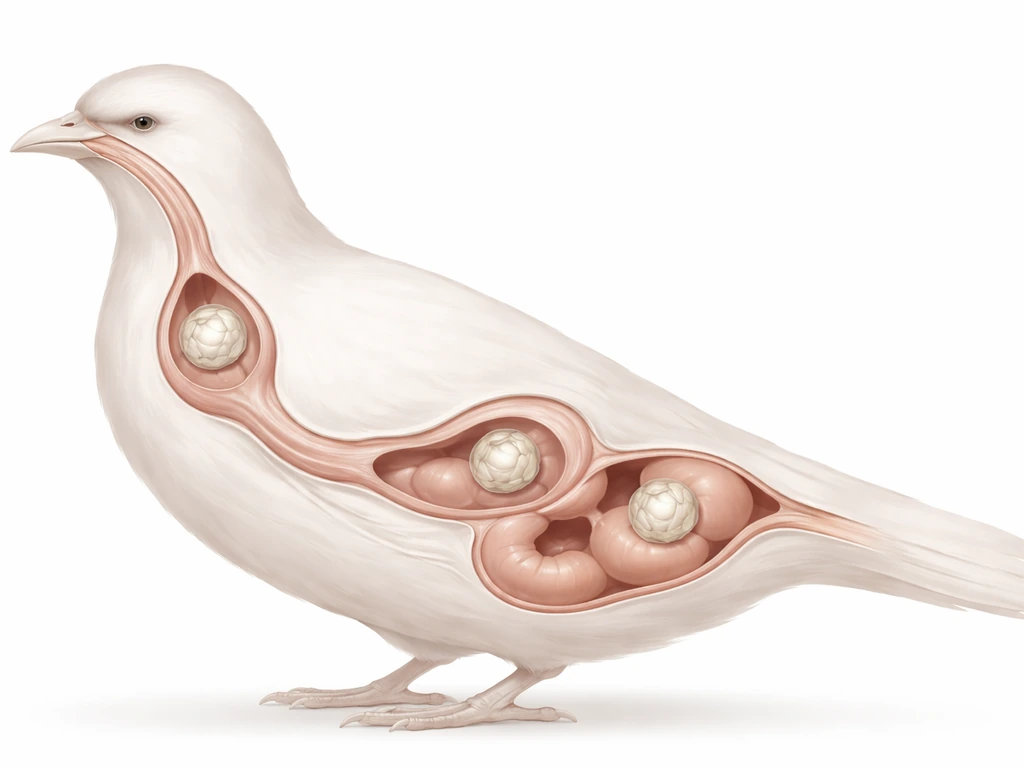
This is the most serious immediate risk. Plastic fragments, especially rigid or balled-up pieces, can lodge in the crop, proventriculus, or ventriculus (the bird's muscular stomach). Soft plastics like bag fragments can compact with food and create an impaction that prevents anything else from passing through. Studies on backyard poultry confirm that even soft plastic material can cause obstructions significant enough to be fatal if not treated. When a blockage forms, the bird cannot digest food normally and begins to deteriorate quickly.
Internal injury and perforation
Sharp plastic edges, rigid fragments, or pointed pieces can lacerate or perforate the GI tract as they move through. Perforation causes bacteria from the gut to enter the body cavity, leading to infection and rapid deterioration. This is less common with soft plastics but is a real risk with rigid fragments, broken bottle caps, or hard packaging corners.
Reduced feeding and slow starvation
A partial blockage does not always produce obvious acute symptoms right away. Instead, the bird eats less, absorbs fewer nutrients, and gradually loses body condition. In marine bird research, this is called the 'satiation effect,' where a stomach partly full of plastic leaves the bird feeling full even when it is not getting enough calories. You may notice a bird returning to your feeder less often or looking thinner over several days.
Entanglement risk from stringy plastic
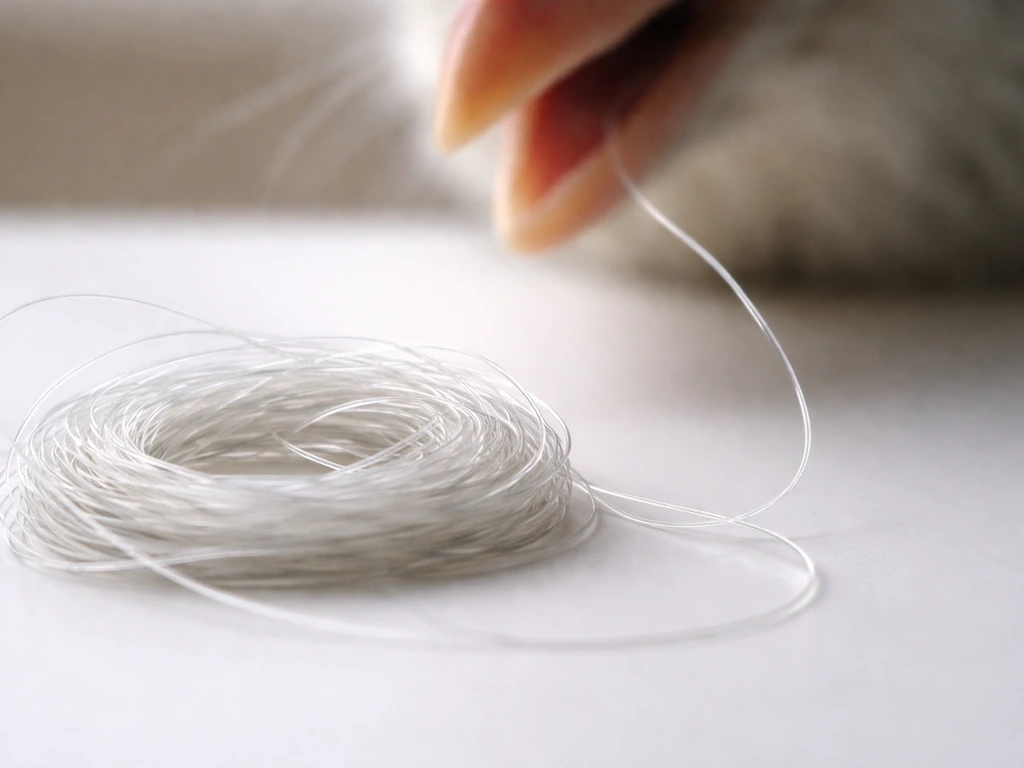
Monofilament fishing line, plastic twine, and stringy packaging material that is ingested can catch on internal structures or wrap around the tongue, beak, or digestive tissue. The same materials that entangle externally can create similar mechanical damage internally. If you see a bird with line hanging from its mouth, that is a veterinary emergency.
Warning signs to watch for
These are the clinical signs most commonly documented in birds with GI foreign bodies. If you see one or more of these in a bird you suspect has eaten plastic, do not wait to see if it improves on its own.
- Sitting fluffed up or hunched on the ground, not moving away when approached
- Obvious regurgitation or repeated neck-stretching and head-bobbing
- Open-mouth breathing, gasping, or audible clicking/wheezing (especially urgent if plastic may be in the trachea)
- Swollen or distended abdomen
- Absent or very scant droppings, or droppings that appear bloody
- Lethargy and weakness, unable or unwilling to fly
- Complete refusal to eat over several hours
- Visible fishing line or plastic string hanging from the beak or cloaca
What to do right now
Your goal in the first few minutes is to assess without causing more stress, contain safely if the bird needs help, and get expert guidance as fast as possible. Here is a practical triage sequence.
- Observe from a distance first. Note whether the bird is standing, alert, and moving normally or whether it looks fluffed, grounded, or distressed. A bird that flies away when you approach is a much better sign than one sitting still.
- If the bird needs to be contained, use a cardboard box with small ventilation holes punched in the sides. Gently guide or place the bird inside, cover the top, and keep the box in a quiet, dark, warm location. Darkness reduces panic.
- Do not offer food or water. Multiple wildlife hospitals and rehabilitators are emphatic about this: giving food or water to an injured or potentially obstructed bird without veterinary guidance can make things significantly worse and delay proper treatment.
- Do not try to pull out any visible plastic or line yourself. If monofilament is wrapped around a leg or wing, do not tug on it. If a piece is hanging from the beak, leave it. Pulling can cause internal tearing.
- Contact a licensed wildlife rehabilitator or avian vet immediately. In the U.S., the Wildlife Rehabber directory and the NWRA (National Wildlife Rehabilitators Association) finder can locate your nearest contact. Many wildlife hospitals have emergency lines. Do not wait until morning if the bird looks sick.
- While you wait for guidance, keep the bird contained, quiet, and at room temperature. Avoid excessive handling. The box method recommended by wildlife clinics like Tufts and the Alabama Wildlife Center is intentionally simple: box, darkness, quiet, and a call to a professional.
The myth: 'It only pecked at it once, it will be fine'
This is the most common thing people tell themselves after watching a bird interact with plastic debris. The reality is that you usually cannot tell by watching whether material was swallowed. A single peck at soft wrapper is unlikely to cause serious harm in a larger bird like a jay or starling. A smaller bird swallowing even a centimeter of plastic string is a different situation entirely.
The rule of thumb: if the bird is acting normally after an hour and you are certain it only had brief contact with soft, flat plastic, you can monitor from a distance. If you saw it swallow something, if it is a small bird, or if it shows any of the warning signs listed above, treat it as a potential emergency and make the call.
What vets can actually do
The reason professional help matters is that avian vets have real options that you do not. Depending on where the foreign body is located, a vet can use radiography to visualize it, endoscopy to examine and retrieve material from the crop, esophagus, or proventriculus, or surgery to relieve a full impaction. Endoscopic retrieval is often possible without major surgery for material lodged in the upper GI tract. The sooner a bird reaches care, the better the odds of a non-surgical outcome.
How to respond if you find plastic in or near a bird feeder
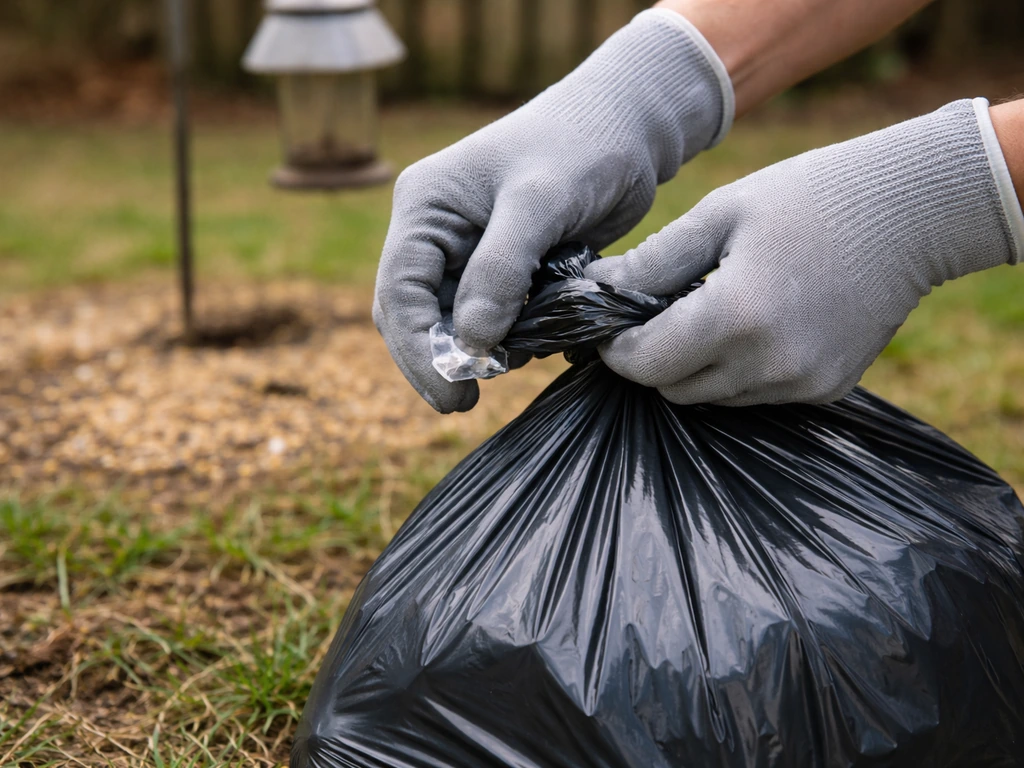
Finding plastic debris at or around a feeder does not mean a bird has already eaten it, but it does mean you need to act on it now. Here is the sequence I use.
- Remove the plastic immediately. Pick it up with gloves or a bag, seal it in your trash, and check the surrounding ground for more fragments. Do a close sweep in a two-meter radius around the feeder base.
- Disassemble and clean the feeder. Debris, husks, and droppings build up in corners where small plastic pieces can hide. Use a stiff brush to scrub all surfaces, then disinfect with a 10% bleach solution (1 part bleach to 9 parts water). Rinse thoroughly and let it dry completely before refilling.
- Check seed bags and packaging before use. Plastic ties, bag clips, and torn packaging pieces can fall into a feeder station during refills. Always inspect what you are pouring.
- Scan the area for fishing line, plastic netting, or ribbon. These are the highest-risk items because of their entanglement and ingestion combination threat. Remove and dispose of them in a sealed container.
- If you notice a bird in the area showing any of the warning signs above, follow the triage steps in the previous section.
Prevention: remove plastic hazards and cut ingestion risk
Most plastic hazards around feeders come from three sources: loose trash and packaging that blows in, materials used in gardening or yard maintenance, and items carelessly left near outdoor eating or activity areas. Addressing all three is easier than it sounds.
Yard and feeder area check
- Do a ground-level check around all feeder stations at least once a week, looking for plastic fragments, twist ties, bag remnants, and any type of string or line
- Keep trash cans with tight-fitting lids within the feeder vicinity so wind-blown debris does not scatter
- Remove plastic berry netting and fine produce bags from your garden; replace with paper or fabric alternatives if needed
- Cut and remove any monofilament fishing line you spot in trees, shrubs, or on the ground immediately and dispose of it in a sealed bin rather than a recycling bin (most monofilament is not accepted in standard recycling)
- Avoid using plastic-coated wire or plastic mesh near feeder poles or stands that birds perch on regularly
Materials to avoid entirely near birds
The U.S. Fish and Wildlife Service specifically advises against leaving out string, twine, or yarn as wildlife nesting material because birds can get entangled in or ingest these fibers. For prevention, check your yard for loose fibers like string, twine, or yarn and remove plastic hazards before birds can entangle in or ingest them. The same principle extends to plastic ribbon, plastic zip ties with cut tails, rubber bands, and any type of synthetic fiber that can unravel into strands. If you want to provide nesting material, short natural cotton strips or dried plant stems are lower-risk options.
Safe feeder and yard practices that also prevent other bird hazards
Reducing plastic risk is one part of a broader safe-feeder practice. Clemson’s Home and Garden Information Center recommends cleaning feeders and then disinfecting with a 10% bleach solution (1 part bleach to 9 parts water) to help control salmonella, after scrubbing off debris 10% bleach (1 part bleach to 9 parts water) to disinfect feeders. The same cleanup habits that remove plastic debris also reduce disease transmission, mold exposure, and other hazards. Here is how to combine them efficiently.
| Practice | How often | Why it matters |
|---|---|---|
| Full feeder disassembly and scrub | At least once a month | Removes debris, seed husks, and droppings where plastic can hide and pathogens breed |
| 10% bleach disinfection (1:9 bleach to water) | Every cleaning cycle | Kills Salmonella and other bacteria; rinse thoroughly before refilling |
| Ground sweep below feeder | Weekly | Catches fallen plastic, sharp debris, and spoiled seed before birds pick it up |
| Bird bath cleaning and water change | Every 2 to 3 days | Prevents disease; also removes debris that floats in near water sources |
| Seed storage in sealed hard containers | Ongoing | Prevents rodents that bring packaging debris; keeps seed dry and mold-free |
| Visual check for entangling materials | Every visit to feeder | Fishing line, ribbon, and string can appear overnight from wind or visitors |
Feeder material choice also matters. Metal and thick resin feeders hold up better over time and do not shed plastic fragments the way cheap thin-walled plastic feeders do when they crack or UV-degrade. If your feeder is brittle, faded, or visibly flaking, replace it. The small broken pieces it sheds are exactly the size that ground-feeding birds pick up.
When plastic isn't the main issue: other common food and feeder risks
Plastic ingestion is a real hazard, but it is worth keeping it in proportion. Most birds at well-maintained feeders are more likely to be harmed by contaminated or inappropriate food than by plastic. Moldy seed, fermented nectar, and human food scraps left in or near feeders cause far more documented harm in backyard populations than plastic debris does.
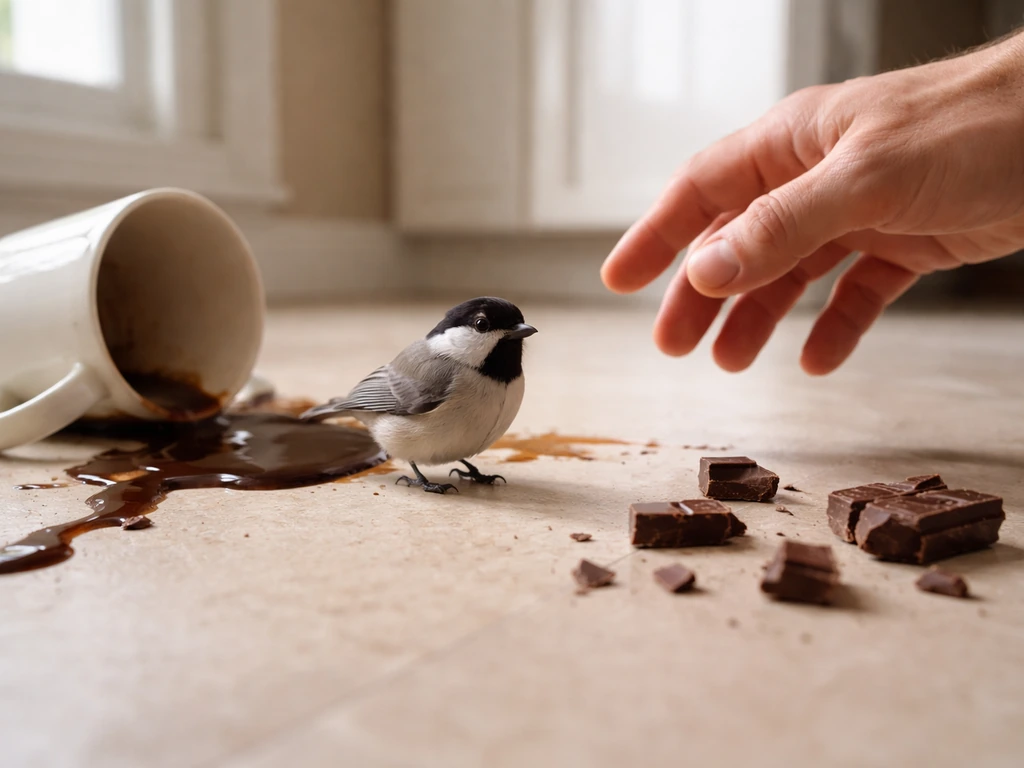
Chocolate is genuinely toxic to birds. The theobromine and caffeine in chocolate affect birds similarly to the way they affect dogs, and there is no safe threshold for backyard birds. If you have ever wondered whether a bird that pecked at a dropped piece of chocolate needs attention, the short answer is yes, monitor closely and contact a rehabber if you see any behavioral changes. The same urgency applies if a bird has accessed any food you are unsure about.
Other food risks that show up in real backyard situations include bread and processed human food (low nutritional value and can ferment quickly in warm weather), rice that has gone moldy in wet feeder trays, and seed mixes containing sulfite preservatives or salt added to human-grade mixes. None of these are as immediately dangerous as a gut obstruction from plastic, but over time they degrade body condition in ways that look very similar to the slow starvation associated with plastic satiation. If a bird at your feeder looks thin, lethargic, or has poor feather condition over several days, food quality is at least as worth investigating as physical hazards.
If you are also concerned about other toxic exposures such as what happens when a bird eats a poisonous plant, encounters Alka Seltzer, or has access to medications, the triage steps are nearly identical: contain calmly, do not feed or water, and get to a rehabilitator or avian vet as fast as possible. Birds cannot vomit, which means there is no safe at-home way to reverse an ingestion event once it has happened.
Finally, do not overlook physical injuries unrelated to ingestion. Window strikes, cat attacks, and wire or fence entanglement are the most common reasons birds end up grounded in backyards. If a cat has attacked or carried off a bird, treat the situation as urgent because injuries or internal damage may not be obvious right away cat attacks. A bird sitting stunned near a window may look similar to a bird with a GI obstruction. The triage approach is the same regardless of cause: observe, contain if necessary, call a professional, and do not offer food or water until instructed.
FAQ
If I think a bird swallowed plastic, should I try to pull it out of its mouth or give it something to “help it pass”?
Use a slow, quiet approach and a container you can secure (small towel, cardboard box with ventilation holes). Avoid grabbing with bare hands or forcing movement. If the bird is fluffed, weak, gagging, or has line hanging from the mouth, prioritize capture to keep it warm and still, then contact an avian vet or wildlife rehabilitator immediately.
Should I feed or give water to a bird that might have eaten plastic?
Do not offer food or water on your own if you suspect a swallow, blockage, or internal injury (especially if the bird is small, lethargic, or gagging). Food and drink can worsen an obstruction or increase risk of aspiration while the bird is stressed.
How long should I watch a bird before deciding it needs professional care?
If the bird seems alert and is acting normally, and you are confident it only had brief pecking at soft, flat plastic you can remove from the area, monitoring from a distance for about an hour can be reasonable. If it is a smaller species, you actually saw swallowing, or symptoms appear (fluffed posture, reduced feeding, trouble flying, open-mouth breathing, gagging), treat it as potentially serious and seek professional help.
Can a bird look okay at first after eating plastic, and then get worse later?
Yes. A bird may not show dramatic symptoms right away with a partial obstruction. Watch for gradual weight loss, fewer visits to feeders, decreased activity, and persistent dull or thin appearance over the next several days, even if it initially seemed fine.
What is different about what happens if the plastic risk is fishing line or string?
If you find fishing line or string, treat it as both ingestion and entanglement risk. Do not tug it. Keep the bird calm and call an avian vet or wildlife rehabilitator, since line can cut circulation or cause internal mechanical damage.
Are there safe at-home ways to make a bird vomit or clear the plastic?
Avoid trying to induce vomiting or using home remedies like oils, laxatives, or “clearing” foods. Birds cannot vomit, and these attempts can cause delays while the obstruction or injury progresses.
What signs mean this is an emergency rather than something I can monitor?
If the bird is breathing with effort, unable to perch or fly, repeatedly gagging, sitting fluffed for extended periods, or has visible line at the mouth, those are emergency signals. In those cases, do not wait for an appointment tomorrow.
Does the risk change if the plastic piece was rigid or sharp, even if the bird seems mostly normal?
Yes. If the bird took any material that could be sharp or rigid (broken bottle-cap edges, hard packaging corners, stiff plastic pieces) or the bird is small, the threshold for getting help should be lower because laceration and perforation risks are higher.
How can I prevent other birds from getting exposed if I already found plastic near my feeder?
If you find plastic debris around feeders, immediately switch to cleanup mode: remove the item, collect nearby fragments (especially flaking pieces from cracked feeders), and check common sources like wind-blown trash, gardening materials, and leftover yard string or twine. Replace any feeder that is brittle, faded, or shedding fragments.
What nesting materials should I avoid to reduce the chance of plastic or string ingestion and entanglement?
For nesting materials, avoid offering or leaving synthetic fibers (string, twine, yarn, plastic ribbon, cut zip ties). If you want nesting support, choose lower-risk natural materials like short cotton strips or dried plant stems, and keep everything trimmed so it does not create long loose strands.
If a bird is on the ground, how do I tell whether it swallowed plastic or it is injured by something else?
Yes, because similar “grounded” behavior can come from other injuries (window strikes, cat attacks, fence or wire entanglement). If a cat attacked the bird or it was hit by a window, treat it as urgent and get professional guidance, since internal damage may not be obvious.
Next Article
What Happens If a Bird Eats Chocolate and What to Do
What happens if a bird eats chocolate: toxic methylxanthines, symptoms, and immediate steps plus vet red flags.