Orioles are the birds most likely to show up for oranges at your feeder, specifically Baltimore Orioles in the eastern US and Bullock's Orioles in the west. But they're not alone: tanagers, mockingbirds, thrashers, bluebirds, woodpeckers, cardinals, jays, starlings, thrushes, cedar waxwings, and yellow-breasted chats will all take a slice if conditions are right. Cut an orange in half, place it flesh-side up on a platform or deck railing, and you can have your first visitor within an hour during peak spring migration.
What Bird Likes Oranges? How to Identify and Offer Safely

Maya Bennett
22 May 2026
Birds most likely to eat oranges (what to watch for)
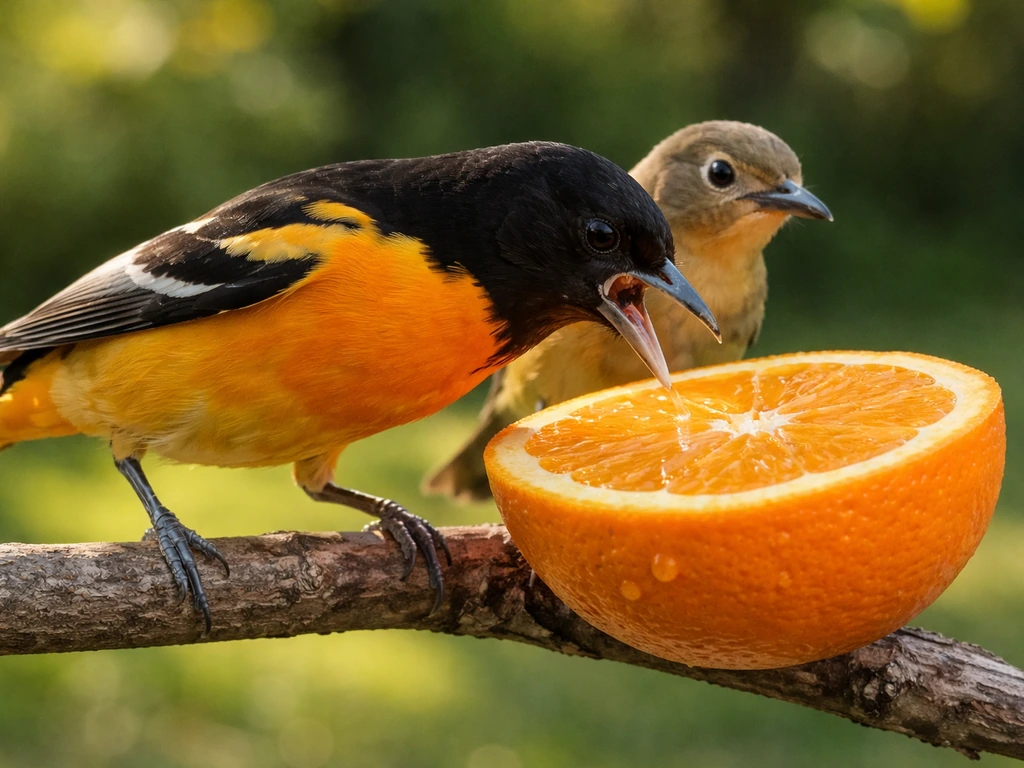
Orioles are the headline act, and that's not an accident. Baltimore Orioles have a strong preference for ripe, dark-colored fruit and use a feeding technique called "gaping" where they stab the soft flesh with their bill, force it open, and drink the juice with their brushy-tipped tongues. This means they're not just pecking at the surface. They're actively working the pulp. You'll see them press their bill into the orange, pry it open, and lap at the exposed flesh. It's a distinctive behavior you can spot from across the yard.
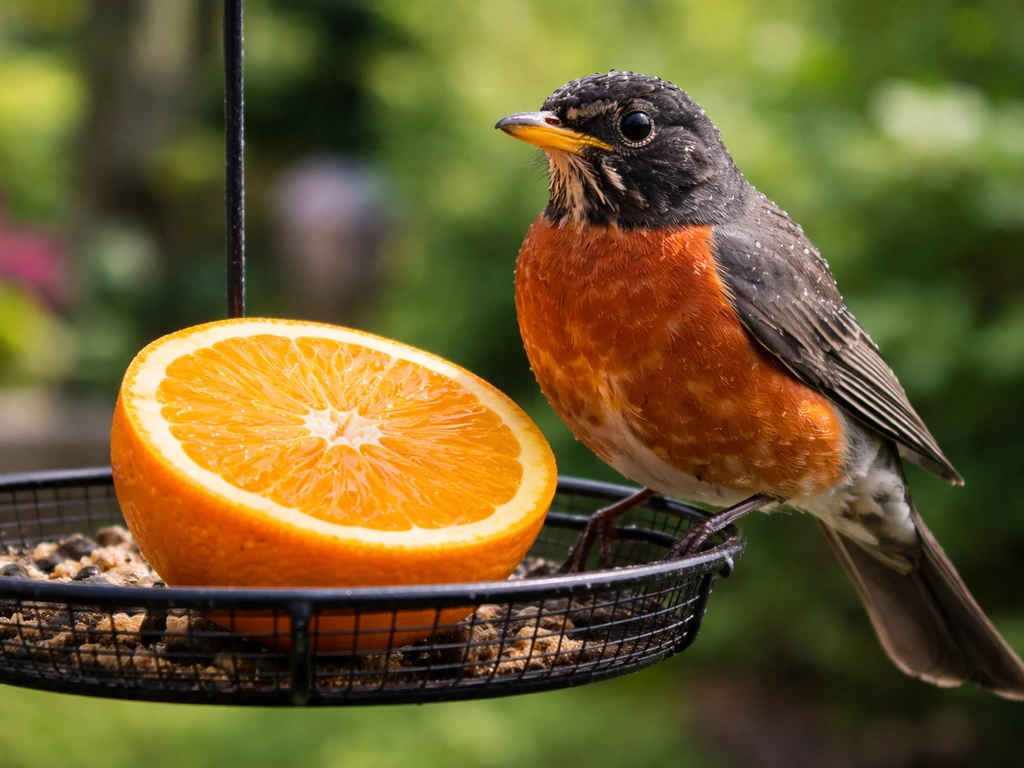
Beyond orioles, the fruit-visitor list is surprisingly long. The Michigan DNR specifically calls out tanagers, mockingbirds, thrashers, bluebirds, cardinals, woodpeckers, jays, starlings, thrushes, cedar waxwings, and yellow-breasted chats as birds attracted to orange halves at feeders. Most of these are opportunistic rather than dedicated fruit-eaters, but they'll sample a fresh, juicy slice readily.
| Bird | Region | How they eat oranges | Likelihood at feeder |
|---|---|---|---|
| Baltimore Oriole | Eastern US | Gaping, juice/pulp extraction | Very high (spring–summer) |
| Bullock's Oriole | Western US | Gaping, juice/pulp extraction | Very high (spring–summer) |
| Scarlet/Western Tanager | Widespread | Picks at flesh | Moderate |
| Northern Mockingbird | South/East US | Picks at flesh and skin | Moderate |
| Gray Catbird | Eastern US | Picks at flesh | Moderate |
| Red-bellied Woodpecker | Eastern US | Chisels into flesh | Moderate |
| American Robin | Widespread | Picks at soft flesh | Low–Moderate |
| Cedar Waxwing | Widespread | Picks at soft flesh | Low–Moderate |
| Northern Cardinal | Eastern US | Samples soft flesh | Low |
Orioles are also heavy fruit consumers right after they arrive in spring, so the first few weeks of their return (roughly late April through May across most of the US) is your best window. Erie Bird Observatory notes they eat a lot of fruit early in the season, so having oranges out from day one pays off.
How to offer oranges safely (cutting, placement, feeder setup)
The simplest and most effective setup is also the easiest: cut an orange in half and place each half flesh-side up on a platform feeder, deck railing, or flat tree branch. No fancy equipment required. The flesh needs to be exposed and accessible because that's what the birds are after. A single half-orange can attract multiple species within one session.
If you want to go a step further, dedicated orange feeders (essentially a skewer or cup holder designed to hold a halved orange) keep the fruit from rolling off a railing and present it at a consistent, predictable spot. Audubon has a DIY design that amounts to a spike mounted on a post or shepherd's hook, which works well. The advantage is that birds learn the location quickly. Either approach works, but a fixed spot trains visitors to return.
- Cut a fresh, ripe orange in half crosswise to expose maximum flesh.
- Place flesh-side up on a platform feeder, railing, or flat branch at a height between 4 and 6 feet if possible.
- Choose a location with some nearby perching cover (shrubs or trees within 10 feet) so birds feel safe approaching.
- Keep the feeder away from high-traffic human areas, especially during the first few days while birds are learning the spot.
- If using a skewer-style orange feeder, mount it on the same post or pole as a nectar feeder to take advantage of orioles already visiting for sugar water.
- Offer orange alongside other oriole attractants: nectar feeders, grape jelly, and mealworms all increase overall visitation.
One practical note on ripeness: Baltimore Orioles specifically prefer ripe, dark-colored fruit. A pale, underripe orange left over from the fruit bowl may get ignored. Use fruit that's deeply colored, soft to a gentle press, and smells like juice. If it's past prime for you to eat but not yet fermenting, it's ideal for orioles.
How to identify the visitor (quick visual cues)
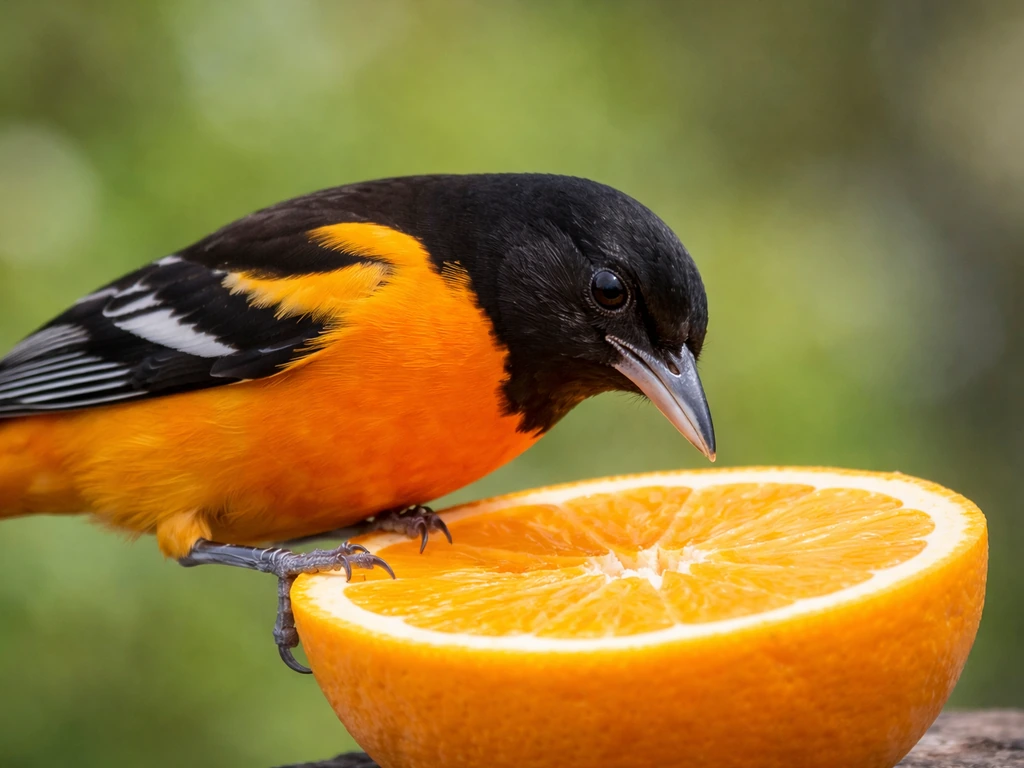
If you're watching the feeder and a bird lands on your orange, here's how to confirm what you're looking at in under a minute.
| Bird | Key visual features | Behavior at orange |
|---|---|---|
| Baltimore Oriole (male) | Vivid orange body, black hood, white wing bar | Stabs flesh, opens bill, laps juice repeatedly |
| Baltimore Oriole (female) | Olive-yellow/orange wash, two white wing bars, no black hood | Same gaping technique as male |
| Bullock's Oriole (male) | Bright orange face and underparts, black eyeline and crown, large white wing patch | Same gaping technique |
| Scarlet Tanager (male) | Brilliant scarlet body, jet-black wings | Pecks at flesh, less fluid motion than oriole |
| Red-bellied Woodpecker | Barred black-and-white back, red cap, pale face | Chisel-taps into flesh from the side |
| Northern Mockingbird | Gray overall, long tail, white wing patches | Hops around fruit, short pecks |
| Cedar Waxwing | Sleek brown-gray, yellow tail tip, red wing spots, crested head | Dainty pecks, often visits in small flocks |
The gaping behavior is your single best field ID clue for orioles. No other common feeder bird stabs fruit and forces the bill open quite that way. If you see a bird doing that, you almost certainly have an oriole. Woodpeckers will tap and chip at the flesh from an angle, while most other visitors just peck from above.
Why birds may ignore oranges (timing and troubleshooting)
If you put out an orange and nothing happens, don't pull it immediately. Give it a full day. That said, there are a few common reasons birds skip the orange feeder, and most of them are fixable.
- Wrong timing: Orioles are migratory. In most of the US, they arrive between late April and mid-May. Offering oranges outside that window means the target birds simply aren't there yet.
- Unripe or pale fruit: Orioles key on ripe, deeply colored fruit. A light-orange or firm fruit may get passed over entirely.
- Poor placement: If the feeder is too exposed with no nearby perching cover, nervous birds won't linger long enough to investigate. Move it closer to shrubs or a tree line.
- Competition from other food: If you have seed feeders loaded with millet or sunflower nearby, some birds may default to those. Try briefly reducing seed volume to encourage fruit exploration.
- No nearby water: Birds are more likely to visit a feeding area that also offers clean water. A simple birdbath within 20 feet can improve overall visitation.
- Weather: Cold snaps can suppress activity. Orioles in particular slow down on cool, rainy mornings. Warm, calm mornings are your best bet for first visits.
- The orange has dried out: Once the cut surface dries, it's far less attractive. Replace after one to two days maximum, sooner in hot weather.
If orioles still aren't showing up after a week of fresh oranges during migration season, try adding a nectar feeder (4:1 water to sugar ratio) and a small dish of grape jelly. Orioles often locate sugar-water feeders first and then discover the adjacent orange offering. The combination outperforms any single food.
Food-safety and spoilage risks (remove and replace rules)
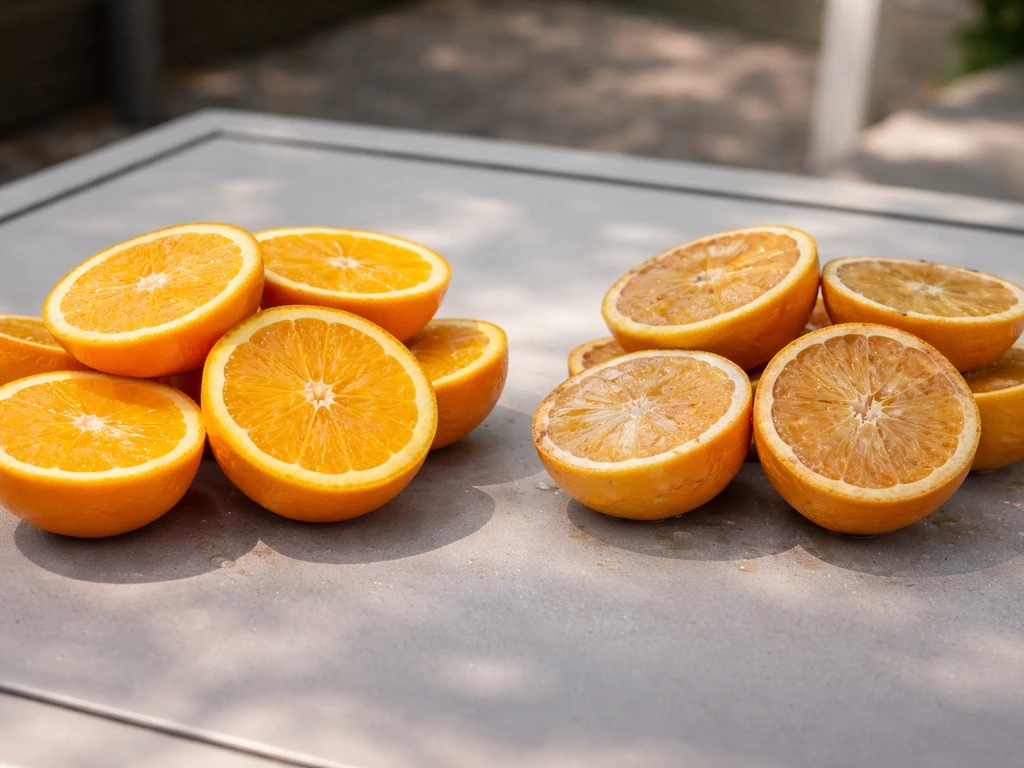
Fresh citrus spoils faster than dry seed, and this is where a lot of backyard birders get lazy and end up hurting the birds they're trying to help. Cut orange left in the sun will dry out within a day and grow mold within two days, sometimes faster in warm, humid weather. Mold on fruit is harmful to birds, so the replace schedule is non-negotiable.
- Replace orange halves every one to two days, every day in hot or humid conditions (above 80°F).
- If the cut surface looks dry, shrunken, or has any visible fuzzy growth, remove it immediately.
- Don't leave partially eaten orange overnight if temperatures are warm. Fermentation starts faster than you expect.
- Rinse the feeder tray, skewer, or platform with hot water every time you swap the fruit. A small scrub brush helps remove juice residue that attracts insects and bacteria.
- Never put out fruit that has already fermented or smells alcoholic. Fermented fruit can cause disorientation in birds and is genuinely dangerous.
- Only put out as much fruit as birds are likely to consume in one day, following the same logic the Penn State Extension applies to seed feeders.
The same principle that applies to wet birdseed in rainy weather (mold and bacteria form quickly) applies even more urgently to cut fruit. Think of it as perishable food, because that's exactly what it is. The RSPB's general feeder guidance says not to let uneaten food accumulate, and fruit is where that rule matters most.
Risks to pets and wildlife (proper handling and storage)
If you have dogs or cats that have access to the yard, the orange feeder placement matters more than most people realize. Spoiled or fermenting fruit on a low platform is an easy snack for a curious dog, and fermented citrus that's been picked over by wild birds isn't something you want a pet ingesting. The CDC specifically advises keeping pets away from wild birds and anything they've contacted, particularly given ongoing concerns about wild bird disease transmission. A spoiled orange half that's been sitting in the sun and visited by multiple birds is exactly that kind of contact point.
- Mount orange feeders at least 5 feet off the ground to keep them out of easy reach of dogs.
- Remove any fallen or knocked-down fruit from the ground promptly.
- Don't leave feeder trays where pets can lick the surface. Juice residue from bird-visited fruit is a potential contamination risk.
- Store unused oranges indoors in a cool spot, not in a garage feeder bin where wildlife can access them overnight.
- Wash your hands after handling feeder equipment that's had fruit on it.
Wildlife visitors beyond your target birds are also worth thinking about. Raccoons, opossums, and squirrels will absolutely eat orange halves, especially at night. If you're finding your oranges cleaned out overnight without any daytime bird visits, a nocturnal mammal is likely the culprit. Bring the feeder in at dusk or mount it on a pole with a baffle to reduce mammal access.
Low-risk alternatives if oranges don't work
Oranges are the classic oriole attractant, but they're not the only option. If your oranges are consistently going uneaten or going bad before birds find them, these alternatives carry the same appeal with some practical advantages.
| Alternative | Target birds | Practical notes |
|---|---|---|
| Grape jelly (no artificial sweetener) | Orioles, catbirds, woodpeckers | Extremely effective; only put out 1–2 teaspoons at a time to avoid birds getting it on their feathers |
| Sugar-water nectar (4:1 water/sugar) | Orioles, hummingbirds | Change every 2–3 days; clean feeder thoroughly each time |
| Apple quarters | Orioles, robins, waxwings, thrushes | Spoils at a similar rate to orange; same replace schedule applies |
| Raisins (soaked in water) | Robins, bluebirds, catbirds, waxwings | Soak for 30 minutes first; less mess than fresh fruit |
| Mealworms (live or dried) | Orioles, bluebirds, warblers | High-protein complement to fruit; very effective during nesting season |
| Mulberries or wild cherries (if available) | Orioles, tanagers, waxwings | Natural fruit sources; plant a mulberry nearby for long-term attraction |
Grape jelly deserves a special mention because it's consistently the most reliable oriole attractant when oranges aren't working. The caveat is portion control: too much jelly and birds can get it matted in their feathers, which causes real problems. A small shallow dish with a teaspoon or two, refreshed daily, is the right approach. Combine it with a nectar feeder on the same pole and you've built an oriole station that's hard to beat.
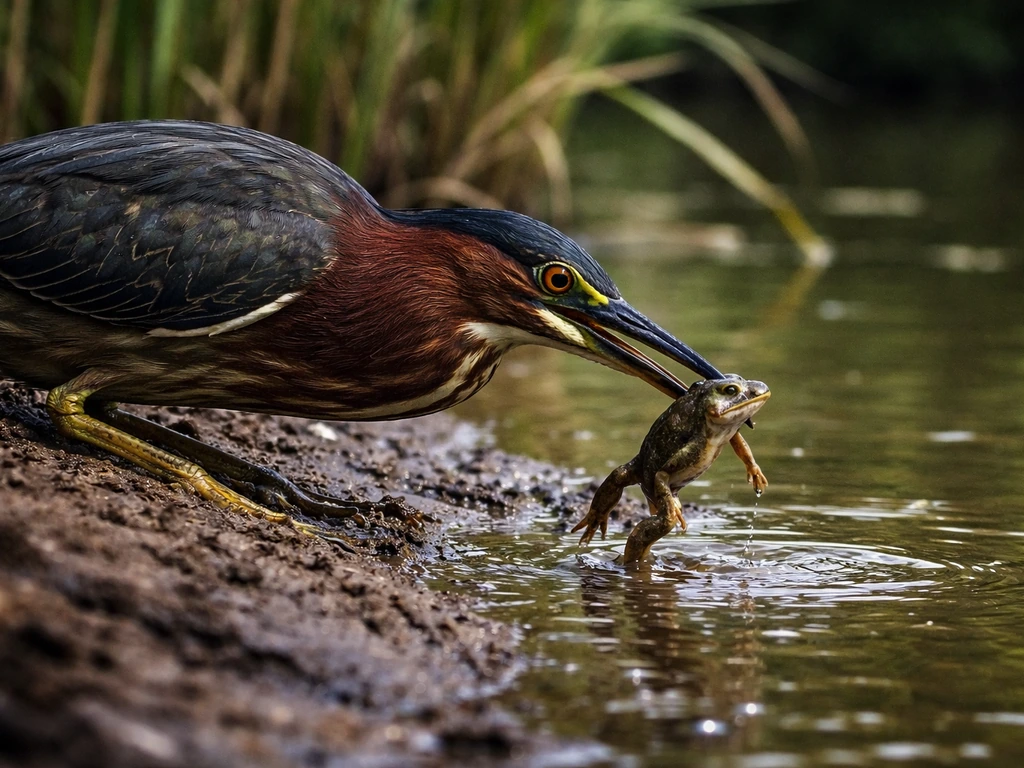
If you're interested in which birds are out there eating other natural food sources, some of the same species that visit your orange feeder, especially the insect-hunting warblers and flycatchers, are also among the birds that actively eat mosquitoes. The overlap between fruit-loving and insect-eating species in your yard is bigger than most people expect, and understanding both feeding habits helps you create a more complete habitat. Some birds that eat frogs, such as herons and kingfishers, are attracted to yards with nearby water and suitable prey what bird eats frogs. In the rainforest, the question of what eats a bird has a different set of predators than what you see at a backyard feeder what eats a bird in the rainforest.
Your next steps today
Here's what to do right now if you want orange-eating birds at your feeder as fast as possible. Cut a ripe orange in half. Place it flesh-side up on a platform, railing, or dedicated skewer feeder between 4 and 6 feet off the ground, near some cover. Check back in two hours. If nothing has visited by the end of the day, check the fruit condition, adjust the location closer to trees or shrubs, and try adding a small dish of grape jelly or a nectar feeder on the same pole. blank" rel="noopener noreferrer">Replace the orange every one to two days without fail, and never leave it out once it shows any drying or mold. The birds are out there. Fresh, ripe fruit in a visible spot with nearby perches is usually all it takes. If you’re wondering can a frog eat a bird, the short answer is that it’s extremely uncommon, since frogs mainly hunt insects and small invertebrates rather than catching birds bird-eating frogs.
FAQ
Can I use orange peel or whole oranges instead of cutting them in half?
Yes, but only if the flesh stays exposed. Leave cut oranges flesh-side up, or remove the peel so the juicy surface is accessible. Don’t hang whole oranges by the stem, many birds can’t get purchase on the peel. If you use a skewer or cup, make sure it’s angled so juice collects where the bill can reach.
How do I tell if an orange is ripe enough for orange-loving birds?
For orioles, ripe, dark fruit is the safest bet. If the orange is very pale, firm, or looks partially dried, expect fewer visits. A good field check is smell and feel, if it smells strongly of citrus and gives a little to a gentle press, birds are more likely to investigate.
What should I do if ants or lots of torn-up pieces show up under the orange feeder?
If you find torn orange pieces and ants appear, that’s usually a sign the fruit is sitting too long or is warming up quickly. Remove it sooner, rinse the feeder surface if needed, and re-offer a fresh half. Also consider placing the feeder where it gets morning sun but not intense afternoon heat, heat accelerates spoilage.
When should I throw out an orange, even if it still looks mostly okay?
Stop and discard it as soon as you see any fuzzy mold, wet slimy spots, or strong fermentation. Don’t “scrape off” mold and keep feeding. With warm weather, replace on the faster end of the schedule and keep the feeder elevated so it doesn’t pool water or stay damp.
If orioles ignore the oranges in my yard, what changes usually work fastest?
It can happen, but start by changing one variable at a time. First verify placement (4 to 6 feet, near cover), then switch to a consistent feeder location, then add the nectar feeder and a small grape jelly dish. Orioles often discover sugar-water first, then move to nearby fruit.
How much grape jelly is safe to offer without creating a mess or health issues for birds?
Grape jelly is more controlled than oranges, but it still needs strict portion control. Use a shallow dish with only a teaspoon or two, refresh daily, and choose a spot protected from rain and direct splashing. If jelly gets thickened and covered in debris, clean it and start fresh to avoid attracting pests.
Will raccoons or squirrels eat the oranges, and how can I prevent that?
Yes, especially around feeders that stay low or have open access. If you see the feeder being cleaned out overnight, mount it on a pole with a baffle or bring it in at dusk. For pets, keep oranges out of reach because fermented or spoiled fruit can be risky if swallowed.
What’s the quickest way to confirm it’s an oriole and not another fruit visitor?
When comparing bird identity, prioritize behavior over appearance. Orioles are most reliably confirmed by the bill-insertion “gaping” technique, they force open the soft flesh and lap the exposed pulp. Woodpeckers generally chip from an angle and don’t usually pry and lap the way orioles do.
Do I need to clean the feeder between orange replacements?
Yes, but avoid letting wet feeders and cut fruit get mixed with old residue. Clean the platform or railing after removing spoiled fruit, and let it dry before adding a new half orange. The goal is preventing leftover mold and bacteria from re-seeding the next piece.
If other birds keep taking over the feeder, can I still attract orioles reliably?
It helps, but keep expectations realistic. If other fruit visitors dominate the feeder, you may still get orioles because the food is consistent and reachable. To make the oriole route easier, use a fixed spot (skewer or cup), keep it near cover, and remove oranges promptly to reduce the time opportunists have to overtake the supply.
Next Article
What Bird Eats Frogs? Identify the Culprit Fast
Spot the bird that eats frogs fast with field marks, behavior clues, and safe backyard steps to protect wildlife.