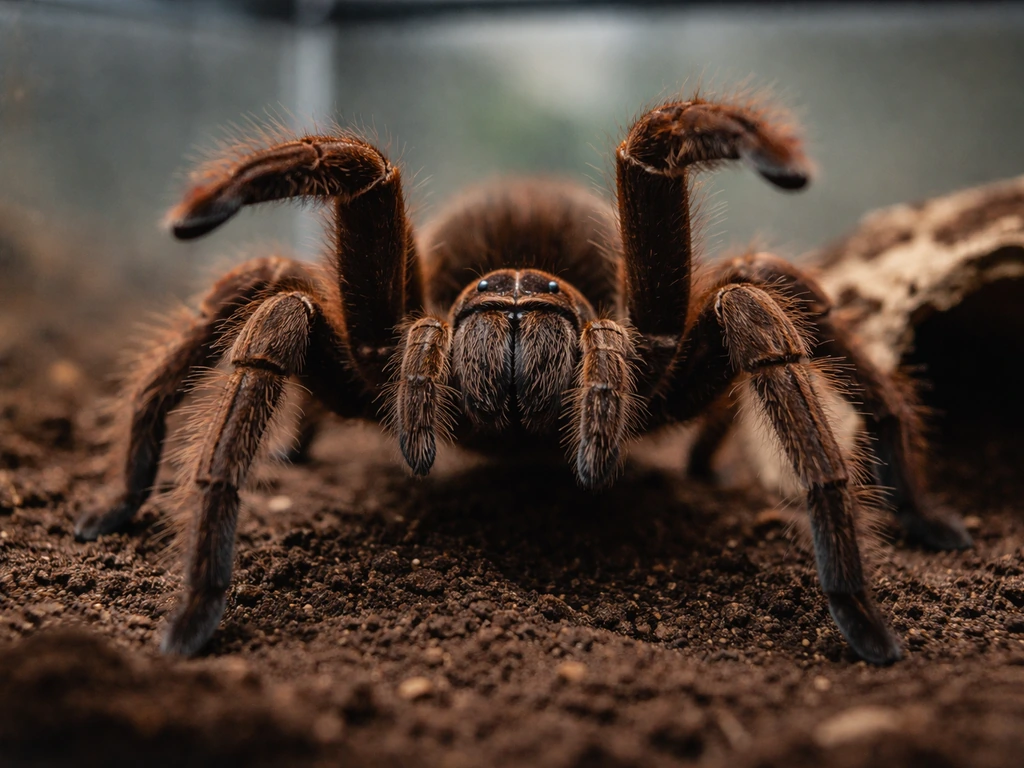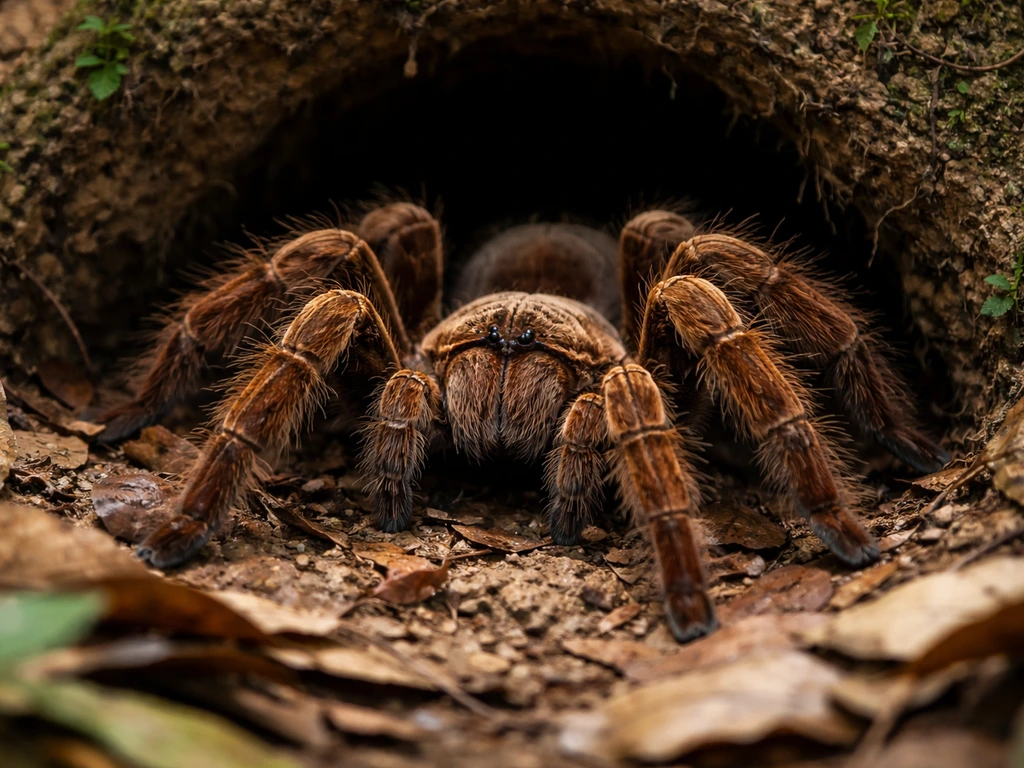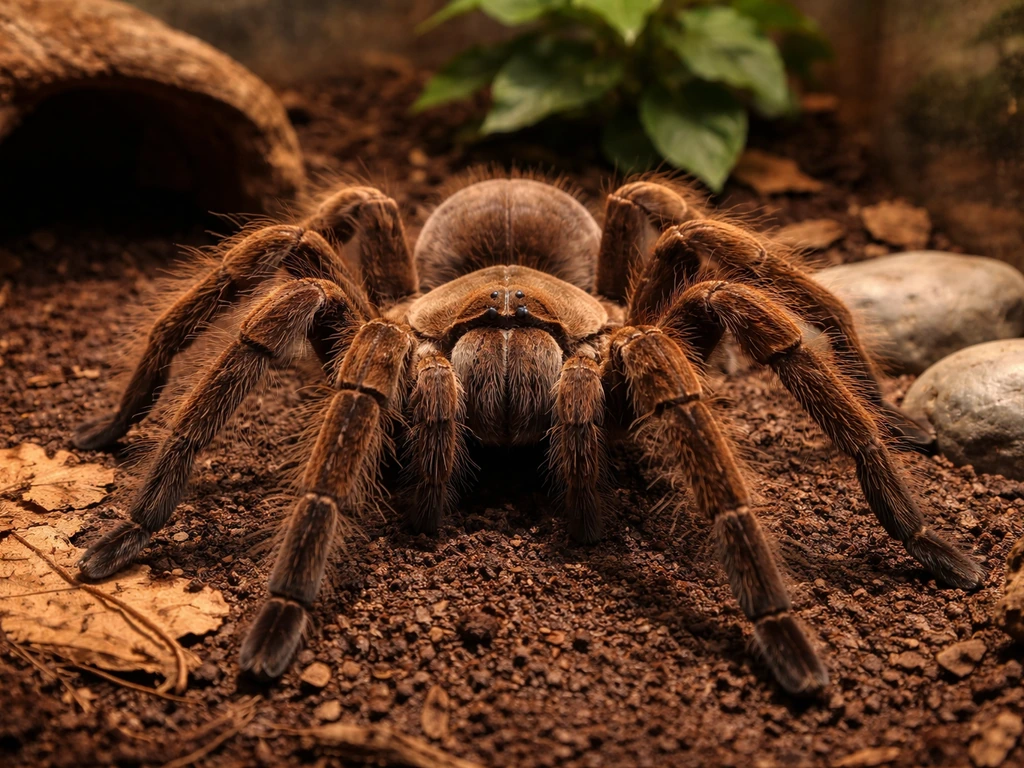
The Goliath bird-eating spider is venomous, not poisonous, and its venom is not lethal to humans. A bite feels roughly like a bee sting, causes local pain and swelling for a few hours, and no human death from tarantula venom toxicity has ever been recorded. The bigger practical risk, especially if you handle one or disturb it, comes from its urticating hairs: barbed bristles it flicks at threats that can cause skin irritation lasting weeks and serious eye inflammation if they reach your eyes.
Are Goliath Bird-Eating Spiders Poisonous or Venomous?

Maya Bennett
12 May 2026
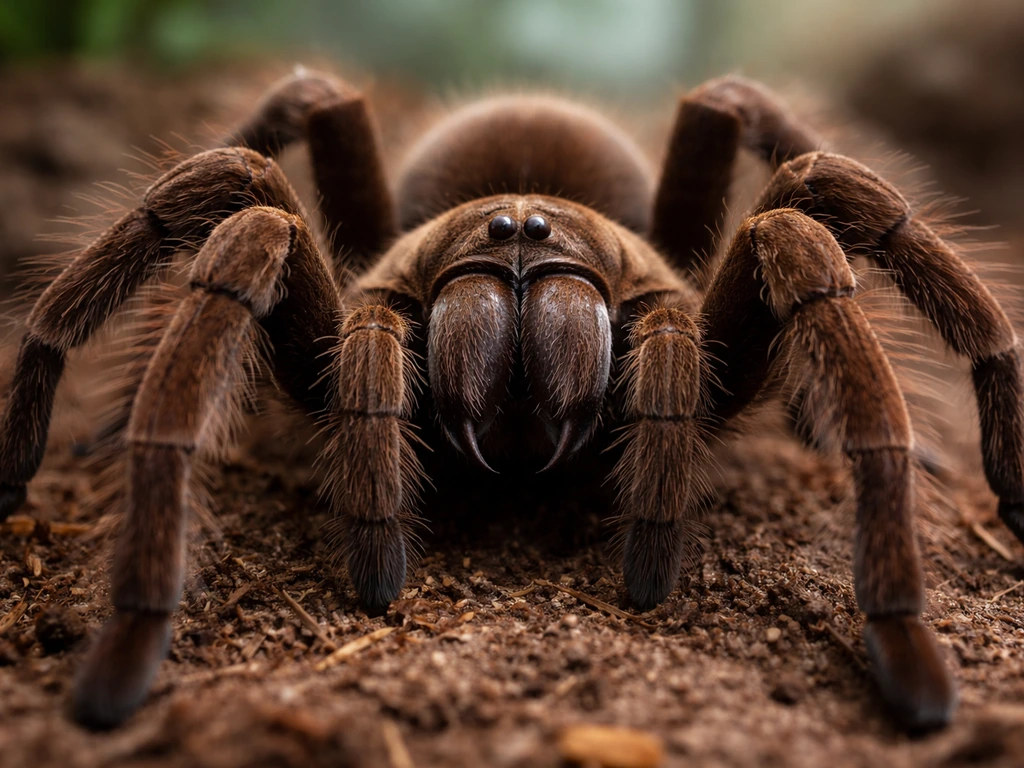
Poisonous vs venomous: why the distinction actually matters here
Poisonous means something is harmful when touched or eaten. Venomous means it delivers toxins through a bite or sting. The Goliath bird-eater is venomous, full stop. Its fangs inject venom when it bites.
There is nothing meaningfully toxic about touching the spider's body or accidentally ingesting it. That said, the word "poisonous" gets used loosely online, so if you searched it, you're not wrong to want a straight answer: yes, it has venom; no, it is not going to kill you or your pets in a typical encounter.
The National Wildlife Federation puts it plainly: tarantula venom is not nearly toxic enough to pose a serious threat to humans, and National Geographic notes the Goliath's venom specifically is not lethal to people.
Which spider are we actually talking about? The name confusion
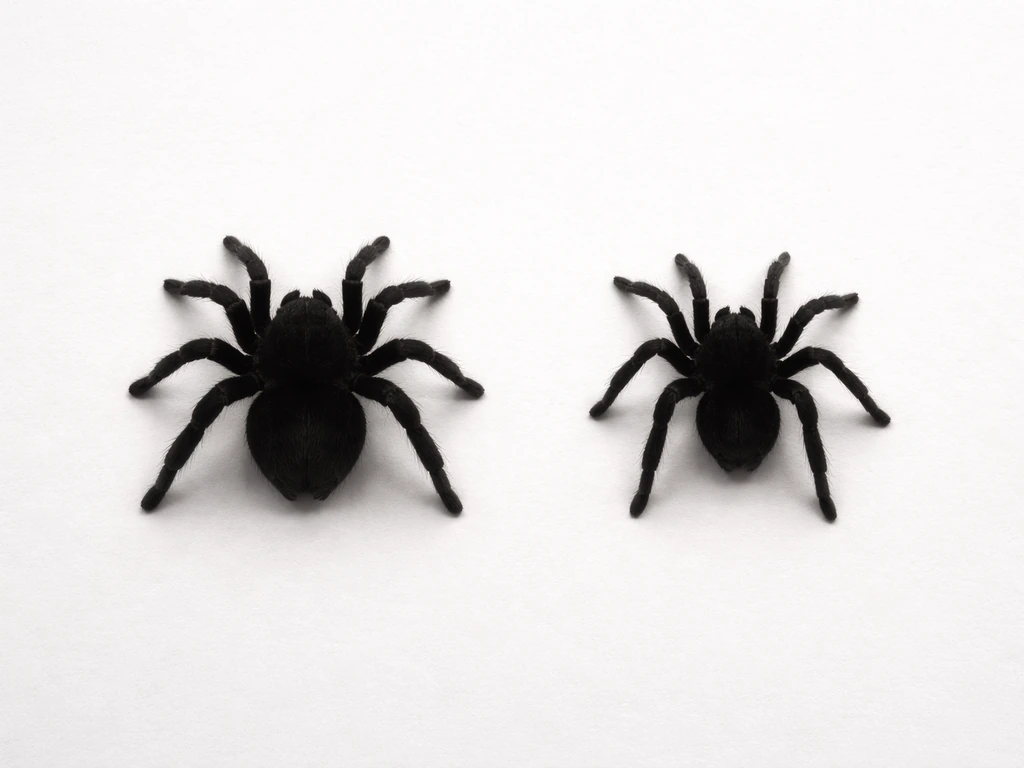
"Goliath bird-eating spider" most often refers to Theraphosa blondi, the species recognized by the Smithsonian National Zoo and listed by NCBI as the Goliath birdeater. It holds the record as the world's heaviest tarantula by weight. If you're also wondering how big it is when it reaches full size, the Goliath bird-eater can be surprisingly large for a tarantula how big is a goliath bird eating tarantula. But the label gets applied loosely across the whole Theraphosa genus.
Theraphosa stirmi, for instance, is widely sold and discussed under the name "burgundy Goliath bird-eater," and it shares nearly identical defensive behaviors: threat displays, fang exposure, and urticating hair flicking. Both species belong to the subfamily Theraphosinae and both carry urticating hairs, so the risk profile is essentially the same regardless of which one you're dealing with.
The "bird-eating" part of the name traces back to an early 18th-century engraving by naturalist Maria Sibylla Merian, who depicted a large tarantula consuming a hummingbird. That image drove the common name for the whole genus, even though eating birds is opportunistic behavior rather than a regular diet.
This name confusion matters for risk assessment because the venom potency and defensive behavior of Theraphosa species are broadly similar. If someone tells you their "Goliath bird-eater" bit them, the medical response is the same regardless of whether they mean blondi or stirmi.
How the spider actually harms you: bite, venom, and those hairs
The bite and venom
When the Goliath bird-eater bites, it injects venom containing enzymes and nucleotides. The expected human effects are local: pain at the site, swelling, redness, and itching lasting several hours. StatPearls, which summarizes clinical toxicology literature, describes the outcome of tarantula envenomation as typically local and treated conservatively. Systemic neurotoxicity is not the usual picture for Theraphosa bites. Serious or systemic reactions can happen, especially in people with allergies or hypersensitivity, but they are the exception, not the rule. Before it bites, the spider will almost always warn you: the Smithsonian describes the Goliath rearing up on its hind legs and presenting its large fangs as a threat display. That posture is a clear signal to back away.
Urticating hairs: the underrated risk
This is where most people get hurt. Theraphosa species actively flick barbed urticating hairs from their abdomen using their back legs when threatened. These hairs are not passive; the spider aims them. Once airborne, the barbs anchor into skin, mucous membranes, and eyes.
[StatPearls reports that the majority of tarantula-related injuries in clinical settings come from urticating hairs rather than bites. ](https://www. ncbi. nlm.
nih. gov/sites/books/NBK557667/) On skin, they trigger a histamine-type inflammatory reaction: pain, redness, itching, and swelling that Poison Control says can last for weeks. In eyes, the hairs can cause a condition called [ophthalmia nodosa](https://en. wikipedia.
org/wiki/Urticating_hair), where barbs work deeper into ocular tissue over time, causing chronic granular inflammation, pain, and blurred vision. Inhaling hairs near your face can irritate the respiratory tract. The hairs are a serious enough issue that Poison Control lists them as a more clinically significant concern than venom envenomation for many tarantula patients.
Symptoms to watch for in humans and pets
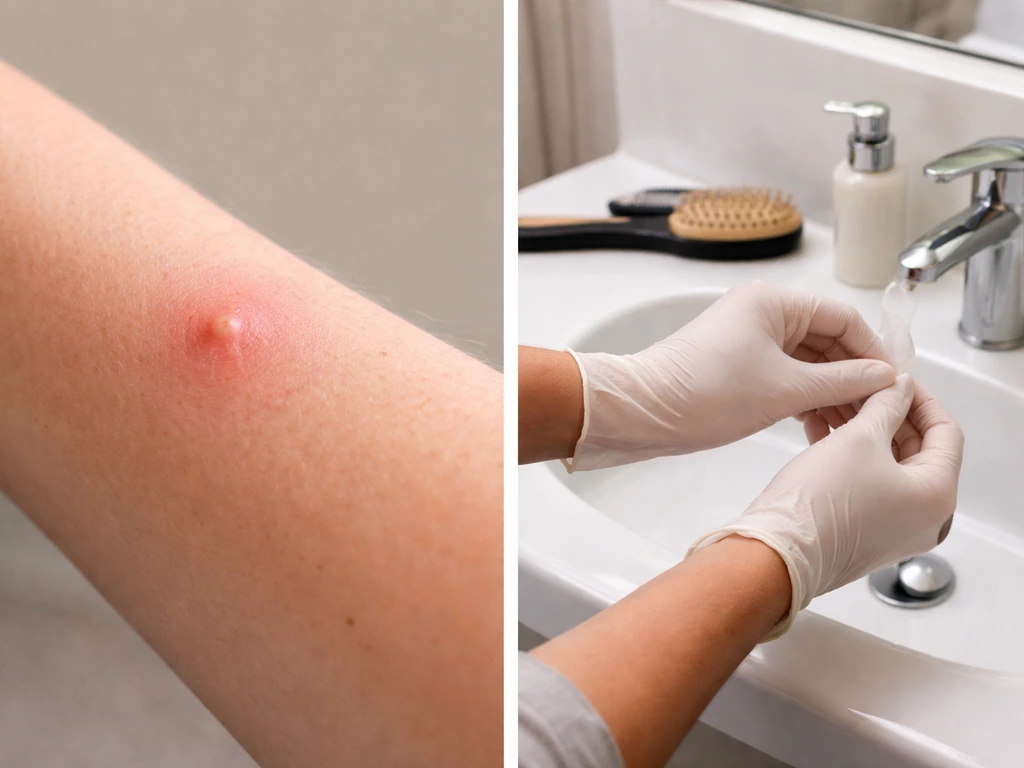
| Exposure type | Common symptoms | When to escalate |
|---|---|---|
| Bite (venom) | Pain at site (bee-sting level), swelling, redness, local itching lasting a few hours | Skin rash spreading beyond the bite, shortness of breath, facial swelling, dizziness, or allergic reaction signs |
| Urticating hairs on skin | Redness, itching, swelling, pain that can persist for weeks | Symptoms worsening after 48 hours, widespread rash, signs of infection at the site |
| Urticating hairs in eyes | Immediate irritation, redness, pain, blurred vision | Any eye involvement: seek ophthalmology evaluation promptly, hairs can migrate deeper |
| Urticating hairs inhaled | Nasal/throat irritation, sneezing, mild respiratory discomfort | Breathing difficulty, wheezing, chest tightness: seek emergency care |
| Pets (dogs, cats, birds) | Pawing at face, swelling around muzzle, eye redness, lethargy | Any respiratory distress or swelling near airway: emergency vet immediately |
For pets, birds are particularly vulnerable because their respiratory systems are sensitive and their small body weight means even local inflammation can escalate quickly. If a pet bird gets urticating hairs near its face or in an enclosed space with a disturbed tarantula, treat it as a veterinary emergency.
What to do right after a bite or hair exposure
If bitten
- Stay calm and move away from the spider so it cannot bite again.
- Wash the bite site thoroughly with soap and warm water for several minutes.
- Apply a cold, wet compress or an ice pack wrapped in cloth to the bite area to reduce swelling and pain.
- Call Poison Control immediately (in the US: 1-800-222-1222) or use the webPOISONCONTROL online tool. They will give you guidance tailored to your specific symptoms and exposure.
- Watch for escalating symptoms: spreading rash, swelling beyond the bite site, shortness of breath, or any signs of allergic reaction. If those appear, call emergency services.
If urticating hairs get on your skin or in your eyes
- Do not rub the area. Rubbing drives barbs deeper.
- For skin: wash gently with warm water and antibacterial soap. Avoid touching your face or eyes before the hairs are cleared.
- For eyes: rinse with clean running water or saline immediately. Do not rub. Get to an eye doctor or emergency room the same day, even if irritation seems mild. Hairs in ocular tissue can migrate and cause chronic damage if not removed.
- For respiratory irritation: move to fresh air immediately. If breathing difficulty develops, call emergency services.
- Call Poison Control to discuss next steps and whether you need in-person evaluation.
Keeping your birds, feeders, and backyard pets safe

Let's be clear about something: a Goliath bird-eating tarantula is not going to show up at your backyard bird feeder. If you are wondering where Brazilian salmon pink tarantulas live, they are native to parts of Brazil and nearby regions in South America where do brazilian salmon pink bird eating tarantula live.
If you are wondering how it compares as a predator to other small animals, the goliath bird eating spider vs mouse dynamic is usually about opportunistic encounters rather than regular hunting bird feeder. These spiders are native to the rainforests of South America, primarily Venezuela, Brazil, Guyana, and Suriname. They live in burrows in humid forest floor environments. They are not a wildlife hazard for North American backyard birders.
The "bird-eating" name is misleading in exactly the way this site focuses on myth-busting: it implies a regular diet of birds, but the behavior is opportunistic and rare, and the spider is not a feeder pest. The main way backyard birders or pet owners encounter one is if they keep a pet tarantula, or if they visit somewhere like a zoo exhibit or a wildlife education event.
If you do keep a pet Goliath bird-eater or have one in a home with birds or small mammals, here is what actually reduces your risk:
- Never house a tarantula in the same room as a free-flying pet bird. Birds are curious, and a disturbed tarantula will flick hairs defensively.
- Keep the enclosure securely closed and clearly labeled so other household members do not open it unknowingly.
- Do not handle a Goliath bird-eater without proper experience. These are not beginner handling tarantulas. Their urticating hairs are a real and common injury cause.
- If you must interact with the enclosure for cleaning or feeding, wear close-fitting safety glasses. Hairs in the eyes are the injury you most want to avoid.
- Keep the tarantula's enclosure away from areas where pet food, bird seed, or feeders are prepared or stored to avoid cross-contamination with loose hairs.
- After any enclosure maintenance, wash hands thoroughly before touching your face or handling pets.
- If you suspect your dog or cat has been exposed to urticating hairs, especially if it was pawing at the tarantula's tank, call your vet. Watch for eye redness, pawing at the face, or respiratory distress.
Busting the "deadly bird-eating monster" myth
The name does a lot of work that the spider does not actually do. Yes, the Goliath bird-eater is large enough to take small vertebrates opportunistically. Yes, it has venom and can bite hard enough to break skin. But no human death from tarantula venom has been documented.
Its default response to a threat is a warning display, rearing up and showing fangs, before it escalates to biting. The urticating hairs are its first line of defense, and those are more of a medical nuisance than a dangerous toxin.
For the typical person asking whether this spider is poisonous because they saw it on a nature documentary or found one at a zoo: the realistic risk of a serious medical event from a Goliath bird-eater encounter is low, as long as you do not provoke, handle, or expose your eyes to it.
Your practical next steps
- If you were bitten or exposed to hairs today, follow the first-aid steps above and call Poison Control (1-800-222-1222 in the US) right now. Do not wait to see how it develops.
- If you have a pet tarantula and pets or birds in the home, review the enclosure setup and separation rules above before your next tank maintenance.
- If you are trying to identify a spider you encountered and are not sure it is a Goliath bird-eater, note the body size (females can reach 4.75 inches body length with a leg span up to 11 inches), brown coloration, and heavy build. Take a photo from a safe distance and consult a local extension service or arachnologist rather than handling it.
- If your concern is about birds at your feeders being threatened by a large spider, you can relax: Theraphosa species do not live in North America and are not a backyard feeder threat.
- Save the Poison Control number in your phone: 1-800-222-1222. That one step is the most practical thing you can do today regardless of whether you have ever seen one of these spiders.
FAQ
If I get the hairs on my skin, is the spider poisonous or is it just irritation?
Most “poisonous” searches come from mixing up terms. For goliath bird-eating spiders, the danger is venom from a bite (venomous) and irritation from urticating hairs, not toxicity you would absorb by touching or swallowing. If you or someone else ingests hairs or venomous fluids, treat it as a contact irritation case and contact a clinician, but accidental ingestion is not a typical pathway in normal encounters.
What should I do if urticating hairs get in my eyes?
Yes, eye exposure is the main situation where outcomes can be more serious than skin symptoms. If hairs get into your eyes, you may develop ophthalmia nodosa, delayed pain, and blurred vision. Rinse promptly with clean running water, avoid rubbing, and get urgent medical care, especially if symptoms persist or you wear contact lenses.
How do I handle a bite versus urticating-hair exposure at home?
A first-aid approach is different for bites versus hairs. For a bite, clean the area with soap and water, apply a cold pack, and monitor swelling. For hairs, remove what you can carefully from the skin, rinse thoroughly, and use antihistamine-type treatments if you have them, but do not scratch. If symptoms last more than a day or you see worsening swelling, seek care.
Can a goliath bird-eating spider cause an allergic reaction?
If you develop trouble breathing, widespread hives, vomiting, faintness, or swelling of the face or throat, that can indicate an allergy rather than “normal tarantula effects.” Treat these as emergency symptoms and seek immediate help, particularly for people with known venom or insect sting allergies.
Do these spiders usually bite, or do they prefer to flick hairs instead?
Not always. Many first encounters are a mix of warning displays and defensive hair flicking, not a bite. If you keep your distance and let the spider retreat, the most likely “harm” is hair irritation rather than venom injection. The bite risk rises mostly when the spider is handled, trapped, or startled at very close range.
If my pet shop called it a “Goliath bird-eater,” how much does species confusion change the risk?
Yes. The common name is applied to multiple Theraphosa species sold under similar labels, and their defensive behavior and overall risk profile are broadly comparable. The practical medical response after a bite or hair exposure does not need exact species identification if you treat it as local envenomation plus hair irritation risk.
Does having sensitive skin or a history of allergies change what I should watch for?
If you have an insect bite or local reaction history, you might be more reactive to the inflammatory response from hairs. Prior hypersensitivity to insect stings is not the same as hair-only irritation, but it raises the stakes for monitoring, especially around eyes and mucous membranes. If you have a history of severe allergies, consider discussing an action plan with your clinician.
Why are birds and other pets more at risk, even if the venom is not lethal?
Pets are a special case because birds and small mammals can develop worse symptoms from irritation near the face or from inhaling hairs in a confined space. If a bird is affected, or if you suspect hairs reached the mouth, nares, or eyes, treat it as urgent and contact an avian or small-animal veterinarian right away.
What if I touched the spider or its enclosure, but it didn’t bite me?
If your only exposure was accidental contact while cleaning or moving the enclosure, the risk is usually irritation rather than a true envenomation event. Still, check for hairs on clothing and wash hands and surfaces. If irritation develops or persists, follow the hair-exposure first-aid steps and seek medical advice for symptoms involving the eyes or breathing.
What practical safety steps reduce the chance of both bites and hair flicking?
If you’re managing a home with a tarantula, avoid reaching into the enclosure during feeding or stress events, use tools for transfers rather than bare hands, and keep a barrier between your face and the enclosure during maintenance. Wear eye protection if you’re likely to disturb hairs, and store the tarantula setup so it cannot be knocked into curtains or other enclosed spaces.