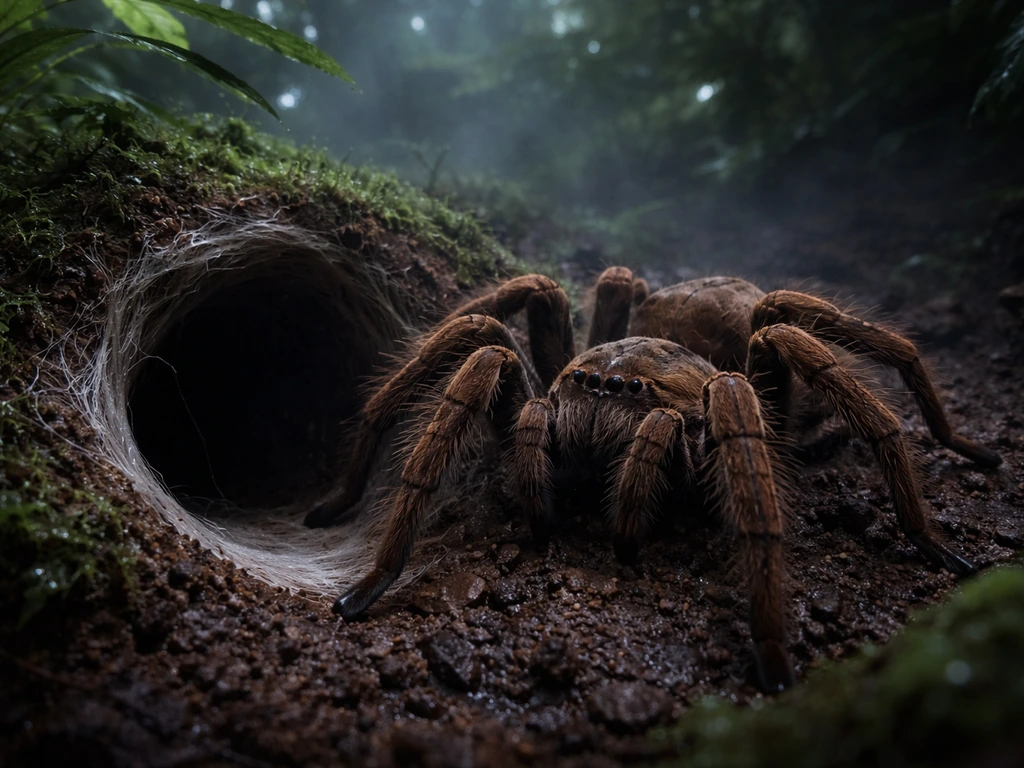
The goliath bird-eating tarantula (Theraphosa blondi) is the largest spider in the world by mass. Its body can reach up to 4.75 inches (12 cm) long, its leg span can stretch to 11 inches (28 cm), and the heaviest recorded individuals weigh in at around 6.2 oz (175 grams). To put that in perspective, you're looking at a spider roughly the size of a dinner plate. That's the short answer, but there's quite a bit more worth knowing, especially if you're a birder, a pet owner, or just someone who found an alarming photo online and wants to understand what they're really dealing with.
How Big Is a Goliath Bird Eating Tarantula? Size Guide

Maya Bennett
13 Apr 2026
"Goliath bird-eating tarantula" vs. "bird-eating tarantula": which spider are we talking about?
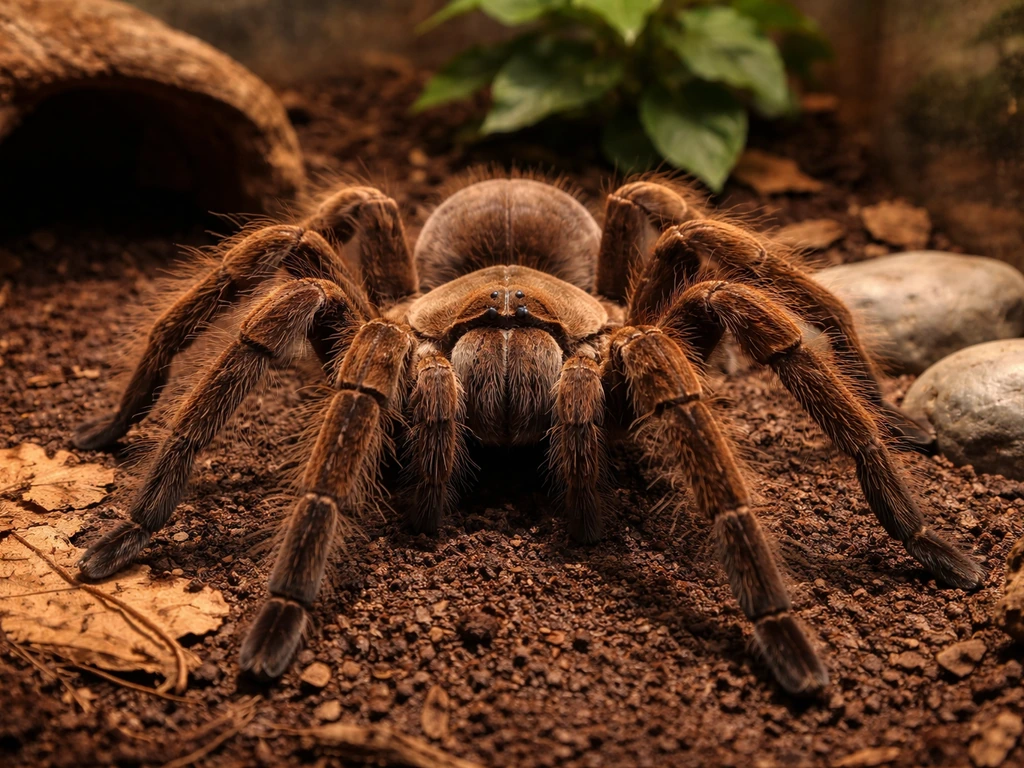
This distinction matters because the two terms get mixed together constantly. "Goliath bird-eating tarantula" almost always refers to a specific species: Theraphosa blondi, the confirmed record-holder for spider size. When the Smithsonian's National Zoo describes the goliath birdeater, they're talking exclusively about T. blondi. That's the one with the official measurements and the Guinness World Record.
"Bird-eating tarantula," on the other hand, is a much looser term used in the hobby. Enthusiasts sometimes apply it to other large terrestrial tarantulas in the Theraphosa genus or related species. If you're curious about where bird eating tarantulas live more broadly, you'll find the label can shift depending on who's using it. For this article, the specific size numbers come from T. blondi, since that's the species behind the record-breaking claims you'll see in headlines.
The "bird-eater" name itself has a fascinating and somewhat misleading origin. It traces back to a famous 18th-century engraving by artist Maria Sibylla Merian depicting a tarantula hunting a hummingbird. National Geographic has pointed out that this historical image, not documented evidence of routine bird predation, is what gave the species its dramatic nickname. National Geographic notes that the dramatic “bird-eater” nickname comes from a historical image and is not evidence of routine bird predation not documented evidence of routine bird predation. The name stuck, even though birds are not a regular part of this spider's diet.
The actual size numbers for Theraphosa blondi
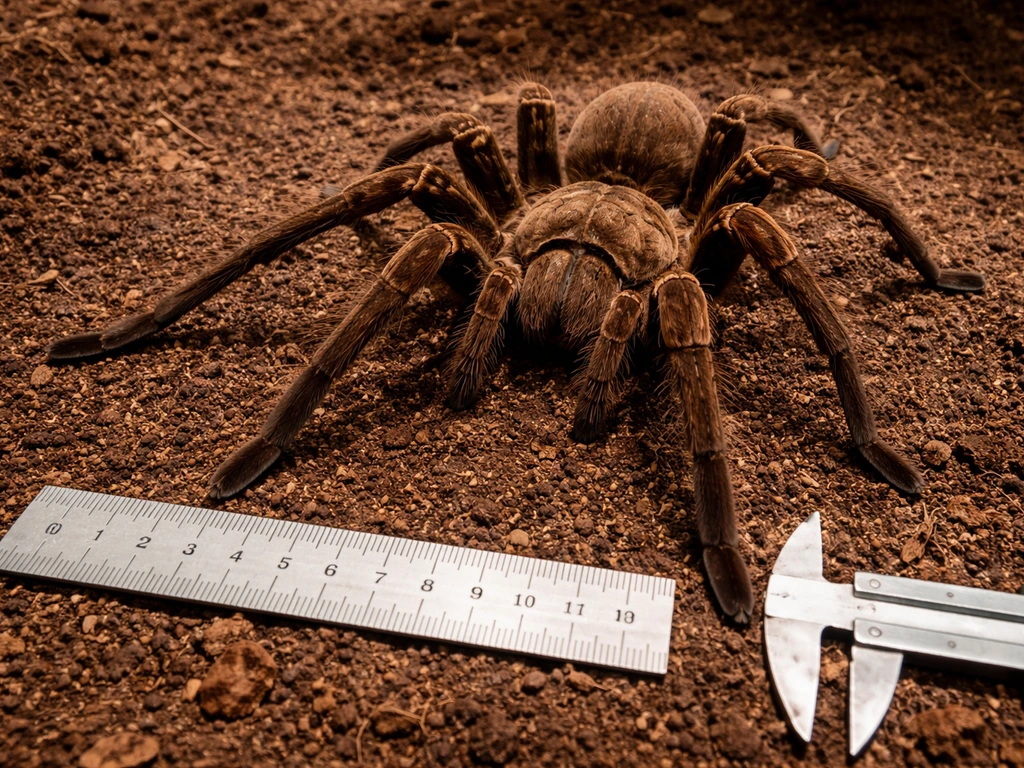
Here are the concrete measurements you're looking for, pulled from the most credible sources available:
| Measurement | Typical Range | Maximum Recorded |
|---|---|---|
| Body length | Up to ~5 in (12–13 cm) | ~5.1 in (13 cm) |
| Leg span | Up to 11 in (28 cm) | 11 in (28 cm) |
| Weight | Large females ~4–5 oz (113–142 g) | 6.2 oz (175 g) |
The Smithsonian cites body length up to 4.75 inches (12 cm) and leg span up to 11 inches (28 cm). Guinness World Records puts the maximum weight at 6.2 oz (175 grams), and a Nature-referenced source similarly reports body mass around 175 g with lengths reaching 13 cm for top-end specimens. National Geographic rounds the weight to about 6 ounces (170 g). Those small discrepancies between sources are normal and reflect the natural variation you'd expect across wild-caught vs. captive-raised specimens.
Why size numbers vary by age, sex, and how you measure
Not every goliath birdeater is going to hit those maximums. Slings (spiderlings) are tiny, juveniles are intermediate, and adults vary based on sex. Males tend to have a longer leg span relative to body size, while females are typically stockier with greater body mass. A mature female is usually the one hitting those 175-gram benchmarks.
Measurement method is another major source of confusion. In the tarantula hobby, the standard metric is called diagonal leg span, or DLS. DLS measures the distance from the tip of the front leg on one side to the tip of the opposite rear leg, with all legs stretched out as straight as possible (no bent knees). This is the consistent, standardized way keepers track growth. Enclosure-sizing guidance is based on DLS too: the floor of an enclosure is typically recommended to be at least twice the spider's DLS in each dimension. That framing gives you a concrete way to visualize the scale. An 11-inch DLS spider needs a floor at least 22 inches on each side.
The catch is that not all sources use DLS. Some older natural history descriptions used body length alone, and others used whatever measurement was easiest in the field. A spider with tucked or slightly bent legs can look much smaller than the same specimen fully stretched out. That's why you'll see numbers like "up to 28 cm" and "up to 13 cm" in the same article: one is leg span, one is body length, and they're measuring completely different things.
Does it actually eat birds? What size prey is realistic
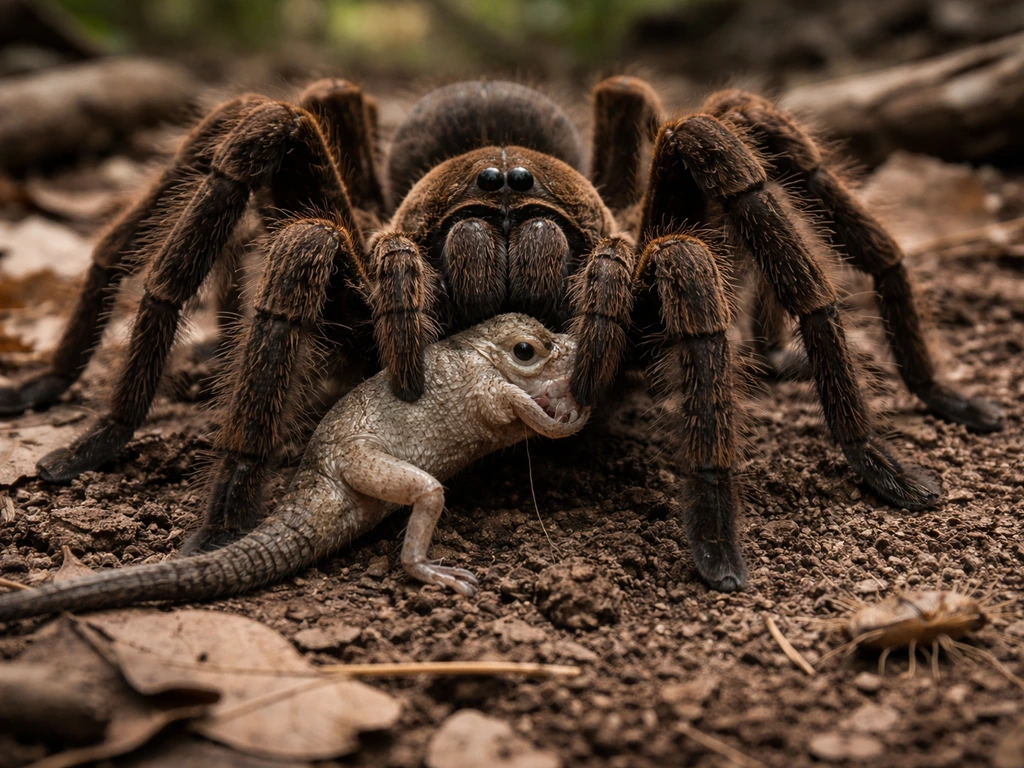
Here's where the myth-busting comes in, and it's especially relevant if you're a birder worried about feeders. Despite the dramatic name, the Smithsonian is straightforward about this: T. blondi doesn't eat birds frequently. Their primary wild diet consists of large arthropods, earthworms, and amphibians like frogs and toads. Occasional small mammals and lizards also get taken. Birds are technically within their physical capability, but they're far from a regular meal.
There is at least one documented scientific case of a goliath birdeater preying on a bird: a published paper recorded opportunistic predation of a Common Scale-backed Antbird in the Brazilian Amazon. Crucially, that bird was blank" rel="noopener noreferrer">entangled in a mist-net used for research, which made it accessible in a way a free-flying bird normally wouldn't be. This is a good illustration of what goliath bird eaters actually eat in the wild: they're opportunistic, not bird hunters. A healthy adult bird at your feeder is not at meaningful risk from one of these spiders.
Prey size in practice tends to stay well below the spider's own body size. Keepers are even advised not to offer prey items that are too large, because oversized prey can injure the spider rather than the other way around. Insects, worms, and the occasional small amphibian are the realistic menu. Think of the "bird-eater" label as a marketing name from the 1700s, not a hunting description.
How to estimate a tarantula's size when you see one
If you spot a large tarantula and want to gauge its size without touching it, here are a few practical visual reference points:
- A fully grown goliath birdeater covers roughly the same area as a standard dinner plate (about 10–11 inches across).
- Its body alone is close to the length of a smartphone screen end-to-end.
- A large adult would completely cover an outstretched adult human hand.
- The weight of a maximum-size specimen (around 175 g) is close to a medium-size chicken egg plus a couple of tablespoons of water.
- If you can place a ruler nearby without disturbing the spider, note that DLS is measured diagonally (front-left leg tip to rear-right leg tip), not straight across the body.
For photographic documentation, include a common object like a coin or pen in the frame for scale. This is the safest approach and gives you a permanent reference point if you need to identify the species later.
Goliath birdeater vs. other large tarantulas: a quick size comparison
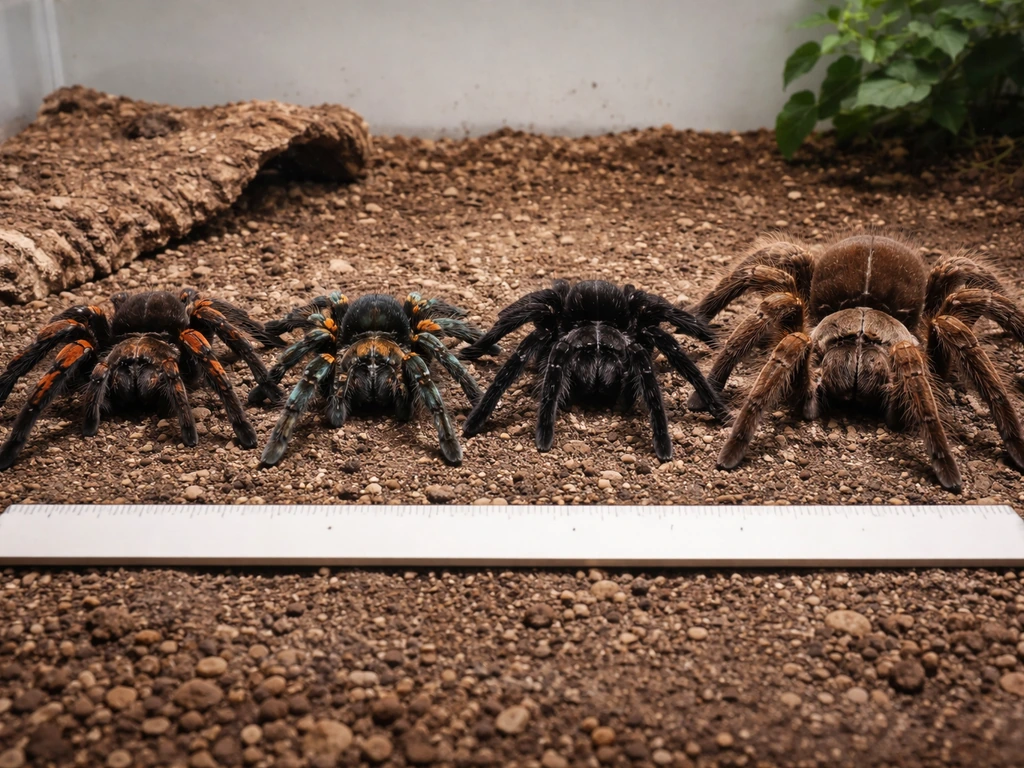
Since "bird-eating tarantula" gets applied to multiple species, it helps to see how they stack up. The Brazilian salmon pink bird eating tarantula (Lasiodora parahybana) is the most common runner-up in size discussions and a regular mix-up in hobbyist communities.
| Species | Common Name | Max Leg Span | Max Weight | Notes |
|---|---|---|---|---|
| Theraphosa blondi | Goliath birdeater | 11 in (28 cm) | 6.2 oz (175 g) | World's largest spider by mass; record holder |
| Lasiodora parahybana | Brazilian salmon pink birdeater | ~10 in (25–26 cm) | ~3.5 oz (100 g) | Close second; common in the hobby |
| Theraphosa stirmi | Burgundy goliath birdeater | ~10–11 in (26–28 cm) | Similar to blondi | Sometimes marketed as a "goliath" |
If someone says they saw a "goliath" and you're trying to decide whether they mean the real record-holder or a lookalike, the location is often your first clue. Knowing where goliath bird eating spiders live in the wild (primarily the rainforests of Venezuela, northern Brazil, Guyana, and Suriname) helps narrow down whether an encounter was even plausible. These are not North American species, and finding one near a backyard feeder in the U.S. would almost certainly mean an escaped or released captive.
Safety guidance for birders and pet owners
Near your feeders: what's actually at risk
For backyard birders in North America, the practical risk from a goliath birdeater near your feeder is effectively zero. These spiders don't live in the wild in temperate regions. What you can do to reduce spider activity near feeders more generally is keep fallen seed cleaned up. Accumulated seed attracts insects, insects attract spiders, and a messy feeder area becomes a hunting ground for all kinds of predatory arthropods. Tidy seed management is the single most effective step.
Store seed in sealed, hard-sided containers rather than open bags, and don't leave seed on the ground overnight. This limits the insect activity that makes any area attractive to large hunting spiders. The goliath bird eating spider vs mouse comparison is instructive here: these spiders are capable of taking prey the size of a small rodent, which shows their hunting range. But their preferred habitat is deep tropical rainforest, not suburban backyards.
If you keep or encounter a large tarantula
If you're a keeper or come across a large tarantula in a captive or encounter setting, handling should be avoided unless absolutely necessary. EAZA best-practice guidelines for theraphosids are explicit: these spiders should never be directly handled unless there's no alternative, and that guidance exists to protect both the keeper and the animal. A fall from even a modest height can be fatal to a tarantula this size.
People sometimes wonder whether a goliath birdeater's venom is a serious concern. It's worth reading up on whether goliath bird eating spiders are poisonous in detail, but the short version is this: a bite is roughly comparable in pain to a bee sting for most people. MedlinePlus notes that tarantula bites can cause localized pain and, in rare cases, allergic reactions that require emergency care. No specific antivenom exists. UC ANR guidance recommends cleaning the bite site, applying an ice pack in intervals, and seeking medical attention if symptoms are severe or systemic.
Goliath birdeaters also have a second defense mechanism that catches people off guard: urticating hairs. They flick barbed hairs from their abdomen when threatened, and these cause significant skin and eye irritation. This is a more common complaint among keepers than bites. If you need to move an enclosure, wear gloves and safety glasses. Knowing whether goliath bird eaters bite and under what circumstances helps you stay calm and take the right precautions without overreacting.
If a pet is exposed
If a dog or cat gets too close to a large tarantula and gets bitten or exposed to urticating hairs, the response is similar to a human exposure: clean the area, watch for swelling or signs of allergic reaction, and contact a vet if symptoms escalate. Small pets are more vulnerable than larger ones simply because of body mass relative to venom dose. Keep the tarantula contained and call your vet before assuming the situation is either completely fine or a major emergency.
Quick reference: what to do when you encounter a large tarantula
- Don't touch it. Observe from a safe distance and photograph with a common object in the frame for scale.
- Note the location and habitat: is it indoors, in a yard, in a tropical setting? This helps with identification.
- If it's in your home with no known captive origin, contact a local pest control or wildlife service, not animal control (they typically don't handle spiders).
- If you or a pet are bitten, clean the site immediately, apply a cold pack in 10-minute intervals, and seek medical or veterinary care if systemic symptoms appear.
- If you're a keeper, review your enclosure setup: floor dimensions at least 2x DLS, head space above substrate no more than 2x DLS to reduce fall risk, and a secure lid.
- Tighten feeder hygiene if you're concerned about spider activity near birds: remove fallen seed daily, store seed in sealed hard containers, and don't leave food on the ground overnight.
FAQ
How big is a goliath bird-eating tarantula compared to a dinner plate in everyday terms?
Using the article’s measurements, an adult’s leg span can reach about 11 inches (28 cm), which is close to the diameter of many large dinner plates. The body length (up to about 12 cm) is much smaller than the leg span, so the “plate-sized” look comes mostly from fully stretched legs.
If I see “up to 13 cm” online, is that bigger than the official goliath birdeater size?
Often it is just a different measurement being quoted. “Up to 13 cm” is typically body length, while the larger “up to 28 cm” number usually refers to diagonal leg span (DLS). A spider can look smaller or larger in photos depending on whether the legs are fully extended.
What should I use to estimate size from a photo if diagonal leg span (DLS) is not visible?
Use a fixed object for scale (coin, pen, or known tool) and look for whether the spider’s legs are stretched. If the legs are tucked or bent, the apparent size can be misleading, so avoid comparing to DLS-based size charts unless the spider is fully splayed.
Are male goliath bird-eating tarantulas the same size as females?
Not exactly. Males usually have proportionally longer legs relative to body size, while females are typically stockier and tend to be the ones reaching the top recorded weights. So a “thin but leggy” tarantula may look big in span but not match female mass benchmarks.
Do captive goliath bird-eating tarantulas always reach the same max weight as record claims?
No. Variation is normal due to sex, age, feeding, and individual genetics. Captive individuals can become robust, but records still represent the high end, and diet and husbandry strongly influence how close a spider gets to those maximum weights.
How big does an enclosure need to be if my spider is, say, 11 inches DLS?
A common rule of thumb is at least twice the DLS as floor dimensions in each direction. So for an 11-inch DLS spider, plan for roughly a 22-inch (about 56 cm) square footprint, then adjust for adequate substrate depth and ventilation needs.
Can a goliath bird-eating tarantula climb or jump enough to reach a bird feeder?
They can climb surfaces, and a tarantula that gets access to a feeder area is possible, especially if there are hiding spots nearby. However, in temperate regions the species would have to be escaped or released, and a feeder bird itself is not the spider’s regular food.
If I’m worried about bird feeders, what is the most effective first step?
Reduce insect attraction first. Cleaning up spilled seed and not leaving seed on the ground overnight helps break the chain (seed attracts insects, insects draw in predatory arthropods). Sealed, hard-sided storage also matters because it limits insect activity around the feeding area.
Is a “bird-eating tarantula” near my yard automatically Theraphosa blondi?
No. The phrase is often used broadly in the hobby, and multiple large theraphosids get the same label. Location is a key clue, because true T. blondi is tropical, so sightings in places outside its range are more likely escaped pets or misidentifications.
Are tarantula bites from a goliath bird-eater likely to be dangerous?
Serious outcomes are uncommon, but risk depends on individual factors. Even without antivenom, most reported issues are localized pain, with rare allergic reactions that can require emergency care, so watch for widespread hives, swelling beyond the bite area, or breathing symptoms.
If a tarantula gets threatened, what is more likely to harm me than a bite?
Urticating hairs. They can cause significant skin irritation and eye irritation when flicked, so if you need to move the enclosure, use gloves and eye protection rather than assuming a bite is the main hazard.
Next Article
Where Do Goliath Bird-Eating Spiders Live and What They Eat
Learn where goliath bird-eating spiders live, what they eat, and what preys on them near bird feeders and yards.