Quick answer: do Goliath bird-eaters actually eat birds?
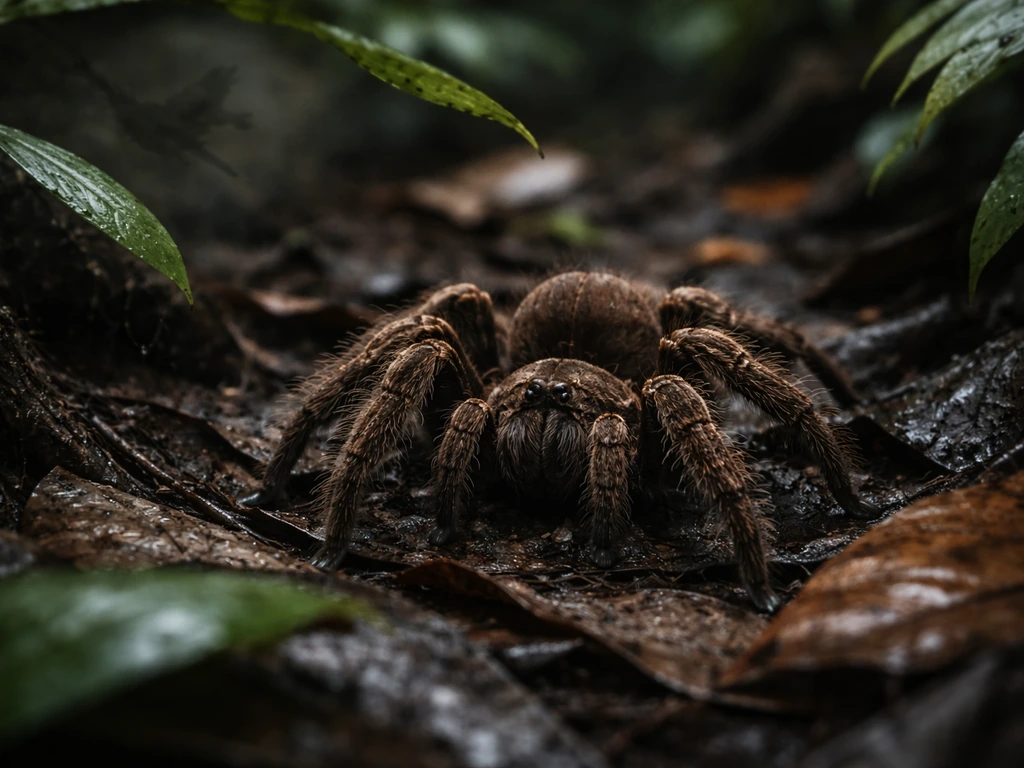
No, not really. Despite the dramatic name, Theraphosa blondi (the Goliath bird-eating tarantula) only rarely preys on birds in the wild. The name is essentially a historical accident, and in practice birds make up an insignificant slice of this spider's real diet. If you were searching for a yes or no answer, there it is. But the full story is worth knowing, especially if you keep backyard feeders or have a pet tarantula.
What Goliath bird-eaters actually eat in the wild
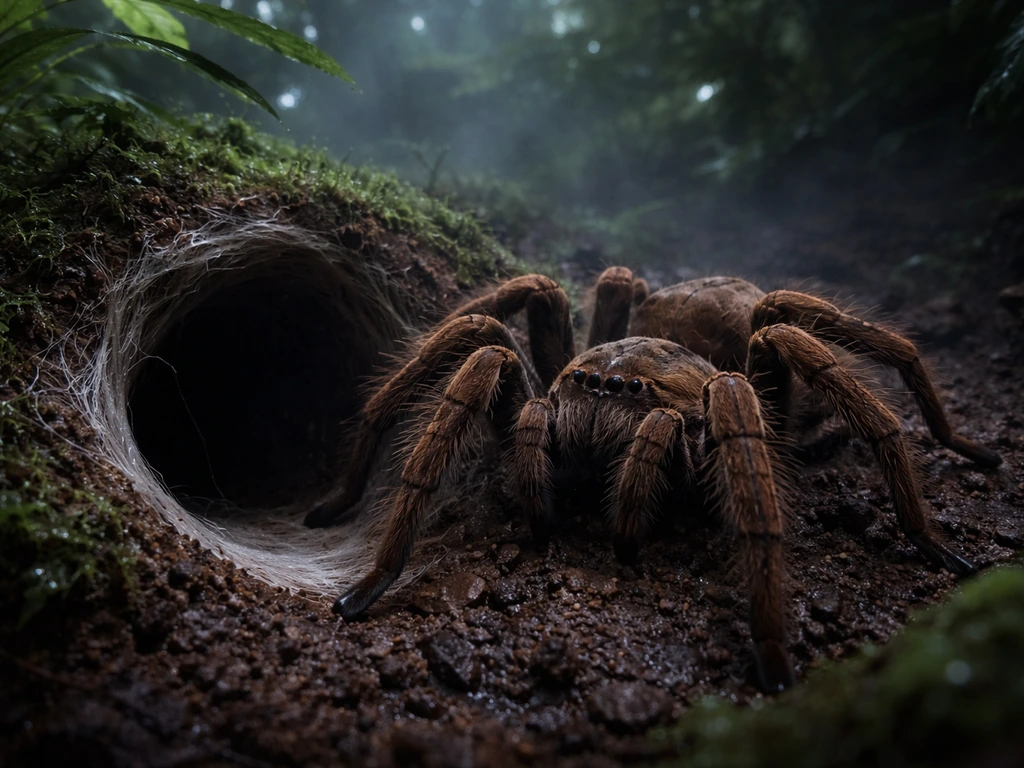
In its natural range in the rainforests of South America, the Goliath bird-eater is a ground-dwelling ambush predator. It spends most of its time in a burrow or under dense leaf litter and waits for prey to wander close. When something edible comes within range, it strikes downward, driving its large curved fangs into the prey to inject venom and begin digestion. That downward stabbing motion is actually relevant to the bird question: the mechanics work best on prey that is on the ground or crawling across it, not perching or flying above.
Its core wild diet looks like this: large insects (beetles, crickets, cockroaches), earthworms, other arthropods including smaller spiders, and small vertebrates like frogs, lizards, and occasionally small snakes or mice. Britannica similarly describes Theraphosa blondi’s diet as primarily insects and earthworms, including frogs and toads, with occasional consumption of small mammals, reptiles, and only rarely small birds and bird eggs large insects (beetles, crickets, cockroaches), earthworms, and small vertebrates like frogs, lizards, and occasionally small snakes or mice.
If you want to understand how this spider compares against a similarly sized mammal prey item, the Goliath bird eating spider vs mouse question is a good illustration of just how opportunistic these animals can be. Small vertebrates are definitely on the menu, but they are opportunistic targets, not daily staples.
The key phrase from the research is "blank" rel="noopener noreferrer">rarely actually preys on birds." Amphibians and large invertebrates are the reliable food sources. A nestling bird found on the forest floor could theoretically be taken, but that is an exception, not a feeding pattern you would build a diet profile around.
Where it lives matters too
Understanding diet also means understanding habitat. If you want context on where these spiders actually range, where Goliath bird-eating spiders live covers the specific regions of northern South America: Venezuela, Brazil, Guyana, Suriname, and French Guiana. These are dense, humid lowland rainforests, and the spider stays close to the ground. It is not a climber hunting perched birds. That ground-level lifestyle practically rules out most bird predation on its own.
Why the name misleads everyone
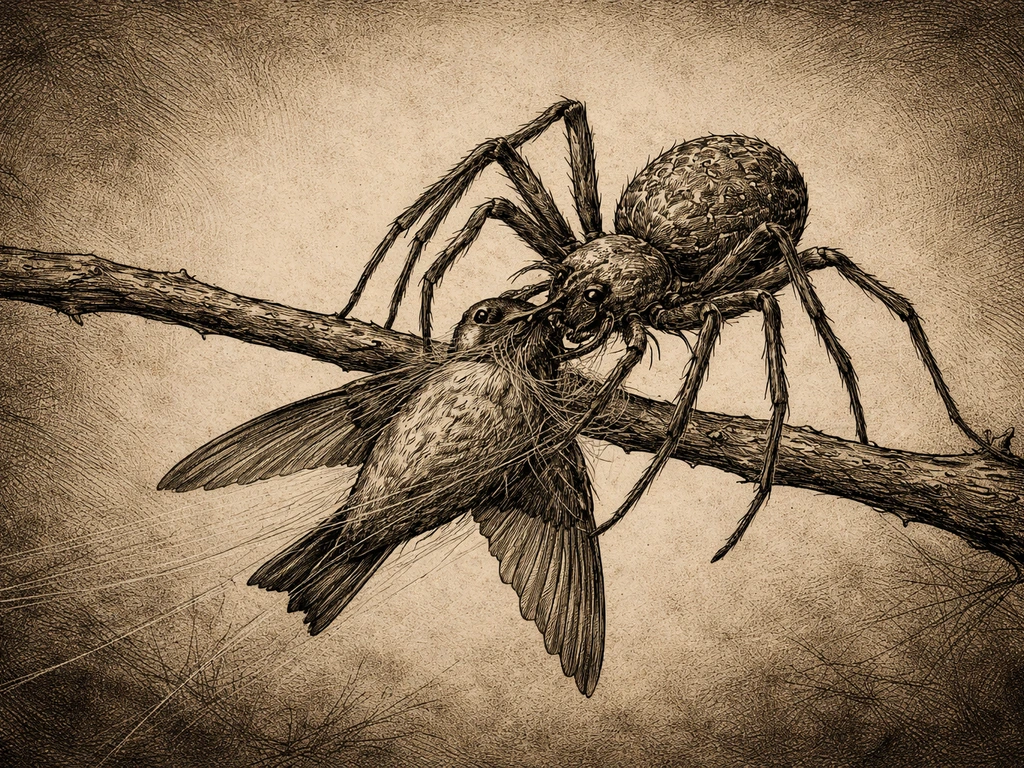
The 'bird-eater' label traces directly to an 18th-century copper engraving by naturalist Maria Sibylla Merian that depicted a large spider consuming a hummingbird. That single image stuck, and when explorers later named the genus, they reached for that vivid association. National Geographic points to this same origin story. The genus Theraphosa (and related bird-eating tarantulas in the Avicularia group) got burdened with the bird label based on one dramatic illustration, not systematic observation of what the spiders were actually eating day to day.
This is a pattern worth recognizing: common names for animals often reflect a single memorable observation or a moment of spectacle rather than typical behavior. The Goliath bird-eater is a perfect case study in how a name can completely warp public understanding of a species. Where bird-eating tarantulas live and how they actually behave tells a much more grounded story than the name implies. These are burrowing, ground-hunting spiders. "Worm and frog eater" would be a far more accurate common name.
Diet myth vs. reality at a glance
| Claim | Reality |
|---|
| Goliath bird-eaters regularly hunt birds | Extremely rare; birds are not a reliable prey item |
| The name reflects typical feeding behavior | Name comes from one 18th-century engraving, not diet data |
| They use webs to catch prey | No web; hunts by ambush and a downward fang strike |
| Main prey is large vertebrates | Main prey is large arthropods, worms, frogs, and lizards |
| They climb to reach birds in nests | Ground-dwelling; does not climb to hunt perched or nesting birds |
Feeding one in captivity
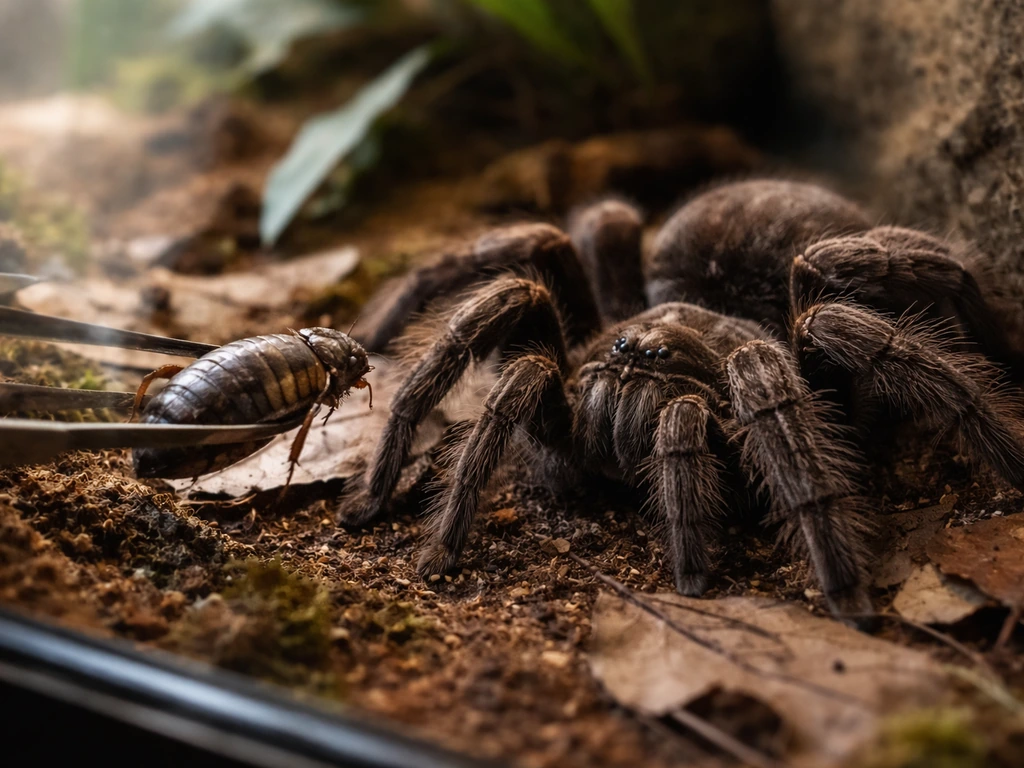
If you keep or are considering keeping a Goliath bird-eater, feeding in captivity is straightforward once you accept what the spider actually wants: large, gut-loaded feeder insects and the occasional small vertebrate. Most keepers use dubia roaches, large crickets, and superworms as staples. These are nutritious, easy to source, and appropriately sized for adults. Juvenile T. blondi do well on smaller crickets and mealworms.
Before you get to feeding questions, it helps to have a realistic sense of scale. How big a Goliath bird-eating tarantula actually gets will recalibrate your expectations if you have only seen photos. Adults can reach leg spans of around 28 to 30 cm (roughly 11 inches) and weigh up to 170 grams. That size means prey items can be correspondingly substantial.
Some keepers do offer the occasional pinky mouse or small frog as enrichment or to trigger a feeding response in a fussy specimen, but this is occasional, not routine. Overfeeding vertebrates introduces unnecessary risk of injury to the spider (a prey item that fights back can damage legs or eyes) and is simply not needed for good nutrition. Stick to insects as the primary food source, offer prey every 10 to 14 days for adults, and remove any uneaten prey within 24 hours to avoid stress on the animal.
Captivity feeding guidelines
- Staple feeders: dubia roaches, large crickets, superworms
- Juveniles: small crickets, mealworms, waxworms occasionally
- Adults: feed every 10 to 14 days; offer prey roughly 1/3 the spider's body size
- Occasional vertebrates (pinky mice, small frogs) are fine but not necessary
- Remove uneaten prey within 24 hours
- Gut-load feeder insects with leafy greens, carrots, and commercial gut-load products for at least 24 hours before offering
- Provide fresh, shallow water at all times
Should backyard birders be worried?
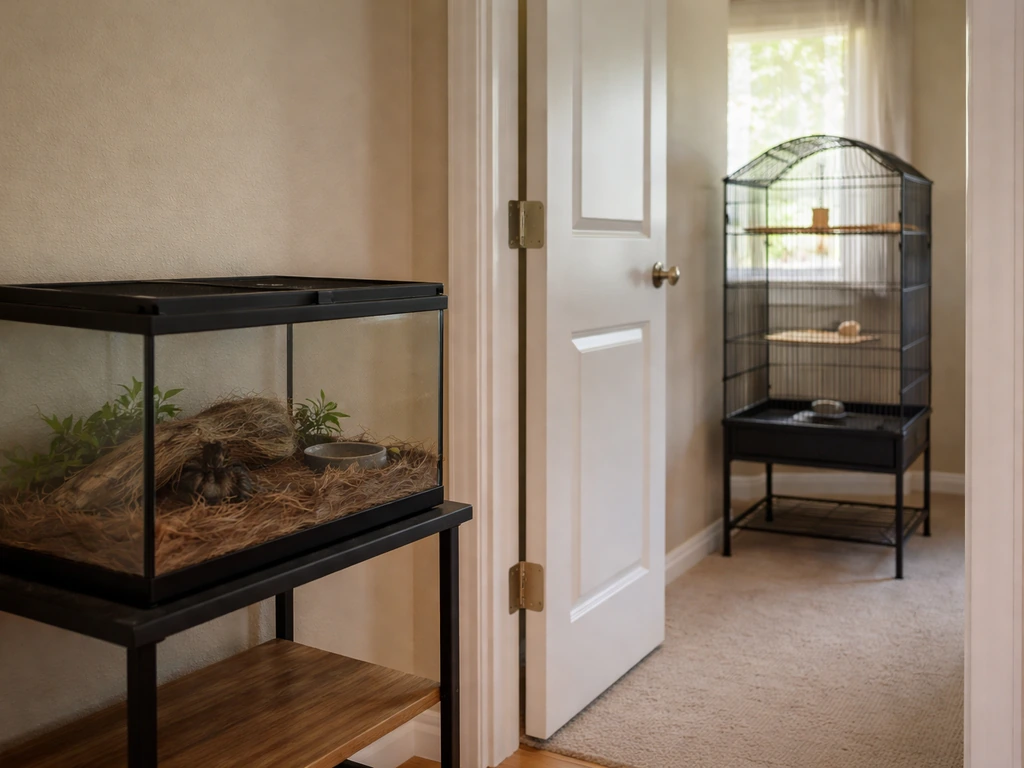
If you found this article because you heard that a large spider could threaten your backyard birds or you are worried about a pet bird near a tarantula enclosure, here is the practical answer: wild Goliath bird-eaters are not going to show up at your feeder. They live in South American rainforest, full stop. Where Brazilian salmon pink bird-eating tarantulas live gives you another example of just how geographically confined these species are to tropical South America. They are not an invasive species spreading into North American or European backyards.
If you keep a pet T. blondi and also have a pet bird, keep them in completely separate rooms. This is not really about the spider hunting the bird proactively; it is about preventing accidental contact. A tarantula's urticating hairs can cause serious irritation or respiratory distress in a small bird. And in the other direction, a large parrot could injure a spider badly. Keep the two animals separated by closed doors, not just separate enclosures in the same room.
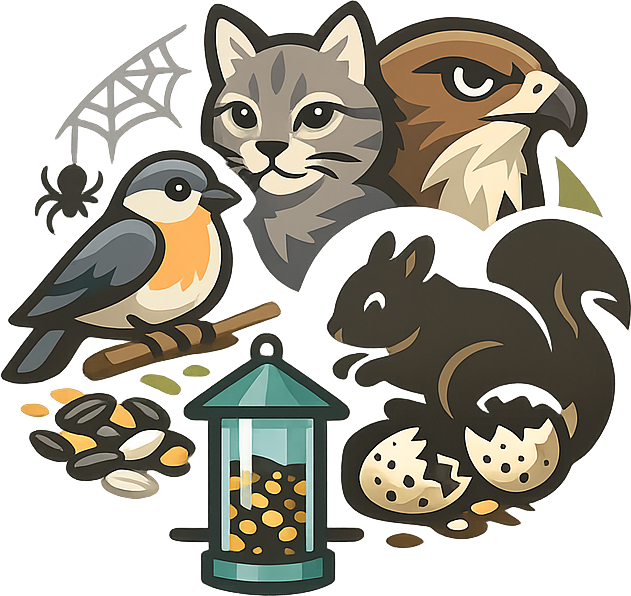
For backyard feeder setups, the risk from any spider is not predation on adults but rather the general principle of keeping your feeding area clean. Spoiled seed, standing water, and decaying fruit attract insects in large numbers, and heavy insect concentrations near feeders can in turn attract larger predators, though in practice this means squirrels, raccoons, and native bird-hunting hawks, not exotic tarantulas. Keep feeders clean, rotate seed regularly, and discard anything that has become damp or clumped. That is your real contamination risk at a North American feeder.
Fast checklist for low-risk feeder management
- Empty and scrub tube feeders every 1 to 2 weeks with a 10% bleach solution, then rinse thoroughly and dry before refilling
- Discard any seed that is wet, clumped, or has a musty smell immediately
- Use a tray or catch platform under feeders and clean up fallen seed daily
- Keep water features (birdbaths, fountains) fresh and change water every 2 to 3 days
- Store bulk seed in sealed, airtight containers off the ground to prevent moisture and mold
- If you keep a pet tarantula, house it in a separate room from pet birds, fully secured
Visual ID and behavior cues: what is that spider actually hunting?
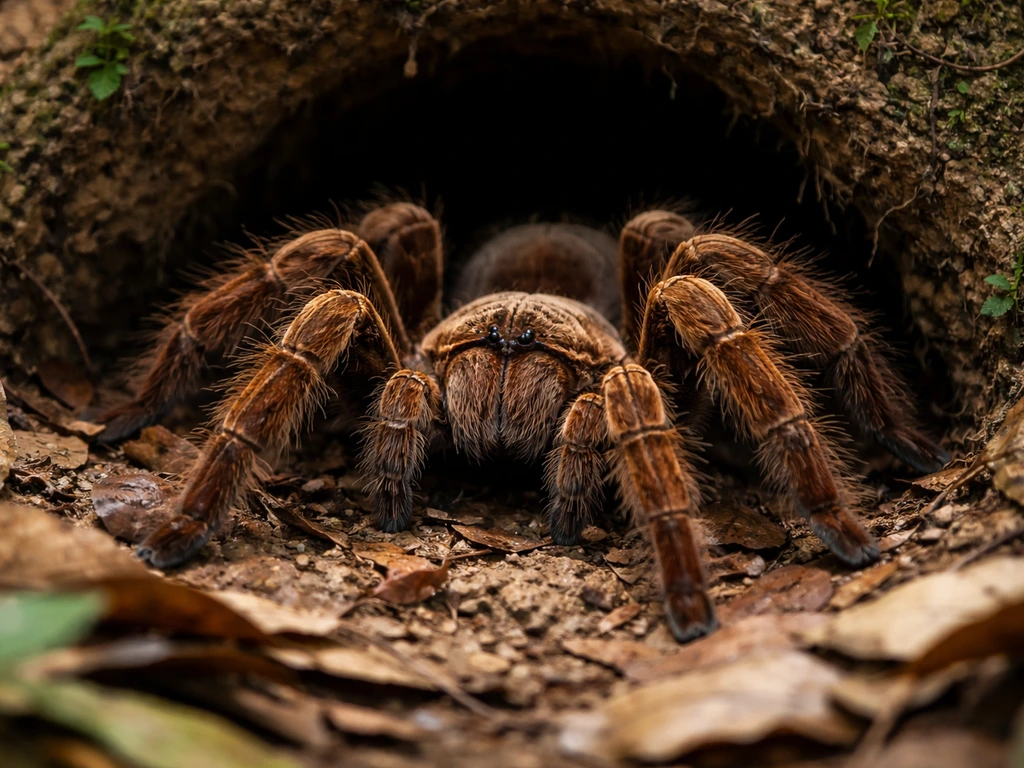
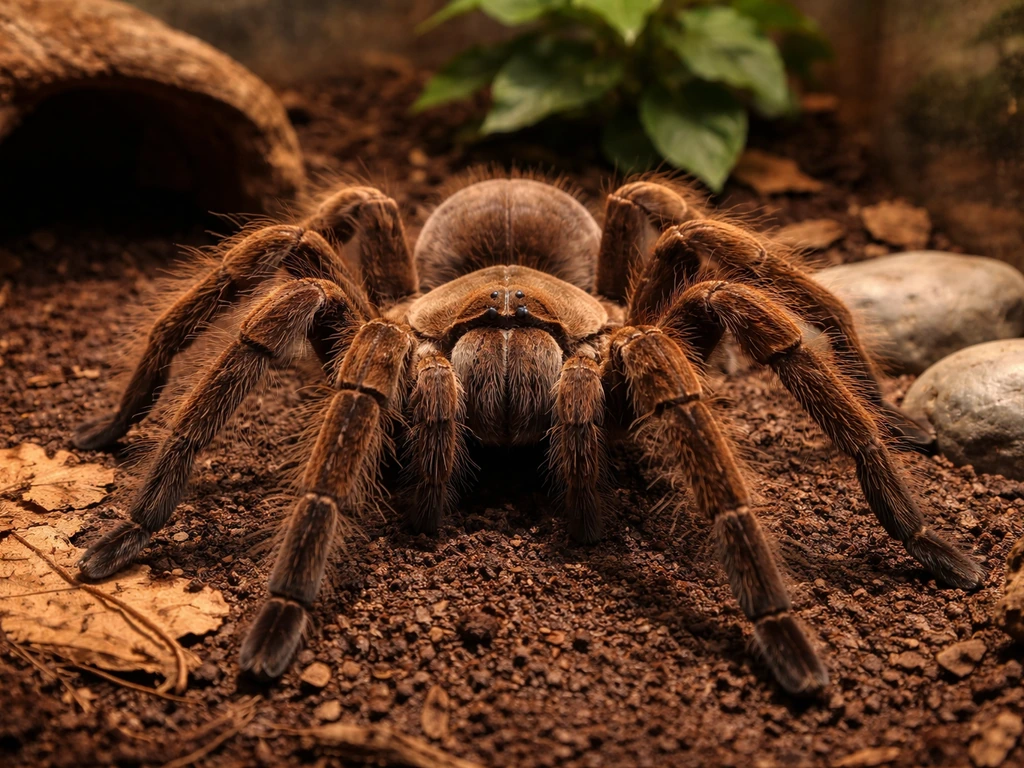
If you come across a large spider and want to understand what it might be eating, a few visual and behavioral cues tell you a lot. Goliath bird-eaters are very large (that leg span of up to 11 inches is unmistakable), covered in dense brown to reddish-brown hair, and found on or near the ground, often near a burrow entrance. They do not build webs to catch prey. If you see a large spider sitting in a web, it is not T. blondi.
Hunting behavior to look for: slow, deliberate movement when stalking, then a sudden lunge and downward strike with the fangs. The spider will hold prey in place while venom takes effect, then begin feeding. Because the fangs fold under the body and must strike downward, prey is almost always on the same surface level as the spider. Anything airborne or perched overhead is simply not accessible to this predator in any practical sense.
One other behavior worth knowing: when threatened, Goliath bird-eaters rub their back legs against their abdomen to flick urticating (barbed, irritating) hairs at the threat. This is their primary defense, and it is effective enough that you should avoid touching even a captive specimen without proper precaution. Whether Goliath bird-eaters bite is a fair question given their size, and the answer is yes, they can and will bite if sufficiently provoked, but hair-flicking is usually the first line of defense. On the question of venom, whether Goliath bird-eating spiders are actually poisonous gets into what their venom does to humans (uncomfortable but not medically dangerous for most healthy adults) versus what it does to a small invertebrate or frog-sized prey animal.
Quick visual ID summary
- Size: leg span up to 28 to 30 cm, body up to 13 cm, weight up to 170 grams
- Color: dense dark brown to reddish-brown hair covering body and legs
- Location: on or near ground, often at a burrow entrance in leaf litter
- No web: if it's in a web, it's a different species
- Prey clue: look for remnants of large insects, earthworms, or small amphibians near the burrow
- Defense behavior: rubbing abdomen with hind legs (hair-flicking) before biting
- Movement: slow and deliberate when not alarmed; sudden fast lunge to strike prey
The bottom line
Goliath bird-eaters do not eat birds in any meaningful, routine sense. The name is a 300-year-old myth built on one engraving. Their real diet is large insects, earthworms, frogs, lizards, and occasionally small rodents. In captivity, feed them roaches and crickets and keep vertebrates as a rare treat. If you have backyard feeders, your real contamination risks are spoiled seed and standing water, not exotic tropical spiders. And if you keep a pet T. blondi alongside a pet bird, separate them by a closed door. That is genuinely all you need to know.